
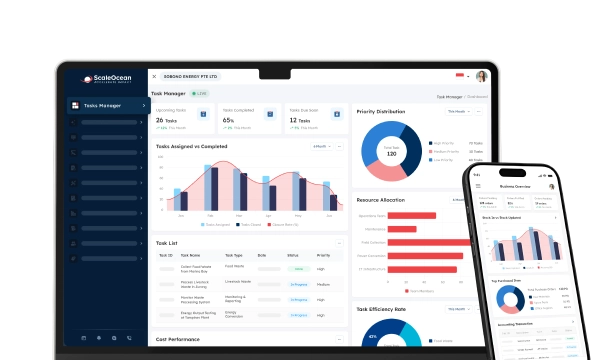

Shop Floor Management (SFM) is a systematic approach to managing everyday manufacturing processes to achieve optimal efficiency and quality, and to support continuous improvement, or “Kaizen”. This practice requires on-site observation of the processes, materials, machines, and performance of the workforce, which is referred to as the “genba”.
Without an integrated system, companies typically face challenges, including the inability to have a real-time overview of machine status and stock levels. Often, these problems are magnified with high downtime rates due to unplanned maintenance and scheduling mistakes, leading to significant waste of time.
According to the data gathered by our team from The Straits Times, a clear example of this urgency is Micron Technology’s plan to build a US$24 billion semiconductor plant in Singapore to expand chip production amid rising AI demand.
The facility will produce NAND flash memory chips for solid-state drives in data centers, where speed, reliability, and consistent output are critical. This highlights the importance of strong shop-floor visibility, as even small delays in machines, materials, or scheduling can disrupt production in high-demand industries.
SFM plays a central role in optimizing production from start to finish, ensuring machines, materials, and schedules are fully coordinated. By providing real-time visibility, it reduces downtime, maximizes uptime, and maintains precise control over raw materials, preventing miscommunication between production and warehouse teams and enabling data-driven decisions.
The core principles and essential elements of SFM demonstrate how digital tools can transform production workflows, empower the workforce, and support long-term manufacturing success.
 Key Takeaways
- Shop Floor Management (SFM) refers to a systematic approach that works towards optimizing daily shop activities for maximized efficiency, quality, and continuous improvement (Kaizen).
- Three core pillars of shop floor management are Gemba (the real place), Genchi Genbutsu (go and see), and Genjitsu (the real facts).
- Effective shop floor management implementation can enhance productivity, reduce costs, improve quality, and empower the workforce, which drives continuous improvement across the entire organization.
- Manufacturing software ScaleOcean can implement a robust shop floor management system to gain visibility and control over your production processes.

What is Shop Floor Management?
Shop Floor Management (SFM) is a systematic approach that works towards optimizing daily shop activities for maximized efficiency, quality, and continuous improvement (Kaizen). Monitoring on the spot (genba) is an adaptation of SFM that looks at processes, materials, and workforce performance that can be done in real-time.
A shop floor management system can help break down the silos. They instead get a complete picture of the production process. This allows supervisors and managers to decide wisely to enhance flow, minimize bottlenecks, and ensure the product is of the desired quality within the expected time frame.
How has the Evolution of Shop Floor Management?
Shop floor management involves managing, monitoring, and optimizing the day-to-day operations of a manufacturing plant. It covers tracking of raw materials or work in progress (WIP) to monitoring of machines and coordinating workers.
The traditional method was carried out manually, on paper logs and clipboards, and on the basis of the experience and intuition of the foreman, and is time-consuming. Often, information was late, and delays were only realized once production had slipped.
Today, with the advent of integration with Industry 4.0 and IoT, the transformation towards shop floor management software has revolutionized the factory environment. This digital transformation allows businesses to benefit from cutting-edge data analytics and remain up-to-date with the industry’s latest manufacturing trends, thus optimizing efficiency and accuracy.
 Also Read: Top 12 Manufacturing Execution System in Singapore 2026
What are the Goals of Shop Floor Management?
The primary objective of Shop Floor Management is to maximize productivity and smoothness of a production process in the factory. Shop Floor Management reduces waste and provides solutions quickly, ensuring high quality and stimulating employees to continuously improve their processes.
Shop Floor Management does not improve how things run. It also enables individuals on the factory floor to communicate better among themselves. Have more information. If workers and supervisors can see what’s happening on schedule, it can facilitate collaboration between departments and team decision-making.
It’s important to have a process that allows for solving issues promptly to eliminate bottlenecks and prevent work from becoming stagnant. This can be effectively resolved with a good shop floor management system, such as manufacturing cost estimating software.
Companies need to look for ways to make their work better so they can compete with others and deal with changes in their industry. One effective approach is adopting manufacturing software that supports shop floor management, helping teams streamline production, optimize resources, and gain real-time insights. Among the available solutions, ScaleOcean stands out for its comprehensive features and ability to integrate processes seamlessly, making it easier for companies to achieve these goals.

Three Pillars of the Shop Floor Management Approach
The three key ideas of Shop Floor Management. Gemba (the actual place), Genbutsu (the actual thing), and Genjitsu (the facts). Are valuable for those leaders who wish to improve their production process.
The Three Pillars (The “Three Reals”)
1. Gemba (The Real Place)
- Definition: This is where things are created, or something is made, e.g., a production line.
- Focus: To improve the situation, managers need to step out of their offices and go down to the factory floor to inspect things firsthand. This helps them visualize what is happening and identify problems.
2. Genchi Genbutsu (Go and See)
- Definition: This means inspecting the products, materials, or machinery used in the process.
- Focus: The goal is to examine the product and look for defects and issues with the equipment. This allows quality to be visually inspected.
3. Genjitsu (The Real Facts)
- Definition: This is the concept of making decisions based on facts, not guesswork.
- Focus: Utilizing direct visual tools such as digital KPIs and dashboards to detect anomalies as soon as they occur. This ensures that strategies are driven by irrefutable evidence such as cycle times and downtime metrics, rather than guesswork.
Why Is Shop Floor Management Important?
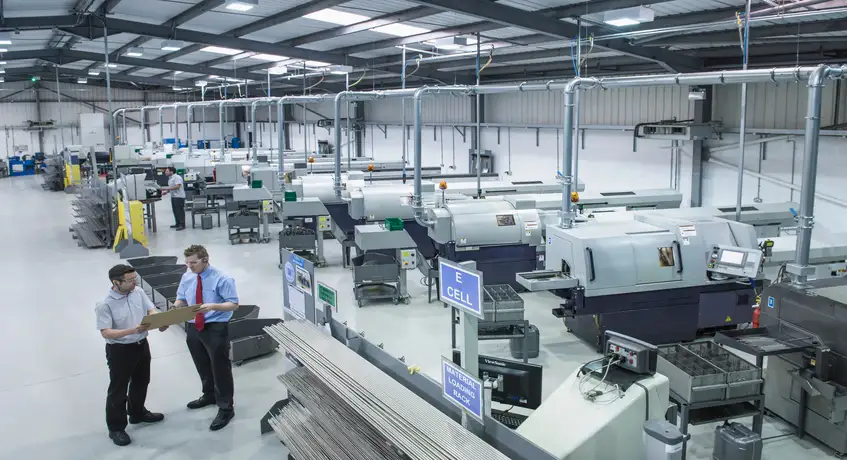
Production floor management serves as an important case between management and day-to-day production processes, as well as a key component in ensuring maximum efficiency, minimizing waste, and maintaining uncompromising quality.
The right production floor management system can minimize downtime in a smart factory environment, reduce operating costs, and increase production output through coordination between the workforce, machinery, and raw materials.
1. Enhances Productivity and Efficiency
Effective management ensures that all machines operate at the right time and are operated by the right people performing the right tasks. This integrated approach minimizes the 8 wastes of lean manufacturing to the greatest extent possible, ensuring that energy and raw materials are optimally utilized in the form of finished products.
Additionally, when tasks are standardized, production time variability decreases. This enables more accurate forecasting and greater certainty in the supply chain. Improved process efficiency results in lower costs per unit of product or service, thereby directly enhancing the company’s competitive advantage and market share.
2. Reduces Downtime and Maintenance Costs
Unplanned downtime disrupts operations and increases maintenance costs. Integrating preventive maintenance schedules with real-time machine monitoring can detect these issues early, ensuring repairs are carried out promptly.
This proactive strategy minimizes damage, extends equipment lifespan, and keeps production lines running smoothly without unnecessary delays.
3. Improves Product Quality
Integrated quality control throughout the production process prevents defects from accumulating. Continuous inspection during the process allows for immediate correction of machine deviations, thereby improving production yield from the start. The result is reduced rework, consistent product standards, and increased customer satisfaction.
When quality is monitored in real-time, trends leading to defects, such as machines drifting out of calibration, can be addressed immediately.
4. Strengthens Workforce Performance
Well-defined job responsibilities and the free flow of communication allow employees to learn about the expected standards of work and monitor themselves.
Managers gain the opportunity to find out skill gaps and train employees for them in a desired way, and ensure they have the capabilities to cope with further procedures and sophisticated methods.
5. Optimises Inventory Usage
Real-time visibility of materials and work-in-progress enables just-in-time replenishment and reduces excess stock. Efficient inventory management conserves storage space, prevents obsolescence, and ensures resources are available when needed, contributing to a leaner and more profitable production system.
Opting for inventory optimization also helps them save on storage space and the chances of the materials going obsolete or getting damaged. Through such strict material management. Product life cycle is managed efficiently from raw material entering the factory to shipping the finished product.
6. Facilitates Continuous Improvement
Kaizen, or continuous improvement, is facilitated by shop floor management. Document processes and record data for each shift to provide a baseline to build upon. It can be significant when implemented on the floor, by a small increment each time.
By instilling a culture of improvement, all employees are encouraged to provide improvement ideas. These ideas can be tested and validated quickly due to the transparency of the data and management being present (Gemba). The planning, doing, checking, acting process is one that makes a world-class manufacturer stand out from the crowd.
Core Components of Shop Floor Management
Shop Floor Management is a strategic lean management system based on leadership at the point of value creation, which would provide an optimum flow and boost team synergy.
It consists of real-time visualization of KPIs, daily huddles, systematic problem-solving with the PDCA cycle, and active participation of leadership to promote a culture of perpetual growth. Combining all these elements, manufacturers can create a high-visibility setting, ensuring operational discipline and lasting production excellence.
Important Components of Shop Floor Management:
1. Gemba Walking
Gemba walking involves managers visiting the production floor to directly observe daily operations. Rather than serving as a critical inspection, this practice provides an opportunity for leaders to listen, learn, and identify operational roadblocks. By engaging directly with operators, management can better understand workflow obstacles and pinpoint areas for waste reduction.
Integrating scheduled Gemba walks into the standard leadership routine helps build strong workplace trust. These observations frequently uncover minor, easily rectifiable issues, such as misplaced tools or unclear instructions, that cause major delays. Resolving these problems immediately boosts both employee morale and overall factory efficiency.
2. Visual Management
Visual management uses graphics, signals, and digital dashboards to instantly convey production status. Without needing to ask for help, anyone can determine whether production is on schedule, identify bottlenecks, and review the latest quality metrics.
Key tools in this framework include Andon lights for machine status, tool shadow boards, and digital KPI displays. When everyone, from operators to executives, works based on the same data, the organization can respond to deviations from the plan much more quickly.
3. Short Interval Control/Meetings
Short Interval Control (SIC) relies on brief meetings lasting ten to fifteen minutes at the start of each shift or every few hours. The primary goal is to address issues immediately, preventing small morning delays from escalating into major disruptions in the afternoon.
Teams hold these brief meetings directly on the production floor near the management board to facilitate rapid communication and issue escalation. Breaking the workday into smaller, manageable segments helps frontline teams maintain a high level of focus.
4. 5S System
The 5S system is five things: Sort, Set in order, Shine, Standardize, and Sustain. It helps to keep our workplace organized and working well. We need to do this because when our workplace is messy, we cannot see the problems that are hiding. When we cannot see these problems, we waste a lot of time and resources.
When we use the 5S system to organize our workspaces, we save a lot of time looking for things we need. We also become safer because we remove things that can hurt us. When everything is clean and in its place, we can see if something is wrong, like a machine that is leaking or a part that is missing. This helps us fix problems before they become issues.
5. Performance Monitoring
Performance monitoring is about watching how well we are doing. We look at things like how well our equipment is working, how much waste we are making, and how well our workers are doing their jobs. We use software to collect all this information, and it gives us the numbers we need to know what is going on right now.
By watching these numbers, we do not have to wait until the end of the month to see how we are doing. Help the teams that are not doing well. If we see that a machine is not being used enough, we can find out why. The 5S system and performance monitoring help us make sure the manufacturing facility is always running smoothly.
6. Lean Leadership Culture
The kind of leadership required at the shop floor level is supportive, not directive. Lean leadership transforms the command-and-control approach to leadership into a servant leadership philosophy whereby it becomes a leader’s sole responsibility to support shop floor operators, remove their operational problems, and coach teams in the application of problem-solving techniques.
A culture built upon this philosophy requires transparency of operations. Operators should feel comfortable making problems visible for the team to collectively solve, rather than suffering disciplinary action for doing so. Once leadership commits to a culture of continuous improvement, the entire organization will adopt such a philosophy.
7. Process Confirmation and Operational Control
Process confirmation is a process of the management audit on the team to confirm that they are repeating the standardized working process regularly. This process has not been intended for the purpose of punishing employees, but is instead designed for confirmation of the validity of the current process and its understandability.
If the operators do not adhere to the established work procedure, then modifications to the work procedure itself should be required. Operational control is the control mechanism that determines that the plan of production is indeed being followed. It ensures that materials are located at the correct stations and that operations are proceeding in the correct order of the production sequence.
8. On-Site Communication and Meeting Scheduling
An optimal shop floor management strategy relies upon a clear communication hierarchy and path for communication. The executive management’s requirements should cascade down to the shop floor, and information as well as issues should flow upward to the higher management ranks.
As long as meetings are consistent and happen with regularity, fewer unscheduled, disruptive emergency meetings will take place. This is a scheduled and directed communication that guarantees that all participants, including those from production, maintenance, quality, and logistics, are aligned with each other.
9. SFM Board
A shop floor management board is an informational tool positioned directly on the production floor. This either physical or digital board will display the day’s schedules, targets, quality indicators, and a space for live problem-solving sessions. From this vantage point, all teams will be able to track and witness the progression of every issue from discovery to resolution.
The Management Board represents the focal point for shop floor team communication. It serves as a focal point for both morning shift meetings and leadership walks. The public presentation of such information fosters worker ownership of their production results.
10. Sustainable Problem-Solving
The key aspect of shop floor management is to reduce disruption of the activities on the shop floor rather than just handling crises. This proactive approach needs a structured problem-solving methodology, like the 5 Whys model or the A3 thinking model. The main goal is to find the root cause of a problem, not the ‘tip of the iceberg’.
Involving employees at all levels in the training creates a self-optimizing organization that can operate for the long term. Ongoing tracking ensures the root cause is thoroughly addressed, and the new standard is effective.
11. Continuous Improvement (Kaizen)
Shop floor management encourages a culture of incremental improvement. By documenting processes, collecting data, and empowering employees to propose enhancements, factories cultivate ongoing innovation.
The wider shop floor management system will offer the means and framework to make Kaizen a reality, every day. Highlighting and enabling employees to resolve problems can be an effective catalyst for manufacturing innovation.
Where is Shop Floor Management Implemented?
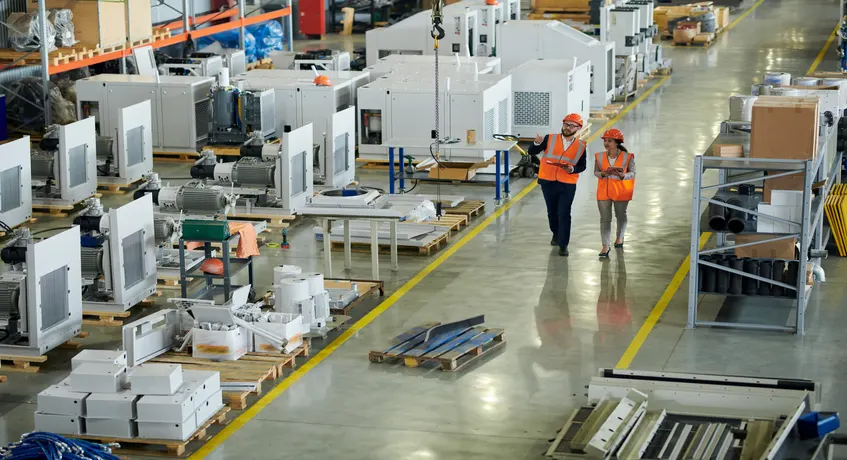
Shop Floor Management (SFM) is done directly at the Gemba (the actual place of production) to optimize the manufacturing process and to reduce waste. Teams can solve problems on the fly and stay in sync with one another throughout the entire exercise using on-site routines and visual aids, such as T cards and whiteboards.
SFM is a complete system that unites all manufacturing sections into one harmonious manufacturing process. It offers the fundamental framework to manage the people, inventory, and quality requirements for a manufacturing environment, from start to finish.
Where SFM is implemented:
1. Workforce Management
Implementing SFM in workforce management means keeping track of hours worked, managing the schedule, and keeping a skills matrix. This way, the appropriate number of skilled operators is assigned to stations.
It also assists in determining who needs cross-training to prevent production stalls because of employee absence.
2. Production Planning and Scheduling
SFM converts high-level production plans into daily schedules. When integrated with the shop floor management system, planners have real-time visibility of machine availability and the status of jobs.
From the data we collected from EDM Singapore, Singapore is prioritizing research and development (R&D) to strengthen its technological edge, shorten innovation cycles, and help firms bring ideas quickly from the lab to the factory floor and into the market. Semiconductors remain a key pillar of the economy, contributing nearly 7 per cent of GDP.
To support this, the Ministry of Trade and Industry, led by Dr Tan See Leng, announced that around S$800 million will be allocated to the Research, Innovation and Enterprise (RIE) plan to establish the RIE Flagship in Semiconductors.
3. Inventory and Material Management
On the shop floor, this means moving the materials from the warehouse to the production lines. By using SFM, “line-side” stock levels are maintained at optimum levels.
The system can be equipped with visual aids such as Kanban cards for automatic replenishment and to avoid the stoppage of the line due to missing parts.
4. Machine and Equipment Management
This is about optimizing the use and capabilities of production resources. SFM monitors machine run-time, machine speeds, and error codes, and can be supported by manufacturing software to enhance efficiency and visibility.
With the digital view of the machines, companies can adopt predictive maintenance and have an accurate view of the “health” of the production line.
5. Quality Control and Assurance
Quality management is integrated directly into the production steps. Operators use SFM tools to record inspection results as they work.
This immediate feedback loop allows for the “stop-the-line” authority (Jidoka) if a quality trend is negative, ensuring that bad parts never make it to the next stage of production.
6. Real-Time Data Collection and Analytics
In today’s day and age, data becomes the lifeblood of SFM. Automated data collection via sensors and Barcode/RFID scanning avoids human error when reporting data.
The analytics can be used to determine long-term trends and to correlate performance with specific shifts, materials, or environmental changes, giving operators a much deeper insight into operations.
7. Communication and Collaboration
SFM bridges the departmental barriers. The platform is available digitally, making it easy for production teams to work on the same platform with maintenance to make repairs and with the warehouse to address material shortages.
This smooth exchange helps to minimize misunderstandings and guarantees that everybody is aligned.
8. Compliance and Safety Management
Ensuring safety and regulatory compliance becomes part of the SFM routine is easier.
Digital safety checklists and ESG (Environmental, Social, and Governance) reporting, all automated logging, keep the factory safe and compliant with local and global regulations.
8 Tips for Improving Shop Floor Management Successfully
Practicing 5S principles to keep work areas organized and implementing a Kaizen culture of continuous improvement are key strategies for excellence. Real-time production monitoring also allows the incorporation of digitized production tools, facilitating informed, rapid decision-making and further reducing waste.
How to improve your shop floor management:
1. Build a Foundation with Standardization & 5S
Improvement of any process depends on stability, and that starts with standardizing the process. Taking detailed notes on how the most efficient and safest ways to complete tasks are done creates a benchmark for progress in the future and provides a consistent training standard for employees.
At the same time, applying 5S methodology brings cleanliness, organization, and visualization to the workplace. Cleaning up the shop floor helps teams to recognize efficiencies efficiently and provides a solid structure for any other shop floor project.
2. Optimize Flow and Layout
We must improve efficiency by managing the floor. We must identify how the raw materials change into a product and simplify the entire process. This is essentially mapping the entire factory flow.
The machines and the work stations must be laid out in series to eliminate wasted material, save time, and maximize the efficiency of the factory. A product-oriented cell can do this.
3. Foster a Servant Leadership Culture
The managers should adopt the habit of serving rather than managing. Their role is to empower the team and overcome any obstacles that may appear.
In order to realize this, the manager should spend time with workers on the shop floor and teach the workers the necessary skills. If the workers feel empowered, they are more likely to work harder and care about their job, the essential aspect of the factory’s success in running.
4. Structured Communication and Meetings (Management Cascade)
We must ensure that our employees understand and work toward our shared goals. We must begin holding meetings to share information and make decisions that are fact-based and efficient.
It starts with meetings at the factory level, followed by departmental meetings, then meetings with on-the-floor teams, and so on. We must use whiteboards and visual displays to keep us focused on our goals and our performance. By doing so, we can eliminate mistakes and work together.
5. Leadership Emphasis
We must get top management buy-in. The Senior executives must walk the shop floor, attend the meetings, and help in any possible way, and not necessarily give out instructions, but rather provide assistance.
By doing this, they create a sense that the changes are not just for the short term and are indeed a part of the entire factory strategy, building trust and contributing to the new culture.
6. Digital Tools & Automation
We should incorporate tools like a manufacturing execution system to keep us informed about the operations on the shop floor.
Sensors could predict when the machines are about to break, and workers could be provided with devices to guide them during the tasks. The technology chosen must not hinder how the company functions.
7. Visualisation and Problem-Solving Tools
This includes teaching them how to find the root cause of issues using methods like asking “why” five times.
Workers must be given the skills to identify and solve problems. They must be taught to address the root cause through 5 Whys analysis and so forth, allowing workers to correct the issues on the floor itself and gain ownership of the improvement process.
8. Iterative Process Enhancement
Making the factory better is a process; instead of trying to change everything at once, we should try new things in small areas and see how the process goes.
It must be emphasized that shop floor improvement is a process. Instead of attempting radical changes over a large area of the factory floor, we must adopt and test out changes in small cells, gain from experience gained and refine. This will help mitigate risks and still allow us to be more efficient.
Challenges in Shop Floor Management
Shop floor management refers to coordinating operators, machines, and processes to optimize manufacturing efficiency and meet production goals. The big challenges are when machines break down without warning, when data production is complicated, and when workers are not working together.
If we do not fix these problems, it can cause delays, quality problems, and inefficient work that hurts the companies in the long run.
Key challenges in shop floor management include:
1. Gaining Workforce Support
Getting workers to support a shop floor management system is a big challenge. Workers who are used to doing things the old way might be suspicious of systems and worry about their jobs. We have to talk to them from the start and explain why we are making changes and how it will help them.
It is a big challenge to get workers to support a shop floor management system. Old hands may be wary of systems and worried about their jobs. We have to explain to them from the beginning why we are doing things and how it is going to help them.
2. Training Leaders and Supervisors
Managers need to move from directive styles to coaching and empowering workers to manage the shop floor effectively. This can be difficult for managers who are accustomed to being in charge. We need to teach and coach them to trust their teams and delegate more.
Leaders need to learn how to communicate, listen to workers, provide good feedback, and work together to solve problems. Investing in these skills, we will have a team that can help to support the goals of the company.
3. Communication & Escalation
With good systems, communication can break down and cause problems. We have to make sure everyone can talk to each other clearly and reliably so we can see what is happening and fix problems before they get big.
We should know that everyone is on the same page, and also have to make sure workers feel safe telling us about problems so we can fix them before they cause issues.
4. Recognising New Wins
Making the factory better is a long-term job that needs workers to keep trying. A common mistake is to focus on the challenge and forget about what we have already done well. We have to recognize and celebrate our successes, no matter how small they are, to keep workers motivated.
This helps to motivate workers and makes them want to keep making the company better. Celebrating our successes creates a loop that helps us keep getting better.
The Role of Technology in Shop Floor Management
Technology transforms shop floor management by shifting traditional manufacturing from paper-reliant, isolated tasks into interconnected, data-driven workflows. It delivers comprehensive visibility across production lines, allowing leaders to eliminate operational blind spots, streamline resource usage, and accelerate continuing.
This gives us a view of what is happening on our production lines. Leaders can then use this information to get rid of problems they did not know about, use resources efficiently, and make continuous improvements. They can do all of this with real-time information about what’s happening on the shop floor.
Key Technological Drivers
- Manufacturing Execution Systems (MES) and ERP Integration: Connect high-level business planning with real-time shop floor execution, eliminating data silos.
- Industrial Internet of Things (IIoT): Connects machinery and special sensors directly with the network to transmit real-time data on equipment condition and the environment.
- Predictive Maintenance Analytics: This considers all of the data we are collecting. Identifies issues in equipment before they become a problem.
- Automated Workflow Tools: This reduces mistakes and speeds up the flow of information. It does this by replacing the data entry with automatic digital data entry.
Core Benefits
- Data-Driven Decision-Making: This provides our managers with. Operators need the information they need to make good decisions
- Dynamic Operational Agility: This provides an environment that can adapt rapidly to changes in plans or the market.
- Strategic Waste Reduction: This helps us find inefficiencies and problems with quality. It helps minimize waste. Improves our tools’ efficiency.
Implementation Best Practices
- Empower the Frontline Workforce: Ensure that our workers are familiar with it. We do this by providing them with the training they need.
- Ensure System Usability: Use tools that are easy to use and convenient for daily use.
- Adopt an Iterative Digital Shift: Begin with the things that would make a difference. Then we can move on to creating a smart factory. This will allow us not to overwhelm our facility with too much change in one summer.
Top 5 Shop Floor Management Software Solutions
Shop floor management (SFM) software improves production efficiency by keeping track of manufacturing operations in real-time, regulating resource consumption, and upholding quality standards. The best five producers in the field can give the complete package of production tracking, resource allocation, and optimum production tools.
Choosing the best manufacturing ERP software is really critical to the success of your shop floor management initiatives. With so many choices available, and each one typically strong in some areas and weak in others, it can be difficult to narrow down the choices.
1. ScaleOcean
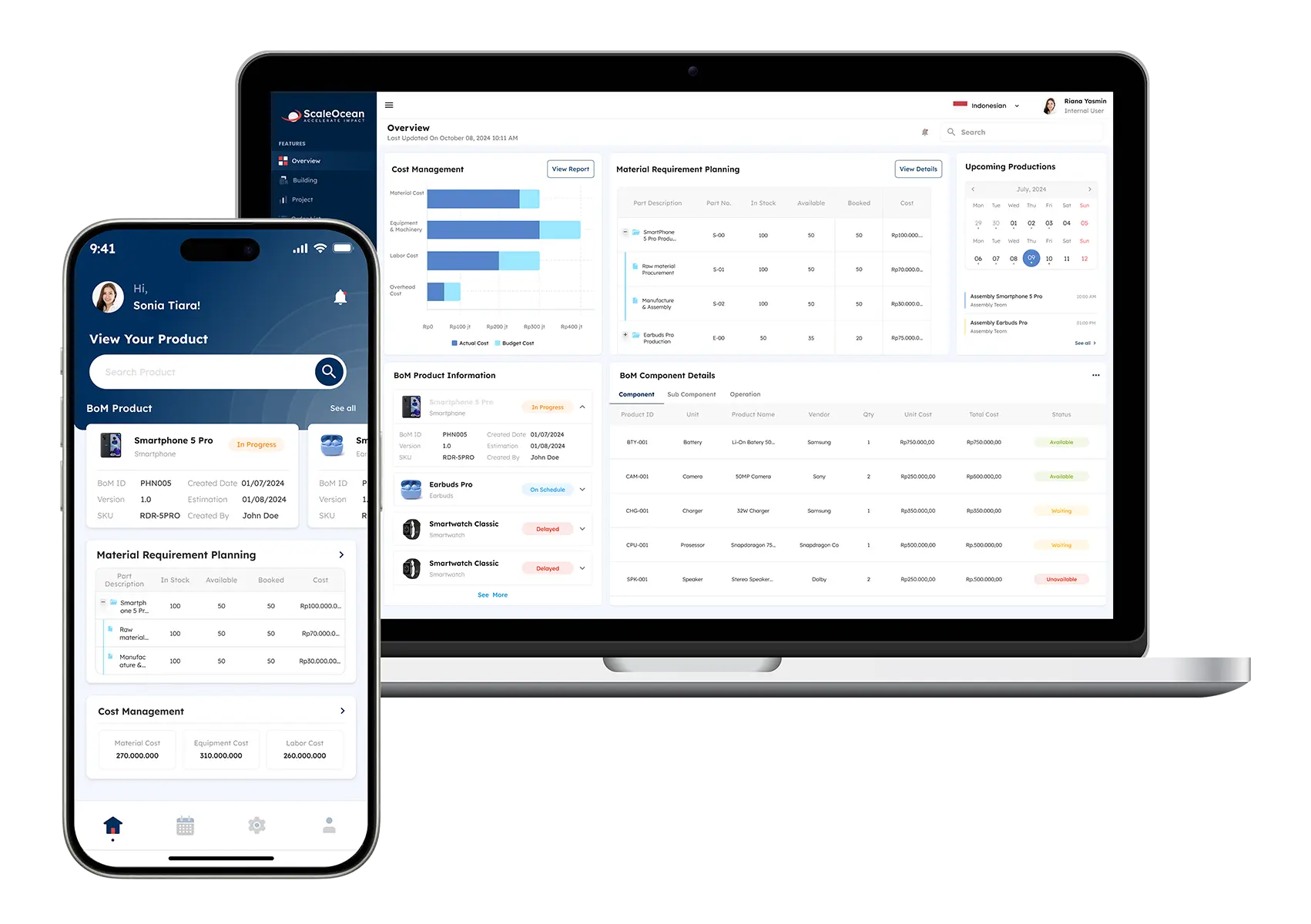
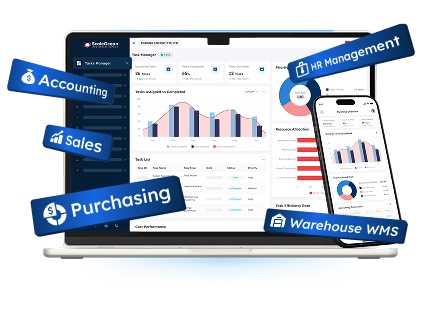
ScaleOcean Manufacturing software is a complete, all-in-one ERP solution to give manufacturers full shop floor visibility and control. Unlimited users, 200+ modules in-built, sensible flat-tier pricing, AI & BI enabled, fully customizable dashboards. Production, inventory, quality, and maintenance can be handled in one place efficiently.
This software offers sensible flat-tier pricing and satisfies the criteria for EDG grants. For businesses in Singapore, funding assistance of up to 70% is available for eligible companies. To explore how this solution can support your operations, you can request a free demo and see the features in action.
Unique features from ScaleOcean are:
- Production Dashboard & OEE Tracking: Manage, monitor, and track your machine’s efficiency, production flow, and overall equipment effectiveness.
- Advanced Planning & Scheduling: Enable teams to schedule all production operations based on current capacity, workforce, and raw materials availability.
- Automated WMS Integration: Interface shop floor operations and warehouse management to effectively track raw materials and finished goods inventory.
- In-Process Quality Inspection: Enables quality inspections throughout each stage of production, in an effort to decrease defects.
- Skill Matrix & Time Tracking: Monitor working hours, operator’s skill levels to assist in workforce planning.
- Preventive Maintenance Alerts: Receive automated machine maintenance reminders when needed, thereby limiting breakdown time.
- Barcode, RFID & IoT Integration: Enhance the speed of collecting production data without heavy reliance on manual entry.
- Automated ESG & Audit Reporting: Generate operational reports useful for auditing and sustainability needs.
| Pros | Cons |
|---|---|
|
|
Best for: Mid-sized to large manufacturing companies in Singapore that need an integrated ERP solution for production, inventory, maintenance, quality control, and operational reporting.
2. SAP S/4HANA SFM
SAP S/4HANA Manufacturing is an enterprise application for production planning, execution, quality management, and shop floor control. It is suited for large manufacturers needing integrated data across production, procurement, finance, and supply chain, though it often requires substantial implementation effort and resources.
Features from SAP S/4HANA SFM:
- Production Planning & Scheduling: Supports production planning and scheduling across a multi-plant and multi-production line environment to optimize workflows and resources.
- Material & Inventory Coordination: Manage raw materials, work in progress, and finished products to avoid shortages or overstock.
- Quality Management: Integrates quality control and assurance throughout the production process for reduced defect rates.
- Shop Floor Execution: Enables control of production workflow and workers and tracks machines, with their activities.
- Reporting & Analytics: Generates real-time reports for financial and supply chain, as well as production data decision making.
| Pros | Cons |
|---|---|
|
|
Best for: Large organizations with extensive manufacturing capabilities across many sites and complex processes.
3. SafetyCulture
SafetyCulture is a mobile-first platform for inspections, audits, safety checks, and quality control on the shop floor. It helps staff replace paper checklists and record operational issues, supporting consistency in reporting and quality management without being a full shop floor management system.
SafetyCulture has several benefits:
- Inspection & Checklist Management: Digitizes safety and quality checklists used by frontline workers on the shop floor.
- Mobile Data Capture: Inspections and incidents can be recorded on site using a mobile phone.
- Issue Tracking & Reporting: Record any detected issues and document them with photographic and narrative information.
- Compliance Monitoring: Used to track regulatory and internal compliance through audits and checks.
- Basic Analytics: Provides summaries of the results derived from inspections and audits.
| Pros | Cons |
|---|---|
|
|
Best for: Small and mid-sized manufacturers that require a practical shop floor tool for quality checks and safety inspections, and frontline reporting.
4. FastEC PAILOT
FastEC PAILOT is a manufacturing execution system (MES) that provides real-time production data and machinery monitoring. It helps manufacturers track machine performance, production progress, and downtime patterns, providing visibility into operational efficiency.
FastEC PAILOT benefits such as:
- Machine Data Acquisition (MDA): Collect data on the physical operation of machines in real-time.
- Production Data Collection (PDC): Logs progress against work orders.
- OEE Monitoring: Tracks overall efficiency of the equipment used in manufacturing processes.
- Downtime Tracking: Alerts and records instances where a machine is unavailable for production.
- Quality Data Documentation: collects data on production quality.
| Pros | Cons |
|---|---|
|
|
Best for: Mid to large manufacturers requiring machine monitoring, OEE tracking, and a view of production execution.
5. Business Central (Shop Floor Insight)
Shop Floor Insight is an add-on for Microsoft Dynamics 365 Business Central, enabling the collection of labor, materials, and production data on the shop floor. It updates Business Central records directly using barcode-based tracking, suitable for companies already using this ERP.
The benefits of implementing Business Central (Shop Floor Insight) are:
- Barcode-Based Tracking: Labor time, work orders, and material consumption are tracked using barcoding.
- Production Output Monitoring: Track production output and processes on the shop floor.
- Labor & Time Tracking: Track employee labor and task accomplishment.
- ERP Integration: Synchronizes with Microsoft Dynamics 365 Business Central.
- Reporting: Produce reports that can be visualized on shop floor dashboards.
| Pros | Cons |
|---|---|
|
|
Best for: Small to mid-sized manufacturers using Business Central ERP who want to collect shop floor data.
Common Tools and Technologies of Shop Floor Management
Shop Floor Management (SFM) integrates lean principles with digital technologies to monitor, control, and optimize production processes in real time. By connecting executive goals with daily operations, SFM standardizes workflows, visualizes key metrics, and enables workers to address issues directly on the shop floor.
Modern SFM systems rely on a combination of high-level enterprise software and intuitive visual tools that provide immediate insights. These technologies collect critical data, improve visibility, and facilitate communication, forming the foundation of an efficient, data-driven manufacturing environment.
Common technologies of shop floor management:
1. Shop Floor Control System (SFC)
A Shop Floor Control (SFC) system is a software application used to schedule, track, and report on work progress within a manufacturing plant, acting as the core engine of shop floor execution. SFC systems manage work order release, monitor time and material usage, and provide real-time production updates, giving detailed control over operations.
Many SFC systems leverage barcodes or RFID technology to capture data quickly and accurately. By offering a real-time view of each job, these systems allow managers to identify bottlenecks, monitor efficiency, and make immediate adjustments, effectively managing the “who, what, and where” of production.
2. Visual Management Boards
Visual management boards, whether physical whiteboards or digital dashboards, act as a central information hub for any work area. They present production targets, quality metrics, and issue status in a clear, graphical format, making performance visible to all team members.
These boards are often the focus during daily huddles and team meetings, improving communication, accountability, and focus. Despite the prevalence of complex software, well-maintained visual boards remain one of the most effective tools for engagement and continuous improvement on the shop floor.
3. ERP/MES
Enterprise Resource Planning (ERP) and Manufacturing Execution Systems (MES) are critical platforms for shop floor management. ERP systems oversee the entire business, including finance, sales, procurement, and production planning, while MES focuses specifically on executing and monitoring tasks on the factory floor.
ERP sends production plans and work orders to MES, which manages detailed execution and collects real-time production, quality, and machine performance data. This data feeds back to the ERP, updating inventory, costing, and overall business metrics, creating a seamless information flow and a unified view of operations.
Conclusion
Shop Floor Management (SFM) is a lean leadership technique that focuses on managing production at the Gemba. It places special importance on daily operation, visual management, and hands-on communication to detect and solve problems quickly, thereby ensuring the continuous enhancement of efficiency, quality, and safety in the workplace.
By adopting manufacturing software ScaleOcean, companies can streamline operations, optimize resources, and gain real-time insights. To experience these benefits firsthand, you can request a free demo and explore the platform’s full capabilities.
FAQ:
1. What does a shop floor manager do?
Floor managers supervise front-line operations, focusing on streamlining procedures, managing staff, and ensuring efficiency and a consistent customer experience across retail, manufacturing, or service environments.
2. What is the shopfloor management process?
Shopfloor management, a key aspect of Lean management, involves monitoring and controlling production processes on the shop floor, with the goal of continuously optimizing all processes across the value chain.
3. What are the 5S in shop floor management?
The Five S (5S) methodology, which stands for sort, set in order, shine, standardize, and sustain, creates a clean, organized, and safe workspace. It helps reduce waste, improve productivity, and foster a high-quality work environment both physically and mentally.





















.png)