



Corporate accounting is the recording, maintaining, and analyzing of a company’s financial statements in a methodical manner. Unfortunately, many companies struggle to achieve consistency in their reporting, with records falling behind and reports failing to provide accurate data across departments.
As operations grow, companies’ financial processes become more intricate and challenging to track manually. As a result, bad accounting habits lead to budgeting problems, risk of non-compliance, and reduced insight into the company’s financial standing.
Corporate accounting and finance enable organizations to record their operational activities and to make structured decisions accurately. It also enables companies to enhance reporting uniformity, strengthen internal controls, and better track their financial performance.
According to our team’s research, Grand View Research estimates the global accounting software market size at USD 19.38 billion in 2024 and projects it to reach USD 31.25 billion by 2030. The market is expected to grow at a CAGR of 8.4% from 2025 to 2030, fueled by rising demand for automation and efficiency in financial operations.
Thus, by adopting well-defined corporate accounting methodologies, companies can achieve transparency without sacrificing the long-term fiscal development of the various sectors of their operations. In this article, we will explore the complete method of corporate accounting and how it can help your business.
 Key Takeaways
- Corporate accounting is the systematic recording, tracking, and measurement of every business’s financial activity.
- Corporate accounting is important because it supports business stability by improving reporting accuracy, reducing financial risks, and strengthening consistent financial management across operations.
- Corporate accounting principles and standards help businesses maintain transparent financial reporting while supporting compliance across various operational and regulatory environments.
- Corporate accounting processes organize financial activities systematically, helping businesses improve reporting consistency, budgeting accuracy, and cash flow management effectively.
- ScaleOcean Accounting Software helps businesses automate financial processes, improve reporting accuracy, and optimize corporate accounting management.
What Is Corporate Accounting?
Corporate accounting is the systematic recording, tracking, and measurement of every business’s financial activity. The management system subsequently aids the organization in rectifying processing errors and enables precise reporting while enforcing individual responsibility across the company’s various sectors.
Corporate accounting is used to prepare financial reports, control costs, track revenue and metrics, and analyse an organization’s financial health. Consequently, businesses can enhance their financial understanding of the question of what corporate accounting is to make more accurate decisions about scheduling, investment, and operational planning.
In addition, corporate accounting ensures that financial data is orderly, accessible, and efficiently aligned with relevant accounting principles and statutory policies. As a result, corporations can minimize reporting discrepancies and effectively enhance cohesiveness among financial groups, management staff, and other external parties.
 Also Read: Financial Management: Definition, Key Components, and Goals
Why Corporate Accounting Is Important?
Corporate accounting and financial help instill security and stability in businesses by enhancing financial visibility, improving reporting and planning, and strengthening organizational decision-making. At the same time, companies can track their financial performance efficiently, minimizing waste of financial resources across business departments.
Financial Transparency and Reporting
Corporate accounting enhances financial transparency by systematically maintaining financial data and helps ensure consistent, accurate reporting across all business sections. So, the management team, investors, and stakeholders can analyze business performance using reliable financial data and standard reporting documents.
Correct financial documentation also allows your business to catch any financial irregularities early, helping limit the severity of future operational issues. Clarification and evaluation measures will help preserve investor confidence and ensure you remain responsible within your organization.
Strategic Decision Making
Business accounting provides critical financial information to help management teams make sound operational and investment decisions with confidence. Businesses can therefore determine profitability trends, identify cost-controlling measures, and explore avenues for sustainable financial growth.
Useful accounting data also assists long-term planning by providing financial information for evaluating organizations, and the management team can enhance business strategy more quickly and with reduced environmental uncertainty by using shaped financial analysis and precise reporting systems.
Compliance with Regulatory Requirements
Corporate accounting enables businesses to consistently comply with taxation policies, financial regulations, and reporting standards established by regulatory agencies. Therefore, business organizations experience fewer compliance-related risks and avoid financial sanctions arising from unreported transactions or incomplete financial statements.
Stable accounting procedures facilitate effective audits by ensuring well-kept financial records across various business activities. In addition, companies can enhance regulatory compliance and increase oversight on financial performance.
Better Resource Allocation
In addition to maintaining control over spending across all departments, corporate accounting and financial enables organizations to monitor expenses by recording operating costs and prioritizing spending to improve efficiency. As a result, organizations have a better budget management capability.
Firms can make sound investment decisions. Reliable financial data enable organizations to carefully analyze the effectiveness of resource use and operational efficiency. So, enterprises can reduce wasteful expenditures and maximise profit through systematic financial control and formal budgeting.
Minimize Financial Risk
Corporate accounting enables companies to detect financial risks early by tracking cash flow, expenses, and operational financial performance on an ongoing basis. Also, companies can react more quickly to financial issues and reduce the risk of a substantial financial setback.
Financial control is another example, as uniform recording systems enhance control by enabling accurate financial forecasting and systematic tracking of transactions throughout the organization. Therefore, firms can reinforce their financial stability by reducing error ratios related to earnings, financial management, and fraud.
Detailed Financial Analysis
Corporate accounting enables measurement-based financial analysis by systematically and precisely reporting financial information in accordance with logical accounting categories. Therefore, corporations can more efficiently measure profitability, operational efficiency, and financial trends using precise financial data.
Through in-depth analysis, an organization can easily pinpoint operational deficiencies and opportunities for financial improvement across various departments. In addition, the management team can develop a more effective financial strategy that leads to long-term sustainability through effective performance review.
What are the Types of Corporate Accounting?

There are several types of accounting, various forms of corporate accounting, and various financial organization management and reporting needs that require adaptation. Moreover, the national accounting types enable companies to improve financial control by supporting operational planning, budget establishment, and strategic business decision-making.
Financial Accounting
Financial accounting involves preparing standard financial statements that present a company’s financial performance to external parties consistently and accurately. As a result, it enables businesses to adequately communicate transparent financial information to investors, regulators, creditors, and other external users.
This type of accounting adopts constant accounting and reporting rules to ensure consistent, accurate, and comparable financial reporting. Aside from that, it would enhance the organization’s financial reputation, help uphold regulatory practices, and promote the organization.
Managerial Accounting
Managerial accounting provides internal financial information to management, enabling them to operate the business effectively. As a result, it enables management teams to analyze costs incurred, profitability achieved, and budgeting activities using the provided reports.
This accounting method further enables businesses to improve operational efficiency by identifying opportunities for cost reduction and prioritizing resource allocation. Moreover, businesses would be able to facilitate strategic planning by maintaining control over their finances through correct internal reporting and financial performance analysis.
Tax Accounting
Tax accounting lays the foundation for handling tax-related financial operations by ensuring an up-to-date, accurate understanding of what is corpocate accounting and the application of relevant tax legislation. As a result, the company can determine its legally incurred taxes and minimize the potential of reporting mistakes and financial costs.
Another benefit of this type of accounting is that it provides value to businesses by supporting budgeting and financial planning. It allows businesses to effectively track tax obligations and reporting requirements across operations.
Examples of Corporate Accounting
Corporate accounting involves a set of universal principles that apply to various financial functions, helping organizations maintain accurate reporting and effective financial control systems. Firms tend to utilize corporate accounting to enable budgeting, taxation, auditing, and other financial performance assessments.
May include, but is not limited to, the production of financial reports, payroll transactions, control of operational costs, and timely control of the company’s cash flow. In addition, the company uses the accounting system to record accounts payable and receivable, as well as tax declarations.
What are the Processes in Corporate Accounting?
Corporate accounting refers to a set of related tasks that enable companies to conduct their financial operations systematically and accurately over time. Thus, organizations can generate reports more coherently and improve their overall financial control across operational, managerial, and regulatory tasks.
The accounting cycle may help attain specific financial goals with the greatest consistency. Additionally, with accounting cycles in place and an automated financial monitoring system, companies can reduce data reporting errors and enhance interdepartmental communication.
Create Company Accounting System
Companies develop accounting systems to organize their financial information, reporting entities, and transaction processing in a structured, frequent manner. As a result, companies can accurately identify, account for, and maintain their financial records when reporting on results, and accomplish daily operational financial control across various divisions and reporting entities.
A routine accounting process further enables business organizations to gain easier access to relevant information and to monitor financial activities comprehensively over time. It further enables corporations to enhance the accuracy of budgeting processes and streamline day-to-day operational control, auditing, and strategic financial planning.
Record Transactions
Writing down transactions provides a regular record of deals, purchases, sales, costs, and operational payments. As a result, it is easy for companies to maintain reliable financial records and reduce errors that could affect reporting accuracy and financial assessments.
Another benefit of a proper transaction recording system is that it efficiently establishes financial transparency across various operations and management activities within a company. What is more, the organization of the transaction recording process allows organizations to increase accountability and enhance their financial control.
Preparing Financial Statements
Organizations prepare financial reports to provide an accurate summary of an entity’s financial performance, operating status, and profitability for a given reporting period. Therefore, it enables interested parties to understand a business’s financial condition well and to analyze organized financial information for specific purposes.
In addition, financial statements meet the information requirements for tax and financial audit purposes, as well as for regulatory monitoring, in a uniform and consistent manner. Furthermore, firms can enhance their authenticity and their ability to communicate operational performance and the permanent financial position of all business operations.
Payroll Management
A payroll administrator enables the efficient and accurate calculation of employees’ compensation, benefits, and deductions. As a result, an organization can enhance employee satisfaction and minimize payroll errors.
Responsive payroll systems facilitate better adherence to taxation requirements and employment legislation in dynamic environments. Additionally, the concerned organizations can streamline payroll administration and enhance their financial reporting on workforce payments and operational budgeting procedures.
Special Expense Management
Special expense management is the strict management of irregular operational expenses, special one-time operational expenditures, project budgets, and one-time financial activities. Hence, companies can maintain the stability of their financial position and avoid overspending, thereby influencing operational profit.
The administration of special expenses also allows organizations to assess financial priorities more efficiently in the face of unforeseen operational or strategic business circumstances. On the other hand, companies could also enhance budgeting accuracy while exercising greater control over each non-recurrent financial expense and operational modification.
Accounts Payable Management
Accounts payable management enables organizations to track liabilities to suppliers that are currently incurred and to run operations consistently and on an ongoing basis. Organizations can maintain strong supplier relationships and avoid payment delays, ensuring smooth operations and financial stability.
And proactive payable management also supports credit flow planning by effectively managing payment date combinations and other financial status submissions across departments, strengthening financial control and mitigating risks from late payments, penalties, and unreliable liability data submissions.
Accounts Receivable Management
Receivable attention is dedicated to monitoring cash inflows into the customer Accounts Receivable and to maintaining the flow of invoice monitoring in an easy and accurate manner. This allows enterprises to optimize their cash flow and reduce collection delays that could negatively affect operational and financial performance.
A further benefit is that it enhances individual customer payment tracking and provides for accurate cash flow forecasts at various business levels. Furthermore, companies may reduce exposure to uncollectible debts and optimize short-term cash resources through organized invoice collection systems.
What are the Principles and Standards of Corporate Accounting?

Corporate accounting is guided by normal rules and regulations to help organizations adhere to standardized financial recording. Principles help the company adhere to accounting standards, and principles have harmonized and standardized financial reporting practices.
This process can help organizations standardize and reconcile their financial reports to meet regulatory requirements effectively. By doing so, it enhances compliance and ensures that stakeholders have access to reliable information for making informed business decisions.
These are the systematic set of rules and guidelines that efficiently promote both financial accountability and comparability of reports in the business and industrial sectors. In addition, businesses can enhance the auditing process and achieve financial comparability by establishing uniform accounting frameworks and reporting standards.
Singapore Financial Reporting Standards (SFRS) International
Singapore Financial Reporting Standards International (SFRS(I)) sets out clear financial reporting standards and consistently and effectively adheres to international accounting standards. Therefore, financial reporting in Singapore is transparent and enables global comparability.
In addition, SFRS International supports organizations in ensuring systematic compliance with global regulatory obligations and investor expectations. Additionally, SFRS International facilitates reporting uniformity and enhances financial credibility and operational accountability in various organizational financial management functions.
Singapore Financial Reporting Standards for Small Entities (SFRS for SE)
Singapore Financial Reporting Standards for Small Entities introduces a set of simplified requirements for smaller entities operating in Singapore. As a result, small entities can maintain their accounting records accurately with less administrative burden than under full-set accounting standards and regulatory compliance requirements.
The standard also benefits smaller businesses by facilitating disclosures and reporting procedures, reducing the burden on these entities without sacrificing the reliability of reporting to some extent throughout the year. Moreover, businesses can achieve greater organizational effectiveness.
Generally Accepted Accounting Principles (GAAP)
Generally accepted accounting principles set out universal guidelines that businesses apply to prepare accurate and truthful financial statements efficiently and uniformly. As a result, businesses can more effectively comply with accounting conformity rules and operational documentation norms while improving financial comparisons.
Additionally, it aids companies in being more accountable and consistent in their financial reporting by enabling it to be done consistently across operational environments and regulatory requirements. Beyond creating consistency, it also improves an auditing company’s processes and enhances its credibility regarding financial information and performance.
International Financial Reporting Standards (IFRS)
International Financial Reporting Standards are a set of globally accepted accounting standards that facilitate consistent, transparent comparability of financial reporting practices across countries. Organizations reporting internationally can enhance information consistency and improve communication with various regulators.
IFRS further assists organizations in building investor confidence by consistently increasing financial transparency and reporting quality across all international business operations. Moreover, it enables firms to expand internationally to comply with generally accepted accounting and financial reporting systems.
Financial Accounting Standards Board (FASB)
The Financial Accounting Standards Board establishes accounting principles that form the basis of financial reporting practices in the United States, standardizing how businesses should report accurate information.
FASB further guarantees transparency through the organized enhancement of accounting procedures and the consistency of reporting across diverse sectors. Companies can build stakeholder confidence and maintain accurate records for financial audits, investment analysis, and daily operations.
What is the Role of Corporate Accountants?
Corporate accountants manage financial records, reporting activities, and operational financial monitoring within organizations consistently and accurately. Therefore, businesses rely on corporate accountants to maintain financial stability and effectively support compliance, budgeting, and strategic planning.
These professionals also help organizations improve financial transparency through organized reporting and regular, detailed financial evaluations. Furthermore, corporate accountants support operational efficiency while reducing financial risks associated with inaccurate reporting and weak financial oversight processes.
Daily Responsibilities
Corporate accountants handle daily financial activities, including transaction monitoring, expense tracking, and account reconciliation processes consistently and accurately. Consequently, businesses can maintain organized financial records while effectively improving operational financial control across multiple departments.
They also regularly coordinate budgeting activities, payroll administration, and financial documentation for operational reporting requirements. Additionally, corporate accountants help organizations improve reporting accuracy while supporting smoother communication between operational teams and financial management departments.
Financial Analysis and Reporting
Corporate accountants consistently analyze financial data to evaluate operational performance, profitability trends, and the organization’s financial condition. As a result, businesses can make informed decisions while improving budgeting accuracy and long-term financial planning.
They also prepare accurate financial reports that summarize company performance for management teams, investors, and regulatory purposes. Furthermore, detailed financial reporting helps organizations enhance transparency and accountability across operational and financial management processes.
Risk Management and Internal Audits
Corporate accountants identify financial risks by regularly and systematically reviewing the accuracy of reporting, operational spending, and transaction management processes. Therefore, businesses can implement corrective actions earlier and effectively reduce exposure to operational disruptions and financial irregularities.
Internal audit activities also help organizations consistently and accurately evaluate compliance, financial control systems, and operational accountability. Additionally, corporate accountants strengthen fraud prevention efforts and improve oversight of company financial management and reporting procedures.
Corporate Accounting vs. Financial Accounting vs. Public Accounting
Although these accounting fields share similar financial foundations, each area focuses on distinct operational objectives and responsibilities. Consequently, businesses often use multiple accounting approaches simultaneously to improve financial management, reporting accuracy, and organizational compliance effectively.
| Aspects | Corporate Accounting | Financial Accounting | Public Accounting |
|---|---|---|---|
| Primary Focus | Managing internal company financial activities and operational reporting | Preparing standardized financial reports for external stakeholders | Providing accounting services for multiple external clients |
| Main Users | Internal management and company departments | Investors, regulators, and financial institutions | Businesses, individuals, and government organizations |
| Core Activities | Budgeting, payroll, financial planning, and operational analysis | Financial statement preparation and reporting compliance | Auditing, taxation, consulting, and advisory services |
| Work Environment | Private companies and corporations | Private and public organizations | Accounting firms and consulting agencies |
| Main Objective | Improve operational financial management and business performance | Ensure transparent and standardized financial reporting | Support clients with professional accounting expertise |
Understanding what is corporate accounting and other types of accounting helps businesses choose suitable financial strategies that align with their operational and reporting needs. Furthermore, organizations can improve financial management while consistently supporting better compliance and decision-making processes.
How Corporate Accounting Helps Businesses in Real-Life
Corporate accounting helps businesses improve financial visibility by organizing operational transactions and reporting activities accurately and consistently. Therefore, organizations can monitor profitability while reducing reporting errors that can significantly disrupt operational and strategic business activities.
Retail companies, for example, use corporate accounting systems to effectively monitor inventory costs, supplier payments, and daily sales performance. Consequently, businesses can improve budgeting accuracy while maintaining better control over operational spending and cash flow management activities.
Recently, an article from Microsoft reported that Superbet successfully implemented integrated financial systems to streamline audit processes and improve the efficiency of financial reporting across its international operations. As a result, the company significantly reduced audit processing time while effectively strengthening compliance and financial management coordination.
How Companies Optimize Corporate Accounting?
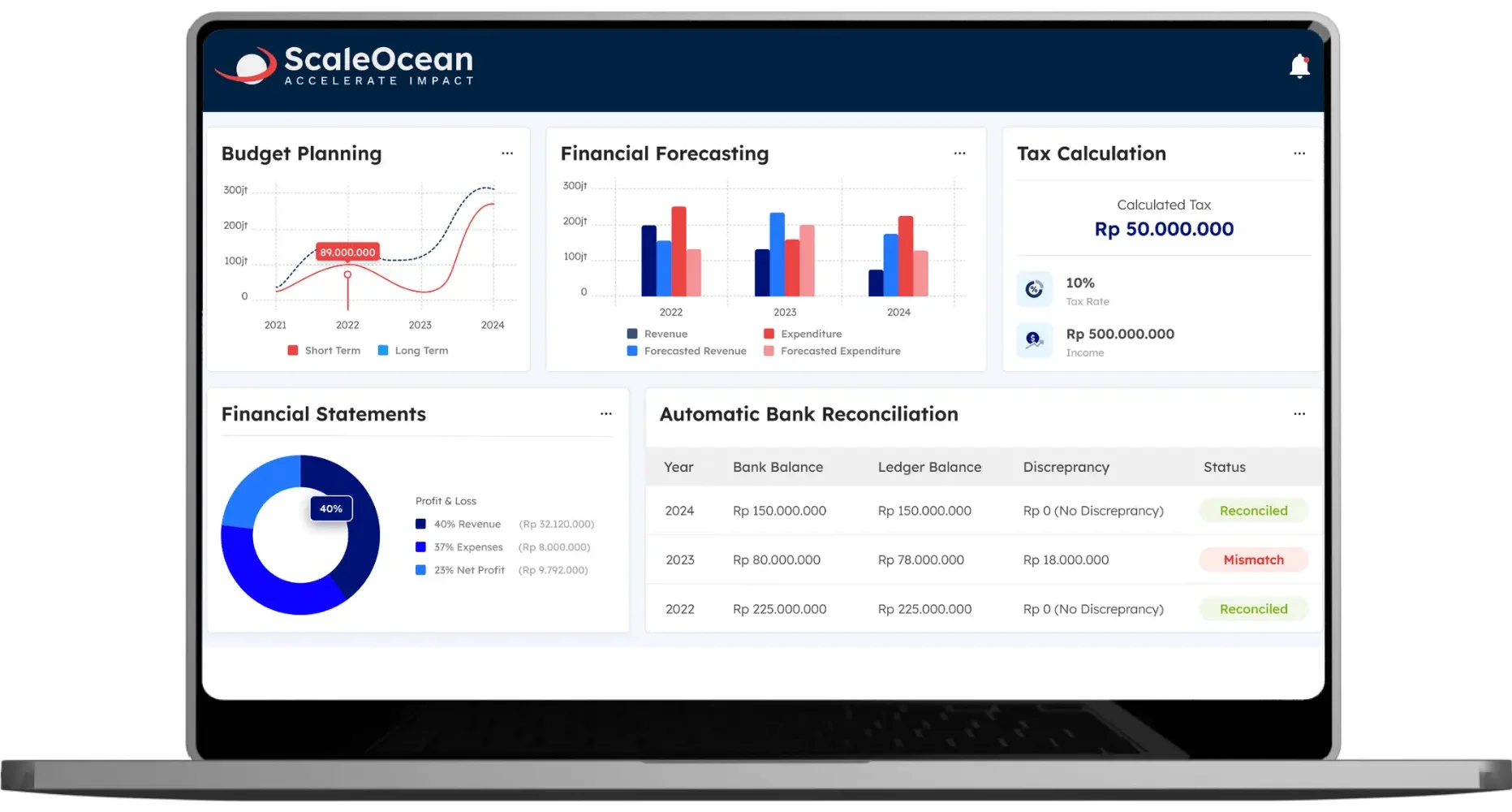
Businesses optimize corporate accounting by using accounting software to automate financial reporting, budgeting, transaction tracking, and operational financial monitoring processes consistently. Consequently, organizations can improve reporting accuracy while effectively reducing manual administrative work and financial management inefficiencies.
Modern accounting systems also help companies centralize financial information across departments and operational activities systematically and securely. Furthermore, businesses can strengthen financial transparency while improving compliance, cash flow management, and long-term operational decision-making processes.
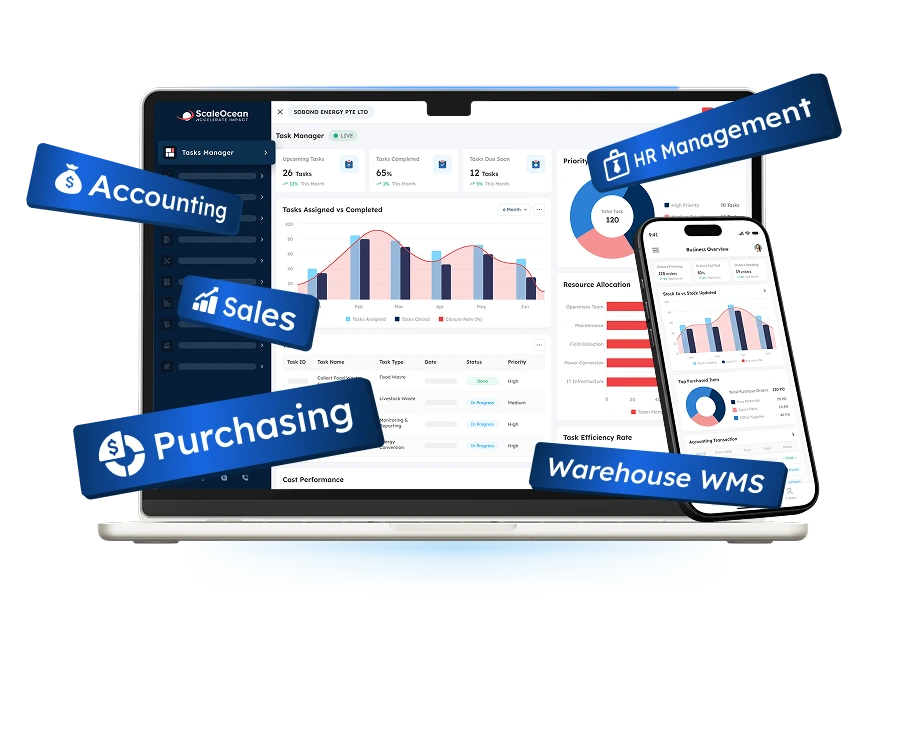
ScaleOcean Accounting Software helps businesses optimize corporate accounting with integrated financial management systems that drive operational efficiency and reporting consistency. Additionally, companies can effectively improve collaboration, automate financial processes, and strengthen financial visibility across organizational activities.
ScaleOcean also provides businesses with unlimited user access, integrated operational modules, multi-branch system connectivity, flexible customization, and automated financial workflows. Therefore, companies can improve coordination, reduce operational costs, and manage corporate accounting activities more efficiently across organizational departments.
Conclusion
Corporate accounting helps businesses maintain accurate financial records, improve operational transparency, and support consistent, better decision-making. Furthermore, structured accounting practices enable organizations to strengthen compliance, reduce financial risks, and improve overall operational efficiency across various business activities.
Businesses seeking more efficient financial management can use ScaleOcean Accounting Software to automate reporting, budgeting, payroll, and transaction monitoring. Additionally, integrated operational modules and centralized financial systems help organizations improve coordination and consistently reduce manual administrative workloads.
ScaleOcean also provides flexible customization, multi-branch integration, automated workflows, and real-time financial visibility to help growing businesses operate efficiently. Therefore, companies can optimize corporate accounting activities while improving operational productivity by requesting a free demo to explore ScaleOcean directly.
FAQ:
1. What skills are needed for corporate accounting?
1. Essential Qualifications & Skills for a Corporate Accountant:
2. Holding a Certified Public Accountant (CPA) credential.
3. Proficiency with financial software and ERP platforms.
4. An advanced degree in Accounting, Finance, or a related discipline.
5. Strong analytical thinking and problem-solving capabilities.
6. Excellent communication and interpersonal skills.
2. Is corporate accounting a good career?
Corporate accounting and finance careers provide opportunities for progression and continuous development, whether you are entering the field, moving into management roles, or aspiring to executive leadership positions across various industries.
3. What is the future of corporate accounting?
The future of corporate accounting is set to be shaped by ongoing innovation. With advancements in AI technology, we anticipate more advanced tools that improve accuracy, automate processes, and deliver deeper strategic insights.
4. What is corporate accounting called?
Corporate accounting, also known as private accounting, typically includes financial analysis, budget management, sustainability accounting, and the use of accounting information systems within a company or corporation.




















.png)