



Construction ERP software is a type of electronic command center that connects your office staff with the field and keeps project logs and finances all in one place. It’s intended to provide you with a clear, real-time view of labor and material costs.
Without communication and automated data, your business can be prone to blind spots that can lead to massive budget blow-outs. These patchy processes can often mean frustrating delays that quickly start to eat into your bottom line.
To avoid these headaches, you will need a good ERP to keep your projects on track and your team working in the same direction. This technology will allow you to automate all your processes, close the leaks, and create a much more stable future.
The software also needs to be appropriate for your construction company. This article will discuss the best ERP software for construction companies, the different ERP software modules, and how to choose them.
 Key Takeaways
- Construction ERP software is an industry-specific system that streamlines business operations in the construction industry to optimize project and business operations.
- The benefits of construction ERP software are increased efficiency, financial control, enhanced collaboration, better compliance, centralized project management, and automated procurement.
- Key features for a construction ERP system include tender and bid management, contract management, construction accounting, workforce management, compliance, and risk management.
- The best construction ERP software includes: ScaleOcean, SAP S/4HANA, Procore, Viewpoint Vista, Sage 300 CRE, Microsoft Dynamics 365, Oracle, and others
- ScaleOcean construction ERP is one of the best recommendations with automation, integration, and full visibility of all business processes and projects in a construction company.
What is Construction ERP Software?
Construction ERP software is an industry-specific system that streamlines business operations in the construction industry to optimize the operations of projects and businesses. The functions that can be centralized with an ERP system of a construction company include job costing, financial accounting, project management, procurement, and human resources.
The application of ERP software to construction firms is very important, particularly in streamlining processes and costs in construction projects. This system can also help construction firms to effectively manage costs, resources, and schedules across different projects and sites.
According to the statement we found from Future Market Insight, states that the adoption of ERP software by construction companies can help to boost the construction projects by about 3.9% and reach a market share of about 5.2%, reflecting the increased reliance on platforms that are integrated.
A market survey of the use of construction ERP software has established it as the most suitable solution for optimizing and integrating business processes in construction in a comprehensive and integrated manner.
10 Main Benefits of ERP Software for Construction Industries
A construction-specific ERP system changes the way that companies deal with their logistics and thin profit margins. All of the information regarding the projects a company completes is located in one place so that everyone involved in the construction of the project has access to the same information.
Here are ten benefits of using a system to give you a quick idea of how ERP software for Construction Industries can help your company improve its performance:
1. Increased Efficiency and Productivity
ERP software for the construction industry makes it easier for those companies to automate the tasks that they complete during each construction project. This makes it so that there is less work done by hand, fewer mistakes, and an increase in the productivity of the teams working on each project.
By having more time for the workers to focus on the construction of the buildings, the companies are able to produce more projects and increase the number of buildings constructed during a specific time period.
The ability of team members to have access to the necessary information at the right time allows for each construction team to remain updated with the projects that they are working on and to stay on schedule to complete them.
2. Improved Financial and Budgeting Control
Construction companies can gain access to their financials with ERP systems. They can monitor their costs and revenues to ensure that they are within their budget for the projects that they build.
The managers can react quickly to any changes in the financial aspects of the companies. Additionally, the budgeting processes are also automated so that there is no room for human error when setting budgets for the construction companies.
Finally, when the construction scheduling software detects a potential project overspend, it promptly notifies managers so they can take corrective action and prevent further financial issues.
3. Enhanced Collaboration
ERP systems help cut down communication barriers between departments by bringing collaboration tools into a centralized place. Project teams, contractors, clients, and everyone can work together seamlessly, accessing shared data and updates, resulting in a more unified approach to project delivery.
The software enhances collaboration by facilitating easy access to documents, tasks, and progress reports. Team members will be able to cooperate more effectively, and the amount of misunderstandings and smoothness of coordination will decrease during the project lifecycle.
4. Better Compliance and Risk Management
ERP software is an aid to construction companies as it keeps them informed of the relevant regulations. The ERP automatically validates required permits and forms, thereby ensuring no violations, fees, and legalities. This enables construction firms to operate without issues and without incurring liabilities.
The integrated risk management component of the ERP ensures that problems are detected early on. The problem may be financial, a safety issue, or even something else, like the ERP gives relevant details that enable management to identify potential problems in advance and address them without fail.
5. Scalability
Along with the growth of the number of construction enterprises, there has been a parallel increase in the number of ERP software. The ERPs are easily scaled for greater numbers of people, larger projects, various locations, etc.
Such software is adaptable to the increasing scale of construction organizations, ensuring no interruptions or reduction in performance.
ERP software provides adaptability for larger firms. The capability of integrating new procedures and data is provided by the ERP software, which can maintain flow, as and when the organization scales to include more entities, regions, and projects.
6. Data-Driven Decision Making
The real-time information provided by the ERP system will enable managers to make the right decision. Whether it is changing a project deadline or predicting a cost estimate, ensuring that the right data is available helps make the right decision.
The centralization of the project data at a single easily-accessible source will allow the managers to get an in-depth overview of the business, which will allow them to make decisions in line with maximizing profitability, performance, and growth of the business.
7. Centralized Project Management
An ERP solution allows for project management for all features in one single source. From budgeting to scheduling to assigning the correct team member, every project management aspect is organized in a central system, which provides the project managers with an overview of the entire construction project.
All project management tasks being located at a single destination reduces the chances of mistakes and keeps the processes straightforward. With all processes in check, the team can monitor resources, performance, and timeframes in real-time and avoid making any errors.
8. Automated Procurement and Inventory Management
ERP systems will automate the procurement process, which will ensure that construction materials are ordered in time and within the budget.
The software can keep the projects on track by ensuring that the stock levels are kept at the appropriate levels and that there are no delays in the construction procurement process.
ERP systems also make inventory management more streamlined. Construction companies can be sure that they will always have the necessary resources on hand without wasting money on extra stock or causing delays due to shortages.
9. Workforce and Resource Allocation
An ERP system shows you the availability of the workforce and the demands of the project. Hence, the right person is assigned for the right work at the right time. This is useful in making the most out of the efficiency in the construction projects, to prevent stoppages and downtimes.
With the skills of the workforce and demand for the resources, ERP software could guarantee the effective utilization of the resources.
This wise allocation helps the construction companies make the most out of their available workforce and material, and ensures the timely completion of the projects within a given budget.
10. Improved Analytics and Reporting
ERP software offers efficient analytical solutions to construction companies by turning the data into actionable information. Managers can analyze the tendencies, identify shortcomings, and thus make informed decisions for better results by analyzing information rather than guessing.
A user can customize the report to generate in any format required by the construction company.
The financial standing of the company, progress of the projects, and usage of resources can be monitored efficiently through ERP, thereby letting the companies make decisions on data instead of guesswork.
7 Key Features of Construction ERP Software

When building the perfect enterprise resource planning platform, the core functionality should create a strong platform for precise project lifecycle management. By implementing these core functionalities, firms can enhance their ability to manage resources, operations, and day-to-day results.
To best equip your organization for maximizing efficiency while minimizing risks, the following essential ERP functionalities are essential in modern construction:
1. Cost Tracking & Financial Management
A great construction ERP system tracks costs and project finances so that the team always stays on top of spending and is aware of project expenditures.
Keeping track of project costs and finances makes the team aware of any and all expenditures and prevents unpleasant surprises from happening, so the projects stay within their respective budgets.
The right information is readily available at all times, and so, smart decisions are a given. The ERP software helps in speeding up processes such as payments, expenses tracking, and approval, making sure everything in the project runs efficiently.
2. Project Scheduling & Management
One of the key features of construction ERP software is the ability to manage project schedules efficiently. It organizes tasks, milestones, and deadlines, making it easy for everyone to stay on track and minimizing the chance of delays in construction project management.
With robust scheduling tools, teams can optimize resources and workflows. This keeps everything moving forward, ensuring that projects are completed on time and that every team member knows exactly what’s going on throughout the process.
3. Document Management
Handling project documents is a very simple task with construction ERP software, as everything is housed in one location. Project teams can be sure that when they pull contracts, plans, and permits, they are actually getting what they need instead of outdated, irrelevant information.
Document handling is not a problem anymore. The ERP system reduces the risk of misplacing files by centralizing documents. Version control systems ensure that everybody is working with updated documents so they don’t work from past information.
4. Procurement & Inventory Control
ERP system features can also help construction projects to avoid delay of the projects. ERP can help ensure construction projects are not delayed due to materials shortages or excessive inventory management.
The system helps with automated purchasing and inventory tracking from the beginning to the end, ensuring that projects continue as planned. With streamlined purchasing & inventory management processes, you can reduce overall costs as materials that are not needed are not purchased or carried.
It also helps to ensure that you have the right amount of materials needed in your construction project, to prevent waste and ensure projects run smoothly without delays.
5. On-Site Connectivity
On-site connectivity is crucial for construction teams who need to stay informed at all times and from anywhere. An ERP system facilitates the necessary connectivity for workers to access information, update project progress, and communicate directly with their managers.
Workers at construction sites can have easy access to information so they are able to report problems or requests, and be up to date about project development. Such a system will help them work closely together to minimize errors and speed up their process from anywhere.
6. Real-Time Budgeting and Financial Monitoring
A real-time budgeting & cost monitoring system provided by the ERP software provides comprehensive insight into the project’s financial status and health. Track spending in real-time and make dynamic adjustments to budgets on the go to maintain expenditure control and prevent overruns.
By closely monitoring project finances in real time, you will be able to take preemptive measures to prevent unforeseen circumstances from threatening the project and stay on budget.
7. Compliance & Risk Management
ERP systems are designed to help construction businesses manage compliance with industry regulations. They ensure all necessary documentation is in place and that safety standards are followed, minimizing risks and supporting construction asset management.
By giving you real-time insights, ERP software helps identify potential risks early. This lets you address issues before they become problems, saving time and money, and ensuring smoother project execution without unnecessary setbacks or legal complications.
12 The Best Construction ERP Software
In Singapore’s competitive construction sector, selecting the right ERP software is crucial for streamlining operations, enhancing collaboration, and ensuring project success.
The following list highlights the 12 best ERP software for construction companies, each offering unique features to meet diverse business needs:
1. ScaleOcean Construction ERP Software
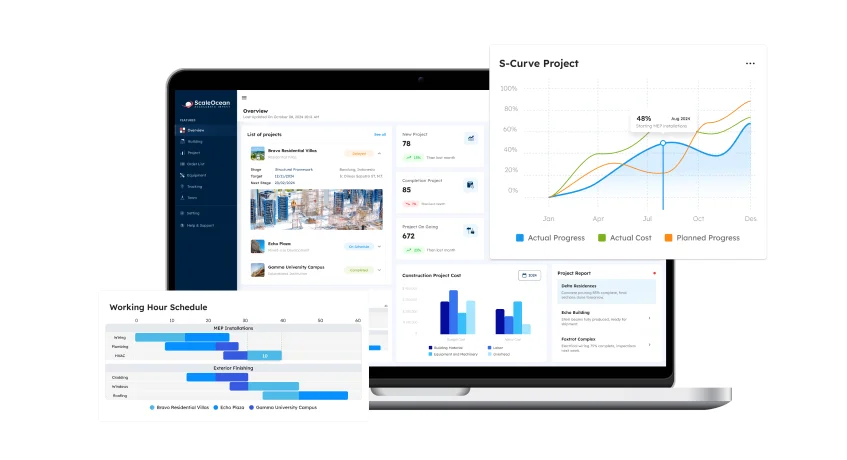
ScaleOcean’s Construction ERP Software Singapore offers an integrated solution for efficiently managing construction projects. With a system that enables centralized tender and project management, real-time budget tracking, and automated material procurement, companies can avoid delays and unexpected costs.
The system provides full visibility into project status, streamlines resource management, and automates contract management and financial reporting. Furthermore, this ERP facilitates collaboration between teams, improves inventory management, and provides seamless integration with other existing systems.
Supported by organized payment and expense management, ScaleOcean’s ERP for construction companies can also enhance transparency, efficiency, and control over all aspects of construction project operations.
Scaleocean is suitable for use in medium to enterprise companies, with special configurations according to the company’s needs. To experience this solution, you can request a free demo and consult with Scaleocean’s leading team to find a customized solution specific to your construction project.
Key Features:
- All-in-one solution: over 200 modules and 1,000+ features tailored to specific business needs, supporting integration and flexibility.
- Customizable to meet the company’s demanding needs, including personalized dashboards and intelligent configurations for each division.
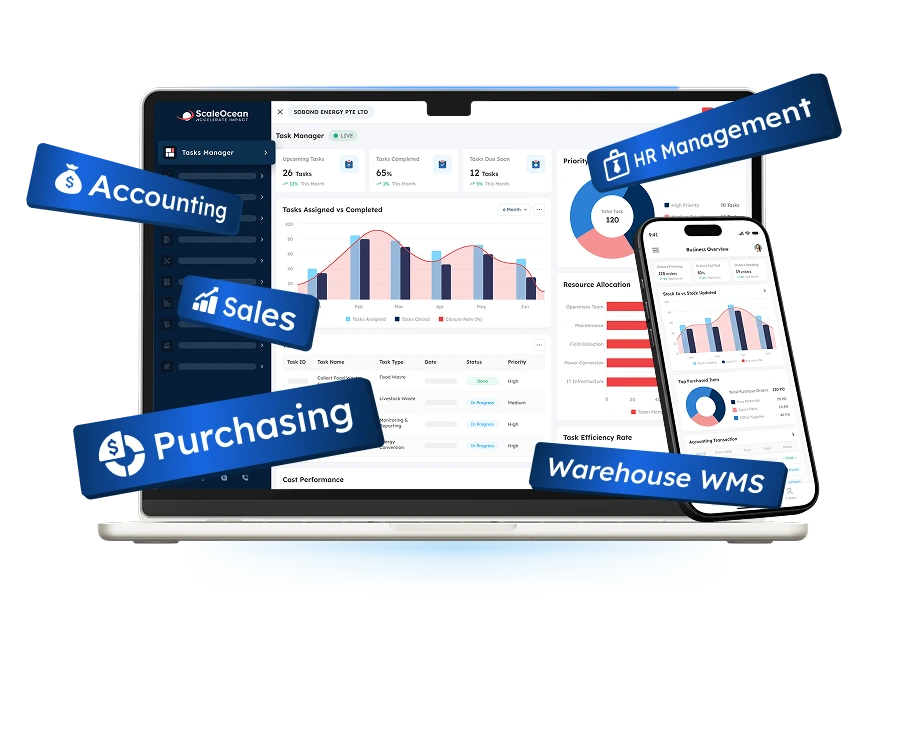
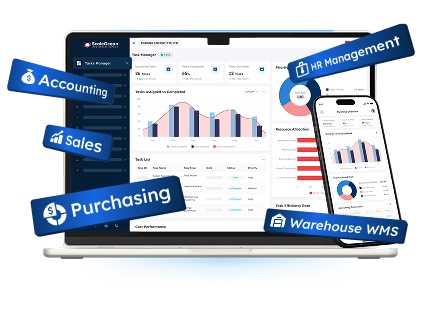
- Enjoy the seamless integration with all business functions within your construction company, as well as monitoring in a single, easy-to-use and configurable dashboard, from financial management and project management to warehouse inventory, procurement, and human resources.
- Facilitate collaboration between teams involved in a project by ensuring that the latest project information is accessible to all relevant team members in real-time.
With a focus on automation, integration, and full visibility into project operations, ScaleOcean’s Construction ERP helps construction companies manage their projects more efficiently, reduce risk, and increase profitability. Here are the pros and cons of ScaleOcean’s construction ERP software, including:
| Pros | Cons |
|---|---|
|
|
Price: ScaleOcean offers a transparent, flat-fee pricing model with no hidden costs. The final investment is tailored specifically to your project’s scope and the complexity of the implementation process.
Best For: This solution is ideal for medium-to-large enterprises looking for a highly customized system that can be adapted to any business process or specific industry requirement within the Singaporean market.
2. SAP S/4HANA Construction Software
SAP S/4HANA is an enterprise-level ERP solution that offers powerful capabilities for financial management, supply chain optimization, and project management. This system leverages real-time data processing to enhance business decision-making.
This system can also offer flexibility to manage complex construction projects across multiple locations.
Key Features:
- Real-time analytics
- Comprehensive financial management
- Supply chain optimization
- Cloud and on-premise deployment options
| Pros | Cons |
|---|---|
|
|
Price: Pricing is quote-based, typically requiring a minimum implementation investment of US$75,000. Total costs vary based on user count and modules, often reaching six or seven figures for large-scale Singaporean firms.
Best For: Best for large global corporations and Tier 1 contractors in Singapore that need a robust, high-performance system to manage massive data sets and complex international supply chain requirements.
3. Procore Cloud-Based Construction Software
Procore is a cloud-based construction ERP system designed to streamline project management and enhance collaboration within the construction industry. It offers modules for managing project schedules, budgets, contracts, and construction documents.
This software focuses on improving communication and operational efficiency while reducing risks associated with construction project delays.
Key Features:
- Project management
- Document control
- Budgeting and financials
- Quality and safety modules
- Mobile accessibility
| Pros | Cons |
|---|---|
|
|
Price: Rather than per-user fees, Procore uses a value-based pricing model based on your company’s total annual construction volume, requiring a custom quote for a yearly subscription.
Best For: Best for mid-sized to large contractors who manage multiple complex projects simultaneously and want to provide unlimited users access to a centralized project dashboard.
4. Viewpoint Vista Construction ERP System
Viewpoint Vista is an integrated ERP software specifically designed for the construction industry. It offers comprehensive modules for project management, accounting, job costing, and human resources. Viewpoint Vista is ideal for both large and small construction businesses.
Key Features:
- Job costing
- Project management
- Document management
- Mobile access
- Business intelligence
| Pros | Cons |
|---|---|
|
|
Price: As an enterprise-grade solution, licensing and implementation typically range from $20,000 to $100,000+, depending on the number of modules and scale of the infrastructure.
Best For: Highly suited for large civil and heavy highway contractors who need deep integration between back-office accounting, payroll, and field-based project management tools.
5. Sage 300 CRE Construction ERP Solution
Sage 300 Construction and Real Estate (CRE) is a robust ERP solution designed for construction businesses to manage financials, projects, and operations. This software provides tools for job costing, project management, and real estate management, offering construction companies full control over their operations.
Key Features:
- Job costing
- Project management
- Document control
- Service management
- Payroll integration
| Pros | Cons |
|---|---|
|
|
Price: Modules are often priced around $1,655 each for a lifetime seat license on-premise, with an additional annual business care fee of approximately 24% for support.
Best For: Best for established medium to large construction and real estate firms that require a robust, traditional accounting engine combined with advanced property management features.
6. Microsoft Dynamics 365 Construction ERP Software
Microsoft Dynamics 365 is a comprehensive ERP solution that integrates finance, operations, project management, and customer relationship management for the construction industry.
This system can also help construction firms optimize operations, predict future project needs, and enhance collaboration across teams, ensuring timely project delivery and budget adherence.
Key Features:
- Project management
- Financial management
- Supply chain management
- Human resources
- AI and analytics
| Pros | Cons |
|---|---|
|
|
Price: Essentials licenses start at $80 per user monthly, while full implementations of Business Central or Finance modules typically range from $75,000 to over $500,000.
Best For: Ideal for large enterprises already integrated into the Microsoft ecosystem that need a highly flexible ERP capable of managing diverse international business entities.
7. Oracle NetSuite Cloud-Based Construction ERP Software
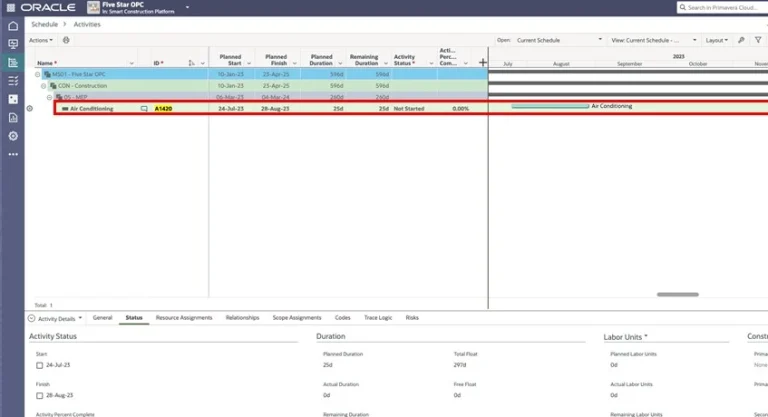
Oracle NetSuite is a cloud-based ERP platform that provides an integrated approach to managing operations, from procurement to project delivery.
This software scalability allows it to support large construction firms with complex projects. With its real-time data access and automated processes, it helps companies manage costs, timelines, and resources more effectively.
Key Features:
- Financial management
- CRM
- E-commerce
- Supply chain management
- Real-time analytics
| Pros | Cons |
|---|---|
|
|
Price: Base licenses start at $999 per month with users at $99 each, but total annual costs for most construction firms range from $25,000 to $250,000+, including modules.
Best For: A top choice for fast-growing mid-sized companies and large tech-integrated firms in Singapore that need a cloud-native platform for multi-subsidiary financial management.
8. CMiC Construction ERP System Software
CMiC is a comprehensive construction ERP software designed to optimize project and financial management within the construction industry. This software enhances collaboration by providing a centralized data repository that is accessible across departments.
This ERP for construction companies simplifies complex workflows, enabling construction companies to reduce operational costs and improve project performance, from preconstruction to project closeout.
Key Features:
- Project management
- Financial management
- Document control
- Human resources
- Mobile access
| Pros | Cons |
|---|---|
|
|
Price: CMiC uses a revenue-based pricing model for their enterprise platform, which typically requires a custom quote and carries a significant upfront investment for setup.
Best For: Best for very large, project-driven firms that want to consolidate human resources, project management, and reporting into a single database for one version of the truth.
9. Deltek Construction System
Deltek is an ERP solution designed for project-based businesses, particularly in the construction, engineering, and architecture sectors. The software includes robust features for project management, financial accounting, and resource planning.
By offering deep integration with accounting and project management workflows, Deltek ensures that construction companies can handle large-scale projects efficiently and profitably.
Key Features:
- Project management
- Financial management
- Resource planning
- Time and expense tracking
- Business intelligence
| Pros | Cons |
|---|---|
|
|
Price: Cloud subscriptions for project-based ERP modules like Vantagepoint often range from $30 to $50 per user per month, with enterprise implementation costs quoted upon request.
Best For: Ideal for mid-sized to large architecture, engineering, and government contracting firms that need rigorous compliance tracking and detailed project lifecycle profitability.
10. Acumatica Construction Solution
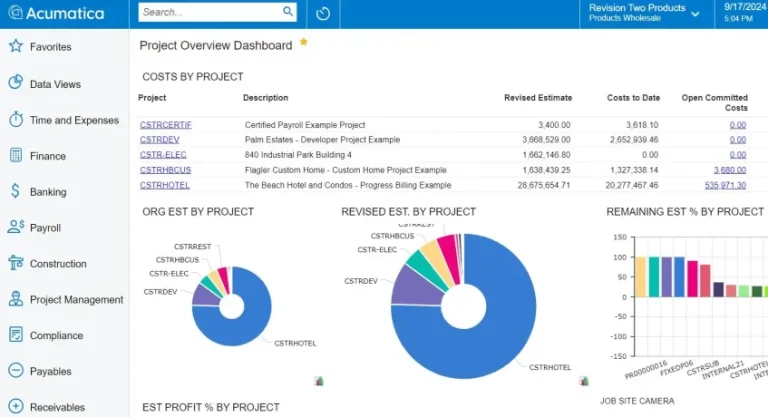
Acumatica is a cloud-based ERP solution with a strong emphasis on project management and financial management for the construction industry. It offers modules for job costing, project accounting, inventory, and procurement, all integrated into a single platform.
Its scalability supports both small and large construction firms with a wide range of project sizes and complexities.
Key Features:
- Financial management
- Project accounting
- CRM
- Inventory management
- Mobile access
| Pros | Cons |
|---|---|
|
|
Price: The annual subscription for the general edition starts at $6,396, though most mid-market contractors spend $25,000+ annually, depending on their monthly transaction volume and needs.
Best For: Best for small to medium-sized growing contractors who prefer a consumption-based pricing model that doesn’t charge for every individual user added to the system.
11. IFS Applications Construction Software
IFS Applications is an ERP solution that offers comprehensive functionality for construction businesses, including project management, financials, asset management, and supply chain management.
It helps construction companies manage the entire project lifecycle, from planning to execution. This flexible and scalable ERP solution is ideal for large construction firms handling multiple projects across various locations and industries.
Key Features:
- Project management
- Financial management
- Enterprise asset management
- Supply chain management
- Mobile access
| Pros | Cons |
|---|---|
|
|
Price: As an asset-intensive enterprise solution, total ownership costs usually reach the mid-six-figure range, tailored specifically to the complexity of the asset management scope.
Best For: Best for large-scale engineering and infrastructure companies that focus heavily on asset maintenance, complex AI scheduling, and real-time project margin visibility.
12. COBRA Contractors Software
COBRA Contractors Software is a user-friendly ERP system designed for small to mid-sized construction businesses. It integrates all project-related data into a single platform, allowing construction companies to track job costs, schedules, and labor productivity in real time.
Its simplicity and ease of use make it an ideal choice for contractors looking for an affordable and reliable ERP solution to streamline their operations.
Key Features:
- Project management
- Job costing
- Time and expense tracking
- Document management
- Mobile access
| Pros | Cons |
|---|---|
|
|
Price: This system offers a unique entry-level one-time purchase starting at $3,500, while recurring flat-rate subscription options are also available starting as low as $39 per month.
Best For: Specifically designed for small to medium-sized specialty contractors, such as HVAC or electrical businesses, who need straightforward tools for service management and dispatch.
To wrap things up, selecting the right ERP software is essential for smoother construction project management. ScaleOcean Construction ERP shines with its tailored features, easy integration, and all-in-one solution, helping businesses enhance efficiency, teamwork, and profitability. Request a demo today!
How to Choose the Right Construction ERP Software: 5 Tips
Selecting the right construction ERP system is a critical decision for ensuring smooth project execution, financial management, and operational efficiency. When evaluating ERP options, here are the key factors to consider:
1. Define your business objectives and requirements
The first step in selecting the right construction ERP software is understanding what your business truly needs. Start by identifying the challenges you’re facing, like issues with project management or tracking finances, and use that as a guide.
Knowing your specific goals helps you choose a system that offers the right features to address those challenges. By doing this, you’ll ensure that the software fits your company’s vision, making everything more efficient and productive.
2. Assess scalability and adaptability
As you grow, your ERP system should grow with you. It’s important to choose a solution that can handle larger, more complex projects, new users, and growing amounts of data without slowing down or creating bottlenecks.
An adaptable system is key because it means you won’t outgrow your software in a few years. Having the flexibility to add new features and modules as needed means you’ll get long-term value from your ERP system without needing a complete overhaul.
3. Check integration compatibility
Before choosing an ERP system, make sure it will integrate well with the tools you already use. Whether it’s your accounting software, project management platform, or inventory system, compatibility ensures everything works smoothly together.
A system that integrates well with your existing tools reduces the need for manual data entry, which minimizes errors. It also creates a more efficient workflow, helping everyone stay on the same page and access real-time information when needed.
4. Review the overall cost of ownership
When considering an ERP system, it’s important to look beyond just the initial cost. Think about additional expenses such as setup, customization, training, and ongoing maintenance so you get a full understanding of your total investment.
Cheaper options may seem tempting at first, but the hidden costs can add up. By reviewing all expenses, you can find the best value and make sure your choice aligns with your long-term goals, including the need for effective construction cost management solutions in Singapore.
5. Seek features tailored to the industry
Choose an ERP system with features designed specifically for the construction industry. Tools like project management, bid tracking, and compliance management are essential to helping you stay on track, reduce costs, and meet deadlines.
Industry-specific features can really make a difference by automating tasks unique to construction projects. They ensure smoother operations, better collaboration, and help you stay competitive by meeting industry standards and regulations with ease.
Conclusion
Ultimately, construction ERP software acts as a vital bridge between your field operations and the back office, turning chaotic data into clear, manageable insights. This unity helps you stop budget leaks and keep your projects profitable.
So, ScaleOcean Construction Software offers a flexible, flat-fee approach that simplifies even the most complex industry workflows. Trying a free demo is a great way to see how this tool can elevate your growth.
Construction ERP Software FAQ:
1. What is CMS in construction?
CMS stands for Construction Management System. It is a software platform developed to assist construction companies in efficiently managing their projects, resources, and teams.
2. Is ERP effective in Singapore?
ERP helps reduce vehicular congestion during peak hours, optimizes road usage, and encourages more people to rely on public transportation. In a space-limited city like Singapore, it has become an essential tool for maintaining traffic flow and ensuring smooth commuter mobility.
3. What are the examples of a construction system?
Common high-mass wall systems are masonry-based, such as brick, concrete block, and precast concrete. Other widely used systems include rammed earth and mud brick. While traditional masonry systems tend to have high embodied energy, rammed earth and mud brick have considerably lower energy levels.
4. What is the most used tool in construction?
A power drill is a widely used tool in construction, designed for drilling holes, attaching small drill bits, and tightening or loosening fasteners.




















.png)