

Transshipment is defined as the shipment of cargo via an intermediate port or logistics hub, and then to its final destination. During this, the products may be transferred between ships, subdivided into smaller container sizes, consolidated with other products, or moved to other carriers. It enables shipping networks to link markets without practical direct shipping.
Transshipment increases the number of available routes, but creates traffic risk. Delivery commitments, customer relationships, and profits on the shipment can be affected when the shipment is lost in transit due to missed connections between vessels, container roll-overs, customs delays, unmatched Bills of Lading, extended dwell times, and inaccurate estimated arrival times.
So, the need for logistics companies is to have all vessel schedules, bookings, container movements, customs documents, terminal activities, costs, and delivery milestones running in a single operational flow. Teams will be more visible; thus, they will have the opportunity to resolve connection issues before reaching an exception, to make plans for alternative connections, and to exchange new delivery guidelines.
Our team gathered data from the Maritime and Port Authority of Singapore (MPA), which shows that Singapore’s record 44,66 million TEUs in 2025 increased by 8.6% from 2024. About 90% of container volumes transshipped to other ports in Singapore reflects the need for coordinated connecting movements for maritime performance in Singapore, MPA has stated.
Gain insight into the meaning of transshipment, the significance for businesses, how it functions, the difficulties it faces, key transshipment hubs, important tracking statuses, and the impact of logistics software in bridging all the legs of a shipment.
 Key Takeaways
- Transshipment connects indirect shipping routes, lowers transportation costs, combines smaller cargo loads, and helps businesses reach destinations without practical direct services.
- Effective transshipment depends on coordinated vessel schedules, terminal handling, customs documentation, container transfers, and loading onto the correct connecting service.
- Common challenges in transshipment include port congestion, missed connections, cargo damage, documentation errors, prolonged dwell times, and unexpected costs that reduce shipment profitability.
- ScaleOcean Atlas connects shipment legs, documents, costs, and teams, while embedded ScaleMind helps identify exceptions and summarize affected shipments earlier.
What is Transshipment?
Transshipment is a shipping method that involves shipping through one or more intermediate ports in the shipment to the final port of discharge. Cargoes are usually unloaded from a transshipment port and reloaded aboard a second vessel onto the next part of the journey in container shipping.
The transshipment process is the process of arranging the arrival of the inbound vessel, offloading at the terminal, staging the containers in the terminal, preparing customs or permit paperwork, arranging the connecting vessel and supporting documentation, and arranging the delivery dates to the next port.
Singapore customs describes transshipment goods as cargo moving through Singapore from a location outside the country towards another overseas destination, as supported by documents such as a through Bill of Lading, through Air Waybill, or through manifest.
A transshipment hub normally operates as the connecting point between major long-distance services and smaller regional services. Large vessels carry substantial volumes between major hubs, while feeder vessels distribute individual containers to smaller ports that may lack direct calls from mainline services.
This hub-and-spoke network enables carriers to establish broader networks without running a direct service between all of the network’s origins and destinations. It also means, however, that if one vessel is late, one document is missing, one terminal has a restriction, or one connection is missed, it will impact multiple subsequent shipment activities.
 Also Read: 12-ton KitKat Theft in Europe: Causes and Ways to Prevent it
Why Do Businesses Use Transshipment?
Companies and shipping companies employ transshipment to lower shipping expenses and connect two points that are not served by the same shipping line, as well as to combine smaller shipments into bigger ones. Cargo on ship-to-ship transfers to an intermediate hub can help companies maximize the use of their shipping resources and tap into new markets.
While it might involve additional handling time, transshipment can offer increased flexibility in the global supply chain. These benefits overcome typical constraints with direct shipping, and transshipment is a key component in today’s maritime logistics.
1. Lack of Direct Routes
Not all port-to-port connections are made up of direct shipping lines. Shipments from a smaller port in the region could be shipped by feeder to a large transshipment port. It is then transferred to a mainline vessel serving a larger trade lane, such as Asia–Europe or Asia–North America.
This way, the exporter and importer can obtain more destinations without having to wait for a less frequent service. It is particularly effective in cases where cargo originates, such as secondary ports, island markets, or developing trade corridors, which are unable to support regular, direct calls by ships due to insufficient cargo demand.
2. Cost Routing Optimization
Transshipment is employed to enable shipping lines to load onto larger ships for long-haul shipping. Larger ships will be able to carry more containers in one trip, reducing the cost of operating the ships under the assumption that costs would increase with volume, and to ensure that no additional service would need to be offered for each ship-to-ship combination.
This creates an economy of cost of the resulting line as compared to the direct service, especially on less busy lines. It is possible for container vessels to unload in a smaller port, and then load onto a feeder vessel to a transshipment port where thousands of containers are loaded onto a mainline ship.
But lower base freight does not necessarily mean a lower shipper freight rate. Other charges that also need to be factored in: the terminal handling charges, feeder charges, storage, customs costs, documentation changes, demurrage, detention, and costs for exceptions.
3. Cargo Consolidation and Deconsolidation
Smaller parts sometimes are combined in transshipment centres into larger lots. Several less-than-container-load consignments could be packed together in a container, and containers from various origins could be combined for onward transport in the same container.
At another stage, consolidated cargo may be separated according to destination, consignee, delivery region, or transportation mode. This allows logistics providers to use available vessel capacity efficiently while still serving customers with different final delivery requirements.
4. Port Limitations
Some ports cannot accommodate the world’s largest container vessels because of berth length, water depth, crane reach, turning-basin dimensions, or terminal capacity. A mainline vessel may therefore call at a deeper and more capable transshipment port rather than entering a smaller destination port.
Cargo is then transferred to a feeder vessel suitable for the destination’s physical and operational limitations. This protects the efficiency of the mainline service while allowing the cargo to reach markets served by smaller ports.
5. Intermodal transportation
Transshipment can support intermodal transportation when cargo moves between sea, rail, road, inland waterway, or air services. A container may arrive by sea, continue by rail to an inland terminal, and then move by truck towards a warehouse or customer location.
Using more than one mode allows companies to balance cost, speed, capacity, accessibility, and environmental considerations. Maritime transport may be economical for the long-distance segment, while road or rail provides access to inland destinations.
This coordination forms part of broader logistics management. When maritime, terminal, trucking, warehouse, and delivery records remain separated, teams may struggle to determine who currently holds the cargo or which milestone should occur next.
6. Political or legal restrictions
Political conditions, trade regulations, cabotage rules, sanctions, controlled-goods requirements, and customs restrictions can influence available shipping routes. Certain goods may require specific authorizations before they can enter, leave, or pass through a jurisdiction.
A carrier may use an approved hub to transfer cargo between services while remaining within applicable trade rules. However, transshipment must never be treated as a way to conceal origin, destination, ownership, or the true nature of controlled goods.
7. Expanded reach
Transshipment allows carriers, freight forwarders, and logistics companies to serve more destinations through connected networks. A business does not need a direct route from its origin port to every customer market when a major hub can provide onward connections.
This reach supports exporters entering new markets, regional distributors sourcing from multiple countries, and multinational companies serving customers across several territories. It also gives shippers access to alternative routes when capacity is limited on their preferred service.
However, greater reach creates more route combinations to manage. Each option may involve different carriers, hubs, schedules, documentation requirements, cut-off times, and exception risks.
When is Transshipment Used?
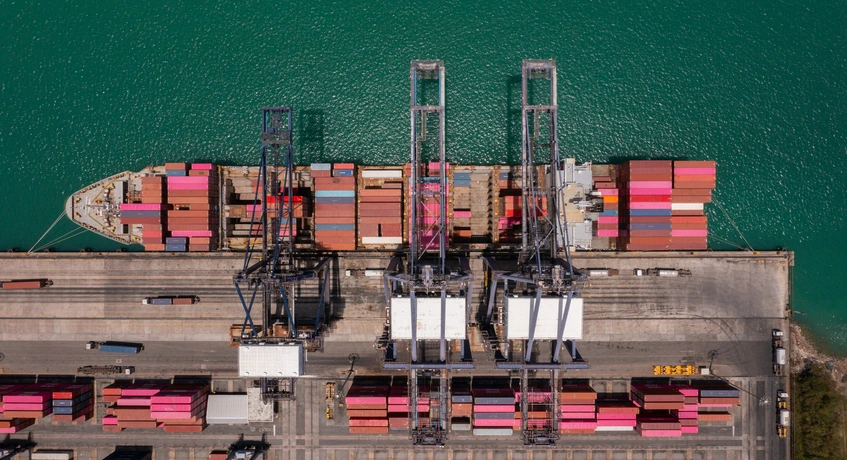
Transshipment is used when direct transportation is impossible, inefficient, or too expensive. It may be planned as part of the original route or introduced later because of schedule disruption, port restrictions, capacity shortages, or operational changes.
1. Connecting Disconnected Routes
Transshipment occurs when a company has an origin and a destination that do not have the same vessel service. Cargo is initially delivered to a hub from where it can be connected to an appropriate destination or to another hub in the carrier’s network.
For instance, cargo that departs a small port in Southeast Asia could go to Singapore before being sent on a long-distance route. It can be transferred again to the feeder ship at the destination region that will go to the final destination.
2. Overcoming Port Size Limitations
When the final port is not large enough to accommodate a large mainline vessel, transshipment is used. The primary vessel visits a deep-water transshipment port to load destination containers on smaller vessels.
Such a situation occurs in archipelagic areas, in smaller terminals on a coastal market, or in ports where the draught or berth facilities are limited. These are linked by feeder services to regional or world trade routes.
Acceptance of a container by the mainline vessel does not necessarily mean that other ports and vessels can take the same container. Consistency of equipment and terminal capabilities will be verified along the entire route.
3. Lowering Shipping Costs
Companies can choose transshipment if the total transport cost for the hub service is cheaper than that for direct service. This is more probable when traffic volumes are low and/or the direct route is run less frequently.
The saving comes from combining shipments and using high-capacity vessels on major trade lanes. Feeder services handle regional distribution, allowing the mainline network to operate around concentrated cargo flows.
4. Managing and Consolidating Cargo
Freight forwarders use transshipment to organize cargo according to destination, service level, container type, or customer requirement. Shipments arriving from several locations can be consolidated at a hub before onward transport.
The process is useful when order volumes change after the initial booking. A company may need to reallocate inventory, separate urgent cargo, or direct part of a shipment towards another market.
How Does Transshipment Work and Process?
The transshipment process normally covers origin preparation, inbound transportation, discharge at a transit port, terminal handling, connecting-vessel loading, final-port discharge, and onward distribution. The exact flow depends on the cargo type, service arrangement, carrier, and customs requirements.
1. Loading of Cargo at the Origin Port
The process begins when cargo is prepared, packed, labelled, and assigned to the correct container or transport unit. The shipper or freight forwarder confirms the booking, vessel, voyage, port of loading, transshipment hub, final destination, and expected schedule.
Documentation is prepared alongside the physical shipment. Relevant records may include a commercial invoice, packing list, shipping instruction, Bill of Lading data, certificate of origin, insurance document, permit, dangerous-goods declaration, and container seal reference.
2. Unloading of Cargo at a Transit Port
When the inbound vessel reaches the transshipment port, containers assigned for onward connections are discharged and moved into the terminal yard. They remain there until their connecting vessel is ready for loading.
The terminal uses vessel plans, container references, destination codes, yard positions, and departure schedules to determine where containers should be placed. Incorrect positioning can create additional crane movements and make connection windows harder to meet.
Customs or port procedures vary according to the cargo and movement. In Singapore, non-controlled goods transshipped within the same FTZ generally do not require a transshipment permit, whereas controlled goods and inter-FTZ movements require the appropriate declaration.
3. Transferring and Reloading onto the Connecting Vessel
After discharge, the container is assigned to its connecting vessel and moved towards the appropriate loading area. The terminal coordinates yard equipment, cranes, vessel stowage, safety requirements, and loading sequence.
The carrier may revise the planned connecting vessel because of schedule changes, capacity constraints, port omission, equipment issues, or network adjustments. When this happens, the shipment can be rolled to a later sailing.
4. Arrival and Unloading at the Port of Discharge
The connecting vessel carries the shipment to its final port of discharge. On arrival, the container is unloaded and positioned for import clearance, collection, deconsolidating, or onward transportation.
The consignee or appointed agent completes the destination requirements, including customs declarations, duty or tax processing, document submission, terminal payments, and cargo-release procedures.
The shipment then moves into inland transportation or last-mile delivery. Truck appointments, warehouse receiving capacity, customer delivery windows, and container-return deadlines must be coordinated with the final vessel milestone.
What are the Transshipment Challenges?
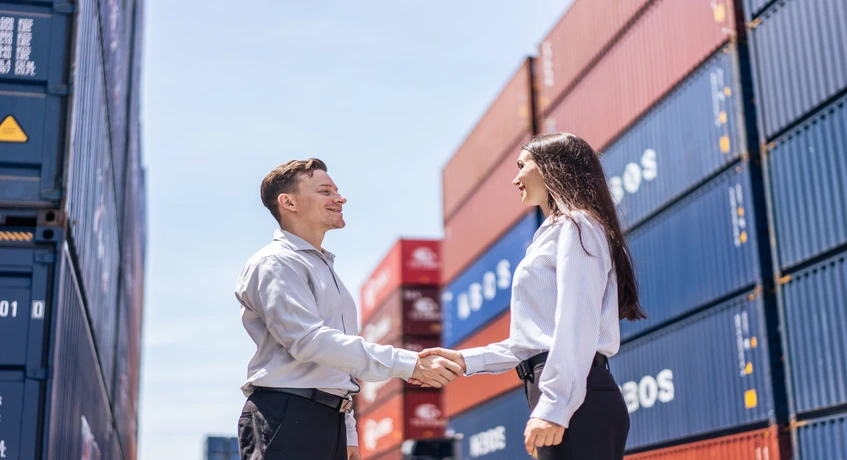
Transshipment adds operational flexibility, but every additional transfer creates another dependency. Logistics teams must coordinate physical cargo movement with vessel schedules, terminal operations, documents, customs procedures, customer commitments, and financial records.
1. Delays and Port Congestion
Port congestion occurs when vessel arrivals, yard volumes, equipment demand, labour capacity, or inland transport activity exceeds the terminal’s effective handling capacity. A delayed inbound vessel may arrive after the connecting vessel has completed loading.
The container must then wait for another suitable sailing. Depending on service frequency, this can add several days or longer to the total lead time and may create storage or handling charges.
Congestion can also produce vessel bunching, where several delayed ships arrive within a similar period. Even when the original delay occurs at another port, its effects can continue through subsequent hubs and connections.
Based on the data our team collected from Channel NewsAsia, Singapore’s overall vessel-arrival tonnage increased by 4.5% year on year during the first four months of 2024. This real-world case demonstrates how congestion at a major transshipment hub can disrupt connection windows, increase storage exposure, and delay subsequent shipment legs.
2. Risk of Damage During Transfer
Each discharge, yard movement, inspection, transfer, and reloading activity introduces another handling point. Containers may experience impact, poor stacking, seal issues, water exposure, temperature deviation, or movement-related cargo damage.
Temperature-sensitive products require additional attention. Within cold chain logistics, reefer settings, electrical connections, temperature records, plug-in status, inspection results, and emergency escalation should remain visible throughout the hub stay.
Companies should document the cargo condition at key handovers. Seal references, inspection notes, photographs, sensor records, and damage reports help establish when an incident occurred and which party should investigate it.
3. Complex Documentation
Transshipment may involve a master Bill of Lading, several house Bills of Lading, manifests, permits, packing lists, commercial invoices, certificates, customs references, and carrier instructions.
A discrepancy in the vessel, voyage, container, consignee, cargo description, quantity, weight, or destination can delay permit approval and cargo clearance. It may also create inconsistencies between operational and financial records.
Singapore Customs requires agents to retain relevant trade documents and records for at least five years from the permit approval date. Examples include invoices, Bills of Lading, packing lists, certificates, insurance records, and books of accounts.
4. Variable Shipping Costs
Transshipment costs may include ocean freight, feeder freight, terminal handling, documentation, customs services, storage, reefer electricity, inspection, trucking, demurrage, detention, amendment fees, and peak-period surcharges.
Some charges are known during booking, while others appear only after a schedule disruption or extended hub stay. This makes it difficult to determine the true margin of a shipment using disconnected spreadsheets.
These cost visibility issues can make it difficult for logistics businesses to identify which shipment legs, routes, hubs, or service providers are reducing profitability. A connected logistics system can help teams compare estimated and actual expenses while keeping operational and financial records aligned.
ScaleOcean logistics software connects costs across shipment legs, containers, carriers, terminals, and customers within one platform. With embedded ScaleMind, real-time margin visibility, configurable workflows, and unlimited-user options, teams can identify cost deviations earlier and review recurring expenses more accurately.
Schedule a consultation with the ScaleOcean team to assess your shipment costing process and determine the most suitable configuration for your logistics operations.
Transshipment vs. Direct Shipment vs. Transit vs. Transloading
Although these terms are closely related, they describe different cargo movements. Transshipment generally involves transferring cargo between vessels or services at an intermediate location, while direct shipment avoids an intermediate cargo transfer.
Transit refers more broadly to goods passing through another territory or location on the way to their destination. Transloading normally involves physically moving the goods themselves from one container, trailer, or transport unit into another.
| Aspect | Transshipment | Direct Shipment | Transit | Transloading |
|---|---|---|---|---|
| Main Purpose | Connects separate vessel services or route legs through an intermediate hub. | Moves cargo from origin to destination without transferring it at an intermediate hub. | Allows goods to pass through another port, country, or customs territory en route. | Transfers goods between containers, trailers, railcars, vessels, or other transport units. |
| Cargo Handling | The container or cargo unit is discharged and loaded onto another connecting service. | Cargo generally remains on the same service until reaching the destination. | Cargo may pass through without being unloaded, although procedures vary by movement. | Goods are physically removed from one transport unit and loaded into another. |
| Intermediate Location | A transshipment port, terminal, airport, rail hub, or logistics facility. | No planned intermediate transfer point is required. | A country, port, checkpoint, corridor, or customs territory crossed during transportation. | A warehouse, cross-dock, terminal, rail ramp, port, or distribution facility. |
| Change of Vessel or Mode | Usually includes a change of vessel and may also involve another transport mode. | Generally remains with the same direct service or planned conveyance. | A change is not necessarily required; the term concerns passage through an intermediate territory. | Commonly changes equipment or transport mode and may involve repacking or reconsolidation. |
| Documentation | May require through Bills of Lading, manifests, transshipment permits, and connection details. | Usually involves standard origin, carriage, import, and delivery documentation. | May require transit declarations, customs guarantees, seals, or corridor documentation. | Requires transfer instructions, quantity reconciliation, new equipment references, and handling records. |
| Primary Risk | Missed vessel connections, roll-overs, prolonged dwell time, and document mismatches. | Limited route availability, higher rates, capacity constraints, or schedule infrequency. | Border delays, regulatory non-compliance, seal discrepancies, and corridor interruptions. | Cargo damage, shortages, contamination, repacking errors, and inventory discrepancies. |
| Typical Use Case | Serving destinations without direct vessel connections through a hub-and-spoke network. | Moving time-sensitive or high-volume cargo on an established origin-to-destination route. | Crossing an intermediate country or port without entering its domestic market. | Changing from international containers to domestic trailers, railcars, or delivery equipment. |
| Best Suited For | Broad network coverage, feeder connections, cargo consolidation, and secondary ports. | Predictable corridors where direct capacity and frequency justify the service. | International movements that must cross another jurisdiction or transport corridor. | Domestic distribution, equipment optimization, intermodal transfers, and cargo reconfiguration. |
The right name is dependent upon what becomes of the product and transportation unit. Typically, transshipment is a closed container that is transferred between vessels. A domestic trailer is used to load goods after they have been unloaded from that container and is used for transloading the goods.
Top 6 Busiest Global Transshipment Ports and Hubs
The following ports are major container and transshipment ports, which have various regional functions. Volume rankings are also not necessarily included for global ports since ports such as Ningbo-Zhoushan and Port Klang are included.
1. Port of Singapore
Singapore is one of the world’s most important transshipment hubs because of its location along major East–West shipping routes and its extensive network connectivity. MPA reports that the port handled 44.66 million TEUs in 2025.
Some 90% of Singapore’s container traffic is transshipment traffic, where most containers are shipped to another country as opposed to Singapore. This brings coordination of connecting vessels to the fore of the operation of the port.
The city-state provides enterprises with a multitude of feeder and major services. All ports in Southeast Asia have the ability to reach Europe, the Middle East, North Asia, the Americas, and other parts of the world.
It also emphasizes the importance of careful planning even more. There must be a synchronicity of booking information, arrival of the vessel, discharging at the terminal, movement at the yard, permit requirements, departure of the connecting vessel, cost, and customer ETA.
2. Port of Shanghai
Shanghai handled more than 55.06 million TEUs in 2025, continuing to hold the top spot in the world in volume for 16 consecutive years.
It is connected by river, coastal, and deep-sea routes. The port links with China’s manufacturing and consumption markets, and serves as a gateway between the domestic and international shipping industries.
Shanghai is also a port of transshipment between the regional and ocean services. It has developed the infrastructure to handle large ships and connect cargo from ports in the Yangtze River Delta and other coastal ports.
3. Port of Shenzhen
In 2025, the port of Shenzhen processed about 35.41 million TEUs. The total is the sum of the activity of the main ports at Yantian, Shekou, Chiwan, and Dachan Bay.
The port is located in the export hub of the Pearl River Delta and the Greater Bay Area. Its terminals link manufacturing hubs in southern China to key services to North America, Europe, and other Asian countries.
4. Port of Busan
The transshipment process is the process of arranging the arrival of the inbound vessel. In 2025, the port handled approximately 24.88 million TEUs, including 14.10 million TEUs of transshipment cargo, representing around 57% of its total container volume.
Its location allows shipping lines to connect cargo moving between South Korea, China, Japan, Russia’s Far East, and major international trade routes. Regional shipments can arrive through feeder services before being transferred to larger vessels serving Europe, North America, and other long-distance markets.
5. Port of Hong Kong
While Hong Kong’s container volume has declined, its neighbouring ports on the mainland have expanded; it remains a successful maritime shipping port and regional cargo hub. The port is anticipated to process around 12.99 million TEUs in 2025.
If the business is related to the use of Hong Kong, it is advisable to inquire whether they have cargo in the container terminal or river-trade. This selected flow has an impact on documentation, drayage, cut-off times, and onward connection planning.
6. Port of Rotterdam
Rotterdam is Europe’s largest port and a major gateway connecting deep-sea shipping with European short-sea, barge, rail, road, and inland logistics networks. It handled approximately 14.2 million TEUs in 2025.
Companies should therefore avoid assuming that historic routing patterns will remain unchanged. Carrier alliances, terminal selections, geopolitical conditions, and service restructures can change which port handles a shipment and how long its connection requires.
Key Tracking Statues to Look For in Transshipment
The tracking of transshipment should be done separately in the hub, in the physical discharge, connection risk, loading, or onward departure of the vessel. The “in transit” classification is too vague to be used for decision-making.
1. Discharged at [Hub Port Name]
This implies that there isn’t an inbound carrier in the container. It will indicate that the sea leg has been completed but not that the cargo has matched up with the connecting vessel.
It might be waiting for loading in the terminal for the positions, documentation, customs clearance, or loading window for the connecting ship.
At this stage, teams should compare the actual discharge time with the planned connecting-vessel departure. They should also verify the intended terminal, new vessel, voyage number, and current estimated loading date.
A short connection buffer requires closer monitoring. If the incoming vessel arrives late, the logistics team should confirm whether terminal cut-off and stowage planning still allow the container to be loaded. Efficient cross-docking processes can also help improve cargo flow coordination and minimise unnecessary handling delays.
2. Transshipment Delay / Roll-over
A transshipment delay indicates that the planned connection has been disrupted or postponed. A roll-over more specifically means the container was not loaded onto its intended vessel and has been moved to a later sailing.
The status should trigger more than a general customer notification. Teams need the replacement vessel, voyage, expected loading date, departure date, revised arrival date, and any additional costs.
Then, there is a need to modify the operational plans. The updated milestone for the maritime sector could affect trucking bookings, warehouse appointments, manufacturing schedules, customer delivery schedules, and inventory planning.
3. Loaded on [New Vessel Name]
This status means that the container is on the connecting vessel. It’s among the most pivotal transshipment milestones as the cargo has now made it through the hub transfer.
But when the party is loaded, it doesn’t necessarily mean that it has to go. The ship could still be finalizing the operations at the port, awaiting clearance, or getting ready to move out of the port.
till be finalizing the operations at the port, awaiting clearance, or getting ready to move out of the port. Once confirmed, the new schedule can be shared with the consignee and used for destination planning.
How to Track Transshipments Easily?
Effective transshipment tracking combines carrier information, operational documents, vessel-position data, terminal milestones, and internal workflow updates. No single source necessarily explains every exception.
1. Carrier Tracking Portals
Most container carriers provide online tracking by container number, Bill of Lading, or booking reference. These portals may show origin loading, vessel departure, hub arrival, discharge, connecting-vessel loading, and final-port arrival.
Carrier data should be treated as the primary source for the planned vessel and voyage because the carrier determines the booking route and connection.
However, status updates may not immediately explain why a shipment has stopped moving. A container can remain shown as discharged without indicating whether it is waiting normally or has missed its connection.
2. Use a Freight Forwarder
A freight forwarder can coordinate carrier bookings, origin handling, consolidation, customs documents, transshipment connections, and final delivery. This is useful when a shipment involves several carriers or transport modes.
The company should nevertheless define reporting expectations. The forwarder should provide the planned and actual vessel, hub status, connection changes, revised ETA, cost implications, and required customer action.
3. Maintain Proper Documentation
till be finalizing the operations at the port, awaiting clearance, or getting ready to move out of the port, cargo descriptions, permit references, quantities, container details, or routing instructions.
The correct declaration is determined by goods being in transit in the same FTZ, between FTZs, or via a land checkpoint or between licensed premises.
4. Multi-Carrier & AIS Tracking Platforms
Multi-carrier platforms integrate portfolios of ships of multiple shipping lines to a single user interface. Businesses that need to deal with a lot of business transactions via a number of carrier portals can benefit from them.
AIS-based tools add vessel-position information, including the vessel’s latest location, speed, destination, and reported arrival estimate. This can help teams assess whether an inbound ship is likely to reach the hub before the connection window closes.
5. Use the Best Logistics Software
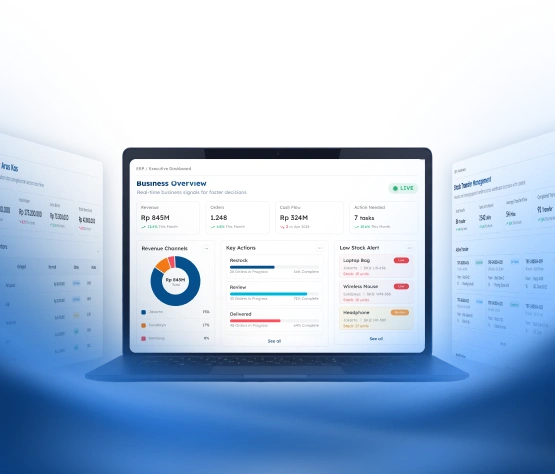
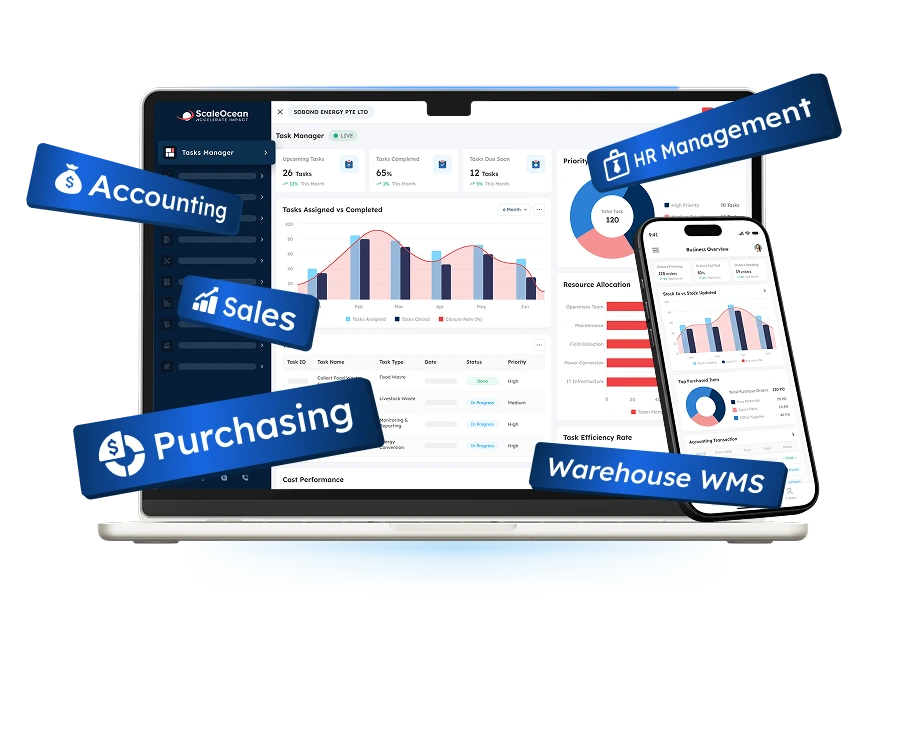
ScaleOcean provides an integrated enterprise ecosystem that helps logistics businesses connect operational, financial, and customer-facing processes within one platform. Its flagship product, ScaleOcean Atlas for Logistics, manages bookings, shipment legs, carriers, containers, documents, costs, invoices, and delivery activities. ScaleMind AI is embedded directly within the system, enabling teams to manage transshipment processes without switching to another application.
ScaleOcean Atlas for Logistics supports key transshipment requirements by connecting every shipment leg, identifying connection risks earlier, aligning documents with cargo movements, tracing actual shipment costs, and coordinating shipping, customs, warehouse, trucking, finance, and customer service teams through a shared workflow.
The embedded ScaleMind AI helps users review route and shipment data, highlight schedule exceptions, identify documentation gaps, and summarize affected bookings. Its AI-guided capabilities can also help teams recognize missed connections, vessel changes, unusual dwell times, and incomplete records, while real-time cost visibility links operational events with freight, terminal, storage, trucking, and exception expenses.
ScaleOcean Atlas is designed to support PDPA compliance and local financial reporting standards while meeting relevant requirements associated with EDG and CTC grants. Grant support remains subject to company eligibility, project scope, qualifying costs, assessment, and approval by the relevant authorities, as each programme applies separate business and project criteria.
Conclusion
Transshipment is the movement of cargo through an intermediate port or hub before it reaches its final destination. It enables businesses and shipping lines to connect routes, use larger vessels efficiently, consolidate cargo, overcome port limitations, combine transport modes, and extend service coverage across global markets.
Without coordinated transshipment management, businesses may face missed vessel connections, roll-overs, port delays, inconsistent ETAs, cargo damage, permit issues, document discrepancies, prolonged dwell time, unexpected charges, and limited shipment-margin visibility. Connecting schedules, cargo events, documents, customs activity, costs, and delivery plans helps teams respond before disruptions spread across the supply chain.
ScaleOcean logistics software connects bookings, shipment legs, vessel schedules, container movements, documentation, customs readiness, trucking, warehouses, billing, and customer updates through one adaptable operational backbone.
With embedded ScaleMind intelligence, AI-guided exception planning, connected documentation, real-time cost visibility, configurable workflows, unlimited-user options, and phased implementation, companies can coordinate every party while keeping each transshipment movement traceable. Schedule a consultation with the ScaleOcean team to assess your routes, connection risks, documentation flow, cost structure, integrations, and implementation priorities.
FAQ:
1. Is a customs permit required for every transshipment in Singapore?
No. A permit is generally not required for non-controlled goods transshipped within the same Free Trade Zone. Permits are required for controlled goods and movements such as transfers between FTZs, between an FTZ and a land checkpoint, or between specified licensed premises.
2. How can a company apply for a transshipment permit in Singapore?
The company or its appointed declaring agent submits the appropriate permit application through TradeNet, Singapore’s national trade-documentation platform. The declaration type must reflect the cargo, supporting transport document, goods classification, movement route, and applicable Competent Authority requirements.
3. How long is a transshipment permit valid in Singapore?
The validity depends on the permit and movement, but a transshipment or movement permit covering goods under a through Bill of Lading or Air Waybill is generally valid for 21 working days from approval. Companies should review the specific permit conditions and request an extension before expiry when necessary.
4. Can transshipment goods be stored in a Singapore Free Trade Zone?
Yes. Goods arriving by sea or air are generally deposited in an FTZ, where duty and GST remain suspended unless the goods enter Singapore’s customs territory. Liquor and tobacco usually have a 30-day FTZ storage limit, while goods covered by a through Bill of Lading or Air Waybill are not subject to that storage restriction.





















.png)