

Cross-docking is a logistics method that moves inbound products directly to outbound transportation with minimal or no warehousing. This can speed product flow and improve supply chain responsiveness.
Enterprising logistics operations in Singapore can be hampered by issues such as the high cost of warehouses, growing delivery demands, and complicated distribution networks. In some cases, companies might have challenges like low utilization of warehouse space and delays due to repeated handling between receiving and shipping operations.
A well-implemented cross-docking strategy helps businesses improve goods flow by connecting inbound receiving, sorting, consolidation, and outbound delivery processes more effectively. With real-time visibility, accurate inventory information, and connected logistics systems, companies can reduce unnecessary storage activities while improving shipment and operational efficiency.
Our team’s research from CBRE’s Asia Pacific Logistics Occupier Survey indicates that supply chain resilience and operational efficiency continue to be significant factors for logistics firms, and businesses are now more conscious of enhancing their warehouses to cater to evolving market requirements. This underscores the need to implement measures like cross-docking to optimize Logistics.
Read this article to learn what cross-docking is, how cross-docking operations work, when to use cross-docking, the technologies that are required to implement cross-docking, and how to implement cross-docking in Singapore.
 Key Takeaways
- Cross-docking is a logistics strategy that moves incoming goods directly to outbound transportation with minimal storage time, improves product flow, reduces handling activities, and optimizes distribution efficiency.
- Cross-docking is suitable for high-volume, time-sensitive, and regional distribution operations that require faster movement, accurate coordination, and better shipment visibility.
- Successful cross-docking requires connected logistics technology, including WMS, TMS, ERP, ASN, barcode/RFID, and dock scheduling systems to improve accuracy and operational control.
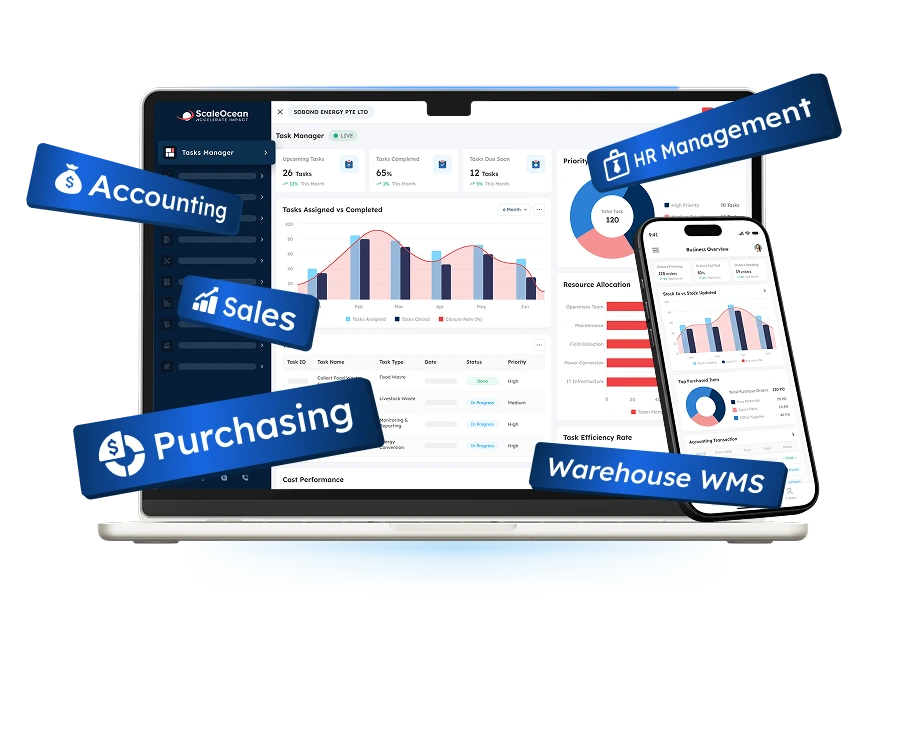
- ScaleOcean Atlas helps businesses optimize cross-docking operations through configurable workflows, centralized logistics visibility, scalable modules, and integrated operational processes within one platform.
What Is Cross-Docking in Logistics?
Cross-docking is a distribution approach that involves transferring products directly from inbound transportation to outbound transportation. Instead of the traditional warehousing process, which entails products staying in storage for a while before being sent for order fulfillment, cross-docking emphasizes moving products in a timely way with closer coordination between receiving and shipping.
The goal of cross-docking is to reduce storage time,f speed up the process, and make the supply chain more efficient. Incoming goods are sorted at a distribution center according to destination or customer needs, and then loaded rapidly into outgoing trucks for delivery.
It’s a technique that’s utilized by businesses with heavy volumes of shipments, quick-moving goods, or time-sensitive deliveries. This minimizes the need for additional inventory storage and handling, optimizes transportation usage, and ensures prompt response to customer orders.
For example, retailers may use cross-docking to transfer products from suppliers directly to stores, while manufacturers can use it to coordinate raw materials or finished goods movement between production facilities and distribution networks.
 Also Read: What is Logistics? Meaning, Types and Activities
How Does Cross-Docking Work?
Cross-docking is a logistics strategy that unloads materials from an inbound truck or rail car and loads these materials directly into outbound transport vehicles, with little or no storage in between.
Unlike warehouse operations, which are very dependent on storage and picking, cross-docking emphasizes the accurate timing, visibility of the shipment, and the performance of the transfer between inbound and outbound operations. It is crucial to ensure that there is no delay, congestion, or incorrect shipment allocation at each stage.
1. Pre-Arrival Planning
Logistics teams pre-prepare shipment information before the goods arrive at the cross-docking facility, such as expected time of arrival, product information, quantity, and destination. Logistics teams prepare shipment information prior to the receipt of goods at the cross-docking facility, including product information, quantity, destination, and time of arrival.
By planning ahead, warehouse teams can have dock space ready, have staff and equipment ready, and have outbound vehicles coordinated prior to receiving shipments. This helps to shorten the waiting time and to make goods move quickly after being received.
2. Inbound Receiving
When received, the warehouse staff checks against all shipment data, including product condition, quantity, and shipping specifications.
Unlike in traditional warehouses, products are not kept for a longer period. Instead, receiving activities focus on quickly checking the accuracy of the shipment, while delaying the shipment to the next stage of goods handling, sorting, and outbound preparation.
3. Sorting and Segregation
After receipt, goods are sorted based on destination, customer requirements, delivery routes, and shipment priorities. This process helps warehouse teams organize products efficiently, ensuring urgent orders and grouped deliveries are handled appropriately.
Once sorted, products are prepared for outbound transportation through packaging, labeling, and final quantity checks. This ensures shipments are accurate, properly protected, and ready for timely delivery to customers.
4. Consolidation
The process of combining multiple shipments into an optimized outbound shipment containing destinations or delivery routes that are similar is called consolidation. This makes transport more efficient, optimises vehicle utilisation, and helps to group and dispatch shipments more efficiently for last-mile delivery.
This will help to spread out the usage of the vehicles, transportation expenses, and number of trips during shipment. It can be very useful for companies that have regional distribution networks.
5. Outbound Loading
Finally, sorted and consolidated goods are put on outbound transportation as per the transport schedule.
Outbound loading is efficient, so products are ready to leave the facility when their delivery is scheduled and delivered to the customers or distribution points. With proper coordination, cross-docking is the best means of fast product movement without the requirement of long-term storage.
Types of Cross-Docking
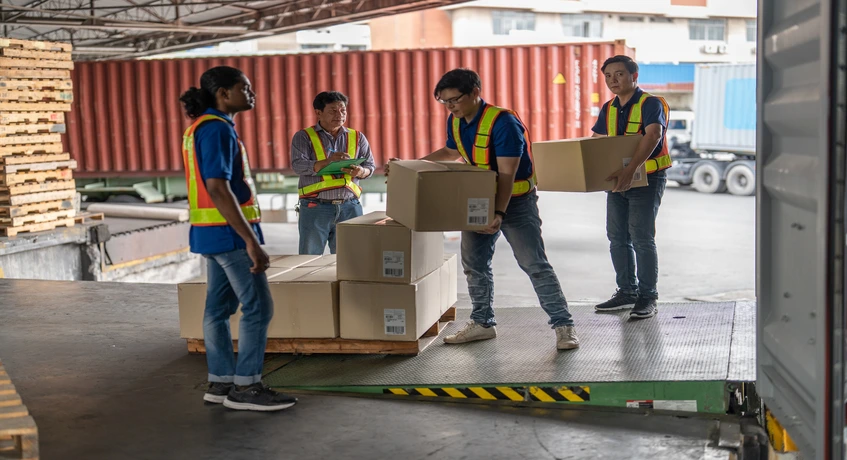
Cross-docking refers to a logistics method that involves picking up inbound products by outbound trucks without being stored in the warehouse.
Companies should select the type that best fits their needs, based on factors such as the volume of shipments, the need for inventory, and the nature of customer demand, as well as the coordination between suppliers and distribution networks.
1. Pre-Distribution Cross-Docking
Pre-distribution cross-docking is one way of pre-distribution where items are predetermined by particular customers or destinations prior to their arrival in the cross-docking center. The goods are taken in and sorted according to the established rules and immediately shifted towards the outbound transport.
A way of doing business that is common, in which there is forecasting of the need and information regarding the orders. This technique is often used by retailers and distributors as it enables them to match the supplier deliveries with the customer’s or store’s needs.
2. Post-Distribution Cross-Docking
When goods are received before their destination is known, it is known as post-distribution cross-docking. Items can be temporarily put on display at the facility until a customer order, information about demand, or distribution needs are determined.
It allows for flexibility in case of fluctuating demands or in situations where businesses need more time for allocation decisions. But it must be much more visible and get the right demand information to avoid unnecessary delays.
3. Continuous Cross-Docking
With continuous cross-docking, the emphasis is on minimizing the movement of goods between receiving and shipping with high throughput.
It’s a very coordinated operation that requires information regarding shipments in real time and an organized transport plan. It is ideal for businesses like retail distribution centers and businesses that rely on time-sensitive products, which process large volumes of shipments and demand speed and efficiency.
4. Consolidation Cross-Docking
Consolidation cross-docking combines smaller inbound shipments from multiple suppliers into larger outbound shipments. This helps businesses optimize transportation capacity and reduce the number of delivery trips.
For example, several supplier deliveries can be combined into one outbound shipment to a regional distribution center. This reduces transportation costs while improving vehicle utilization.
5. Deconsolidation Cross-Docking
Deconsolidation cross-docking separates larger inbound shipments into smaller outbound deliveries based on customer requirements, delivery locations, or distribution priorities. This method is commonly used when businesses receive bulk shipments and need to distribute products across multiple stores, branches, or customers.
For businesses managing complex distribution networks, accurate shipment allocation and real-time visibility are important to ensure products move to the correct destinations efficiently. Without proper coordination, companies may face delivery delays, incorrect allocation, or inefficient handling processes.
ScaleOcean Atlas could help businesses manage deconsolidation workflows through configurable logistics processes, centralized shipment data, and multi-location operational visibility. The platform supports flexible approval flows and unlimited-user access, allowing enterprises to adapt the system based on their distribution structure and operational requirements.
Specialized Forms of Cross-Docking in Industries
Different industries have developed variants of cross-docking operations, which take the general idea of moving goods from inbound to outbound without storing them at the dock and apply it to their specific business requirements.
1. Retail Cross-Docking
A cross-docking system is commonly used by retail stores to help them move goods from their suppliers straight to their store or fulfilment center, avoiding the need for the retail store to keep the merchandise in its warehouse for long periods of time.
This approach can be useful for products that have high velocity, seasonal products, and promotional items, where the retailers can help the customers receive the products in time and speed up the production.
2. Manufacturing Cross-Docking
The main objective of cross-docking is to supply the manufacturer with a better material flow between suppliers, manufacturing facilities, and distribution channels. This eliminates the need for unnecessary storage and handling operations, which can help businesses optimize their supply chains, have greater visibility of their shipments, and minimize risks like cargo theft while in transit.
The coordination of inbound materials and production schedules can help the manufacturer to minimize inventory carrying costs and ensure a smoother production process. This is especially useful for companies that are employing just-in-time manufacturing practices.
3. E-Commerce Cross-Docking
To speed up the process of order processing, e-commerce businesses implement cross-docking practices to move goods from suppliers or fulfillment centers to distribution channels in a short time.
As customer expectations for quicker delivery continue to rise, cross-docking assists online retailers in streamlining order movement and processing time.
ScaleOcean Atlas helps businesses optimize these logistics processes through centralized shipment visibility, configurable warehouse workflows, and connected inventory management. With real-time operational data across logistics activities, businesses can improve coordination and delivery teams while maintaining better control over growing e-commerce operations.
When Is Cross-Docking Used?
Cross-docking works best when businesses know what to expect in terms of shipments, suppliers are reliable, inventory is highly accurate, and there is good coordination between inbound and outbound transportation. This is typically implemented by businesses to overcome challenges with conventional storage methods, like delays, increased warehouse expenses, or excessive handling of inventory.
Cross-docking is a popular option among businesses that deal with a lot of shipping, as it quickens the speed of shipments and helps to keep warehouses organized. Retail chains, distributors, and logistics providers can send products directly from the supplier to distribution areas and customers, boosting product delivery time and efficiency.
Cross-docking can also be used for time-sensitive products that need to be moved through the supply chain more quickly. For food or other sensitive handling businesses, storage time can be reduced and product flow enhanced. Cross-docking can help companies with regional distribution networks by reducing the number of shipments from various suppliers and sending products to various markets.
Additionally, businesses with a high inventory turnover could also use cross-docking to minimize reliance on traditional warehouse storage. Products can be received, sorted, and then immediately sent to their destinations, rather than being stored for long periods. But for successful implementation, it is essential to have logistics systems that are interconnected.
What Are the Main Benefits and Risks of Cross-Docking?
Cross-docking is a logistics strategy that unloads materials from an inbound vehicle and loads them directly into outbound transport with little to no warehouse storage.
The following table highlights the main benefits and potential challenges businesses should evaluate before implementing cross-docking:
| Features / Metrics | Advantages / Impacts | Risks / Challenges |
|---|---|---|
| Inventory Storage | Reduces dependency on long-term warehouse storage and improves inventory movement speed. | Requires accurate demand planning because limited storage reduces flexibility for unexpected changes. |
| Warehouse Space Utilization | Helps optimize warehouse space by minimizing storage activities and unnecessary handling. | Poor coordination can create dock congestion and inefficient workflows. |
| Transportation Efficiency | Improves shipment consolidation and helps maximize transportation capacity. | Delays in inbound shipments can affect outbound schedules. |
| Operational Speed | Accelerates product movement from suppliers to customers or distribution points. | Requires strong synchronization between suppliers, warehouses, and carriers. |
| Data Visibility | Provides better control over shipment status, inventory movement, and delivery planning. | Limited visibility can lead to incorrect allocation and shipment errors. |
Cross-Docking vs Transloading vs Warehousing: Which One Should You Use?
Cross-docking, transloading, and traditional warehousing are different logistics strategies designed to support different supply chain requirements. While cross-docking focuses on minimizing storage time, transloading emphasizes transferring goods between different transportation modes, and warehousing provides longer-term inventory storage.
Choosing between cross-docking, transloading, and warehousing depends on your speed requirements, inventory strategy, and how your freight moves. Businesses should evaluate whether they prioritize faster movement, storage flexibility, or transportation efficiency.
| Aspect | Cross-Docking | Transloading | Warehousing |
|---|---|---|---|
| Main Purpose | Moves goods directly from inbound to outbound transportation with minimal storage time. | Transfers goods between different transportation modes, carriers, or shipment formats. | Stores inventory for future distribution, production, or customer fulfillment. |
| Storage Requirement | Requires little to no long-term storage as products move quickly through the facility. | May require temporary holding during transportation transfers or consolidation activities. | Requires dedicated warehouse space for inventory storage and management. |
| Best Used For | Fast-moving goods, retail distribution, high-volume shipments, and time-sensitive products. | International logistics requires movement between sea, air, rail, or road transportation. | Businesses requiring safety stock, inventory buffers, and flexible order fulfillment. |
| Operational Focus | Speed, shipment coordination, and efficient product flow. | Transportation efficiency and smooth freight movement across different modes. | Inventory accuracy, storage management, and fulfillment control. |
| Inventory Visibility Needs | Requires real-time shipment and inventory visibility to coordinate fast movement. | Requires shipment tracking across multiple transportation stages. | Requires detailed inventory monitoring, stock accuracy, and warehouse control. |
| Example Application | Retail products are transferred from suppliers directly to stores or distribution centers. | Imported cargo is transferred from ports to domestic transportation networks. | Manufacturing materials or finished products are stored before distribution. |
For businesses managing regional supply chains, the three approaches can also work together. For example, imported goods may go through transshipment before reaching a distribution center, where cross-docking can accelerate outbound movement toward customers.
Best Practices in Cross-Docking
Successful cross-docking requires more than simply reducing storage time. Businesses need strong coordination between suppliers, warehouse teams, transportation providers, and technology systems to maintain smooth product movement.
1. Improve Implementation Technology and Visibility
Real-time data visibility is essential because cross-docking depends on accurate information about incoming shipments, inventory availability, delivery schedules, and outbound requirements.
Businesses should implement connected logistics systems that provide updated shipment information and allow teams to identify delays before they impact operations.
2. Optimize Dock and Layout Configuration
The efficiency of cross-docking operations is closely related to the layout of docks. Reducing the need for unnecessary movement between receiving and shipping areas in the design of facilities should be avoided.
Proper dock scheduling, organized staging areas, and clear product flow paths help reduce congestion and improve handling speed.
3. Align Supply Chain Processes
Cross-docking requires coordination across suppliers, carriers, warehouses, and customers. Businesses should establish standardized processes for shipment preparation, receiving, sorting, and dispatching.
Clear communication between stakeholders helps reduce shipment errors and ensures inbound and outbound activities remain synchronized.
4. Maintain Operational Readiness
The company needs to evaluate its employees, technology, transportation network, supplier relationships, and other factors prior to implementing the concept of cross-docking.
Without sufficient planning, businesses may experience delays, incorrect shipments, or operational disruptions despite having a cross-docking strategy.
Technology Required for Efficient Cross-Docking Operations
Technology is a key factor in achieving accuracy, scalability, and ease of management in cross-docking. Products also flow rapidly through facilities, and businesses need to have systems that give them real-time visibility and coordination between various logistics activities.
The backbone of efficient cross-docking involves key software systems, real-time data-capturing solutions, and material-handling automation solutions, which enable the seamless transfer of products from inbound to outbound trucks without extended warehousing.
1. Warehouse Management System (WMS)
A Warehouse Management System (WMS) is used for receiving, sorting, inventory movement, and outbound activities in a cross-docking operation. It gives more control over product allocation, product shipment status, warehouse workflows, and inventory accuracy.
For cross-docking facilities that deal with a lot of shipments, WMS assists teams to coordinate a movement of goods that happens at a quick pace without manual tracking. More visibility can help businesses cut down on handling mistakes and streamline the flow of products from inbound to outbound.
Our team collected the data from Mecalux, and highly automated warehouse facilities with a WMS have achieved inventories with 98-99% accuracy or higher. It shows the value of digital tracking technology and connected warehouse solutions for businesses to increase the accuracy of sorting and ensure greater shipment visibility during the cross-docking process.
2. Transportation Management System (TMS)
A Transportation Management System (TMS) is used for the following purposes, such as transportation planning, carrier coordination, route optimization, and shipment tracking. It assists businesses in coordinating the movement of goods with cross-dock activities to ensure proper coordination of inbound and outbound movement.
TMS can also integrate transportation information with delivery needs to optimize vehicle utilization, minimize delays, and manage intricate distribution networks. This is particularly useful for businesses that are running several modes of delivery around a region or several carriers.
3. Enterprise Resource Planning (ERP)
ERP systems integrate cross-docking operations with other business processes like purchasing, sales, finance, inventory, and procurement. ERP integrates operational data into a single system, making it easier for logistics teams to get more accurate information and to coordinate the activities of the supply chain within departments.
ERP integration can benefit businesses with complex distribution channels by minimizing data silos, optimizing planning, and aiding in decision-making. Teams can coordinate supplier activities, inventory, shipment, and financial transactions in one platform, resulting in increased visibility of the overall logistics process.
ScaleOcean Atlas helps businesses integrate cross-docking workflows with enterprise operations through a configurable ERP ecosystem. With ScaleMind embedded as an AI Business Assistant, teams can analyze logistics data, identify operational bottlenecks, and gain actionable insights to improve supply chain decisions.
The platform also ensures secure data governance and compliance, including optimizing against PDPA regulations and financial reporting standards within their respective countries, such as GST and IRAS reporting standards in Singapore.
4. Advanced Shipping Notice (ASN)
Advanced Shipping Notice (ASN) provides shipment information prior to the product reaching a cross-docking location. This enables warehouse teams to plan receiving activities, resources, and outbound transportation.
Early shipment visibility helps businesses to minimize shipping delays and enhance coordination between suppliers, warehouses, and transportation providers. ASN has become especially valuable for high-volume operations when timing accuracy is critical.
5. Barcode and RFID Technology
Barcode and RFID technologies help with the identification, tracking accuracy, and product verification of shipments in receiving, sorting, and outbound operations. These technologies enable teams to verify product details easily and manually without relying too much on manual data entry.
Barcode and RFID systems contribute to better shipment visibility during cross-docking because they enhance traceability and minimize human mistakes. This enables quicker processing and correct identification and transfer of products.
6. Dock Scheduling Systems
Dock scheduling systems support inbound and outbound vehicle appointments, minimizing vehicle wait times while optimizing the use of loading/unloading docks. These systems empower logistics managers with efficient scheduling of truck arrivals, loading efforts, and unloading plans.
Dock scheduling is advantageous in large, high-volume shipments and/or multi-carrier operations to maintain orderly operations flow and avoid traffic jams. Linking transportation plans with dock schedules can help companies execute cross-docking operations smoothly.
Applications of Cross-Docking in Industries
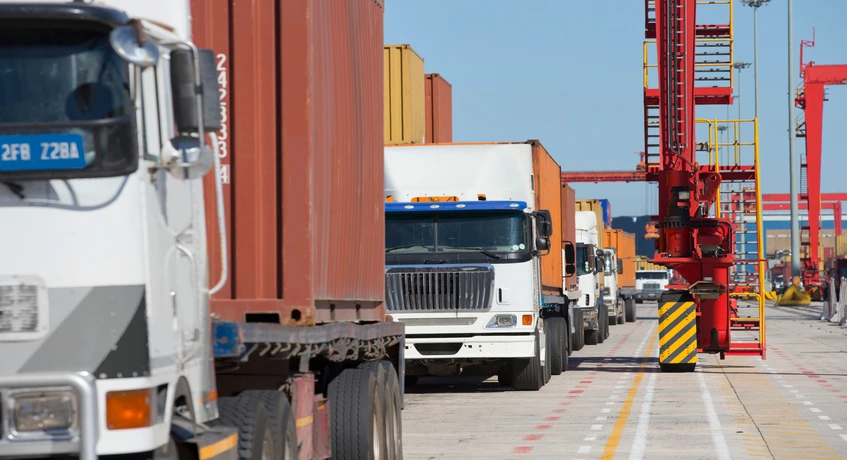
Cross-docking is a logistics practice that moves goods directly from incoming trucks to outgoing trucks with little to no storage time in between. This can support different industries depending on their supply chain requirements, product movement speed, and distribution complexity.
1. Retail and E-Commerce
Cross-docking aims to accelerate product delivery throughout a retail or e-commerce supply chain, taking items directly from inbound delivery to outbound shipments to consumers or fulfillment centers. Highly mobile items like seasonal products or fast-moving goods benefit greatly from cross-docking as the retailer needs faster replenishment.
During peak times, inventory can move quickly throughout the entire retail or e-commerce cycle, shortening customer response time, improving delivery efficiency, and avoiding warehouse processing or slotting, space, and time constraints that would otherwise occur during this busy time.
2. Food and Beverage
Food and beverage companies often use cross-docking for products that require faster distribution cycles and controlled handling. Moving goods quickly through distribution facilities helps reduce storage time while maintaining product freshness.
When combined with temperature-controlled processes such as cold chain logistics, cross-docking helps businesses manage sensitive products more effectively. This allows companies to improve delivery speed while maintaining quality standards throughout the supply chain.
3. Automotive and Manufacturing
A manufacturing procedure helping get parts, components, finished goods, to and from suppliers, manufacturing plants, and distribution channels quickly; avoid storing materials needed at a later time and overly large inventory.
By supporting just-in-time manufacturing strategies, cross-docking helps reduce inventory requirements, improve material availability, and create smoother production workflows. However, manufacturers need accurate scheduling and supplier coordination to prevent production disruptions.
4. Chemicals and Pharmaceuticals
Products made in chemicals and pharmaceutical industries could use cross-docking systems to improve their production flows and at the same time achieve regulatory compliance with strict working procedures, as less processing increases throughput rate.
However, these industries require stronger tracking, documentation, and quality control processes due to regulatory and safety considerations. Businesses need reliable logistics systems to maintain product traceability, compliance records, and accurate shipment information throughout the distribution process.
Cross-Docking in Singapore: Key Considerations for Regional Distribution
Cross-docking in Singapore is a highly efficient logistics strategy where incoming goods are transferred directly from arriving transportation to outbound vehicles with minimal to no storage time.
1. Singapore as a Regional Logistics Hub
Singapore’s strategic location, advanced port infrastructure, and strong regional connectivity make it an important gateway for distribution across Southeast Asia. Companies can use cross-docking facilities in Singapore to consolidate inbound shipments from multiple suppliers before distributing goods to different markets.
For businesses managing regional supply chains, successful cross-docking requires accurate shipment coordination, real-time inventory visibility, and efficient collaboration between warehouses, carriers, and distribution teams. Without connected logistics processes, companies may experience delays and inefficient shipment handling.
ScaleOcean Atlas helps businesses optimize cross-docking operations by connecting warehouse activities, inventory movement, transportation workflows, and logistics data within one platform. With configurable workflows and flexible module activation, companies can tailor logistics processes according to their operational structure, approval requirements, and supply chain complexity.
2. Free Trade Zones and Transhipment
Singapore’s Free Trade Zones (FTZs) support smoother cargo movement by allowing eligible goods to be stored, consolidated, or transferred before final distribution. This provides greater flexibility for businesses managing international supply chains.
Companies can combine cross-docking with FTZ operations to improve shipment consolidation, reduce unnecessary handling, and support faster regional distribution. Accurate documentation and coordination remain essential to ensure smooth cargo movement.
3. Customs and Inter-Gateway Movement
Cross-docking involving international shipments requires accurate documentation and close coordination between logistics providers, customs processes, and transportation networks. Any mismatch in shipment details can create delays and disrupt planned delivery schedules.
Businesses should maintain reliable shipment information, including product details, quantities, and destination requirements. Proper coordination helps reduce customs-related issues and ensures goods move efficiently between different logistics gateways.
4. Technology and Track-and-Trace Requirements
Real-time visibility is increasingly important for businesses managing regional supply chains through cross-docking. Companies need accurate information about shipment status, inventory movement, and transportation schedules to maintain smooth operations.
Connected logistics platforms help integrate warehouse activities, transportation processes, and inventory data into a centralized system. This allows businesses to improve shipment control, identify delays faster, and make better operational decisions.
Conclusion
Cross-docking is a logistics strategy whereby inbound products are sorted immediately upon arrival to outbound delivery vehicles. This involves a few warehouse storage activities, improving shipment flow as well as cutting transportation time.
However, successful implementation requires accurate inventory visibility, coordinated transportation planning, and connected operational systems. Without proper synchronization, businesses may face shipment delays, incorrect allocation, and operational inefficiencies.
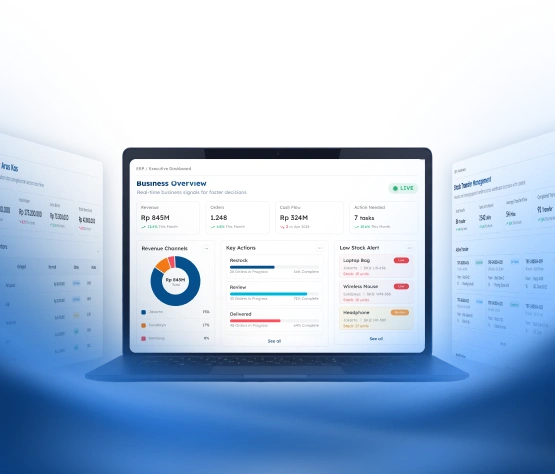
ScaleOcean Atlas provides an integrated platform that supports cross-docking operations through configurable workflows, real-time visibility, ERP-connected processes, and AI-assisted insights through ScaleMind. Schedule a consultation with the ScaleOcean team to evaluate how the platform can support your logistics operations and future growth.
FAQ Cross-Docking:
1. How long do goods stay in a cross-docking facility?
Goods in a cross-docking facility typically remain for a short period, ranging from several hours to less than a day, depending on shipment coordination, product type, and outbound transportation schedules. The goal is to minimize storage time and move products quickly to their next destination.
2. When should cross-docking not be used?
Cross-docking may not be suitable when businesses require long-term inventory storage, experience unpredictable demand, have unreliable suppliers, or lack sufficient shipment visibility. Companies should evaluate operational readiness before implementing this strategy.
3. Can cross-docking work without real-time inventory visibility?
Cross-docking is difficult to manage effectively without real-time inventory visibility because businesses need accurate information about incoming shipments, product availability, and outbound requirements. Connected logistics systems help improve coordination and reduce errors.
4. Are customs permits required for cross-docking in Singapore?
Customs requirements depend on the shipment type, origin, destination, and whether goods move through regulated zones or international distribution processes. Businesses should ensure proper documentation and compliance when handling cross-border cross-docking activities.





















.png)