Grant management software is a digital system that enables organizations to manage the activities associated with grants, such as applications, fund allocation and spending, reporting, compliance, audits, and more. However, enterprises in Singapore may struggle when different grants span multiple projects, departments, entities, and requirements.
However, manually managing government grants, transformation funding, innovation grants, and productivity bonuses can create disjointed records and lead to fund mismanagement. The more programs businesses must oversee, the more difficult it becomes.
For Singapore enterprises, grant management involves more than applying for a grant scheme, getting approval, and receiving funds. To manage grants effectively, companies must ensure governance, accurate financial reporting, audit readiness, and quantifiable business benefits across the entire grant lifecycle.
Thus, an integrated, ERP-driven platform links grant activity with finance, project management, document management, approval workflows, and reporting. This increases visibility for companies and reduces the administrative burden of managing funded transformation programs.
Key Takeaways
Grant management software is a centralized solution for managing grant applications, funding, budgets, compliance, documentation, reporting, and project outcomes.
The 10 best grant management software platforms offer different capabilities for grant applications, administration, financial management, compliance, reviews, reporting, and recipient management.
The importance of grant management software includes centralized tracking, automated reminders, collaboration, audit readiness, accurate budgets, compliance, reporting, and performance insights.
Choosing grant management software requires identifying organizational roles, assessing capabilities, determining budgets, evaluating scalability, and asking vendors relevant questions.
ScaleOcean ERP Software helps Singapore enterprises manage grant lifecycles, financial tracking, project visibility, compliance, approvals, documentation, and reporting through an integrated ERP platform.
Grant management software is a platform organizations use to manage all aspects of a grant, from application and evaluation to funding, expense reporting, and even audits. The software can also support approval workflows, collect documentation, run compliance checks, and generate reports across multiple grants.
The result is greater transparency in how funding is used and better recordkeeping. For large organizations, integrated grant management programs can link fund management directly to business processes and financial information. As a result, program directors can manage budgets, account for appropriate costs, document project results, and generate reports more easily.
Grant Management Software Use Cases and Sector Applications
Grant management applications serve organizations that seek funding, use grants within their organization, or distribute grants to others. They can tailor their functions to meet financial governance, project tracking and evaluation, and stakeholder management needs.
Organizations with complex financial requirements and multiple programs use shared documentation and processes across programs to improve compliance, strengthen management, and provide more transparent tracking of grants and project results.
1. Grantseekers / Nonprofits
Grantseekers and nonprofit organizations utilize grant management software to categorize funding opportunities, draft applications, and monitor submission guidelines. As a result, groups can manage deadlines, supporting documentation, budgets, and project commitments in one easy-to-access system.
Once you receive funding, organizations can track spending, milestones, and reporting requirements during the funding term. Providing this transparency enables nonprofit teams to show that they are spending funds in an accountable way while also saving administrators time and increasing their accountability to funders.
2. Grantmakers / Foundations
The software enables grantmakers and foundations to organize and streamline the process for receiving grant requests, reviewing proposals, selecting recipients, and releasing funds. Standard automated workflows can also be set up to establish a formal review process and maintain records of funding decisions.
It can also track recipient performance and manage usage and reporting requirements after grants are awarded. This gives foundations stronger monitoring of program results while maintaining standard governance across multiple recipients and projects.
3. Government Compliance
Funded program administration. When an organization receives funding from the government and business owners for various projects, it must follow guidelines on allowable costs, documentation, reporting, and fund use. The grant management system keeps all these procedures in one location, making it easier for multiple teams to keep organized documentation.
In addition, automated controls and approval processes allow for a more robust audit trail for grant transactions and activities. This structure helps enterprises anticipate missing documentation before a review or audit and prepare accordingly.
4. Public Sector
Many times, public sector organizations use grant management software to distribute funds in collaboration with agencies, departments, beneficiaries, and compliance requirements.
Furthermore, the system increases transparency by creating organized documentation from the beginning to the end of the funding cycle. As a result, it enables public agencies to track program progress more effectively and supports greater accountability for the use of public funds and results.
5. Higher Education, Academic Medicine, and Research Institutes
Universities, academic medical centers, and research institutes often administer grants for research projects, scientific research, and institutional development. Grant management software facilitates application processing, budgeting, documentation and forms, project milestones, and reporting requirements.
These organizations can also link funding records to research administration and financial management systems across the institution. This provides a clearer overview of expenditures, ensures compliance, and enables researchers to focus more on project results.
Quick Comparison for the Best Grant Management Software in Singapore for 2026
The best grant management software depends on whether an organization primarily applies for grants or distributes funding to recipients. Therefore, Singapore businesses should compare platforms based on their operational role, workflow complexity, and financial requirements.
Grantseekers generally require stronger budget tracking, project monitoring, and reporting capabilities, while grantmakers prioritize application intake and recipient management. Consequently, enterprise organizations should also consider how each platform integrates with broader operational systems, such as the best ERP software Singapore.
Platform
Best Used For
Standout Features
ScaleOcean
Grantseeker
Integrated ERP modules, financial tracking, project management, ScaleMind AI insights, approval workflows, document management, multi-entity support
Instrumentl
Grantmaker
Grant application management and reporting tools
Bloomerang
Grantseeker / Nonprofit
Fundraising and donor management capabilities
GrantFrog
Grantmaker
Application collection and grant administration
Submittable
Grantmaker
Online application intake and review workflows
SmartSimple Cloud
Grantmaker
Configurable workflows and stakeholder management
Fluxx Grantmaker
Grantmaker
Grant lifecycle and recipient management
AmpliFund
Grantmaker / Public Sector
Grant administration and compliance management
Bonterra
Grantmaker / Nonprofit
Social impact and funding management tools
Good Grants
Grantmaker
Application management and evaluation workflows
1. Top Grant Management Software for Grantseekers
Grantseekers need software that supports funding applications while maintaining control over project budgets, expenses, documentation, and reporting obligations. Therefore, integrated financial and operational capabilities become increasingly important for enterprise organizations managing multiple grants.
ScaleOcean supports grantseekers through an integrated ERP platform connecting grant-related activities with finance, project management, document management, approval workflows, and reporting. This unified approach helps enterprises maintain stronger governance throughout complex funded transformation projects.
Bloomerang provides tools commonly used by nonprofit organizations for managing donor relationships and fundraising activities. Its platform supports organizations that need basic visibility into funding sources and stakeholder engagement.
AmpliFund offers grant-related management capabilities for organizations handling government and institutional funding. Users can manage financial and administrative processes through structured workflows designed around grant lifecycle requirements.
2. Top Grant Management Software for Grantmakers
Grantmakers require systems that help manage applicant intake, proposal evaluations, approvals, funding distribution, and recipient reporting. As a result, these platforms typically focus on streamlining administrative workflows across large volumes of applications and stakeholders.
Submittable provides online tools to collect applications and manage review processes. Organizations can use structured workflows to organize submissions and coordinate evaluations between internal teams and external reviewers.
SmartSimple Cloud offers configurable workflow capabilities for organizations managing grants and other stakeholder programs. Its platform supports application management, data collection, and administrative processes through customizable system configurations.
Fluxx Grantmaker supports grantmakers throughout the funding lifecycle. The platform provides tools to manage applications, grants, recipients, and reporting activities in a centralized environment.
10 Best Local Grants Management Software for 2026
Selecting grant management software requires organizations to consider their funding complexity, compliance responsibilities, and integration requirements. The following platforms provide different capabilities for managing applications, financial processes, reporting, and stakeholder activities.
However, enterprise organizations should prioritize systems that connect grant management with broader financial and operational workflows. This approach improves visibility, strengthens governance, and reduces fragmented data across projects, departments, and business entities.
1. ScaleOcean
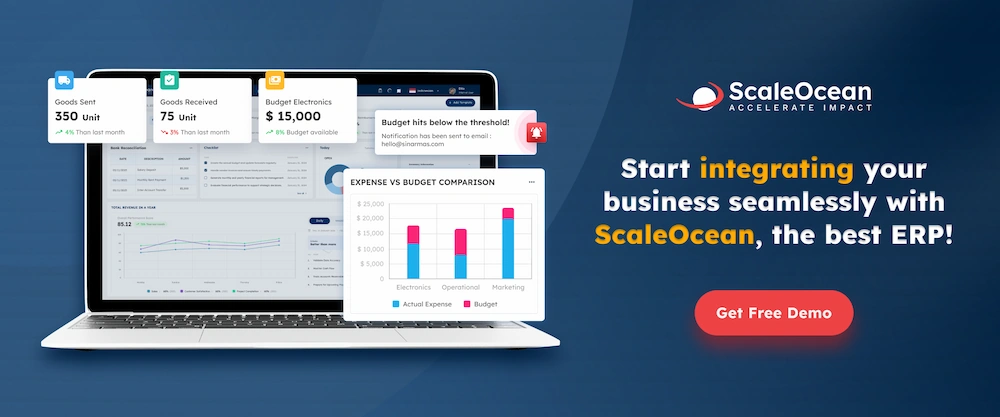
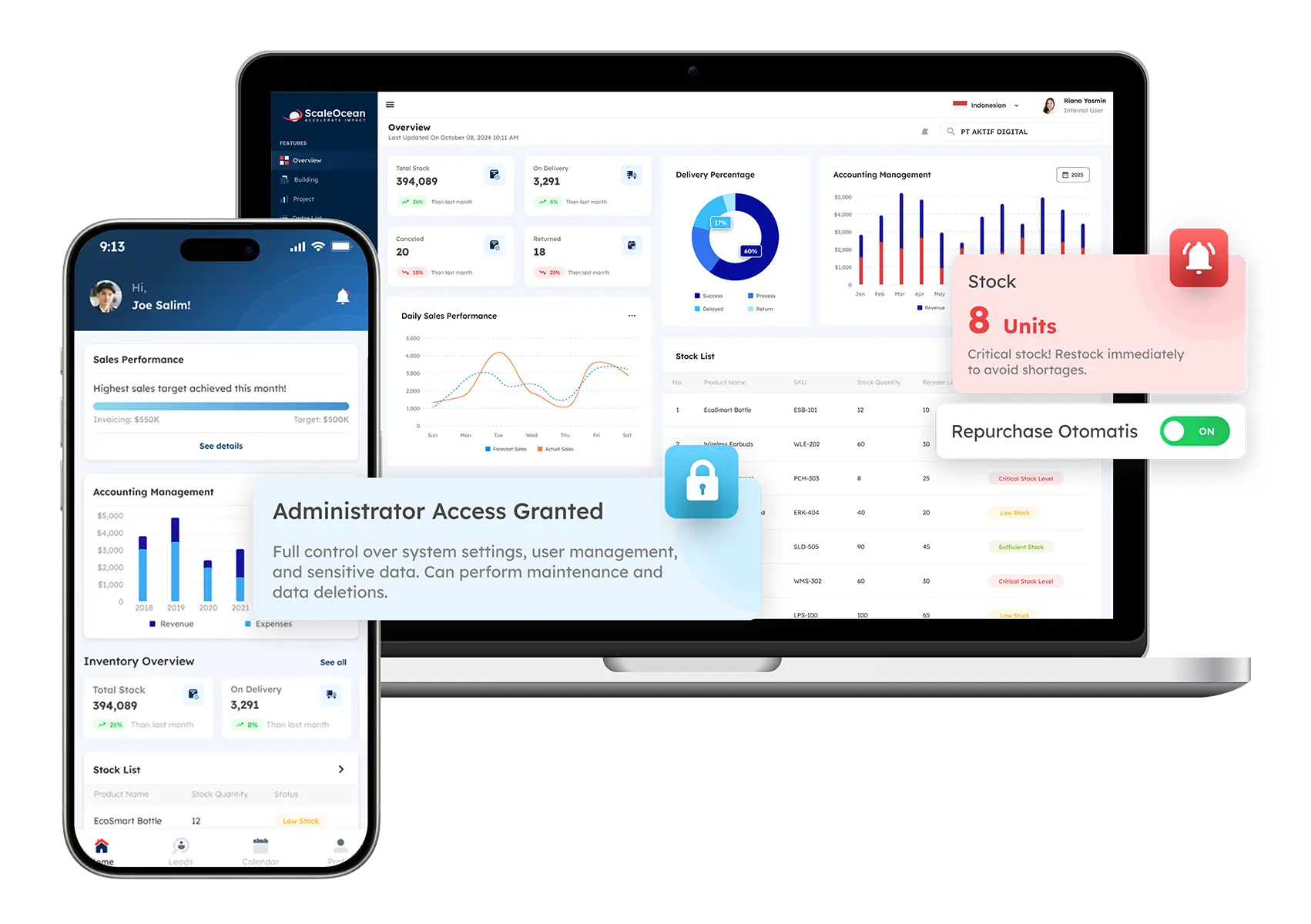
ScaleOcean ERP Software for grant management provides an enterprise ERP platform that supports end-to-end grant lifecycle management, from planning and funding allocation to utilization monitoring and reporting. Businesses can connect grant activities with finance, project management, documents, and approval workflows.
Moreover, with its flagship platform, ScaleOcean Atlas improves financial accuracy and compliance tracking by recording grant transactions, budgets, supporting documents, and approvals within one connected system. Additionally, ScaleMind AI helps teams analyze business data, retrieve relevant information, and prepare reports faster across grant-funded initiatives.
The system is also fully optimized to comply with local PDPA regulations and Singapore’s financial reporting standards, ensuring seamless compatibility with IRAS guidelines and GST handling. Schedule a consultation with our experts to discuss your business requirements and ERP implementation needs to optimize your grant management and funding processes.
Key Features of ScaleOcean ERP:
Integrated Grant Management Platform: Centralizes grant budgeting, fund utilization, documentation, approvals, and reporting within one connected platform.
Connected ERP Financial Management: Links grant activities with accounting, expense management, procurement, and project costing for accurate transaction tracking.
Real-Time Grant Budget Monitoring: Tracks fund allocation, actual spending, remaining budgets, and grant utilization status through real-time visibility.
Automated Approval Workflow & Governance: Configures approval processes for expenditures, reimbursements, and grant documents based on organizational requirements.
Centralized Grant Documentation & Audit Trail: Stores invoices, contracts, quotations, and project records while maintaining clear activity histories for audit readiness.
Project & Outcome Tracking: Monitors project milestones, timelines, resource allocation, and KPIs to measure the impact of grant-funded initiatives.
Pros
Cons
Business-based pricing ensures companies pay only for the required modules.
Dedicated consultants align the system with operational requirements before implementation.
Modular implementation based on business priorities.
Transparent implementation timeline based on operational analysis.
Supports phased deployment, allowing gradual digital transformation with lower implementation risk.
ScaleOcean tailors its implementation to each company, so pricing requires an initial consultation with our experts.
ScaleOcean’s Implementation prioritizes long-term stability over rapid deployment.
Best For: ScaleOcean is best suited for Singapore enterprises and medium-to-large organizations managing multiple grant-funded projects, entities, departments, and budgets while requiring integrated financial tracking, compliance controls, real-time visibility, and scalable ERP capabilities.
ℹ️ Why Choose ScaleOcean
ScaleOcean offers an integrated ERP approach that connects grant management with finance, projects, procurement, documentation, and approvals, helping Singapore enterprises maintain accurate funding visibility, stronger governance, audit readiness, and scalable operational control.
2. Instrumental
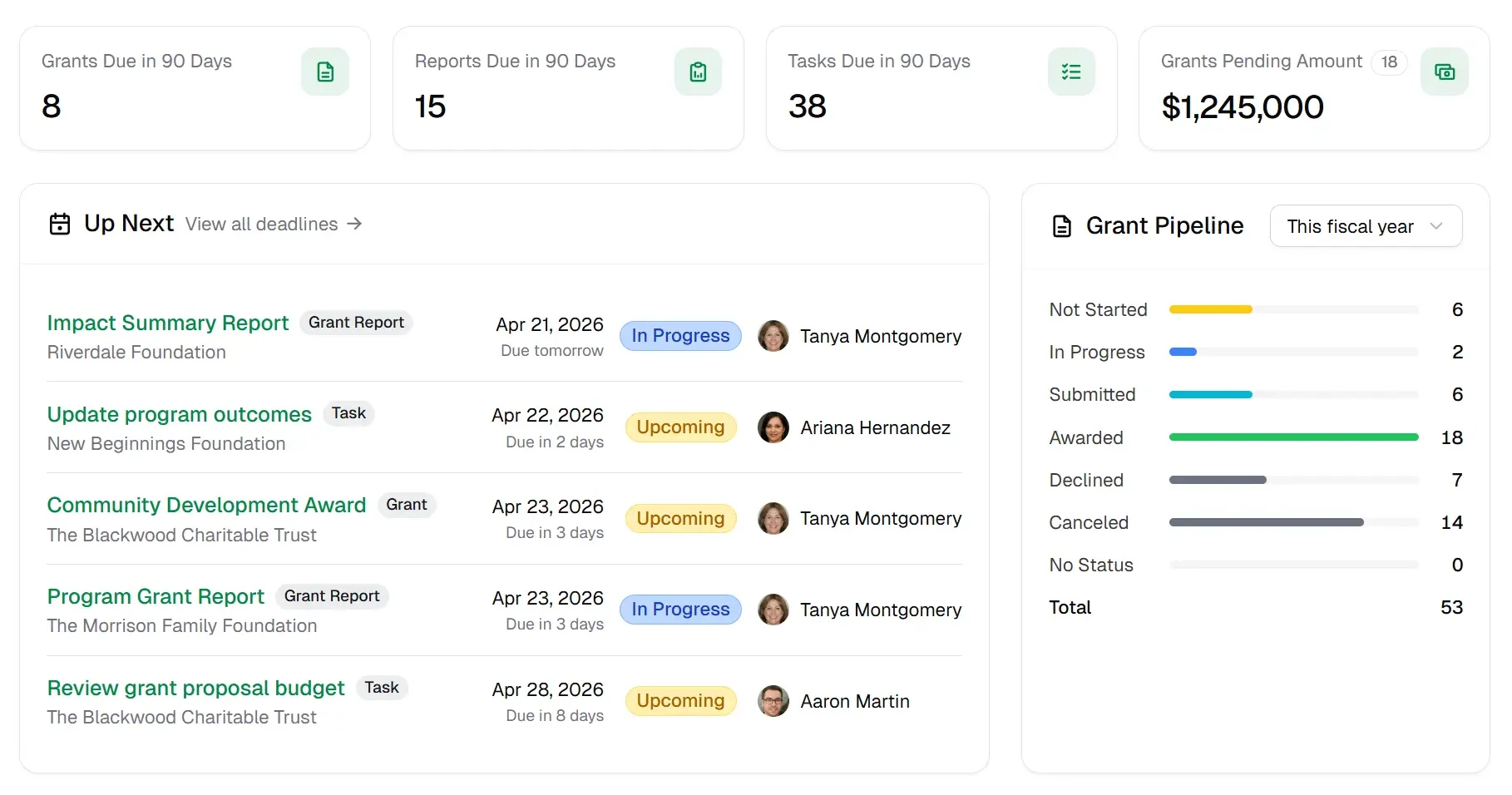
Instrumental grant management software helps grantseekers discover, organize, and track funding opportunities throughout the grant process. It provides a centralized tracker for deadlines, applications, tasks, awards, and financial details.
The platform also supports post-award activities, including payment tracking, reporting, and grant spending. It mainly helps nonprofits and other grantseekers manage funding pipelines and application activities.
Key Features of Instrumentl:
Grant opportunity matching
Grant pipeline tracking
Deadline reminders
Award and payment tracking
Pros
Cons
Useful for grant research
Centralized grant tracking
Supports deadline management
Primarily grantseeker-focused
Some features depend on plans
Less suited for broad ERP needs
Best For: Instrumentl is best for small to mid-sized nonprofits, universities, and organizations that primarily need grant discovery, application tracking, and post-award monitoring.
ℹ️ Why Choose Instrumentl for Grant Management Software
Instrumentl is a practical choice for organizations that want to combine grant discovery with basic tracking and management in one platform.
3. Bloomerang
Bloomerang grant management software helps nonprofits organize grant applications, deadlines, awards, and reporting activities. It provides a centralized view of grant information alongside tools for managing funder relationships.
The platform supports task management, multi-year grant tracking, document storage, and customizable workflows. Therefore, nonprofits can use it to keep grant information organized throughout different funding stages.
Key Features of Bloomerang:
Grant tracking
Deadline reminders
Funder history
Grant reporting
Pros
Cons
Designed for nonprofits
Easy grant tracking
Supports multi-year grants
Nonprofit-focused
Limited broader business functions
Not designed as an ERP
Best For: Bloomerang is best for small to mid-sized nonprofits that need straightforward grant tracking alongside fundraising and donor management activities.
ℹ️ Why Choose Bloomerang for Grant Management Software
Bloomerang suits organizations looking for a simple grant tracking solution that can connect grant activities with broader nonprofit fundraising processes.
4. GrantFrog
GrantFrog grant management software is designed to help organizations manage grant applications and related funding processes online. It provides tools for organizing application information and supporting administrative grant workflows.
The platform can be used to manage applications, review information, and organize grant program activities. Its functionality is generally suited to organizations seeking a dedicated system for grant administration.
Key Features of GrantFrog:
Online applications
Application management
Grant tracking
Reporting tools
Pros
Cons
Focused on grant administration
Online application management
Centralized information
Less suitable for complex ERP needs
Fewer broad business functions
May require configuration for larger operations
Best For: GrantFrog is best for small to mid-sized foundations, nonprofits, and organizations managing straightforward grant application and administration processes.
ℹ️ Why Choose GrantFrog for Grant Management Software
GrantFrog can suit organizations seeking a dedicated grant platform without requiring extensive financial or enterprise resource planning capabilities.
5. Submittable
Submittable grant management software helps organizations collect, review, and manage grant applications through an online platform. It provides tools for building application forms, creating review workflows, and coordinating users.
The platform also includes collaboration and financial tracking capabilities for grant programs. Consequently, organizations can manage applications and monitor funding activities from a centralized workspace.
Key Features of Submittable:
Application form builder
Review workflows
Team collaboration
Financial tracking
Pros
Cons
Simple application management
Flexible forms
Supports collaboration
More focused on grant programs
Limited ERP functionality
Advanced needs may require additional tools
Best For: Submittable is best for small to mid-sized grantmakers, government programs, and corporate giving teams that primarily need application intake and review management.
ℹ️ Why Choose Submittable for Grant Management Software
Submittable is suitable for organizations that want a centralized application and review system without implementing a broader enterprise business platform.
6. SmartSimple Cloud
SmartSimple Cloud grant management software helps organizations manage grant applications, reviews, budgets, payments, and reporting. It provides configurable workflows that can be adapted to different grant programs and organizational processes.
The platform also supports financial management, dashboards, reporting, and integrations with external systems. Therefore, organizations can use it to coordinate different stages of the grant lifecycle from one environment.
Key Features of SmartSimple Cloud:
Configurable workflows
Application management
Budget management
Reporting and dashboards
Pros
Cons
Flexible workflows
Broad grant lifecycle coverage
Integration capabilities
Can require configuration
May be complex for small teams
Primarily grant-focused
Best For: SmartSimple Cloud is best for mid-sized to large foundations, government agencies, and research organizations managing multiple grant programs and complex workflows.
ℹ️ Why Choose SmartSimple Cloud for Grant Management Software
SmartSimple Cloud fits organizations that need configurable grant workflows and structured management across applications, funding, reviews, and reporting.
7. Fluxx Grantmaker
Fluxx Grantmaker grant management software helps grantmaking organizations manage funding programs, applications, recipients, budgets, and reporting. It is designed around the grantmaking lifecycle and provides tools for managing related information centrally.
The platform includes dashboards, grantee portals, reporting, and integrations with external systems. These functions help grantmakers coordinate information and monitor activities across their funding programs.
Key Features of Fluxx Grantmaker:
Grant lifecycle management
Grantee portals
Budget tracking
Reporting and analytics
Pros
Cons
Grantmaker-focused
Centralized grant data
Supports reporting
Mainly designed for grantmakers
Not a general ERP
Might be more than smaller teams need
Best For: Fluxx Grantmaker is best for mid-sized to large foundations and corporate grantmakers managing multiple programs, recipients, and grantmaking workflows.
ℹ️ Why Choose Fluxx Grantmaker for Grant Management Software
Fluxx Grantmaker provides a dedicated environment for organizations that need structured grantmaking, recipient management, and funding oversight.
8. AmpliFund
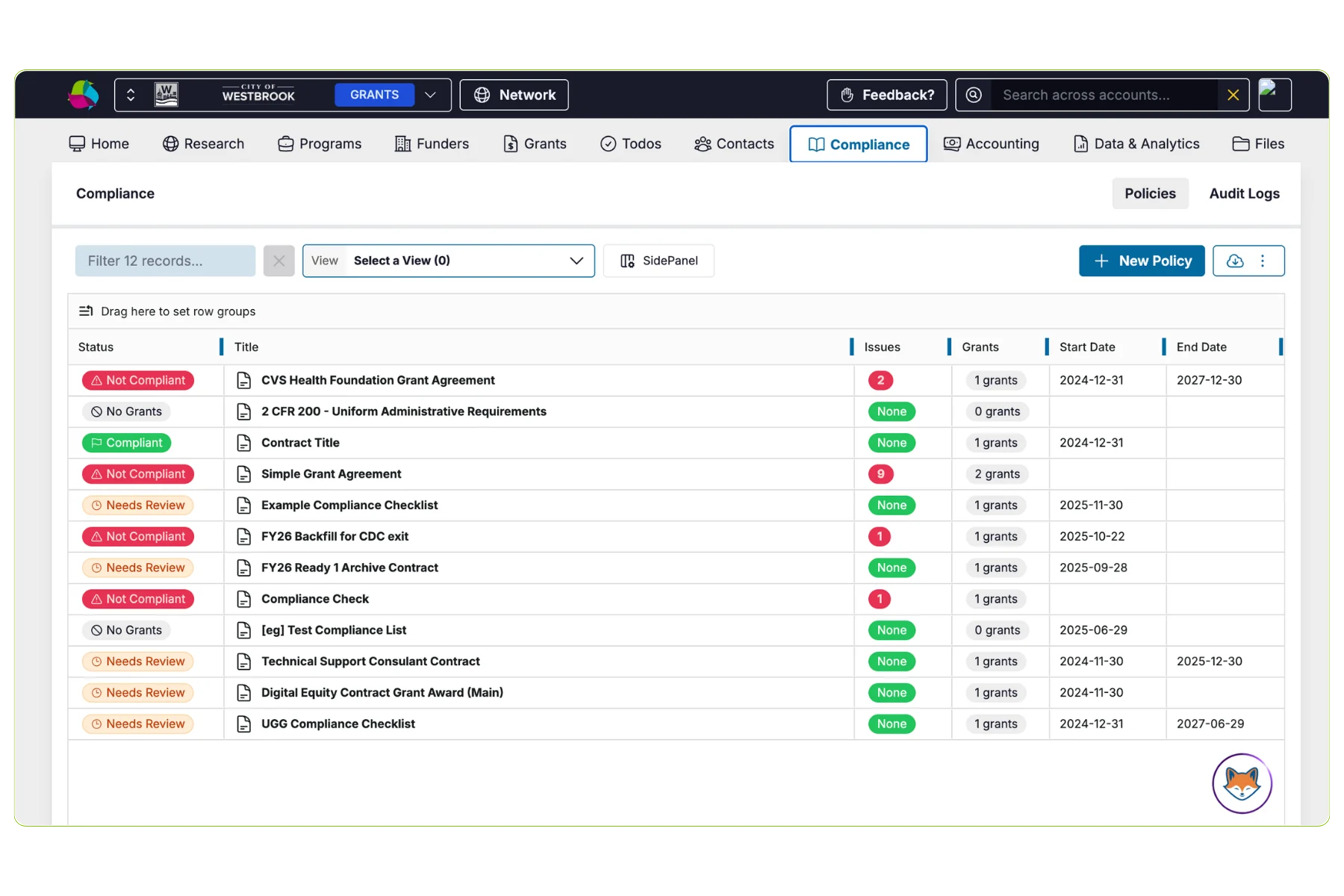
AmpliFund grant management software helps grantmakers and grantseekers manage different stages of the grant lifecycle. It supports application activities, compliance, performance management, recipient management, and reporting.
The platform is also used across government and nonprofit environments where organizations need to monitor funding and performance. Its tools help centralize grant information and administrative processes.
Key Features of AmpliFund:
Grant lifecycle management
Compliance tracking
Performance management
Grant reporting
Pros
Cons
Supports grantmakers and seekers
Strong compliance focus
Suitable for public sector users
Primarily grant-focused
May require implementation support
Less suitable for general business management
Best For: AmpliFund is best for mid-sized to large government agencies, nonprofits, and organizations managing structured grant programs with compliance and performance requirements.
ℹ️ Why Choose AmpliFund for Grant Management Software
AmpliFund can suit organizations that need centralized grant administration with additional attention to compliance, performance, and funding oversight.
9. Bonterra
Bonterra grant management software helps organizations manage corporate and nonprofit grantmaking activities across the funding lifecycle. Its solutions support application review, recipient management, disbursement, and impact reporting.
The platform also provides workflows for multi-stage reviews, scoring, routing, and approvals. Therefore, organizations can structure grant programs according to their internal funding processes.
Key Features of Bonterra:
Application review
Grant workflows
Fund disbursement
Impact reporting
Pros
Cons
Supports enterprise grantmaking
Workflow configuration
Covers multiple grant stages
Primarily grantmaking-focused
May be complex for smaller teams
Broader ERP functions are limited
Best For: Bonterra is best for large corporations, foundations, and enterprise grantmakers managing multiple funding programs and structured approval processes.
ℹ️ Why Choose Bonterra for Grant Management Software
Bonterra is suitable for organizations that need a dedicated grantmaking platform with workflows covering applications, reviews, funding, and impact reporting.
10. Good Grants
Good Grants grant management software helps grantmakers manage applications, reviews, funding, and post-award reporting online. It supports different grant program structures and provides tools for managing the grant lifecycle.
The platform also provides application forms, review tools, funding management, reporting, and configurable workflows. Consequently, organizations can manage grant programs without relying entirely on separate administrative systems.
Key Features of Good Grants:
Application management
Review workflows
Funding management
Grant reporting
Pros
Cons
Easy online access
Flexible application forms
Supports multiple currencies
Primarily grantmaker-focused
Limited general business functions
Advanced features vary by plan
Best For: Good Grants is best for small to mid-sized foundations, nonprofits, scholarship providers, and corporate giving teams managing online grant applications and funding programs.
ℹ️ Why Choose Good Grants for Grant Management Software
Good Grants works well for organizations seeking a dedicated grantmaking platform with application, review, funding, and reporting capabilities.
Why is Grant Management Software Important?
Organizations need to manage funding activity well after the initial application process. The right grant software can provide ongoing tracking, accountability, compliance, and financial management for complex grants.
Additionally, centralized digital processes can reduce reliance on spreadsheets and on disconnected communication pathways between departments. Businesses can manage deliverables, records, finances, authorizations, and reporting demands more precisely, with transparency in action.
According to The Straits Times, Singapore’s National Council of Social Service (NCSS) encourages social service agencies to implement digital grant management systems to track funding, streamline claims, and accurately measure program impact. This shift shows how modern cloud solutions help non-profits reduce operational friction while maintaining strict accountability.
By adopting digital tracking platforms, social service agencies can easily connect funding sources directly to project outcomes and financial reporting. This automation not only simplifies audit readiness under local regulatory standards but also ensures complete transparency for donors and government bodies alike.
1. Centralized Tracking
With centralized tracking, applications for grants, funding information, key project stages, costs, and supporting material are managed in a single system. This means staff can track progress without checking multiple spreadsheets, emails, or files across departments.
This consolidated view also allows managers to detect gaps and delays proactively. As a result, organizations can monitor multiple grants, projects, entities, and departments at the same time.
2. Automated Task Reminders
Automated task reminders inform the responsible employee of upcoming deadlines for applications, reports, documents, and projects. This enables teams to perform necessary tasks on schedule and decreases missed compliance requirements.
In addition, organizations can tailor reminders to distinct roles and workflows, even granting access as needed. This targeted delivery improves accountability, as employees know what is expected of them throughout the entire funding lifecycle.
3. Simplified Collaboration
Finance teams, project managers, department heads, and outside partners may all be part of grant-funded activities. Grant management software provides a single repository for communication and documentation that relevant parties can easily access and work from.
Furthermore, shared workflows minimize duplicate requests to and from departments when approvals and reporting are required. As a result, departments and program areas can organize and divide tasks more effectively and better delineate ownership of grant activities and decisions.
4. Audit Readiness
Audit readiness. All funding decisions, expenditures, approvals, and documentation should be documented and kept on file. Grant management software simplifies producing an audit trail by making it easy to retrieve past information.
Centralized systems also help organizations identify missing materials before official evaluations, reducing later procedural strain and demonstrating improved oversight of grant-sponsored procedures.
5. Accurate Budget Tracking
Budget Tracking-Keeps your organization on track by tracking time and expenses against grants. The program compares budgeted costs to actual costs on a report that forewarns managers of possible overspending.
Additionally, the finance team can clearly separate allowable and non-allowable costs as per grants. This enables organizations to strengthen financial control over incurred costs and maintain clear records to support reimbursement claims, reporting, and funding accountability.
6. Regulatory Compliance
Grants may have different conditionsfor payments, documentation, reporting periods, and tangible results. Grant administration programs help organizations track these responsibilities and document compliance activities.
Automated workflows can also support internal approval processes before completing key grant-related activities. As a result, companies can control compliance points while establishing a common approach across all units of the organization.
7. Organization Generation
Manual grant reporting can be a time-consuming activity for staff who must pull financial and operations information from a variety of systems and compile it manually. Grant management software automates this process by producing reports directly from the Grant Management System’s stored reports and organized project data.
This enables managers to receive more transparent reports on fund usage, project progress, and project status, if applicable. Faster reporting translates into faster decision-making and less repetitive work for finance and operations teams.
8. Data-Driven Success
Grant management software turns fund information into a format an organization can use for future planning. Managers can pinpoint effective projects and solutions to common problems, along with expenditure trends and areas that need increased efficiency.
Additionally, performance intelligence can help enterprises assess whether funded projects achieve the business’s goals. It can also provide evidence for resource allocation and business planning for future transformation or innovation projects.
Key Features of Corporate Grant Management Software
Effective corporate grant management solutions should include features that support multi-layered funding arrangements, financial oversight, and inter-department cooperation. Consequently, enterprises should consider features that link grants with general operational and financial activities.
In addition, multinational organizations may need more robust controls across entities, currencies, regulations, and reporting standards. The ideal platform should offer a centralized view while allowing workflows to conform to various grant programs and standards.
1. Pre-Award Intake
Pre-award intake tools allow organizations to gather, organize, and review information in the early stages of preparing or reviewing a grant application. Staff can gather all relevant eligibility information, proposals, attachments, budgets, and early concepts.
Standardized intake procedures ensure applications are submitted consistently, with no gaps across applicants or within internal units. This framework allows reviewers to evaluate opportunities promptly, with all documentation in place from initial funding rounds.
2. Review Workflows
Review workflows guide grant applications, budget requests, and attachments through predefined review steps. This allows organizations to delegate tasks, set approval chains, and keep the process uniform.
Workflows also maintain a history ofreviewer activities and approvals in each phase. As a result, team management gains visibility for accountability and faster execution, since they won’t have to wait for email responses.
3. Compliance Tracking & Auditability
Guidance and compliance tracking allow tracking of documentation, deadlines, expenditure requirements, and reporting obligations of each grant. The system can also centralize this information, facilitating monitoring of compliance duties.
The auditability function also preserves records of transactions, approvals, modifications, and documentation, providing a reliable audit trail to support accountability and provide relevant evidence more efficiently.
4. Financial Controls
Financial controls enable enterprises to manage the process of allocating, approving, and incurring grant expenditures across projects. Enterprises can set budget thresholds and approval rules to prevent unauthorized or otherwise non-compliant costs.
In addition, integrating with financial systems enables teams to compare planned budgets with actual costs. Consequently, it gives managers greater transparency into spending and helps them address financial issues early.
5. Tracking KPIs & Supporting ESG Goals
KPI tracking enables organizations to evaluate if grant-funded activities accomplish the specified operational, financial, or strategic objectives. Throughout the grant period, administrators can track key checkpoints and performance metrics alongside fund expenditure.
Some grants will also fund sustainability and social goals, which may need to be substantiated through measurable indicators with clear ESG outcomes. Structured performance tracking can help organizations demonstrate project impacts while also enabling them to meet overarching corporate objectives.
6. Multi-Currency, Multi-Entity & Global Capability
Multinational enterprises could have grants operating in different subsidiaries, jurisdictions, currencies, and regulatory authorities. Multi-entity functionality in grant management software consolidates control while separating the finances of different business entities.
Multi-currency functionality also enables closer tracking of funding and project costs when currencies vary. This is especially useful for global organizations that need to gather information while maintaining local reporting and operational requirements.
Grant management intersects finance, operations, project teams, compliance officers, and senior management at every stage of the funding lifecycle. Integration across departments links data and minimizes duplication in data entry and disconnected decision-making across business functions.
End-to-end visibility enables enterprises to view applications, approvals, budgets, expenses, milestones, and outcomes from a unified environment. This integrated view strengthens governance and makes it easier to manage complex grant portfolios.
Types of Grant Management Systems
Organizations can choose different types of grant management systems depending on their operational scale, technical resources, and governance requirements. Each option provides different levels of accessibility, customization, integration, and administrative control.
Therefore, businesses should evaluate how each system supports their grant lifecycle and long-term operational needs. The right choice depends on funding complexity, internal capabilities, security requirements, and planned organizational growth.
Online Grant Management System
Online grant management systems operate through cloud-based platforms that users can access using an internet connection. They centralize applications, documents, workflows, reporting, and communication without requiring organizations to maintain extensive internal infrastructure.
Cloud accessibility also allows distributed teams and external stakeholders to collaborate from different locations. However, organizations should evaluate data security, integration capabilities, customization options, and vendor support before selecting an online solution.
Enterprise Grant Management System
Enterprise grant management systems support organizations managing complex funding portfolios across multiple departments, entities, projects, and jurisdictions. They typically provide stronger controls for financial governance, approvals, compliance monitoring, integrations, and consolidated reporting.
Moreover, enterprise systems can connect grant activities with broader business functions such as finance and project management. This integration provides end-to-end visibility while helping large organizations maintain consistent processes across complex operations.
Open Source Grant Management System
Open source grant management systems provide access to source code, allowing organizations to modify functionality according to specific requirements. They canoffer greater customization flexibility for teams with sufficient technical expertise and development resources.
However, organizations must manage implementation, maintenance, security updates, and technical support independently or through external providers. Therefore, open source solutions may suit organizations prioritizing customization over vendor-managed infrastructure and standardized support.
How to Choose the Best Grant Management Software for Your Organization?
Choosing grant management software requires organizations to evaluate their funding role, operational complexity, and governance requirements. A suitable platform should support current workflows while providing enough flexibility for future growth.
Furthermore, decision-makers should assess more than individual features when comparing available solutions. Integration capabilities, pricing structures, implementation support, security controls, and scalability can significantly influence long-term value and successful adoption.
Step 1: Identify Your Primary Role
Organizations should first identify whether they primarily seek grants or distribute funding to external recipients. This distinction determines which workflows, controls, reporting capabilities, and collaboration tools the organization needs most.
Grantseekers (Nonprofits, Universities, Hospitals): These organizations typically need tools for opportunity tracking, applications, budgeting, expenditure monitoring, documentation, and post-award reporting.
Grantmakers (Foundations, Government Agencies, Corporations): These organizations usually require applicant intake, proposal reviews, approval workflows, fund distribution, recipient monitoring, and impact reporting.
Therefore, understanding the primary role helps companiesavoid investing in unnecessary capabilities. Some enterprises may perform both functions, making flexible workflows and configurable access controls particularly important.
Step 2: Assess Core Software Capabilities
Next, organizations should compare whether each platform supports essential processes across the complete grant lifecycle. Important capabilities include application management, workflow automation, document control, financial tracking, compliance monitoring, and report generation.
Enterprises should also evaluate how easily the software integrates with existing finance, ERP, project management, and document systems. Strong integration reduces duplicate data entry and improves visibility across grant-related operations.
Step 3: Determine Your Budget and Scaling Needs
Organizations should consider both immediate software costs and the long-term resources required for implementation, customization, training, and maintenance. A lower initial price may lead to additional costs as operational requirements become more complex.
Furthermore, the selected platform should accommodate increasing users, grants, projects, entities, and reporting requirements. Scalable systems help organizations avoid disruptive software replacements as funding activities and organizational operations continue expanding.
Step 4: Ask Vendors the Right Questions
Before making a final decision, organizations should ask vendors detailed questions about pricing, implementation, access controls, and security. These discussions help decision-makers identify hidden limitations that feature comparisons may not immediately reveal.
Clear vendor responses can also indicate whether the platform realistically supports long-term operational requirements. Organizations should compare answers carefully against their existing workflows, technical capabilities, compliance obligations, and expected growth plans.
Is your pricing model based on the number of users, applications received, or total grant volume?
How long is the typical implementation timeline, and what does your onboarding support look like?
Can external reviewers access the system securely without consuming a paid internal staff license?
How does the platform handle data security, encryption, and privacy regulations, including GDPR or SOC 2 requirements?
Conclusion
Grant management software helps Singapore organizations manage applications, funding, budgets, compliance, documentation, reporting, and project outcomes more systematically. The right platform depends on organizational roles, operational complexity, and scaling requirements.
ScaleOcean ERP Software provides an integrated approach that connects grant management with financial management, project tracking, approvals, documentation, and reporting. This helps enterprise businesses maintain stronger funding visibility while supporting governance across departments and entities.
With ScaleMind AI insights, businesses can also gain faster insights from operational data and simplify information analysis. Schedule a consultation with our experts to discover how ScaleOcean can support your organization’s grant management needs.
FAQ Grant Management Software:
1. Who needs grant management software: grantseekers or grantmakers?
Both can benefit from grant management software. Grantseekers can manage applications, budgets, documents, and reporting, while grantmakers can manage applications, reviews, funding distribution, recipients, and program reporting.
2. Can grant management software integrate with accounting and ERP systems?
Yes. Grant management software can integrate with accounting and ERP systems to connect grant budgets, expenses, procurement, project costs, and financial reporting, reducing duplicate data entry and improving financial visibility.
3. How does grant management software support compliance requirements in Singapore?
It helps organizations track grant conditions, deadlines, eligible expenses, approvals, and supporting documents. Centralized records and audit trails also make it easier to maintain documentation and prepare for compliance reviews or audits.
4. Can grant management software manage multiple grants and projects at the same time?
Yes. Organizations can manage multiple grants, projects, budgets, deadlines, documents, and reporting requirements within one system, while maintaining separate records and providing consolidated visibility across funding activities.









 Key Takeaways