

Managing contracts manually invites severe risks like missed deadlines, legal non-compliance, and costly human errors. Without a dedicated system like contract lifecycle management, businesses often struggle with data silos that lead to significant financial leakages. These risks drive the market’s rapid growth as organizations prioritize security.
Because of that, this article explores CLM software definitions and why this software is vital for success. We will also review the best contract lifecycle management software, like ScaleOcean, DocuSign, Sirion, and many more, to help you find the best fit for your specific enterprise requirements.
 Key Takeaways
- Contract lifecycle management software is a strategic digital platform that automates and streamlines the entire contract lifecycle.
- Modern CLM software features automate workflows and centralize data to reduce legal risks, ensuring seamless compliance and faster deal cycles.
- Explore the top contract lifecycle management software reviews, like ScaleOcean, DocuSign, Sirion, Ironclad, Workday, Juro, and many more.
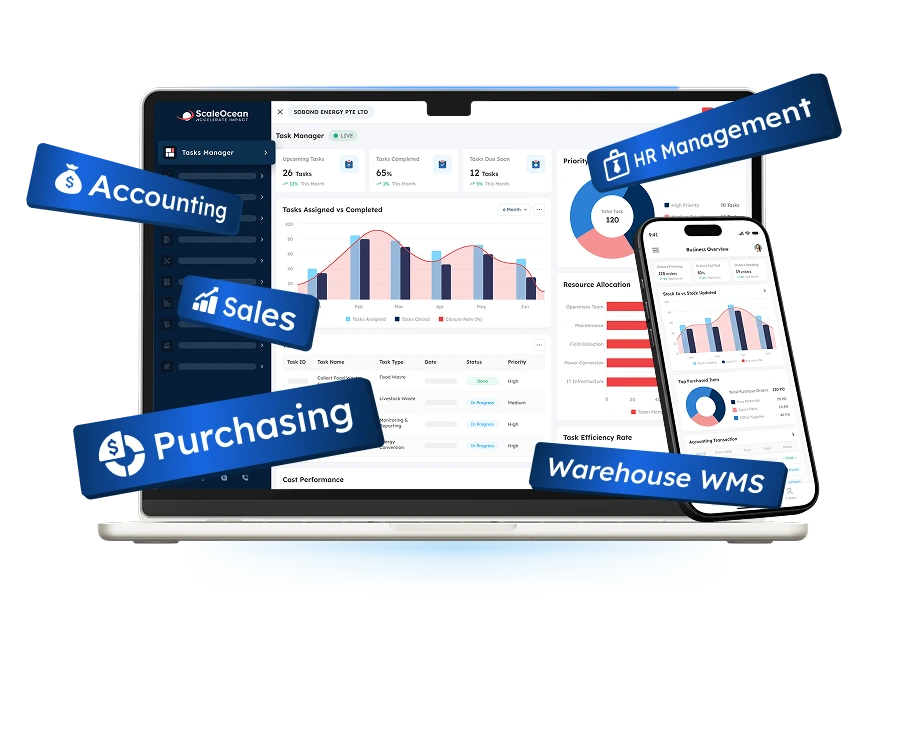
- ScaleOcean’s contract management system offers an easy-to-use platform that is simple to customize and integrate.
What is Contract Lifecycle Management Software?
Contract lifecycle management software is a strategic digital platform that automates and streamlines the entire contract lifecycle. It manages everything from initial drafting and negotiation to final execution and renewals.
Modern CLM software eliminates manual bottlenecks by digitizing every step. This ensures that legal and business teams can collaborate in a single, secure environment without losing critical data.
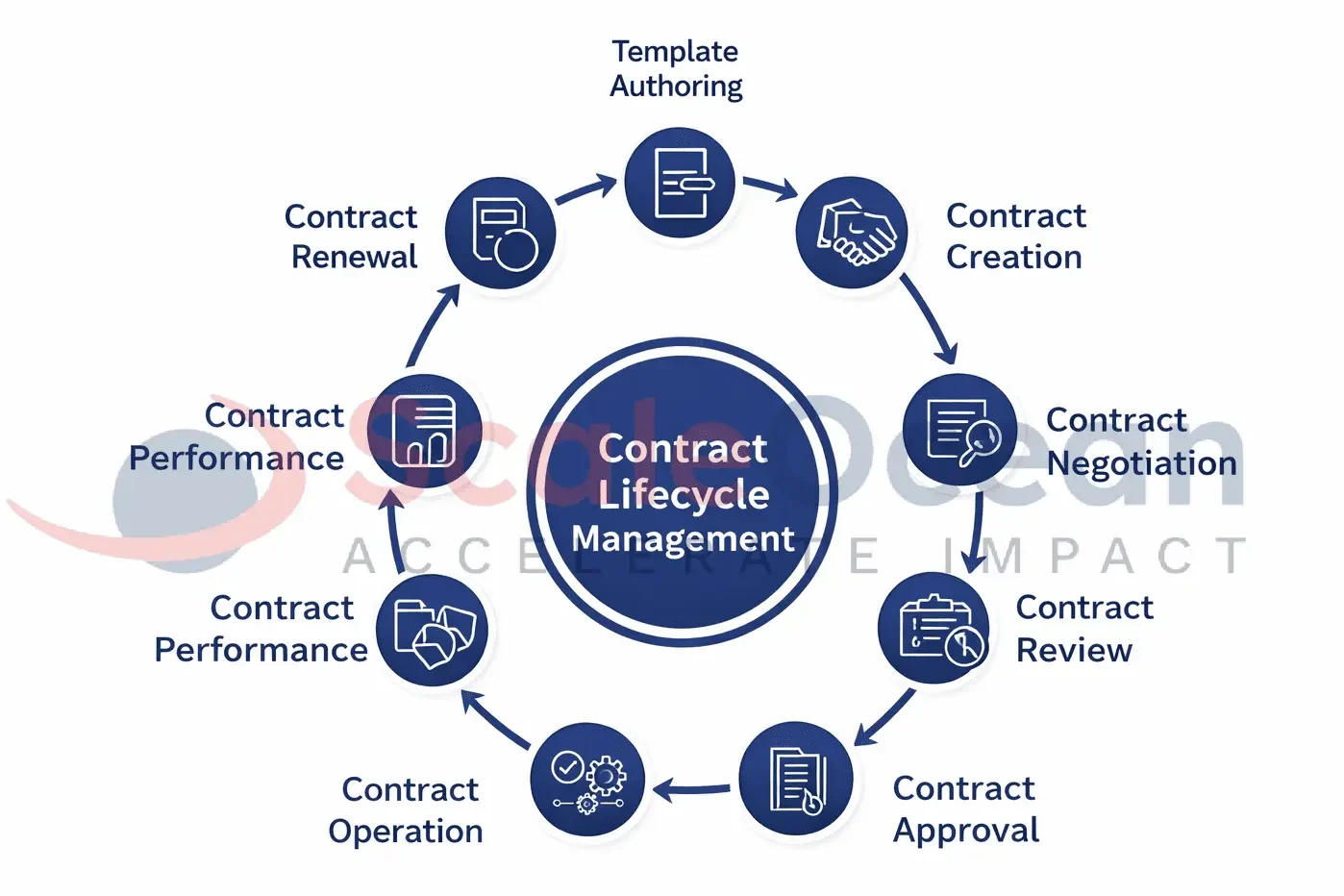
By integrating these digital steps, the process moves seamlessly from request and authoring to negotiation, approval, and signing. This lifecycle concludes with post-signature tracking to ensure all obligations are met before renewal.
Here is the flowchart of the contract lifecycle management:
Why CLM Software Matters in 2026
In 2026, CLM software becomes essential as contract volumes grow, regulations tighten, and speed matters more than ever. It helps organisations manage contracts faster, reduce risk, and turn agreements into strategic assets that support scalable, data-driven decision making.
Key capabilities that define modern CLM platforms include:
- Faster Contracting: Accelerate deal cycles by removing manual drafting delays.
- Fewer Errors: Use pre-approved language to eliminate costly human mistakes.
- Visibility and Scalability: Gain a bird’s-eye view of all global agreements instantly.
- Shift to Contract Intelligence: Turn static documents into searchable, actionable data assets.
- Agentic AI Transformation: Deploy autonomous AI agents to handle routine contract tasks.
- Proactive Compliance and Security: Automate regulatory checks and safeguard sensitive data.
- Revenue Protection: Prevent financial leakage by never missing a renewal date.
Contract Lifecycle Management Software Features to Look Out For
Contract Lifecycle Management software matters even more as contracts get more complex, spread across teams, and are expected to move faster. The right features help organisations simplify work, reduce legal risk, and scale contract operations smoothly across regions and departments.
Key features that typically define a strong CLM platform include:
Centralized Repository
A unified database acts as the single source of truth for all company documents using the best document management system software. It allows users to find any contract instantly using advanced search and tagging features.
Having all agreements in one place prevents document loss and silos. This visibility is crucial for decision-makers who need to audit obligations across various departments and regions.
Automated Workflows
Automated workflows route contracts to the right stakeholders for approval without manual follow-ups. This ensures that the internal review process remains consistent, fast, and fully transparent.
By setting up custom triggers, businesses can ensure high-value deals are prioritized. It removes the guesswork from “who needs to sign next,” significantly reducing organizational friction.
AI-Powered Analysis
Artificial intelligence scans contracts to extract key metadata, dates, and complex clauses. This feature turns thousands of pages of text into a structured, easily reportable dashboard.
Decision-makers use this analysis to identify hidden risks and opportunities at scale. It transforms the legal department from a cost center into a strategic business intelligence unit.
AI Redlining
AI redlining suggests edits and flags risky terms during the negotiation phase. It compares incoming vendor paper against your company’s pre-defined playbooks to ensure total alignment.
This technology allows legal teams to focus on high-level strategy rather than routine text. It ensures that every negotiation adheres to your specific risk tolerance and standards.
Template Library
A library of pre-approved templates allows non-legal teams to generate standard agreements safely. This self-service model ensures all documents start with the most current, compliant language.
Maintaining a template library reduces the legal team’s burden for routine NDAs or SOWs. It empowers sales and procurement teams to move faster while maintaining strict quality control.
Compliance and Risk Management
The software proactively monitors regulatory changes and internal policy adherence. It flags deviations in real-time, allowing teams to address potential compliance issues before they become liabilities.
Automated alerts for expiring certifications or missing clauses provide an essential safety net. This feature protects the company’s reputation and prevents heavy fines in highly regulated industries.
Self-Service Intake
Self-service portals allow stakeholders to request contracts by answering simple, guided questions. The system then triages the request and routes it to the appropriate team or template.
This intake method eliminates messy email chains and missing information from the start. It ensures that every contract request is captured with the necessary context for rapid processing.
What is the Best CLM Software for 2026? 10 Recommendation
As businesses scale and contract volumes rise, the need for efficient contract lifecycle management (CLM) software becomes essential. In 2026, choosing the right CLM solution can help streamline operations, ensure compliance, and improve overall efficiency in managing contracts.
Here is a comparison of the best CLM software options for 2026:
| Vendor | Best Use Case | Core Features |
|---|---|---|
ScaleOcean | Medium to large enterprises in Singapore | Contract automation, customizable templates, alerts, compliance tracking, access control, Singapore-localized security |
DocuSign CLM | Large global enterprises are using e-signatures | Automated document generation, clause library, e-signature integration, flexible workflows, and cloud storage |
| Vendor | Best Use Case | Core Features |
|---|---|---|
| ScaleOcean | Medium to large enterprises in Singapore. | Contract automation, customizable templates, alerts, compliance tracking, access control, Singapore-localized security. |
| DocuSign CLM | Large global enterprises are using e-signatures. | Automated document generation, clause library, e-signature integration, flexible workflows, and cloud storage. |
| Sirion | Complex, long-term vendor relationships. | AI-driven obligation tracking, real-time vendor monitoring, performance analytics, and collaborative portal. |
| Ironclad | Fast-growing tech companies need user-friendly workflows. | Workflow design, dynamic repository, redlining, instant alerts, sales, and HR integration. |
| Workday CLM | Enterprises using Workday for HR and finance. | Integration with HR/finance data, automated term extraction, risk identification, and reporting. |
| Juro | High-volume contract businesses. | Browser-based editor, mass document generation, real-time collaboration, and visual dashboards. |
| Agiloft | Enterprises with complex workflows. | No-code customization, multi-language support, advanced permissions, and legacy system integration. |
| Icertis | Large global enterprises. | AI-powered risk scoring, global compliance management, reporting, SAP, and Microsoft integration. |
| LinkSquares | Enterprises with unorganized legacy contracts. | OCR scanning, automated clause extraction, search filters, expiration, and liability reporting. |
| HyperStart | Small to medium enterprises seeking AI-driven drafting. | AI redlining, metadata tagging, version control, contract tracking, and a secure repository. |
With the comparison already discussed above between the best CLM software, here are the detailed reviews and explanations of the top contract lifecycle management software recommendations to consider in 2026:
1. ScaleOcean Contract Lifecycle Management Software
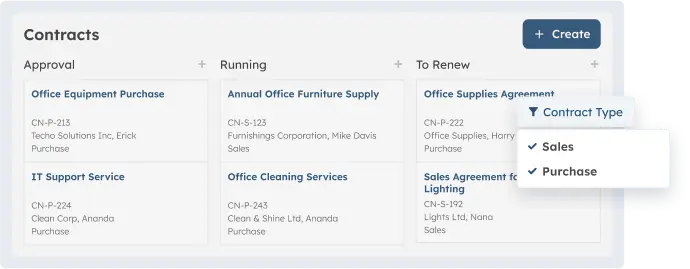 ScaleOcean’s contract management system is an ERP-based software that offers an intuitive platform that seamlessly integrates with various business modules. This solution allows for easy customization, ensuring smooth connectivity with your CRM, sales, inventory, finance, and other business functions.
The system provides centralized contract lifecycle management where all agreements are handled in one place. This unified hub simplifies searching and tracking while reducing the risks of document loss or critical storage errors.
Security is guaranteed through Singapore localization and strict data storage following PDPA regulations. Furthermore, this software is a perfect match for the CTC grant in Singapore to support your digital transformation goals. Also, you can explore these features firsthand by booking a free demo to see how the system fits your workflow.
Key Features:
- Contract Automation: Create documents automatically using customizable smart templates.
- Access Control: Ensure only authorized staff can edit or approve sensitive files.
- Customizable Templates: Tailor diverse agreement forms to meet your specific business needs.
- Flexible Contract Types: Manage long-term, short-term, or recurring agreements with ease.
- Automated Alerts: Get instant reminders for upcoming deadlines and contract renewals.
- Compliance Tracking: Monitor every agreement to ensure total alignment with policies.
| Pros | Cons |
|---|---|
|
|
Best For: This platform is highly suitable for medium to large enterprises in Singapore needing a localized ERP-integrated solution. It excels at bridging the gap between legal documents and daily operations for growing corporate teams.
2. DocuSign CLM System
DocuSign CLM is a document management solution that focuses on the organization and automation of agreement processes. It provides a structured environment for preparing, signing, and storing corporate files.
The primary function of this tool is to standardize how documents move through an organization. It connects electronic signature capabilities with automated folder structures to keep legal data organized.
Key Features:
- Automated document generation from pre-approved templates.
- Advanced clause library for standardized legal language.
- Tight integration with world-leading e-signature tools.
- Flexible workflow routing for internal approval cycles.
- Secure cloud storage with organized folder hierarchies.
| Pros | Cons |
|---|---|
|
|
Best For: Ideal for large global enterprises that already utilize electronic signature workflows and require a scalable system. It fits organizations looking to standardize their document preparation and storage globally.
3. Sirion Contract Management Software
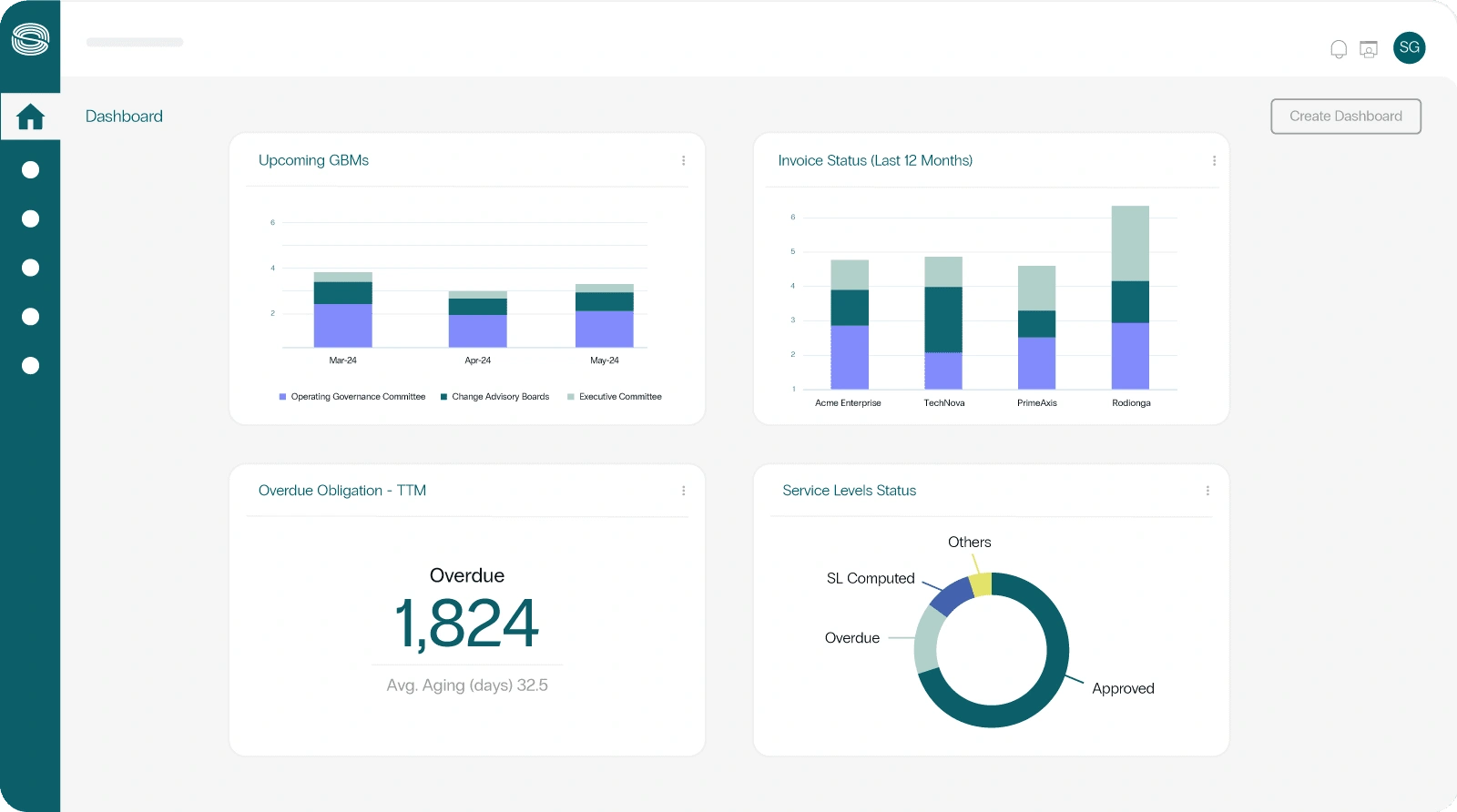
Sirion is a leader in AI-native contract lifecycle management, focusing heavily on post-signature obligation tracking. It uses advanced intelligence to ensure that what was promised in the contract is delivered.
This software is ideal for companies with complex, long-term vendor relationships. It helps management monitor service levels and financial commitments in real-time to maximize contract value.
Key Features:
- AI-driven extraction of key contractual obligations.
- Real-time monitoring of vendor service level agreements.
- Automated tracking of financial commitments and dates.
- Advanced performance analytics for post-signature data.
- Collaborative portal for buyer and supplier alignment.
| Pros | Cons |
|---|---|
|
|
Best For: This solution is best for large enterprises managing complex, long-term vendor relationships and service agreements. It serves decision-makers who need to ensure that every contractual obligation is met.
4. Ironclad Contract Management Tools
Ironclad is a digital contracting platform designed to handle the entire administrative process of legal documents. It allows users to build custom workflows for drafting and internal approval cycles.
The software functions as a collaborative workspace where legal and business teams can edit documents. It records every change made during the process to maintain a complete audit trail.
Key Features:
- Intuitive drag-and-drop workflow designer for users.
- Dynamic repository with advanced data search filters.
- Collaborative redlining tools within a web interface.
- Instant alerts for upcoming contract renewal dates.
- Seamless connectivity with common sales and HR tools.
| Pros | Cons |
|---|---|
|
|
Best For: Perfect for fast-growing medium to large technology companies that need a modern, user-friendly interface. It suits organizations that prioritize rapid workflow changes and cross-departmental collaboration.
5. Workday CLM Solution
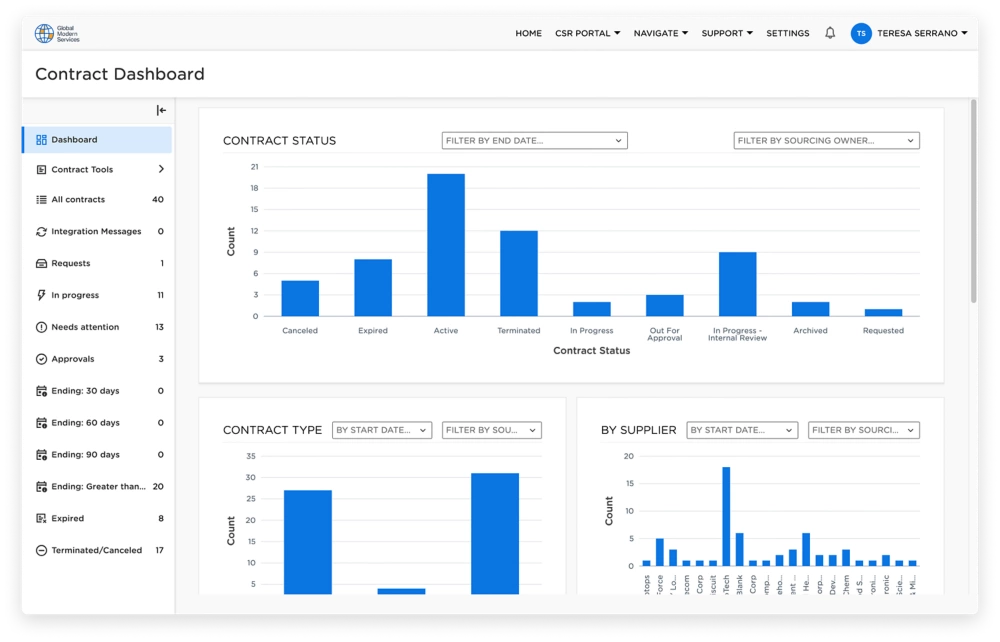
Workday CLM is an integrated module within a larger human capital and financial management ecosystem. It functions by linking contract data directly to employee records and corporate financial accounts.
This tool serves to provide context for agreements within the scope of global business operations. It helps finance teams verify that spending aligns with the terms found in active contracts.
Key Features:
- Native integration with HR and financial data sets.
- Automated extraction of terms using intelligent tools.
- Unified view of contracts within the Workday portal.
- Risk identification based on existing corporate policy.
- Strategic reporting on contract-related spending trends.
| Pros | Cons |
|---|---|
|
|
Best For: Best for large enterprises already invested in the Workday ecosystem for HR or finance. It is the top choice for companies seeking a unified source of truth for all corporate and employee data.
6. Juro Contract Management Software
Juro is a browser-based contracting tool that allows for the creation and signing of documents without external software. It functions as a data-first platform for managing high-volume legal agreements.
The system serves to consolidate the negotiation and signature phases into a single digital interface. It allows multiple parties to view and update the status of a contract in real-time.
Key Features:
- End-to-end browser-based contract editor and signer.
- Mass generation of documents via simple data uploads.
- Real-time collaboration sidebar for internal comments.
- Visual dashboards for tracking the contract pipeline.
- Automated reminders for signature and renewal tasks.
| Pros | Cons |
|---|---|
|
|
Best For: This software is ideal for small to medium-sized businesses and high-growth startups with high-volume, standardized contracts. It works best for teams needing a fast, frictionless signing experience.
7. Agiloft Contract Management Platform
Agiloft is a highly configurable management system used for automating various business rules and contract types. It functions by allowing users to define specific logic for their document workflows.
This software serves organizations that have unique administrative requirements that do not fit standard models. It provides a flexible framework for managing diverse sets of legal and operational data.
Key Features:
- Fully customizable no-code platform for workflows.
- Advanced permission settings for granular data access.
- Detailed audit logs for every system configuration.
- Support for multi-language and multi-currency data.
- Integration capabilities with legacy enterprise tools.
| Pros | Cons |
|---|---|
|
|
Best For: Suited for large enterprises with highly specific or unusual business processes that require deep customization. It is perfect for organizations that need their software to adapt to their logic.
8. Icertis CLM Platform
Icertis is an enterprise-level platform built to manage large portfolios of agreements across global locations. It functions by converting static document text into structured data for better corporate reporting.
The tool provides a centralized system for tracking compliance and risk across different jurisdictions. It helps large companies maintain a unified approach to their global contractual obligations and standards.
Key Features:
- AI-powered risk scoring for incoming agreements.
- Management of cross-border regulatory compliance.
- An extensive library of global legal clause variations.
- Sophisticated reporting for executive-level oversight.
- Broad integration with Microsoft and SAP ecosystems.
| Pros | Cons |
|---|---|
|
|
Best For: Recommended for the largest global enterprises with massive contract volumes across multiple countries. It is the best choice for organizations where compliance and risk management are the top priorities.
9. LinkSquares Contract Management System
LinkSquares is a contract analysis tool that focuses on the retrieval and categorization of data from executed agreements. It functions by using identification technology to search through legacy document libraries.
This software serves to help teams understand what is contained within their existing contract database. It identifies key dates and clauses so that companies can respond to internal data requests.
Key Features:
- High-speed OCR for scanning legacy paper documents.
- Automated extraction of dates, parties, and clauses.
- Advanced search filters for the entire repository.
- Detailed reporting on expiration and liability risks.
- Simple dashboard for managing post-signature tasks.
| Pros | Cons |
|---|---|
|
|
Best For: This tool is best for medium to large enterprises that have a large volume of existing, unorganized contracts. It is ideal for legal teams needing to conduct rapid audits or data discovery.
10. HyperStart Contract Management
HyperStart is a management solution that focuses on the extraction of metadata from legal documents during the drafting stage. It functions by identifying specific terms and entities within a text.
The system serves to categorize contract information automatically to reduce manual data entry. It assists teams in organizing their digital files based on the specific attributes found in each.
Key Features:
- AI-assisted redlining for faster document review.
- Automatic metadata tagging for all new uploads.
- Simplified dashboard for tracking contract progress.
- Version control for managing multiple draft edits.
- Secure repository with organized document tags.
| Pros | Cons |
|---|---|
|
|
Best For: A great fit for small to medium enterprises looking for a nimble, AI-focused solution to speed up their drafting process. It serves teams that want modern technology without enterprise complexity.
In conclusion, selecting the right CLM software can significantly streamline contract processes and enhance business efficiency. So, ScaleOcean’s ERP-integrated CLM offers a powerful, flexible solution that seamlessly connects contracts to your daily operations, ensuring compliance and boosting productivity.

Who Uses CLM Software?
CLM software is used across industries to streamline contract processes, reduce manual errors, and improve operational efficiency. Automating workflows and enhancing compliance, it helps teams close deals, manage risks, and improve strategic decision-making.
Here’s how different departments leverage CLM software:
- Sales Teams: To close deals faster without waiting for manual legal reviews.
- Procurement/Vendor Agreements: To manage supplier relationships and track complex spending obligations.
- Human Resources: To automate offer letters and ensure employment contracts stay compliant.
- Customer Service: To monitor service level agreements (SLAs) and client commitments accurately.
- Executive Management: To gain real-time visibility into company-wide risks and revenue opportunities.
CLM Software Use Cases by Industry
 Contract lifecycle management software offers tailored solutions to various industries, helping them streamline contract lifecycle management, boost efficiency, and stay compliant. With automation and advanced features, businesses in different sectors are better equipped to handle complex agreements and manage risks.
Here are key use cases for CLM software by industry:
Legal Compliance Service
Law firms and compliance teams use CLM to manage high volumes of regulatory documents. The software ensures that every clause meets current standards, reducing the risk of litigation.
According to a report from the State of Legal Function from Fortune Business Insight, the proportion of legal budgets spent on technologies is expected to increase significantly by 2025. This shift highlights the growing reliance on technology to streamline legal processes and improve efficiency.
Automation also helps these teams handle routine reviews 10x faster than manual processes. This allows legal professionals to focus on higher-value advisory work rather than administrative paperwork.
Manufacturing and Supply Chain
Manufacturers use CLM to track complex vendor agreements and delivery milestones. It ensures that every part of the supply chain adheres to the agreed-upon quality and timing.
Automated alerts for renewals prevent disruptions in the production line. This visibility helps managers optimize their vendor portfolios and negotiate better terms based on historical performance.
Healthcare and Life Sciences
In healthcare, CLM is critical for managing physician agreements and regulatory compliance. It ensures that all contracts meet strict data privacy and industry-specific safety standards.
The software tracks expiration dates for licenses and insurance, preventing costly lapses. This focus on compliance protects the organization from legal repercussions and ensures patient safety.
Financial Service
Banks and financial institutions use CLM to manage thousands of complex, highly regulated agreements. The software provides an audit trail that is essential for meeting international banking standards.
AI-powered analysis identifies financial risks and ensures that all fee structures are consistent. This level of control is vital for maintaining transparency and operational integrity.
Technology and SaaS Companies
Tech companies use CLM to manage rapidly scaling subscription agreements and NDAs. The focus here is on speed and integration with existing CRM systems like Salesforce.
Automated workflows allow sales teams to send out contracts with a single click. This reduces friction in the sales cycle, helping software companies maintain high growth rates.
Energy and Utilities
The energy sector uses CLM to manage massive infrastructure projects and land-lease agreements. These contracts often span decades and involve complex, long-term legal and financial obligations.
Centralized storage ensures that critical documents are never lost over long timeframes. The software helps managers track environmental compliance and maintenance obligations across diverse assets.
How to Choose the Right CLM Software
Choosing the right contract lifecycle management software is crucial for streamlining contract management and ensuring business growth. By evaluating your unique needs and considering key features, you can select the best solution that will enhance efficiency, reduce risks, and improve compliance across your organization.
Here’s how to approach selecting the right CLM software:
1. Assess Your Needs & Goals
Identify the specific bottlenecks in your current process, such as slow approvals or lost documents. Understanding your primary pain points helps you prioritize features that offer the most ROI.
Consult with all departments to ensure the software meets everyone’s needs. A tool that only works for legal won’t be adopted by sales or procurement teams effectively.
2. Key Features to Evaluate
Focus on essential capabilities like AI-powered extraction, automated workflows, and e-signature integration. Ensure the software can handle your specific contract volume and complexity without slowing down.
Test the mobile accessibility and user interface to guarantee high adoption rates. The best software is the one your team actually finds easy and helpful to use.
3. Vendor & Implementation Considerations
Look for a vendor with a strong presence in your region and a proven track record. Consider the implementation timeline and the level of support provided during the transition.
Ask about data security standards, such as SOC 2 compliance, to protect your sensitive data. A reliable vendor should offer transparent pricing and a clear path to success.
4. Decision-Making Process
Run a pilot program or a “Live Redline Challenge” with your most complex templates. This allows you to see how the software performs under real-world pressure before committing.
Collect feedback from all stakeholders involved in the trial to ensure a well-rounded decision. The final choice should balance technical power with ease of use and long-term scalability.
Conclusion
Contract lifecycle management software helps streamline the process from the initial request all the way to renewal, improving transparency, reducing risks, and eliminating slowdowns. This boosts efficiency and adds long-term value to your business.
ScaleOcean’s CLM software keeps you ahead by automating tracking and centralizing data, ensuring compliance and protecting revenue. It connects legal obligations with everyday growth. Book a free demo today to see how it can transform your operations.
FAQ:
1. What does contract lifecycle management software do?
CLM software automates and simplifies the contract process, ensuring smooth handling of agreements across all stages. This increases efficiency, reduces mistakes, and ensures contracts are compliant, offering a streamlined management experience.
2. What is the difference between CLM and ERP?
ERP systems manage overall business functions, while CLM is focused on handling and automating every phase of a contract’s lifecycle, providing specialized contract management.
3. What is CLM and CPQ?
CPQ creates quick and accurate pricing and quotes, whereas CLM takes those quotes and turns them into legally binding contracts, managing them from start to finish.
4. How big is the contract lifecycle management market?
According to Mordor Intelligence, the CLM market is expected to grow to USD 3.39 billion by 2026, up from USD 3.0 billion in 2025, with a forecasted growth rate of 13.06% CAGR, reaching USD 6.26 billion by 2031.



















.png)