


Warehouse slotting is the strategic process of organizing inventory within a warehouse to maximize efficiency, reduce travel time, and improve picking accuracy. As operations scale, poor slotting quickly leads to delays, congestion, and rising fulfillment costs.
In many warehouses, items are placed wherever space is available instead of where they perform best. As a result, workers spend more time walking, searching, and correcting mistakes, which directly reduces productivity and increases operational inefficiencies over time.
Moreover, growing order volumes and customer expectations make speed and accuracy non-negotiable. Without a clear slotting strategy, businesses struggle to keep up, resulting in missed deadlines, higher labor costs, and declining customer satisfaction throughout fulfillment processes.
Therefore, companies must rethink how they position inventory inside their facilities. This article will explore what warehouse slotting is, its structured methods, and its best practices to help businesses streamline operations, improve picking, and build scalable, efficient systems for growth.
 Key Takeaways
- Warehouse Slotting is the systematic placing of products based on demand, size, and handling needs to optimize workflow and overall warehouse performance.
- Warehouse Slotting is Important because it reduces picking time, improves accuracy, enhances safety, and ensures smoother and more efficient fulfillment operations.
- Types of Warehouse Slotting, including fixed, dynamic, and zone-based methods, help businesses adapt inventory placement to various operational needs.
- Warehouse Slotting Best Practices, such as data integration and regular audits, ensure continuous optimization and alignment with changing demand patterns.
- ScaleOcean WMS helps optimize warehouse slotting through AI-driven insights, real-time data integration, and automation to improve efficiency, accuracy, and scalability.

What Is Warehouse Slotting?
Warehouse slotting refers to the systematic placement of products within a warehouse based on specific criteria such as demand frequency, size, weight, and picking patterns. This approach ensures that fast-moving items remain easily accessible for quicker retrieval.
Instead of random storage, warehouse slotting uses data-driven insights to determine optimal product locations. Consequently, businesses can improve overall workflow efficiency while strengthening their inventory control across different warehouse zones and processes.
Additionally, slotting considers factors such as product compatibility and storage conditions. For example, fragile or hazardous items require specific placement to ensure safety while maintaining accessibility, ultimately supporting both operational efficiency and compliance standards.
As operations evolve, understanding what is warehouse slotting becomes increasingly important, as businesses must continuously adjust placement strategies to reflect changing demand patterns and maintain operational efficiency.
 Also Read: What is a Warehouse Management System (WMS)? 10 Top Software
Why Is Warehouse Slotting Important?
Warehouse slotting plays a critical role in improving overall warehouse performance. By organizing inventory strategically, businesses can reduce inefficiencies, streamline workflows, and respond faster to demand. As operations grow more complex, proper slotting becomes essential for maintaining consistency and control.
- Reducing Picking Times: Warehouse slotting places high-demand items closer to picking zones, allowing workers to retrieve products faster. As a result, travel time decreases significantly, enabling faster order processing and improving overall warehouse productivity without requiring additional labor resources.
- Improved Item Handling: Proper slotting ensures items are stored based on their physical characteristics. Consequently, workers handle products more efficiently and safely, reducing the risk of damage while maintaining product quality throughout storage and fulfillment operations.
- Optimized Storage Density: Effective slotting maximizes warehouse space by organizing items by size and demand. Therefore, businesses can store more products without expanding physical space, leading to better space utilization and reduced operational costs over time.
- Seamless Fulfillment: Warehouse slotting aligns product placement with order patterns, enabling smoother picking and packing workflows. As a result, fulfillment processes become faster and more consistent, helping businesses meet customer expectations for speed and accuracy more effectively.
- Increased Safety and Ergonomics: By placing frequently picked items at accessible heights and locations, slotting reduces workers’ physical strain. Consequently, it lowers the risk of workplace injuries while improving overall comfort and efficiency during daily warehouse operations.
- Better Accuracy: Organized product placement minimizes confusion during picking activities. Therefore, workers can locate items quickly and accurately, reducing errors in order fulfillment and improving overall accuracy, thereby directly enhancing customer satisfaction and operational reliability.
Ultimately, warehouse slotting supports both operational efficiency and long-term scalability. By fully understanding what is warehouse slotting, businesses can maintain high performance, reduce costs, and keep operations agile in a fast-changing market.
What Are the Different Types of Warehouse Slotting?
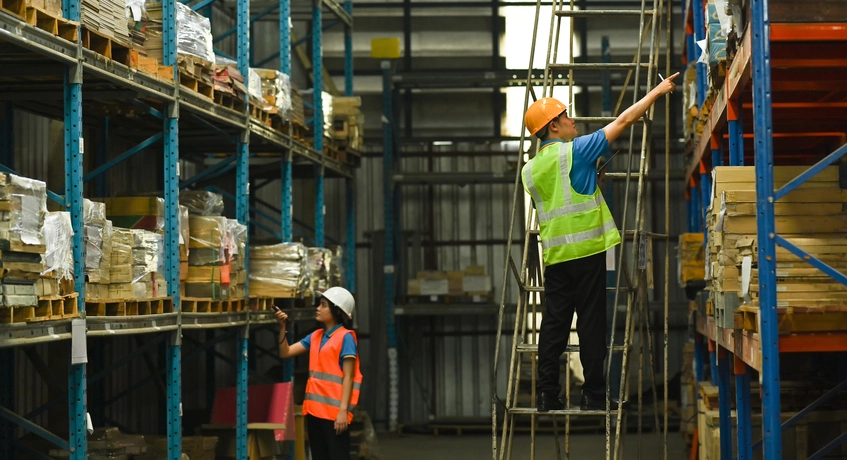
Understanding different types of warehouse slotting methods helps businesses choose the right approach for their operations. Each type offers unique advantages depending on inventory characteristics, demand patterns, and warehouse complexity, allowing companies to optimize efficiency and improve overall workflow performance.
- Fixed Slotting: Fixed slotting is one of the common types of warehouse slotting that assigns a permanent location to each product. It improves consistency, simplifies daily operations, makes training easier, and supports stable inventory movement with predictable patterns.
- Dynamic Slotting: Dynamic slotting continuously adjusts product placement based on real-time data such as demand and order frequency. Therefore, businesses can adapt quickly to changes, ensuring that fast-moving items remain easily accessible while maintaining optimal efficiency across warehouse operations.
- ABC Slotting: ABC slotting categorizes inventory into groups based on demand frequency and value. Consequently, high-demand items are placed in easily accessible areas, while slower-moving products are stored further away, improving picking efficiency and reducing unnecessary travel time.
- Zone Slotting: Zone slotting organizes the warehouse into specific areas based on product type, size, or handling requirements. This approach is commonly used in a central warehouse setup, enabling better coordination, reduced congestion, and improved workflow across different sections of the warehouse.
- Ongoing Slotting: Ongoing slotting involves regularly reviewing and adjusting product placement to reflect changing demand patterns. Therefore, businesses can maintain efficiency over time, ensuring that warehouse layouts remain aligned with operational needs and evolving customer expectations.
By selecting the right slotting method, businesses can significantly improve warehouse efficiency. In practice, many companies combine multiple approaches to create a flexible system that balances stability, adaptability, and long-term operational performance.
Macro Slotting vs. Micro Slotting: Key Difference
Macro slotting focuses on the overall layout of the warehouse and determines where product categories or groups should be placed. It considers high-level factors such as workflow design, storage zones, and traffic flow to create an efficient operational structure.
In contrast, micro slotting involves the precise placement of individual items within specific locations. It focuses on optimizing pick paths, accessibility, and product positioning at a fine level of detail to improve accuracy and reduce handling time.
While macro slotting establishes the foundation of warehouse organization, micro slotting refines day-to-day operations. Therefore, both approaches represent important types of warehouse slotting that must work together to ensure efficiency and operational balance.
Ultimately, combining macro and micro slotting allows businesses to optimize both strategic layout and operational execution. This alignment ensures that warehouses remain efficient, adaptable, and capable of handling increasing demand without sacrificing accuracy or speed.
Random Slotting vs. Fixed Slotting: Key Difference
Random slotting assigns products to any available storage location rather than a fixed position. As a result, it maximizes space utilization and flexibility, especially in warehouses with high inventory turnover and constantly changing stock levels.
On the other hand, fixed slotting assigns each product a permanent location. This approach simplifies operations by ensuring workers always know where to find items, reducing search time and improving consistency across daily warehouse activities.
Although random slotting offers flexibility, it often requires advanced systems to track item locations accurately. Meanwhile, fixed slotting provides simplicity but may lead to inefficient use of space if demand patterns change over time.
Therefore, businesses must evaluate their operational needs before choosing between these approaches. In many cases, combining both methods allows companies to balance flexibility, efficiency, and control within their warehouse management strategy.
Warehouse Slotting Best Practices

Implementing warehouse slotting effectively requires more than initial planning. Businesses must continuously refine their warehouse slotting strategies using data, operational insights, and evolving demand patterns. By following proven best practices, companies can maintain efficiency, accuracy, and long-term scalability.
Moreover, combining multiple approaches ensures that slotting decisions remain relevant across different scenarios. As warehouse complexity increases, these best practices help align inventory placement with real operational needs, minimize inefficiencies, and improve workflow consistency.
User Data Integration
Integrating user and operational data allows businesses to make informed slotting decisions. By analyzing order history, picking frequency, and customer demand, companies can place high-priority items in optimal locations for faster and more efficient retrieval.
Additionally, real-time data integration enables continuous adjustments as demand patterns shift. Therefore, warehouses can remain responsive and maintain efficiency, ensuring that product placement always reflects current operational requirements and customer expectations.
Seasonal Reslotting
Seasonal reslotting involves adjusting inventory placement based on predictable demand fluctuations. During peak seasons, businesses reposition fast-moving items closer to picking zones to ensure quicker access and smoother fulfillment processes.
Furthermore, this approach helps prevent congestion and delays during high-demand periods. By proactively updating warehouse slotting strategies, companies can maintain operational efficiency and avoid bottlenecks that typically occur when demand patterns change significantly.
Regular Audits
Regular slotting audits help identify inefficiencies and ensure that product placement remains aligned with operational goals. By reviewing warehouse performance, businesses can detect issues such as misplaced items, underutilized space, or outdated warehouse slotting strategies.
In addition, audits provide opportunities for continuous improvement. Therefore, companies can refine their slotting approach over time, ensuring that warehouse operations stay efficient, accurate, and capable of supporting evolving business needs.
SKU Velocity
SKU velocity refers to how frequently a product is picked or moved within the warehouse. By prioritizing high-velocity items in accessible locations, businesses can significantly reduce picking time and improve overall workflow efficiency.
Moreover, monitoring SKU velocity allows warehouses to adapt quickly to changing demand patterns. As product movement shifts, companies can update slotting positions accordingly, ensuring that inventory placement always supports optimal performance.
Slot SKU by Zone or Technology
Assigning SKUs based on zones or supporting technologies improves operational coordination. By grouping related items or using automated systems, warehouses can streamline picking processes and reduce unnecessary movement between areas.
Additionally, leveraging technologies such as warehouse management systems enhances slotting accuracy. Therefore, businesses can optimize workflows, improve visibility, and ensure that inventory placement aligns with both manual and automated processes.
Item Level and Storage Medium
Different products require different storage methods based on their size, shape, and handling needs. By matching items with the appropriate storage medium, businesses can improve accessibility while maintaining product integrity and safety.
Furthermore, proper alignment between item level and storage type reduces handling complexity. As a result, workers can retrieve and store products more efficiently, minimizing errors and supporting smoother warehouse operations overall.
Cube Size and Weight
Considering cube size and weight is essential when determining product placement. Heavier and bulkier items should be stored in easily accessible and lower locations to ensure safe handling and reduce physical strain on workers.
Additionally, optimizing storage based on size helps maximize available space. Therefore, businesses can improve storage density while maintaining safety standards, ensuring that warehouse layout remains both efficient and practical for daily operations.
Special Storage Requirements and Product Affinity
Some products require specific storage conditions, such as temperature control or secure handling. By identifying these requirements, businesses can allocate appropriate spaces that maintain product quality while ensuring compliance with safety standards.
At the same time, grouping products with strong affinity improves picking efficiency. Items frequently ordered together should be placed near each other, enabling faster retrieval and reducing travel time during order fulfillment.
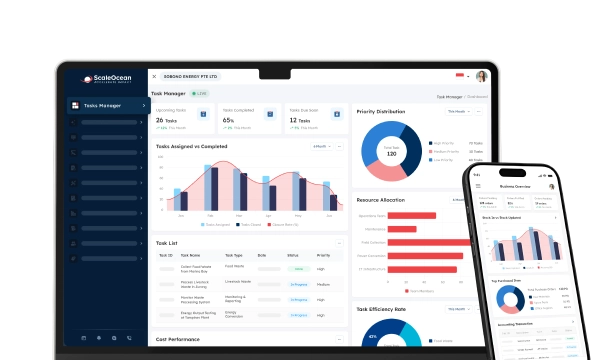
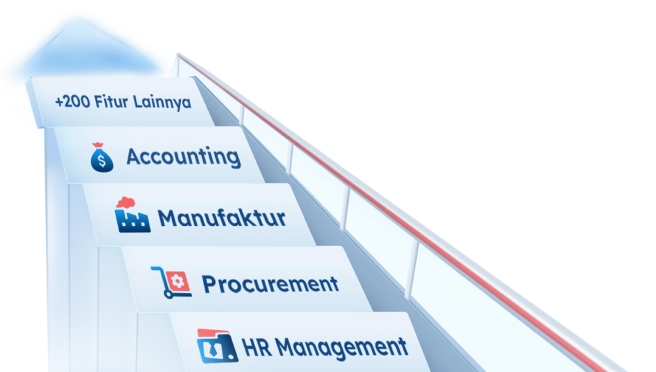
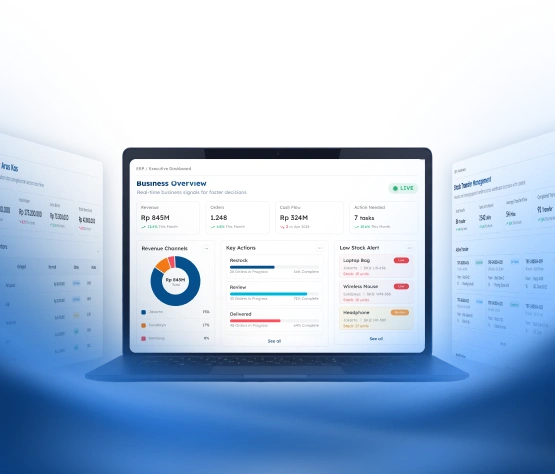
A Warehouse Management System (WMS) is key to efficiently managing growing warehouse operations. ScaleOcean WMS streamlines this by integrating with a unified ERP system to manage inventory, demand, and workflows on a single platform. Customizable modules let companies tailor slotting to their warehouse needs.
With features such as AI-driven slotting recommendations, real-time data synchronization, and multi-warehouse management, ScaleOcean helps improve efficiency while reducing manual effort and operational costs. Request a free demo today to see how it can optimize your warehouse slotting strategy.

Warehouse Slotting Algorithms
Warehouse slotting algorithms use data and mathematical models to determine the most efficient placement of inventory. By analyzing variables such as demand frequency, travel distance, and storage constraints, these algorithms help optimize picking paths and overall warehouse performance.
Additionally, algorithms can process large volumes of operational data quickly and accurately. Therefore, applying insights from what is warehouse slotting allows businesses to make precise placement decisions and reduce manual inefficiencies.
Many slotting algorithms rely on techniques such as clustering, demand forecasting, and optimization modeling. As a result, they can group similar items, predict future demand, and assign storage locations to minimize movement and maximize efficiency.
As warehouses become more complex, algorithm-driven slotting becomes increasingly important. By leveraging these tools, companies can evolve into a smart warehouse
environment that remains efficient, scalable, and responsive to changing operational demands.
Optimize Warehouse Slotting with ScaleOcean WMS Software
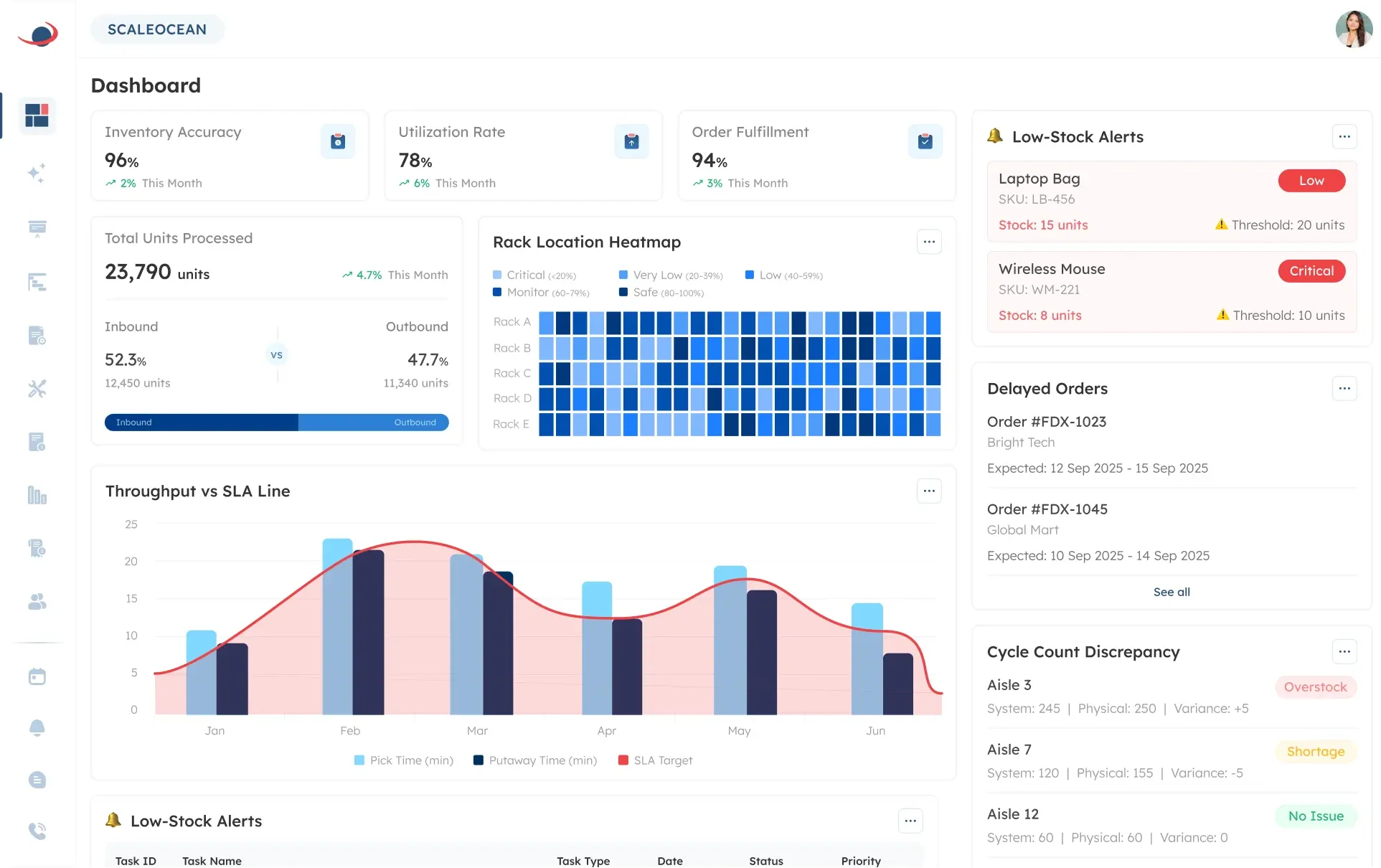
ScaleOcean Warehouse Management System Software optimizes warehouse slotting making warehouse management more efficient, reducing costs, and increasing productivity. With this approach, businesses can streamline inventory placement and improve overall operational performance.
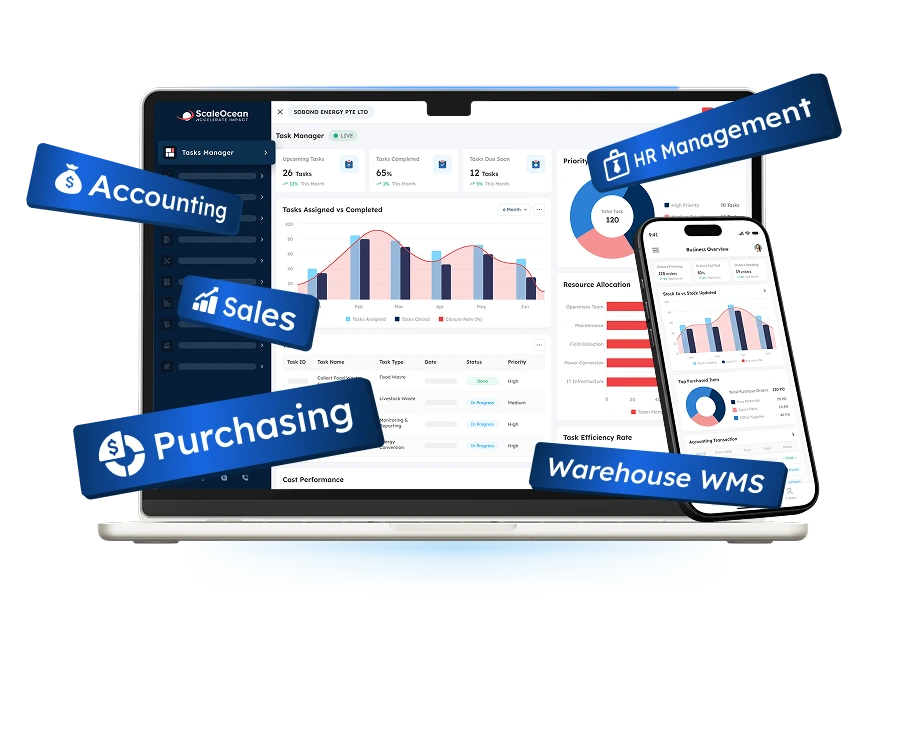
With an integrated all-in-one solution, slotting and inventory management data are directly connected to the sales, purchasing, and finance modules via a centralized dashboard. Additionally, businesses can configure modules to match workflows, managed goods, and specific operational requirements.
Moreover, ScaleOcean offers flat pricing with unlimited users and no hidden fees, making it a cost-effective solution for growing businesses. It also meets CTC grant requirements, allowing companies to receive up to 70% funding support for implementation.
Key Features of ScaleOcean WMS:
- Smart Slotting Algorithm: ScaleOcean’s AI-powered WMS groups items based on size, weight, and turnover rate. As a result, the system recommends optimal placement to minimize travel distance and improve picking efficiency across warehouse operations.
- Dynamic Slotting: This feature automatically adjusts product placement based on demand changes or seasonal trends. Therefore, businesses can maintain optimal efficiency without manual intervention, ensuring that fast-moving items remain easily accessible at all times.
- Multi-Warehouse Management: ScaleOcean WMS manages slotting across multiple warehouse locations simultaneously. Consequently, businesses can maintain consistent efficiency, ensuring that inventory placement remains optimized across all facilities without operational conflicts.
- 3D Warehouse Modeling: This feature provides a digital visualization of warehouse layouts. As a result, businesses can plan stock placement more strategically, optimize space usage, and identify potential inefficiencies before they impact operations.
- Barcode Management: Barcode technology enables accurate tracking of inventory movements. Therefore, businesses can improve picking and putaway efficiency while reducing errors, ensuring better inventory control, and real-time visibility across warehouse operations.
- Stock Transfer Management: The system efficiently manages the movement of goods between warehouse locations. Consequently, businesses can optimize stock distribution, maintain balanced inventory levels, and improve overall space utilization across multiple facilities.
By leveraging ScaleOcean WMS, businesses can transform their warehouse slotting strategy into a data-driven and highly efficient system. This approach not only improves daily operations but also supports long-term scalability and sustainable business growth.
Conclusion
Warehouse slotting is a critical strategy for improving warehouse efficiency, accuracy, and productivity. By organizing inventory based on data-driven insights, businesses can reduce picking time, optimize space, and streamline fulfillment processes while maintaining flexibility to adapt to changing demand patterns.
As businesses seek to enhance these benefits, ScaleOcean WMS provides an integrated ERP solution that connects slotting with sales, purchasing, and financial operations. This unified system enables better decision-making, improved visibility, and more efficient warehouse management across all processes.
To experience how ScaleOcean can optimize your warehouse slotting and overall operations, request a free demo today. Discover how a tailored, all-in-one solution can help you reduce costs, increase productivity, and build a scalable warehouse system for long-term growth.
FAQ:
1. What is the primary goal of warehouse slotting?
Warehouse slotting involves strategically placing inventory items within a warehouse to streamline picking, packing, and replenishment. Its main objective is to reduce the time and effort needed to find and retrieve items, thereby increasing operational efficiency.
2. Is slotting the same as warehouse optimization?
Slotting and wave optimization focus on different aspects of warehouse efficiency but complement each other. Slotting optimizes inventory placement by ensuring high-velocity items are stored in easily accessible locations.
3. How do I view a step-by-step slotting analysis report?
To generate a slotting report, export SKU velocity and dimensions from your WMS. Perform an ABC analysis to identify fast-moving items, then compare their current locations with optimal “golden zones” near shipping areas. Finally, create a move list or heat map to reposition high-traffic items, reducing travel time and improving pick density.
4. What is the list of top-rated WMS software that automates warehouse slotting?
The top-rated WMS software that automates warehouse slotting includes:
1. ScaleOcean WMS
2. Manhattan Active WM
3. Blue Yonder WMS
4. SAP EWM
5. Oracle WMS Cloud
6. Infor WMS





















.png)