

A central warehouse plays a key role as modern businesses face growing pressure to manage inventory efficiently across multiple locations. Fragmented storage systems often cause delays, inconsistencies, and higher costs, negatively affecting customer satisfaction and business performance.
Understanding what is a central warehouse helps explain how companies can reduce inefficiencies and improve control. As supply chains grow more complex, companies need accurate stock visibility and faster distribution. Adopting a structured warehousing approach is essential for efficiency, error reduction, and scalable growth.
In fact, according to a market report by Grand View Research, the global warehousing market was valued at USD 1,079.8 billion in 2024 and is projected to reach USD 1,726.7 billion by 2030, reflecting strong and sustained growth driven by increasing supply chain complexity.
A central warehouse offers a strategic solution by consolidating inventory in a single, controlled location. As a result, businesses can streamline operations, improve coordination, and respond more effectively to fluctuating market demand and customer expectations.
So, in this article, we will explore what a central warehouse is, why it matters, and how it can help businesses improve efficiency, control, and overall operational performance.
 Key Takeaways
- Central Warehouse is a facility where businesses store and manage inventory, allowing better control, improved visibility, and consistent coordination across procurement, storage, and distribution.
- Central Warehousing is important because it strengthens efficiency, supports better decision-making, and ensures consistent service quality while balancing cost control, scalability, and operational risks.
- Key Functions of a Central Warehouse include inventory consolidation, order fulfillment, quality control, and specialized storage to maintain efficiency and ensure smooth operational workflows.
- ScaleOcean WMS helps businesses manage central warehouses efficiently through seamless integration, automation, and real-time visibility, enabling better control, accuracy, and scalable supply chain operations.

What is a Central Warehouse?
A central warehouse is a single, centralized facility where a company stores and manages its inventory. Instead of distributing stock across multiple locations, businesses consolidate goods to improve control, coordination, and overall operational efficiency.
By centralizing inventory, companies can monitor stock levels more accurately and strengthen their inventory control, reducing duplication across warehouses. Consequently, this approach simplifies inventory management while ensuring consistent data across procurement, storage, and distribution processes.
Additionally, a central warehouse serves as a hub for distributing to various branches or customers. Therefore, businesses can optimize logistics planning, reduce transportation redundancies, and maintain better control over stock movement and fulfillment timelines.
Additionally, this model improves logistics planning, addressing the question of what is a central warehouse in practical business operations.
Why Central Warehousing Matters?
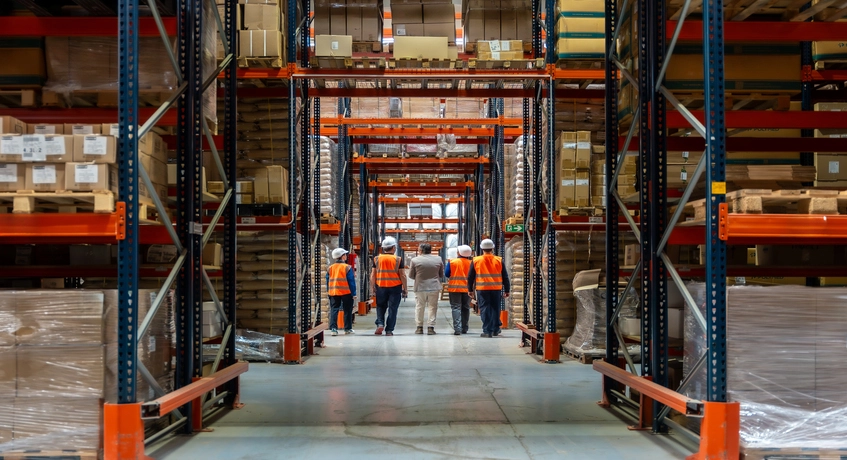
Central warehousing acts as the strategic backbone of a supply chain by consolidating all inventory into a single, specialized location. This model eliminates the need for multiple satellite facilities, significantly reducing overhead costs such as rent, utilities, and redundant management staff while streamlining the entire logistics network.
The primary advantage is enhanced inventory control. With a “single source of truth” for stock levels, businesses can monitor inventory more accurately, simplify audits, and prevent the financial waste of overstocking or stockouts. It also makes it more cost-effective to invest in the best warehouse management system to improve operational efficiency.
This centralization allows companies to leverage economies of scale. By concentrating high volumes in one hub, businesses can negotiate better shipping rates and enforce strict, uniform quality control standards. It ensures that every product, whether for a local or national order, meets the same inspection criteria before dispatch.
However, the model requires balancing efficiency against distance. While a central warehouse solution simplifies operations, a central hub can lead to higher shipping costs for far-flung customers and create a single point of failure. It is best suited for businesses prioritizing lean operations and standardized handling over hyper-local delivery speeds.
Benefits vs. Limitations of Central Warehouse
A central warehouse offers significant advantages for businesses aiming to streamline operations, yet it also presents certain challenges. Therefore, understanding both benefits and limitations helps companies make informed decisions when designing efficient and scalable supply chain strategies.
| Pros | Cons |
|---|---|
|
|
Benefits of Central Warehouse
Central warehousing offers several advantages that help businesses improve efficiency, reduce costs, and maintain greater control over operations. Therefore, Many businesses adopt a central warehouse solution to improve efficiency and reduce costs across their supply chain.
- Improve Inventory Management: Centralizing inventory allows businesses to monitor stock levels in real time and reduce discrepancies. As a result, companies avoid overstocking or stockouts while maintaining accurate records that support better planning and operational control.
- Cost Efficiency: A central warehouse reduces the need for multiple facilities and duplicate resources. Consequently, businesses reduce operational expenses such as rent, labor, and utilities while improving overall cost management across the supply chain.
- Faster Deliveries: By streamlining order processing and coordination, central warehousing enables more consistent and reliable delivery performance. Therefore, businesses can reduce delays and better meet customer expectations across different locations.
- Bulk Purchasing Power: Centralization allows companies to purchase goods in larger quantities. As a result, they can negotiate better pricing, secure discounts, and maintain stable inventory levels that support continuous operations.
- Stronger Quality Control: A single warehouse location simplifies quality monitoring and standardization. Consequently, businesses can enforce consistent inspection processes, reduce product defects, and ensure that goods meet required standards before distribution.
- Strategic Location Considerations: Selecting a central location helps optimize transportation routes and distribution efficiency. Therefore, businesses can balance accessibility and demand patterns while minimizing logistical complexity across multiple regions.
Overall, central warehousing strengthens operational efficiency and supports scalable growth. As a result, businesses can maintain better control, improve service performance, and adapt more effectively to changing market demands.
Limitations and Potential Drawbacks of Central Warehouse
While central warehousing offers many advantages, businesses must also consider potential drawbacks that may impact efficiency and responsiveness. Therefore, understanding these limitations helps companies develop strategies to minimize risks and maintain balanced supply chain performance.
- Higher Outbound Shipping Costs: Centralizing inventory often increases the distance between the warehouse and end customers. As a result, businesses may face higher transportation costs and longer delivery times, especially when serving geographically dispersed markets or remote locations.
- Risk of Disruption: Relying on a single warehouse creates a potential single point of failure. Consequently, disruptions such as natural disasters, system failures, or operational issues can halt distribution and significantly impact overall business continuity.
- Less Flexibility: Centralized warehousing may limit the ability to respond quickly to changes in regional demand. Therefore, businesses might struggle to adapt to local market needs, leading to slower response times and potential inefficiencies in dynamic environments.
Overall, these limitations highlight the importance of careful planning and risk management. As a result, businesses can implement mitigation strategies while still benefiting from the efficiencies of a central warehousing approach.
Key Function of Central Warehouse
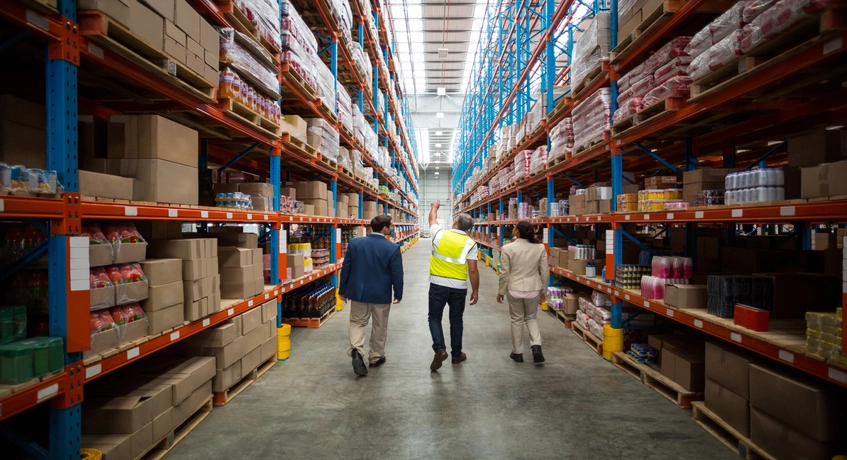
A central warehouse plays a vital role in ensuring smooth and efficient supply chain operations. By centralizing key activities, businesses can improve coordination and gradually transition into a smart warehouse environment that enhances automation, visibility, and operational efficiency.
These functions enable companies to manage stock effectively, fulfill orders accurately, and maintain product quality. Therefore, a central warehouse becomes a critical component in achieving operational efficiency and supporting long-term business growth.
Inventory Consolidation
Inventory consolidation allows businesses to gather all stock into a single, centralized warehousing. As a result, companies can reduce duplication, improve visibility, and maintain more accurate inventory records across procurement, storage, and distribution processes.
Additionally, this approach simplifies inventory tracking and reporting. Therefore, teams can access consistent data, make faster decisions, and optimize stock levels to prevent overstocking or shortages that may disrupt operations. Understanding the central warehouse meaning helps explain why inventory consolidation is critical for efficiency.
Order Fulfillment
A central warehouse slotting supports efficient order fulfillment by streamlining picking, packing, and shipping processes. Consequently, businesses can process orders faster, reduce errors, and ensure consistent delivery performance across customer locations.
Moreover, improved coordination between inventory and logistics teams enhances accuracy and speed. As a result, companies can meet customer expectations more effectively and maintain high service levels in competitive markets.
Quality Control
Centralized warehousing enables businesses to implement standardized quality control procedures. Therefore, companies can inspect products consistently, identify defects early, and ensure that goods meet required standards before distribution to customers.
In addition, having one controlled environment improves monitoring and accountability. As a result, businesses can maintain product integrity, reduce returns, and strengthen customer trust through consistent quality assurance practices.
Reserve and Specialized Storage
A central warehouse provides space for reserve inventory and specialized storage requirements. Consequently, businesses can manage safety stock, handle seasonal demand fluctuations, and store sensitive goods under controlled conditions.
Furthermore, dedicated storage areas and optimized warehouse layout support different product needs, such as temperature control or hazardous-material handling. Therefore, companies can ensure compliance, protect product quality, and maintain operational efficiency across diverse inventory types.
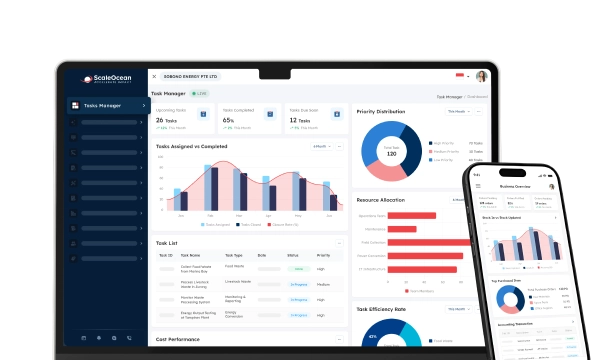
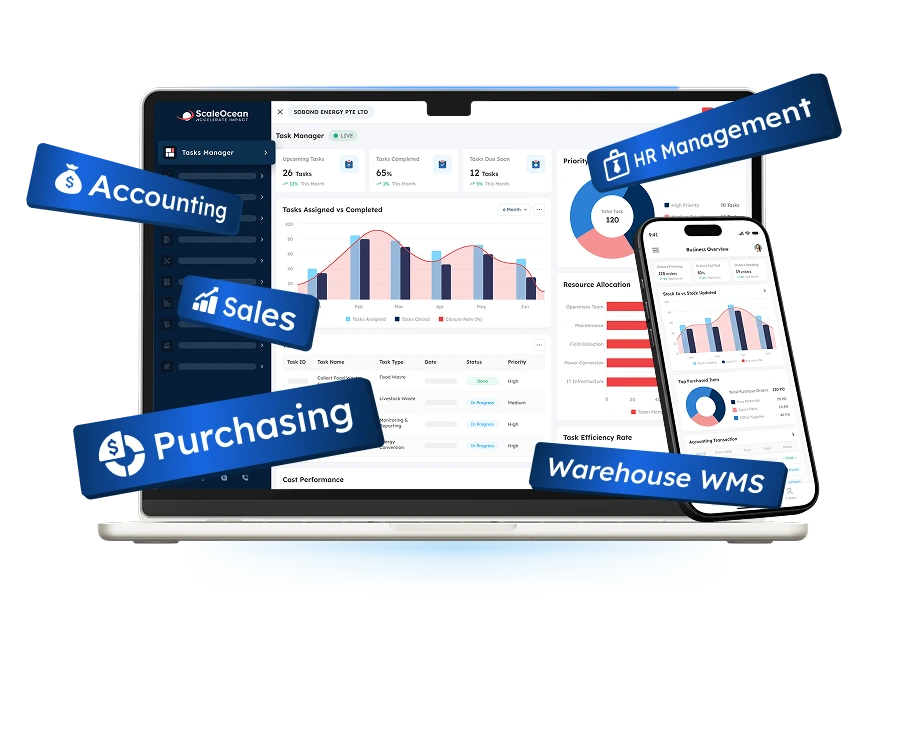
Moreover, managing a central warehouse can become more efficient when supported by an integrated system. Software like ScaleOcean WMS helps businesses connect warehouse operations with inventory, finance, logistics, and sales, enabling real-time visibility and better control across all processes.
To see how this can work in your operations, try a free demo of ScaleOcean and explore how its warehouse management system can simplify processes, improve accuracy, and help you manage your warehouse more effectively.
Centralized vs. Decentralized Warehousing
Businesses must choose between centralized and decentralized warehousing based on operational needs and market reach. Each approach offers distinct advantages and trade-offs. To fully understand what is a central warehouse, businesses must recognize how it differs from decentralized storage systems.
| Aspects | Centralized Warehousing | Decentralized Warehousing |
|---|---|---|
| Inventory Management | Single location improves visibility and control | Multiple locations require more complex coordination |
| Operational Costs | Lower facility and labor costs overall | Higher costs due to multiple warehouses |
| Delivery Speed | Slower for distant regions | Faster due to proximity to customers |
| Transportation Costs | Higher outbound shipping costs | Lower last-mile delivery costs |
| Risk Management | Higher risk due to a single point of failure | Lower risk spread across multiple locations |
| Flexibility | Less adaptable to regional demand changes | More responsive to local market needs |
| Demand Fulfillment | Centralized planning improves consistency | Local warehouses enable quicker response |
| Scalability | Easier to scale operations from one hub | Scaling requires managing multiple facilities |
Which Is Better?
There is no one-size-fits-all answer, as the best approach depends on business priorities and operational complexity. Companies that prioritize cost efficiency and control often benefit from centralized warehousing, especially when demand is stable and predictable.
On the other hand, businesses that require faster delivery and regional responsiveness may prefer decentralized warehousing. Therefore, companies should evaluate factors such as market distribution, customer expectations, and logistics costs before choosing the most suitable strategy.
Understanding the central warehouse meaning also plays a key role when comparing centralized and decentralized warehousing models, especially in terms of control, speed, and scalability.
Manage Central Warehouse with Seamless Integration Using ScaleOcean WMS
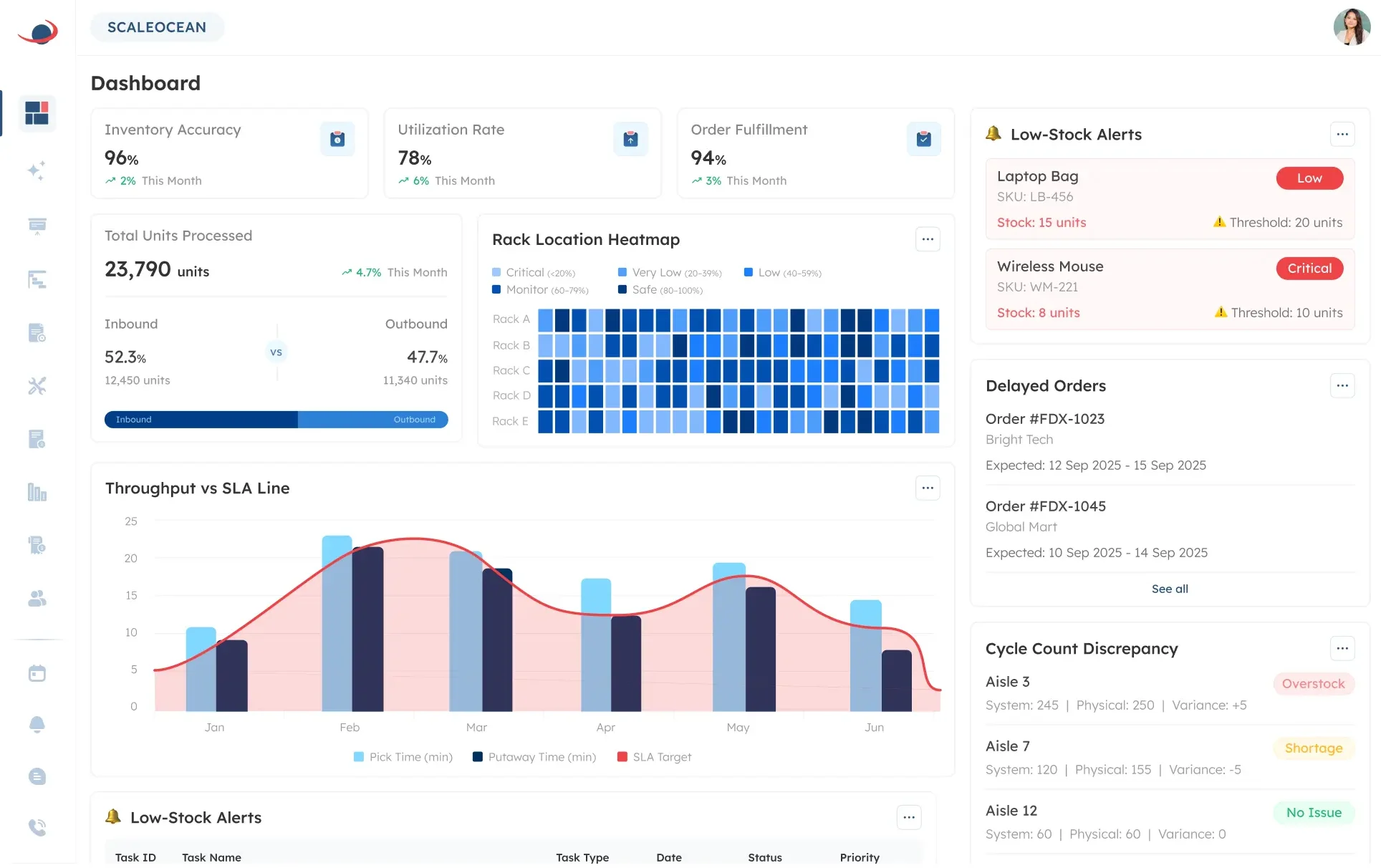
Managing a central warehouse becomes more efficient when systems are fully integrated across operations. ScaleOcean’s Warehouse Management System enables seamless integration between warehouse, inventory, finance, logistics, and sales modules, providing a unified platform that improves coordination and data accuracy.
Moreover, ScaleOcean offers flexible features that adapt to specific warehouse needs. As a result, businesses can customize workflows, optimize processes, and maintain better control over inventory and distribution without relying on disconnected systems or manual coordination.
In addition, ScaleOcean WMS manages the entire central warehouse process within a single platform. From order management to shipping and receiving, every activity flows seamlessly, ensuring accurate, real-time information across all operational touchpoints.
Furthermore, ScaleOcean supports compliance with government initiatives by meeting CTC grant requirements, offering up to 70% grant support. Therefore, businesses can adopt advanced warehouse management technology while reducing implementation costs and financial barriers.
Key Features of ScaleOcean’s WMS:
- Multi-Warehouse Management: ScaleOcean supports managing multiple warehouse locations on a single platform. Consequently, businesses can coordinate stock transfers efficiently and maintain consistent inventory visibility across all storage points.
- Inbound/Outbound Management: The system automates the recording of incoming and outgoing goods. As a result, businesses ensure synchronized inventory flow, reduce manual errors, and maintain accurate stock levels throughout operations.
- Smart Picking & Packing: ScaleOcean provides optimized picking strategies, including wave, batch, and zone picking. Therefore, warehouse teams can follow the most efficient routes, improving speed, accuracy, and overall order fulfillment performance.
- Warehouse Space & Layout Optimization: The platform offers recommendations for efficient product placement within the warehouse. Consequently, businesses can maximize storage capacity, reduce wasted space, and improve accessibility for faster operations.
- IoT Integration: ScaleOcean integrates with IoT devices to monitor asset conditions in real time. As a result, businesses can track environmental factors and maintain product quality, especially for sensitive or high-value goods.
- Barcode & RFID Scanning: Built-in scanning capabilities enable fast, accurate item tracking. Therefore, businesses can minimize manual input errors, improve traceability, and enhance overall efficiency in warehouse operations.
Overall, ScaleOcean’s Warehouse Management System provides a fully integrated platform that can streamline your central warehouse operations. By improving coordination, accuracy, and flexibility, it helps businesses optimize inventory control, increase efficiency, and reduce costs, enabling them to overcome complex logistics challenges.
Conclusion
Central warehousing provides a structured approach to managing inventory, improving efficiency, and maintaining better control across supply chain operations. However, after learning central warehouse meaning, companies must also balance limitations such as shipping costs and flexibility to maximize overall effectiveness.
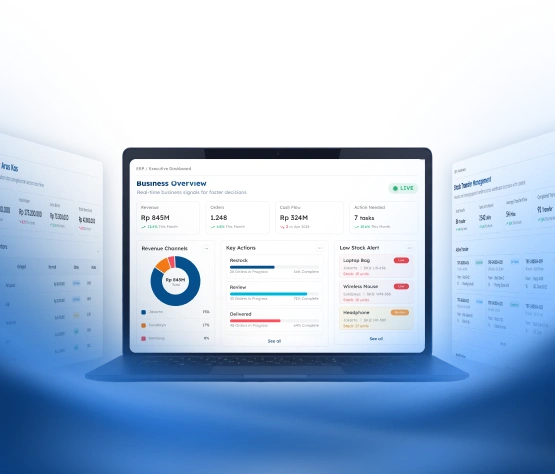
To address these challenges, businesses need a system that integrates and optimizes every warehouse activity. Luckily, ScaleOcean WMS offers a central warehouse solution that connects warehouse operations to inventory, finance, logistics, and sales on a single, unified platform, enabling real-time visibility and accurate decision-making.
With flexible features tailored to central warehouse needs, ScaleOcean helps businesses automate processes, improve efficiency, and scale operations with confidence. Request a free demo today to see how ScaleOcean can transform your warehouse management into a more seamless and data-driven system.
FAQ:
1. What are the specific business locations of the central warehouse in Singapore?
Central warehouses in Singapore are usually located in industrial areas such as Jurong, Tampines, and Changi, near ports and the airport. The exact location varies by company and industry, as “central warehouse” refers to a function rather than a single site.
2. What is Central Warehouse Corporation?
Central Warehousing Corporation (CWC) is a government-owned enterprise under India’s Ministry of Consumer Affairs. It provides warehousing, logistics management, and related services nationwide.
3. What is an example of a centralized warehouse?
A centralized warehouse is often located near its main supply source. For example, a warehouse handling dairy products may be integrated with, or close to, the factory that produces them for efficient dispatch.
4. What are the two basic types of warehouses?
Companies typically choose between two warehouse types: private warehouses owned by the company or public warehouses available for rent to store and distribute goods.





















.png)