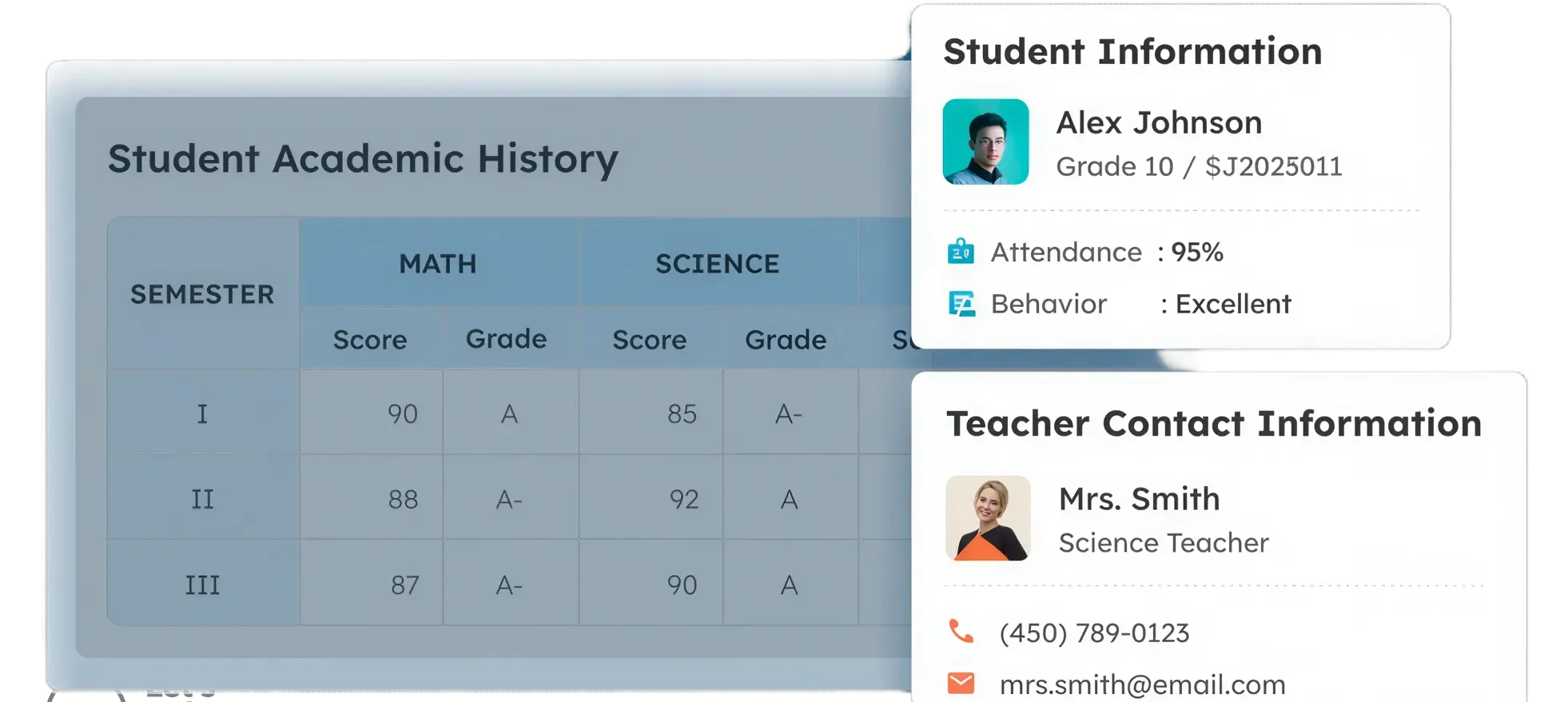
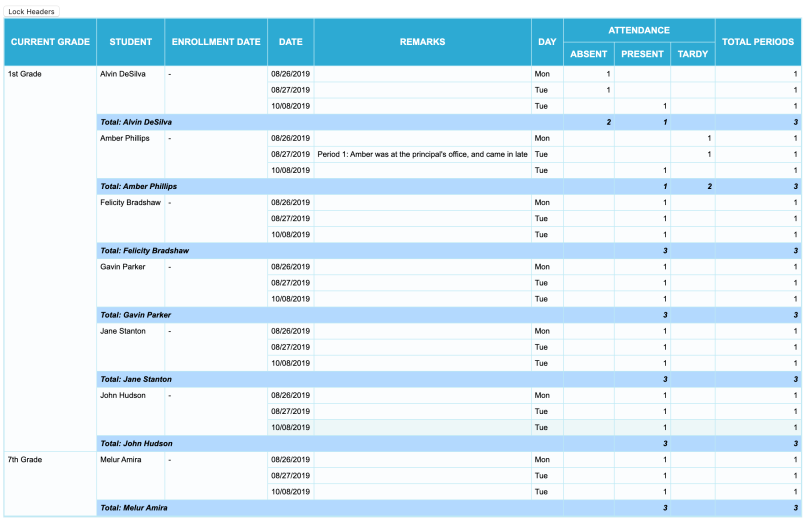
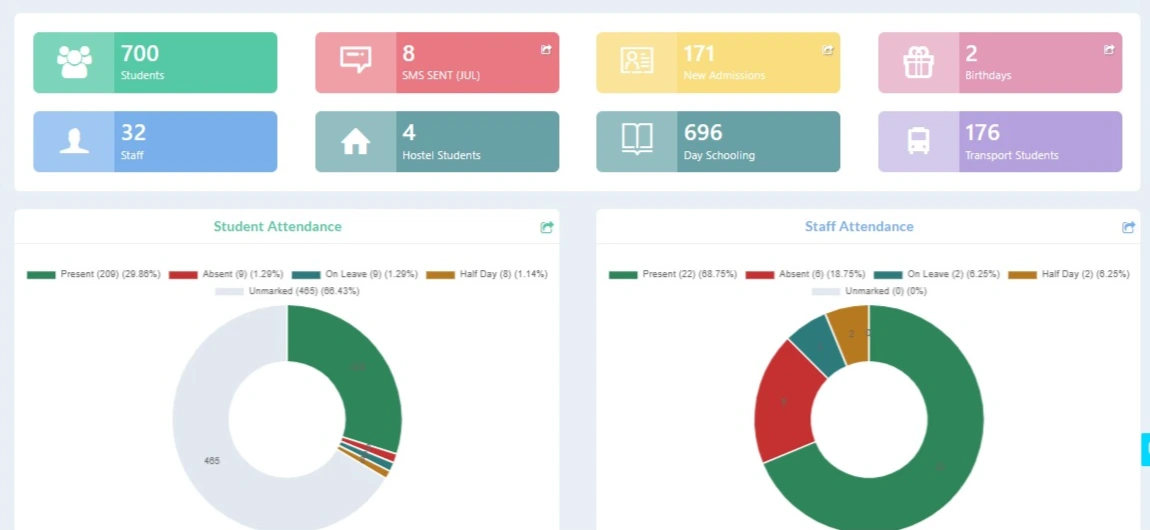
A student attendance management system is a computer and web-based program that manages attendance and attendance information for schools, colleges, and other educational institutions. Traditional pen-and-paper attendance methods show signs of inefficiency as the number of users rises exponentially.
According to the data our team found from Verified Market Reports, the growing adoption of attendance technology is reflected in market trends. The School Attendance Software market was valued at USD 2.1 billion in 2024and is projected to reach USD 4.8 billion by 2032, growing at a CAGR of 8.2% from 2025 to 2032.
A substantial number of school enterprises in Singapore use teachers to manually track attendance before the admin consolidates it and transfers it to a spreadsheet. Therefore, attendance data may reach the enterprise with a lag, causing operational lag and reduced real-time visibility.
Additionally, unreliable attendance statistics can have consequences for student health and well-being, parent contact, and program decisions. Without a centralized reporting system, schools might not be aware of rising truancy until the trend becomes problematic.
Hence, educational institutions have introduced attendance management systems tostreamline processes and ensure accountability. The systems provide instant access to new attendance data and reduce operational burden at the campus, department, and classroom levels.
In this article, we will understand what is student attendance management system, discuss the importance of attendance management, key system features, implementation processes, and recommended software solutions, including ScaleOcean, QuickSchools, SchoolLog, Attend, and Jibble.
Key Takeaways
A student attendance management system is a platform that automates students’ attendance tracking, reporting, and monitoring while improving administrative efficiency across educational institutions.
School attendance management is important because it helps schools save time, improve safety, strengthen accountability, and support data-driven educational decisions.
ScaleOcean School Attendance Management System helps schools streamline attendance processes through automation, analytics, centralized management, and system integration capabilities.
A student attendance management system is an application designed to automate the collection, verification, storage, and reporting of attendance data. It is a replacement for manual attendance collection methods with centralized digital tracking tools and processes.
Students’ presence at courses is recorded using QR codes, RFID cards, biometric devices, mobile apps, and dozens of self–service attendance terminals. After that, it is available throughout the system.
Sharing the tool allows the aggregation of attendance (or other records) accumulated across various classes, sections, grades, campuses, and semesters into a single database. This enhances transparency as opposed to document tracking across systems.
An overwhelming majority of modern systems also have analytics dashboards, auto notifications, and attendance trending reports. This helps different stakeholders in education get better insights into their operational efficiency and student engagement programs.
Why Attendance Management is Critical in Education?
Attendance management is critically linked with student achievement, student well-being, regulatory requirements of Education Authorities and other agencies, and efficient management of school resources. Schools need robust attendance monitoring systems that consistently produce reliable attendance data.
In addition to understanding what a student attendance management system is, using attendance data indicators provides information on students’ involvementand behavioral patterns, which can be paired with a student information management system. If schools have access to attendance records, intervention can occur before negative effects occur.
1. Time Savings
Attending to attendance in and out of the classroom all day, every day, costs teachers and staff valuable time and energy, and diverts time from classroom management and other services.
Attendance management systems digitalize tracking, reporting, and record storage, helping schoolsovercome burdensome administrative tasks. Schools experience increased efficiency and productivity across departments and even campuses.
2. Data-Driven Insights
Attendance records uncover essential trends about students’ mobility and performance. As a result, schools can anticipate risks and intervene as soon as necessary.
Furthermore, analytics dashboards within a class scheduling system provide decision-makers with measurable insights into student performance, supporting strategic planning and efforts to improve retention and academic achievement.
3. Improved Safety
Child safety is always a concern for schools and parents. So schools need a real-time view of student attendance and campus presence throughout each day from a student attendance software.
An automated attendance management system can instantly flag unexcused absences and other attendance irregularities. As a result, teachers and staff can respond more quickly, while students can always be accounted for at school.
4. Enhance Student Accountability
Regular monitoring of attendance helps students develop responsible attendance habits. Visibility to attendance data also provides feedback on maintaining punctuality and participation.
If students know the attendance numbers are being closely tracked, behavioral problems are likely to fade. This way, the students take greater responsibility and, at the same time, are academically inclined.
5. Informed Parental Involvement
Parents are significant collaborators in maintaining students’ attendance and achievement. Consequently, prompt communication from schools about attendance status enhances the school-family working relationship.
Automated attendance alerts notify parents right away of missed or late attendance, allowing for a faster response. This immediate notification helps parents address attendance issues promptly, while school asset tracking software supports better student engagement through more connected school operations.
6. Accuracy in Student Attendance Records
Manual attendance can lead to errors such as duplicate entries, absenteeism, or inconsistent reporting, from initial enrollment through the final step of the recording procedures. This has resulted in less reliable attendance records for administrators.
Any automated system will be effective in making student attendance recording and verification processes more uniform in all school settings. Therefore, schools will have more precise data. Also, there will be fewer inconsistencies in recording student attendance with a student attendance software.
7. Environment-Friendly Solution
Traditional attendance management is a laborious process that relies heavily on paper forms, printed reports, and physical archives. Consequently, institutions generate unnecessary administrative waste and storage requirements.
Digital attendance platforms solve this by eliminating most paper-based attendance processes through electronic recordkeeping. So, what is student attendance management system, in addition to making schools more efficient and informative, digital tools will also help schools to promote sustainability.
How Does the Attendance Management System Work in Education?
An attendance management system connects students, teachers, parents, and administrators through a single platform. As a result, attendance data automatically transfers from one stakeholder to another without re-entry.
The system tracks attendance, maintains records, generates reports, and sends alerts when needed. Moreover, the system allows users to view attendance data relevant to their privileges and responsibilities. Understanding what is parent portal helps institutions recognize how these platforms improve access to student information, enhance communication, and provide parents with greater visibility into academic activities.
1. For Teachers
Teachers use the attendance management system to record attendance and monitor student participation efficiently. Consequently, administrative workloads decrease while attendance records remain accurate and accessible.
Record attendance through mobile apps, web portals, or biometric devices.
Monitor attendance status and absenteeism trends in real time.
Submit attendance corrections and approval requests digitally.
Generate attendance reports without manual data consolidation.
2. For Students
Students interact with the system to register attendance and access attendance-related information. As a result, they gain greater visibility into their attendance records and responsibilities.
Check in using QR codes, RFID cards, or facial recognition.
View attendance history through student portals.
Submit leave requests and supporting documents online.
Receive notifications regarding attendance status and approvals.
3. For Parents
Parents can stay informed through automated attendance updates and self-service access tools. Therefore, they can respond quickly to attendance issues and support student accountability.
Receive instant alerts for absences and late arrivals.
Monitor attendance records through parent portals.
Review attendance summaries and trends.
Communicate attendance-related concerns with the school.
4. For Administrators
Administrators use the platform to oversee attendance operations across the institution. Consequently, they gain centralized visibility into attendance performance and compliance requirements.
Access attendance dashboards across classes and campuses.
Manage attendance policies, approvals, and permissions.
Key Features of Student Attendance Management Systems
The systems now incorporate automation, analysis, and communication tools to facilitate effective management of student attendance. As a result, institutions benefit from enhanced visibility, reduced administrative workload, and improved operational efficiencies.
These tools are compatible with a variety of attendance tracking approaches and integrations that suit the needs of diverse educational settings. As such, it allows institutions to choose an implementation solution that best meets their needs.
1. Mobile App & Online Cloud-Based Platforms
According to teachers, students, parents, and administrators, attendance information can be accessed from anywhere and synchronized across devices, keeping data up to date.
School agencies can also procure greater accessibility to consolidated data. Therefore, schools co-operate more effectively by not placing more reliance on the paper-based attendance officer process.
2. Hybrid Kiosk Solutions
With hybrid attendance kiosks, students can conveniently self-register their attendance at the school’s entrances and common areas. This makes the School effective with respect to the collection of attendance, as this software requires less administrative work.”
Such solutions can also be integrated with mobile applications and in-class attendance systems. Hence, schools still have the flexibility to cater to different needs across campuses.
3. Facial Recognition & Biometrics
Biometric and facial recognition technologies accurately and efficiently confirm students’ identities. Schools benefit from less attendance cheating and greater confidence in their attendance records.
Furthermore, biometric attendance systemsspeed up student check-in, especially during peak times at the school. Therefore, the institutional processes are more efficient, and attendance validation is more reliable.
4. QR Codes & NFC
QR code and NFC attendance systems allow students to check in quickly using a school-provided device. This makes recording attendance a cost-effective solution for schools to track students efficiently.
These systems also allow for contactless attendance retrieval, shortening processing speed. Therefore, schools can enhance the user experience without losing precise attendance records.
5. Geofencing & GPS Tracking
Moving geofencing verifies student attendance at identified schools and attendance zones. This helps keep schools’ attendance records accurate.
Use GPS tracking to improve on this process. This example is more suitable for validating attendance during school trips and other extracurricular activities, enabling schools to monitor activity while still allowing flexible teaching programs and experiences.
6. API-Based LMS Sync
API integrations help to link attendance management with LMS and other educational systems. Hence, the attendance details can be transferred freely between integrated systems.
This makes sense: The synchronization saves schools from duplicative data entry and also maintains information consistency across the school departments.
7. Student Portal
Learners can access their attendance histories, attendance percentages, and related information via student portals. Thus, students are empowered to have better control of their attendance.
Moreover, clear attendance records motivate students’ active participation and accountability. Consequently, students will have greater awareness of attendance and involvement in the learning process.
8. Approval Workflows
Approval workflows automate the process of requests for absences, leave of absence, and attendance corrections. As a result, the schools can streamline the attendance process and significantly reduce administrative bottlenecks.
The system also ensures greater transparency through audit trails for requests and approvals across all attendance-related work. This greatly helps strengthen governance within institutions.
9. Notifications & Alerts
Automated alerts provide instant notification of student absences, late arrivals, and attendance anomalies. This enhanced communication enables schools to respond more efficiently to attendance issues.
Attendance issues are eventually addressed by parents, teachers, and administrators, who are informed earlier through their preferred means of communication. Therefore, it reduces the cycle of attendance problems and enables earlier action.
10. Absenteeism Prediction
Advanced attendance systems evaluate past attendance data to forecast the likelihood of future absences. This way, schools can take corrective actions before attendance issues occur.
Predictive analytics further improves the success of intervention programs and student retention efforts. In this way, schools act rather than react to the needs of individual students.
11. Custom Dashboards
Each role and responsibility has a custom dashboard displaying attendance metrics that are important to that person’s organization. Users view the information they need without navigating through layers of reporting.
Over time, schools can track attendance performance by campus, grade, class, or grading period. Consequently, decision-makers have concrete information to support operational and educational goals.
12. Scheduled Reports
Automatically sends attendance lists to the auto report, which is then automatically sent to the identified parties. This helps schools maintain a consistent view, as they do not have to generate reports themselves.
The processes necessary to generate these reports readily support compliance, performance measurement, and strategic planning. In general, administrators can spend less time creating data while providing a better institutional view.
Some Recommendations for Student Attendance Management System Software
Educational institutions require attendance management software that supports automation, reporting, communication, and operational visibility. Therefore, selecting the right platform depends on scalability, integrations, user accessibility, and attendance tracking capabilities.
The following comparison highlights several attendance management solutions commonly used across educational environments. Consequently, schools can evaluate each platform according to their operational priorities and digital transformation goals.
Tools
Features Offered
ScaleOcean
Cloud-based attendance management, biometric integration, real-time dashboards, attendance analytics, shift and schedule management, approval workflows, employee and student portals, ERP integration, and automated reporting.
Student attendance tracking, school communication tools, report generation, student information management, timetable management, fee management, and academic administration features.
Attend
Attendance monitoring dashboards, absenteeism management, intervention workflows, attendance alerts, reporting tools, parent communication support, and attendance analytics.
Jibble
Mobile attendance tracking, facial recognition, GPS tracking, kiosk mode, attendance reports, cloud synchronization, group management, and automated timesheets.
This comprehensive analysis allows institutions to make well-informed decisions by thoroughly evaluating their options, thereby ensuring that the selected system not only meets their current requirements but also aligns with their long-term strategic objectives and growth plans.
1. ScaleOcean
ScaleOcean’s School Attendance Management System provides an all-in-one solution that integrates attendance, academic administration, class management, and parent communication into a centralized platform. Furthermore, schools can scale operations through unlimited users and multi-campus integration.
The platform automates attendance processes, supports extensive customization, and integrates seamlessly with existing educational systems. Additionally, it supports Singapore GST compliance and local financial reporting standards, and may qualify for PSG or CTC Grant subsidies of 50-70%.
You can request a free demo of ScaleOcean to discover how ScaleOcean can assist your school in its digital transformation journey.
Key Features of ScaleOcean School Attendance Management System:
Hardware Integration: Supports biometric scanners, RFID devices, and QR code attendance for faster, more accurate attendance recording.
Real-Time Reporting: Synchronizes attendance data instantly to centralized dashboards, providing immediate visibility into attendance activities.
Parent Notifications: Automatically sends attendance alerts through email, SMS, or mobile notifications when students are absent or late.
Attendance Analytics: Visualizes attendance trends and absenteeism patterns to help schools identify at-risk students earlier.
Self-Service Portal: Enables students and parents to submit leave requests, absence explanations, and supporting documents digitally.
Pros
Cons
Flexible workflows, approvals, and reports can be configured to match institutional policies.
Modular implementation allows schools to gradually prioritize the phases of digitalization.
Supports expanding the ERP ecosystem beyond attendance management.
Emphasizes long-term system stability and scalability over short-term deployment speed.
Scaleocean offers a range of features and modules, so it may be excessive for schools that only need basic attendance tracking.
ScaleOcean’s implementation is tailored to fit each business’s operations, which may extend implementation time.
Best For: ScaleOcean is best suited for schools, universities, educational groups, and multi-campus institutions that require more than basic attendance tracking. It benefits organizations needing configurable workflows, centralized management, and a scalable platform for digital transformation.
2. QuickSchools
QuickSchools attendance management system is a school administration platform that includes attendance tracking as part of its broader academic management functions. It helps schools manage student records, attendance, grading, and communication from a centralized system.
The platform focuses on simplifying daily school operations through web-based access and administrative tools. As a result, schools can monitor attendance while handling other academic activities within the same environment.
Key Features of QuickSchools:
Attendance Tracking
Gradebook Management
Parent & Student Portal
Class Scheduling
Pros
Cons
Easy to use
Web-based access
Includes academic management tools
Attendance features may be less specialized
Limited customization for complex workflows
Advanced analytics can be basic
Best For: Small to mid-sized schools that need attendance tracking alongside student information and academic management functions within a single platform.
3. SchoolLog
SchoolLog attendance management system is a school management solution that supports attendance monitoring, student administration, and communication processes. It helps educational institutions maintain attendance records and administrative documentation digitally.
The platform combines attendance tracking with several operational school functions. Therefore, schools can centralize routine administrative tasks while maintaining visibility over student attendance activities.
Key Features of SchoolLog:
Student Attendance Tracking
School Communication Tools
Timetable Management
Report Generation
Pros
Cons
Centralized school records
Simple attendance monitoring
Includes communication features
User interface may vary by implementation
Customization options can be limited
Enterprise-level functionality may be restricted
Best For: Small and mid-sized schools seeking a straightforward platform for attendance management and day-to-day administrative operations.
4. Attend
Attend’s attendance management system focuses primarily on monitoring, tracking, and reporting attendance. It helps schools improve attendance visibility and identify attendance-related concerns more efficiently.
The platform emphasizes oversight of attendance through dashboards, alerts, and reporting tools. Consequently, educational institutions can monitor attendance performance and respond to attendance issues more proactively.
Key Features of Attend:
Attendance Monitoring
Absenteeism Tracking
Attendance Alerts
Reporting Dashboard
Pros
Cons
Focused attendance functionality
Easy attendance reporting
Supports intervention monitoring
Limited broader school management features
May require additional systems
Integration options can vary
Best For: Schools and educational organizations that prioritize attendance monitoring and absenteeism management without requiring a full school management suite.
5. Jibble
The Jibble attendance management system is a cloud-based platform that supports digital check-ins and time tracking. It helps organizations and educational institutions record attendance through mobile and web-based tools.
The platform offers multiple attendance verification methods and cloud synchronization capabilities. As a result, users can access attendance information across different devices and locations.
Key Features of Jibble:
Facial Recognition Attendance
GPS Tracking
Mobile Attendance App
Attendance Reporting
Pros
Cons
Mobile-friendly platform
Multiple attendance methods
Simple cloud-based access
Primarily designed for general attendance tracking
Education-specific features may be limited
Advanced administration tools can require additional setup
Best For: Small to mid-sized schools that need a simple cloud-based attendance solution with mobile access and flexible attendance verification options.
How Does Student Attendance Management System Software Optimize Schools?
Attendance management software allows institutions to automate attendance procedures that were previously handled manually and on paper. Consequently, teachers have more time to prepare for lessons while administrators can retrieve and review attendance reports more efficiently.
Additionally, the technology provides greater visibility into the entire school through real-time reporting, tracking, and monitoring tools across classrooms, departments, and campuses. As a result, the school management system will be able to detect attendance problems more quickly and take well-informed action.
The availability of automated messages and communication between the parent and the teacher further strengthens the relationship between the school and the family. As a result, schools can use these tools to promptly address absences, tardiness, and other attendance issues.
Current attendance systems provide even more support for data-driven education management by offering analytics, dashboards, and predictive insights. Consequently, schools become more efficient in their operations while ensuring an accountable learning setting.
A notable example comes from Ngee Ann Polytechnic, which piloted AI-powered facial recognition cameras to automatically record attendance when students are seated in classrooms. Consequently, lecturers no longer need to perform manual attendance checks.
The system uses artificial intelligence and analytics to streamline attendance management and support classroom administration. As a result, schools can reduce administrative workloads while improving the efficiency of attendance monitoring.
Conclusion
A student attendance management system helps schools automate attendance tracking, improve record accuracy, and strengthen communication. As a result, institutions can reduce administrative workloads while improving operational efficiency.
ScaleOcean’s student attendance management system provides a centralized attendance solution with automation, analytics, and system integration capabilities. Therefore, schools can manage attendance processes more efficiently while gaining better operational visibility.
Designed for growing educational institutions, ScaleOcean also supports scalable attendance management across multiple campuses and departments. Book a free demo today to discover how ScaleOcean can support your school’s digital transformation journey.
FAQ:
1. Why is it important to monitor student attendance?
Monitoring creates an early warning system to catch learning gaps before they widen. Consistent attendance directly links to reading proficiency, higher graduation rates, and better long-term career success. Tracking data lets schools offer immediate help to families facing hidden challenges.
2. What causes poor student attendance?
Absences stem from chronic illness, financial instability, and lack of transportation. Psychological factors like anxiety, bullying, and a negative school climate also push students away. Disengagement occurs when coursework feels irrelevant or when parents undervalue daily classroom learning.
3. How to fix attendance problems at school?
Schools must build a supportive, welcoming culture and track real-time absence data. Partnering with families through clear communication prevents blame. Offering targeted support like student mentoring, systemic mental health resources, and reliable transportation helps eliminate major barriers.
4. What can teachers do to improve student attendance?
Teachers can personally greet students at the door to foster a sense of belonging. Designing interactive, relevant lessons motivates students to show up. Teachers should also make positive phone calls home, show deep empathy for families’ struggles, and enthusiastically welcome students back after an absence.













 Key Takeaways