


EBITDA is the acronym for earnings before interest, taxes, depreciation, and amortisation. It represents a company’s operating income, but without some non-cash expenses, tax effects, and financing choices. EBITDA is one of the most popular metrics used by CEOs, CFOs, lenders, and investors to compare and assess a company’s operating performance as well as make comparisons between companies that have different capital structures.
Calculating EBITDA when these revenues and expenses, fixed assets, inventory, procurement, and project costs are recorded in different systems can be a bit tricky. Finance departments may require combining the spreadsheets of several departments, reconciling discrepancies in account classification, and checking that depreciation or accounting for one-off adjustments has been done correctly.
That’s where an integrated accounting platform can help; all transactions are integrated into the general ledger. Revenue, purchasing, inventory utilized, depreciation of assets, payroll, and project costs can be combined and reported in one environment for management, giving them a more consistent basis on which to calculate reported and adjusted EBITDA.
From the data we gathered from Gartner, 59% of those surveyed accountants experienced a few financial mistakes a month, and 18% made a mistake at least daily. The results show why automated transaction capture, managed workflows, and financial data connectivity are becoming more crucial for accurate performance reporting.
Learn what EBITDA is, how to use net income or operating income to calculate it, what it tells you, its drawbacks, and how companies can better manage EBITDA with accounting software integration.
 Key Takeaways
- EBITDA is a financial performance metric that removes interest, taxes, depreciation, and amortisation from earnings.
- How to calculate EBITDA involves adding interest, taxes, depreciation, and amortisation to net income or adding depreciation and amortisation to EBIT.
- EBITDA analysis helps management, investors, and lenders compare operational performance, evaluate valuation multiples, and assess earning capacity.
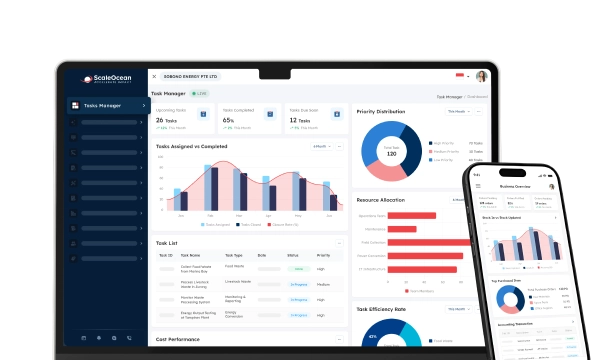
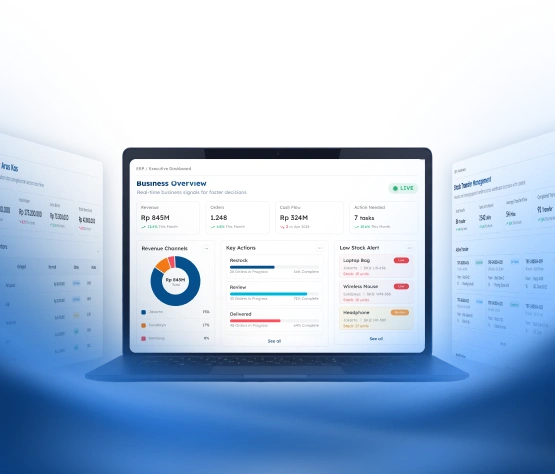
- ScaleOcean Accounting Software connects financial and operational data with AI Insight, AI Forecast, Smart Alerts, and configurable reports for more reliable EBITDA monitoring.

What Is EBITDA?
EBITDA (earnings before interest, taxes, depreciation and amortisation) is a financial measurement that strips out interest, taxes, depreciation and amortisation from earnings. These items cancel each other out, making the calculation more directly related to the profitability from the day-to-day operations of the business.
This ratio is monitored together with the growth of revenue, operating margin, net profit, cash flow, debt, and other financial metrics. EBITDA should not be used in place of those measures, but rather serve as a good starting point when assessing operating efficiency.
The principal components are:
- di bold Earnings: The profit generated after recognizing revenue and operating expenses.
- Interest: Financing costs arising from loans, bonds, leases, or other debt arrangements.
- Taxes: Corporate income taxes are determined by jurisdiction, taxable profit, and available reliefs.
- Depreciation: The allocation of tangible fixed-asset costs over their expected useful lives.
- Amortisation: The allocation of intangible-asset costs over their recognized useful lives.
Earnings Before Interest
Earnings represent the company’s profit after revenue and operating costs have been recorded. Depending on the chosen method, businesses can calculate EBITDA by starting with net income and adding back interest, taxes, depreciation, and amortisation, or by starting with operating income and adding depreciation.
The term “before interest” refers to the costs of financing, which will allow the metric to measure the performance of the company without the influence of its financing. This helps to make comparisons between businesses that have different levels of debt, but management should evaluate interest coverage, debt repayment schedules, debt maturity, and liquidity.
Taxes
Taxes are not included in EBITDA because taxes vary by jurisdiction, legal structure, tax incentives, historical losses, and when taxable income is realized. Their deletion enables decision makers to make comparisons without the effects of differences between tax environments.
This adjustment can be very beneficial for multinational companies where subsidiaries are reporting under different tax rates. But taxes are still a valid cash flow commitment, so there will be a need to reconcile between EBITDA and a profit before tax, taxable income, tax payments, and net income.
Depreciation
Depreciation is the process of distributing the cost of a tangible asset over its useful life, such as machinery, buildings, equipment, vehicles, and computers. When looking at the EBITDA, it is a non-cash item in the reporting period.
Eliminating depreciation would enhance the comparison between companies that have different asset ages or accounting policies. However, assets will still be in need of maintenance, upgrading, or replacement, and EBITDA should be considered in conjunction with capital spending, asset condition, and replacement planning.
Amortisation
Amortisation applies the same allocation principle to intangible assets such as software licences, patents, trademarks, customer relationships, acquired technology, and franchise rights. It is added back because the expense usually does not represent an immediate cash payment in the current period.
Amortisation can make it easier to compare two companies that have different histories. Despite this, intangible assets may require ongoing investments in their renewal, development, branding, or in technology upgrades, and it is essential to know the nature and value of each amortisation adjustment in the future.
How to Calculate EBITDA?

EBITDA can be computed using either net income or operating income. Both methods should yield the same outcome when the records of finances are complete, and the categories used in accounting are consistent.
Net Income Approach
The net income approach starts from the company’s final profit and adds back interest, taxes, depreciation, and amortisation. It is suitable when these expenses are clearly separated in the income statement.
EBITDA = Net Income + Interest Expense + Taxes + Depreciation + Amortisation –> kalo udah masuk shortcode ini remove aja
EBITDA = Net Income + Interest Expense + Taxes + Depreciation + Amortisation
For example:
- Net income: S$1,150,000
- Interest expense: S$250,000
- Income tax expense: S$300,000
- Depreciation: S$300,000
- Amortisation: S$100,000
EBITDA = S$1,150,000 + S$250,000 + S$300,000 + S$300,000 + S$100,000
EBITDA = S$2,100,000
Finance teams should confirm that each amount is added back only once. Incorrect account mapping or duplicated adjustments can overstate the final EBITDA figure.
Operating Income Approach
The operating income approach begins with earnings before interest and taxes, commonly called EBIT. Since operating income already excludes interest and income tax, businesses only need to add depreciation and amortisation.
EBITDA = Operating Income or EBIT + Depreciation + Amortisation
Using the same example:
- Operating income or EBIT: S$1,700,000
- Depreciation: S$300,000
- Amortisation: S$100,000
EBITDA = S$1,700,000 + S$300,000 + S$100,000
EBITDA = S$2,100,000
This method may be more direct, but finance teams must identify where depreciation and amortisation appear. These expenses may be recorded under cost of sales, administrative expenses, distribution costs, or several accounts.
Calculating the EBITDA Margin
The EBITDA margin shows how much operating earnings remain as a percentage of revenue. It supports comparisons across periods, business units, and companies of different sizes.
EBITDA Margin = EBITDA ÷ Revenue × 100
When the company generates S$10 million in revenue:
EBITDA Margin = S$2,100,000 ÷ S$10,000,000 × 100
EBITDA Margin = 21%
A rising margin may indicate stronger pricing, better productivity, or tighter cost control. A declining margin may reflect higher material costs, labour expenses, discounts, unused capacity, or rapidly increasing overheads.
Reported EBITDA and Adjusted EBITDA
Reported EBITDA is calculated from recognized figures in the company’s financial records. Adjusted EBITDA modifies that result by excluding items management considers exceptional, non-recurring, or unrelated to normal operations.
Common adjustments include restructuring expenses, acquisition costs, legal settlements, asset disposal gains, and exceptional losses. Each adjustment should be clearly defined and supported because excessive exclusions may present a stronger view of performance than the underlying business justifies.
For example, a company with reported EBITDA of S$2.1 million may add back a genuinely non-recurring restructuring cost of S$200,000:
Adjusted EBITDA = S$2,100,000 + S$200,000
Adjusted EBITDA = S$2,300,000
The company should reconcile adjusted EBITDA with the reported figure and retain supporting evidence for every adjustment. Applying the same definition across reporting periods also improves consistency and comparability.
What Does EBITDA Actually Tell You?
EBITDA reflects the earnings of a company’s core business before the factors of its financing structure, income taxes, and non-cash asset charges are taken into account. Can assist Management to determine if the commercial model is generating adequate operating returns.
If EBITDA is trending up and up, this could mean that revenue is increasing at a faster rate than operating costs. However, falling EBITDA can also signal that there may be a problem with prices, raw materials, labour, manufacturing productivity, store performance, or sales activity.
The Metric is also good at supporting margin analysis. Management can report EBITDA at the monthly, branch, subsidiary, product group, project, or business unit level to determine the most profitable operating segments of the organization.
Lenders may consider EBITDA when evaluating a borrower’s ability to support debt, while investors may use EBITDA multiples to compare enterprise values. Boards frequently monitor EBITDA against budget, previous periods, and strategic targets.
However, EBITDA does not explain the cause of every movement. A higher figure may result from sustainable productivity improvements, but it may also arise from reduced maintenance, delayed recruitment, or temporary cost reductions.
ScaleOcean’s AI Insight can analyze movements across revenue, operating costs, asset charges, departments, and entities to identify the drivers behind EBITDA changes. AI Forecast can then use historical and operational data to project revenue, costs, margins, and potential EBITDA outcomes.
Request our free demo to assess how AI-supported variance analysis and forecasting provide more than a static EBITDA total, helping finance teams understand why the result changed and what may happen next.
What EBITDA Doesn’t Tell You
EBITDA does not reveal the amount of cash in the bank at the moment. Revenue might be recognised prior to customers paying for it, and expenses, loan repayments, taxes, and capital investments might require immediate cash settlement.
It also fails to show the movements of working capital. A company may have high EBITDA and low cash turnover, with accounts receivable that are overdue, inventory that is excessive, payments made in advance to suppliers, or slow-moving inventory.
Capital expenditure is not included in the metric. Thus, if one company needs to invest heavily in machinery, fleets, stores, data centres, or production, the free cash flow of the two can be very different even when their EBITDA is the same.
EBITDA also does not include the interest and principal repayments on debt. A company may have positive operating earnings and still be highly leveraged or be at significant risk of refinancing.
Furthermore, EBITDA does not assess whether an investment creates long-term value. Capital proposals should be evaluated with cash flow projections, risk analysis, and methods such as NPV (Net Present Value).
Hence, EBITDA must be used along with operating cash flow, free cash flow, net income, debt, working capital, capital expenditure, and return measures.
Why Is EBITDA Used?

EBITDA is used to report the operating performance of a company, excluding financing costs, taxes, depreciation, and amortisation. These are stripped from the metric, thereby providing management with a better picture of the underlying operational performance.
It also facilitates more level comparisons between businesses with different tax bases, debt structures, and asset bases. EBITDA can be a valuable tool for investors and decision makers to evaluate the earning power of a business, track performance trends, and compare results with those of other businesses in their industry.
1. Measures Core Performance
EBITDA removes the impact of financing and capital spending from a company’s earnings. Financial expenses are not included, so management can concentrate on revenue growth, pricing, productivity, labour efficiency, purchasing costs, and operating expense control.
Companies can monitor EBITDA from period to period, department to department, branch to branch, product to product, or project to project to identify performance changes. Management should, however, differentiate between the sustainable improvement and the short-term savings, which may be made by deferring maintenance, which could lead to future operating risks but result in temporary improvement of the current EBITDA.
2. Enables Fair Comparisons
Different financing structures, tax structures, and asset policies may exist across companies with similar operations. Some companies may grow with equity financing, while others may finance growth with loans and therefore have significantly more interest expenses.
These structural differences can be minimized and more consistent comparisons made after excluding interest, taxes, depreciation, and amortisation. Revenue and analysts will need to verify each company’s methodology for calculating its reported or adjusted EBITDA and which expenses were deducted from the calculation.
3. Evaluates Asset-Heavy Businesses
Asset-heavy businesses often record substantial depreciation because they depend on factories, machinery, fleets, warehouses, buildings, or infrastructure. Adding depreciation back allows stakeholders to assess operating earnings without differences in asset age or depreciation policies dominating the comparison.
But these assets are not necessarily free of costs, as EBITDA does not mean. Its value should be evaluated along with maintenance and growth capital expenditure, asset utilization, equipment downtime, remaining useful life of the equipment, and future replacement.
4. Proxies Cash Flow
EBITDA is sometimes used as a rough proxy for cash generation because depreciation and amortisation generally do not require current-period cash payments. It can provide a preliminary indication of operating earnings during budgeting, valuation, credit analysis, or investment screening.
EBITDA does not equate to operating cash flows. It is not a replacement for detailed cash flow analysis, is not intended to include receipts of collections, purchases of inventories, timing of payments to suppliers and taxes, payments on interest, or other working-capital transactions.
Limitations of EBITDA
EBITDA is a good measure of operating income, but it isn’t a complete measure of profitability, liquidity, or financial health. It does not form part of a standard subtotal that is required as per GAAP or IFRS, so businesses can define subtotals differently and use various adjustment policies.
Its exclusions may also result in blind spots as well. If there is any need to gain a true picture of the company’s financial situation, then all of the above must be taken into account, along with capital expenditure, debt costs, working-capital needs, taxes, and the economic cost of assets.
1. Hides Capital Expenditures
Whilst EBITDA does include depreciation, it is the company’s responsibility to purchase, maintain, and replace those assets that help them to run the business. In an excellent EBITDA scenario, a logistics company may be spending a lot of money on replacing its old fleet.
This limitation can make capital-intensive businesses appear more cash-generative than they are. Management should therefore compare EBITDA with maintenance and growth capital expenditure, asset condition, capacity utilization, replacement schedules, and free cash flow.
2. Masks High Debt Loads
This will enable an apples-to-apples comparison of enterprises with different financing models because the valuation will be done without interest. However, this type of treatment can cover up financial pressure if the business incurs high financing costs, has a significant number of principal repayments due, or is highly indebted.
Boards and lenders should review net debt-to-EBITDA, interest coverage, debt maturity, covenant headroom, and refinancing exposure. Positive EBITDA alone does not confirm that the company can meet its contractual obligations or maintain sufficient liquidity.
3. Not a GAAP Metric
EBITDA is not on a GAAP or IFRS basis, and may be defined and reported in various ways by companies. The variance will be larger if businesses report adjusted EBITDA excluding restructuring or acquisition expenses, legal or impairment expenses.
The reconciliation of EBITDA and the audited financial statements should not be assumed by the stakeholders. Periods should also be mapped consistently, have the same categories of adjustments, the same rules for evidence, and the same rules for approval.
4. Ignores Working Capital
EBITDA follows accrual-based accounting and does not show whether customers have paid, suppliers require settlement, or inventory has been converted into sales. A growing company may therefore report increasing EBITDA while experiencing declining cash availability.
The cash conversion cycle, the days sales outstanding, DIO, the payable terms, DIS, and DOPCs should be based on EBITDA. These are indications of how income is converted into cash that is spent.
5. Ignores Asset Costs
If depreciation and amortisation are included, then it may seem as though the use of assets does not have an economic impact. It is undeniable, however, that machines, buildings, software, technology, and/or IP must be maintained, renewed, developed, and/or replaced at some point in time.
Capital expenditure, maintenance costs, research and development, impairment risks, and remaining asset life should be considered by analysts. This is especially important for companies with comparable EBITDA margins that have different investment requirements, for example, asset-light companies versus asset-heavy companies.
6. Earnings Figures May Be Suspect
EBITDA depends on the accuracy of the underlying revenue and expense records. Premature revenue recognition, delayed expenses, inconsistent accruals, incorrect account classifications, or unsupported adjustments can materially distort the reported figure.
Adjusted EBITDA creates additional judgment because management decides which items are exceptional or non-recurring. When recurring costs are repeatedly excluded, the adjusted result may no longer reflect the company’s sustainable operating performance.
Finance teams need detailed audit trails, approval controls, supporting documents, and consistent period-to-period reconciliations. ScaleOcean Accounting Software connects transaction records with fixed assets, expenses, revenues, and configurable EBITDA reports, while Smart Alerts flag unusual margin or cost movements.
Its AI Business Assistant also helps users retrieve reports, trace transactions, and investigate variances without navigating disconnected systems. Businesses can arrange a free demo of ScaleOcean to explore how transaction-level drill-down and controlled adjustments improve the transparency of reported and adjusted EBITDA.
Examples and Use Cases of EBITDA
Consider a distribution company with the following annual results:
- Revenue: S$10,000,000
- Cost of goods sold: S$6,200,000
- Operating expenses: S$2,100,000
- Depreciation included in operating expenses: S$300,000
- Amortisation included in operating expenses: S$100,000
- Interest expense: S$250,000
- Income tax expense: S$300,000
- Net income: S$1,150,000
The company’s operating income is S$1.7 million, while its EBITDA is S$2.1 million. Its EBITDA margin is therefore 21%.
This result does not mean the company generated S$2.1 million of free cash. Management still needs to consider receivable collection, inventory purchases, supplier payments, interest, taxes, capital expenditure, and debt repayments.
- CFO budgeting and performance management
To compare actual EBITDA with budget, forecast, and previous periods, CFOs might have to perform an analysis. Variances can then be further broken down by revenue, materials cost, labour, overhead, branch, or business unit.
Based on the data our team collected from Deloitte, 83% of surveyed finance leaders identified revenue growth as their leading goal. EBITDA analysis can support that objective by showing whether revenue growth is also producing stronger operating earnings rather than merely increasing sales volume.
- Investor valuation
One of the comparisons that investors often make is between enterprise value and EBITDA to gauge the market’s valuation of the operating earnings of the company.
The investor can make the comparison with the company’s EV/EBITDA multiple, compare it with past transactions, and look at possible growth.
- Lender assessment
EBIT is less susceptible to the economic cost of tangible and intangible assets because it accounts for depreciation and amortisation. EBT adds interest to capture the impact of financing choices.
EBITA doesn’t include amortisation but does include depreciation. Although it might be useful for companies that have a large amount of acquired intangible assets but still must recognize the cost of physical assets.
- Merger and acquisition analysis
Corporate development teams use EBITDA to compare acquisition targets and estimate valuation multiples. They may also develop a normalized EBITDA by adjusting owner compensation, one-off professional fees, unusual losses, or temporary operating disruptions.
Buyers should verify that the proposed adjustments are supported by evidence. They should also model post-acquisition capital expenditure, working capital, integration costs, and financing requirements.
- Branch and subsidiary benchmarking
Multi-entity groups can calculate EBITDA for each subsidiary, branch, warehouse, outlet, or regional operation. This helps management identify profitable entities and units with cost, pricing, or productivity issues.
Comparisons must account for shared-service allocations, intercompany transactions, local currencies, and differences in business models. Inconsistent account mapping can otherwise distort the result.
ScaleOcean consolidates financial data across companies, branches, warehouses, and business units while supporting multi-currency reporting and automated intercompany reconciliation. Management can review local EBITDA, consolidated EBITDA, and underlying transactions from a connected environment.
Companies managing complex group structures can book a free demo of ScaleOcean to explore consolidated reporting, multi-entity drill-down, and scalable accounting without additional user licence fees.
EBITDA vs. EBIT vs. EBT vs. EBITA
EBITDA, EBIT, EBT, and EBITA each remove different expenses from earnings. The correct metric depends on whether the analysis focuses on operations, asset consumption, financing structure, or taxation.
| Aspect | EBITDA | EBIT | EBT | EBITA |
|---|---|---|---|---|
| Full Name | Earnings before interest, taxes, depreciation, and amortisation. | Earnings before interest and taxes. | Earnings before taxes. | Earnings before interest, taxes, and amortisation. |
| Basic Formula | Net income + interest + taxes + depreciation + amortisation. | Net income + interest + taxes. | Net income + income tax. | Net income + interest + taxes + amortisation. |
| Interest Excluded | Yes | Yes | No | Yes |
| Taxes Excluded | Yes | Yes | Yes | Yes |
| Depreciation Excluded | Yes | No | No | No |
| Amortisation Excluded | Yes | No | No | Yes |
| Primary Focus | Operating earnings before capital structure and selected non-cash asset expenses. | Operating profit after recognizing asset depreciation and amortisation. | Profit after financing expenses but before income tax. | Operating earnings before financing, tax, and intangible-asset amortisation. |
| Common Uses | Valuation, lender analysis, operating comparison, and management reporting. | Operating-profit analysis and assessment of asset-related costs. | Reviewing profitability after financing decisions but before tax effects. | Comparing businesses with significant acquired intangible assets. |
EBIT includes depreciation and amortisation, making it more sensitive to the economic cost of tangible and intangible assets. EBT goes one step further by including interest, thereby reflecting the effect of financing decisions.
EBITA excludes amortisation but retains depreciation, making it useful for evaluating companies with substantial acquired intangible assets while still recognising depreciation as part of their operating costs.
EBITDA vs. Operating Cash Flow
EBITDA is a measure of operating earnings, while operating cash flow represents cash generated or consumed from operating activities. The amount of the two figures can vary quite a bit, as accounting earnings and cash flow movements have different timing rules.
| Aspect | EBITDA | Operating Cash Flow |
|---|---|---|
| Working Capital Changes | Does not account for movements in receivables, inventory, payables, or other working-capital accounts. | Reflects working-capital changes that affect the cash generated or consumed by daily operations. |
| Performance View | Provides a snapshot of operating earnings before interest, taxes, depreciation, and amortisation. | Shows how much actual cash the company’s core business activities generate during a period. |
| Primary Purpose | Helps assess underlying earning capacity and compare operating performance across businesses. | Helps management evaluate liquidity, cash availability, and the funding of routine obligations. |
| Calculation | Calculated by adding interest, taxes, depreciation, and amortisation to net income. | Calculated by adjusting profit for non-cash items and movements in operating assets and liabilities. |
| Complexity | Generally simpler to calculate when the required income statement figures are clearly classified. | Requires more detailed analysis because it incorporates transaction timing and working-capital movements. |
| Valuation Use | Frequently used in valuation multiples such as EV/EBITDA to compare companies and acquisition targets. | Can support valuation analysis by showing whether reported earnings are converted into operating cash. |
| Main Limitation | May overstate cash-generating capacity because it excludes working capital, interest, taxes, and capital expenditure. | May fluctuate because of payment timing and does not deduct capital expenditure recorded under investing activities. |
When receivables and inventory are growing rapidly, an increase in EBITDA can result in a decrease in operating cash flow for a business. The opposite can happen when the company collects old receivables or temporarily cuts down on stock buying.
Management should agree with the two metrics and consider material differences. This process clarifies if cash is being generated from accounting earnings efficiently.
EBITDA vs. Gross Profit
While gross profit is defined as revenue less direct costs, EBITDA includes a wider range of expenses, including operating costs like professional services, salaries, rent, marketing, technology, and administration.
Understanding each Operating Cost is essential because an organization may produce a strong gross margin but a weak EBITDA after overheads are recognized.
| Aspect | EBITDA | Gross Profit |
|---|---|---|
| Definition | Earnings before interest, taxes, depreciation, and amortisation. | Revenue remaining after direct production or service costs. |
| Basic Formula | Net income + interest + taxes + depreciation + amortisation. | Revenue − cost of goods sold. |
| Direct Costs | Included in the calculation. | Deducted from revenue. |
| Operating Overheads | Includes most operating overheads. | Excludes administrative, marketing, and general overheads. |
| Performance View | Shows broader operational profitability across the business. | Shows profitability after direct product or service costs. |
| Primary Purpose | Evaluates overall earning capacity and operating efficiency. | Evaluates pricing, sourcing, production, and product margins. |
| Common Margin | EBITDA margin. | Gross profit margin. |
| Main Limitation | Excludes financing, taxes, asset charges, and working-capital movements. | Does not show whether gross earnings can cover operating overheads. |
If receivables and inventory increase quickly, then a business can show a rise in EBITDA, but a drop in Does ScaleOcean Support AI Features That Odoo ERP Software Users May Need? operating cash flow. This can happen in the opposite direction, as the company holds the old debt back or puts a temporary hold on buying stock.
The management needs to reconcile the two measurements and look for material differences. This process can uncover the efficiency with which accounting earnings are being turned into cash.
Conclusion
EBITDA is a measure that calculates earnings before interest, taxes, depreciation, and amortisation, which aids in determining the business’s base performance, excluding financing and tax costs and selected non-cash expenses. The worth of the information, however, rests on the completeness, consistency, and classification of the underlying financial information.
Disconnected records, inconsistent account mappings, unsupported adjustments, and delayed reconciliations can make EBITDA reporting inaccurate or difficult to audit. Businesses, therefore, need integrated financial data, controlled adjustment workflows, and clear visibility into cash flow, debt, working capital, and capital expenditure alongside EBITDA.
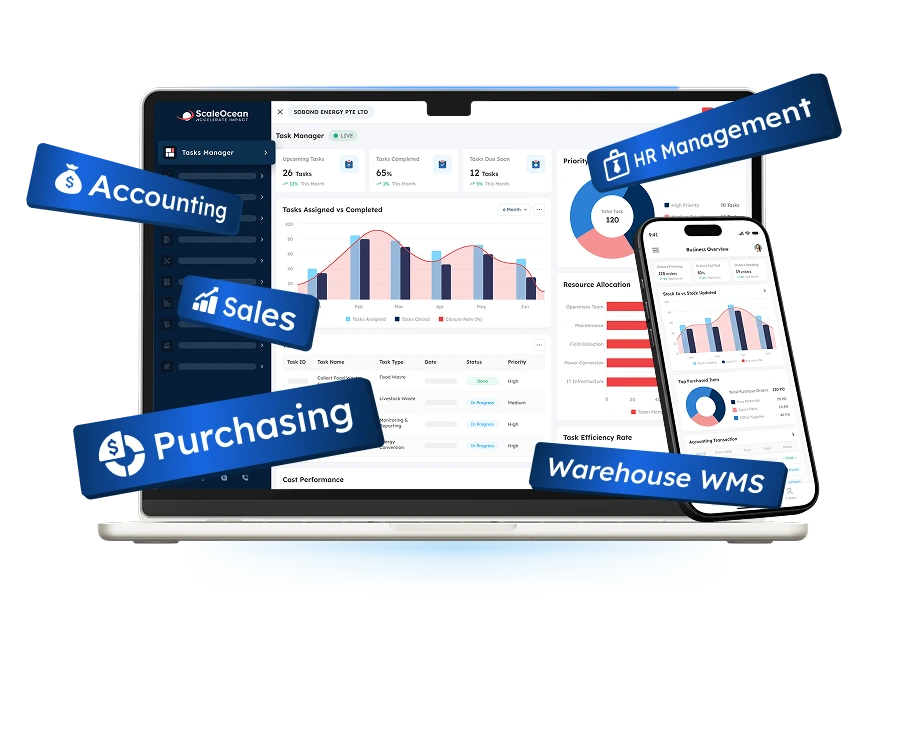
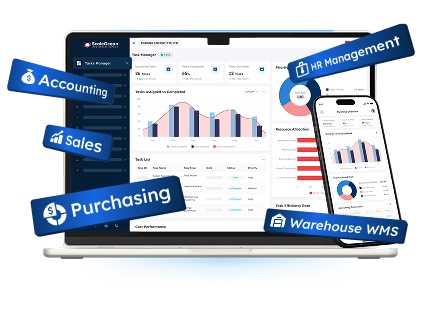
ScaleOcean Accounting Software connects finance with procurement, inventory, fixed assets, projects, and other operational processes across more than 200 modules. Through AI Insight, AI Forecast, Smart Alerts, configurable reporting, and unlimited-user access, businesses can analyze EBITDA more consistently. Arrange our free demo to explore more transparent and scalable financial reporting.
FAQ EBITDA (Earnings Before Interest, Taxes, Depreciation, and Amortization):
1. Should EBITDA be calculated using net income or operating income?
EBITDA can be calculated using either figure. From net income, add interest, taxes, depreciation, and amortisation from operating income or EBIT, add depreciation and amortisation. Both methods should produce the same result when the accounts are complete and consistently classified.
2. Are financial costs included in EBITDA?
Interest and other financing costs are generally excluded from EBITDA. The exclusion allows operating performance to be assessed independently of financing structure, although these costs must still be considered when evaluating cash flow, debt capacity, and financial risk.
3. What is considered a good EBITDA?
There is no universal figure because acceptable EBITDA levels and margins differ by industry, business model, scale, growth stage, and capital intensity. A company should compare its results with previous periods, budgets, relevant peers, cash generation, debt obligations, and operational targets.
4. Can EBITDA be used to measure business profitability?
Yes, ScaleOcean includes AI features that help teams analyze data, monitor performance, detect operational issues, and access business insights faster across finance, inventory, procurement, sales, reporting, and other ERP workflows.





















.png)