


Value Added Tax (VAT) is a tax that a business pays on goods and services acquired for business use and charges on taxable sales to customers, known as input VAT and output VAT. These are referred to as input GST and output GST, which are required to be used by a GST-registered business to calculate the final amount of GST they are liable for or the amount of GST that may be refunded.
As businesses process more transactions, from more suppliers, and more sales activities, managing input and output VAT can become trickier and trickier. Without the correct tracking, finance teams can struggle with issues like incorrect VAT classification, failure to claim input VAT, and problems reconciling purchases and sales.
To ensure proper input and output VAT management, companies should have a clear methodology for maintaining accurate records of their transactions and reconciling purchases and sales regularly. Accurate VAT management assists finance teams with better reporting accuracy and VAT records and lowers potential compliance risks throughout the VAT reporting periods.
The data that our team gathered from IRAS indicates that GST-registered businesses in Singapore should keep proper accounting records, accurately report on taxable supplies, and file for GST returns within the allowed timeframe. This shows that businesses must maintain transaction records to meet GST reporting requirements and manage financial data accurately.
Read this article to understand the difference between input VAT and output VAT, how they are calculated, how businesses can claim back VAT, how proper accounting processes can simplify VAT management, and reporting in Singapore.
 Key Takeaways
- Input VAT and output VAT are two components in VAT systems that represent tax paid on business purchases and tax collected from taxable sales.
- Businesses need accurate input VAT and output VAT to calculate GST obligations, maintain proper records, and reduce risks caused by incorrect tax classification or reporting errors.
- Managing VAT manually can create challenges such as fragmented transaction records, limited GST visibility, incorrect claims, and time-consuming reconciliation processes.
- Module Accounting Software by ScaleOcean Atlas helps businesses simplify input VAT and output VAT management through connected accounting workflows, centralized financial data, and improved GST reporting visibility.
What Is Input VAT in Singapore?
Input VAT is the VAT incurred by businesses when purchasing goods, services, and assets for their business operations. This is called input GST in Singapore, and it allows businesses eligible to offset the GST that might be charged on qualifying purchases against the GST that they pay on goods and services.
The amount of input VAT will be determined by the kind of purchase and whether it’s used for taxable business activities. In the case of a manufacturing company that buys raw materials for SGD 50,000 inclusive of 9% GST, the SGD 4,500 (9% of SGD 50,000) would be counted as Input GST, which may be claimed under the scheme if the condition is met.
To manage input VAT effectively, businesses need accurate purchase records, proper expense classification, and complete supporting documents. Without organized GST data, companies may struggle with reconciliation, identifying eligible claims, and maintaining accurate tax reporting.
Examples of Input VAT Transactions
Input VAT can arise from various business purchases required to support daily operations. Understanding which transactions qualify as input VAT helps businesses maintain accurate GST records and avoid errors when preparing tax submissions.
Common examples of input VAT transactions include:
| Transaction Type | Example of Input VAT Application |
|---|---|
| Inventory Purchases | A retailer purchases products from suppliers and pays GST on the purchase invoice. The GST paid may be recorded as Input VAT if the goods are used for taxable business activities. |
| Raw Materials and Production Costs | A manufacturing company purchases raw materials, components, or production supplies and records the GST paid as Input VAT for eligible production-related expenses. |
| Business Equipment and Assets | A company purchases machinery, computers, or operational equipment and pays GST that may qualify as Input VAT when the assets are used for business purposes. |
| Professional Services | Businesses pay GST on services such as accounting, consulting, legal support, or software subscriptions required to support their operations. |
| Operating Expenses | A business incurs GST on expenses such as office rental, utilities, or other operational costs that support taxable business activities. |
Proper management of these transactions allows businesses to maintain clearer GST records and improve reporting accuracy. By connecting purchase data with accounting records, companies can better track input VAT amounts and ensure eligible claims are properly captured during GST reporting periods.
 Also Read: Top Tax Software 2026: Review and Guide
What Is Output VAT in Singapore?
Businesses are required to collect GST on sales of taxable goods or services to customers, and this is known as output VAT. It is referred to as output GST in Singapore, and typically refers to the tax amount being charged on sales transactions by businesses that are GST-registered and collected by them for the tax authority.
The value of taxable supplies by a business determines the amount of output VAT that is payable. For instance, a company supplies services valued at SGD 20,000 and is subject to the 9% GST rate; then the company will collect SGD 1,800 as output GST from the customer. This total amount has to be reported in the business’s GST reporting.
An important aspect of determining a company’s final GST position is the comparison of output VAT with input VAT on eligible purchases, owing to its importance. In general, the business will be left with excess output tax collected compared to the input tax paid, and will have to pay the balance to the government as GST payable.
To ensure correct output VAT is managed, businesses must ensure that they have appropriate sales documentation, correct tax invoices, and that transactions are correctly classified as taxable. Inaccurate sales data and lack of GST tracking can lead to problems with reconciling revenue transactions, GST calculations, and reporting accurate GST statements.
Examples of Output VAT Transactions
Output VAT occurs when businesses charge GST on taxable sales of goods or services to customers. These transactions represent the GST collected from customers, which businesses must record and include when calculating their overall GST position.
| Transaction Type | Example of Output VAT Application |
|---|---|
| Product Sales | A retailer sells products to customers and adds GST to the sales invoice. The GST collected from the customer is recorded as Output VAT. |
| Service Revenue | A consulting, accounting, or professional service company provides services and charges GST based on the service value provided to customers. |
| Business-to-Business Sales | A supplier sells goods or services to another company and includes GST in the invoice amount issued for the taxable transaction. |
| Logistics and Transportation Services | A logistics provider charges GST for delivery, freight, or transportation services provided to customers as part of its taxable business activities. |
| Digital Products and Subscription Services | A business offering taxable software, digital services, or subscription packages collects GST from customers as part of the sales transaction. |
These transactions need to be managed properly to ensure that businesses keep accurate records of their sales and that output VAT is correctly reported when reporting on GST. Companies can better report revenues and sales that are subject to tax by organizing revenue and taxable sales information, which results in greater accuracy and visibility of the company’s GST responsibilities.
Input VAT vs Output VAT: Key Differences
Understanding the difference between input and output VAT is essential for businesses to accurately manage their GST obligations. While both are related to business transactions, they occur at different stages of operations. Input VAT is associated with purchases made by businesses, while output VAT is generated from sales made to customers.
The relationship between input VAT and output VAT determines whether a business needs to pay additional GST or can claim a refund. By comparing the GST paid on purchases with the GST collected from sales, businesses can calculate their final GST position and prepare more accurate tax reports.
| Comparison Aspect | Input VAT | Output VAT |
|---|---|---|
| Definition | GST is paid by businesses when purchasing goods, services, or assets required for business operations. | GST is collected by businesses when selling taxable goods or services to customers. |
| Source of Transaction | Comes from supplier invoices, business expenses, inventory purchases, and operational costs. | Comes from customer invoices, sales transactions, and taxable business revenue. |
| Purpose | Allows eligible businesses to offset GST paid on qualifying purchases against GST payable. | Represents GST collected from customers that must be reported as part of GST obligations. |
| Example Transaction | A manufacturer purchases raw materials and pays GST to a supplier. The GST paid may become Input VAT. | A retailer sells products to customers and charges GST on the sales invoice, creating Output VAT. |
| Impact on GST Calculation | Reduces the amount of GST payable when eligible claims are available. | Increases the GST amount collected and contributes to the total GST payable calculation. |
| Recorded By | Recorded through purchase invoices, expense records, and supplier transactions. | Recorded through sales invoices, revenue records, and customer transactions. |
| Business Responsibility | Businesses must verify eligible purchases and maintain supporting documents for claims. | Businesses must charge the correct GST amount and accurately report taxable sales. |
Accurate transaction records and connected financial data are crucial to managing both input VAT and output VAT. With the right information on purchases and sales, companies can ensure greater transparency into their GST, minimize reconciliation problems, and enhance their tax reporting processes.
How Input VAT and Output VAT Work Together in GST Calculation
Input VAT and output VAT are used in conjunction to calculate the final amount of the GST payable or receivable by a business for a reporting period. The taxable sales have VAT that is charged by the company; this is called output VAT, and the company pays VAT on eligible business purchases; this is called input VAT.
During a reporting period, for instance, a company receives SGD 9,000 in output GST from customers for their transactions. The company pays SGD 3,600 in the same period for eligible purchases (Input GST). The difference between these amounts will reflect the company’s actual GST requirement.
How to Calculate Input VAT and Output VAT
Businesses can calculate their GST position using the following formula:
Net GST Payable = Output GST – Input GST
Where:
Output GST = GST collected from taxable sales
Input GST = GST paid on eligible business purchases
For example:
A manufacturing company records the following transactions:
Total taxable sales: SGD 100,000
Output GST (9%): SGD 9,000
Total eligible purchases: SGD 40,000
Input GST (9%): SGD 3,600
The GST calculation would be:
Net GST Payable = Output GST – Input GST
Net GST Payable = SGD 9,000 – SGD 3,600
Net GST Payable = SGD 5,400
Based on this calculation, the company would need to pay SGD 5,400 in net GST for the reporting period. Maintaining accurate records of sales invoices, purchase transactions, and GST amounts is essential to ensure the calculation is accurate.
What Happens When Input VAT Is Higher Than Output VAT?
When input VAT is higher than output VAT, it means a business has paid more GST on purchases than the GST collected from customers. This situation commonly occurs when businesses make significant investments, purchase large amounts of inventory, or experience lower sales during a particular reporting period.
For example, a newly established manufacturing company may purchase machinery and raw materials worth SGD 200,000, resulting in higher input GST, while its sales revenue remains limited during the initial operating period. As a result, the input GST paid may exceed the output GST collected from customers.
Businesses should also ensure that supplier and customer information is accurately recorded during GST transactions. Maintaining proper tax records, including the correct tax identification number in Singapore, helps improve transaction accuracy and supports smoother GST reporting processes.
How Can You Claim Back VAT?

Businesses can claim back VAT if they have paid VAT on purchases that are used for eligible activities that create a taxable supply to themselves or to third parties. But enterprises need to make sure to have the right record-keeping, keep supporting documents, and submit claims on time during the GST reporting cycle.
By implementing a structured VAT recovery process, your finance teams can minimize errors, enhance compliance, and avoid losing out on eligible input VAT. To be successful in claiming back VAT and to keep good records of GST, there are a number of points that businesses should be aware of.
1. Keep Valid Invoices
Businesses must maintain valid tax invoices and supporting documents for purchases where input VAT is being claimed. These records provide evidence of the GST paid and help verify that the expense is related to eligible business activities.
Completing invoices is crucial, as incomplete or missing invoices can result in businesses not being able to claim input VAT. Companies need to make sure that invoices contain all the necessary information, such as transaction information, supplier information, GST, and purchase descriptions.
2. Track Eligible Expenses
VAT recovery is not available for all business costs. It is important for businesses to be able to determine what purchases are directly associated with taxable activities and distinguish between eligible purchases and non-claimable transactions.
Expanding on the above, accurate expense classification helps finance teams keep up with input VAT more effectively and prevent misclaiming it. The purchase of inventory, operating supplies, equipment, and professional services is an example of items that businesses need to classify accurately in accordance with the GST treatment.
3. Submit Your Tax Return
Once input and output VAT transactions are recorded, businesses will need to enter the respective amounts in their GST return. GST filing in Singapore is a process to report the GST position for GST-registered businesses.
For accurate reporting, businesses need to ensure that sales and purchase transactions are matched up with GST calculations prior to filing. The GST filing process can also be used as a guide to the reporting requirements and preparation processes that businesses are required to follow.
4. Receive the Payout
When a business has more input VAT than output VAT, it may be eligible to receive a GST refund after submitting an accurate claim. The refund process depends on the submitted GST return and verification of the reported transaction records.
It’s important that businesses keep their finances well documented to aid their VAT claims and not delay the claims process. Good tax record-keeping also enables companies to have better oversight of the overall GST position and future GST reporting obligations.
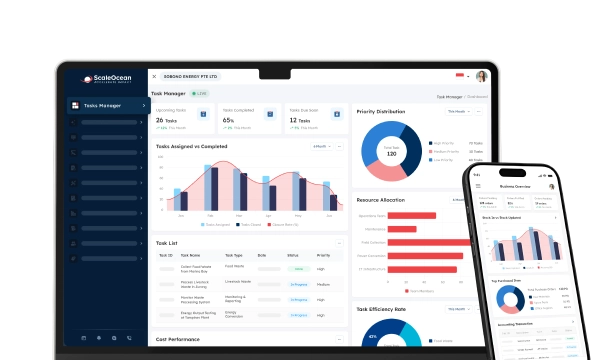
ScaleOcean Atlas accounting integrates input VAT and output VAT data into the integrated financial workflows. AI Business Assistant ScaleMind can help finance teams discover financial patterns, track tax data, and make quicker data-informed decisions.
5 Steps to Prepare Your VAT Return
Businesses preparing a VAT return need to thoroughly check the sales and purchase process, sales and purchase records, and tax calculations before filing the final VAT return. Preparing a structured process allows finance teams to ensure that input VAT and output VAT are appropriately captured, minimise tax reporting inaccuracies and provide improved control of tax obligations.
A standardized VAT preparation workflow can enhance accuracy and facilitate VAT compliance. Key activities that need to be undertaken prior to lodging a VAT return are summarised below.
1. Confirm Deadlines and Tax Schemes
Before preparing a VAT return, businesses should review their filing deadlines, applicable tax schemes, and reporting requirements. Understanding the required submission period helps finance teams organize transaction records and complete the necessary calculations on time.
Businesses should also verify their GST registration status and applicable tax obligations to ensure the correct reporting approach is followed. Having clear awareness of tax requirements helps prevent late submissions and potential reporting issues.
2. Consolidate Sales (Output VAT)
To look at and collate all sales transactions that have output VAT. Businesses need to check the sales invoices, customer transactions, and the revenues to ensure that the VAT received is properly credited.
If output VAT is accurately tracked, then businesses can calculate their period’s output VAT total by summing up the VAT collected from their customers. Companies can benefit from having their sales data organised to minimise calculation differences and ensure the accuracy of their VAT return preparation.
3. Gather Purchase Records (Input VAT)
Businesses should collect and review purchase invoices, expense records, and supplier transactions to identify eligible input VAT claims. These records help verify the VAT paid on business-related purchases and determine the amount that can be offset against Output VAT.
Proper documentation is essential because incomplete purchase records may affect VAT recovery. Businesses should also maintain accurate supplier information and supporting documents to ensure their claims are properly supported. Companies can refer to tax identification number requirements in Singapore when managing supplier and business tax information for accurate financial records.
4. Calculate Net VAT Liability
After consolidating input VAT and Output VAT, businesses need to calculate their final VAT position. The calculation determines whether the company needs to pay additional VAT or is eligible for a refund.
The formula is:
Net VAT Liability = Output VAT – Input VAT
For example, if a business collects SGD 10,000 in output VAT and pays SGD 4,000 in input VAT, the net VAT liability would be SGD 6,000. Accurate calculation helps businesses understand their tax obligations before submitting the VAT return.
5. Reconcile and Submit VAT Return Digitally
Once reconciliation is complete, businesses can submit their VAT return via the appropriate digital filing system. Organised financial records also aid in the review, audit, and tax-related activities of the business in the future, including tax clearance requirements, when necessary.
After completing reconciliation, businesses can submit their VAT return through the required digital filing system. Maintaining organized financial records also supports future reviews, audits, and tax-related processes, including tax clearance requirements when applicable.
A structured digital VAT filing process enables businesses to improve accuracy, reduce administrative workload, and maintain better visibility over their tax reporting activities.
How Businesses Report Input VAT and Output VAT in Singapore GST Returns
GST-registered businesses in Singapore submit their input VAT and output VAT in their GST F5 return, which is the standard GST return form to IRAS. This will involve businesses notifying significant information about the GST, such as what supplies are taxable, what output tax is collected, what input tax is claimed, and the final amount due or refundable for a particular accounting period.
To ensure that the amounts of output VAT and input VAT are correct, businesses are required to reconcile their sales and purchases before they submit the GST F5 return. This process will enable confirmation of the recording of GST paid by the supplier and GST collected on the customer’s accounting records.
Generally, the GST F5 return is filed electronically via the myTax Portal in the prescribed time frame. Companies should keep all the records of the transactions, which may include both sales invoices and purchase invoices that could be needed for verification or future examination.
When preparing GST returns, businesses need to ensure that input VAT and output VAT are correctly classified. Output VAT from taxable sales increases the GST payable amount, while eligible input VAT from business purchases reduces the final GST liability. Accurate reporting enables businesses to maintain compliance while gaining clearer visibility into their overall tax position.
For companies that run multiple business processes or have a high number of transactions, it can be difficult to get GST right when there are no financial records linked. A streamlined accounting system allows businesses to streamline the collection of sales, purchase, and tax data, ensuring that GST reporting is efficient and preventing human error in calculating GST.
Common Challenges Managing Input VAT and Output VAT Manually

Managing input VAT and output VAT manually can become increasingly challenging as businesses handle larger transaction volumes, multiple departments, and complex financial activities. Without a centralized process, finance teams may face difficulties maintaining accurate GST records, reconciling transactions, and ensuring reliable tax reporting.
These challenges can affect GST accuracy, increase administrative workload, and create potential risks during reporting periods. Understanding these common issues helps businesses identify the importance of having a more structured approach to managing GST (Goods and Services Tax) processes.
1. Difficulty Tracking GST Transactions Across Departments
In many businesses, GST-related transactions are generated by different departments, such as sales, procurement, finance, and operations. When each department manages its own records separately, finance teams may struggle to consolidate input VAT from purchases and output VAT from sales accurately.
This fragmented approach can make it difficult to identify missing transactions, verify GST amounts, and maintain consistent records across the organization. As a result, businesses may spend additional time collecting information before preparing GST returns.
2. Risk of Incorrect GST Claims
Companies must carefully examine transactions, supporting documents, and expense categorizations to ensure that businesses are eligible to claim input VAT. Manual methods can result in the risk of wrongly treating an item of GST as it may be a capital expense or an ineligible expense, or may result in missed opportunities for input VAT.
GST claims that are incorrect may impact the correctness of tax reporting and cause further workload to businesses when they have to review and correct tax information submitted. Keeping good records of transactions and proper classification minimizes these risks.
3. Limited Visibility Into GST Liability
If there is no financial information being connected, businesses might not have an awareness of their current GST position. The finance departments may find it hard to estimate the amount of output VAT they have collected, the amount of Input VAT that can be claimed, and the amount of tax on GST they will have to pay.
This lack of visibility can make it difficult to make financial plans, particularly in situations where there are a lot of transactions or many operating units. Real-time access to GST information assists businesses in understanding their tax situation better and preparing accordingly.
ScaleOcean Atlas Accounting enables businesses to gain a better view of GST by enabling the linking of sales, purchasing, and accounting data in a single platform. In real-time financial reporting and with a centralised set of transactions, finance teams can better track input VAT, output VAT, and GST positions and enhance reporting efficiency.
4. Time-Consuming GST Reconciliation
In manual reconciliation, finance departments need to look at the sales invoices, purchase documents, and accounting transactions to make sure that the right amount of input VAT and output VAT was captured. For enterprises that process massive amounts of transactions, this can get repetitive, and it could take a lot of time to check the data and look for any discrepancies.
Based on the data our team gathered from SBF Survey 2025, 45% of businesses reported improved operational efficiency as one of the key benefits of digitalisation efforts, highlighting the growing need for businesses to adopt technology that can streamline repetitive financial processes and improve productivity.
A systematic accounting system can streamline the reconciliation process within the GST framework, ensuring transactions are tracked, manual verification is minimized, and financial data pertaining to GST is more visible. By automating repetitive accounting activities, finance teams can focus more on analysis and strategic financial management.
How Accounting Software Helps Manage Input VAT and Output VAT
Accounting software helps businesses simplify input VAT and output VAT management by connecting financial transactions, sales activities, and purchase records within a structured system. Instead of relying on manual tracking, businesses can organize VAT-related data more efficiently, improve calculation accuracy, and maintain clearer visibility over their GST position.
With centralized financial information, accounting teams can easily monitor input VAT from eligible purchases and output VAT from taxable sales. This helps businesses reduce reconciliation efforts, identify discrepancies earlier, and prepare more accurate GST reports based on consistent transaction records.
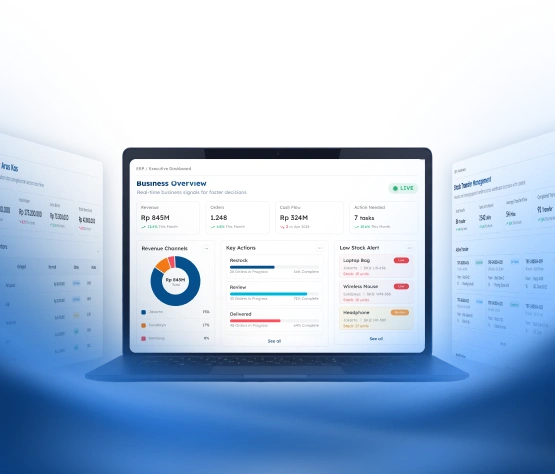
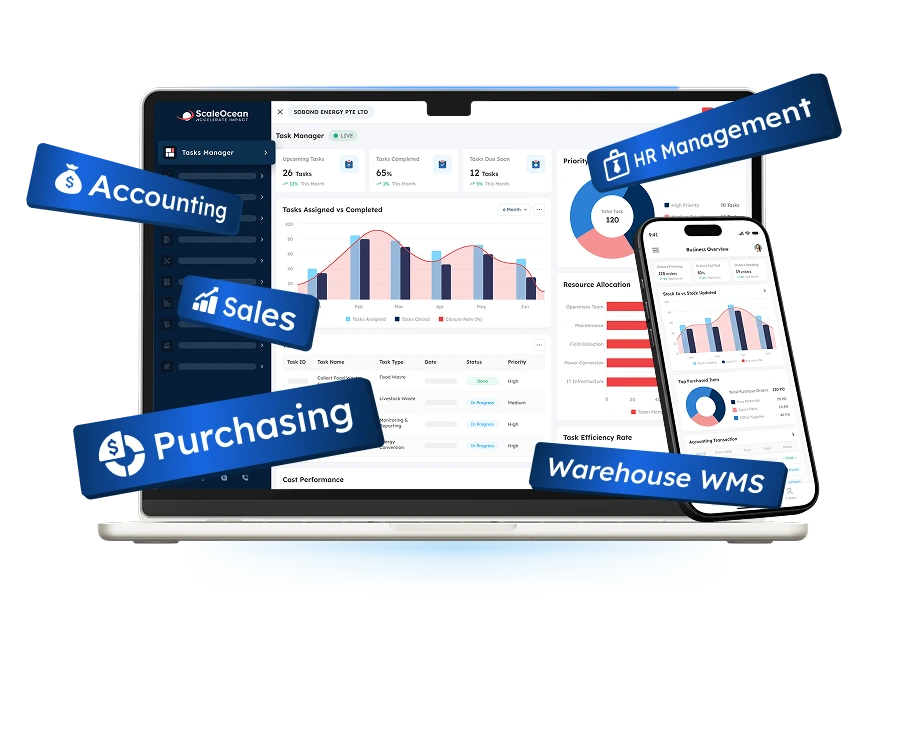
ScaleOcean Atlas, with its Accounting Software module, supports businesses in managing VAT processes through integrated financial workflows, automated transaction recording, and real-time visibility. By connecting purchasing, sales, inventory, and accounting activities within one platform, businesses can simplify VAT calculations, minimize manual reconciliation, and improve overall reporting efficiency.
For enterprises managing complex operations, ScaleOcean Atlas Accounting provides configurable workflows that support different business requirements, including multi-department transactions, approval processes, and centralized financial reporting. The system is optimized and complies with PDPA regulations and local financial reporting standards, including GST and IRAS-related reporting requirements in Singapore, helping businesses maintain better governance over their financial data.
By improving VAT tracking, reconciliation, and reporting processes, businesses can strengthen financial accuracy and make better-informed decisions. Schedule a consultation with the ScaleOcean team to explore how integrated accounting workflows can support more efficient input VAT and output VAT management.
Conclusion
Input VAT and output VAT are key components in GST management that determine how businesses calculate their final tax position. Input VAT represents the GST paid on eligible business purchases, while output VAT refers to the GST collected from taxable sales. Understanding how both components work together helps businesses accurately calculate GST obligations and maintain better financial control.
However, managing input VAT and output VAT manually can create challenges, especially for businesses with high transaction volumes, multiple departments, and complex financial processes. By implementing a structured accounting approach, businesses can improve transaction accuracy, simplify reconciliation, and gain better visibility into their GST position.
ScaleOcean Atlas helps businesses manage VAT-related processes through connected financial workflows, centralized transaction data, and improved reporting visibility. With integrated accounting capabilities, businesses can streamline input VAT and output VAT management, reduce manual reconciliation efforts, and improve financial efficiency. Schedule a consultation with the ScaleOcean team to explore how integrated accounting workflows can support your GST management needs.
FAQ Input VAT and Output VAT:
1. What accounting entries are required for input GST and output GST?
Input GST is recorded as a tax credit when businesses purchase eligible goods or services, while output GST is recorded as a tax liability when businesses make taxable sales. Both amounts are tracked separately and used to calculate the final GST payable or refundable amount.
2. What is the difference between input GST and output GST in Singapore?
Input GST is the GST paid by businesses on eligible purchases, while output GST is the GST collected from customers on taxable sales. Businesses compare both amounts to determine whether they need to pay GST or can claim a refund.
3. How do businesses calculate GST payable using input GST and output GST?
Businesses calculate GST payable by subtracting eligible input GST from collected output GST. The formula is Net GST Payable = Output GST – Input GST. If output GST is higher, the business pays the difference; if input GST is higher, the business may claim a refund or carry forward the excess amount.
4. How do taxable supply, zero-rated supply, and exempt supply affect input and output GST?
Taxable supplies generally require businesses to charge output GST and may allow input GST claims, while zero-rated supplies are taxed at 0% but may still allow input GST recovery. Exempt supplies usually do not require output GST collection and may limit input GST recovery eligibility.





















.png)