

Gross income is the combined income of a person or company before any taxes or other deductions are applied. For employees, gross pay may include many forms of compensation, such as base salary, allowances, commissions, bonuses, and any other payments.
However, gross income management can be difficult for organizations with pay band plans, many employees, or several business units. The HR and finance teams may have to merge the payroll details, employee information, and bonuses from multiple companies and varying sources, which can easily result in inaccurate calculations and few insights.
To manage gross income effectively, businesses need structured payroll processes that ensure all compensation components are recorded accurately and calculated consistently. By maintaining centralized payroll data and improving coordination between HR and finance teams, companies can reduce manual errors and gain better insights into employee compensation expenses.
Our team’s research from ADP’s payroll report has revealed that 26% of companies are seeking to implement digital payroll solutions to manage their payroll by investing in digital systems and tools to streamline and automate manual processes. This signifies the growing demand for businesses to use structured payroll systems for more accurate management of payroll and employee data.
Read this article to find out what gross income is, what items are included, how to work out gross monthly income in Singapore, gross income and net income, and how payroll software can assist companies in better analyzing information about compensation.
 Key Takeaways
- Gross income is the total earnings received by an individual or business before deductions, taxes, or expenses are applied.
- Gross monthly income in Singapore consists of different compensation components, including basic salary, allowances, and variable payments such as bonuses and commissions.
- Gross income and net income represent different stages of earnings, with gross income reflecting total earnings before deductions, while net income represents the final amount after adjustments.
- ScaleOcean helps businesses manage gross income through structured payroll workflows, centralized employee records, and automated compensation management to improve payroll accuracy and operational visibility.

What Is Gross Income?
Gross income refers to the total earnings received by an individual or business before any deductions, taxes, or expenses are removed. It represents the full amount generated during a specific period and is commonly used as a reference for evaluating financial performance, calculating compensation, and preparing financial reports.
Understanding gross income is important because it provides a clearer picture of total earnings before adjustments are applied. For individuals, gross income helps determine total compensation received, while businesses use gross income to measure revenue generation before accounting for operational expenses.
- Individual Gross Income
Individual gross income refers to the total amount earned by an employee before deductions such as CPF contributions, income tax, or other payroll adjustments. It includes different sources of employment-related earnings, not only the basic salary received each month.
For instance, an employee who earns SGD 5,000 in a month as base salary, SGD 300 in transport allowance, and SGD 1,000 as performance bonus would have a gross income of SGD 6,300 before deductions. This is the total amount that you are paid before statutory deductions and contributions.
Accurately tracking individual gross income helps businesses ensure correct payroll calculations, prepare reliable payslips, and maintain consistent employee compensation records. Companies can also use this information for workforce budgeting and compensation planning.
- Business Gross Income
Business gross income is the total income a business earns in a given period before subtracting out expenses, taxes, and other costs to operate the business. It is a measure of the total income a business makes from its core operations in a given period of time.
The means of calculating business gross income will vary depending on the source of the company’s income, including product sales, service income, or other business activity. Gross income does not include the costs of running a business, as net profit does.
This means that a caterer can make SGD 800,000 from event catering services in a year. Since ingredient prices, employee salaries, rental costs, and other operating costs are not yet subtracted from the total, the gross profit for this caterer is SGD 800,000.
Monitoring business gross income helps management teams evaluate revenue performance, identify growth opportunities, and make more informed financial decisions.
 Also Read: Top 12 Payroll Software For Businesses in Singapore 2026
How Is Gross Income Calculated?
Gross income refers to the aggregate of all earnings or income before any deductions are made. It can be calculated differently depending on whether it is for a single employee or a business.
For payroll purposes, businesses need to identify all compensation components accurately, including fixed salary, allowances, and variable payments. For businesses, gross income is determined by calculating total revenue generated from business activities.
A calculation process is defined to keep the financial figures consistent and correct, due to the fact that organizations might miss some of the income and might rely on a changeable source of income.
Gross Income Formula
The general formula for calculating gross income is:
Gross Income = Basic Salary + Allowances + Bonuses + Commissions + Other Eligible Payments
For businesses:
Business Gross Income = Total Revenue Generated Before Expenses
These formulas provide a basic framework for understanding gross income calculation. However, the specific components included may vary depending on employment agreements, business models, and reporting requirements.
How Is Gross Income Calculated
To calculate gross income accurately, businesses should first identify all income sources within the relevant period and combine them before applying any deductions.
For employees, the calculation process generally includes:
- Identifying the employee’s fixed salary.
- Adding eligible allowances and additional payments.
- Including variable compensation such as bonuses or commissions.
- Calculating the total earnings before deductions.
For businesses, the process involves:
- Recording total sales or service revenue.
- Combining income from all business activities.
- Excluding deductions and expenses from the gross income calculation.
Accurate gross income calculations require organized records across payroll, sales, and financial systems. Without centralized data, businesses may face challenges when reconciling compensation information or preparing financial reports.
Calculated Gross Income for Individuals
Example:
An employee receives the following monthly compensation:
| Income Component | Amount |
|---|---|
| Basic Salary | SGD 5,000 |
| Transport Allowance | SGD 300 |
| Housing Allowance | SGD 500 |
| Performance Bonus | SGD 1,200 |
| Total Gross Income | SGD 7,000 |
Calculation:
Gross Income = SGD 5,000 + SGD 300 + SGD 500 + SGD 1,200
Gross Income = SGD 7,000
The employee’s gross income is SGD 7,000 before CPF contributions, taxes, or other deductions are applied.
Calculated Gross Income for Business
Example:
A business generates revenue from different activities:
| Income Component | Amount |
|---|---|
| Basic Salary | SGD 5,000 |
| Transport Allowance | SGD 300 |
| Housing Allowance | SGD 500 |
| Performance Bonus | SGD 1,200 |
| Total Gross Income | SGD 7,000 |
The company’s gross income is SGD 900,000 before deducting operating expenses, taxes, and other business costs. Accurate gross income tracking allows businesses to better evaluate revenue performance and support financial planning decisions.
What Is Included in Gross Monthly Income in Singapore?
Gross monthly income in Singapore refers to the total amount an employee earns from employment before deductions such as employee CPF contributions and income tax are applied. According to MOM Singapore, gross monthly income from employment refers to gross wages or salaries before employee CPF deductions, including basic wages, overtime pay, and one-twelfth of annual bonuses.
Correctly categorizing each income source can help businesses minimize payroll mistakes and keep accurate records of payroll.
1. Basic Salary
Basic salary is the compensation before the other components of the salary, like allowances, bonuses, or commissions. It is generally the largest component of gross monthly wages and is determined by the workers’ contracts, type of job, experience, and nature of the payment system of the firm.
Accurate management of basic salary information helps businesses maintain consistent payroll calculations and ensure employees receive the correct compensation. Since other payments may be calculated based on salary values, incorrect basic salary records can affect overall payroll accuracy.
Fixed Monthly Remuneration
Fixed monthly remuneration refers to recurring payments that employees receive regularly as part of their employment package. These payments are generally predictable and form a consistent portion of an employee’s monthly earnings.
Examples of fixed monthly remuneration include basic salary, fixed allowances, and other contractual payments. Maintaining clear records of these components helps HR teams calculate gross income accurately and improve visibility into recurring workforce expenses.
Employer CPF Contributions Are Not Included
No, employer CPF contributions are not included in an employee’s gross monthly income. Employer CPF contributions are additional payments made by the company into the employee’s CPF account and are treated separately from the employee’s direct earnings.
Understanding the difference between employee compensation and employer CPF contributions is important for businesses when preparing payroll reports. Proper classification ensures gross income calculations reflect the employee’s actual earnings before deductions.
2. Allowance and Additional Payments
Allowances are additional payments provided by employers to support specific employee needs or work-related expenses. Depending on the employment agreement and company policy, these payments may become part of an employee’s gross monthly income calculation.
For businesses, properly recording allowances is essential because employees may receive different benefits based on their roles, working conditions, or responsibilities. Accurate allowance tracking helps maintain transparent compensation structures and prevents payroll calculation errors, especially when managing adjustments such as prorated salary calculations.
Transport Allowance
Transport allowance is an additional payment provided to employees to support travel-related expenses associated with their work responsibilities. It is commonly provided to employees who frequently travel between locations, visit customers, or require transportation support as part of their role.
For example, an employee receiving SGD 300 monthly transport allowance may have this amount included as part of their gross monthly income. Businesses should maintain proper records of transport allowances to ensure accurate payroll reporting.
Housing Allowance
A housing allowance is an allowance given by the employer to help the employee with housing expenses. The benefit is often provided to those employees who move for their jobs, or to those who are required to work in specific areas, or to those who are entitled to more benefits in their employment terms.
By accurately keeping track of housing allowances, businesses can have better control over employee benefits and ensure that all the components of an employee’s compensation are accurately reflected in the payroll records. This also enables HR teams to make better sense of the overall workforce costs.
Shift Allowance
Shift allowance is additional compensation provided to employees who work outside standard working hours, such as night shifts, rotating schedules, or extended operational periods. This type of allowance is common in industries that require continuous operations, including manufacturing, logistics, healthcare, and hospitality.
Shift schedules can differ from one employee to the next, so it is important to have accurate payroll records to ensure that the expenditures are calculated correctly. By managing shift allowances properly, you can ensure that your employees are fairly compensated and your payroll is accurate.
Meal Allowance
Meal allowance is an extra granted to the employee to help with the cost of meals in certain situations, including overtime hours, assignment to a business, and longer shifts. This can be offered as a company incentive towards employee compensation.
When meal allowances are recorded correctly, it allows companies to have a full meal record and process employee payroll consistently. Especially for an organization that employs employees on various shifts.
3. Bonuses and Variable Payments
The compensation that varies according to performance, company performance, sales results, or other measurable items is called a compensation component, such as bonuses. These payments are not fixed like a salary component and may vary from employee to payment period.
For businesses, variable payments are an important element of gross income, and the need for good recordkeeping is paramount. In a structured way, HR teams can ensure clarity and ensure that employees can be paid according to their performance or success.
Annual Wage Supplement (AWS)
Sometimes, employers in Singapore may give an extra annual payment, under the name of Annual Wage Supplement (AWS) or “13th month payment”, depending on the employment contract and the company’s policy. Typically, the pay is in addition to a worker’s monthly wages.
Companies need to keep good AWS records in place to ensure they accurately report on the compensation they provided during the year. Clear tracking also makes it easier for HR teams to manage payroll planning and offer employees a better view of their overall compensation.
Performance Bonus
Performance bonuses are bonuses that are paid depending on the performance of employees, personal goals, team goals, or business performance. They are often employed by businesses as a means of incentivizing their employees to achieve certain objectives and to help the company expand.
Given the possibility of performance bonuses depending on the evaluation results, businesses must have consistent payroll procedures in place to accurately measure and record performance bonuses. Proper management helps maintain fairness and transparency in employee compensation.
Commission
Commission is a variable payment commonly provided to employees based on sales performance, completed transactions, or revenue contribution. It is often used in sales-driven roles where compensation is directly connected to individual achievements or business results. Since commission amounts may change depending on performance, businesses need accurate tracking methods to ensure each employee receives the correct payment.
ScaleOcean Atlas helps businesses manage variable compensation components such as commissions by connecting employee records and compensation data within one platform. This enables HR teams to reduce manual calculations and maintain clearer visibility into employee earnings while supporting more efficient compensation management processes.
Gross Income vs Net Income: Understanding the Difference
Gross income and net income represent different stages of an individual’s or business’s earnings. While gross income shows the total amount earned before deductions, net income reflects the remaining amount after applicable deductions, expenses, or adjustments have been applied.
For employees, understanding the difference between gross income and net income helps clarify how salary amounts are calculated before receiving take-home pay. For businesses, the distinction is important for evaluating financial performance because revenue before expenses differs from the actual amount retained after costs are deducted.
| Comparison | Gross Income | Net Income |
|---|---|---|
| Definition | The total amount earned before any deductions, taxes, or expenses are removed. | The remaining amount after applicable deductions, expenses, taxes, and adjustments is applied. |
| Purpose | Used to understand total earnings, compensation value, or revenue generated. | Used to determine actual take-home pay or final business earnings. |
| For Employees | Includes basic salary, allowances, bonuses, commissions, and other eligible payments before deductions. | Represents the amount received after CPF contributions, taxes, and other payroll deductions. |
| For Businesses | Represents total revenue generated before operating expenses and other costs are deducted. | Represents the remaining profit after deducting expenses, taxes, and operational costs. |
| Calculation | Gross Income = Salary + Allowances + Bonuses + Other Eligible Earnings | Net Income = Gross Income – Deductions/Expenses |
| Example (Employee) | An employee earns SGD 6,000 from salary, allowances, and bonuses before deductions. | After CPF contributions and other deductions, the employee receives SGD 5,000 as take-home pay. |
| Example (Business) | A company generates SGD 1 million in revenue before expenses. | After deducting operating costs and taxes, the company retains SGD 200,000 as net income. |
Gross Income vs Gross Pay: Are They the Same?
Gross income and gross pay are often used interchangeably in payroll discussions because both refer to earnings before deductions. However, the meaning can vary depending on the context. Gross pay generally refers specifically to the total compensation an employee receives from an employer before deductions.
Understanding the difference between these terms helps businesses maintain accurate payroll records and ensures HR teams classify employee compensation correctly when preparing salary reports and financial documents.
| Comparison | Gross Income | Gross Pay |
|---|---|---|
| Definition | The total earnings received by an individual or business before deductions, taxes, or expenses are applied. | The total amount an employee earns from an employer before payroll deductions are applied. |
| Scope | Can refer to individual employment earnings or business revenue depending on the context. | Primarily refers to employee compensation before deductions. |
| Includes | Salary, allowances, bonuses, commissions, and other eligible income sources. | Basic salary, overtime pay, bonuses, commissions, and employment-related payments. |
| Used For | Financial analysis, income reporting, payroll management, and business evaluation. | Payroll processing, payslip preparation, and employee compensation calculations. |
| Example | An employee earns SGD 7,000 from salary, allowances, and bonuses before deductions. | An employee’s monthly gross pay is SGD 7,000 before CPF contributions and taxes. |
In most employee payroll contexts, gross pay and gross income may refer to similar amounts because both represent earnings before deductions. However, businesses should define these terms clearly within their payroll processes to avoid confusion when preparing compensation reports, payslips, and financial records.
How to Calculate Gross Monthly Income in Singapore?
Gross monthly income in Singapore is calculated by adding all eligible earnings received by an employee before deductions such as employee CPF contributions, income tax, or other payroll adjustments are applied. The calculation usually includes fixed salary components, allowances, overtime payments, bonuses, commissions, and other employment-related payments.
For businesses, accurately calculating gross monthly income is important to ensure employees receive the correct compensation and payroll records remain consistent. A structured calculation process also helps HR teams prepare reliable salary records, manage workforce expenses, and improve visibility into total employee compensation.
The general formula for calculating gross monthly income is:
Gross Monthly Income = Basic Salary + Fixed Allowances + Overtime Payments + Bonuses + Commissions + Other Eligible Payments
The components included may differ depending on employment agreements and company policies. Therefore, businesses should ensure all applicable earnings are properly recorded before calculating an employee’s total gross monthly income.
Example Calculation of Gross Monthly Income
An employee receives the following monthly compensation:
- Basic Salary: SGD 5,000
- Transport Allowance: SGD 300
- Housing Allowance: SGD 500
- Overtime Payment: SGD 200
- Performance Bonus: SGD 1,000
The calculation is:
Gross Monthly Income = SGD 5,000 + SGD 300 + SGD 500 + SGD 200 + SGD 1,000
Gross Monthly Income = SGD 7,000
This means the employee’s gross monthly income is SGD 7,000 before deductions such as employee CPF contributions, income tax, or other applicable payroll adjustments.
For businesses managing employees with different salary structures, manually calculating gross income can become complex and time-consuming. Maintaining organized payroll records helps HR teams accurately track salary components, allowances, and variable payments while reducing calculation errors.
Businesses can also improve payroll organization by following a structured payroll cycle that supports consistent salary calculation, verification, and payment processes.
To make this process more efficient, companies can leverage HRIS software that automatically calculates gross income based on integrated employee data, including salary components, allowances, deductions, and variable payments. This helps HR teams reduce manual calculations, minimize payroll errors, and ensure more accurate salary processing across different employee structures.
Is CPF Included in Gross Income?

No, the CPF contribution from the employee is deducted from their gross income; the CPF contribution from the employer is treated separately and is not included in the gross monthly income of the employee. Gross income is the amount of income received by an employee before any deductions, and CPF contribution refers to the contributions that are made under Singapore’s CPF system.
Businesses need to differentiate between the gross income and CPF contributions of the employee when doing payroll calculations to ensure that the income is reported correctly. CPF contribution by the employer is an extra contribution on the employee’s earnings, while the CPF contribution by the employee is deducted from the employee’s income.
In the above example, the employee with a monthly gross income of SGD 6,000 will have the CPF contribution rate applied to his gross income. Any amount deducted for CPF (after the deduction is made) is the employee’s take-home pay, and the employer’s CPF contribution is not included as part of the employee’s gross income.
Businesses can also benefit from reliable payroll records and avoid calculation mistakes with accurate CPF information. A structured process and the correct payslip template make it easier for HR teams to manage payrolls, wage components, and deductions.
Why Gross Income Matters for Businesses in Singapore
Gross income (also known as gross profit) is the total revenue a business earns minus the direct cost of making its goods or services. It is important for businesses operating in Singapore because it reflects the inherent efficiency of their operations, independent of overheads or taxes.
1. Supports Accurate Payroll Processing
To ensure that employees are paid properly according to the terms of their employment, it is important to have an accurate gross income calculation. Before making deductions, payroll teams should accurately reflect the various elements of earnings, such as salaries, allowances, overtime, bonuses, and commissions.
Not having orderly payroll data can create issues, including incorrect salary calculations, delayed payroll processing, and payroll accounting discrepancies. Proper gross income details can assist HR groups in boosting payroll consistency and minimizing administrative mistakes.
2. Helps Financial Planning and Budgeting
Growth in gross income figures offers companies more visibility of overall payroll costs and can assist with improved financial planning. Knowing how an employee’s earnings are calculated can help businesses to estimate payroll costs, create budgets, and allocate resources more efficiently.
Being able to rely on accurate gross income figures is easier for companies that have several employee groups, departments, or locations. This will enable management teams to better plan their hiring strategy, salaries, and running costs.
3. Improves Compliance and Tax Reporting
Proper gross income reporting can benefit businesses in numerous ways, most notably by keeping payroll documentation up to date and aiding compliance with employment and financial reporting regulations. Having accurate compensation data is essential for companies to create payroll reports, to manage statutory contributions, and enjoy transparent employee records.
Good gross income tracking can also help HR and finance to give accurate information when creating financial reports or answering reporting needs. This minimizes the possibility of missing or misclassified compensation data and reduces discrepancies.
4. Loan Applications and Financial Qualification
Most of the time, gross income is cited as a supporting document when an employee is applying for a loan, financial services, or a mortgage. Good records of income are used to provide clear and accurate income details for use by employees to establish their earning capacity and by financial institutions during the qualification process.
By automating payslip generation, maintaining centralised employee records and organizing compensation data, ScaleOcean streamlines payroll documentation, enabling HR teams to deliver greater accuracy in income records and minimise manual administrative tasks.
Keeping the payroll data organized will allow businesses to enhance compensation transparency, create seamless documentation procedures, and offer employees dependable payroll records for future financial needs.
Common Mistakes When Calculating Gross Income
Calculating gross income accurately requires businesses to consider all applicable compensation components, including basic salary, allowances, bonuses, commissions, and other employee payments.
Mistakes in gross income calculation can affect payroll accuracy, employee compensation records, and financial reporting. By identifying common calculation errors and understanding their impacts, businesses can improve payroll processes and maintain more reliable workforce data.
| Common Mistakes | Impact on Business |
|---|---|
| Excluding eligible salary components such as allowances, bonuses, or commissions | May result in inaccurate gross income calculations, incorrect payroll records, and compensation reports that do not reflect employees’ actual earnings. |
| Incorrectly including or excluding CPF contributions | Can create payroll reporting errors because employee CPF deductions and employer CPF contributions are treated differently from gross income calculations. |
| Using outdated or inconsistent employee salary data | Causes discrepancies between payroll records, payslips, and financial reports, making compensation management more difficult. |
| Manually calculating gross income for large employee populations | Increases the risk of calculation mistakes, requires additional administrative effort, and may delay payroll processing. |
| Failing to properly record variable payments | May lead to inaccurate reporting of bonuses, commissions, or overtime payments, affecting employee earnings visibility. |
| Maintaining payroll information across disconnected systems | Limits data visibility between HR and finance teams, making payroll reconciliation and reporting more challenging. |
To avoid these challenges, businesses need structured payroll processes that can centralize employee compensation data and automate repetitive calculations. A connected payroll system helps HR teams maintain accurate salary records, reduce manual errors, and improve visibility into overall workforce expenses.
How Payroll Software Helps Businesses Manage Gross Income

Managing gross income accurately requires businesses to process multiple compensation components, including basic salaries, allowances, bonuses, commissions, overtime payments, and employee deductions. As workforce structures become more complex, manual payroll calculations can increase administrative workload and create risks of inaccurate salary records.
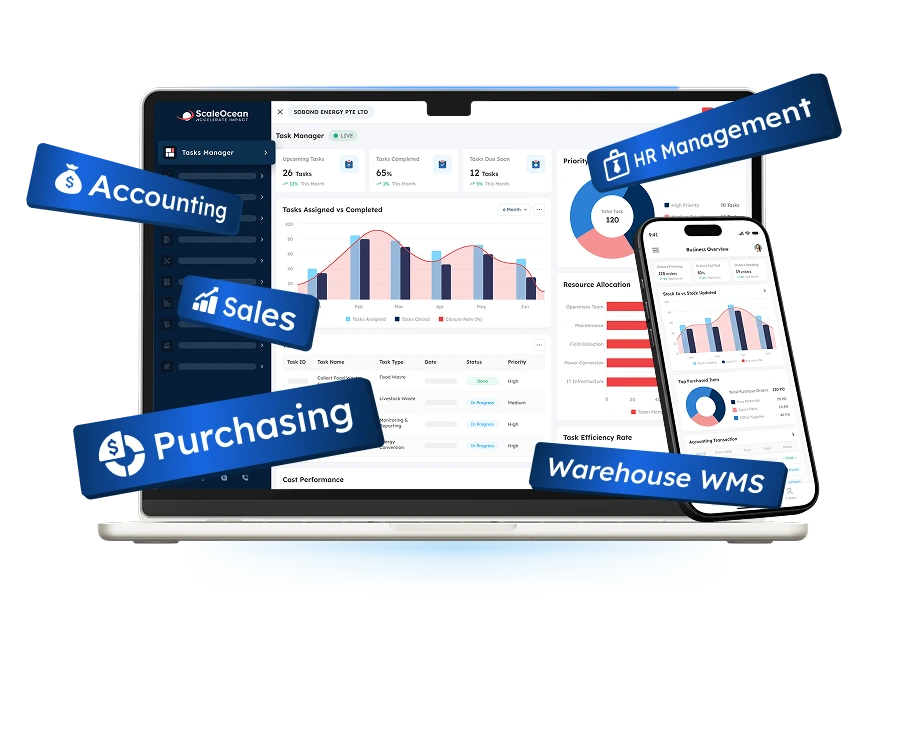
ScaleOcean Atlas, with its HRIS Payroll module, helps businesses manage gross income by centralizing employee compensation data, automating payroll calculations, and organizing salary components within one connected platform. This helps HR departments to ensure accurate payroll records, minimize manual calculations, and increase transparency of employee salaries across departments.
The module integrates payroll with other HR functions, allowing companies to streamline worker information, attendance tracking, and wage details. This minimizes inconsistencies and disconnected records, enabling HR teams to generate payroll reports more quickly and make informed workforce management decisions.
The system has been optimized and complies with PDPA regulations and local financial reporting standards, including IRAS requirements and GST-related financial reporting where applicable. This helps businesses maintain better payroll governance while supporting accurate compensation reporting. Schedule a consultation with the ScaleOcean team to explore how this system can support your business requirements.
Conclusion
Gross income is the total amount earned by an individual or business before deductions, taxes, or expenses are applied. For employees, it includes salary components such as basic wages, allowances, bonuses, and commissions, while for businesses, it represents revenue generated before operational costs are deducted.
However, managing gross income accurately can become challenging when businesses handle complex salary structures, multiple employee records, and variable compensation components. Without organized payroll processes, companies may experience calculation errors, inconsistent records, and limited visibility into workforce costs.
ScaleOcean Atlas helps businesses streamline gross income management through centralized employee data, automated payroll processes, and connected HR workflows. By supporting accurate compensation records, configurable payroll management, and compliance-focused operations, businesses can improve payroll efficiency and workforce visibility. Schedule a consultation with the ScaleOcean team to understand how an integrated HRIS Payroll solution can support your payroll needs.
Frequently Asked Questions About Gross Income:
1. Is CPF included in gross monthly income in Singapore?
No, employee CPF contributions are deducted from gross income, while employer CPF contributions are generally treated separately and are not included in an employee’s gross monthly income. Gross income represents earnings before employee CPF deductions are applied.
2. Does gross income include bonuses?
Yes, bonuses may be included in gross income depending on the purpose of calculation and applicable employment terms. Performance bonuses, annual wage supplements, and other variable payments can contribute to an employee’s total earnings before deductions.
3. How do you calculate gross monthly income?
Gross monthly income is calculated by adding all eligible earnings received by an employee before deductions. The calculation generally includes basic salary, allowances, overtime payments, bonuses, commissions, and other applicable compensation components.
4. Is gross income the same as salary?
Not always. Salary usually refers to the fixed amount paid to an employee, while gross income includes salary plus additional earnings such as allowances, bonuses, commissions, and other eligible payments before deductions.
5. Why is gross income important for payroll management?
Gross income is important because it helps businesses calculate employee compensation accurately, prepare payroll reports, manage workforce costs, and maintain reliable financial records. Accurate gross income data also supports better planning and compliance management.





















.png)