




Construction site management combines schedules, labour, materials, and safety protocols across active projects. It has become a challenge for contractors in Singapore to ensure visibility, quality, collaboration, and efficiency across multiple construction sites at once.
Our team found that Mordor Intelligence reported that the construction management software market was valued at USD 11.58 billion in 2026 and is projected to reach USD 17.81 billion by 2031, growing at an 8.99% CAGR. This growth emphasises the rising demand for digital construction ecosystems that enhance visibility, coordination, and efficiency.
However, A significant number of construction businesses still suffer from long approval cycles as disconnected reporting hampers daily coordination. As such, managers are tied up solving unneeded scheduling disputes or document anomalies.
An effective construction site management structure will enable operators to gain better insight into project operations while ensuring project safety in Singapore. At the same time, central management assists contractors in minimising construction material waste, delays, conflicts, and additional administrative work.
That’s why construction companies need integrated systems that can efficiently handle communication, inspection, budgeting, and workforce scheduling. Thus, contemporary site management practices, whether explicit or implicit, enhance project quality, profitability, responsibility, and customer satisfaction.
In this article, we will cover the construction site management structure, operational duties, site strategies, and key project roles. We will also examine how digital solutions enhance coordination, compliance, productivity, and efficiency.
 Key Takeaways
- Construction site management is the process of coordinating schedules, workers, safety, budgeting, materials, and communication throughout construction project operations.
- Construction site management roles include managers, engineers, supervisors, subcontractors, consultants, clients, and financial planning teams across active sites.
- Construction site operational activities include scheduling, resource allocation, inspections, compliance management, communication, budgeting, and risk monitoring.
- ScaleOcean Construction ERP Software centralizes project coordination, compliance, budgeting, reporting, and operational visibility across multiple construction sites in Singapore.

What Is Construction Site Management?
Construction site management is the process of planning, supervising, directing, communicating, and managing health & safety, costs, production, and resources in daily job-site activities. Project managers organize crew members, monitor construction progress on schedule, and control costs and incomes.
Managing equipment use, subcontractor quality of work, inspections, and procurement form is also part of site management. As the project grows, systematic coordination helps prevent confusion, delays, accidents, and inconsistent construction quality.
To understand what construction site management is, companies must recognize its role in planning, supervising, communicating, and controlling daily construction activities efficiently.
Why Site Management in Construction Matters?
One of the main responsibilities on construction sites in Singapore is managing a complex schedule, controlling expensive materials, and complying with rigorous regulatory requirements. Hence, effective site management requires teams to complete jobs quickly while ensuring safety, communication, and consistency.
Without organized management, contractors’ work often leads to conflicts, rework, penalties for non-compliance, and dumping of projects. In addition, central control enhances decision-making, as managers receive more informed updates on all construction work.
Effective site management also strengthens overall construction project management by improving visibility, scheduling accuracy, communication, and operational control. To fully understand what construction site management is, companies must recognise how it directly affects compliance, communication, budgeting, and construction productivity.
Types of Construction Sites that are Usually Managed in Singapore
Singapore handles a vast number of construction operations that require specific planning, coordination, workforce management, and regulatory oversight. As such, site supervisors adjust their work procedures according to the project’s level, the type of structure, transport links, and site infrastructure involved.
Despite differences across projects and construction firms and variations between project types, various project types frequently occur at a construction site, including residential, commercial, industrial, and infrastructure projects. And these projects all have their specific workflows, communication procedures, and follow-up procedures.
1. Residential
Reflats, condominiums, landed housing, and mixed developments are part of the residential development. The site manager is flexible about the number of subcontractors, as the homeowner’s expectations for safety, quality, and adherence to the program are high.
Moreover, home applications often lead to frequent daily testing, organized component deliveries, and clear communication with contractors. Synchronizing best practices among contractors prevents neighborhood disruption, ensures optimal handovers and maintenance planning, and increases customer satisfaction.
2. Commercial
Designed and built for commercial use, Singapore’s commercial projects include offices, shopping malls, hotels, and entertainment venues. Managers manage commercial projects because they require closing schedules, brand consistency, and management readiness.
In addition, most commercial projects involve sophisticated electrical systems and interior installations, as well as tight tenant demands. Without site management, scheduling overlaps are avoided, and cooperation among supply companies, consulting firms, contractors, and investors is enhanced.
3. Industrial
Industry construction projects include manufacturing plants, warehouses, power stations, and logistics infrastructure. Given the nature of the industrial environment, management will focus on safety, coordination of technical details, and reliability.
During industrial development, scheduling should be highly accurate, as contractors often set up operational and building systems in an interconnected manner. Proper time and cost control will facilitate smooth operations and labour safety while adhering to relevant standards.
4. Infrastructure
Constructing infrastructure refers to the design and construction of highways, railways, bridges, airports, and transit systems, requiring system-wide coordination to meet government requirements for construction site safety, accessibility, environmental standards, and long-term performance.
Moreover, in infrastructure development, many other contractors, public agencies, and engineering consultants cooperate simultaneously. Planned site management facilitates clear communication and enables teams to complete large projects successfully, on time, and on budget.
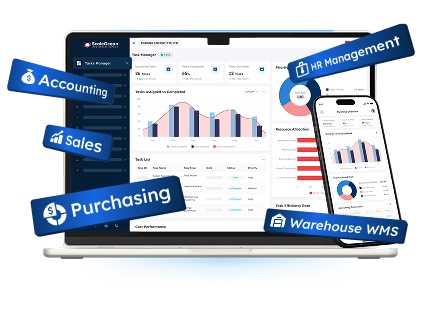
Furthermore, construction companies that improve project visibility often implement construction software to support scheduling, reporting, procurement, and project coordination activities. ScaleOcean Construction ERP Software provides centralized dashboards connecting project managers, engineers, subcontractors, and multiple construction sites.
Additionally, ScaleOcean offers unlimited users at no additional licensing cost, enabling efficient collaboration across departments and project locations. You can request a free demo today to see how it improves your company’s coordination, productivity, and operational visibility throughout Singapore construction projects.
Who is on the Construction Site and What are Their Roles?
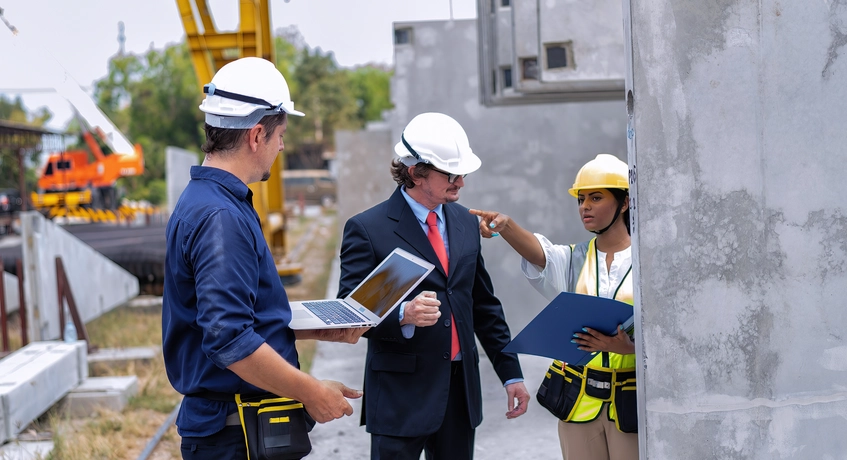
Across all areas related to construction sites, a variety of specialists actively manage documents, daily procedures, technical studies, health and safety procedures, and project communication. So, all positions will work directly to keep productivity, safety, quality control, and delivery.
Building teams have similar responsibilities, but they must work together as seamlessly during the planning, implementation, and completion phases as they do on-site. Proper coordination minimizes the risk of miscommunication and allows stakeholders to track the project’s progress and budget.
| Player/Job | Roles in Construction Site Management |
|---|---|
| Construction Project Manager | Manages budgets, schedules, contracts, and stakeholder communication throughout projects. |
| Site Manager | Supervises daily site operations, workers, materials, and project coordination activities. |
| Site Supervisor | Monitors workers to ensure safety procedures and schedules are consistently followed. |
| Site Engineer | Handles technical implementation, engineering calculations, and construction specifications onsite. |
| Construction Workers & Subcontractors | Perform construction tasks, including installations, structural work, and finishing activities, efficiently. |
| Quantity Surveyors | Carefully control project costs, procurement budgets, and contract administration processes. |
| Architects & Consultants | Develop designs while consistently ensuring projects meet technical and regulatory requirements. |
| Clients & Stakeholders | Approve budgets, monitor progress, and support project decision-making throughout construction activities. |
1. Construction Project Manager
Construction project managers plan, supervise, and coordinate construction projects’ budgets, schedules, contracts, procurement activities, client communication, and related activities. They allocate departmental responsibilities and help lead the project to completion within defined cost and schedule constraints.
In addition, they assess project risks, review and approve key decisions, periodically monitor contractor performance, and lead the project throughout. Their leadership enhances overall project accountability while supporting an organization in achieving profit, compliance, efficiency, and project results.
2. Site Manager
Field managers oversee ongoing construction activities, ensuring smooth coordination of personnel, materials, and equipment throughout the day. They play a crucial role in maintaining the project schedule, enforcing safety protocols, and addressing issues as they arise, keeping the work progressing efficiently and in line with safety plans.
In addition, site managers act promptly to address operational issues due to the high level of instability at construction sites during project execution. The decisions they make optimise coordination, resulting in less delay, fewer conflicts, and fewer disruptions.
3. Site Supervisor
Site supervisors oversee day-to-day activities on the construction site, ensuring that workers follow instructions, meet timelines, and adhere to safety constraints. They are required to give commands directly to workers, as close supervision is needed to improve workers’ discipline and efficiency.
In addition, supervisors routinely check finished work and inform site managers of progress on time. His supervision also benefits the business by maintaining construction quality standards and avoiding costly mistakes, delays, and dangerous accidents.
4. Site Engineer
Site engineers oversee the technical side of construction, such as engineering calculations and drawings, while also guiding the structural implementation. They work directly with contractors to bring projects up to engineering standards and rules.
Site engineers also identify technical difficulties early on, as unanticipated construction conditions arise frequently during on-site work. Know-how allows them to enhance precision and facilitate effective installations, inspections, troubleshooting, and logistics.
5. Construction Workers & Subcontractors
Construction trades and subcontractors comprise specialists such as fitters, cladders, electricians, and tilers. Those who undertake specific activities such as general installations, civil, electrical, and finishing activities. The quality of the work done by these trades directly affects the overall project quality, as the project’s progress depends on their work.
On the other hand, subcontractors are working on many projects with the same work disciplines. That’s why well-ordered communication and scheduling are necessary. Good site management has ensured high efficiency among the general contractor’s workforce and avoided excessive conflicts and delays.
6. Quantity Surveyors
Quantity surveyors closely oversee cost management, procurement planning, contract supervision, and economic reporting. They track costs closely and yet support the organization’s budgets, profit margins, risk management, and resource allocation through budgeting control.
In addition, quantity surveyors, among other functions, have concerns about material cost, contractor’s claims, and change orders in design and construction procedures. Financial performance monitoring and control conducted by them enhances responsibility and site performance.
7. Architects & Consultants
Project architects and consultants define a project’s design while incorporating the building’s needs from technical, regulatory, and operational perspectives. They have close interaction with builders because integrated planning guarantees efficiency and quality.
Furthermore, the consultants bring a wealth of knowledge on sustainability, engineering standards, materials, and construction techniques. Advice from them can aid more informed decision-making and help the contractor avoid risks, changes, delays, and operational difficulties.
8. Clients & Stakeholders
Work with clients and other stakeholders to define project expectations, approve budgets, and periodically monitor construction progress. The way they guide the planning process has direct implications for the project’s direction, since their strategic decisions affect schedules, investments, priorities, and quality.
In addition, stakeholders need transparency around budgets, milestones, risks, and progress updates. Good site management also helps build stakeholder confidence and mitigates struggles through smoother approvals, input, accountability, and relationships.
Construction Site Management Operational Activity Area
The construction site management structure comprises various operational aspects that facilitate the project’s achievement of its intended productivity, performance criteria, quality, and effective communication. So, it is essential to identify the proper working mechanism in which each factor is deployed.
As construction complexity increases, managers need operational processes that take the form of structured activities to monitor progress and make decisions quickly and effectively. Therefore, managed activity controls to minimize delays while enhancing accountability, resource utilization, and construction progress.
Understanding what construction site management is also requires evaluating operational areas such as scheduling, inspections, compliance, documentation, and resource allocation
1. Site Planning and Scheduling
Site planning and scheduling coordinate the construction tasks in relation to the schedules involved, human resources, and priorities within the work schedule. Experienced project managers plan dates very closely, since lateness has repercussions for procurement, budgets, and subcontractor scheduling.
Furthermore, structured scheduling facilitates communication between departments and enables effective task sequencing. During the construction phase, proper scheduling helps to reduce operational interruption.
2. Resource Allocation
Resource Allocation refers to the availability of materials, workforce, equipment, and subcontractors during the construction period. Managers keep strict control over their usage. It is observed that delays often occur due to resource constraints, resulting in lower productivity and additional costs.
Additionally, proper resource management eliminates waste and provides for more efficient coordination of multiple construction activities. Proper resource allocation enhances productivity and helps firms optimize the performance of various factors, such as workforce, equipment, and material procurement.
3. Health and Site Safety Management
Health and site safety management is an ongoing process to protect all workers, contractors, visitors, and equipment. Managers must adopt and maintain safety procedures in construction environments because these environments involve dangerous machinery, heights, electrical systems, and heavy objects.
Also, by maintaining a safe work environment through the project’s completion, proactive safety management can help reduce the risk of safety-related incidents, ensure compliance with standards, and maintain smooth operations across all projects.
4. Quality Assurance & Control
Quality assurance and quality control maintain quality standards throughout construction, execution, monitoring, inspection, and final delivery. Managers are constantly aware of work quality because we know that inconsistent quality can lead to rework, delays, and client dissatisfaction.
In addition, formal quality procedures establish accountability and ensure that contractors adhere to the approved specifications, engineering needs, and processes. Regular assessments enable organizations to achieve consistent construction results, together with a strong reputation, compliance, and customer loyalty.
5. Compliance Management
Compliance management ensures that all construction works comply with Singapore laws and regulations, licensing requirements, safety guidelines, and environmental conditions throughout the project. Managers proactively conduct inspections, reporting, or quality checks to spot non-compliance and prevent penalties, delays, or reputational harm.
Certainly, compliance procedures lead to comprehensive written records that facilitate the examination and summarization of solutions, the maintenance of consistency, and the coordination of teams. Proper monitoring enables firms to mitigate legal risks and operate under the doctrine of lawful ignorance.
Construction businesses managing compliance and financial reporting require ERP systems that consistently support Singapore’s operational and regulatory requirements. Such as ScaleOcean Construction ERP Software that supports GST compliance while aligning with Singapore financial reporting standards and operational workflows.
ScaleOcean is built using industry best practices and efficiently supports customizable workflows aligned with construction operational requirements. ScaleOcean also qualifies for Singapore digitalization support through EDG grants, which cover up to 50% of the costs.
6. Manage Daily Documentation
Daily documentation benefits communication, accountability, report accuracy, and operational transparency and consistency throughout construction. Managers tend to file documents systematically, since clearing is common. Incomplete records often lead to litigation, scrutiny, blockages, and collaboration problems.
In addition, centralized documentation ensures easier access for construction crews and more effective recording of progress, inspection status, safety hazards, and process modifications. Well-structured documentation may improve understanding and communication among contractors, consultants, customers, and agencies.
Essential documents on construction sites help organizations maintain visibility, accountability, and operational control throughout project execution. Commonly managed documents usually include the following operational and compliance records:
- Construction Site Plan: This site plan illustrates the locations of layouts, access points, equipment, and operational areas. As a result, the managers can operate more efficiently while keeping construction sites better organized and safer.
- Inspection Reports: An inspection report documents construction inspections, instances of non-compliance, safety observations, and the periodic communication of corrective actions. As a result, entities mitigate liability and minimize liability issues related to quality and compliance.
- Daily Construction Reports: Daily Construction reports provide accurate details on labor force, scope of work, work accomplishment, delays, accidents, and materials consumed. Managers eventually improve at monitoring operational activity and project profiles.
- Method Statements and RAMS: They describe work methods and hazard controls, reduce risks before starting on site, ensure workers are aware of potential hazards, and support legal compliance and consistency.
7. Budget & Cost Control
Budget and cost control ensure that project costs, procurement, workforce, and operating costs are managed. All managers measure financial performance all the time because costs that run uncontrolled often lead to a lower profit margin and throw the project off schedule.
In addition, implementing a formal schedule of rates and cost control can lead to higher estimation precision and greater efficiency in the procurement process. It assists in superior contractor coordination and a more streamlined work execution.
8. Site Inspections & Risk Management
Throughout project execution, site inspections and risk management identify problems such as operational hazards, construction deficiencies, and contractual non-compliances. Managers conduct routine inspections because anticipating problems allows them to avoid mishaps, postponements, conflicts, and financial setbacks.
In addition, systematized risk assessments can reduce project execution risk through better synchronization, thereby reducing the likelihood of errors and/or cancellation. Every project benefits from early problem detection, enabling immediate corrective actions without affecting construction volume, performance, and code compliance.
9. Coordination & Communication
Effective coordination and communication link project managers, contractors, consultants, suppliers, and clients throughout the construction process and help avoid unnecessary conflicts and misunderstandings, as construction projects involve multiple groups working simultaneously.
In addition, centralized coordination enhances workflow transparency and enables teams to make reliable decisions and respond swiftly across projects. Proper communication between sites reinforces team cooperation and helps organizations reduce project delays, disputes, and execution issues.
10 Tips for Successful Construction Site Management

Effective site management is crucial for project development, requiring strong planning, clear communication, site monitoring, and consistent work procedures. Construction firms should thus apply formal procedures to ensure efficiency, regulation, safety, and sustainable project management.
Despite the specificities of each project, good management principles provided the basis for companies’ operational control. As a result, construction teams got better coordination while minimizing delays, risks, budget deviations, and quality issues.
1. Plan the Construction Site Thoroughly
Effective construction scheduling and planning facilitate better workflow arrangements, resource coordination, equipment placement, and enhanced work efficiency. It is always better for the manager to carefully consider the project’s needs, as poor planning often results in delays and procedural chaos.
Specifics of the site organization enhance accessibility and ensure the smooth and safe movement of people, products, and bulky machinery. Proper organization of the project volume increases productivity and minimizes interruptions, clogs, and corrective procedures.
2. Set Up Clear Communication Channels
Open communication pathways enable construction teams to share updates, directions, approvals, and operational messages efficiently across project sites. Communication should be centralized by managers, as a lack of coordinated communication causes errors.
Additionally, structured communication enhances accountability and expedites decision-making processes between contractors, consultants, suppliers, and other project parties. Regular communication streamlines the flow of information, minimizing delays and increasing efficiency.
3. Identify and Assess Potential Risks
Construction companies can use risk identification to identify potential hazards, operational issues, non-compliance issues, and financial threats before they happen. Risk should be managed proactively, and managers need to evaluate risks in advance to prevent accidents, delays, and disputes.
Furthermore, planned assessments also provide better preparation and can help accelerate the response to unforeseen operational conditions during construction. Proper risk management enhances operational stability and protects the personnel safety, the budget, schedule, and the quality of construction.
4. Make Safety the Top Priority
Safety should be a construction company’s primary concern, as the building site poses many hazards and higher risks to Workers and Subcontractors. Construction managers have to rigorously implement safety policies and carry out safety awareness throughout the project.
In addition, scheduled safety audits and inspections enhance compliance, can significantly reduce workplace safety issues, and help avoid or minimize operational disruptions. An effective safety culture promotes employees’ confidence and supports productivity, accountability, and sustainability.
5. Monitor Progress Based on Set Goals
Monitoring progress enables managers to assess construction performance against schedules, budgets, cost efficiencies, and operational targets, and is likely more effective when teams regularly check major milestones, as failure to identify significant delays often compounds project execution problems.
Furthermore, precise progress measurements increase transparency and enable timely adjustments to construction processes and labour synchronisation. With appropriate tracking, it becomes easier to keep the project’s workers and organization accountable, thereby minimizing delays, wastages, and inconsistencies.
6. Maintain Regulatory Compliance
You find that building contractors are required to continually adhere to guidance on safety, environmental, permit, and engineering matters during project execution. It is necessary for managers to keep track of this, as it can bring fines and shutdowns.
In addition, structured compliance management results in effective documentation and easier inspections and project approvals. It also allows organizations to build a credible stance and avoid litigation, conflicts, and other undesirable issues.
7. Perform Regular Quality Inspections
Periodic quality checks enable the construction team to identify deviations, defects, and operational problems prior to project completion. Managers should conduct on-site inspections more frequently, as rework costs and customer dissatisfaction are high when quality problems go unresolved.
Also, systematically conducting inspections increases accountability and ensures the project provides uniform operational environments that meet previously established standards and specifications and align with site activities. Well implementation of inspections is also key to building customer trust, compliance, and business continuity.
8. Recognize Site Limitations and Constraints
Physical, environmental, access, and operational restrictions commonly impact construction projects. These limitations should be identified early by the manager to avoid disruptions to workflow and scheduling coordination.
Additionally, knowledge of site restrictions enhances planning and enables safer, more efficient operational decision-making. By proactively evaluating these parameters, organizations plan proactively, thereby minimizing delays and avoiding unnecessary expenditure of resources.
9. Adopt Technology in Site Operations
Technology enhances construction visibility by providing rapid, effective services for all communications, scheduling, reporting, inspection, and operational monitoring. Managers need to use digital tools because human operating systems can hinder the efficiency and timeliness of project coordination.
Furthermore, up-to-date systems increase the availability of information and assist firms in systematically monitoring construction works on a daily basis. Relying on technological advances optimizes workflow and minimizes time losses, documentation, and communication issues during projects.
10. Implement Construction Software
Construction software is designed to encompass project management, reporting, budgeting, inspections, scheduling, and communication within a unified operational system. Wise use of the software is necessary, as independent workflows are prone to reporting errors and operational inefficiencies.
In addition, these platforms enhance visibility into operations and facilitate collaboration among contractors, consultants, managers, and stakeholders. Construction software enables companies to increase efficiency and keep track of performance.
Companies implementing construction software require integrated systems that efficiently support project management, budgeting, procurement, inspections, and operational reporting. To get the best one, consider ScaleOcean, which offers all-in-one ERP capabilities with integrated modules that support end-to-end construction management workflows.
Additionally, ScaleOcean efficiently supports integration with BIM, CAD, financial systems, and Industrial IoT monitoring infrastructure. Consequently, you can request a free demo today to see how ScaleOcean can consistently improve your company’s efficiency, accountability, and project performance.
Conclusion
Construction site management is the process by which companies organize the right people, work schedules, compliance, budget, safety, and operational communication throughout their projects. As a result, well-managed jobs are more efficient, finish faster, and significantly lower delays, risks, operation costs, and construction quality issues.
Operational efficiency rises as construction firms adopt complex EPR-integrated systems to centralize project coordination, procurement, budgeting, compliance, and reporting. ScaleOcean’s Construction ERP Software offers a customized workflow, unlimited users, and integrated operational visibility across multiple project sites, all seamlessly.
On top of that, ScaleOcean also supports Singapore GST compliance and aligns with the company’s financial reporting and operational practices. Request a free demo today to learn how ScaleOcean helps construction companies achieve productivity, compliance, visibility, and project improvement across Singapore.
FAQ:
1. What is the site management in construction?
Site management is the day-to-day supervision of a physical construction site. It covers the planning of all construction activities in the field to ensure the works are carried out safely, in the correct sequence, on time, and in accordance with the specified requirements.
2. What is a construction site manager’s job?
The construction site manager is responsible for supervising those working on the site, ordering materials, and implementing safety procedures. They resolve daily technical issues on-site and serve as the point of contact between workers and project owners.
3. What are the 5 phases of construction management?
The five phases of construction management are initiation, planning and design, execution or construction, monitoring and control, and project closure or handover.
4. What are the five stages of construction management?
The five stages of construction management include project initiation, design or pre-construction, procurement, construction and monitoring, and post-construction closeout activities. They are the standard project lifecycle for project constraints such as time, cost, and quality.























.png)