

Singapore’s business environment is evolving and requires more than spreadsheets. A robust ERP finance module gives companies real-time visibility into their finances, streamlines IRAS and SFRS compliance, and supports smarter, faster decision-making.
According to the Monetary Authority of Singapore (MAS), Singapore’s financial services sector grew 6.8% in 2024, more than double the growth rate of the preceding year, with assets under management crossing S$6 trillion for the first time. In an environment of this scale and complexity, robust financial management systems are no longer optional for businesses operating in Singapore’s financial ecosystem.
ERP systems are critical for streamlining financial processes by providing firms with a single platform to manage accounting, financial reporting, and cash flow. ERP solutions automate and integrate financial processes, reducing human labor and improving accuracy.
This article will look at the essential features and benefits of a finance module in ERP, as well as the factors to consider when choosing one, and how accounting software by ScaleOcean Atlas may help your business’s financial management.
 Key Takeaways
- The ERP finance module centralizes all financial data, integrating operations like general ledger, accounts payable/receivable, and reporting.
- Key features of the ERP finance module include Accounts payable management, risk control and regulatory compliance, asset lifecycle management, and more.
- Benefits of using an ERP finance module include better financial insight, improved operational efficiency, simplified regulatory compliance, and mitigation of financial risks.
- Finance Module by ScaleOcean Atlas streamlines financial management by combining major financial functions and offering real-time reporting and analytics to aid strategic decision-making.
Understanding the ERP Finance Module
The platform centralizes all the most vital data and highlights what ERP modules for finance are built for.
The unified system will allow businesses in Singapore to track transactions and have an up-to-date view of what’s occurring, so your reports are always accurate and there are never compliance issues.
One of the main functions of the ERP finance module is accounting and financial reporting. Real-time views of the finances in the business will allow you to track both expenditures and revenues efficiently, and bank reconciliation will be a seamless process.
The general ledger is the foundation of the accounting system and tracks every single financial transaction. The accounts payable and accounts receivable modules deal with money that your company owes to suppliers and what your customers owe to you, respectively.
The financial reports provide timely and accurate financial accounts in order to increase financial efficiency.
Key Features of ERP Finance Module
This platform is indispensable in streamlining the workflow and demonstrates the power of an ERP in the finance and accounting domain. It’s a must-have for any business looking for the best business management software in Singapore and will optimize its efficiency to meet stringent local standards. Its key features are:
1. Risk Control and Regulatory Compliance
Risk management within your ERP system is vital for monitoring and controlling the way your access is being handled.
Allowing role-based rules ensures that sensitive financial data is kept protected and will keep Singapore businesses in perfect compliance with stringent regulations such as PDPA (Personal Data Protection Act).
Preventing ERP system failures by ensuring strong security measures as the one that is described.
ERP finance module enables an automated workflow that will adhere to critical compliance such as Sarbanes-Oxley to improve compliance management. The module will ensure that financial processes adhere to industry standards and create better internal controls for auditing.
2. Accounts Payable Management
Accounts payable are the short-term debts that a company owes to its vendors and suppliers. This is a vital process as it ensures that the payments made are done on time and, in this way, avoids any penalties or late payment charges and ensures strong vendor relationships.
Accounts payable is a feature that can help your organization significantly.
Accounts payable within an ERP finance module is fully automated, and it automatically integrates vendor data and invoice processing. This helps cut down on mistakes and speeds up the accounts payable process considerably while maintaining a tight grip on the organization’s cash flow.
3. Financial Planning and Budgeting
Financial planning and budgeting are one of the most important and crucial parts for any business to remain successful long-term. ERP systems equip companies with the tools necessary to predict revenues and expenses, allowing businesses to plan and ensure their financial health.
Using and understanding the right ERP software available will make this entire process very smooth.
The planning and budgeting tools can help management make decisions on time in response to real-time financial information and thus enable them to take quicker and more accurate actions to ensure long-term growth and profitability by providing highly accurate reports.
4. Asset Lifecycle Management
Asset lifecycle management helps businesses to monitor and manage the physical and non-physical assets throughout their lifecycle from acquisition to sale or disposition, depreciation, and finally, the eventual retirement, ensuring they are optimally utilized.
Asset lifecycle management in an ERP finance module helps the business to have a simplified mechanism for tracking the assets. The software is built to assist companies with capital spending and IP management to have accurate accounting and value optimization.
5. Vendor Relationship Oversight
A module dedicated to vendor management will help you maintain tight control over the entire process by ensuring that suppliers and vendors adhere to the relevant regulations and agreed service levels.
An integrated system is paramount to this, as the benefit of ERP consolidation ensures that your suppliers’ compliance is monitored across the board.
The system handles the relevant supplier contracts, terms and conditions, along with ensuring seamless management of their renewals and terminations. The integrated vendor view allows for better data-driven decisions in order to build stronger relations and leverage this in negotiation.
6. Accounts Receivable Management
Accounts receivable tracks what your customers owe to your business and ensures that payments are received on time. This would allow your company to maintain a healthy cash flow. The strategy of two-tier ERP may integrate local as well as corporate financial processes for optimal results.
Within the ERP finance module, the accounts receivable system automates invoicing and payment processes to dramatically reduce manual errors and time spent on this function to enable better cash flow management for your business.
7. Multicurrency Transaction Handling
Handling numerous currencies is essential for businesses conducting global trade; ERP systems facilitate this by consolidating transactions into one cohesive and easily manageable system. Displaying your financial overview in your base currency ensures clarity even across borders.
ERP finance modules will manage real-time currency exchange rates. This will accurately record the cost of all transactions, which allows you to remain compliant with local and international accounting standards and remain informed.
8. Cash Flow and Liquidity Management
Managing your cash flow and liquidity within an ERP system will provide you with a real-time overview of what’s coming in and going out, allowing for optimized spending and allocation of company funds to ensure you’re using your money efficiently.
Careful management of your expenses is vital to this. The system can also help you forecast your company’s cash needs for upcoming big expenses and avoid any cash flow crunches so that your business can continue to run seamlessly.
9. Tax Compliance and Reporting
Tax management within an ERP system is important to ensure that your business is compliant with all local and international tax laws.
This feature tracks tax obligations and automates reporting to help streamline the process and avoid costly penalties. Understanding hybrid ERP can benefit you for tax compliance in a multi-platform environment.
This feature will be highly valuable to companies operating in more than one jurisdiction; they will be able to manage their varying tax rates and laws effortlessly. This system will also include updates and new tax laws that can provide assistance with the latest regulations.
10. Bank Account Integration and Management
This is the direct integration of your bank account into your company’s ERP system. By integrating bank accounts, you will have the ability to manage balances, review transaction history, and transfer funds more effectively. This feature is essential to daily financial operations.
This feature will facilitate the bank reconciliation process and ensure that your financial statements are always up to date.
Having integrated bank management helps you identify and rectify issues much faster than manually trying to match transactions in your bank accounts and internal ERP systems.
11. Profitability Analysis
How your company monitors profits in the ERP system indicates its overall financial health. This is done by analyzing product and service contributions to overall profits to identify where gains are made and where losses occur.
Understanding the role of SaaS ERP within this area will give you greater insight due to cloud-based capabilities.
By regularly monitoring all aspects of your business to determine profit levels, companies can see what needs to be focused on and what they should improve. This provides data to ensure resources are used to make the company profitable while still eliminating ineffective tasks.
12. Transaction Reporting and Analytics
Transaction reporting and analytics will allow your business to see its overall financial health. ERP systems provide detailed reports to help management make smart financial decisions that increase profits and decrease losses.
This will provide value when deciding how best to invest your resources and cut costs.
This feature of the ERP allows leadership to review the most important performance metrics for their business. They will be able to use the data provided to make important decisions that will help boost profitability and efficiency for the business, at reduced cost.
13. General Ledger Functionality
The general ledger is essential for tracking every financial transaction in your organization. It records sales, expenses, inventory, and cash flow, providing a reliable snapshot of your business’s financial situation. The function of a mobile ERP system enhances this by offering real-time access to financial data.
The general ledger is very important, as it will record all transactions that have been carried out within the business, such as sales, costs of goods, inventory purchases, and cash flows, to show you the status of your business.
How the mobile ERP is used for this purpose will provide instant, on-the-go financial reports.
The ERP utilizes the general ledger to show you your financial reports, and this can only be done when all information is placed in one place. This improves reporting for the financial health of your business.
Here is a consolidated view of all 13 ERP finance modules, their core functions, and the specific benefits each delivers for Singapore businesses managing IRAS compliance, multi-entity reporting, and day-to-day financial operations.
| Features | Primary Function | Key Benefit |
|---|---|---|
| Risk Control and Compliance | Records every financial transaction across the business. | Single source of truth for all financial reporting and SFRS compliance. |
| Accounts Payable | Manages payments owed to vendors and suppliers. | Automated invoice processing reduces errors and prevents late payment penalties. |
| Financial Planning & Budgeting | Forecasts revenues and expenses against business targets. | Real-time financial data enables faster, more accurate management decisions. |
| Asset Lifecycle Management | Tracks assets from acquisition through depreciation to disposal. | Supports IRAS capital allowance claims and accurate asset valuation. |
| Vendor Oversight | Manages supplier contracts, terms, renewals, and compliance. | Centralised vendor visibility supports better negotiation and supply chain governance. |
| Accounts Receivable | Tracks customer payments and outstanding invoices. | Automated invoicing accelerates collections and maintains healthy cash flow. |
| Multicurrency Transaction | Converts and records transactions across multiple currencies. | Essential for Singapore businesses trading in SGD, USD, CNY, MYR, and other ASEAN currencies. |
| Cash Flow and Liquidity | Monitors incoming and outgoing funds in real time. | Proactive cash forecasting prevents shortfalls and optimises fund allocation. |
| Tax Compliance and Reporting | Automates tax tracking, GST calculations, and regulatory reporting. | Reduces IRAS filing errors and keeps the business current with Singapore tax law changes. |
| Bank Account Integration | Connects bank accounts directly to the ERP system. | Streamlines bank reconciliation and keeps financial statements always up to date. |
| Profitability Analysis | Measures profit contribution by product, service, or business unit. | Identifies underperforming areas and directs resources to highest-return activities. |
| Reporting and Analytics | Generates detailed financial reports and performance dashboards. | Gives leadership the real-time data needed to make strategic, cost-effective decisions. |
| General Ledger | Records every financial transaction across the business. | Single source of truth for all financial reporting and SFRS compliance. |
Benefits of Implementing an ERP Finance Module

Implementing an ERP finance module offers businesses a wide range of benefits. Understanding what is the role of ERP modules in finance is helps Singapore firms centralize critical data, reduce compliance risks, and operate far more efficiently.
According to VisitSingapore, Singapore is Asia’s leading fintech hub, with over 1,000 fintech firms based in the country, underscoring the growing demand for efficient financial systems like ERP solutions to support business growth and innovation. Below are some of the key advantages of adopting an ERP finance module for your business:
1. Enhanced Financial Visibility
Implementing a finance module in ERP gives firms real-time access to financial data, which improves decision-making. This visibility enables managers to evaluate financial performance and make informed decisions based on current information. Furthermore, transparency in financial reporting minimizes the likelihood of errors and fraudulent activity.
2. Operational Efficiency
Routine financial processes, such as invoice vs receipt processing and financial reconciliation, can be automated to reduce the likelihood of human error while also saving time. By reducing these processes, firms may focus on more critical duties, resulting in increased overall efficiency and cost savings. Businesses can optimize operational workflows by implementing a well-integrated ERP finance and accounting module.
3. Regulatory Compliance
The ERP finance module enables firms to comply with financial standards. Robust security tools protect your customer outreach from Do Not Call (DNC) Registry violations and safeguard databases to avoid heavy fines for data breaches, making audit compliance simpler and more efficient.
4. Mitigate Financial Risks
The ERP finance module will also be helpful in mitigating any financial risks by automating the required tasks. Through access to real-time information in the ERP system, businesses will be alerted early enough to fix the problem.
The financial reporting of the ERP module will be accurate to the extent that it will limit errors to a minimum. This cloud-based ERP feature will be more beneficial to you by providing you with access.
Considerations for Selecting an ERP Finance Module
Choosing the right ERP finance module is a critical decision. When evaluating solutions, Singapore firms must examine how well the system aligns with the AI Governance Framework to ensure future operations remain fully compliant and secure.
Here are the essential factors to consider as you make your decision:
1. Scalability
When selecting an ERP financial module, scalability is a vital consideration. As your business expands, so will its financial management requirements. It is critical to choose a system that can scale to meet the growing size and complexity of your operations.
A scalable ERP system is designed to grow with you, allowing the business to adapt easily when financial needs shift. This ensures your system remains highly effective and efficient in consistently meeting evolving demands. Choosing the best custom enterprise software enhances this adaptability.
2. Integration Capabilities
An ERP finance module should work seamlessly with your existing financial systems and other modules in your ERP suite. This compatibility is critical for avoiding disruptions to your business operations and guaranteeing a seamless data movement.
By choosing a system that integrates well with your existing infrastructure, you can reduce data silos. This leads to improved departmental efficiency and more accurate, accessible financial data, including smooth integration with ERP banking systems for better financial management.
3. Compliance
The ERP should support local financial regulations and reporting requirements in Singapore, including accurate tax calculations, financial documentation, and audit-ready reports. A system with configurable workflows makes it easier to adapt to changing compliance needs.
For Singapore businesses, user-friendliness in an ERP finance module goes hand in hand with compliance. When finance teams can navigate the system confidently, without a steep learning curve or lengthy training, they are far less likely to make input errors that lead to GST misfilings, inaccurate SFRS reports, or exposure to IRAS audits.
4. Investment and Risk
Financial services companies operate in an environment where governance is non-negotiable. An ERP system with configurable workflow capabilities makes this possible at scale, ensuring that every internal request moves through the right hands and is accompanied by a documented audit trail that supports both regulatory compliance and operational accountability.
When evaluating ERP options, it is tempting to focus on the headline licence price, but the true investment goes well beyond that. Implementation services, system customisation, third-party integrations, ongoing maintenance, staff training, and future upgrade costs all contribute to what you will actually spend over the system’s lifetime.
5. Vendor Viability
Selecting a reliable ERP provider means looking beyond the software itself. The right partner should offer end-to-end implementation guidance, system configuration tailored to your business workflows, hands-on user training for your finance and operations teams, and responsive ongoing support well after go-live.
For Singapore businesses, this is particularly important during the migration phase; a structured implementation approach minimises disruption to day-to-day financial operations, reduces the risk of data loss, and ensures your team is fully equipped to use the system correctly from day one.
A well-designed interface ensures that compliance workflows such as tax invoice generation, CPF payroll submissions, and period-end closing are completed correctly and on time. Understanding custom ERP and off-the-shelf ERP is also an important step, as the right deployment model directly affects how quickly your team adopts the system and how well it aligns with your existing compliance processes.
Simplify Financial Management with Accounting Software by ScaleOcean Atlas
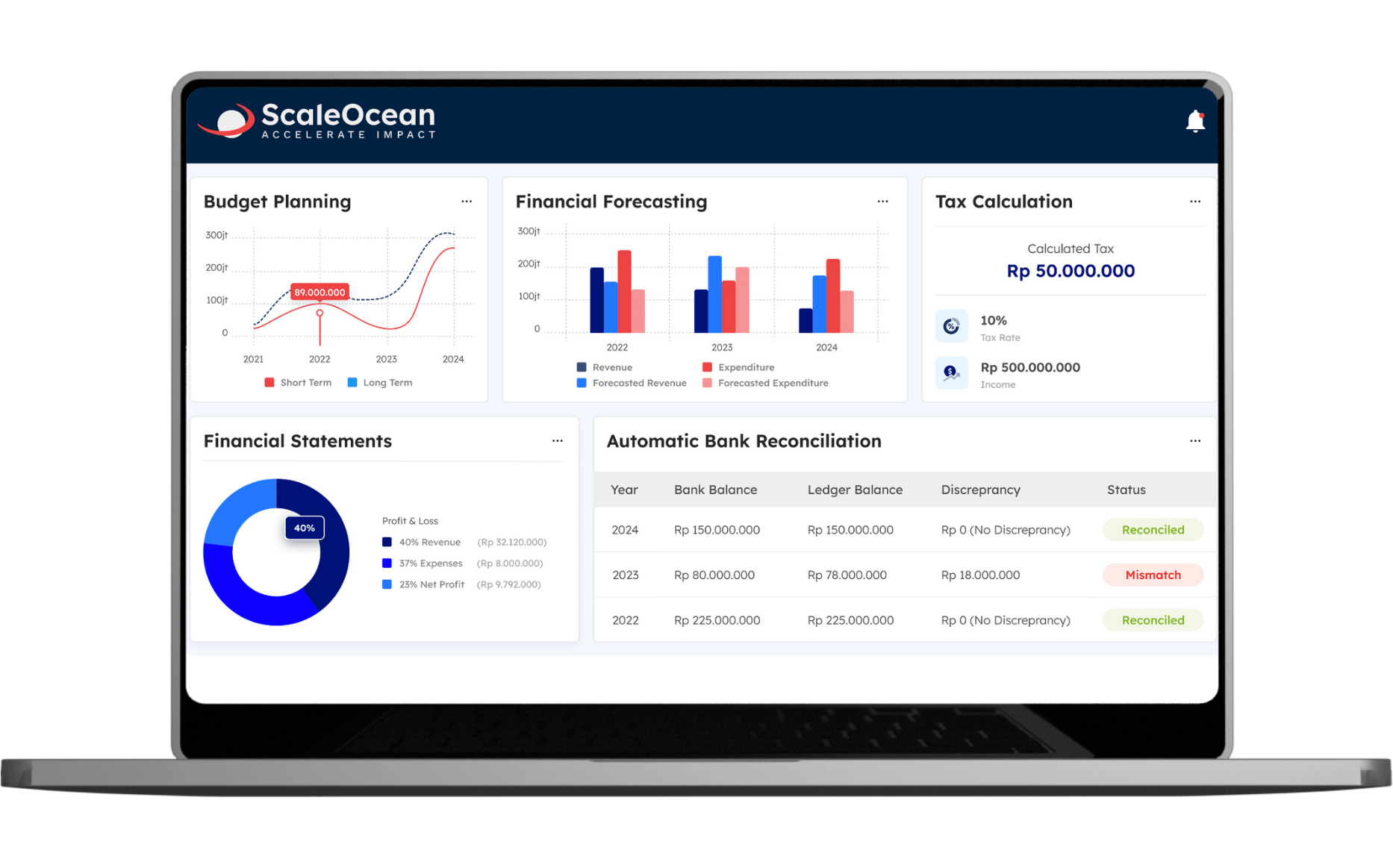
As a superior example of finance modules in ERP examples, ScaleOcean Atlas is regarded as one of the top finance modules available for Singaporean companies.
This module allows management of the general ledger, accounts, cash flow, and other related matters in a single setup, thus making regulatory compliance more effective.
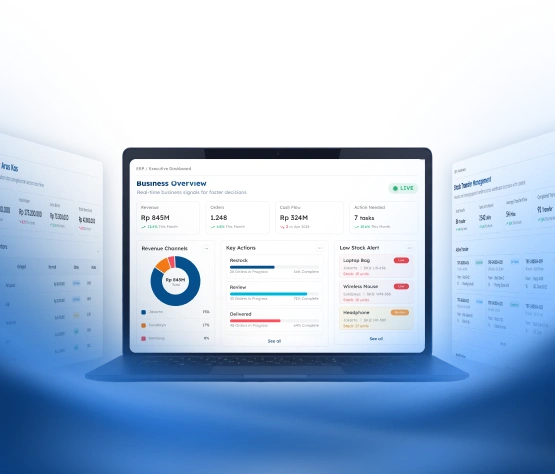
The software offers financial reports and analysis in real-time, and deep analysis provides detailed information, enabling firms to make strategic financial decisions more effectively.
Enhanced controls, better flexibility when facing varying needs, and seamless integration with the existing system are made available for easy management.
With an easy-to-use interface and the provision of professional support and training, businesses can indeed utilize the software in the optimization of financial operations.
This system qualifies for the CTC grant; you can receive a free consultation with expert from ScaleOcean and observe by yourself the positive enhancement in financial management. Here are ScaleOcean’s special features:
- IFRS Compliant: ScaleOcean Atlas is fully aligned with IFRS (International Financial Reporting Standards), ensuring that your financial reporting is compliant with global accounting standards.
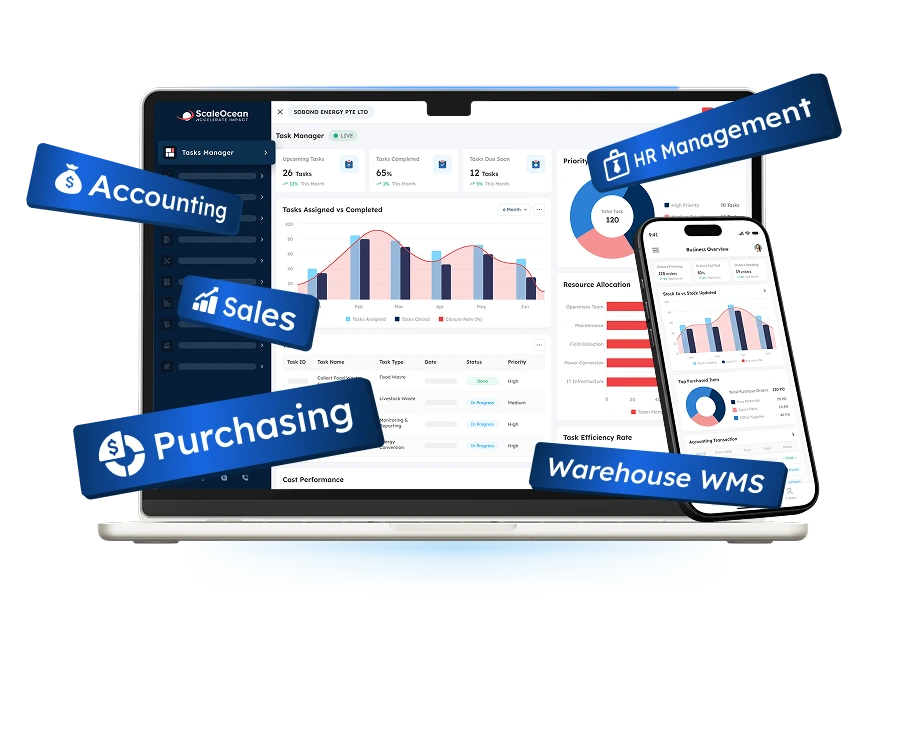
- All-in-One Solution: Accounting software by ScaleOcean Atlas offers an all-in-one solution with over 200+ specialized modules and 1,000+ feature options.
- Industry Best Practices: ScaleOcean Atlas is designed based on the best industry practices and solutions, tailored specifically to solve the unique challenges faced by businesses today.
- Customizable Solutions: Accounting software by ScaleOcean Atlas provides advanced customization options, allowing you to tailor its accounting software to fit the specific needs of your company.
Conclusion
A comprehensive ERP finance module provides companies with all the tools for financial success. Features like real-time data, automation, and robust reporting ensure better business decisions, easier cash flow management, and adherence to regulations.
When supported by the right financial management system, a firm can be well-positioned to manage its cash flows efficiently, allocate resources appropriately, and scale business effectively.
If you want to enhance financial operations and achieve business success, then accounting software by ScaleOcean Atlas is the ideal solution for your company.
ScaleOcean enhances finance management and business growth through various effective tools tailored to meet the needs of your company. Explore the benefits by booking ScaleOcean’s free consultation right away, and you will be fully convinced of ScaleOcean’s financial solutions.
FAQ:
1. What are ERP financial modules?
ERP financial modules are components within an ERP system that centralize financial data and manage key processes such as accounting, general ledger, accounts payable, accounts receivable, budgeting, cash management, and financial reporting. They help businesses track transactions in real time, improve reporting accuracy, simplify reconciliation, and maintain better financial control.
2. What are the five main ERP modules?
The five common ERP modules are Finance & Accounting, Human Resources, Sales & CRM, Supply Chain Management, and Project Management, helping businesses manage core operations in one platform.
3. Will your ERP finance system need to scale as your number of users grows?
Yes, an ERP finance system should be scalable to support more users as they grow. If a company expands, there may be new users that need to be accounted for without impacting the efficiency of financial procedures or the system’s performance.
4. Which cash management systems integrate smoothly with both banks and popular ERPs?
Cash management solutions such as treasury platforms and ERP-integrated cash tools can connect with banks and ERPs to automate payments, reconciliation, cash visibility, and financial workflows.



















.png)