



Manufacturing inventory software is a platform that helps manufacturers track raw materials, work-in-progress, completed goods, and inventory movements. It integrates stock details with purchasing, production, and store management.
In Singapore, inventory becomes more complicated when manufacturers support regional supply chains for semiconductors, electronics, and precision engineering products. Stock shortages often mean canceled deliveries, while excess stock can drain working capital.
In addition, inventory doesn’t stay in the warehouses, but follows the work, from production step to production step, from site to site, from one partner to the other. Limited WIP visibility can make it impossible for managers to see what is truly available.
Thus, manufacturers require an inventory management system that links BOMs and inventory levels with production demand and replenishment decisions. This type of system improves visibility and helps companies manage traceability, inventory costs, and dynamic supply situations.
 Key Takeaways
- Manufacturing inventory software is a system used to store and manage raw materials, WIP, finished goods, and inventory movement across manufacturing processes
- The top 10 manufacturing inventory software options differ in capabilities, pricing, complexity, and suitability for different business sizes and manufacturing needs.
- Choosing manufacturing inventory software requires assessing operational complexity, integrations, scalability, customization, reporting, compliance, and suitability.
- ScaleOcean Manufacturing ERP Software connects inventory with production, procurement, accounting, and business processes through configurable modules for long-term operational growth.
What is Manufacturing Inventory Software?
Manufacturing Inventory software is a system used to store and manage raw materials, WIP, finished goods, and inventory movement across manufacturing processes. It links stock information with purchasing, production, and warehousing activities.
Unlike basic inventory tools, specialized platforms account for production requirements and material consumption. This is particularly relevant for manufacturers such as packaging companies, where ERP for packaging industry can connect inventory with production and operational workflows.
These systems unify inventory data across all warehouses, production, and other sites. As a result, manufacturers can achieve higher inventory accuracy by minimizing manual inputs and untied sheets.
 Also Read: What is Manufacturing ERP Software? Best 12 System 2026
How Does Manufacturing Inventory Management Software Work?
Manufacturing inventory management software displays inventory transaction data entered at each stage, from purchasing and receiving through production, transfers, and sales.
Following this, the software links inventory levels with BOMs, work orders, and production schedules. From there, planners can proactively determine material needs, check current stock levels, and initiate purchases or replenishment to avoid production disruptions.
Barcode scanning, batch tracking, and serial number controls can accurately record inventory movement. This provides transparent traceability of where materials came from, where they moved, and how they were used, which is what is needed in industries such as ERP for chemical manufacturers.
Lastly, dashboards and reports transform inventory transactions into operational information for managers. They can monitor stock levels, work-in-progress, material usage, and inventory costs, while consolidating decisions across different warehouses and factories.
Why Do Manufacturers Need Specialized Inventory Software?
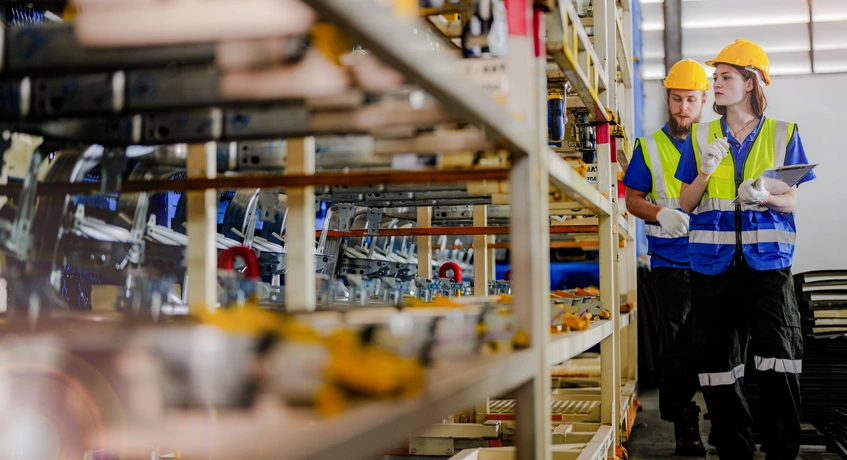
Manufacturers manage inventory differently than typical retailers, as raw materials are constantly moving through the manufacturing process. To achieve this, dedicated software is required to link the inventory records to production, costing, and traceability controls.
A complex production environment may also include a mix of BOMs, multiple process steps, suppliers, warehouses, and regulatory requirements. An intelligent system coordinates these dependencies and maintains consistent data for procurement, production, finance, and managerial personnel.
Improved integration can help manufacturers prevent unnecessary stockouts, excess inventory, and reconciliation activities. It can provide greater visibility into operations so teams can react more quickly to fluctuating production needs and/or supply status, as food industry ERP software does.
- Managing Complex BOMs: Connecting component quantities and revision updates to live stock availability ensures production teams always work with accurate inventory requirements.
- Real-Time WIP Tracking: Tracking materials through every stage of production gives supervisors immediate visibility into bottlenecks and stock availability without requiring floor updates.
- Real-Time MRP: Linking production demand to current inventory and open orders helps planners catch shortages early and adjust procurement before schedules are disrupted.
- True Total Cost of Goods Sold: Combining raw material consumption with direct operational inputs provides finance teams with accurate COGS reporting and profitability metrics.
- Regulatory Compliance and Lot Traceability: Manufacturers in regulated sectors often need detailed records for batches, serial numbers, suppliers, and inventory movements. ERP for medical device manufacturers can help connect these requirements with production, inventory, and traceability processes.
Quick Comparison: Manufacturing Inventory Software at a Glance
The following table compares 10 manufacturing inventory software options by starting price and typical use cases. Pricing can vary by plan, users, modules, and implementation requirements.
| Platform | Starting Price | Best Used For |
|---|---|---|
| ScaleOcean ERP Manufacturing | Custom quotation with flat pricing and unlimited users | Singapore medium to large enterprise businesses needing integrated inventory, production, procurement, warehouse, and finance management |
| Katana Cloud Manufacturing | From $299/month | Small and growing manufacturers managing production and inventory |
| MRPeasy | From $49/user/month | Small manufacturers requiring MRP, production planning, and inventory management |
| Cin7 Core | From $349/month | Product-based businesses managing inventory across multiple channels and locations |
| Fishbowl Manufacturing | Custom quotation | Manufacturers seeking inventory control with production management capabilities |
| Oracle NetSuite Manufacturing | Custom quotation | Growing and larger businesses requiring cloud ERP and manufacturing management |
| inFlow Inventory | From $149/month | Small businesses needing inventory, purchasing, sales, and order management |
| Acumatica Cloud ERP | Custom quotation | Mid-sized businesses requiring configurable cloud ERP and manufacturing capabilities |
| Odoo | From $31.10/user/month | Businesses seeking ERP with inventory and manufacturing application |
| QuickBooks | From $38/month | Small businesses primarily managing accounting with basic inventory needs |
Starting prices are indicative and may change based on subscription plans, users, modules, billing terms, and regional pricing. For enterprise manufacturing operations, evaluate the right platform based on functional coverage and total implementation requirements, not price alone.
10 Best Manufacturing Inventory Software in Singapore for 2026
Manufacturing inventory software helps businesses control raw materials, work-in-progress, finished goods, purchasing, and stock movements while connecting inventory data with production activities. In Singapore, these systems can help manufacturers improve inventory visibility and coordinate purchasing, production, and warehouse operations more efficiently.
However, each platform approaches manufacturing inventory differently. Some focus on production planning and MRP, while others provide broader ERP capabilities, inventory management, or integrations for growing manufacturers.
1. ScaleOcean ERP Manufacturing
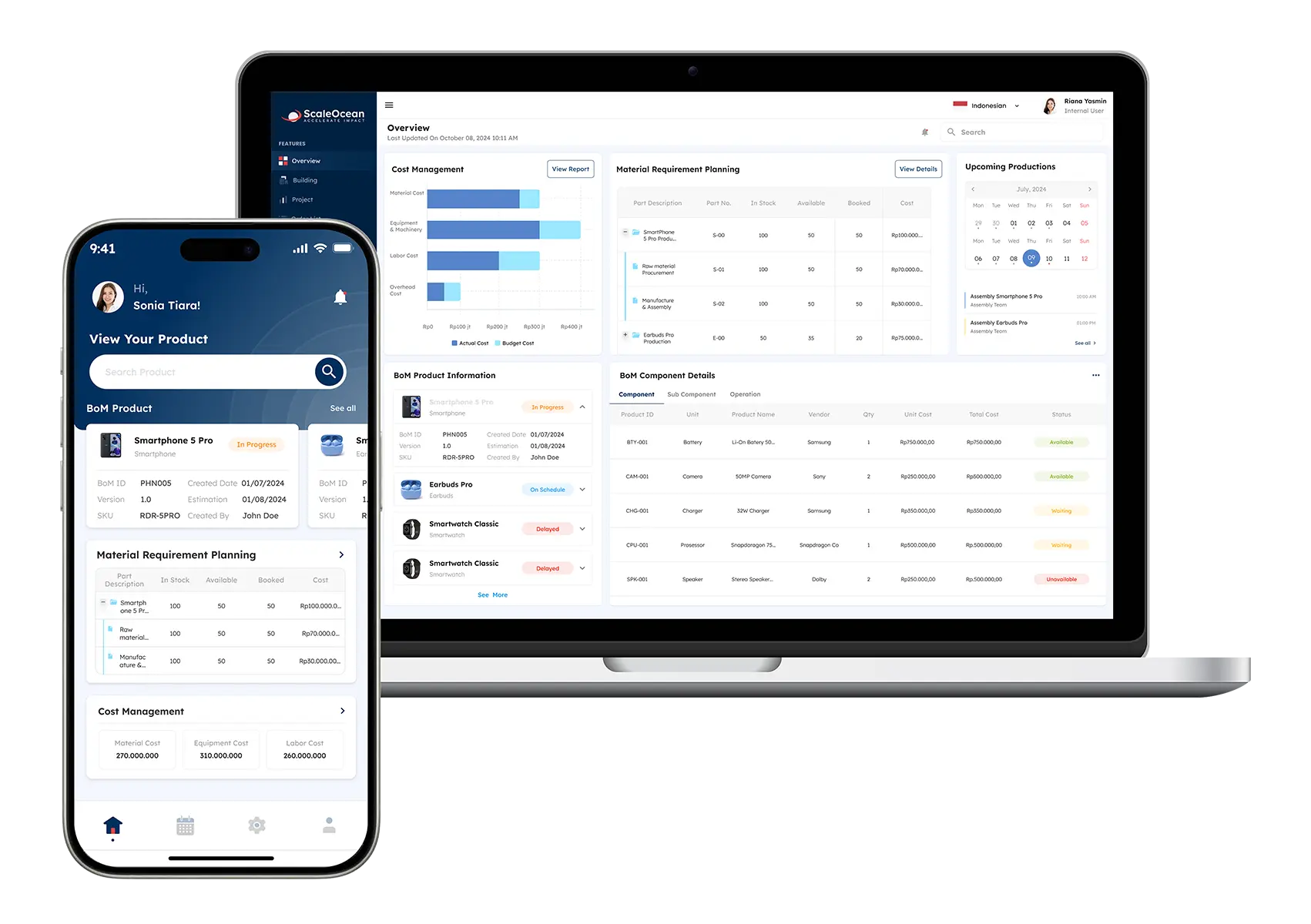
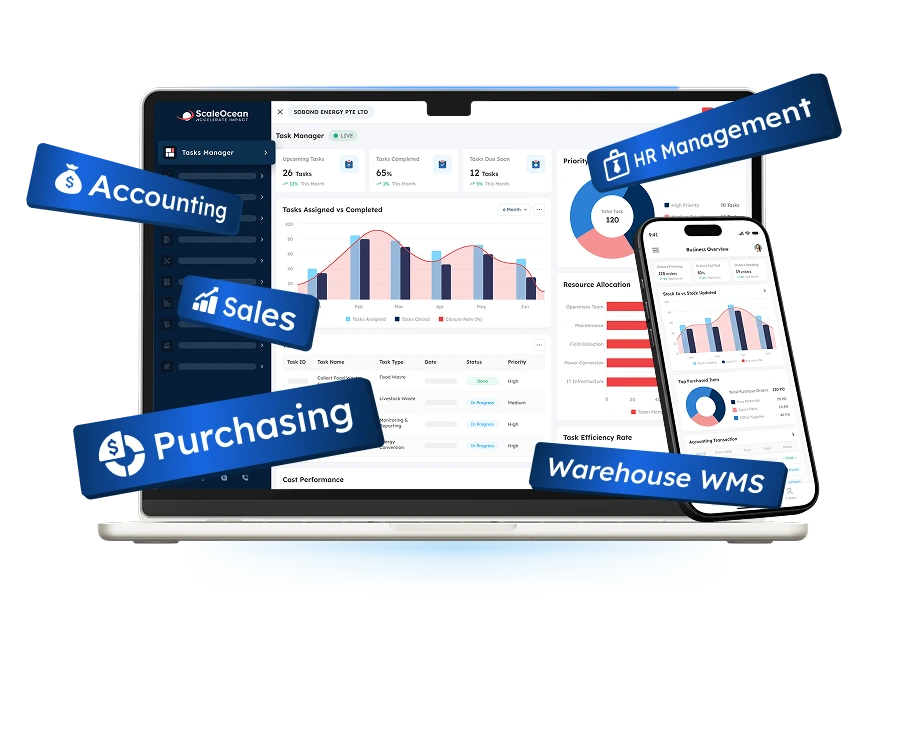
ScaleOcean Manufacturing ERP Software connects inventory, MRP, BOM, procurement, production, and WIP in one platform, helping manufacturers align material requirements with actual production demand. Its integrated workflows improve visibility and reduce shortages.
With its flagship platform, ScaleOcean Atlas, it supports multi-site inventory visibility, batch and serial traceability, and ScaleMind AI-assisted planning to identify shortages, excess stock, and replenishment needs across complex manufacturing operations in Singapore.
It is optimized for Singapore operations, supporting PDPA requirements and local financial reporting aligned with IRAS and GST processes. You can schedule a consultation with our experts to discuss your manufacturing inventory needs.
Key Features of ScaleOcean Manufacturing ERP Software:
- Integrated MRP, BOM & Inventory: Connects material requirements with BOMs, inventory availability, and production planning for better material control.
- WIP & Material Traceability: Tracks materials from raw materials through production stages and finished goods based on work orders.
- Multi-Site Inventory: Provides centralized visibility across multiple warehouses, plants, 3PL locations, and regional operations.
- Batch & Serial Tracking: Tracks batches and serial numbers throughout inventory and production for stronger traceability and control.
- Actual Consumption & Scrap Tracking: Records actual material consumption and scrap against production activities to improve inventory accuracy and costing.
| Pros | Cons |
|---|---|
|
|
Best For: Medium to large Singapore manufacturers with complex, multi-site operations that need a configurable ERP to connect inventory management with broader business processes, including procurement, production, accounting, and finance.
ℹ️ Why Choose ScaleOcean?
ScaleOcean is a strong choice for manufacturers that need more than basic inventory tracking and require an ERP that can adapt to complex enterprise workflows. Its configurable structure allows businesses to align modules, approval processes, reports, and integrations with their existing operations.
2. Katana Cloud Manufacturing
Katana manufacturing software is a cloud-based platform for managing production, inventory, purchasing, and sales in one system. It is mainly designed for manufacturers that want to monitor stock and production activities from a centralized interface.
Its tools cover production planning, inventory control, purchasing, and shop floor management. The platform is generally suited to smaller manufacturing businesses that need straightforward production and inventory management.
Key Features of Katana Cloud Manufacturing:
- Production planning
- Inventory management
- Purchase order management
- Shop floor tracking
| Pros | Cons |
|---|---|
|
|
Best For: Small to mid-sized manufacturers that need cloud-based production and inventory management without requiring a highly complex enterprise ERP environment.
ℹ️ Why Choose Katana?
Katana can suit manufacturers looking for a relatively straightforward system that combines production, inventory, purchasing, and sales management.
3. MRPeasy
MRPeasy manufacturing software is a cloud-based manufacturing and inventory system designed primarily for small manufacturers. It combines production planning with material management, purchasing, and basic business operations.
The platform supports BOM management, production scheduling, lot tracking, and MRP functions. Its structure makes it more appropriate for manufacturers that need core production planning without a large enterprise ERP implementation.
Key Features of MRPeasy:
- Material Requirements Planning
- BOM management
- Production scheduling
- Lot traceability
| Pros | Cons |
|---|---|
|
|
Best For: Small to mid-sized manufacturers that need core MRP, production planning, BOM, and inventory functions without adopting a broader enterprise ERP system.
ℹ️ Why Choose MRPeasy?
MRPeasy is suitable when production planning and material requirements are the primary priorities, particularly for smaller manufacturing teams.
4. Cin7 Core
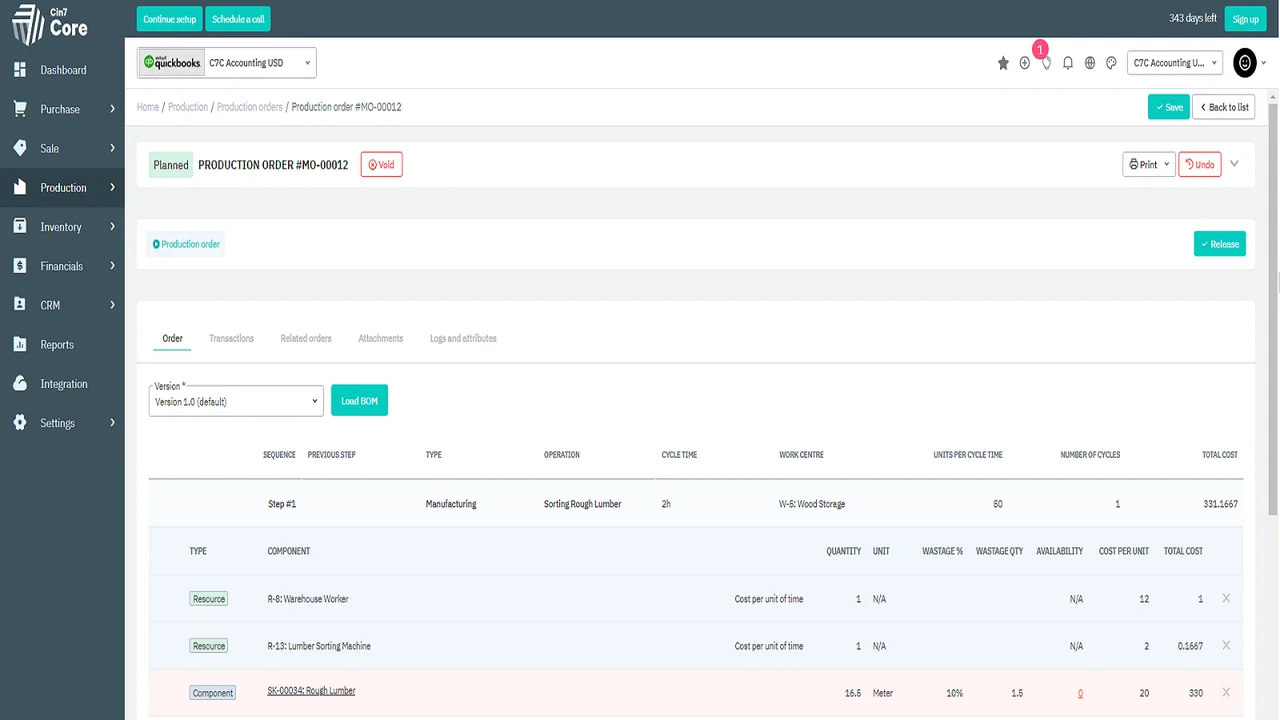
Cin7 Core manufacturing software provides inventory and order management alongside manufacturing functions for product-based businesses. It helps businesses manage stock across locations while connecting inventory with purchasing, sales, and production activities.
Its manufacturing capabilities include BOM management and MRP, while higher plans add more advanced inventory and warehouse functions. As a result, it can support growing businesses with increasingly complex inventory requirements.
Key Features of Cin7 Core:
- Inventory management
- BOM and MRP
- Multi-location inventory
- Warehouse management
| Pros | Cons |
|---|---|
|
|
Best For: Small to mid-sized manufacturers and product-based businesses that manage inventory across several locations and need connected order and stock management.
ℹ️ Why Choose Cin7?
Cin7 Core can fit businesses that place strong emphasis on inventory control, multi-location operations, and connected order management.
5. Fishbowl Manufacturing
Fishbowl Manufacturing software combines inventory management with production and warehouse functions for manufacturers and distributors. It helps businesses manage materials, production orders, stock movements, and warehouse activities from one system.
The software is commonly positioned around inventory control and manufacturing management rather than a complete enterprise ERP. It can therefore work for businesses that need more manufacturing functionality than basic inventory software.
Key Features of Fishbowl Manufacturing:
- Manufacturing orders
- Inventory tracking
- BOM management
- Warehouse management
| Pros | Cons |
|---|---|
|
|
Best For: Small to mid-sized manufacturers that need dedicated inventory and production management, particularly businesses already focused on warehouse and stock control.
ℹ️ Why Choose Fishbowl?
Fishbowl can be considered when inventory and warehouse management remain central requirements alongside basic manufacturing processes.
6. Oracle NetSuite Manufacturing
Oracle NetSuite manufacturing software connects manufacturing activities with broader ERP functions such as financials, sales, purchasing, and inventory. It supports production processes from planning through work orders and finished goods.
Its manufacturing capabilities include BOMs, work orders, outsourced manufacturing, and manufacturing analytics. The platform is therefore better suited to organizations with broader ERP requirements and more complex operations.
Key Features of Oracle NetSuite Manufacturing:
- Advanced BOM management
- Work order management
- Manufacturing planning
- Manufacturing analytics
| Pros | Cons |
|---|---|
|
|
Best For: Mid-sized to large manufacturers that need manufacturing inventory management alongside accounting, procurement, sales, and other enterprise business functions.
ℹ️ Why Choose Oracle NetSuite?
NetSuite fits manufacturers seeking a broader ERP environment rather than a standalone inventory or production management system.
7. inFlow Inventory
inFlow manufacturing software provides inventory, purchasing, sales, and production management for businesses that manufacture or assemble products. Its manufacturing edition adds BOMs, product assembly, and labor and material cost tracking to its inventory capabilities.
The platform also supports multi-location inventory and helps users determine whether products can be built from available stock. This makes it more suitable for smaller operations with straightforward manufacturing requirements.
Key Features of inFlow Inventory:
- Bill of Materials
- Product assembly
- Multi-location inventory
- Labor and material costing
| Pros | Cons |
|---|---|
|
|
Best For: Small manufacturers and businesses that assemble products and need inventory management with basic production and costing capabilities.
ℹ️ Why Choose inFlow?
inFlow can work well when a business primarily needs inventory control with straightforward assembly, BOM, and production costing functions.
8. Acumatica Cloud ERP
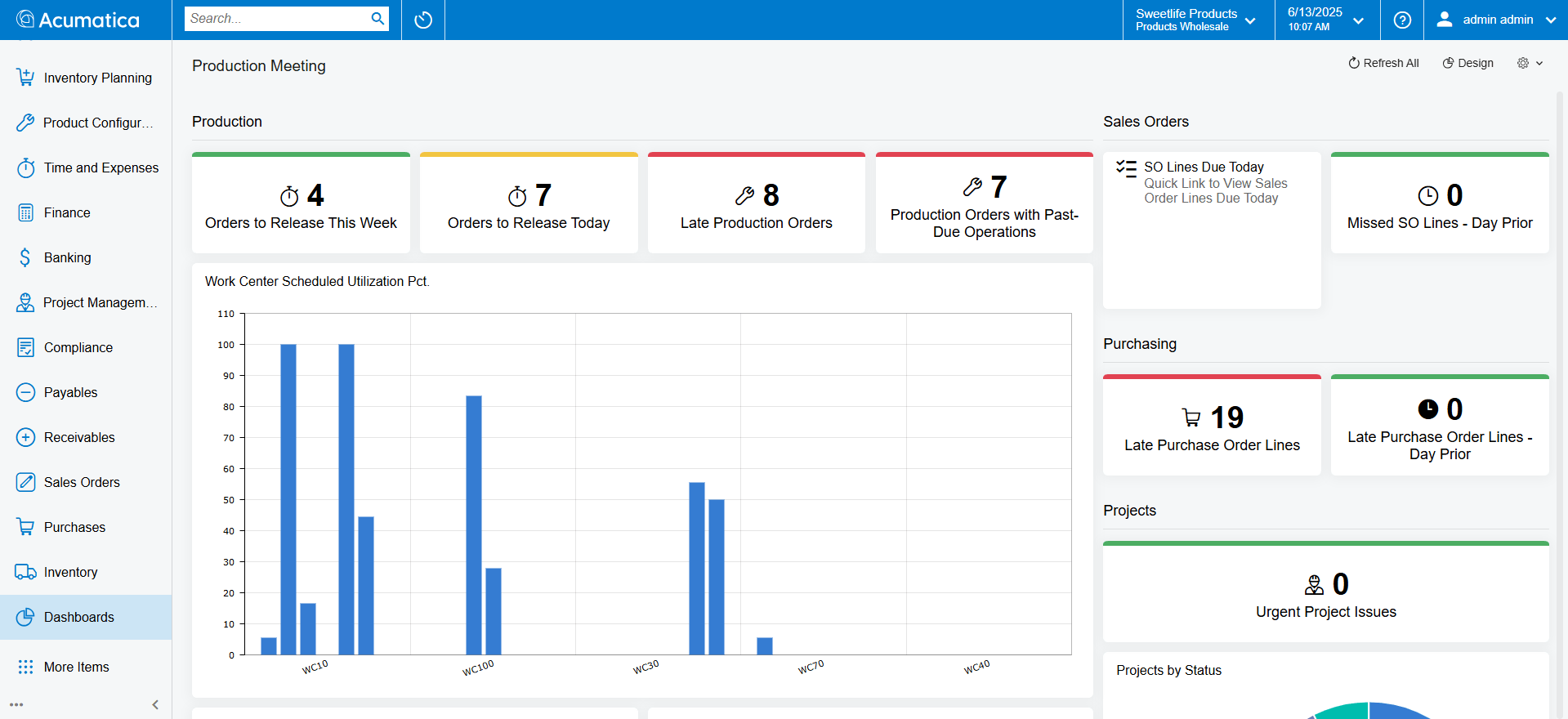
Acumatica manufacturing software is a cloud ERP platform that combines production, inventory, supply chain, accounting, and reporting functions. It supports several manufacturing models, including make-to-stock, make-to-order, batch, and project-driven production.
Its manufacturing tools include BOMs, MRP, production scheduling, shop floor data collection, and inventory management. Acumatica is positioned toward growing and mid-sized manufacturers that require a broader ERP system.
Key Features of Acumatica Cloud ERP:
- BOM and routing
- MRP
- Production management
- Inventory management
| Pros | Cons |
|---|---|
|
|
Best For: Mid-sized manufacturers that need manufacturing, inventory, financial, and supply chain management within a single cloud ERP environment.
ℹ️ Why Choose Acumatica?
Acumatica is worth considering when manufacturing inventory management needs to operate alongside broader financial and business management processes.
9. Odoo
Odoo manufacturing software is an ERP application that combines manufacturing with inventory, purchasing, sales, accounting, and other business applications. Its modular structure lets businesses select applications based on their operational needs.
The manufacturing environment generally covers BOMs, work orders, production planning, and inventory movements. This makes Odoo suitable for businesses that want to combine manufacturing with other ERP applications in one system.
Key Features of Odoo:
- Manufacturing orders
- BOM management
- Inventory management
- Work center management
| Pros | Cons |
|---|---|
|
|
Best For: Small to mid-sized manufacturers that want modular ERP applications and need to combine manufacturing inventory with other business functions.
ℹ️ Why Choose Odoo?
Odoo can suit businesses that prefer a modular ERP structure and want to add manufacturing alongside inventory, purchasing, accounting, or sales applications.
10. QuickBooks
QuickBooks manufacturing software offers inventory and manufacturing capabilities to manage financial and inventory-related activities. It is primarily recognized as an accounting platform rather than a dedicated manufacturing ERP.
Its suitability depends on the manufacturing complexity and the tools or integrations used alongside the accounting system. Therefore, it is generally more appropriate for smaller businesses with straightforward inventory and production requirements.
Key Features of QuickBooks:
- Inventory tracking
- Purchase management
- Sales management
- Accounting and reporting
| Pros | Cons |
|---|---|
|
|
Best For: Small manufacturers with relatively simple production processes that primarily need accounting and basic inventory management rather than a dedicated manufacturing ERP.
ℹ️ Why Choose QuickBooks?
QuickBooks can be considered when accounting is the main requirement and manufacturing inventory needs remain relatively simple.
What Makes Manufacturing Inventory Software the Best? Key Features to Look For
The top manufacturing inventory software integrates inventory controls with production needs, purchasing, and warehouse management. Manufacturers should therefore explore features that enhance material visibility, planning, and operational monitoring.
As an example from International Accounting Bulletin, Alcar Ruote is a Swiss manufacturing company that produces and distributes high-performance steel wheels for the European automotive aftermarket. The company deployed cloud-based inventory and supply chain software to resolve inventory visibility gaps and accelerate order fulfillment.
Using IoT integration, shop floor devices send real-time sensor data into their central system, enabling automated inventory updates and predictive machine maintenance. As a result, Alcar Ruote automated 80% of its sales orders and significantly cut downtime.
1. Bill of Materials (BOM)
A Bill of Materials feature organizes components, quantities, and production relationships needed to produce each item. This allows inventory groups to compare component availability with production demands before releasing work orders.
The software connects inventory quantities with BOMs, work orders, and production schedules. For FMCG manufacturers, ERP for FMCG industry can further connect inventory management with purchasing, production, and distribution activities.
In addition, the BOMs must accommodate revisions and product variations as specs evolve. This helps manufacturers maintain accurate material needs and reduce incorrect orders and manufacturing delays.
2. MRP (Material Requirements Planning)
MRP begins by linking the production schedule with BOMs, existing inventory, purchase orders, and expected receipts. This way, planners can identify potential material shortages before they become production constraints.
Effective MRP should also revise requirements in response to changes in demand, inventory, or schedules. This helps procurement teams adjust purchase quantities and dates accordingly, preventing excess inventory buildup.
3. End-to-End Lot and Serial Traceability
Lot and serial traceability tracks inventory as it moves from receiving through production, storage, and finished goods. This provides manufacturers with a documented history of material sourcing and use in manufacturing, as well as the goods it impacted.
In addition, end-to-end tracking enables investigation of quality issues, recalls, and compliance requirements in controlled manufacturing environments. It can also help teams find specific batches or units without digging through disconnected record systems.
4. Shop Floor Tracking
Shop floor tracking records material use, production activities, and stock movements on the shop floor. Therefore, shop floor tracking allows supervisors to follow progress and WIP on the shop floor and detect production problems from real-time information.
In addition, tracking links shop floor transactions with work orders and inventory balances. This minimizes manual updates and enables planners to quickly identify which materials are still in stock, used up, or in production.
5. Real-Time Multi-Tracking
Operational multi-tracking provides visibility across warehouses, production, inventory locations, and other operational sites. This is especially critical when manufacturing plants span multiple facilities or regional supply chain locations.
As a result, teams have a single point of information for stock availability and movements and do not need to combine records manually. Centralized visibility will also aid inventory allocation when sites compete for resources.
6. Automated Replenishment
Automated replenishment enables the automatic monitoring of inventory levels, and production needs to assess when excess materials may be needed. This allows procurement teams to act on anticipated shortages without constantly checking stock balances.
Additionally, replenishment rules can factor in minimum levels, demand, lead times, and scheduled production. This helps manufacturers ensure material availability while reducing excess inventory and protecting working capital.
How to Choose the Right Manufacturing Inventory Software
Choosing manufacturing inventory software requires more than comparing prices and feature lists. Manufacturers should assess whether the platform fits their production complexity, inventory workflows, integrations, compliance requirements, and long-term operational needs.
- Assess Manufacturing Complexity: Choose software that can handle your BOMs, production stages, WIP, inventory locations, and material requirements.
- Check MRP Capabilities: Ensure the system connects production demand with inventory levels, purchasing, lead times, and replenishment.
- Evaluate Traceability: Look for lot and serial tracking if your industry requires detailed material and product histories.
Consider Multi-Site Operations: Select a platform that provides centralized inventory visibility across warehouses, plants, 3PLs, or regional locations. - Review Integration Capabilities: Check whether the software integrates with accounting, procurement, sales, warehouse, production, and existing business systems.
- Compare Scalability: Choose software that can support increasing users, locations, transactions, products, and production complexity as your business grows.
- Consider Customization: Evaluate whether workflows, approvals, reports, and modules can adapt to your existing manufacturing processes.
- Assess Reporting and Analytics: Look for dashboards and reports that help monitor inventory levels, material consumption, WIP, costs, and production performance.
- Check Local Compliance: For Singapore businesses, consider support for relevant data protection requirements and financial reporting processes involving IRAS and GST.
- Request a Practical Demo: Test the software using actual manufacturing scenarios to confirm that its workflows match your operational requirements.
Conclusion
Manufacturing inventory software helps Singapore manufacturers control materials, production inventory, traceability, and replenishment while improving visibility across operations. Choosing the right platform depends on manufacturing complexity, scale, and integration needs.
ScaleOcean Manufacturing ERP connects inventory with production, procurement, accounting, and other business functions through a configurable platform. Its flexible modules help manufacturers align system workflows with operational requirements while supporting long-term growth.
To identify the right manufacturing inventory solution for your business, schedule a consultation with ScaleOcean today and consult our experts for guidance based on your processes and requirements.
FAQ Manufacturing Inventory Software:
1. What is the main benefit of manufacturing inventory software?
It prevents production delays by ensuring you never run out of raw materials. The software automatically monitors stock levels, tracks work-in-progress, forecasts lead times, and triggers reorder alerts before shortages stall your shop floor assembly line.
2. How does manufacturing inventory software differ from retail inventory tools?
Retail software only tracks finished goods ready for sale. Manufacturing systems manage the entire production cycle, tracking raw materials, work-in-progress (WIP), multi-level component recipes, and shop-floor scheduling.
3. Why does manufacturing inventory software use a BOM?
A Bill of Materials (BOM) acts as a component recipe. The software uses it to calculate exact product costs, predict raw material requirements, and automatically deduct parts from inventory as items move down the assembly line.
4. Can manufacturing inventory software sync with accounting?
Yes, top systems integrate with accounting tools such as ScaleOcean. This connects physical shop floor data to your financials, automating cost-of-goods-sold tracking and ensuring your asset values match your real-world warehouse stock.





















.png)