Multi-entity accounting software is a financial management system that allows businesses to keep separate accounting records for subsidiaries, legal entities, branches, or business units and consolidate financial information for group reporting. It supports entity-level bookkeeping, consolidation, intercompany transactions, currency management, approvals, and group-wide financial analysis.
The issue tends to become more pronounced with enterprise firms as they grow and add more business units, legal entities, subsidiaries, and overseas operations. Finance teams may still close each entity in spreadsheets, resulting in slow multi-entity closing, manual consolidation, intercompany mismatches, complex entity-level compliance, limited group visibility, and difficult audit traceability.
The multi-entity accounting software addresses these issues by enabling all entity ledgers, inter-company activity, master data, consolidation rules, reporting currencies, and reporting structures to be united in one financial environment.
The Business Times provided our team with details regarding all Singapore companies registered for GST who will eventually have to submit digital invoices to IRAS via InvoiceNow, bringing the number of businesses using the network to some 90,000. This highlights the need for entity-level accounting records and tax data and group financial processes and group invoices to be managed at the entity level.
Explore what multi-entity accounting software is, the must-have features for enterprise finance teams, eight multi-entity accounting platforms to consider in 2026, and practical enterprise use cases, as well as key considerations for selecting a multi-entity accounting software platform.
Key Takeaways
Multi-entity accounting software helps finance teams maintain separate entity records while consolidating subsidiaries, currencies, intercompany transactions, and group reporting.
A comparison of multi-entity accounting software helps companies evaluate each platform based on consolidation, intercompany automation, multi-currency support, integrations, scalability, and reporting depth.
ScaleOcean Multi-Entity Accounting Software supports consolidation, intercompany matching, multi-currency finance, entity-level workflows, and group reporting within one configurable platform.
Multi-Entity Accounting Software is a financial solution designed for businesses with more than one legal entity, subsidiary, branch, division, or business unit. Finance teams can gather financial data at the consolidated level, while each entity has its own accounting record.
The distinction between simple multi-company bookkeeping and consolidation depth is that in the former only a few companies are being consolidated, while in the latter, many of the companies are being consolidated. The reporting requirements, tax configuration, entity permissions, intercompany transactions, fiscal structures, and currencies could be different in various enterprise systems.
This becomes important when local subsidiaries need autonomy. Headquarters may want standardized reporting and consolidated visibility, while individual entities still need their own currency, operating processes, and statutory records. The goal is therefore not to remove entity independence but to create a financial structure in which group governance and local requirements can coexist.
Additional expansion of the model is possible with a modern accounting information system, which will allow you to connect the transactions in the general ledger with the purchasing, sales, inventory, payroll, fixed assets, projects, and management reporting.
The first step in multi-entity accounting is to have financial records at the entity level. For example, a Singapore subsidiary can be able to post an invoice, journal, payment, asset, or tax entry and expenses to its subsidiary ledger and follow the accounting principles and requirements of its own country, using its own accounting currency.
The software then maps those entity records into a group structure. Shared accounts, dimensions, currencies, consolidation rules, and reporting hierarchies allow finance teams to combine information without manually rebuilding every financial statement.
Intercompany transactions form another important layer. If Entity A sells services to Entity B, the platform can create or match the corresponding entries and remove internal activity during consolidation, so group revenue and expenses are not overstated. Modern multi-entity platforms increasingly automate due-to, due-from, matching, and elimination processes.
A cloud accounting setup will also allow distributed finance teams to access shared financial information, processes, and reporting without having to establish their own local accounting system for each company.
Core Features to Look For in Multi-Entity Accounting Software
For multi-entity accounting software, there are native capabilities, including automated intercompany eliminations, centralized charts of accounts, real-time financial consolidation, and multi-currency support. Features that minimize the need for consolidation while maintaining entity-level responsibility and auditability are also a key factor for enterprise finance teams to consider.
1. Intercompany Automation
When finance teams have to identify the matching receivables, payables, expenses, revenue, and balances manually between interrelated companies, it can become complicated. A helpful system will be able to assist in matching these transactions and minimizing double counting at month-end.
The more entities there are, the more value is added by automation, as each new subsidiary generates extra intercompany relationships. All ScaleOcean, Sage Intacct, Acumatica, and Intuit Enterprise Suite feature documentation that addresses intercompany automation or intercompany eliminations.
2. Entity-Level Segmentation and Consolidation
Financial teams should have access to the performance of individual entities and the consolidated group without the need to have separate reporting environments. While the subsidiary controllers are still receiving their statements, a parent company might need consolidated profit, cash, liabilities, and working capital.
Good systems provide users the ability to drill down from group-level figures to underlying entities, and not just as a final report at the end of a process. NetSuite OneWorld, for instance, offers subsidiary and consolidated reporting contexts, whereas Sage Intacct offers entity-level and consolidated views.
3. Easy Entity Switching
Users should not have to go through the hassle of logging into multiple entities just to check out another subsidiary. Moving between companies, with the right permissions and having separate records, should be feasible with entity switching.
Convenience switching, however, should not be taken as the same as true consolidation. For example, with QuickBooks Online, you can have multiple company files per login, but each company is a separate subscription and dataset.
4. Automated Intercompany Transactions
The other advantage of stronger platforms is to build matching entries when an intercompany event happens. A payable may be a corresponding receivable or due-to/due-from in another company.
This decreases the risk that one side of an internal transaction is entered into while the other isn’t entered into. Intercompany financial transactions and inventory transactions are supported in Acumatica, and Intuit Enterprise Suite can generate intercompany journals and eliminate specific elimination accounts from consolidated reports.
5. Multi-Currency and Multi-Tax Support
Regional groups can have separate companies in SGD, USD, MYR, PHP, EUR, or other currencies, and report consolidated results in one group currency. Multi-entity software should then facilitate reporting on transaction currencies, entity base currencies, FX revaluation, translation, and consolidated currency reporting.
Requirements also may vary from one jurisdiction to another. Singapore groups need to look at the treatment of GST, GST group arrangements, foreign taxes, and entity-level tax configurations. This guide on the top multi-currency accounting software can be checked out by firms that operate overseas.
6. Custom Approval Workflows and Controls
The requirements for approval will not necessarily be the same for each legal entity. Capital purchases might need a double approval at one company, but at another they might have a different level of approval depending on the management responsibilities in your local company.
The platform should enable finance teams to set approval policies based on risk, department, role, transaction type, amount, or company. This will help the groups agree on the principles of governance without compelling them all to follow the same path in their operations.
7. Role-Based Access Permissions
Group finance teams must have access to a wide range of data, whereas local employees often need access to only their own company or responsibilities. Role-based permissions can be used to ensure that users do not view or modify records that are not within their scope of authority.
This is especially critical if customer, vendor, employee, or payroll information includes personally identifiable information. For Singapore organizations, access governance is something that should be considered in conjunction with the PDPA duties.
8. Unified Dashboards with Drill-Down Reporting
Senior finance leaders need group-level information, but a consolidated number is only useful when they can investigate what caused it. Dashboards should therefore allow users to move from group KPIs to entity, account, journal, or transaction detail.
Drill-down reporting also improves audit traceability because finance teams can investigate variances without rebuilding spreadsheets. Multi-entity platforms such as ScaleOcean, Sage Intacct, NetSuite OneWorld, Gravity Software, and Acumatica all emphasize consolidated reporting with entity-level visibility.
Brief Comparison of Multi-Entity Accounting Software
The ideal multi-entity accounting software will vary by a company’s financial setup, number of entities, geographic reach, and level of consolidation. A small group could just need to eliminate separately and report combined; a regional enterprise may need automation, integration into other ERP activities, setting up entity-level controls, reporting consolidated, and dealing with multiple currencies.
The following matrix contrasts multi-entity accounting software based on their business environment and their ability to differentiate with respect to their multi-company approach. Availability, localization, integrations, scope for implementation, support, and geographic availability of features may differ based on vendor and subscription.
Platforms
Best For
Why They Stand Out
ScaleOcean
Medium and large enterprises managing multiple entities, currencies, branches, operational workflows, and Singapore reporting requirements.
Combines multi-entity accounting, automated consolidation, intercompany matching, entity-level workflows, operational ERP data, and ScaleMind financial insights within One Platform while retaining local entity flexibility.
Sage Intacct
Mid-market and larger finance teams with significant multi-entity and multi-currency consolidation requirements.
Strong financial-management depth with automated consolidation, intercompany eliminations, currency conversion, dimensional reporting, and entity-level drill-down.
NetSuite OneWorld
Large and multinational organizations managing subsidiaries across different currencies and tax jurisdictions.
OneWorld manages subsidiaries in a hierarchical structure and combines multi-subsidiary financial management with consolidated reporting and broader ERP capabilities.
Gravity Software
Mid-market groups, franchises, family offices, and multi-location businesses using the Microsoft ecosystem.
Uses a unified multi-entity architecture built on Microsoft Power Platform with automated intercompany processes, multi-currency accounting, Power BI, and unlimited entity support.
QuickBooks Online Advanced
Small and growing groups that maintain separate QuickBooks company files and need combined reporting without moving immediately to a full ERP.
Supports multi-company reporting through Spreadsheet Sync while retaining familiar QuickBooks Online company files and workflows.
Intuit Enterprise Suite
Growing multi-entity organizations that want consolidated reporting and intercompany automation within the broader Intuit environment.
Small and medium groups that manage several organizations and already use Zoho applications.
Allows users to manage and switch between multiple organizations, with Zoho Analytics providing cross-organization reporting and dashboards.
Acumatica
Mid-market and large businesses requiring multi-company accounting alongside distribution, manufacturing, construction, or broader ERP processes.
Supports unlimited related companies, intercompany automation, shared financial structures, consolidated reporting, and broader operational ERP capabilities.
The Best 8 Multi-Entity Accounting Software for Enterprise Business in 2026
To execute enterprise finance teams in 2026, they do not simply need to be able to open a number of company ledgers. These factors should be addressed in the right system to help minimize close complexity, maintain accurate intercompany balances, consolidate group results, manage currencies, enhance entity-level governance, and keep sufficient detail for audit and management review.
The following eight platforms serve different levels of multi-entity complexity, from growing groups using separate accounting files to multinational businesses requiring a broader ERP and financial consolidation environment.
1. ScaleOcean
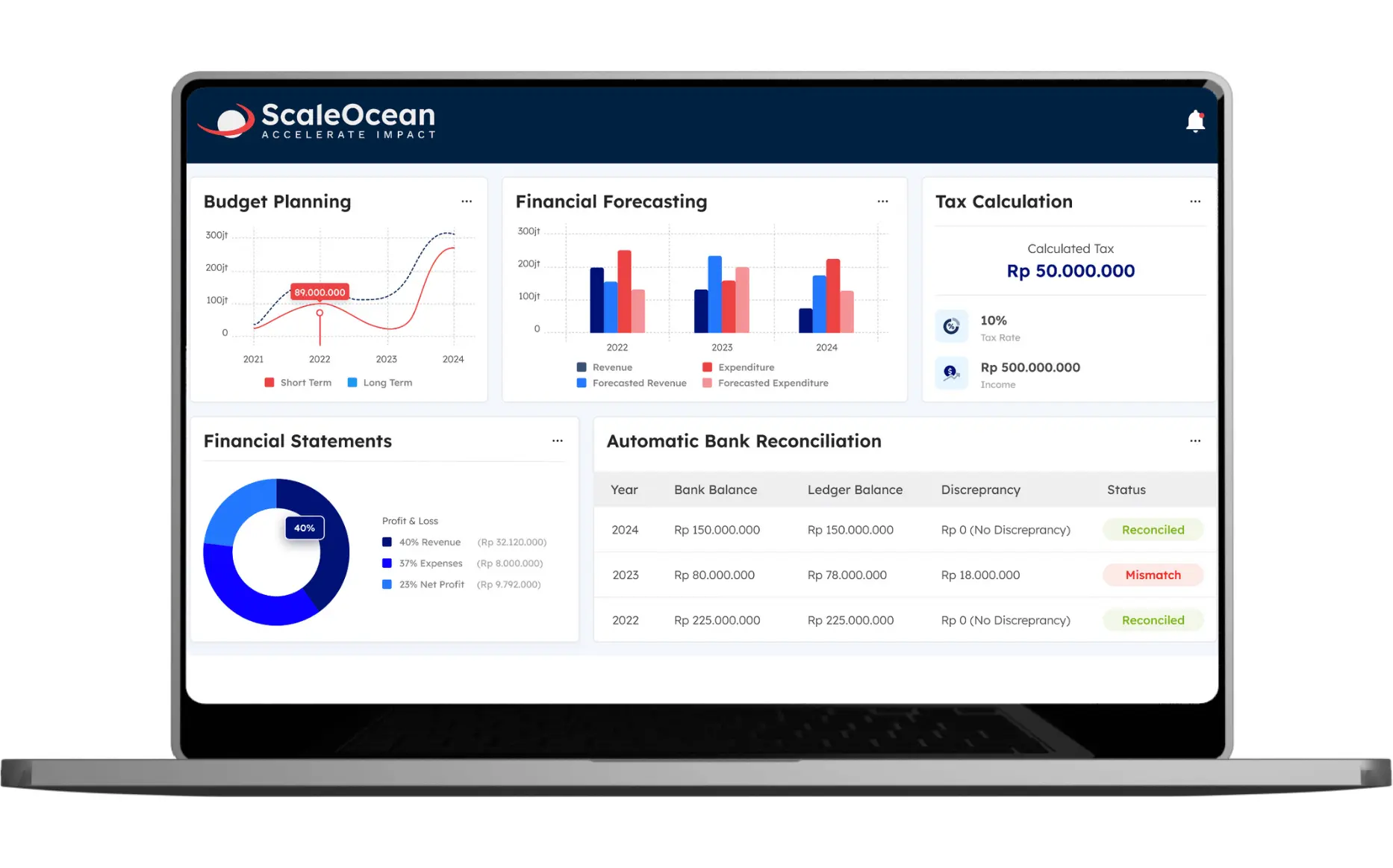
ScaleOcean is a multi-entity accounting platform built for medium to large enterprises to manage subsidiaries, entities, branches, currencies, charts of accounts, transactions, consolidation, approvals, and reporting within one integrated system. It keeps group finances consistent while allowing each entity to retain its local workflows, tax structures, and operational requirements.
ScaleOcean Atlas, as ScaleOcean’s flagship ERP platform, connects multi-entity accounting with procurement, sales, inventory, projects, payroll, and other operational data within One Platform. ScaleMind works as an intelligence layer that helps finance teams summarize group performance, identify anomalies, investigate financial movements, and review information across entities.
Its central positioning is one financial platform for every entity without losing local flexibility. Headquarters can standardize consolidated reporting and group governance, while subsidiaries retain entity-specific currencies, tax configurations, approval workflows, operational structures, and accounting requirements.
For Singapore enterprises, ScaleOcean is designed to support PDPA-aligned governance and local financial reporting workflows through role-based access, audit trails, GST-oriented processes, InvoiceNow readiness, and XBRL-related reporting support. ACRA requires XBRL filing for applicable companies, while IRAS is expanding GST InvoiceNow requirements. Schedule a consultation to assess how multi-entity consolidation, entity-level workflows, and operational integration fit your group structure.
Key features:
Automated Multi-Entity Consolidation
Intercompany Matching & Elimination
Multi-Currency & FX Management
Flexible Group & Entity Chart of Accounts
Group Reporting with Entity-Level Drill-Down
Entity-Based Workflow, Access & Audit Trail
Singapore GST, InvoiceNow & XBRL Readiness
Pros
Cons
Uses a consultative implementation approach that begins by mapping entity structures, accounting requirements, approval responsibilities, consolidation logic, and operational priorities.
Its enterprise-level depth may be unnecessary for small businesses that only need basic bookkeeping for one or two straightforward companies.
Uses scope-based pricing so modules and implementation requirements can be aligned with the financial and operational capabilities the group actually needs.
Final pricing requires an initial consultation because entity count, modules, integrations, deployment, localization, and process complexity influence the scope.
Allows modules to be introduced gradually according to business priorities, helping enterprises expand their financial environment without replacing the core platform.
Implementation prioritizes accurate financial architecture, system stability, and long-term suitability rather than an immediate generic accounting setup.
Implementation timelines are based on process analysis and business readiness, giving finance teams a clearer basis for planning migration, testing, and rollout.
Best for: Medium and large enterprises, regional headquarters, multi-subsidiary groups, manufacturers, distributors, construction companies, logistics groups, project-based organizations, and companies operating across several legal entities.
ℹ️Why choose ScaleOcean?
ScaleOcean helps enterprise groups combine financial standardization and consolidated visibility with entity-level flexibility across currencies, workflows, tax structures, approvals, and operational processes.
2. Sage Intacct
Sage Intacct is a cloud financial management platform with dedicated multi-entity functionality for businesses operating several companies, subsidiaries, locations, or international operations. Users can maintain entity-specific configurations while consolidating information across the wider organization.
It is multi-entity capable and features intercompany transactions, automated eliminations, currency conversion, global consolidation, dimensional reporting, and the ability to drill from the consolidated level to the entity level. New entitiescan use a different definition of lists, processes, and charts of accounts if necessary, while continuing to inherit the existing lists, processes, and charts of accounts.
Key features:
Multi-entity consolidation
Intercompany eliminations
Multi-currency accounting
Entity-level configuration
Dimensional financial reporting
Consolidated reporting
Pros
Cons
Strong financial-management depth for groups with significant consolidation and multi-currency requirements.
Implementation and financial-model design can require more planning than entry-level accounting software.
Automated eliminations and currency processes can reduce spreadsheet-heavy consolidation work.
Organizations requiring extensive operational ERP processes may need additional applications or integrations.
Entity-level drill-down provides finance teams with both group visibility and local financial detail.
Companies with very straightforward accounting requirements may not need its broader financial-management depth.
Best for: Mid-market and large organizations, financial services groups, SaaS companies, hospitality groups, nonprofits, and businesses that prioritize financial management and consolidation.
ℹ️Why choose Sage Intacct?
Sage Intacct provides dedicated multi-entity financial management with automated consolidation, intercompany eliminations, multi-currency processing, and drill-down reporting.
3. NetSuite OneWorld
NetSuite OneWorld is Oracle NetSuite’s multi-subsidiary solution for businesses operating in various tax jurisdictions, countries, currencies, and legal entities. The structure of subsidiaries might be hierarchical, placing the subsidiaries under a parent company, but with their own financial setting.
OneWorld integrates subsidiary accounting, consolidated reporting, currency translation, intercompany journals, local financial statements, and more NetSuite ERP capabilities. Users can access reports either at the subsidiary level or they can combine reports of related subsidiaries, though not all NetSuite reports can be consolidated.
Key features:
Subsidiary hierarchy
Consolidated financial statements
Multi-currency accounting
Consolidated exchange rates
Advanced intercompany journals
Country-specific reporting
Pros
Cons
Designed for multinational and multi-subsidiary organizations with complex financial structures.
Its broad ERP scope can require a more structured implementation and administration model.
Connects multi-entity financial management with wider ERP processes such as customers, projects, and operations.
Oracle documents that some reports are limited to individual subsidiary contexts rather than consolidated reporting.
Supports subsidiary-specific and consolidated financial statements across hierarchical structures.
Small organizations may not require the level of configuration associated with a global ERP platform.
Best for: Large enterprises, multinational groups, regional businesses, and organizations already using NetSuite for wider ERP operations.
ℹ️Why choose NetSuite OneWorld?
NetSuite OneWorld supports multi-subsidiary financial management, consolidated reporting, currencies, intercompany activity, and broader global ERP processes.
4. Gravity Software
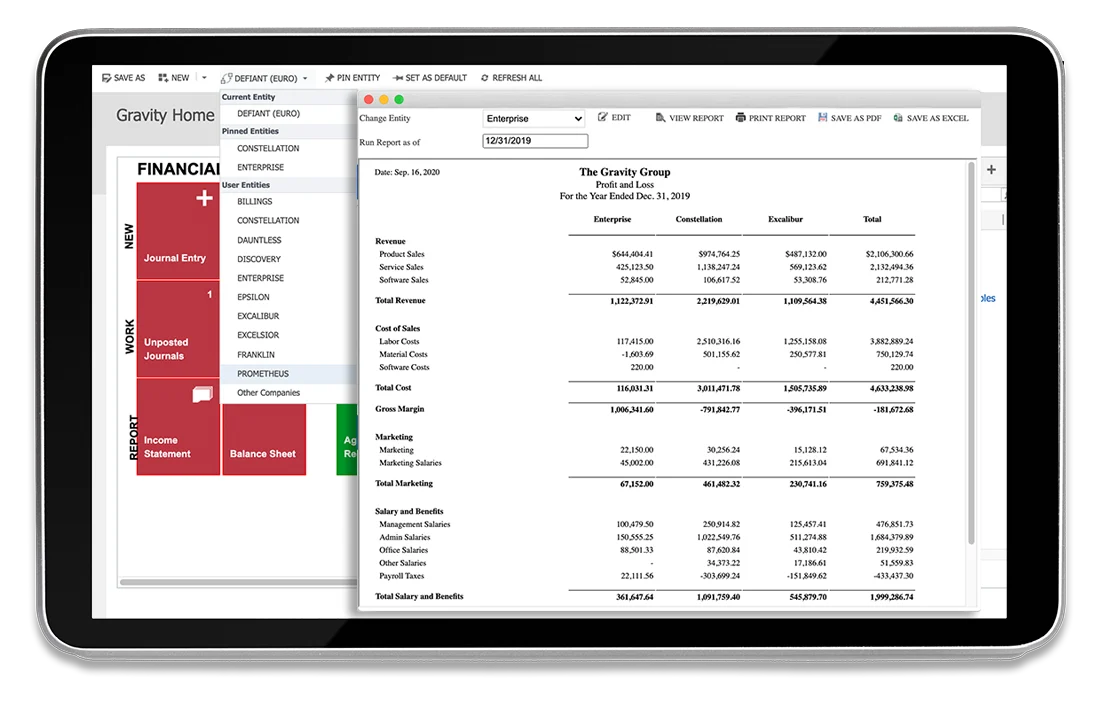
Gravity Software is a multi-entity accounting and financial management platform built natively on Microsoft Power Platform. It is designed to let businesses manage multiple companies in one centralized environment rather than operating separate databases for every entity.
Gravity provides limitless entities, intercompany automation, multi-currency accounting, consolidated reporting, entity groups, role-based access, Microsoft 365 integration, and Power BI reporting. The platform specifically targets multi-company organizations likefranchises, family offices, health care, professional services, and multi-location organizations.
Key features:
Centralized multi-entity accounting
Automated intercompany transactions
Multi-currency support
Entity grouping
Role-based access
Pros
Cons
Uses a unified multi-entity architecture that keeps related companies within a centralized financial environment.
Its Microsoft Power Platform foundation may be most attractive to businesses already comfortable with the Microsoft ecosystem.
Automates intercompany transactions, reconciliations, and consolidated reporting.
Smaller organizations with only simple bookkeeping requirements may not need its multi-entity depth.
Power BI and Microsoft 365 integration provide familiar reporting and productivity options.
Complex implementations still require careful entity, workflow, and reporting configuration.
Best for: Mid-market businesses, franchises, healthcare groups, family offices, professional service firms, and companies that use Microsoft applications extensively.
ℹ️Why choose Gravity Software?
Gravity Software combines centralized multi-entity accounting, intercompany automation, consolidated reporting, and Microsoft Power Platform integration.
5. QuickBooks Online Advanced
QuickBooks Online Advanced is a cloud accounting product for growing companies that need stronger reporting, workflow automation, permissions, and spreadsheet connectivity than standard entry plans. Businesses can maintain several QuickBooks companies under one login, although each company remains a separate subscription and dataset.
For groups with multiple QuickBooks Online Advanced files, Spreadsheet Sync can combine balance sheets, profit and loss statements, and trial balances across companies. This gives smaller groups a way to build multi-company reporting without immediately moving to a full enterprise ERP, although account structures need to be aligned for clean aggregation.
Key features:
Separate QuickBooks company files
Multi-company reporting
Custom report builder
Workflow automation
Role customization
Financial reporting
Pros
Cons
Offers a familiar path for businesses already managing their accounting through QuickBooks Online.
Each company remains a separate paid subscription with separate underlying data.
Spreadsheet Sync can combine selected reports across multiple company files.
Multi-company reporting depends on consistent account structures and spreadsheet-based consolidation workflows.
Useful for growing companies that are not yet ready for a full enterprise ERP migration.
Complex intercompany automation and enterprise group consolidation may exceed its intended accounting scope.
Best for: Small and medium businesses with several relatively independent companies already using QuickBooks Online.
ℹ️Why choose QuickBooks Online Advanced?
QuickBooks Online Advanced provides growing businesses with familiar accounting workflows and the ability to combine selected reports from multiple company files through Spreadsheet Sync.
6. Intuit Enterprise Suite
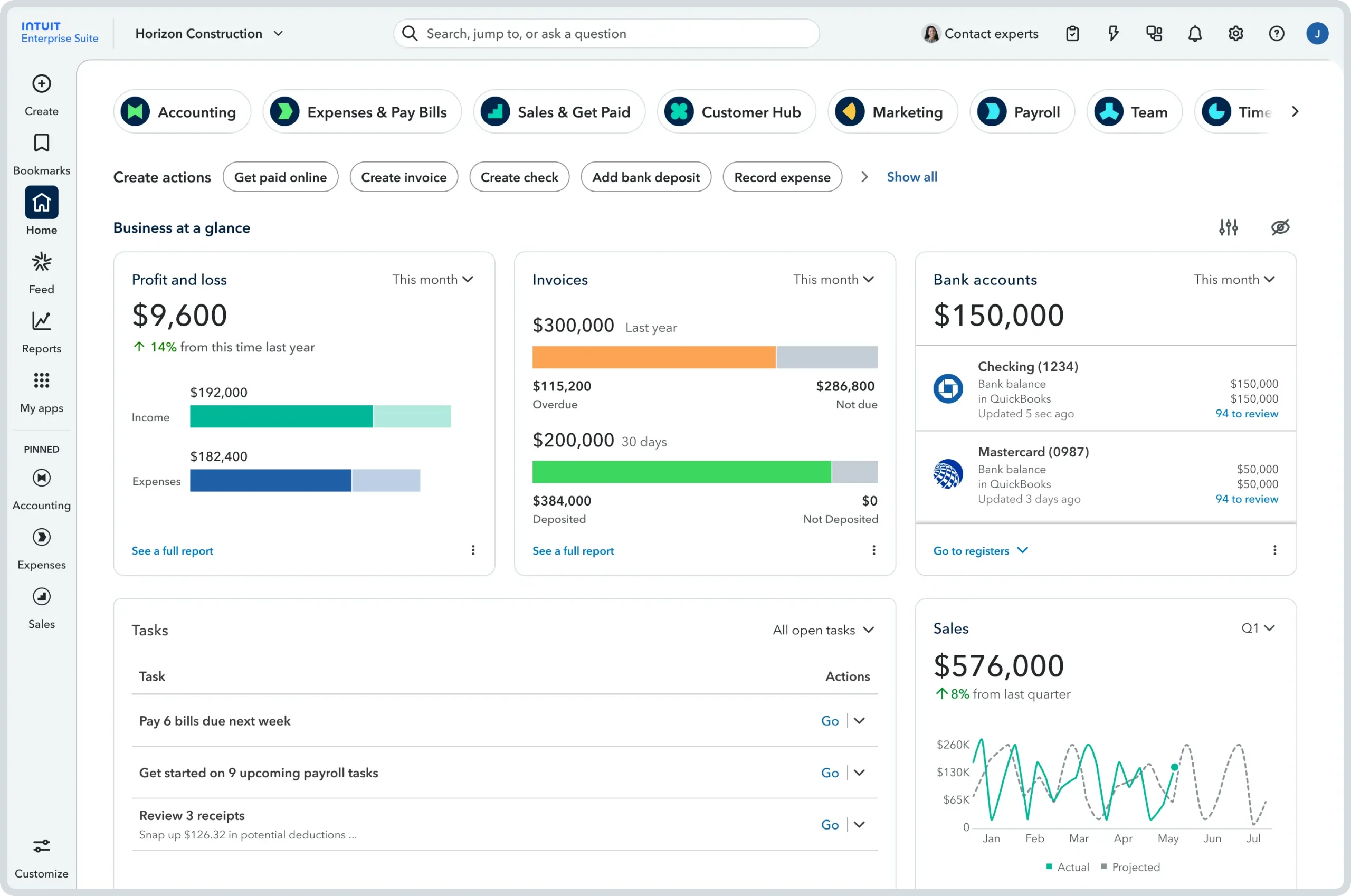
Intuit Enterprise Suite is a separate ERP platform from QuickBooks Online and QuickBooks Desktop designed for businesses with growing financial complexity. Its multi-entity capabilities include centralized entity management, intercompany transactions, consolidated financial reports, role-based controls, and dimensional reporting.
The platform has expanded its multi-entity close functionality with automatic intercompany elimination workflows and consolidated reporting. It can be particularly relevant to organizations that have grown within the Intuit ecosystem but now need more formal multi-company financial infrastructure. Singapore organizations should confirm regional availability, localization, and support directly with Intuit before shortlisting it.
Key features:
Multi-entity management
Automated intercompany workflows
Consolidated reporting
Dimensional reporting
Role-based permissions
Financial planning
Pros
Cons
Provides a more advanced multi-entity path for businesses familiar with the Intuit accounting ecosystem.
Singapore businesses should verify current regional availability, localization, and support before committing.
Centralizes entity reporting and supports intercompany transactions with automated eliminations.
Its broader ERP functionality may be unnecessary for organizations requiring only basic accounting consolidation.
Combines accounting, reporting, finance planning, roles, and AI-supported analysis within one environment.
Businesses migrating from several independent systems still need careful data standardization and entity mapping.
Best for: Growing mid-market and multi-company organizations that want enterprise-style financial management while retaining familiarity with Intuit products.
ℹ️Why choose Intuit Enterprise Suite?
Intuit Enterprise Suite adds centralized multi-entity management, intercompany automation, consolidated reporting, and financial planning for businesses whose complexity has moved beyond standalone accounting.
7. Zoho Books
Zoho Books is a cloud accounting platform that allows users to create and manage multiple organizations and switch between their financial records from the same user environment. Each organization maintains its own transactions, configuration, reporting, and accounting data.
For cross-organization reporting, Zoho Books can integrate with Zoho Analytics, where users can create reports and dashboards using data from multiple Zoho Books organizations and other sources. This structure can work well for smaller groups that need multiple company books without the consolidation depth of a large enterprise ERP.
Key features:
Multiple organization management
Organization switching
Financial reporting
Workflow automation
Multi-currency functionality
Pros
Cons
Provides an accessible cloud environment for managing several organization accounts.
Organizations remain separate rather than operating as one native consolidated enterprise ledger.
Zoho Analytics can combine information from multiple organizations for cross-company reporting.
Group-level reporting may depend on additional Zoho Analytics configuration.
Fits naturally with companies already using other Zoho business applications.
Complex intercompany eliminations and multinational consolidation may require a more specialized enterprise platform.
Best for: Small and medium businesses managing several organizations, particularly companies already using the wider Zoho ecosystem.
ℹ️Why choose Zoho Books?
Zoho Books allows businesses to manage several organization accounts and extend cross-organization reporting through Zoho Analytics.
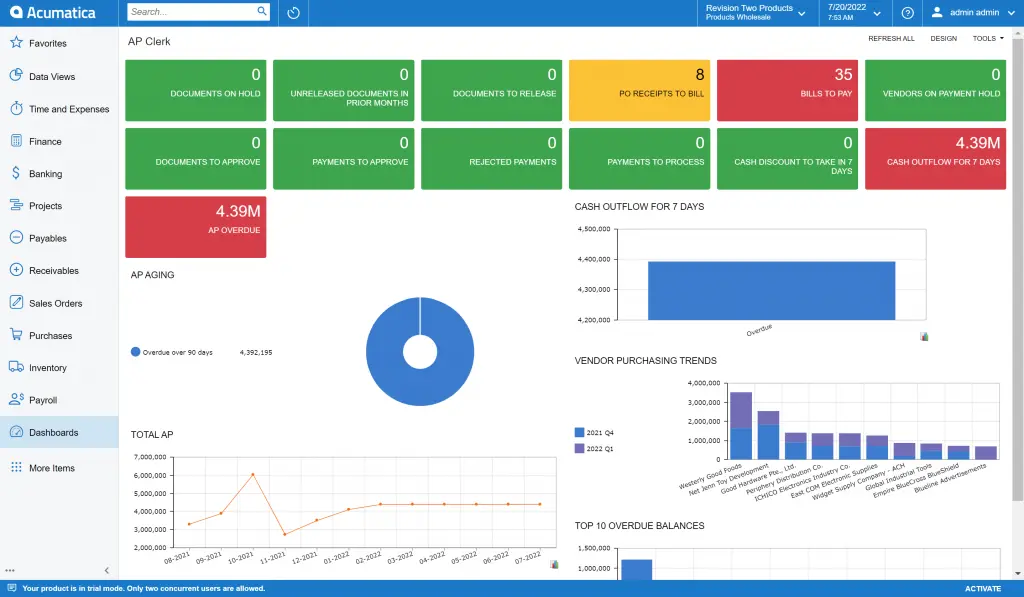
8. Acumatica
Acumatica is a cloud ERP platform with multi-entity and intercompany accounting capabilities for organizations managing related companies, subsidiaries, or branches. Businesses can maintain multiple companies within one environment while sharing selected financial structures and operational information.
Its intercompany functionality covers financial reporting, vendor payments, invoicing, cash management, inventory transfers, and automatic intercompany entries. Acumatica also supports consolidated reporting and role-based entity access, making it relevant when multi-company accounting needs to stay connected with distribution, manufacturing, construction, or other ERP processes.
Key features:
Multiple company management
Intercompany accounting
Consolidated reporting
Shared charts of accounts
Multi-currency
Pros
Cons
Supports related companies within one ERP environment and can automate intercompany financial activity.
Its broader ERP scope may be more than businesses need if their requirement is limited to simple bookkeeping.
Connects accounting with inventory transfers, centralized payments, invoicing, and operational processes.
Implementation requires careful setup of companies, branches, shared structures, and access responsibilities.
Supports reporting across one, selected, or multiple related companies.
Organizations should confirm localization and partner support for the countries where each entity operates.
Best for: Mid-market and large companies, manufacturers, distributors, construction businesses, and organizations requiring multi-entity financial management within a broader cloud ERP.
ℹ️Why choose Acumatica?
Acumatica combines multi-company accounting, intercompany automation, consolidated reporting, and broader operational ERP capabilities within one cloud environment.
Enterprise Use Cases for Multi-Entity Accounting Software
Multi-entity accounting software is particularly useful when businesses expand and generate more subsidiaries, project companies, currencies, and intercompany transactions than are easily manageable by spreadsheets. The next few examples provide a glimpseinto accounting challenges arising from various multi-entity structures, ranging from hundreds of project entities to global subsidiaries.
1. When Hundreds of Project Entities Slow Down Month-End Close
One example cited by CFO Dive demonstrates that a solar firm with over 280 project entities, called GSPP, was previously spending “days” consolidating financial data into Excel. Multi-entity consolidation and intercompany eliminations were automated, which reduced the amount of work done at month-end and helped finance to keep their books in audit-ready condition.
It is often the case in renewable energy, construction, property, infrastructure, and investment companies where projects are located in different legal entities. Multi-entity accounting software can enable each entity to keep its own set of accounts but can also consolidate the results into one set of group accounts as the project portfolio grows, minimizing repetitive consolidation efforts.
2. When Global Subsidiaries Create Intercompany Reconciliation Gaps
Mozilla’s global accounting team shared insights into their initiatives to boost automation and streamline finance operations in its global footprint in an interview with The CFO. The company has to deal with various payment systems, accounting systems, taxes, and global operations.
It is a more general problem of a multi-entity company. Consistency between transactions made between subsidiaries is a requirement, and the headquarters must also have reliable consolidated information. A multi-entity platform not only helps avoid mismatches but also makes intercompany reconciliation easier and provides a greater degree of visibility into group finance while not taking away local finance teams’ accountability.
3. When Multiple Holdings Make Group Financial Visibility Difficult
A 2026 article from Forbes highlights how family wealth can span multiple entities, jurisdictions, and asset classes, making consolidated financial oversight increasingly important. As structures expand, finance teams need accurate accounting and reporting across separate holdings while maintaining enough visibility to understand the group’s overall financial position.
The same challenge applies to holding companies, investment groups, property businesses, and diversified enterprises. Multi-entity accounting software helps keep each legal entity financially distinct while consolidating assets, liabilities, income, cash flow, and performance into a group-level view that management can trace back to the underlying entity.
Together, these enterprise use cases show that multi-entity accounting software becomes most valuable when financial complexity grows alongside the business. By connecting separate entities, intercompany activity, currencies, and reporting structures in one financial environment, companies can reduce manual consolidation, improve accuracy, and give management clearer visibility into group-wide performance.
What to Look For in Multi-Entity Accounting Software
The right software should fit the group’s legal structure and finance process rather than simply offering the longest feature list. A platform that works well for three domestic entities may not remain suitable after expansion into several jurisdictions or acquisitions.
1. Look for Customizability
Entity structures are rarely identical. Companies should examine whether charts of accounts, approvals, reporting dimensions, tax treatments, currencies, workflows, and access rules can be configured for different subsidiaries.
Customization should still preserve group consistency. The objective is to allow legitimate local differences without creating so many variations that consolidated reporting becomes difficult to govern. This is especially important when evaluating the best multi-currency accounting software, as entities may operate in different currencies while still requiring standardized group reporting.
2. Evaluate Reporting Options
Examine if financial statements, both at the entity level and the regional and consolidated levels, can be derived from the same financial environment. Dashboards must enable finance teams to delve deeper into the cause of extreme differences in groups.
Reporting depth matters particularly when management, auditors, investors, and local finance teams require different views of the same records. A strong platform should provide consolidated visibility without removing the ability to trace numbers back to individual entities or transactions.
3. Explore Pricing
Multi-entity software can be priced according to users, entities, modules, transactions, implementation scope, or combinations of these factors. Finance leaders should therefore look beyond the starting subscription.
Calculate the cost of additional entities, implementation, integrations, migration, support, reporting tools, users, localization, and future modules. A platform that appears inexpensive for two entities may become significantly more expensive as the group expands.
4. Integrations
Very few times does multi-entity accounting work independently. Customer invoices can be sourced from the CRM or selling application, while purchasing, payroll, inventory, projects, the bank, and expenses applications can provide accounting records.
Outline and sketch the current technology landscape before selecting a platform. Integration should eliminate duplicate data entry and ensure the consistency of the finance team’s master data, not create yet another disintegrated financial database.
5. Additional Resources
Assess the level of implementation support, training, documentation, migration support, customer service, partner ecosystem, and technical resources available for the software.
These resources become increasingly important during acquisitions or expansion because finance teams may need to add new entities, change reporting structures, introduce new currencies, or integrate additional applications after the original implementation.
For enterprises expecting continued growth, ScaleOcean Atlas supports phased module activation, configurable entity-level workflows, and unlimited-user options, allowing finance teams to expand the system as new subsidiaries, currencies, and operational requirements emerge without replacing the core platform.
How to Choose the Right Multi-Entity Accounting Platform
The selection of the right multi-entity accounting platform involves matching your business structure, volume of transactions, and international presence with software that can automate intercompany transactions natively and provide centralized control and reporting.
1. How Many Entities and in How Many Countries?
Now count the current subsidiaries, branches, holding companies, project entities, and other legal entities; then make an educated guess as to how many legal entities may be created in the next few years.
Country count matters as much as entity count. A company with ten Singapore entities can have very different requirements from a company with entities across Singapore, Indonesia, Malaysia, the Philippines, and Europe because currencies, tax structures, statutory reporting, and local workflows differ.
2. Do You Need a Full ERP or Primarily Accounting?
Some companies require financial consolidation and already have the other systems in place, such as sales, procurement, warehouse, and HR. The financial-management platform might then be enough.
Other companies desire to have finance remain linked to operations. Under such an environment, an expanded ERP system can eliminate the need for multiple interfaces between purchasing, inventory, projects, sales, payroll, and group accounting.
3. How Complex Are Your Intercompany and Consolidation Needs?
Determine the frequency of transactions and what types of transactions are taking place between entities. Shared services, management fees, inventory transfers, loans, expense allocations, centralized payments, cross-company purchasing, and internal revenue are all things to consider.
Then explore the process of consolidation. If finance is spending a lot of time on matching balances, translating currencies, mapping accounts, posting eliminations, or investigating differences, better automation will be a key factor in the selection.
4. What’s Your Existing Tech Stack?
Document every system that currently produces information needed by accounting. This may include POS, CRM, procurement, payroll, banks, inventory, project management, expense, tax, business intelligence, and data warehouse platforms.
Ask vendors to demonstrate how these integrations actually work rather than relying on integration logos. Evaluate data direction, synchronization timing, master-data ownership, error handling, API capability, and what happens when a connected system becomes unavailable.
Conclusion
Multi-entity accounting software is a financial platform that enables organisations to keep separate records for each entity, whether it’s a subsidiary, company, branch, or entity, and to consolidate their financial results at group level. It integrates entity ledgers, intercompany transactions, currencies, approvals, reporting systems, and financial governance in a unified system.
If there is no system, there are several issues that can be seen by enterprise groups, including slow closing, manual consolidation, multiple charts of accounts, lack of group visibility, and poor audit trail. Multi-entity accounting software eliminates these problems by automating consolidation, intercompany matching, entity-level controls, and financial analysis capabilities with drill-down reports.
ScaleOcean Atlas Multi-Entity Accounting allows you to integrate group finance data with procurement, sales, inventory, projects, payroll, and other operational data in One Platform, while individual entities can have their own setups.
It can handle the growing complexity of the group structure in medium and large enterprises with financial capabilities relevant to Singapore, configurable entity workflows, ongoing implementation phases, and unlimited user options, supported by financial insights provided by ScaleMind. Schedule a consultation to see how ScaleOcean can help with your consolidation, intercompany accounting, and group reporting needs.
FAQ Multi-Entity Accounting Software:
1. What does multi-entity mean in accounting?
Multi-entity accounting means managing financial records for multiple companies, subsidiaries, branches, or business units while still producing consolidated group reports. Each entity can maintain its own books, currencies, and accounting requirements.
2. What are the four types of entities?
Common business entities in Singapore include sole proprietorships, partnerships, limited liability partnerships, and companies. Each structure has different ownership, liability, compliance, and reporting requirements.
3. What is the best accounting software for multiple companies?
The best software depends on entity count and financial complexity. ScaleOcean is suitable for medium and large enterprises that need multi-entity consolidation, intercompany accounting, multi-currency management, and integrated operational workflows.
4. What are the top 5 accounting software options?
Five notable options are ScaleOcean, QuickBooks Online, Xero, Zoho Books, and Sage Intacct. ScaleOcean is more suitable for complex enterprise and multi-entity operations, while the others serve different business sizes and accounting requirements.













 Key Takeaways