
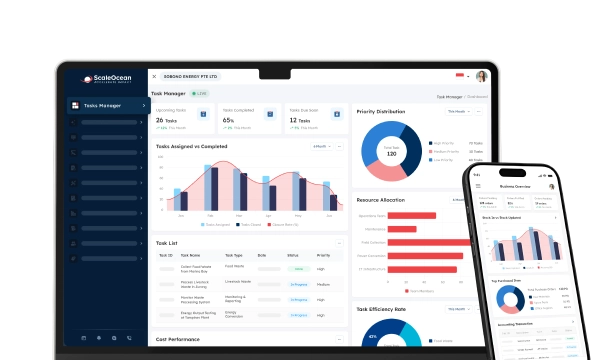

ERP software for FMCG is a comprehensive solution that streamlines inventory, distribution, procurement, sales, and finance management processes. But many FMCG companies in Singapore still face disconnected operations and inaccurate stock visibility.
Furthermore, the adoption of ERP systems continues to grow significantly across operational industries worldwide every year. Our team found that, according to the data we got from Market Intelo, the global manufacturing ERP market was valued at USD 14.2 billion in 2024 and is projected to reach approximately USD 32.7 billion by 2033, growing at a CAGR of 9.5%.
FMCG companies typically manage several distributors, supermarkets, online marketplaces, and B2B customers across different channels and with varying warehouse requirements. As a result, stock discrepancies often occur as they are unable to keep close track of stock movements at all locations in real time.
The operational shortcomings pose significant business risks for FMCG businesses that process high transaction volumes and handle products that move quickly every day. For instance, companies could sell out-of-stock products and keep excess stock in various warehouses or distribution centers.
This is why many FMCG companies in Singapore are now using specialized ERP software for FMCG to streamline their operations and gain a much better understanding of their stocks. Real-time sync and automation can help businesses reduce operational inefficiencies and ensure the same products are available across sales channels at all times.
Therefore, in this article, we will examine essential ERP for FMCG features and compare solutions such as ScaleOcean, Odoo, SAP S/4HANA, Oracle NetSuite ERP, Microsoft Dynamics 365, and others to help you select the most suitable FMCG ERP software for your business.
 Key Takeaways
- ERP software for the FMCG industry manages high-volume transactions, fast product turnover, short shelf-life goods, and complex distribution networks in one platform.
- Specialized ERP software for FMCG helps manage expiry tracking, pricing strategies, promotions, and multi-channel inventory through automation and real-time visibility.
- Explore the top FMCG ERP options like ScaleOcean Atlas, Odoo, Dynamics 365, NetSuite, LOGIC ERP, Ebizframe, etc., to improve inventory, finance, and supply chain efficiency.
- ERP software features for FMCG should include forecasting, inventory management, analytics, compliance, distribution coordination, and operational visibility capabilities consistently.
- ScaleOcean Atlas Software helps FMCG businesses improve inventory visibility, operational coordination, compliance management, and scalable long-term digital transformation initiatives.
What’s the Meaning of ERP Software for FMCG?
Enterprise Resource Planning (ERP) system for the Fast-Moving Consumer Goods (FMCG) industry is a specialized platform designed to manage high-volume transactions, rapid product turnover, short shelf-life products, and complex distribution networks within one integrated system.
Running an FMCG business in Singapore? You’re aware that with warehouses, retailers, marketplaces, and B2B customers, there’s a lot to handle. You need an efficient system that can move stock accurately and maintain product levels effectively.
Use your ERP to Integrate Everything Your business runs on important functions. ERP software enables you to seamlessly link your procurement, inventory, sales, logistics, and finance operations in one system. This will improve your organization’s coordination and enable you to adapt faster to changes in the marketplace.
ERP software also means automation and accuracy by reducing manual effort and decreasing errors. You will see your business performance more clearly and have greater insights, so you can make educated decisions.
What are the Common Mistakes in the FMCG Industry?
FMCG companies are typically struggling with several operational pain points, including high product volumes, high demand variability, and multiple distribution channels. As such, any minor error in operations can have a major impact on inventory flow, profits, and customer satisfaction, all of which can take a toll over time; you can counter this by using inventory software for manufacturers.
Furthermore, a significant number of companies continue to rely on fragmented systems and manual coordination to consistently manage daily operations. Frequently, businesses face forecasting inaccuracies, logistics inefficiencies, and inconsistent retail execution across multiple sales channels without integrated operational visibility.
1. Poor Demand Forecasting
Many FMCG companies still use manual estimation techniques to regularly predict product demand across markets and channels. Therefore, inaccurate forecasting can significantly impact operational activities, leading to overstocking, stock shortages, and unnecessary warehousing costs.
Furthermore, changing customer preferences and seasonal buying habits continually complicate demand planning for FMCG companies. Businesses often face inefficiencies in their procurement, production, and distribution processes across different locations without the right forecasting tools.
2. Inaccurate Master Data
Mismatches in master data often cause operational confusion, as departments rely on the same product, supplier, and customer data simultaneously. As a result, discrepancies in inventory and pricing, as well as reporting errors, can cause significant disruptions to daily business and financial reconciliation processes.
In addition, FMCG companies regularly update product and packaging data using ERP software for the packaging industry, as well as distribution data across various systems. Without centralized master data management, employees can duplicate records or re-enter transactions due to stale operational data.
3. Neglecting Last-Mile Logistics
Many FMCG companies focus on production and warehousing and do not consistently track the efficiency of final product deliveries to customers. As a result, customers are often dissatisfied with delayed shipments and damaged goods, and there has been a significant rise in complaints from operations involved in distribution activities.
Also, last-mile delivery can involve multiple logistics partners, routes, and delivery requirements for different retail locations. In competitive market conditions, businesses find it difficult to effectively handle delivery accuracy and product availability without appropriate coordination systems.
4. Over-Reliance on a Single Channel
Certain FMCG companies rely on a single distribution channel to sustain their revenue throughout the year, such as supermarkets or marketplaces. But in a matter of moments, disruptions and changing consumer behaviors can impact sales performance and overall operational stability in the market.
Furthermore, using a single channel restricts customers’ reach and reduces business flexibility when markets become competitive, as they do periodically. Thus, businesses need to diversify their distribution channels and maintain consistent stock visibility across them to achieve sustainable operational growth in the long run.
5. Weak Retail Execution
A common problem is that FMCG businesses lack consistent monitoring of product placement and promotion across stores, resulting in weak retail execution. Products can therefore be unavailable, poorly displayed, or even not seen at all by potential consumers in the retail setting.
Furthermore, a lack of communication between the field and the head office can lead to delays in merchandising and inventory replenishment for an extended period. Effective retail execution monitoring is essential for keeping products visible and making the most of sales opportunities throughout distribution networks, without which businesses struggle to do both.
6. Missing Product-Market Fit
Many FMCG companies launch products without a good grasp of consumer preferences, purchasing habits, and regional market needs. In this way, the products can be commercially unsuccessful, even if they have very good production techniques and are sold through many selling channels continuously.
Also, demand in the FMCG sector is dynamic, as customers’ expectations are often volatile and shift frequently based on their lifestyle choices. So, businesses should continually assess customer feedback to adjust their product strategies and stay relevant to the market over time.
7. Poor Digital Presence
A weak online presence hinders customers’ ability to search for products before making the final purchase decision, as is often the case with today’s consumers. As a result, FMCG companies could miss out on the competitive edge if their competitors maintain a stronger presence on digital marketplaces and social media platforms.
What is more, the poor quality of digital strategies limits the ability to accurately gather customer information and analyze purchasing behavior over time. Thus, companies need to build their digital brand and effectively activate online sales activities in relation to the centralized operations management system.
Why Should the FMCG Industry Use Specialized ERP Software?

FMCG companies need a specialized ERP for the FMCG industry because they operate with low profit margins and high sales volumes, leaving no room for mistakes in inventory, logistics, or compliance. Generic ERP systems lack the built-in features needed to effectively handle perishable products, fluctuating customer demand, and complex multi-channel distribution.
By integrating all the functional areas of a business into a single system, specialized ERP software enables FMCG companies to coordinate procurement, inventory, finance, warehousing, and distribution efficiently. As a result, businesses can significantly reduce manual workloads and repetitive administrative tasks by ensuring operational consistency.
Furthermore, the fast-paced nature of FMCG products and the diverse sales channels require businesses to monitor operations in real time. It’s essential to evaluate whether your chosen ERP for the FMCG industry suits the specific needs of your business, especially if you require features tailored for food industry ERP software
1. Expiry Management and Product Waste Control
Managing FMCG products? You’re well aware of the importance of maintaining accurate expiration date records. But there are ERP software systems for FMCG products out there that can give you a helping hand and make use of systems such as FEFO to help you use older goods first and reduce waste.
Automating how you check expirations increases your inventory accuracy and helps you avoid those expensive lost product dollars due to bad expiration dates. This keeps your inventory fresh, improves it, and smooths out your entire operation down the supply chain!
2. Dynamic Pricing and Promotion Management
Managing the intricate price schema of FMCG companies can be difficult, but no fear, ERP software specifically designed for FMCG businesses can help take the weight off your shoulders. Your software will handle everything from trade promotions and customer contracts to volume discounts.
With this support, you’ll reduce manual errors, stay flexible in times of market change, and get more insight into your promotions. All leading to higher profitability and stronger customer relations.
3. Omnichannel Order and Inventory Synchronization
Today, you probably have to manage sales in e-commerce, in the supermarket, in the store, and with your mobile sales team. With the right ERP software, you can even unify order and stock data between them all!
By integrating in real-time, you can monitor stock at all times and fulfil orders faster. This will result in faster and more accurate fulfilment, no more stock issues, and a seamless service experience, regardless of how your customers choose to shop.
10 Best ERP Software Options Tailored for FMCG Companies in Singapore
Introduction to Inventory Management with ERP in Singapore allows for smooth inventory management, distribution, procurement, finance, and sales. So how can an FMCG business get the right ERP based on their requirement?
No two FMCG companies are the same, and requirements may vary based on the size of the FMCG company, the warehouse and distribution chain, etc. Also, maybe you’re asking: What’s the best for small FMCG companies? And what’s best for medium?
For those reasons, we’ve selected software for ease of use, automation, and live visibility. These ERP solutions help FMCG companies boost operational efficiencies, reduce waste, streamline processes, and make smarter decisions for their business:
1. ScaleOcean Atlas ERP
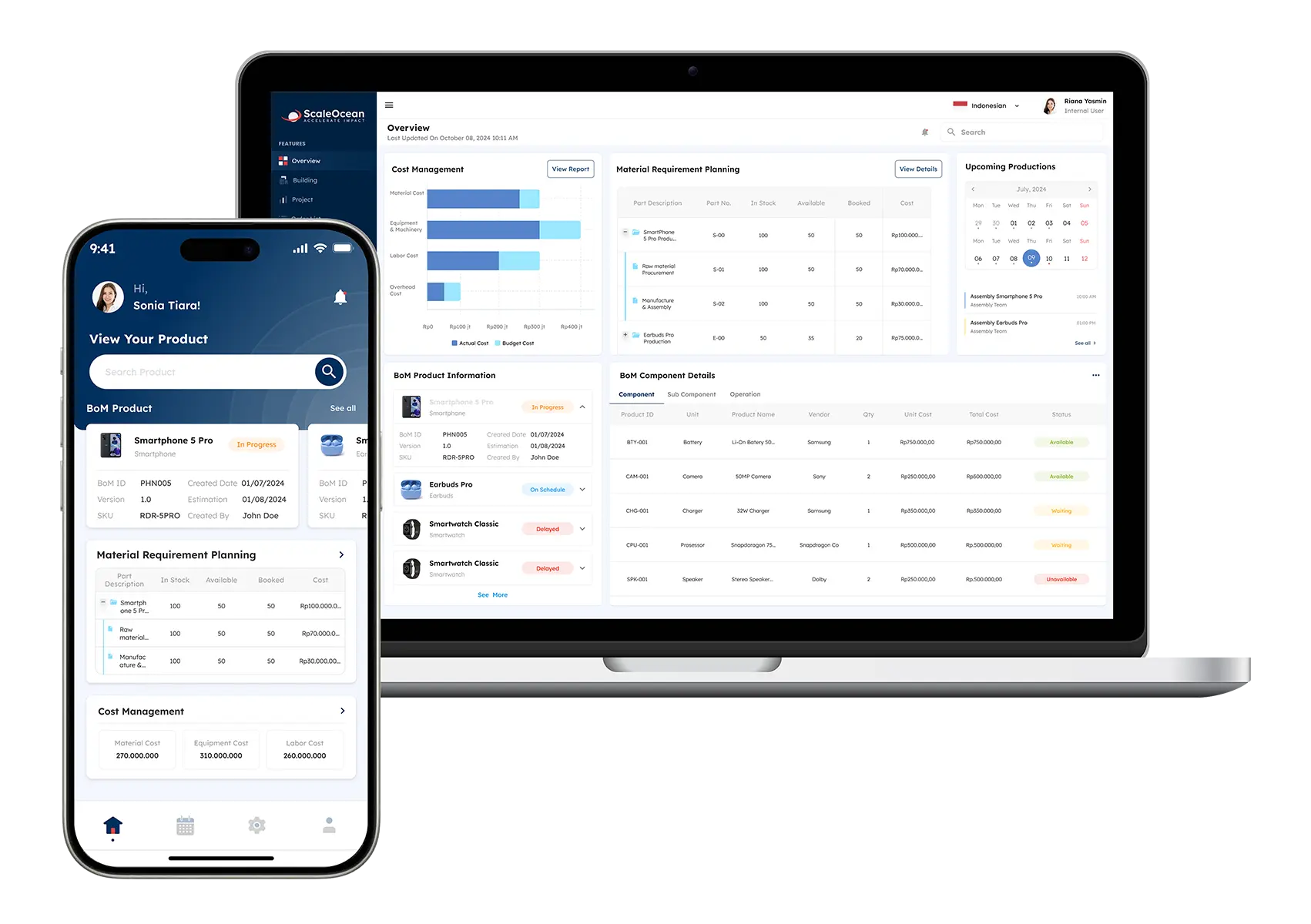
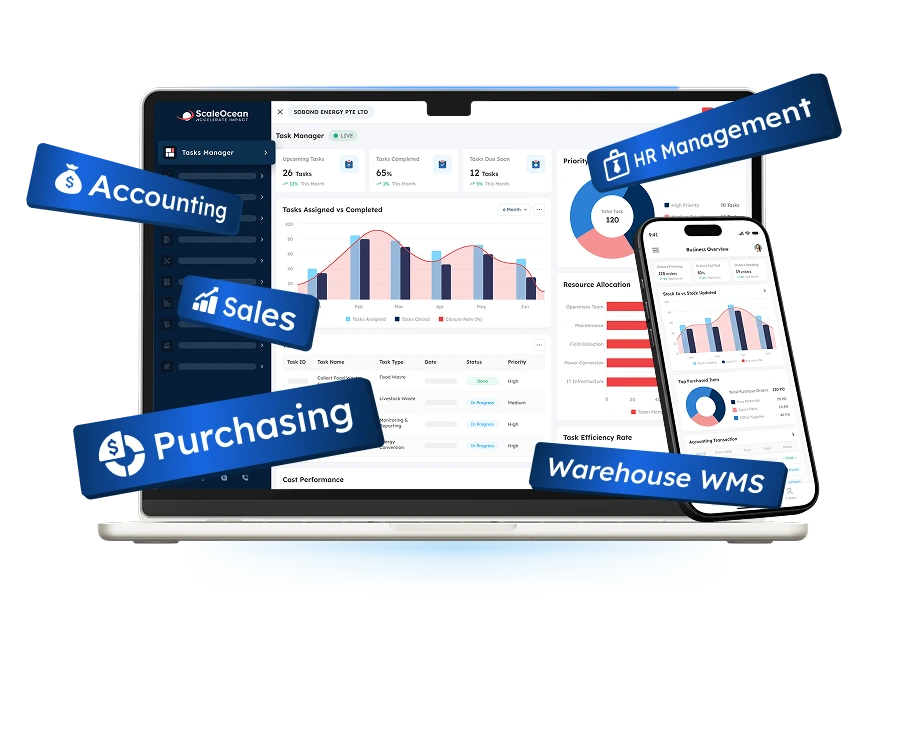
ScaleOcean Atlas Software enhances efficiency in inventory, procurement, distribution, finance, and reporting with a centralized solution. It features over 200 integrated modules, unlimited users, and customizable functionalities.
In addition, ScaleOcean Atlas ERP rigorously ensures Singapore GST compliance and local financial reporting practices to improve regulatory control. It is also approved software for Singapore’s digitalization grant schemes, such as PSG and CTC Grant, enabling businesses to receive government subsidies of 50%-70%.
To achieve these operational improvements, you can schedule a consultation with the ScaleOcean team to explore ERP solutions tailored to your specific FMCG workflows, distribution structures, and inventory management requirements.
Key Features of ScaleOcean ERP software:
- AI-Powered Operational Analytics: Provides real-time operational insights and automated analysis for faster FMCG decision-making processes.
- Real-Time Stock Tracking & Batch/Serial Tracking: Monitors inventory movement and improves product traceability across operational channels efficiently.
- Expiry Date Management: Supports automated FEFO processes to reduce losses from expired FMCG products consistently.
- Warehouse Management System (WMS): Accelerates picking, packing, and warehouse operations through effective barcode or RFID integration.
- Automated Sales Order Management: Synchronizes orders from multiple sales channels into one centralized operational platform automatically.
- Demand Forecasting: Uses historical data to improve inventory planning and purchasing accuracy continuously.
| Pros | Cons |
|---|---|
|
|
Best For: Medium to large FMCG companies that manage complex operational workflows, multiple warehouses, distributors, retail channels, and high transaction volumes while requiring scalable and customizable ERP solutions for long-term business growth.
2. Odoo
Odoo ERP software offers integrated business management tools for inventory, sales, accounting, purchasing, and warehouse operations on a single platform. Customizable modules help manage operational workflows more efficiently.
Odoo also provides cloud-based accessibility and modular implementation for businesses with varying operational requirements. Features can be activated gradually in line with operational priorities and organizational growth.
Key Features of Odoo:
- Modular business management system
- Inventory and warehouse tracking
- Sales and accounting integration
| Pros | Cons |
|---|---|
|
|
Best For: Small to medium FMCG businesses that require modular ERP software for managing inventory, sales, purchasing, and operational workflows with flexible implementation options.
3. Microsoft Dynamics 365 Supply Chain Management
Microsoft Dynamics 365 Supply Chain Management manages operational activities such as supply chain, procurement, inventory, and operational planning. It provides real-time visibility into these activities, enabling effective coordination across the organization.
The system includes automation and reporting capabilities that enhance the management of operational activities at the enterprise level. This helps businesses plan inventory more effectively by managing supply chains at multiple operational levels.
Key Features of Microsoft Dynamics 365 Supply Chain Management:
- Supply chain visibility tools
- Procurement and inventory management
- Operational analytics dashboard
| Pros | Cons |
|---|---|
|
|
Best For: Medium to large FMCG companies that require integrated supply chain visibility, operational analytics, and scalable ERP solutions for growing distribution networks.
4. Oracle NetSuite ERP
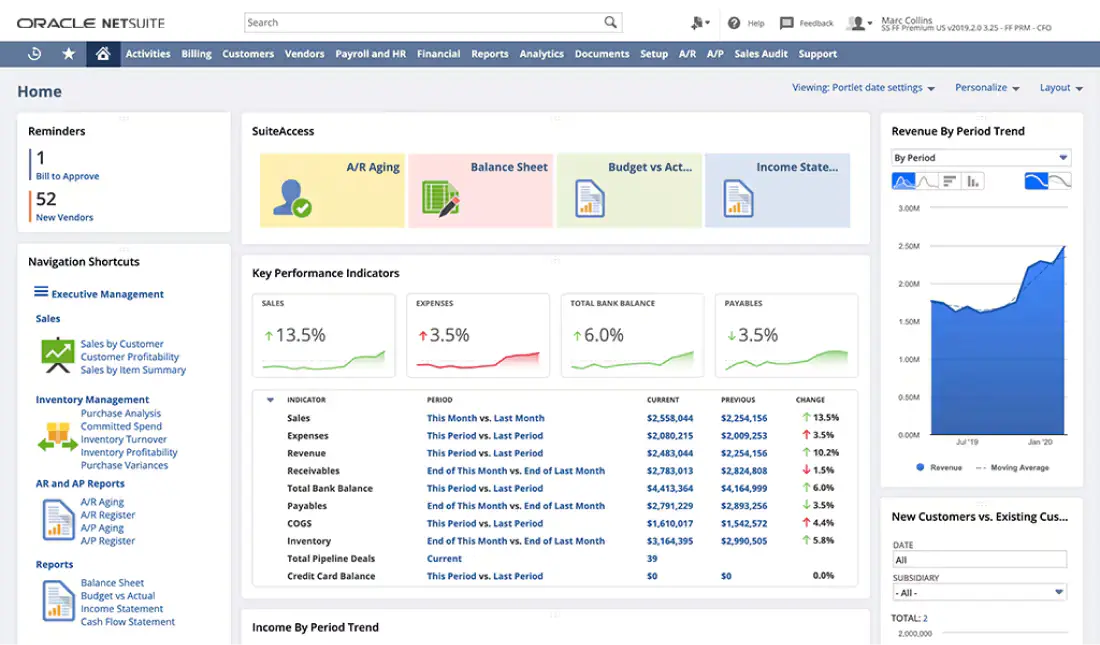
Oracle NetSuite ERP is a cloud-based business management system that efficiently handles financial, inventory, procurement, and operational reporting processes. It provides centralized visibility into operational activities, improving organization-wide operations across multiple departments and locations.
The system automates functions that help organizations optimize and streamline their financial and inventory management processes. This results in greater functional effectiveness and improved interdepartmental and distribution coordination.
Key Features of Oracle NetSuite ERP:
- Cloud-based ERP platform
- Financial management tools
- Inventory and procurement management
| Pros | Cons |
|---|---|
|
|
Best For: Medium to large FMCG businesses that require cloud-based ERP systems for managing finance, inventory, and operational visibility across multiple locations efficiently.
5. LOGIC ERP
LOGIC ERP software manages distribution, warehouse, retail, and inventory functions across operational activities with a single software tool. It monitors operational activities and supports business processes that handle multiple products and distribution activities.
The software provides reporting and tracking features for constant inventory monitoring, maintaining excellent control over inventory levels. It streamlines and coordinates business operations by automating manual processes across distribution activities.
Key Features of LOGIC ERP:
- Inventory and warehouse management
- Distribution monitoring tools
- Operational reporting system
| Pros | Cons |
|---|---|
|
|
Best For: Small to medium FMCG businesses that require operational management systems for inventory, warehousing, and retail distribution activities consistently.
6. Ebizframe
Ebizframe ERP software provides tools for finance, inventory, procurement, and supply chain operations and management to achieve better operational outcomes. It offers automation support to enhance cross-business workflow coordination across all organizational levels.
The software offers configurable operational functions that provide flexibility, helping organizations with diverse structural designs and demands manage diverse operational requirements. It helps businesses with operational planning, management, and maintaining control over operational information.
Key Features of Ebizframe:
- Procurement and inventory management
- Financial reporting tools
- Workflow automation system
| Pros | Cons |
|---|---|
|
|
Best For: Medium-sized FMCG businesses that require integrated operational management for procurement, inventory, finance, and workflow coordination activities effectively.
7. SAP S/4HANA
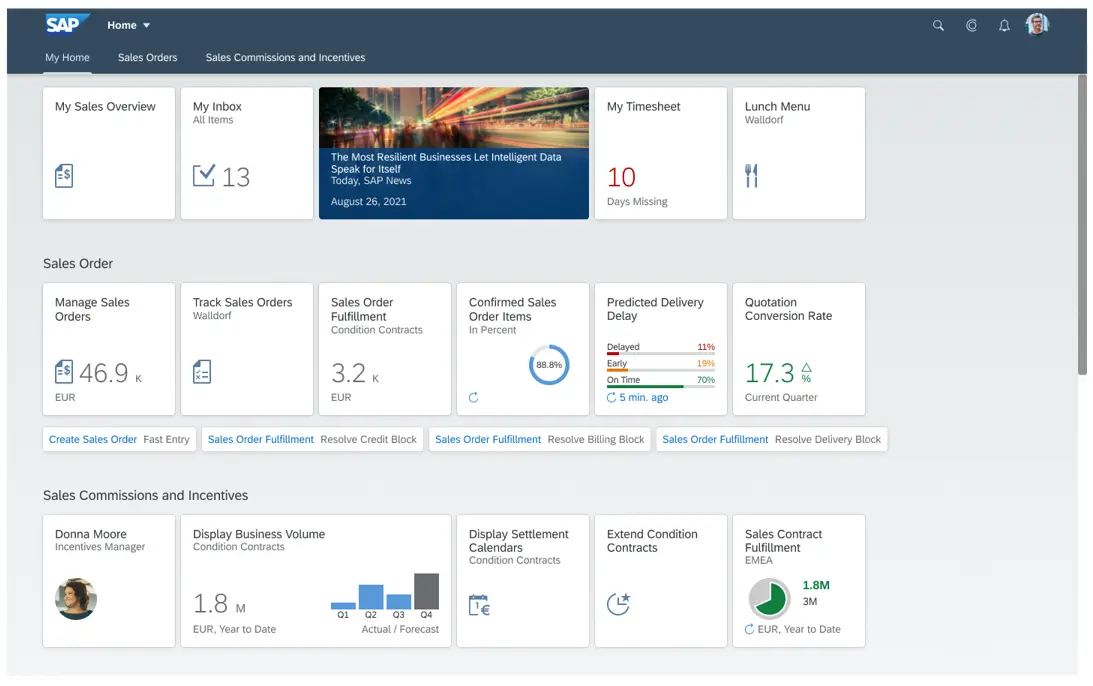
SAP S/4HANA ERP software manages business operations, supply chain processes, inventory management, and financial processes with a single solution. It provides real-time operational visibility to improve decision-making in large organizations.
The tool supports operational decision execution and business process optimization through automatic operational planning and reporting capabilities. Business owners can efficiently streamline operations, coordinate between different business processes, and sustain consistent, effective performance over time.
Key Features of SAP S/4 HANA:
- Real-time operational analytics
- Enterprise resource management
- Supply chain coordination tools
| Pros | Cons |
|---|---|
|
|
Best For: Large FMCG enterprises that require enterprise-scale ERP systems for managing complex supply chain, operational, and financial processes across multiple business units.
8. Multiable
Multiable ERP software is a tool that provides business management capabilities by supporting inventory management, accounting processes, procurement operations, and cross-departmental and operational workflow coordination. It also offers operational visibility and helps organizations continuously manage multiple business activities.
The system features automated controls that help the organization consistently reduce the burden of manual labor across its various processes. Therefore, it also helps business owners enhance the effectiveness of their operational workflows and improve cross-departmental and distribution coordination.
Key Features of Multiable:
- Inventory management system
- Procurement coordination tools
- Financial management features
| Pros | Cons |
|---|---|
|
|
Best For: Medium FMCG businesses that require integrated ERP software for inventory, procurement, accounting, and operational workflow management efficiently.
9. IFS Cloud
IFS Cloud ERP software provides operational services to streamline business operations, supply chain management, inventory control, financial processes, and operational workflows in one integrated and synchronized application. It continuously ensures that visibility into operational information and automated support for business processes are in place across different organizational and functional layers.
The system supports operational monitoring, reporting, and analytical tools that help businesses maintain a consistent, up-to-date overview of operational performance. Hence, business owners get greater operational planning and achieve enhanced consistency and coordination across organizational activities in real time.
Key Features of IFS Cloud:
- Cloud-based operational management
- Supply chain coordination tools
- Business performance analytics
| Pros | Cons |
|---|---|
|
|
Best For: Medium to large FMCG companies that require cloud-based ERP systems for operational visibility, supply chain coordination, and business process management activities.
10. Matiyas ERP
Matiyas ERP software provides integrated operational management tools for inventory, finance, procurement, and warehouse activities across business environments efficiently. Additionally, the system supports centralized operational coordination to improve workflow consistency across departments continuously.
The software also offers reporting and inventory management capabilities that help businesses maintain operational monitoring activities more effectively. Consequently, companies can improve inventory control and reduce manual operational management tasks across business processes.
Key Features of Matiyas ERP:
- Inventory and warehouse management
- Financial reporting system
- Procurement management tools
| Pros | Cons |
|---|---|
|
|
Best For: Small to medium FMCG businesses that require ERP software for managing inventory, procurement, warehousing, and operational coordination activities consistently.
Businesses should carefully evaluate ERP software, as each platform offers different capabilities in inventory management, scalability, distribution, and workflow flexibility, depending on organizational needs. ScaleOcean Atlas ERP centralizes FMCG operations, enhancing efficiency and supporting scalable digital transformation.
Furthermore, ScaleOcean Atlas helps businesses improve operational accuracy through flexible workflows, centralized reporting, AI-powered analytics, and scalable ERP implementation for complex FMCG operations.
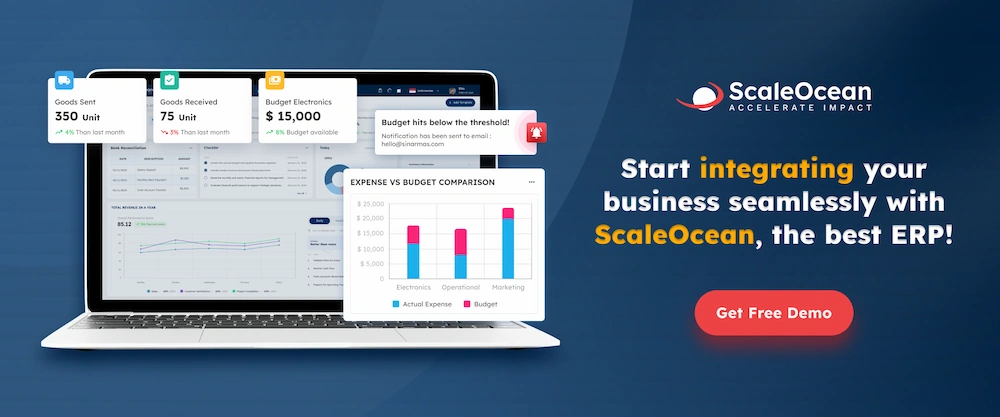
If you are interested in improving operational visibility and long-term business scalability, you can schedule a consultation to explore ScaleOcean Atlas Software further.
What Features Should Be Included in ERP Software for FMCG Operations?
FMCG companies need ERP software that can keep up with fast-moving stock, complex distribution channels, and high transaction volumes across various functional channels. Therefore, companies should prioritize ERP features that maximize operational visibility, maintain inventory accuracy, and facilitate departmental coordination.
Furthermore, the unique capabilities of ERP software for the FMCG industry enable FMCG businesses to minimize inefficiencies and remain agile in response to ever-changing market demand. Thus, companies can effectively manage their products, allocate inventory strategically, and manage their operations with respect to distribution.
1. Demand Forecasting & Planning
Accurately forecasts product demand based on sales patterns and operational data of the business in the past. This means that businesses can consistently make better buying decisions and minimize the risks of overstocking and stock shortages.
Besides this, forecasting aids in improved production planning, distribution center stocking, and warehouse planning. This means that businesses can ensure that their products are available at consistent times and that their operational planning is as accurate as possible, all the time.
2. Inventory & Shelf-Life Management
Efficiently tracks stock, product batches, and shelf life data throughout warehouses and distribution centers. This means businesses can minimize out-of-date inventory while improving the accuracy of stock allocation at all times.
Moreover, inventory monitoring is conducted centrally to enhance visibility into fast- and slow-moving products throughout operations. Thus, companies can optimize inventory turnover without incurring unnecessary storage costs.
3. Trade Promotion Management
Manages promotion, discounting, and retailer contracts in centralized systems effectively for FMCG businesses. This means companies can track promotional success and ensure consistent coordination between sales and marketing.
Besides, promotion management tools offer budgeting and campaign performance tracking, enhancing the effectiveness of operational decision-making. This means that businesses can continuously assess promotional results across various sales channels with greater accuracy.
4. Distribution Management
Coordinates product distribution, warehouse operations, and delivery schedules across various distribution channels effectively. As a result, businesses can ensure consistent shipment accuracy and product availability during business operations.
Moreover, centralized distribution monitoring helps minimize coordination time among warehouses, distributors, and retail destinations. So, companies can regularly optimize their operations and reduce distribution interruptions.
5. Expiry Management
Consistently follows product expiration dates and applies automated inventory rotation techniques based on the FEFO operational principles. This means that effective product quality management can be achieved while minimizing product waste throughout distribution and retail channels.
Furthermore, expiry monitoring helps maintain visibility into products nearing expiration in operational storage facilities. For this reason, it is possible to make the most of inventory and minimize financial losses from expired products on an ongoing basis.
6. Multi-Channel Distribution & Retail
Effectively coordinates inventory and sales operations among supermarkets, distributors, marketplaces, and retail stores. An apparel industry ERP software enables businesses to keep their products available and enhance their operational coordination between their sales channels on an ongoing basis.
Moreover, operational visibility in the central system enables companies to manage stock distribution over various distribution channels efficiently. As a result, companies can minimize inventory discrepancies and consistently enhance customer fulfillment.
7. Real-Time Analytics
Gives operational dashboards and reporting tools to track inventory, sales, and distribution performance accurately. This means companies can detect problems in their operations sooner and make better, more efficient decisions across departments.
Also, analytical tools can effectively inform daily activities by continuously providing up-to-date business performance data and supporting daily operational planning. Thus, businesses can respond more quickly to market shifts and operational disruptions.
8. Regulatory Compliance
Ensures operational documentation and financial reporting for FMCG businesses are performed consistently in accordance with industry standards. Therefore, businesses can minimize compliance risks and effortlessly prepare and report on operational audit tasks.
Moreover, compliance monitoring tools are continuously enhanced to improve operational transparency across procurement, inventory, and financial management processes. This means businesses can comply with regulations without having to report inaccurately or frequently.
9. Route-to-Market Execution
Ensures effective coordination, execution, monitoring, and product distribution across field sales operational territories. This means that businesses can boost sales channel visibility while keeping products available in all sales channels at all times.
Besides, route execution tools enable companies to effectively track the performance of their operations throughout distributors and retail partners. Thus, businesses can continuously reinforce operational coordination and expand market coverage.
How to Choose an ERP System for FMCG Business Operations Accurately in Singapore?

When selecting FMCG ERP software, companies must consider factors such as distribution channels, inventory management, scalability, and operational complexity. Hence, businesses should opt for ERP systems that enable them to run their operations efficiently and consistently and to grow.
Moreover, companies must evaluate the readiness to implement ERP software, integration options, and operational flexibility before making a successful choice. This means that businesses can reduce the risk of disruption and ensure their ERP implementation is effective across all aspects of the business on a regular basis.
1. Prioritize Industry-Specific Must-Haves
Some essential ERP features that all FMCG firms should implement include inventory management, distribution coordination, forecasting, and expiry tracking. Therefore, firms can simplify the implementation process without adding unnecessary complex features.
Besides, FMCG-specific ERP systems enable companies to coordinate all business processes effectively and efficiently in line with FMCG product distribution mechanisms. Thus, firms can be assured that long-term growth and operational efficiency are achieved, and that they remain aligned for better scalability.
2. Assess Integration & Technical Maturity
All firms should evaluate how well the ERP integrates with existing business processes and systems at all times. Through this method, businesses can prevent operational silos and manage workflows across departments more smoothly.
Additionally, a mature FMCG-specific ERP offers advanced system scalability, stability, and reliability, making it suitable for rapidly growing businesses. Henceforth, businesses can operate and handle any possible disruption smoothly and effectively, reducing system-related complications that may arise from technical glitches or system overload.
3. Selection Process Checklist
All firms have to evaluate the scalability, operational requirements, reporting features, and integration options of the chosen ERP systems. Therefore, businesses will be able to make the right choices about which ERP to implement and avoid potential implementation risks.
Moreover, a planned evaluation system enables firms to check solutions against operational needs and business objectives more smoothly and efficiently throughout the selection process, thereby minimizing implementation issues, if any, regarding the productivity required by the business and aligning with long-term organizational objectives.
4. Implementation Readiness
Companies should prepare all their data, have internal processes in place, and be ready for the transition. This allows manufacturers to minimize business interruptions and achieve seamless adoption at every stage of the system through efficient manufacturing-specific ERP software.
Besides, implementation readiness aids in ensuring a smoother operational transition to a better working system, thereby minimizing overall project delays and enabling organizations to benefit from ERP solutions and streamline business operations efficiently at all times.
Conclusion
ERP software for FMCG helps businesses efficiently manage inventory, distribution, procurement, finance, and operational visibility within a centralized system. Consequently, companies can continuously improve operational accuracy while reducing inventory inconsistencies and supply chain coordination issues.
ScaleOcean Manufacturing ERP Software effectively supports FMCG businesses through flexible operational management, integrated workflows, and scalable implementation aligned with organizational requirements. The system enhances operational visibility, ensures compliance with Singapore GST, and supports digital transformation.
Furthermore, ScaleOcean Atlas centralizes inventory, procurement, warehousing, finance, and multi-channel distribution management within a single, integrated ecosystem. If you are interested in improving operational scalability and inventory visibility, you can book a consultation to explore ScaleOcean Atlas ERP further.
FAQ:
1. What is the best ERP for FMCG?
ScaleOcean ERP Software is one of the best ERP solutions for FMCG businesses because it efficiently supports inventory, distribution, procurement, finance, and multi-channel operations within a single integrated system. Additionally, the platform consistently improves operational visibility and supply chain coordination.
2. What is the full form of ERP in FMCG?
ERP stands for Enterprise Resource Planning, a software system that helps FMCG businesses efficiently manage inventory, finance, procurement, logistics, sales, and reporting within a single centralized operational system.
3. What are the 5S in the FMCG industry?
The 5S principles in the FMCG industry include Sort, Straighten, Shine, Standardize, and Sustain, which are used to improve workplace organization efficiently. Additionally, the method helps businesses reduce waste while continuously improving operational consistency and productivity.
4. What is SAP in FMCG?
SAP in FMCG refers to enterprise software that helps businesses efficiently manage supply chain, inventory, procurement, manufacturing, and financial operations within a single centralized system. However, ScaleOcean ERP Software can also support Singapore FMCG operational management with a more flexible implementation.





















.png)