



ERP Software for the Packaging Industry is an integrated management solution that covers production planning, inventory control, cost management, and compliance. As the packaging industry grows, centrally tracking its development is essential for remaining profitable and maintaining consistent operations.
As packaging operations become more data-driven, ERP adoption continues to accelerate across the industry. Our team found that Global Info Research estimates the global ERP software market for the packaging industry will grow from US$262 million in 2025 to US$482 million by 2032, representing a 9.2% CAGR during the review period.
The packaging division in Singapore caters to a variety of industries, including food manufacturing, pharmaceuticals, electronics, and retail outlets. All of these require different specifications and standards, which puts a lot of pressure on production.
Many packaging companies have difficulty accurately calculating material costs, line setting, labor, and finishing processes. That’s why their profits are declining, because their prices don’t cover the actual development costs.
Hence, so many enterprises utilize ERP software to enhance transparency, optimize business processes, and gain a competitive advantage in the future. Therefore, this article discusses the packaging industry landscape, common production challenges, essential ERP features, and the best ERP software for packaging industry businesses in Singapore.
 Key Takeaways
- Singapore’s packaging and printing industry faces increasing demands for customization, compliance, sustainability, and operational flexibility.
- Common packaging mistakes, including costing errors and material selection issues, often lead to waste, delays, and reduced margins.
- ERP software for packaging industry plays a critical role in improving costing accuracy, inventory control, production planning, compliance, and automation.
- The best packaging ERP solutions offer varying capabilities, making it important to evaluate operational requirements before implementation.
- ScaleOcean Manufacturing ERP Software helps packaging businesses streamline operations, improve visibility, and support sustainable long-term growth.
Printing and Packaging Industry in Singapore Overview
The printing and packaging sector is one of the supporting industries of manufacturing, logistics, hospitals, food manufacturing, and consumer goods industries in Singapore. The companies, therefore, have to maintain consistent production quality, with speed, flexibility, and adherence to regulations and standards.
As the industry continues to grow, so do the demands placed on it, including increased need for personalization, eco-friendly packaging, and shorter product life cycles. Companies, therefore, need to respond rapidly while keeping costs low and maximizing efficiency.
Numerous packaging manufacturing companies manage a wide array of operations, including design, prepress, printing, laminating, die-cutting, and finishing. With such advances in the process, there must be close coordination with other departments to run the operation smoothly, using the best manufacturing ERP software.
In addition, each export destination would impose its own labeling and traceability requirements, as well as raw material specifications, making it mandatory for companies to pursue digital transformation, as they did in Singapore’s packaging industry.
 Also Read: 10 Best ERP for Chemical Manufacturing Industry in 2026
What are Some Common Mistakes in the Packaging and Printing Industry?
Packaging and printing processes comprise many complex, interrelated steps that require precision and order. But a single error can sometimes have a negative effect, disrupting production timelines and customer requirements.
The implications of some of these errors for a business include identifying waste, improving efficiency, and ensuring the consistency and stability of the finished product. Furthermore, preventing these errors increases profitability and supports sustainable growth.
1. Prepress and Design Mistakes
Prepress mistakes often happened when teams ignored specifications for the artwork, color, resolution, and layout. Sequencing the production process is necessary because operators need to make changes to the file before entering production.
To prevent recurring design issues and ensure consistency across projects, businesses should establish a structured and regular approval process. This process involves multiple review stages, stakeholder sign-offs, and clear approval criteria.
2. Incorrect Choice of Material (Substrate)
Using inappropriate substrates can impact print quality and durability, protect the product, and affect consumer perception. This may lead to waste, customer complaints, and unplanned production costs.
Various goods require different properties in strength, water resistance, flexibility, and eco-friendliness. It is requested that the company consider substrate demand before approving a manufacturing plan and a purchase request.
3. Omitting the Physical Prototype Stage
Often, companies try to raise their production speed by skipping prototype or sample production procedures. However, doing so might also increase risks, as errors and costly manufacturing shortcomings are discovered only after large-scale production.
Prototypes provide stakeholders with the opportunity to check dimensions, color matching, material suitability, and pre-operational functionality. Organizations will be able to shorten test time and save money by reducing errors at this stage of product development.
4. Typos or Failure to Meet Regulatory Standards
Usually, the packaging content, product information, warning statements, nutrition information, and regulatory statements are all checked for accuracy. Therefore, even minor errors can create compliance issues and negatively affect brand credibility.
Regulatory requirements frequently vary across industries and international markets. As a result, companies must implement structured review processes to ensure all packaging materials comply with relevant legal and industry standards.
5. Ignoring the Direction of the Grain
Paperboard and other packaging have a grain direction that impacts folding, cutting, & break down the strength. However, paperboard manufacturers may discount it in their manufacturing planning.
Grain can be reversed if unpredictable cracks or inferior finish quality are encountered during conversion. These occurrences may result from detrimental grain orientation. The production group shall ascertain the grain direction before finalizing the specifications and job instructions.
What is the Important Role of ERP Software for the Packaging Industry in Singapore?

ERP solutions. ERP systems help packaging producers manage operational complexity by providing centralized information and automating processes. This allows organizations to enhance decision-making processes and reduce manual procedures and operational waste.
Additionally, ERP systems can offer immediate visibility of activities related to production, inventory, procurement, quality control, and business finance, and they can utilize manufacturing inventory software. As a result, businesses can adapt to market changes more rapidly while maintaining better control over their operations.
1. Accurate Cost Estimation with Strong Margin Safeguards
To handle quotations and pricing for packaging projects, ERP software typically sums the individual variables that contribute to the final cost of packaging components, such as substrates, inks, machine preparation, personnel, end-of-line finishing systems, and other factors.
Additionally, ERP software for packaging industry provides live costing visibility, enabling companies to monitor margins and stay competitive in the market. This allows management teams to analyze current costs and make pricing decisions accordingly, avoiding potential underestimation of production costs.
2. Advanced Multi-Market Inventory & Substrate Management
Packaging companies manage multiple substrates, specialty materials, and customer inventories simultaneously. ERP software provides a unified view of inventory across warehouses and plants. This capability is valuable for packaging suppliers serving companies using ERP software for the FMCG industry that need a rapid inventory turnover.
Furthermore, the continuous replenishment planning system minimizes stock-outs and prevents overstocking. Consequently, enterprises increase material availability, manage financial flows more effectively, and eliminate resource waste.
3. Flexible Scheduling for Custom Orders and High-Volume Production
The company consists of packaging manufacturers that handle customization separately from larger production batches. Scheduling then becomes complex since machine capacity and resources are dynamic.
ERP software offers dynamic production planning by scheduling in real time and providing visibility into the workload. Thus, companies can eliminate bottlenecks, improve delivery performance, and maximize equipment utilization across production lines.
4. Complete Regulatory Compliance with Full Traceability
Packaging companies should retain records of materials, suppliers, production batches, and quality checks. As a result, ERP software for packaging industry would automate accounts for the documentation and enhance audit preparedness.
Detailed traceability also enables companies to access potentially impacted products more quickly during investigations or recalls, making it easier to follow up and strengthen compliance management, thereby reducing operational or Reputational risks.
5. Addressing Local Labor Shortages Through Automation
However, labor availability issues and workforce costs remain challenges for Singapore’s manufacturing industry. As a result, packaging companies’ interest in automation technologies has become higher.
ERP software includes tools to eliminate repetitive manual administrative tasks, streamline approval workflows, manage inventory, and automate production reporting. This way, the staff will be able to dedicate themselves to more valuable tasks, and the organization will achieve greater productivity from its current workforce.
10 Best Recommendations of ERP Software for the Packaging Industry in Singapore

ERP software should at least be able to manage and integrate all functions across the packaging industry, including production planning, inventory control, quality inspection, order processing, cost accounting, and purchasing. Different ERP packages offer different features, and it is a matter of finding one that fits your business’s size and needs.
Here’s a comparison table to make your choice easier, listing some of the best ERP software for the packaging Industry in Singapore, based on manufacturing features, packaging-industry-specific features like how the food industry needs food industry ERP software, and operational flexibility.
| ERP Software | Best For | Free Demo Info | Price |
|---|---|---|---|
| ScaleOcean | Packaging manufacturers seeking an end-to-end ERP system with production, inventory, costing, procurement, and finance integration | Free demo available | Unlimited users with no hidden cost and flat pricing based on business size and modules |
| Syspro | Small to mid-sized manufacturers requiring strong inventory and production management | free demo available | Starts around US$75–150/user/month* |
| IFS | Large packaging companies managing complex manufacturing and supply chains | Available | Starts around US$110–250/user/month* |
| BatchMaster Manufacturing | Process and batch-based manufacturers with formulation requirements | Available | Starts around US$60/user/month* |
| Epicor Kinetic | Mid-sized to enterprise manufacturers needing advanced production planning | Available | Starts around US$100–200/user/month* |
| Amtech ERP | Packaging and corrugated box manufacturers require industry-specific workflows | Available | Custom quotation |
| ePS Packaging Suite (Radius®) | Folding carton, labels, flexible packaging, and commercial print businesses | Available | Custom quotation |
| Label Traxx | Label converters and narrow-web printing companies | Available | Custom quotation available upon request |
| DELMIAWorks (IQMS) | Manufacturers seeking ERP and shop-floor integration in one platform | Available | Custom quotation |
| TranZact | SMEs looking for affordable manufacturing digitization and inventory control | Available | Subscription-based pricing available upon request |
Actual ERP costs vary depending on user count, deployment model, implementation scope, customization requirements, and additional modules. Most vendors provide tailored quotations after requirement assessments.
1. ScaleOcean ERP Manufacturing
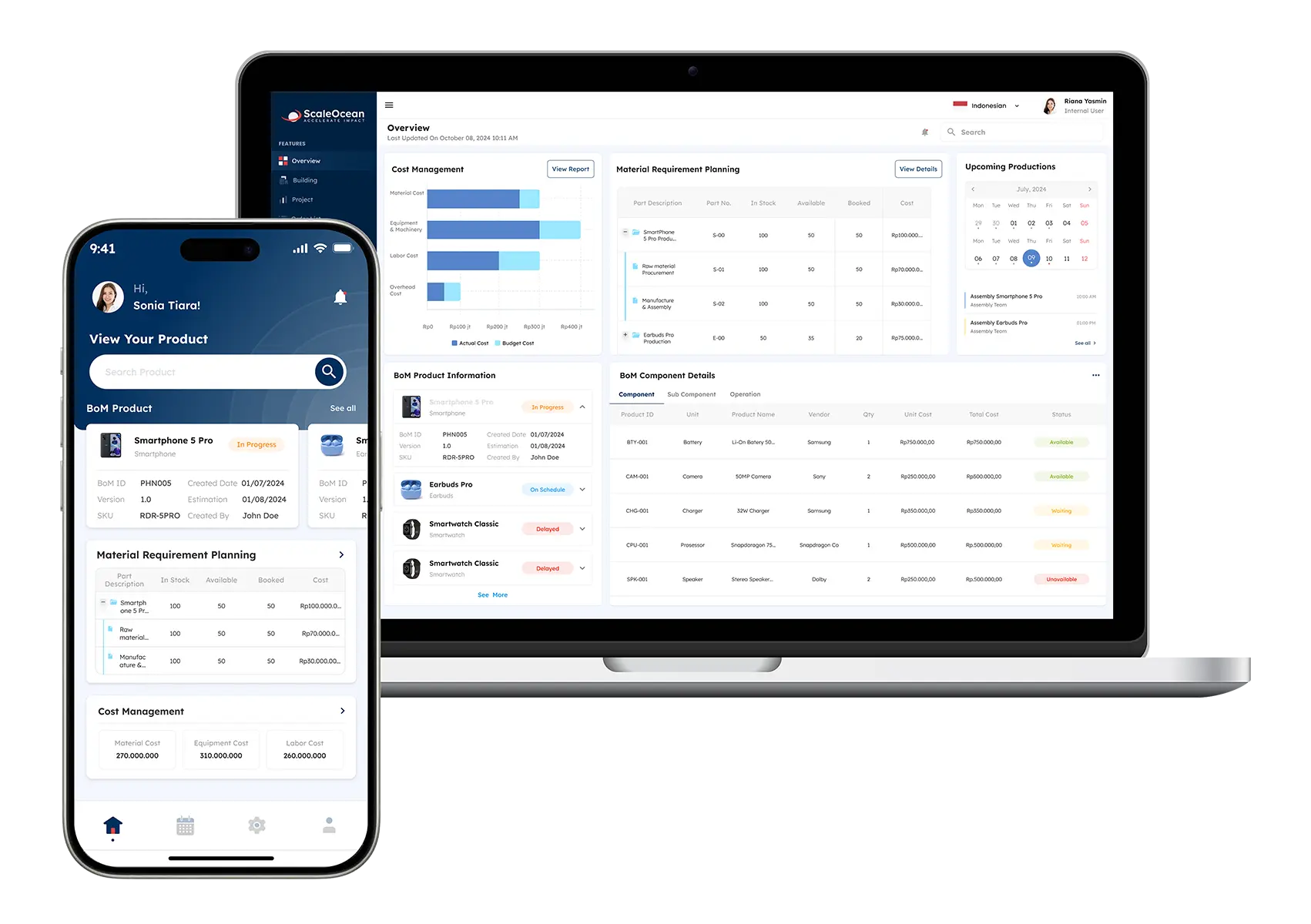
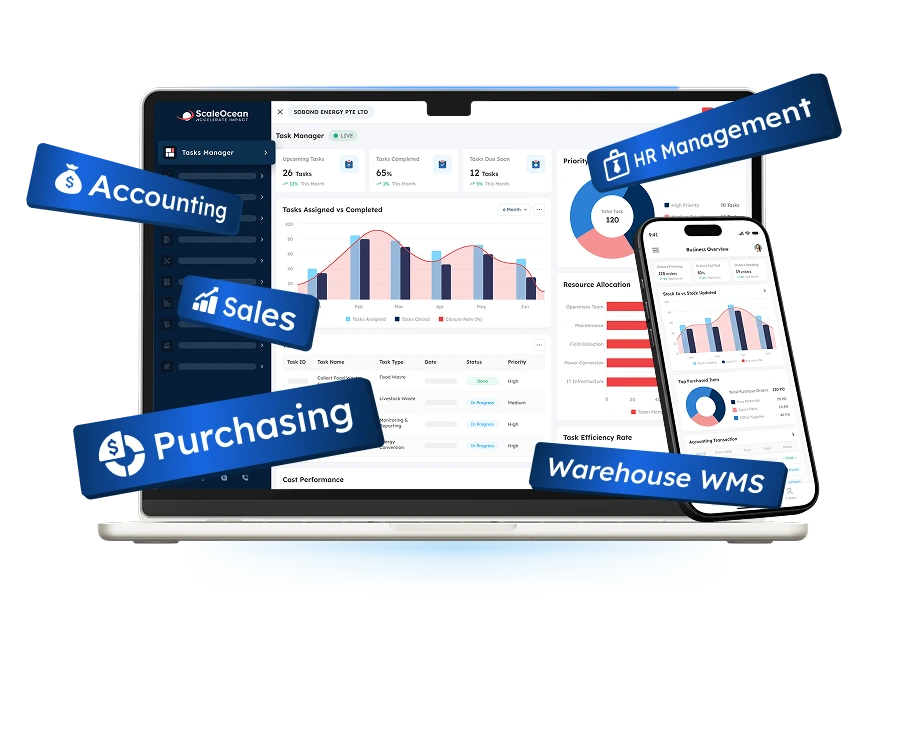
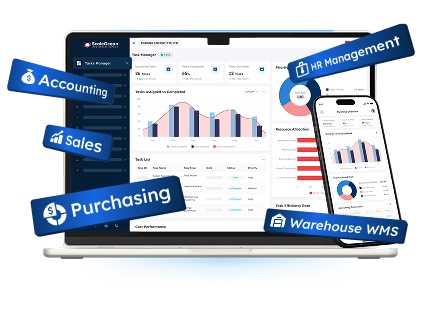
ScaleOcean ERP Manufacturing Software combines production, inventory, procurement, sales, warehousing, and finance management into a single integrated platform. ScaleOcean is an industry-focused solution supporting sectors like printing and packaging manufacturing, with a flexible, customizable system that adapts workflows, reports, and processes to business needs.
ScaleOcean also supports Singapore GST compliance and local financial reporting requirements for packaging businesses. Furthermore, eligible companies may qualify for Enterprise Development Grant (EDG) support covering up to 50% of the costs of qualifying digital transformation projects.
You can request a free demo of ScaleOcean today to explore how its flexible ERP platform can support your company’s production planning, inventory management, and business growth.
Key Features of ScaleOcean ERP Manufacturing:
- Advanced Production Scheduling: Optimizes machine schedules in real time to reduce setup time and production bottlenecks.
- Precision Cost Estimation: Automatically calculates production costs based on materials, machine usage, and labor requirements.
- Real-Time Stock Visibility: Tracks raw materials and finished goods accurately to improve inventory control and planning.
- Artwork & Specification Management: Centralizes artwork versions and customer specifications to reduce production errors and rework.
- Quality Control & Traceability: Records inspection and batch data to support product quality, compliance, and audit readiness.
| Pros | Cons |
|---|---|
|
|
Best For: Medium to large-sized packaging businesses looking for a customizable ERP for packaging manufacturing industry platform that can adapt to unique manufacturing workflows, support business expansion, and improve cross-department operational visibility.
2. Syspro
Syspro ERP for the packaging industry is designed to assist manufacturers with an integrated system for production planning, inventory control, procurement, and financial activities. This system is quite popular among manufacturing companies that need an overall view of operations.
The system supplies a set of functions to help you administer your daily manufacturing operations and track resources. The system also offers production tracking and reporting facilities.
Key Features:
- Production Planning
- Inventory Management
- Procurement Control
- Financial Reporting
| Pros | Cons |
|---|---|
|
|
Best For: To manage a broad range of manufacturing processes, raw materials, and finished goods, and provide multi-department planning and accounting with insight into manufacturing.
3. IFS
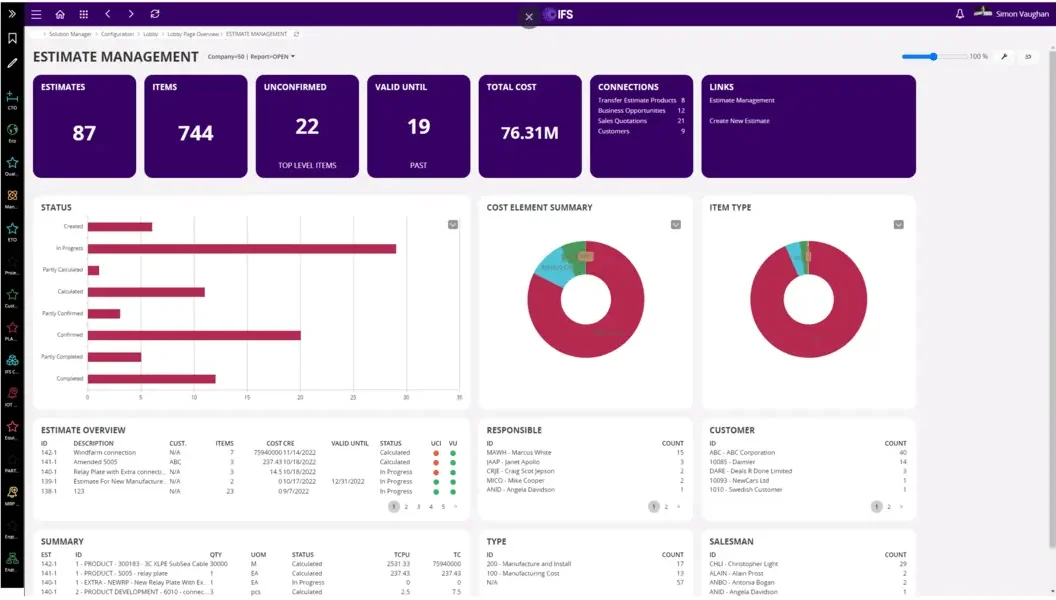
IFS ERP for the packaging industry brings automation and control across production, supply chain, and assets into a single system. This system is designed for companies that manage complex manufacturing and operational requirements.
The software features planning and monitoring tools that help to improve production coordination and resource utilization. Also, it gives you visibility over production and supply chain processes.
Key Features:
- Asset Management
- Supply Chain Planning
- Production Scheduling
- Business Analytics
| Pros | Cons |
|---|---|
|
|
Best For: Packaging suppliers with multiple sites, handling many fast-moving SKUs that need a robust planning system to support their production business.
4. BatchMaster Manufacturing
BatchMaster ERP for the packaging industry assists manufacturers in controlling batch production, managing inventory, quality control, and tracking materials. It is frequently applied in sectors that require formulation management and traceability.
The system facilitates operational control during manufacturing processes, allowing the companies to ensure product quality. It also assists companies in ensuring the completeness of business operations and gaining an overview of inventory consumption and production efficiency.
Key Features:
- Batch Production Management
- Material Traceability
- Quality Control
- Inventory Tracking
| Pros | Cons |
|---|---|
|
|
Best For: Small and mid-size packaging firms with batch-oriented manufacturing and a need for materials traceability, quality monitoring, and inventory management during the manufacturing process.
5. Epicor Kinetic
Epicor Kinetic ERP for the packaging industry enables packaging manufacturers to manage multiple facets of their business, including production planning, inventory, supply chain, and business operations, through a single system. This system is popular among organizations that need visibility and control of their operations.
It supports manufacturing workflows by providing planning and reporting features. Furthermore, it helps companies track their manufacturing activities and make better decisions.
Key Features:
- Production Scheduling
- Inventory Management
- Supply Chain Planning
- Business Intelligence
| Pros | Cons |
|---|---|
|
|
Best For: Packaging manufacturers, from mid-sized to larger companies, looking to enhance production planning, gain an overview of their supply chain, and improve their operational reporting to grow their business and refine operations.
6. Amtech ERP
Amtech ERP for the packaging industry is used by packaging producers to manage functions such as estimating, production planning, inventory management, and order processing. This solution is used by packaging and corrugated manufacturers.
The system provides operational visibility into manufacturing activities and coordinates workflows. In addition, the system assists enterprises in tracking production and resource use.
Key Features:
- Production Management
- Estimating Tools
- Inventory Control
- Order Tracking
| Pros | Cons |
|---|---|
|
|
Best For: manufacturers of corrugated boxes and packaging converters looking for a solution targeted at the industry for cost estimating, production control, and order processing.
7. EPS Packaging Suite (Radius)
The EPS Packaging Suite ERP provides packaging companies with control over estimating, production scheduling, customer orders, and inventory, all within a single integrated environment. Effective for packaging & printing shops.
The system supports workflow coordination of diverse business functions. Enhance the visibility of business operations and help manufacturers handle production more effectively and meet customers’ demands.
Key Features:
- Estimating & Quoting
- Production Planning
- Inventory Tracking
- Customer Management
| Pros | Cons |
|---|---|
|
|
Best For: Medium to large packaging companies in folding carton, flexible packaging, labels, or commercial print that need industry-specific workflow and production management features.
8. Label Traxx
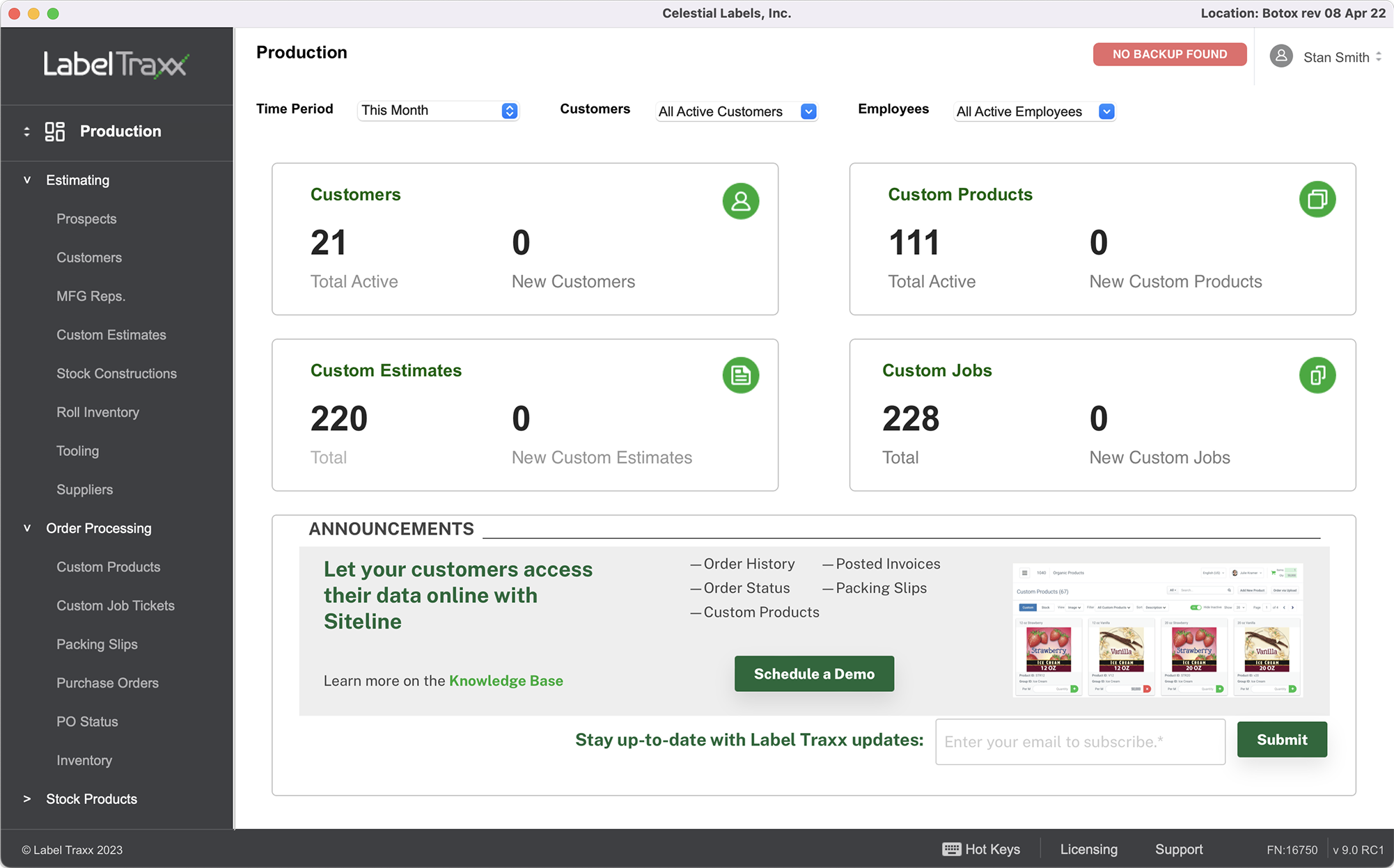
Label Traxx ERP for the packaging industry enables label converters to control their production workloads, inventory, estimating, and customer orders. Developed for packaging industry businesses.
Provides operational management, enabling you to track job and production progress and manage workflows more efficiently. Additionally, it helps businesses organize production workflows more effectively.
Key Features:
- Job Management
- Inventory Control
- Estimating Tools
- Production Tracking
| Pros | Cons |
|---|---|
|
|
Best For: Smaller to medium label converters and printers who want a dedicated system for entering job costing information, running, and tracking inventory and production within a label manufacturing plant.
9. DELMIAWorks (formerly IQMS)
DELMIAWorks ERP for the packaging industry is a comprehensive solution that enables manufacturers to plan and control production, inventory, quality, and shop-floor processes within a consolidated environment. This system is used predominantly by manufacturers seeking better integration between the shop floor and business activities.
The system provides monitoring of manufacturing performance and supports production monitoring and reporting activities. The system also helps organizations balance production activities across functions.
Key Features:
- Manufacturing Execution System (MES)
- Production Scheduling
- Inventory Management
- Quality Control
| Pros | Cons |
|---|---|
|
|
Best For: Mid-sized to large packaging companies that use shop floor measurements to implement an ERP system and want to track production results and quality control.
10. TranZact
TranZact ERP for the packaging industry helps manufacturers manage their inventory, purchasing, production, and order processes digitally. This solution aims to deliver operational insight with a user-friendly enterprise management system.
The software is mainly for the efficiency of the flow process and reducing the manual admin workload. Also, it supports basic manufacturing management software for emerging businesses.
Key Features:
- Inventory Management
- Procurement Tracking
- Production Monitoring
- Order Management
Cons:
Limited advanced manufacturing features
Less depth for complex operations
Scalability depends on business requirements
| Pros | Cons |
|---|---|
|
|
Best For: Small and medium-sized packaging production facilities in the early stages of digital transformation, looking for a fairly easy-to-implement solution.
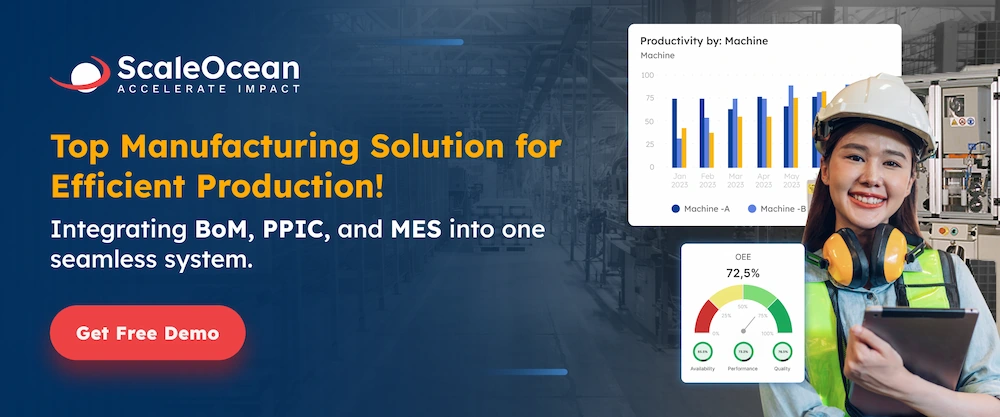
Although many software solutions support packaging manufacturing, ScaleOcean stands out with its industry-focused approach and flexible design. It integrates production, inventory, procurement, warehousing, and financial management into a connected ecosystem, while also adapting to complex business needs and evolving processes.
Additionally, its configurable design helps packaging manufacturers enhance visibility, control processes, and support sustainable growth. You can request a free demo today to see how ScaleOcean can improve your manufacturing processes.
ERP Features that are Usually Used for the Packaging and Printing Industry
Packaging and Printing Manufacturers usually seek ERP systems to meet the demands of complex manufacturing, changing material consumption, costing, and quality. Accordingly, industry-specific ERP functions contribute significantly to operational efficiency and a positive balance sheet.
With the right ERP for packaging manufacturing industry features in place, companies can identify waste and control costs through centralized production planning, improve interdepartmental visibility, and speed up customer response. Consequently, this translates as higher customer satisfaction or service levels without sacrificing quality or compliance.
1. Multi-Material Management
Product packaging generally consumes a variety of materials, such as paperboard, corrugated paper, inks, glues, films, and labels. Hence, these production systems need to be aware of which materials are available, which are being used, and where each material is in the process.
Multi-material management enables manufacturers to maintain precise inventory and reduce stock shortages and overproduction, thereby improving purchasing and production processes.
2. Accurate Cost Estimation
Long production runs are often needed to justify the cost of equipment used for a variety of packaging needs. In this case, knowing the cost per thousand or per dozen will be invaluable. An ERP for packaging manufacturing industry should be able to provide such costing calculations for each production job.
Accurate cost estimation enhances business competitiveness and helps protect profit margins. Therefore, it leads to better pricing decisions for companies and enhanced business results.
3. Dynamic Scheduling
Due to rush orders, machine breakdowns, material shortages, or changes in customer requirements, the production schedule is often updated. Thus, the best ERP for packaging industry systems must provide a scheduling system that is flexible in the face of constantly changing circumstances.
Dynamic scheduling benefits all parties by improving resource utilization and reducing disruptions and idle time in production. Manufacturers can deliver better, with less risk of displeasing customers.
4. Material Requirement Planning (MRP)
Material Requirement Planning assists manufacturers in predicting what quantities and when inventories are needed. Businesses can ensure they don’t run out of necessary materials when production starts.
MRP can minimize out-of-stock moments and avoid holding excessive stock of work and customers’ stock across all warehouses, leading to more efficient inventory management in production and a more balanced manufacturing activity.
5. Waste & Scrap Tracking
Material wastage and production scrap will consequently directly impact the profitability of packaging and printing operations. The best ERP for packaging industry should be able to indicate wastage at various stages of production.
When waste and scrap are monitored, companies can identify bottlenecks and implement corrections more efficiently. Accordingly, manufacturers can reduce material waste while increasing production efficiency.
6. Quality & Compliance Tracking
A quality packaging manufacturer must comply with customer requirements, industry best practices, and government regulations. So the ERP system has to implement quality inspection and document control. Similar compliance requirements can also be found in highly regulated sectors that rely on ERP for medical device manufacturers.
Quality and compliance tracking lead to more consistent products and easier audits. All this enables companies to improve product quality and regain customers’ confidence and credibility.
7. Direct Machine Interface (DMI)
Direct Machine Interface (DMI) allows production machinery and equipment to be directly linked to the ERP system and to collect usage information. This way, all machines can be observed without extensive manual reporting.
DMI enhances production visibility by continuously providing information on machine condition, part quality, and machine efficiency. This way, companies can analyze data and make decisions more quickly.
8. Product-Specific Estimating
Different types of packaging products have substantially differing material/production/finishing processes. Hence, the best ERP for packaging industry has to allow estimating calculations for specific product needs.
Using product-specific estimating allows your company to produce better selections for customized projects or special packaging. This ultimately enables manufacturers to achieve more competitive prices and higher profit margins.
9. Unit of Measure (UOM) Flexibility
Most packaging manufacturers buy, store, and use materials in different units, such as sheets, rolls, kilos, meters, and packaging units. So a good ERP such as an ERP software for apparel industry should support conversions, for example, from sheets to meters or from packs to separate units.
UOM flexibility enhances inventory accuracy and streamlines production planning and materials management. It ultimately reduces calculation errors and provides a more consistent, smoother functioning of activities.
Conclusion
Manufacturers of packaging and printing require ERP software with improved production planning, stock controls, accurate costing, quality measures, and 24-hour operational oversight. Choosing the right ERP package is critical for optimizing efficiency, minimizing waste, and ensuring the business’s future growth.
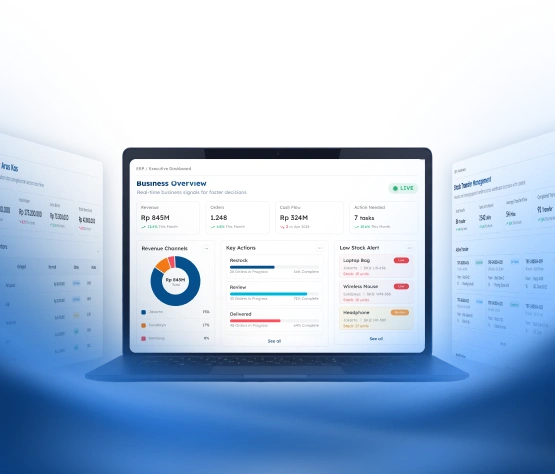
ScaleOcean Manufacturing ERP Software streamlines operations for packaging businesses with a flexible, fully integrated manufacturing solution. Its configurable workflow, the industry-specific implementation approach, and the variety of modules are optimized to increase control over manufacturing, inventory, procurement, and finance.
If your business is seeking to migrate and automate your packaging processes and digitize your business, then ScaleOcean is the solution that can meet your business demands. Request a free demo today to explore how the system can help improve productivity, operational efficiency, and overall business performance.
FAQ:
1. What is the best software to design packaging?
The best packaging design software depends on your needs. Popular options include Adobe Illustrator for professional packaging artwork, ArtiosCAD for structural packaging design, and Esko Studio for 3D packaging visualization and prototyping.
2. What is the full form of ERP in packaging?
ERP stands for Enterprise Resource Planning. In the packaging industry, ERP software integrates production, inventory, procurement, sales, finance, and quality management into a single system to improve operational efficiency.
3. What are the 7 types of packaging?
The seven common packaging categories are primary packaging, secondary packaging, tertiary packaging, flexible packaging, rigid packaging, semi-rigid packaging, and transit packaging. Each serves different functions related to product protection, storage, handling, and distribution.
4. Which AI to use for packaging design?
Popular AI tools for packaging design include Adobe Firefly, Midjourney, ChatGPT, and Canva AI. These tools help generate design concepts, packaging mockups, branding ideas, product descriptions, and marketing visuals more efficiently.




















.png)