



Hotel management software is a centralized digital system that helps hotels manage reservations, front desk operations, housekeeping, billing, and reporting in one integrated platform. It replaces manual processes and disconnected tools with a streamlined workflow designed specifically for hospitality businesses.
Yet many hotels still rely on spreadsheets, handwritten logs, or separate systems that don’t communicate with each other. This often results in double bookings, delayed check-ins, lost data, and frequent miscommunication between departments.
Front office teams struggle to update room availability in real time. Housekeeping may not receive accurate status reports. Meanwhile, finance teams spend hours reconciling inconsistent revenue records. These inefficiencies slow operations and affect guest satisfaction.
In a competitive hospitality market, operational mistakes quickly translate into negative reviews and lost revenue. Without a reliable system in place, hotels risk falling behind competitors who already operate with integrated, data-driven solutions.
To tackle operational challenges, many hotels use software that centralizes reservations, guest management, billing, and reporting. To help you choose the right solution, this guide covers the best hotel management software available today.
The software reviewed includes brands like ScaleOcean, Cloudbeds, and Mews, along with their key features, pricing considerations, and how to select the right system for your hotel
 Key Takeaways
- The Best Hotel Management Software Reviews section explains how each platform works, outlining key features, advantages, limitations, pricing considerations, and types of hotels they serve.
- Choosing the right Hotel Management Software requires evaluating property size, operational complexity, integrations, reporting needs, customization, and scalability.
- Key Features of Hotel Management Software to consider include reservation management, channel sync, analytics dashboards, integrations, and customizable reporting capabilities.
- Benefits of Hotel Management Software include improved efficiency, guest experience, and decision-making through automation and real-time insights.
- ScaleOcean Atlas Hotel Management Software offers integrated control of reservations, finance, operations, and analytics to centralize workflows and support growth.
To make the selection process easier, you can start by reviewing the summary of recommended hotel management software in the table below. This comparison highlights key vendors, their ideal use cases, and general pricing information, allowing you to quickly identify which solutions may best fit your hotel’s operational needs.
Best Hotel Management Software Summary
| Vendor | Best For | Free Demo Info | Price |
|---|---|---|---|
| ScaleOcean | Hotels seeking integrated ERP-level hotel management with accounting, inventory, and operational control | Free demo available | Unlimited users with no hidden cost and flat pricing based on business size and modules |
| Cloudbeds | Small to mid-sized hotels needing an all-in-one PMS with a channel manager | Free demo available | Custom quote |
| Little Hotelier | Small hotels, guesthouses, and B&Bs | Free demo available | Starts from a monthly subscription of SGD 145 (Pro) / SGD 39 (Basics) |
| Amenitiz | Boutique hotels wanting PMS + website builder in one platform | Free demo available | Monthly subscription plans (~SGD 60) |
| RoomRaccoon | Independent hotels focused on automation and upselling | Free demo available | Entry-level pricing starts at SGD 316/month |
| Mews | Tech-driven hotels and modern properties | Free demo available | Starting price is SGD 133/month for the Essentials tier |
| Protel by Planet | Mid-sized to large hotels needing scalable PMS | Demo available upon request | Pricing varies by hotel size and selected modules |
| Oracle OPERA Cloud | Large hotels and international chains | Demo available upon request | Custom pricing |
| SiteMinder | Hotels focused on channel management and distribution | Free trial available | Starting prices typically range from SGD 133 – SGD 200/month |
| Uno by RateGain | Hotels prioritizing revenue management and pricing | Demo available upon request | Custom pricing |
The table above provides a quick overview of several hotel management software options available in the market. Each platform offers different strengths, ranging from basic reservation tools for small properties to more advanced systems designed for large hotels with complex operational workflows.
However, summary tables only provide a high-level comparison. To choose the most suitable solution, it is important to understand how each platform works, what features it offers, and which types of hotels benefit most from using it.
The following section reviews each hotel management software in more detail, including its main functions, key features, advantages, limitations, and typical pricing considerations.
Best Hotel Management Software Reviews
Choosing the right hotel management software depends on your property size, operational complexity, and desired automation level. Some platforms offer simple reservation management for smaller hotels, while others provide enterprise-level solutions with integrated finance, analytics, and multi-department coordination.
Below are several hotel management software options commonly used in the industry:
1. ScaleOcean Atlas Hotel Management Software
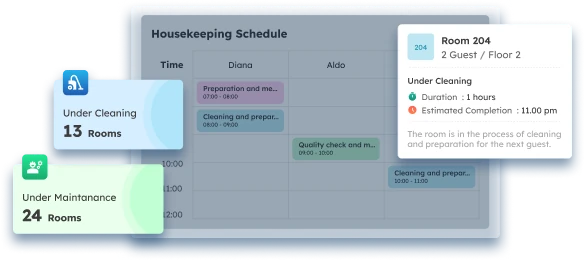
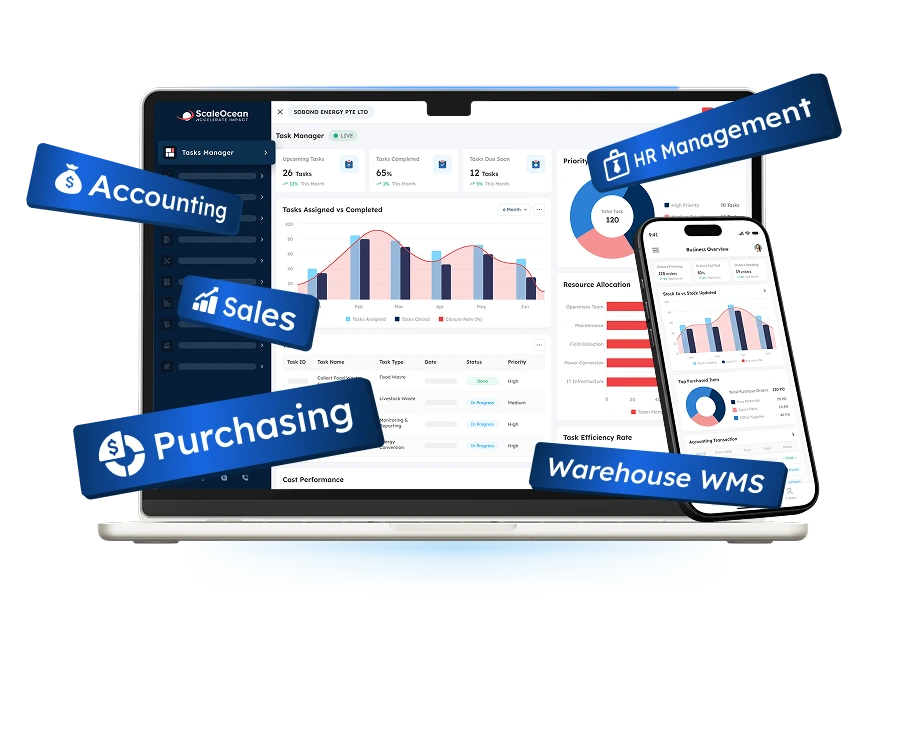
ScaleOcean Atlas hotel management software is built for medium-to-large hotels that require more than a basic hotel system or software. It centralizes reservations, guest management, finance, distribution, HR, POS, property management, and operational workflows within a single ERP ecosystem.
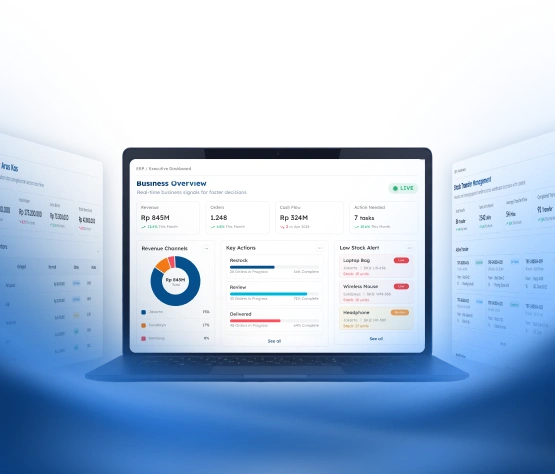
Instead of using a generic template, it’s configured based on each hotel’s structure, approval flow, and reporting needs. Its dashboard provides real-time visibility into room status, guest attendance, housekeeping schedules, ADR, RevPAR, and revenue performance.
The platform follows Singapore-standard security practices with encrypted protection for credit card and guest personal data, aligned with PDPA expectations.
Key Features of ScaleOcean Atlas:
- Mobile Check-in & E-KYC: Passport/ID scanning with facial recognition, connected to immigration or security systems when required.
- Digital Key Access: Guest smartphones function as room keys via Bluetooth or NFC, reducing front desk congestion.
- Smart Room & IoT Integration: Automated control of lighting, HVAC, and curtains linked to occupancy status, plus integration with service robots commonly used in modern hotels.
- Distribution & Revenue Management: Real-time channel synchronization with OTA platforms and GDS, supported by dynamic pricing that adjusts based on demand and seasonality.
- Analytics Dashboard & ESG Reporting: Customizable dashboards tracking ADR and RevPAR in one click, along with digital sustainability reporting for water, electricity, and food waste tracking.
- Task Automation & Workforce Optimization: Automated housekeeping scheduling based on live room status and cross-training modules to manage multi-skilled staff efficiently.
- Integrated Payment Gateway: Supports popular cashless payment methods in Singapore (PayNow, GrabPay) and international credit cards through local gateway integration.
| Pros | Cons |
|---|---|
|
|
Best For: Medium-to-large hotels that require ERP-level hotel management with integrated modules for reservations, accounting, inventory, HR, and operational management. It is especially suitable for hotels with complex workflows that want a centralized platform to manage finance, guest operations, and internal departments within one system.
Price: Flat custom pricing based on hotel size, required modules, and implementation scope. Hotels typically request a consultation and system assessment before receiving a tailored quote.
Capterra Review: 5/5 Stars
2. Cloudbeds
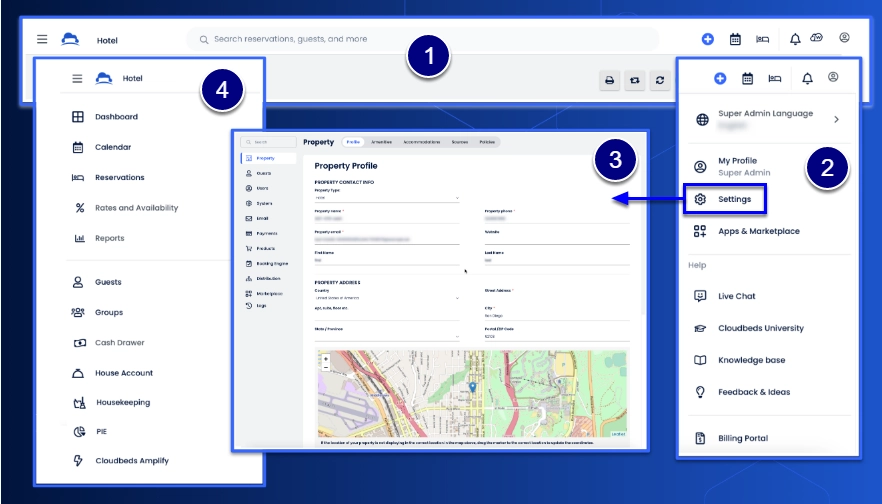 Cloudbeds is a cloud-based hotel management system software that combines basic property management, channel distribution, and booking tools into one dashboard. It helps small and mid-sized properties reduce manual work and keep inventory in sync across OTAs.
The system is commonly used by independent hotels that want to streamline reservation workflows and reduce reliance on spreadsheets or disconnected tools. By centralizing booking information, staff can monitor reservations and room availability through one interface instead of managing multiple systems.
Key Features:
- Reservation management
- Channel syncing with OTAs
- Direct booking engine
| Pros | Cons |
|---|---|
|
|
Best For: Small to mid-sized hotels, boutique properties, and independent hospitality businesses that need an all-in-one property management system with built-in channel management and booking tools.
Price: Subscription-based pricing with customized plans depending on property size, room count, and selected features. Pricing is usually provided after requesting a demo.
Capterra Review: 4.3/5 Stars
3. Little Hotelier
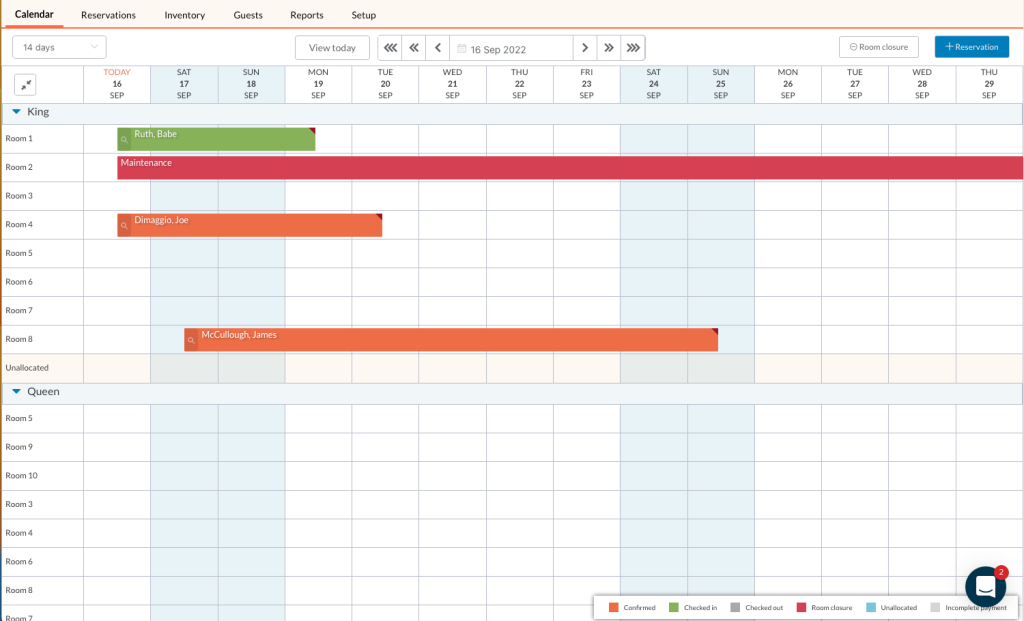
Little Hotelier is a streamlined hotel management system made for very small properties like B&Bs, guesthouses, and small inns. It focuses on straightforward booking management and syncing with OTA partners.
Because many smaller properties operate with limited staff, the platform prioritizes simplicity and straightforward workflows. This allows owners and managers to oversee reservations and booking channels without extensive system training.
Key Features:
- Reservation calendar
- Channel management
- Website booking widget
| Pros | Cons |
|---|---|
|
|
Best For: Small hotels, guesthouses, inns, and B&B operators that want a simple platform for managing reservations, room availability, and online bookings without complex enterprise features.
Price: Starts at around SGD 39 per month for basic plans, with more advanced packages such as the Pro plan starting around SGD 145 per month, depending on included tools.
Capterra Review: 4.1/5 Stars
4. Amenitiz
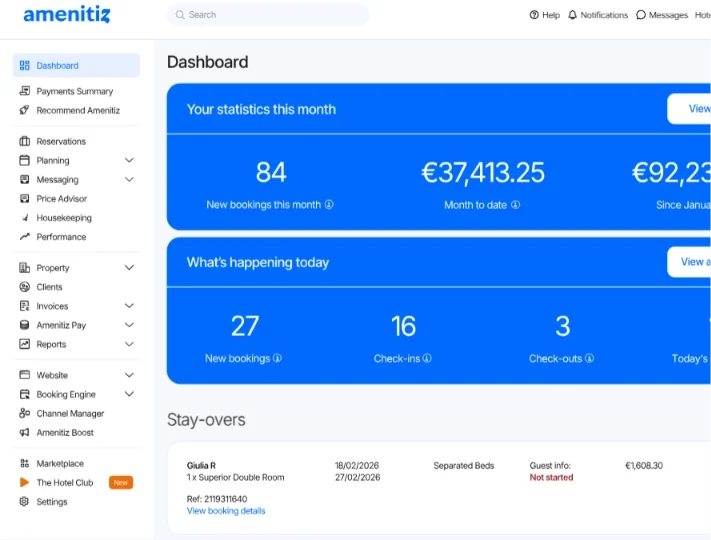 Amenitiz is a hotel management solution with extra emphasis on helping properties sell more direct bookings by providing website and marketing tools alongside basic operations.
The system is often chosen by boutique hotels that want a simple operational platform while also improving their online presence and direct booking channels without relying heavily on third-party OTAs.
Key Features:
- Reservation management
- Channel manager
- Direct booking site
| Pros | Cons |
|---|---|
|
|
Best For: Boutique hotels and small hospitality businesses looking for a combined solution that includes a property management system, booking engine, and website builder in one platform.
Price: Monthly subscription plans generally start at around SGD 60 per month, with higher-tier packages offering additional tools such as advanced booking features and integrations.
Capterra Review: 4.3/5 Stars
5. RoomRaccoon
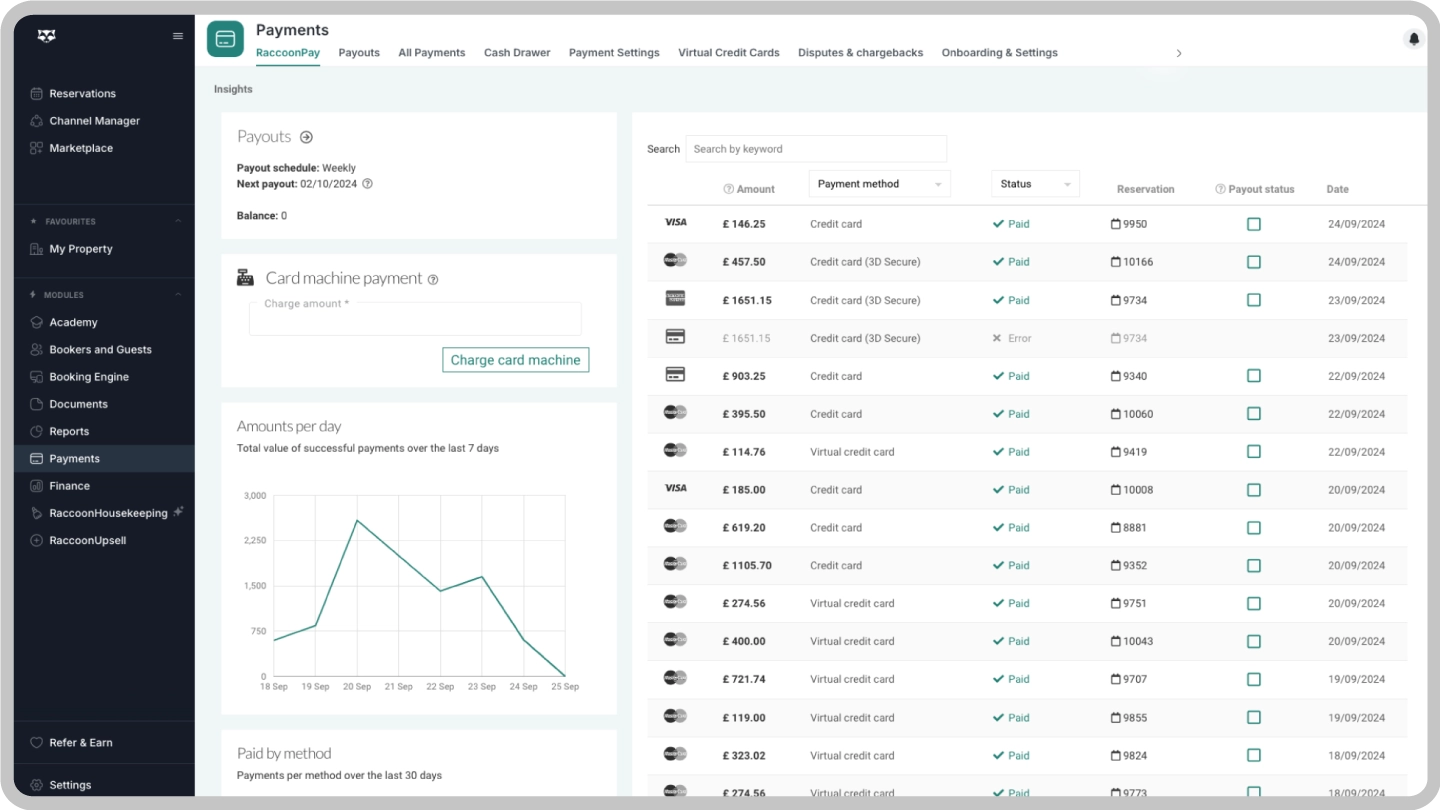 RoomRaccoon is a unified hotel platform that brings reservations, invoices, and OTA channel syncing into one dashboard, designed to make daily tasks easier for small and medium properties.
The platform aims to reduce administrative workload by automating processes such as reservations, payments, and guest communication, helping smaller hotel teams operate more efficiently.
Key Features:
- Reservation management
- Channel manager
- Direct booking engine
| Pros | Cons |
|---|---|
|
|
Best For: Independent hotels and boutique properties focused on automation, revenue optimization, and upselling opportunities to increase booking value.
Price: Entry-level pricing typically starts at around SGD 316 per month, with costs increasing depending on the number of rooms and selected modules.
Capterra Review: 4.2/5 Stars
6. Mews
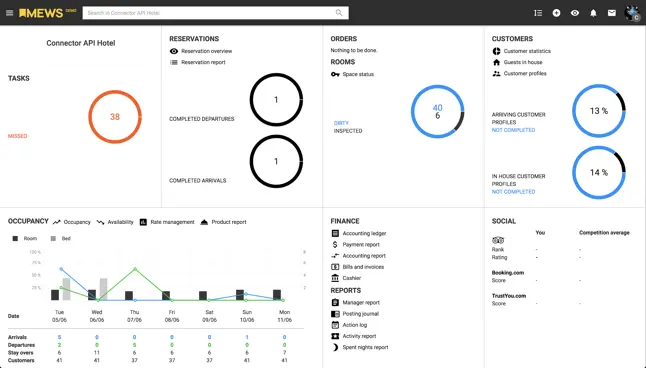
Mews is a cloud-based hotel management system that aims to simplify hotel operations by automating everyday tasks and centralizing key functions. It is designed for properties that want a modern, digital approach without relying on legacy systems.
The platform is commonly used by hospitality businesses that want to transition from traditional legacy systems to a cloud-based infrastructure. This approach enables hotels to operate with more flexibility while keeping operational data accessible across departments.
Key Features:
- Reservation management
- Channel syncing
- Simple invoicing
| Pros | Cons |
|---|---|
|
|
Best For: Modern, tech-focused hotels and hospitality properties looking for a cloud-based system with automation tools and a digital-first approach to hotel operations.
Price: Starting price is around SGD 133 per month for the Essentials tier, with additional costs depending on the number of rooms, users, and add-on features.
Capterra Review: 4.6/5 Stars
7. Protel by Planet
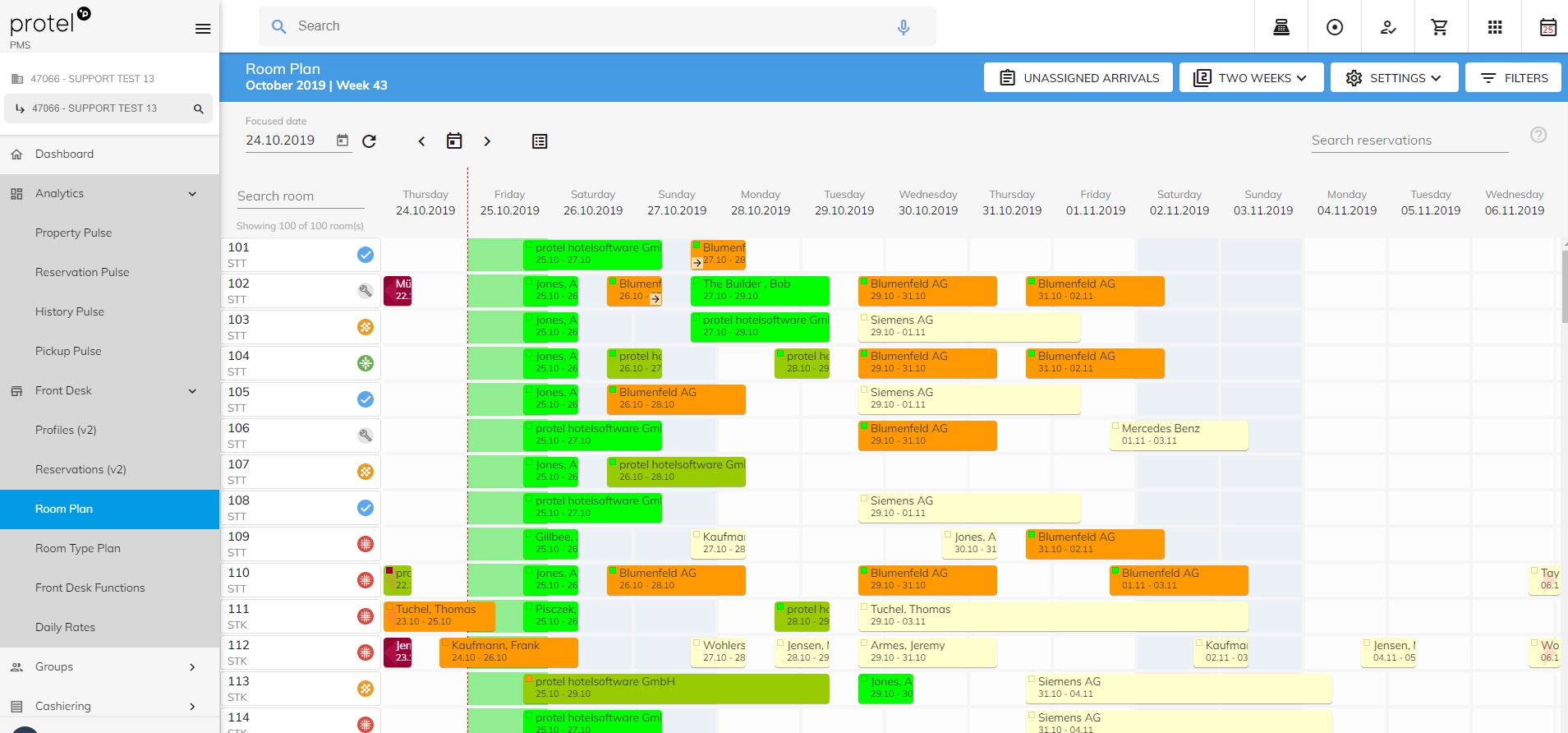 Protel by Planet is a traditional property management system with a long track record in the hotel industry. It provides foundational tools for managing reservations, inventory, and everyday hotel operations.
Its familiarity and reliability in handling everyday operational processes are suitable for mid-sized properties. Hotels that prefer a conventional structure can often use the system to maintain consistent operational routines.
Key Features:
- Reservation management
- Basic invoicing
- Channel sync
| Pros | Cons |
|---|---|
|
|
Best For: Mid-sized to large hotels that need a scalable property management system capable of handling more complex operations and multiple operational departments.
Price: Pricing varies depending on the size of the property and the modules selected. Hotels typically receive a custom quote after consultation or a demo request.
Capterra Review: 3.2/5 Stars
8. Oracle OPERA Cloud
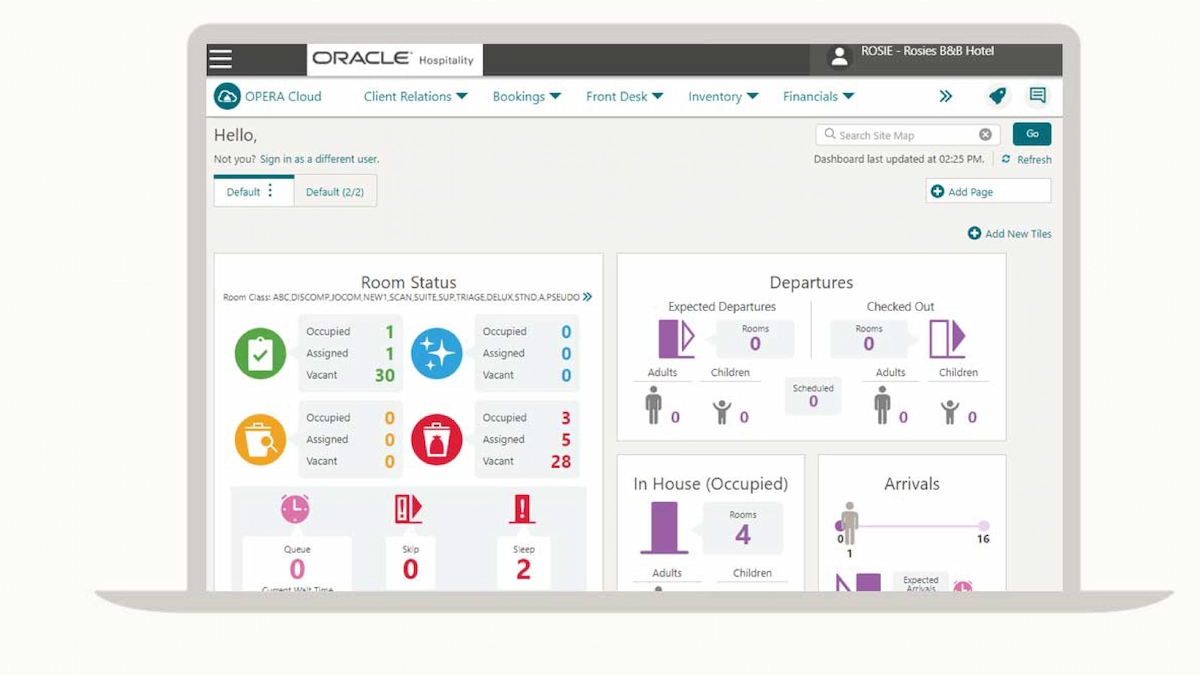 Oracle OPERA Cloud is an enterprise-grade hotel property management system used by large hotel groups and international chains. It provides a comprehensive suite of tools covering reservations, revenue, distribution, and operations at scale.
Because it is built on enterprise infrastructure, OPERA Cloud is typically implemented by properties that require strong system governance and the ability to coordinate operations across many locations.
Key Features:
- Reservation management
- Channel and distribution management
- Multi-property support
| Pros | Cons |
|---|---|
|
|
Best For: Large hotels, resorts, and international hotel chains that require enterprise-grade property management with advanced operational and distribution capabilities.
Price: Enterprise-level custom pricing based on property scale, number of locations, and selected system modules.
Capterra Review: 3.6/5 Stars
9. SiteMinder
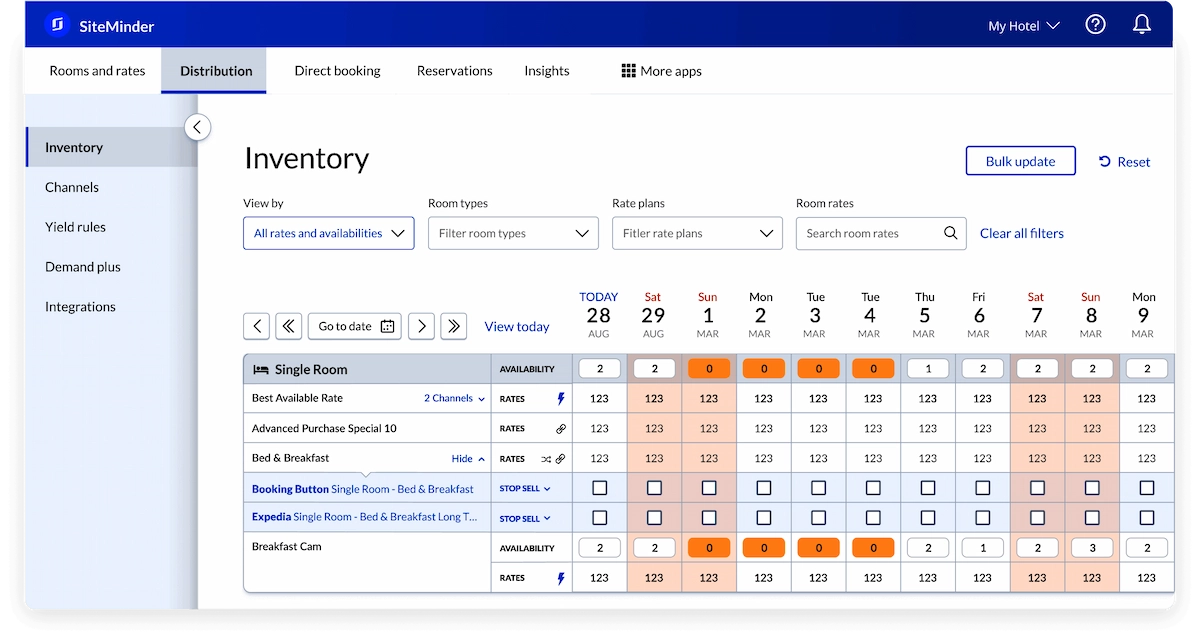 SiteMinder is a channel management and distribution platform that connects hotels’ inventory and rates to online travel agencies (OTAs), global distribution systems (GDS), and booking sites. It focuses primarily on distribution rather than full PMS functionality.
Hotels often use SiteMinder alongside other operational systems to ensure that room availability and pricing remain consistent across different booking platforms.
Key Features:
- Channel management
- Rate synchronization
- OTA connectivity
| Pros | Cons |
|---|---|
|
|
Best For: Hotels focused on improving distribution and managing room availability across multiple online travel agencies (OTAs) and booking platforms.
Price: Pricing generally starts between SGD 133 and SGD 200 per month, depending on the number of channels connected and the size of the property.
Capterra Review: 4.2/5 Stars
10. Uno by RateGain
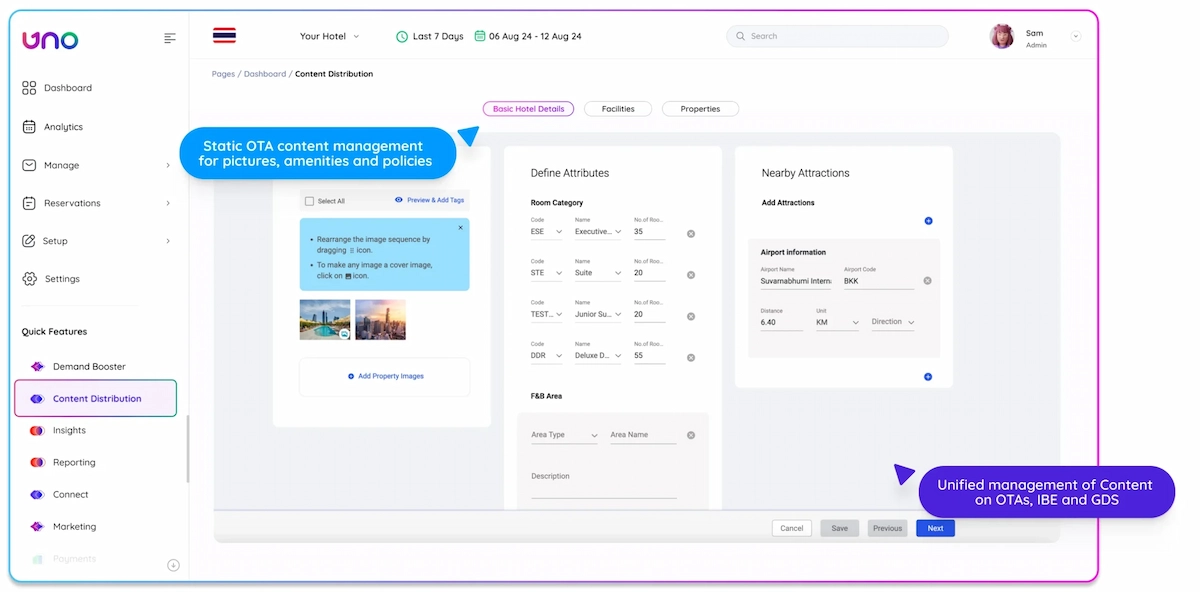 Uno by RateGain is primarily a revenue management and rate intelligence platform that helps hotels optimize pricing based on market trends, competitor data, and demand signals. It isn’t a full PMS but complements other hotel systems.
Key Features:
- Price benchmarking
- Competitor rate tracking
- Dynamic rate suggestions
| Pros | Cons |
|---|---|
|
|
Best For: Hotels that prioritize revenue management, pricing intelligence, and market data to optimize room rates and revenue strategies.
Price: Custom enterprise pricing depending on data access level, number of properties, and selected revenue management modules.
Capterra Review: 5/5 Stars
Choosing the right hotel management software hms depends on the complexity of your operations. Basic tools may work for small properties, but growing hotels often need stronger integration, clearer reporting, and better operational control.
For medium-to-large hotels seeking an all-in-one, scalable system, ScaleOcean Atlas offers integrated modules, real-time dashboards, and long-term flexibility beyond standard booking tools. Request a free consultation with ScaleOcean’s team of experts today to see how it can align with your hotel’s workflow and growth plans.

How to Choose the Right Hotel Management System
Selecting the best hotel management software for your property should be based on operational needs, property size, and long-term scalability. Instead of focusing only on price, hotels should evaluate how well the system supports daily workflows, reporting accuracy, and integration requirements.
Here is a practical evaluation guide:
| Factors | What to Consider |
|---|---|
|
|
A structured evaluation prevents short-term decisions that later require costly system changes.
What is Hotel Management Software
Hotel management software is a digital system that manages hotel operations on a single centralized platform, making it a core component of modern hospitality management. It typically covers reservations, room availability, guest information, billing, reporting, and sometimes housekeeping and accounting.
Instead of using spreadsheets or disconnected tools, hotels use this software to automate bookings, update room inventory in real time, and generate operational and financial reports. The goal is to improve efficiency, reduce manual errors, and provide better visibility into business performance.
What is Cloud-Based Hotel Management Software?
Cloud-based hotel management software is hosted online rather than installed on local servers. This means hotel staff can access the system through a web browser from any authorized device.
Because data is stored securely in the cloud, updates, backups, and system maintenance are handled automatically by the provider. Cloud systems also make integration with OTAs, payment gateways, and external platforms easier. This is why many modern hotels prefer this deployment model over traditional on-premises software.
Key Features of Hotel Management Software to Consider
When evaluating hotel management system software, focus on features that directly improve operational efficiency, revenue visibility, and guest experience. Below are the core capabilities to look for:
- Channel Manager: Synchronizes room availability and rates across OTAs and booking platforms to prevent overbooking and maintain rate consistency.
- Unified Booking Engine: Enables direct reservations through your hotel website, reducing reliance on third-party commissions.
- Reservation Management: Centralizes booking records, guest details, room assignments, and stay history in one system.
- Billing Automation: Automatically generates invoices, tracks payments, and reduces manual reconciliation errors.
- Mobile Staff Apps: Allows housekeeping, maintenance, and front desk teams to receive real-time updates via mobile devices.
- Guest Communication: Automates confirmations, reminders, and pre-arrival messages to improve guest engagement.
- Multi-Property Management: Supports centralized control for hotel groups managing multiple branches or locations.
- Loyalty Program Management: Tracks repeat guests, reward points, and membership benefits to encourage retention.
- Security Safeguards: Protects guest data and payment information through encryption and controlled access permissions.
- Customizable Dashboard: Provides integrated reporting for essential hotel KPIs, including ADR and RevPAR, while supporting dynamic pricing adjustments and targeted promotions.
- Integrations: Connects with POS systems, payment gateways, accounting software, revenue tools, and external platforms.
- Real-Time Analytics: Delivers live status updates reporting on occupancy rate, ADR, RevPAR, and revenue performance to support faster decision-making.
Benefits of Hotel Management Software

Implementing hotel management system software helps hotels streamline operations, reduce manual work, and improve service consistency. Instead of managing reservations, billing, and guest information through separate tools, hotels can centralize everything in one system.
This allows teams to work more efficiently while giving managers better visibility into performance and operational data. Some of the main benefits include:
- Improved operational efficiency: Routine tasks such as reservations, billing, and reporting can be automated, allowing staff to focus more on guest service instead of administrative work.
- Enhanced guest experience: Features like automated messaging, guest profiles, and loyalty program management help hotels deliver more personalized service and maintain stronger guest relationships.
- Better decision-making: Real-time analytics provide insights into occupancy rates, revenue performance, and booking trends, helping managers make more informed operational decisions.
- Centralized management: Hotels with multiple branches can manage rooms, bookings, and performance across locations from a single platform.
- Cost savings: Automation reduces manual errors and lowers operational costs by simplifying billing, reporting, and system integrations.
- Operational flexibility: Mobile access allows managers and staff to monitor operations, update bookings, and respond to issues even when they aren’t on-site.
What Tools Integrate with Hotel Management Software?
A hotel management software app works best when it connects with other operational systems used across the property. Integrations allow information to move automatically between departments, reducing manual data entry and improving operational coordination.
When reservations, payments, housekeeping, and guest data are synchronized, hotels can operate more efficiently and maintain better service consistency. Below are several common systems that integrate with hotel management platforms.
1. Property Management System (PMS)
A Property Management System is the core platform used to manage hotel operations such as reservations, room availability, guest check-in and check-out, and billing. It serves as the central database where most operational information is stored and updated.
Hospitality businesses seek the best property management software for smooth integration with their hotel systems. An integrated PMS supports daily tasks, while the main platform manages reporting, finance, and distribution.
2. Central Reservation System (CRS)
A Central Reservation System manages reservations coming from multiple booking sources. It consolidates bookings from hotel websites, call centers, travel agents, and other distribution channels into one unified system.
3. Revenue Management System (RMS)
A Revenue Management System helps hotels optimize room pricing based on demand, seasonality, and competitor rates. By analyzing market data and booking trends, it can support more effective pricing strategies.
4. Point of Sale (POS) System
A POS system manages transactions within hotel outlets such as restaurants, bars, spas, or retail shops. Integrating POS with hotel software allows charges to be automatically added to a guest’s room account.
5. Housekeeping Management Software
Housekeeping systems help manage room cleaning schedules, maintenance requests, and staff assignments. Integration ensures room status updates in real time once housekeeping tasks are completed.
6. Channel Manager
A channel manager synchronizes room inventory and rates across online travel agencies (OTAs) and booking platforms. This integration prevents double bookings and keeps availability consistent across all channels.
7. Customer Relationship Management (CRM)
CRM software stores guest profiles, preferences, and stay history. Hotels use it to personalize communication, manage loyalty programs, and improve long-term guest relationships.
8. Maintenance Management System (CMMS)
A Computerized Maintenance Management System helps track maintenance tasks, equipment status, and repair schedules. Integrating it with hotel software ensures issues can be reported and resolved quickly without disrupting the guest experience.
Costs and Pricing of Hotel Management Software

When evaluating hotel management software hms, pricing typically depends on features, number of rooms or users, implementation scope, and additional modules. Many providers offer subscription tiers designed to fit different hotel sizes and operational needs.
The table below outlines common pricing plans, their estimated cost ranges, and the types of features usually included in hotel management software solutions.
Plan Comparison Table for Hotel Management Software
| Plan Type | Average Price | Common Features |
|---|---|---|
| Free Plan | $0 | Basic booking management, limited guest messaging tools, and simple reporting features. |
| Starter / Personal Plan | $10–$30 per user/month | Core reservation tools, automated billing, guest communication features, and basic performance insights. |
| Business Plan | $50–$100 per user/month | More advanced reporting, support for loyalty programs, multi-property management capabilities, and third-party system integrations. |
| Enterprise Plan | $150+ per user/month | Fully customizable dashboards, real-time operational analytics, enhanced security controls, and dedicated technical support. |
Pricing tiers offer a general guide for evaluating hotel management software, but price shouldn’t be the only factor. Hotels must also consider complexity, integration, scalability, and long-term growth.
Conclusion
Choosing the right hotel management software can boost operational efficiency, guest satisfaction, and overall performance. It streamlines tasks like reservation management, billing, analytics, and system integration, giving hotels better control over occupancy, revenue, and service quality.
For a comprehensive, scalable solution, ScaleOcean offers an all-in-one platform that manages reservations, guest data, finance, and operations in one system. Its flexible modules and real-time dashboards help managers track performance, coordinate teams, and make data-driven decisions.
If you’ve been wanting to upgrade your system, consider ScaleOcean Atlas. Request a free consultation with ScaleOcean today to see how it can align with your property’s workflow and growth goals.
FAQ:
1. What is the approximate room count of hotel management software?
Hotel management software collectively manages approximately 5.5 million rooms globally. Individually, systems scale from small B&Bs with under 20 rooms to massive resorts exceeding 2,000 rooms. Most mid-market solutions are optimized for properties with 150 to 400 rooms, handling everything from bookings to housekeeping.
2. How to require the integration of hotel management software with an on-site restaurant?
To require the integration of hotel management software (HMS) with an on-site restaurant (POS), you must prioritize systems that support two-way data exchange via open APIs. This ensures that restaurant charges are automatically posted to a guest’s room folio, eliminating manual entry errors and streamlining checkout.
3. What software is used in the hotel industry?
The hotel industry uses a diverse “tech stack” centered around the Property Management System (PMS), which acts as the operational hub for reservations, check-ins, and guest billing. Modern hotels typically integrate this core system with specialized software for revenue optimization, online distribution, and on-site guest services.
4. What are the two types of hotel software?
On-Premises software is installed locally on the hotel’s own servers and hardware, requiring manual updates and a dedicated IT team for maintenance. Conversely, Cloud-Based software is hosted on remote servers by the vendor and accessed via the internet, offering real-time data sync, automatic updates, and lower upfront infrastructure costs.



















.png)