











Tuition management system software helps manage student enrollment, class timetables, tuition fees, tutor allocation, attendance, and financial records for tuition centres. It streamlines administrative workflows and gives education providers access to accurate data, reduces manual work, and optimizes their processes.
Many tuition centres in Singapore still face challenges such as disconnected billing records, complicated fee collection, and limited visibility across multiple branches. Managing recurring lessons, make-up classes, parent enquiries, and tutor schedules through separate spreadsheets can also increase administrative workload and create unnecessary delays.
To overcome all these challenges, a Tuition Management System is proposed, which will be able to collect all student information, arrange class programs, and monitor and report payments in a centralised place. By integrating workflows, tuition centres can streamline their everyday operations, track uncollected fees, as well as keep a record of accurate payments across several centres.
According to the data our team gathered from The Straits Times, approximately 70% of surveyed parents said they would spend more on tuition and enrichment if they could afford it. This highlights the continuing importance of tuition services in Singapore and the need for centres to manage enrolment, payments, and operations effectively.
Read this article to know how Tuition Management Software works, what elements a software needs to be comprised of, the advantages it has to offer, regulations and the cost of implementing the software. We also conduct a comparison of 10 software solutions that can help you decide which platform is the best one for your Singapore tuition and enrichment business.
 Key Takeaways
- Tuition management system software is a digital solution that helps tuition centres manage student enrolment, class scheduling, attendance, tuition billing, tutor administration, and financial reporting within one platform.
- Tuition management software improves operational efficiency by reducing manual administrative tasks, streamlining fee collection, improving tutor scheduling, and supporting better financial visibility across multiple branches.
- The top 10 tuition management software options in Singapore include ScaleOcean, Skooly, Edulabs, Brainstem Breeze, AOne, SchoolTracs, ClassFlō, iEduCentre, Smart Classes, and OClass. Each offers different capabilities for managing tuition and enrichment centres.
- ScaleOcean Atlas integrates education management, accounting, HR, and CRM modules, connecting academic and financial operations within one ERP platform. Its embedded ScaleMind AI Business Assistant helps education groups analyse business information and make informed decisions across multiple centres.
What Is Tuition Management System Software?
Tuition management system software is a specific business software that enables tuition centres to manage students’ records, class timetables, fee collection, tutor management, and parent communication. It consolidates key operational activities on a single platform, helping administrators to manage recurring lessons and keep information up to date.
A tuition centre management system can handle the specific actions and activities that are required in the education sector, including student registration, creating lesson packages, transferring classes, making up tuition, student attendance monitoring, and recurring tuition fees. These functions enable centres to administer a variety of learning programmes without having to keep separate records for each activity.
For example, a Singapore tuition centre could have to arrange hundreds of students in various locations. When connected enrolment, scheduling, and billing records are in place, administrators can easily keep track of student placements, future lessons, delinquent fees, and branch performance, without having to consolidate information manually.
How Does a Tuition Management System Work?
A tuition management system is designed to sync the students’ enrolment, academic schedule, attendance management, tuition billing, payment collection, and financial reporting using a single student database. Every activity keeps the relevant records up to date to allow administrators, tutors, finance, and parents to access information as per their role.
For example, when a student registers for a Mathematics course, the system will be able to capture the student’s information, set up the course and tutor, and create the course tuition schedule. Attendance can then be tracked, invoices created, payments received and financial details accessed via connected workflows as well.
Tuition centres in Singapore can also leverage PayNow or other payment platforms to receive tuition fee payments. The software can be integrated with a proper payment system to match the confirmed transactions to the students’ bills and correct the outstanding balance. This cuts down manual reconciliation and helps to ensure financial reports are more accurate.
What Are the Key Features of Tuition Management Software?

Tuition management software includes features for student administration, class scheduling, fee collection, tutor management, and financial reporting. These capabilities help education providers coordinate daily activities while reducing their dependence on manual records and disconnected applications.
The most useful features will be determined by the size of the centre, the way it’s organised, and operational needs. Here are eight key factors to look at when selecting tuition management software companies in Singapore.
1. Student Enrolment and Information Management
Student enrolment management allows tuition centres to record registrations, student details, parent contacts, course selections, and enrolment status in a central database. Administrators can track new enquiries, confirm registrations, and maintain updated student information without repeatedly entering the same details.
A tuition chain with multiple branches, for example, can have centralised records for student transfers, changes in courses, and histories of enrolment within the chain. This minimizes information duplication and enables administrators to obtain accurate information when communicating with parents or when creating class lists.
2. Class Scheduling and Tutor Allocation
Class scheduling features help centres organise lesson timetables, assign tutors, allocate classrooms, and manage available class capacity. Administrators can review scheduling conflicts, adjust lesson arrangements, and coordinate make-up sessions when students or tutors become unavailable.
For example, a tuition centre offering mathematics, English, and science classes can match tutor availability with student enrolments and classroom capacity. This helps management reduce overlapping schedules, improve resource allocation, and maintain consistent lesson arrangements across branches.
3. Tuition Fee Billing and Payment Management
Automated tuition fee billing allows for the automated recurring billing of tuition fees, calculation of tuition fees for courses, recording of payments, and tracking of outstanding tuition fees. They may feature a variety of billing models (monthly subscription, term-based fees, lesson packages, and additional learning materials).
Singapore tuition centres should also consider whether the software supports PayNow, bank transfers, and payment reconciliation. A suitable integration can help finance teams match incoming payments with student accounts, reducing manual checks and improving collection visibility.
4. Student Attendance and Academic Progress Tracking
Attendance tracking allows tutors to record student participation and identify missed lessons through digital class registers. Administrators can monitor absences, organise replacement classes, and maintain accurate attendance histories without relying on paper records.
Academic progress tracking also enables centres to track assessments, learning milestones, and student performance by subject. These records can assist tutors in conveying information to parents and determining if students require extra learning assistance.
5. Parent Communication and Self-Service Portals
Parent communication features provide a more organised way to share class schedules, payment reminders, attendance updates, and academic information. Depending on the platform, centres may communicate through parent portals, mobile applications, emails, or messaging integrations.
Self-service portals can also allow parents to review invoices, payment histories, lesson arrangements, and eligible make-up class requests. This reduces repetitive enquiries and gives families easier access to relevant information without contacting administrators for every update.
6. Tutor Management and Payroll Administration
Tutor management features help tuition centres maintain employee records, teaching assignments, availability, attendance, and workload information. These functions become particularly useful when centres employ both full-time teachers and part-time tutors across several locations.
Some platforms also support payroll preparation by connecting teaching hours, completed lessons, and compensation arrangements. This helps administrators calculate tutor payments more consistently, although centres should verify whether payroll processing and statutory reporting are included.
7. Financial Reporting and Performance Analytics
Financial reporting features help tuition centres monitor fee collections, outstanding payments, refunds, revenue, and operational expenses. Managers can review these figures to understand whether individual programmes or branches are meeting their financial objectives.
For multi-branch education groups, consolidated reporting provides a broader view of business performance. When financial data connects with enrolment and scheduling information, management can assess revenue alongside student numbers, class utilisation, and tutor workloads.
8. Multi-Branch Management and System Integration
Multi-branch management features allow education providers to monitor student enrolment, classes, fees, and operational performance across different tuition centres. They help standardise administrative processes while preserving relevant information for individual branches.
System integration is equally important for larger organisations. Connecting tuition operations with accounting, HR, CRM, and other business systems can reduce duplicate records and improve coordination between academic and administrative teams.
ScaleOcean Atlas for Education supports this approach through integrated student management, academic scheduling, tuition billing, finance, HR, and multi-branch workflows. Its embedded ScaleMind AI business assistant helps managers access connected information and analyse operational conditions through natural language prompts.
What Are the Benefits of Tuition Management System Software?

Tuition management software helps education businesses improve administrative efficiency, financial visibility, class coordination, and communication with students and parents. These benefits become increasingly important when centres manage large student populations, recurring payments, and several teaching locations.
The following five benefits explain how an integrated management system can improve daily tuition-centre operations.
1. Reduces Administrative Work and Manual Errors
Tuition centres frequently handle repetitive tasks such as student registration, timetable updates, attendance recording, and invoice preparation. Managing these activities manually increases administrative workload and creates opportunities for duplicate entries or incorrect information.
A tuition management system reduces this burden by connecting records and automating supported workflows. Administrators can spend less time updating spreadsheets and more time handling parent enquiries, coordinating classes, and supporting tutors.
2. Improves Tuition Fee Collection and Cash Flow Visibility
Recurring tuition payments can become difficult to monitor when centres manage different fee packages, payment dates, discounts, and outstanding balances. Manual payment checks may also delay reminders and create discrepancies between student accounts and bank records.
With centralised billing, administrators can monitor invoices, payment status, and outstanding fees more consistently. Payment integrations and reconciliation capabilities can further reduce administrative work while providing clearer visibility into expected and received revenue.
For larger tuition groups, ScaleOcean Atlas connects tuition billing with accounting and financial reporting, helping finance teams review collections and balances across branches. This supports consolidated financial oversight without repeatedly gathering information from separate centre administrators.
3. Improves Class Utilisation and Tutor Productivity
Tuition centres must balance student demand, tutor availability, room capacity, and lesson schedules. Without reliable scheduling information, some classes may become overcrowded while others remain underutilised.
Management software helps administrators review enrolment numbers, available teaching slots, and tutor assignments. This supports more balanced timetables, reduces scheduling conflicts, and helps centres make better use of existing teaching resources.
4. Enhances Student and Parent Experience
Parents expect clear information about lesson schedules, fees, attendance, and their children’s academic progress. When centres rely on scattered communication channels, parents may experience delayed responses or receive inconsistent information.
A connected tuition centre management system makes relevant records easier to access and share. Parent portals, payment notifications, and academic updates can improve communication while reducing the number of routine enquiries handled manually.
5. Supports Business Growth Across Multiple Centres
Expanding into multiple locations increases the complexity of managing students, tutors, fees, and financial information. Each branch may follow different administrative practices, making consolidated reporting and operational oversight more difficult.
Multi-branch software helps education groups establish consistent workflows and maintain central visibility across locations. Management can compare enrolment, fee collection, and class performance while allowing branch teams to manage their daily responsibilities.
What Challenges Can Tuition Management Software Solve in Singapore?
Tuition centres in Singapore encounter operational challenges as they grow, from managing student records and coordinating classes to collecting fees and reporting financial performance. These problems can become more complicated when centres operate across different branches or rely heavily on manual administrative processes.
The following table outlines common challenges, their business impacts, and the software capabilities that can help address them.
| Operational Challenge | Business Impact | Relevant System Capability |
|---|---|---|
| Disconnected tuition billing and financial records | Payment delays, inaccurate balances, and additional reconciliation work. | Integrated billing, payment matching, receivables, and accounting. |
| Limited financial visibility across branches | Difficulty monitoring collections, revenue, and centre-level performance. | Multi-branch reporting and consolidated financial dashboards. |
| Complex fee collection and reconciliation | Unmatched PayNow transfers, outstanding fees, and parent disputes. | Automated invoicing, payment references, reminders, and supported bank integrations. |
| Fragmented student information | Repeated data entry, inconsistent records, and slower parent enquiries. | Centralised student database and enrolment management. |
| Inefficient tutor administration | Scheduling conflicts, uneven workloads, and payroll discrepancies. | Tutor allocation, teaching-hour records, and HR integration. |
| Unclear class and programme performance | Difficulty assessing class capacity, demand, and programme profitability. | Enrolment analytics, class utilisation reporting, and financial analysis. |
How Does Tuition Management Software Support Singapore’s Regulatory Requirements?
Tuition centres in Singapore should consider data protection, financial recordkeeping, and applicable education-sector requirements when selecting management software. A suitable platform can organise records, support access controls, and simplify administrative reviews, but it does not automatically guarantee regulatory compliance.
Software evaluation should therefore include practical questions about how the system handles personal data, financial transactions, and education records.
1. Personal Data Protection Under the PDPA
The Personal Data Protection Act (PDPA) governs the collection, use, disclosure, and protection of personal data by applicable organisations in Singapore. Tuition centres regularly handle student identities, parent contacts, attendance records, assessment information, and other personal details, making responsible data management essential.
The Personal Data Protection Commission’s education-sector guidance addresses consent and personal-data handling in educational settings. When evaluating software, centres should ask whether it records consent histories, restricts access by role or branch, maintains activity logs, and supports appropriate data retention and deletion procedures.
2. GST-Compliant Billing and Financial Recordkeeping
Singapore’s prevailing GST rate is 9%, and GST-registered businesses must apply the relevant tax treatment to taxable supplies. Tuition centres should also maintain appropriate invoices, receipts, credit notes, and accounting records to support their reporting obligations.
According to IRAS’s recordkeeping requirements, GST-registered businesses must generally retain relevant records for at least five years. Centres should ask whether their software supports accurate tax invoices, GST configuration, refunds, audit trails, accounting exports, and applicable InvoiceNow requirements.
3. Education Administration and Registration Records
Education businesses may be subject to different registration and administrative requirements depending on their programmes and operating arrangements. Centres should check which rules apply rather than assuming every tuition provider falls under the same private education registration category.
According to the information our team obtained from the Singapore Training Partners Gateway, private education institutions must comply with applicable registration, course administration, and documentation requirements. Therefore, when evaluating software, tuition centres should ensure it can securely maintain student enrolment records, course information, tutor details, attendance histories, agreements, and supporting documents relevant to their regulatory obligations.
Tuition Management System vs. LMS vs. School ERP: What Is the Difference?
A tuition management system primarily manages the daily administration of tuition and enrichment centres, including enrolment, scheduling, attendance, billing, and tutor coordination. A learning management system (LMS) focuses on delivering educational content, assignments, and assessments, while a school ERP connects academic administration with broader financial, HR, procurement, and organisational processes.
Although these systems may share certain features, their main purposes differ. Understanding these differences helps education businesses choose software that fits their operational scope rather than paying for functions they do not need or overlooking essential integrations.
| Comparison Factor | Tuition Management System | LMS | School ERP |
|---|---|---|---|
| Primary Purpose | Tuition-centre administration | Teaching and digital learning delivery | Integrated education and business operations |
| Main Features | Enrolment, scheduling, fees, attendance | Learning content, assignments, quizzes, assessments | Student records, finance, HR, academic and operational workflows |
| Financial Management | Usually tuition billing and collections | Generally limited without integrations | Broader accounting and financial management |
| Ideal Users | Tuition and enrichment centres | Educators and online learning providers | Multi-campus institutions and education groups |
| Main Advantage | Supports recurring tuition operations | Organises learning activities | Connects academic and enterprise processes |
For example, a small tuition centre focused on class scheduling and recurring fee collection may prefer a specialised tuition management system. In contrast, a growing education group handling multiple branches, HR, accounting, and consolidated reporting may benefit from an integrated ERP platform such as ScaleOcean Atlas for Education.
Tuition Management System Platform Comparison Overview
Several tuition management platforms serve Singapore and regional education businesses, but they differ in capabilities, pricing structures, and intended organisation sizes. Some focus on scheduling and fee collection, while others provide student management, learning tools, or broader enterprise integration.
The table below compares ten options based on their key advantages, general pricing models, and suitability for different tuition-centre requirements. Pricing models reflect publicly described arrangements where available; vendors may change their plans or prepare quotations based on individual requirements.
| System | Key Advantage | Pricing Model | Best Suited For |
|---|---|---|---|
| ScaleOcean | Integrated education, finance, HR, AI, and multi-branch ERP workflows. | Custom pricing based on selected modules, workflow customisation, system integrations, and implementation complexity. Unlimited users included. | Medium and large education groups. |
| Skooly | Scheduling, parent engagement, billing, and tutor coordination. | Tiered subscription by active-student capacity and features. | Small to medium tuition academies. |
| Edulabs | Student administration, academic scheduling, and recurring invoicing. | Subscription or licence arrangements; confirm current quotation. | Small and medium education centres. |
| Brainstem Breeze | Student, tutor, academic, and administrative management. | Tiered plans; contact vendor for current fees. | Small to medium tuition and enrichment centres. |
| AOne | Lesson packages, attendance, student administration, and billing. | Vendor quotation based on requirements. | Small and medium learning centres. |
| SchoolTracs | Scheduling, invoicing, make-up lessons, and parent/teacher apps. | Monthly per-branch subscription by active-student band. | Small to medium tuition centres. |
| ClassFlō | Mobile-first attendance, billing, and payment tracking. | Free and tiered monthly subscription plans. | Solo tutors and small to growing centres. |
| iEduCentre | Tuition-specific administration, teacher pay, PayNow reconciliation, and modular functions. | Modular subscription based on setup. | Small, medium, and growing multi-branch centres. |
| Smart Classes | Class administration, attendance, and online coaching tools. | Subscription with optional add-ons; confirm regional terms. | Small coaching and tuition businesses. |
| OClass | Class scheduling, enrolment, digital payments, and reporting. | Vendor quotation; payment processing costs may apply. | Small and medium tuition and enrichment businesses. |
Popular Tuition Management System Software Options (Singapore & Regional)
The following ten platforms offer different approaches to managing tuition and enrichment businesses. Some focus on everyday centre administration, while others support broader education operations, financial management, and business integration.
Each option is evaluated based on its general functions, key features, advantages, limitations, and suitability for different organisation sizes. Vendor capabilities and commercial terms should be confirmed before purchasing.
1. ScaleOcean
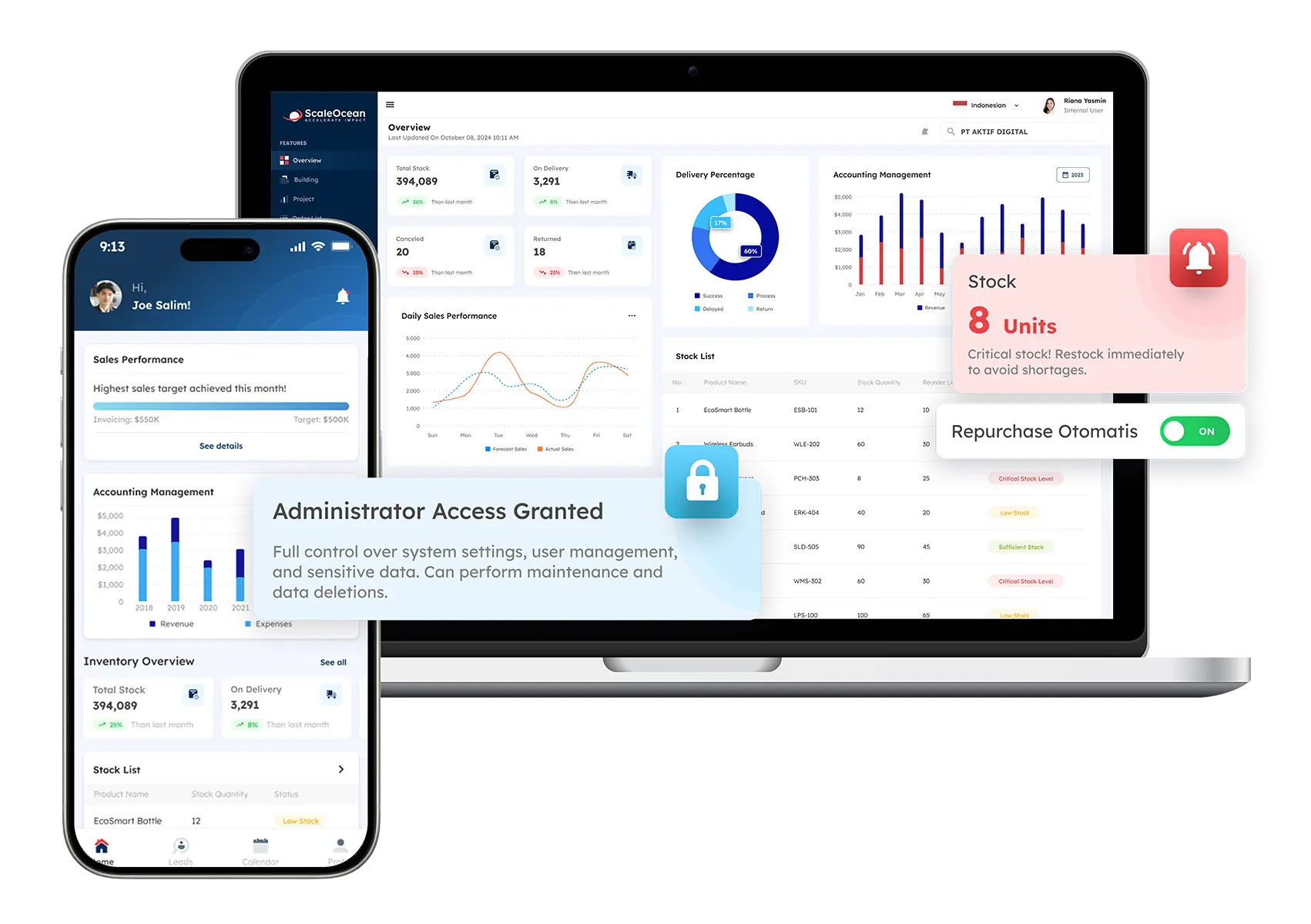
ScaleOcean is an enterprise resource planning (ERP) software provider that develops integrated business management solutions for various industries, including education. Its flagship product, ScaleOcean Atlas for Educational Institutes, features integrated education management modules that connect student enrolment, class scheduling, attendance, tuition billing, financial reporting, and tutor administration. With integrated accounting, HR, CRM, and multi-branch management capabilities, the platform helps tuition centres, training institutes, and education groups coordinate academic and administrative operations within one system.
Additionally, ScaleMind is an AI Business Assistant embedded within ScaleOcean Atlas that helps administrators and managers access and analyse connected business information through natural language prompts. With unlimited users and flexible customisation, ScaleOcean Atlas supports education businesses with complex operational requirements and provides better visibility across multiple centres.
ScaleOcean Atlas is particularly suitable for medium and large tuition centres, private academies, and multi-branch education groups seeking to improve administrative efficiency and financial visibility. Its integrated capabilities help institutions reduce repetitive tasks, coordinate tutor and student information, and support informed business decisions. Schedule a consultation with ScaleOcean to explore how its education ERP solution can support your institution’s operational needs and long-term growth.
Key features:
- Student enrolment and centralised academic records
- Class scheduling, tutor allocation, and attendance management
- Tuition billing, receivables, and accounting integration
- HR and administrative workflow coordination
- Multi-branch financial and operational reporting
- Embedded ScaleMind AI Business Assistant
- Flexible customisation and unlimited users
| Pros | Cons |
|---|---|
| Supports phased module adoption based on institutional priorities and operational needs. | Its comprehensive functionality may exceed the needs of centres seeking only basic scheduling and billing. |
| Supports multi-branch management with consolidated operational and financial reporting. | Multi-branch capabilities may offer limited value to single-location education providers with simple operations. |
| Offers unlimited users and flexible customisation for growing education groups. | Enterprise-oriented pricing may be less suitable for small centres with limited software budgets. |
| Offers flexible cloud and on-premises deployment options to accommodate different institutional IT and operational requirements. | Multiple deployment options may be unnecessary for small education businesses seeking a basic cloud-based solution. |
Best for: Medium and large tuition centres, private academies, education groups, and organisations managing multiple branches.
ℹ️Why Choose ScaleOcean?
ScaleOcean Atlas for Educational Institutes goes beyond basic tuition management by connecting student enrolment, academic administration, tutor management, finance, and multi-branch operations within one ERP ecosystem. Unlike fixed-feature software, institutes can customise workflows and implement only the modules they need. Its built-in ScaleMind AI Business Assistant also analyses connected data through natural-language queries, helping management identify outstanding fees, attendance trends, tutor workloads, and branch performance without manually consolidating reports.
2. Skooly
Skooly is an academy management platform designed for tutoring centres, enrichment providers, and other class-based education businesses. It supports student registration, lesson scheduling, fee collection, tutor coordination, and communication with parents.
The platform also offers tools for lesson packages, make-up classes, academic progress, and customer enquiries. Its subscription plans vary according to active-student capacity and the functionality included, so centres should assess their expected student numbers before selecting a plan.
Key features:
- Student registration and course enrolment
- Tutor and class scheduling
- Attendance and make-up lesson management
- Tuition billing and payment reminders
- Parent communication and academic progress updates
| Pros | Cons |
|---|---|
| Provides scheduling, enrolment, and billing tools for tuition centres. | Advanced capabilities may depend on the selected subscription tier. |
| Supports parent engagement and recurring lesson management. | Offers less extensive financial management than a full ERP platform. |
| Accommodates different class and tutor scheduling arrangements. | Centres may need additional integrations for broader business operations. |
Best for: Small and medium tuition academies requiring connected scheduling, billing, and parent communication.
ℹ️Why choose Skooly?
Skooly offers practical tools for recurring lessons and centre administration without requiring a broader enterprise management platform.
3. Edulabs
Edulabs provides education-centre management software for student registration, academic scheduling, attendance, billing, and administrative reporting. Its platform supports recurring student subscriptions and different fee arrangements, making it relevant to tuition businesses with regular enrolment and lesson cycles.
The system also includes student and parent records, staff administration, communication functions, and academic management tools. Centres should confirm the current licensing structure, subscription costs, implementation requirements, and available integrations directly with the vendor.
Key features:
- Online student registration and enrolment
- Class and lesson management
- Recurring tuition invoices and subscriptions
- Student attendance and academic records
- Staff management and operational reporting
| Pros | Cons |
|---|---|
| Combines student enrolment, class scheduling, and administrative records. | Broader enterprise accounting and HR functions may require separate integrations. |
| Supports recurring tuition invoices and different billing arrangements. | Implementation and licensing costs require confirmation with the vendor. |
| Provides academic administration and student information management. | Available functions may vary depending on system configuration. |
Best for: Small and medium tuition centres that need structured academic administration and recurring invoicing.
ℹ️Why choose Edulabs?
Edulabs focuses on enrolment, academic schedules, and fee management can suit centres that want to organise their existing tuition operations.
4. Brainstem Breeze
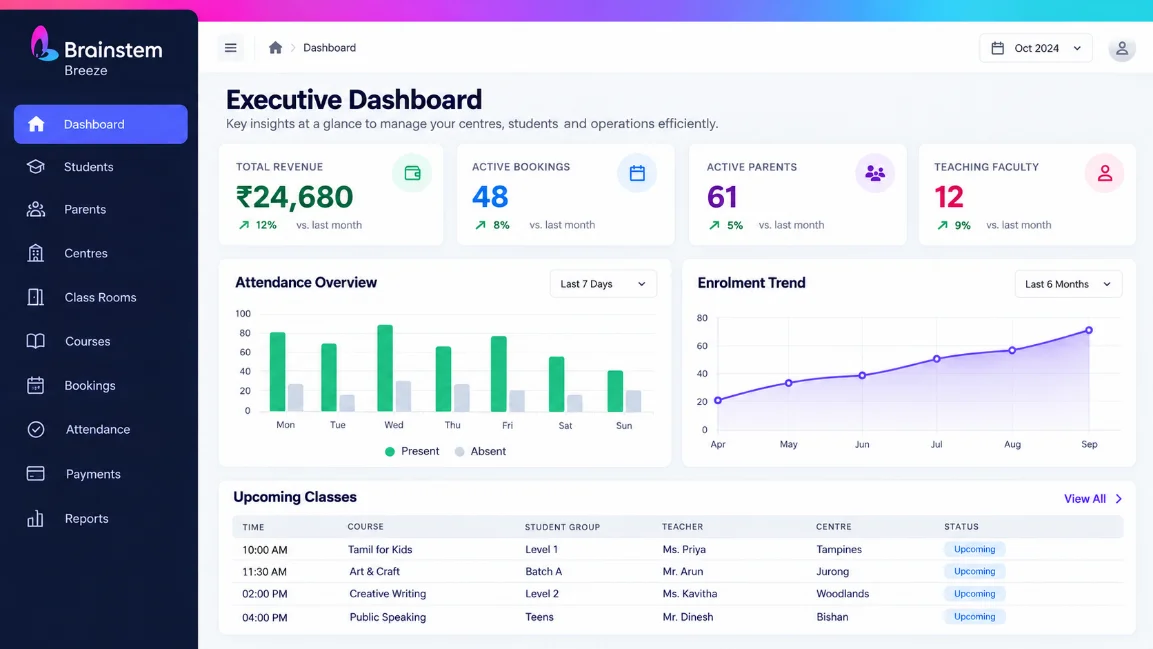
Brainstem Breeze is an education and enrichment centre management platform developed by Singapore-based Advanced E-Solutions. It supports student administration, course management, tutor records, attendance, scheduling, and administrative reporting.
Its plans provide different levels of functionality, with more advanced options covering areas such as parent portals, payments, and multi-centre management. Businesses should compare the features available in each tier before choosing a subscription.
Key features:
- Student and parent information management
- Course and programme administration
- Teacher management and attendance
- Class scheduling and lesson coordination
- Finance, reporting, and selected parent portal functions
| Pros | Cons |
|---|---|
| Includes student, tutor, attendance, and course management functions. | Certain advanced functions are available only in higher-tier plans. |
| Offers education-focused workflows for tuition and enrichment centres. | Enterprise-wide integration may require additional configuration. |
| Provides options for basic and more comprehensive administration. | Businesses should verify current pricing and module availability. |
Best for: Small and medium tuition or enrichment centres that need structured student, tutor, and class administration.
ℹ️Why choose Brainstem Breeze?
Brainstem Breeze provides a practical approach to managing classes, student records, and routine administrative tasks.
5. AOne
AOne is a learning-centre management platform that supports student registration, lesson administration, billing, attendance, and tutor coordination. It serves education businesses that offer recurring courses, individual lessons, and package-based learning programmes.
The platform also supports different fee structures, including recurring payments and lesson packages. This can be relevant for centres that operate several course formats or need more consistent management of student credits and billing arrangements.
Key features:
- Student enrolment and profile management
- Lesson scheduling and attendance tracking
- Recurring fees and lesson packages
- Billing and payment management
- Tutor and class administration
| Pros | Cons |
|---|---|
| Supports recurring lessons, student enrolment, and tuition fee management. | Comprehensive accounting and financial reporting may require external systems. |
| Accommodates different lesson packages and payment arrangements. | Customised pricing requires direct confirmation with the provider. |
| Provides essential tools for class and attendance administration. | Complex institutional processes may need additional integration. |
Best for: Small and medium tuition centres, enrichment providers, and learning academies.
ℹ️Why choose AOne?
AOne? Its support for lesson packages and recurring fee arrangements can help centres manage different teaching and payment models.
6. SchoolTracs
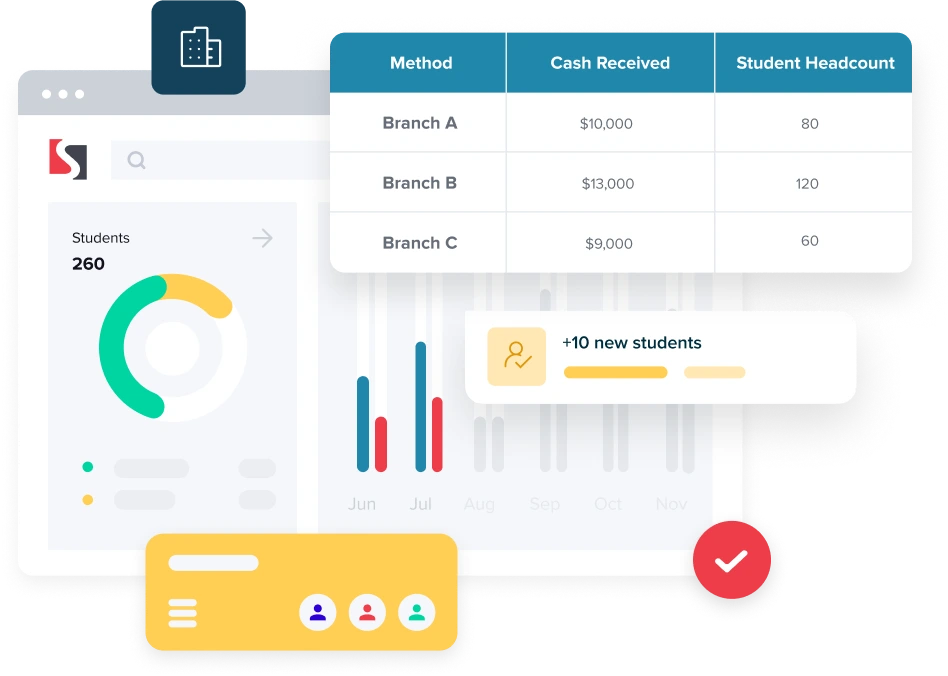
SchoolTracs is a cloud-based course management platform for tuition centres, enrichment schools, and other education providers. Its functions include student management, class scheduling, attendance, invoicing, lesson rescheduling, and communication through student and teacher applications.
The platform publishes subscription pricing based on active-student bands for each branch. It also supports unlimited staff accounts under its published plans, making pricing easier to estimate for centres with defined student volumes.
Key features:
- Student registration and enrolment tracking
- Class and tutor timetables
- Attendance and make-up lessons
- Recurring invoicing and payment reminders
- Student and teacher applications
| Pros | Cons |
|---|---|
| Provides published pricing plans based on student capacity. | Subscription expenses can increase with student volume and branch count. |
| Supports class scheduling, make-up lessons, and recurring invoicing. | Broader enterprise finance and HR needs may require additional applications. |
| Includes applications for students and teachers. | Specific payment and accounting integrations should be verified. |
Best for: Small and medium tuition or enrichment centres seeking structured scheduling, invoicing, and communication.
ℹ️Why choose SchoolTracs?
SchoolTracs published pricing and tuition-specific administrative features make it straightforward to evaluate against common centre requirements.
7. ClassFlō
ClassFlō is a mobile-first tuition centre management application designed for Singapore education businesses. It focuses on practical daily activities such as student administration, attendance, class scheduling, invoices, and payment tracking.
Its design emphasises ease of use on mobile devices, allowing administrators to handle routine tasks without relying entirely on desktop systems. Available plans include different student capacities and features, with multi-branch management included in higher-tier offerings.
Key features:
- Mobile student and class management
- Attendance and make-up lesson records
- Automated tuition billing
- PayNow payment tracking and reconciliation
- Parent communication and reporting
| Pros | Cons |
|---|---|
| Offers a mobile-first interface for everyday centre administration. | Enterprise accounting and HR management are not its primary focus. |
| Supports attendance, billing, and PayNow payment tracking. | Student capacity and advanced functions depend on the subscription plan. |
| Provides practical tools for tutors and growing tuition centres. | Larger education groups should assess integration and reporting capabilities. |
Best for: Solo tutors, small centres, and growing tuition businesses that prefer mobile administration.
ℹ️Why choose ClassFlō?
ClassFlō’s emphasis on mobile workflows, billing, and attendance can suit centres seeking a simpler way to manage daily operations.
8. iEduCentre
iEduCentre is a tuition-centre management platform developed for Singapore’s education market. It connects student registration, recurring classes, make-up lessons, attendance, course fees, staff administration, teacher payments, and parent self-service.
The system offers modular functionality, allowing centres to introduce additional features as their operational requirements grow. Its publicly described capabilities also include PayNow reconciliation and multi-branch support, making it relevant to education businesses that require more connected administration.
Key features:
- Student and parent registration
- Recurring class schedules and make-up lessons
- Course fee generation and payment follow-ups
- Teacher-pay administration
- Parent and student self-service
- Modular management and reporting functions
| Pros | Cons |
|---|---|
| Offers tuition-specific enrolment, scheduling, and payment functions. | Selecting the right modules requires assessing operational priorities. |
| Supports teacher administration and PayNow reconciliation. | Total costs depend on the selected modules and implementation requirements. |
| Provides modular functionality for growing tuition businesses. | Broader ERP integration should be reviewed based on business needs. |
Best for: Small, medium, and growing multi-branch tuition centres needing detailed local administrative workflows.
ℹ️Why choose iEduCentre?
iEduCentre tuition-specific fee management, lesson administration, and modular structure provide flexibility for centres with varied operational requirements.
9. Smart Classes
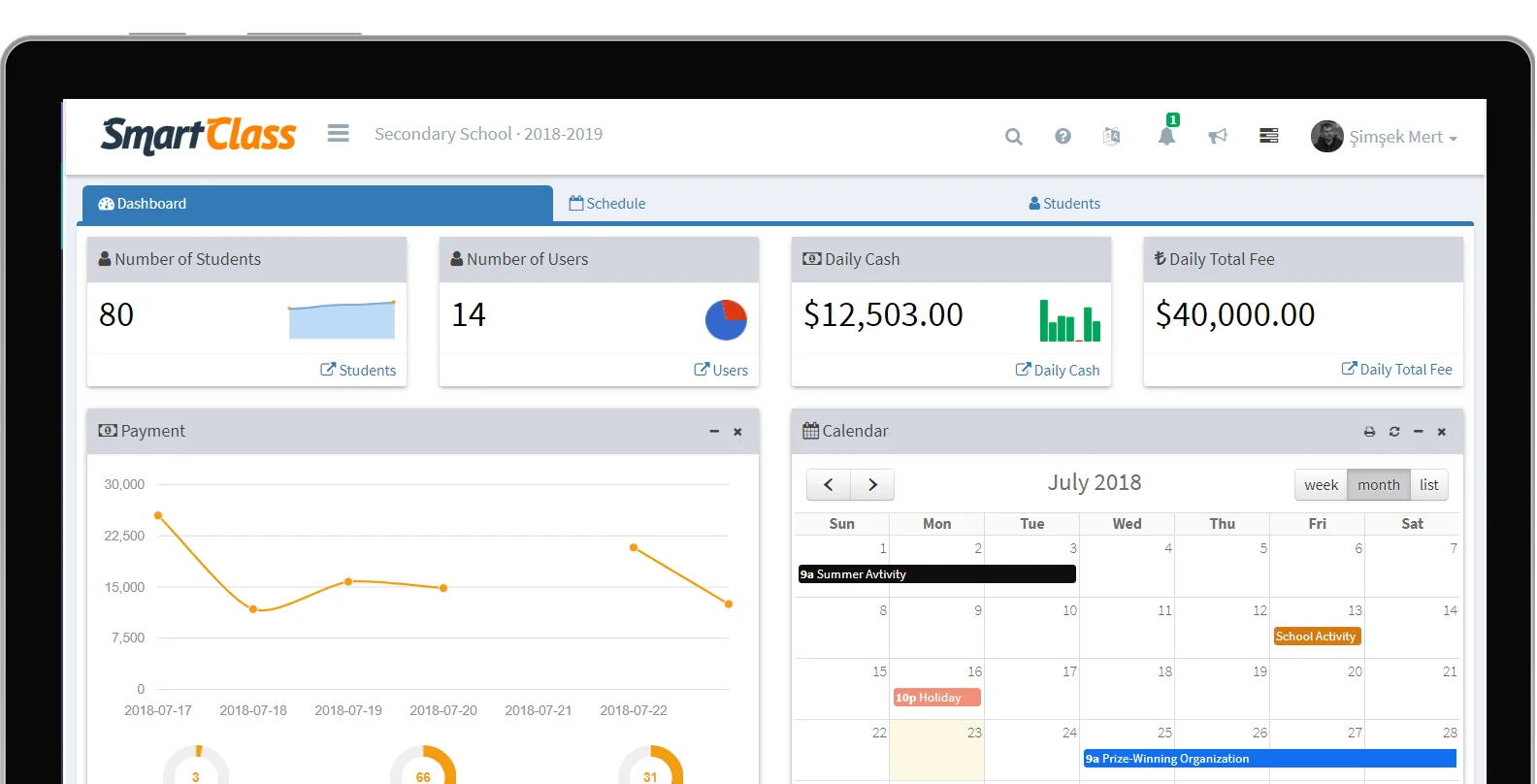
Smart Classes is a regional coaching and tuition management platform that provides tools for student administration, class activities, attendance, and online learning support. It is primarily oriented towards tuition and coaching businesses rather than full enterprise education management.
The platform offers subscription-based access alongside optional services such as branded applications and attendance-related add-ons. Singapore businesses should verify local payment compatibility, tax requirements, support arrangements, and data protection practices before implementation.
Key features:
- Student and class administration
- Attendance management
- Online learning support
- Communication and learning tools
- Optional branded applications and add-ons
| Pros | Cons |
|---|---|
| Provides student and class management for coaching businesses. | Compatibility with Singapore-specific payment services requires verification. |
| Includes attendance and online learning support. | Some additional applications and functions may carry separate charges. |
| Offers optional tools for different coaching-centre requirements. | Enterprise-wide financial and operational integration is not its primary focus. |
Best for: Small coaching centres and tuition providers seeking essential administration and learning tools.
ℹ️Why choose Smart Classes?
Smart Classes suit smaller centres with straightforward requirements, provided the software supports their local operating and payment arrangements.
10. OClass
OClass is a Singapore class management platform used by tuition centres, enrichment schools, fitness studios, and other class-based businesses. It supports class scheduling, student enrolment, invoicing, payments, attendance, and management reporting.
Its tools are designed around recurring classes and customer-facing administration. The platform also describes integration with PayNow and card payments, which may help centres reduce manual payment checks and improve collection visibility.
Key features:
- Class scheduling and enrolment
- Parent and student self-service
- Tuition invoices and digital payments
- Attendance and lesson administration
- Revenue and operational reporting
Best for: Small and medium tuition centres, enrichment businesses, and class-based service providers.
ℹ️Why choose OClass?
OClass offers an integrated approach to scheduling, enrolment, payments, and everyday class administration.
How to Choose the Right Tuition Management System Software
When choosing tuition management software, make sure you understand what your operations need, what management issues you are facing, and what your expansion plans are. The software platform is ideal for a small centre, but may not provide enough financial management or integration into a larger education group.
Before selecting a provider, management should assess the following six factors to ensure the system supports daily operations and long-term business requirements.
1. Identify Your Centre’s Operational Requirements
First of all, focus on the activities that are the greatest source of administrative pressure (registration, scheduling, fee collection, tutor management, reporting). This way, companies will be able to identify and optimize those software features that are actually instrumental to resolving their key challenges.
For example, a small tuition centre may primarily need attendance and invoicing, while a multi-branch academy may require financial consolidation and HR integration. Clear requirements prevent unnecessary spending on unsuitable features.
2. Evaluate Scheduling, Billing, and Payment Capabilities
Check whether the platform supports recurring classes, make-up lessons, tutor assignments, and the tuition fee structures used by your centre. Scheduling and billing must work together to prevent inconsistencies when lessons change.
For Singapore businesses, it is also important to verify PayNow support, payment reconciliation, refunds, and outstanding fee reminders. Centres should test these functions using realistic transactions rather than relying only on feature descriptions.
3. Assess Integration and Multi-Branch Scalability
A suitable platform should support the centre’s current size while accommodating future student volumes, teaching staff, and additional branches. Businesses should evaluate whether multiple locations can share student information and maintain consistent administrative workflows.
If your organisation is already running on an accounting, HR, CRM, or existing learning platform, it’s important. Scale Ocean Atlas for Education brings together all your academic management and enterprise accounting, finance, HR, and reporting needs into a single environment for education groups operating on a larger scale.
4. Verify Data Security and Local Compliance Support
Tuition centres handle personal information belonging to students, parents, and staff. Software evaluation should therefore include access permissions, data protection measures, audit logs, backup arrangements, and consent management.
Businesses should also verify whether the platform supports relevant Singapore financial and education recordkeeping requirements. Vendors should demonstrate their capabilities rather than simply claim that their systems are fully compliant.
5. Compare Total Cost of Ownership and Vendor Support
Subscription fees represent only one part of the overall software cost. Businesses should also consider implementation, data migration, training, integrations, payment processing, maintenance, and ongoing technical support.
Vendor support becomes especially important when centres depend on the system for daily classes and payments. Compare the total expected cost over several years alongside the quality of implementation assistance and operational support.
6. Test the Software Before Full Implementation
Before committing to a platform, businesses should test actual workflows using representative student records, fee structures, schedules, and administrative requirements. This helps identify problems that may not be visible during a general product demonstration.
For example, administrators can simulate a new enrolment, class transfer, tuition invoice, payment confirmation, and tutor schedule change. A successful test helps determine whether the system fits existing operations and whether employees can use it confidently.
How Much Does Tuition Management Software Cost in Singapore?
The cost of tuition management software in Singapore depends on student volume, number of branches, included modules, user access, implementation support, and integration requirements. Some providers publish monthly subscription plans, while broader enterprise platforms usually offer customised quotations.
Common pricing arrangements include monthly subscriptions, per-student billing, per-branch charges, per-user fees, enterprise licensing, and custom development costs. Businesses should compare the complete cost of ownership rather than assuming that the lowest advertised subscription provides the best value.
The following illustrative comparison demonstrates how different cost components affect a single tuition centre and a multi-branch operation. The figures are hypothetical budgeting examples, not vendor quotations or market price benchmarks.
| Cost Component | Single-Centre Example | Three-Branch Example | Cost Type |
|---|---|---|---|
| Software subscription | S$80/month × 12 = S$960 | S$600/month × 12 = S$7,200 | Recurring |
| Onboarding and training | S$300 | S$1,800 | One-time |
| Data migration | S$200 | S$1,200 | One-time |
| Payment processing | S$0.30 × 1,200 transactions = S$360 | S$0.30 × 6,000 transactions = S$1,800 | Variable |
| Ongoing maintenance and support | S$240 | S$960 | Recurring or contracted |
| Illustrative First-Year Total | S$2,060 | S$12,960 | Example only; GST excluded |
The examples above demonstrate why businesses should request a detailed quotation before committing to a platform. Actual payment processing charges may be fixed, percentage-based, included in a subscription, or waived under particular banking arrangements. Training, integrations, and customisation can also change the total implementation cost considerably.
For enterprise tuition groups, ScaleOcean Atlas for Educational Institutes offers customised pricing based on operational requirements, selected modules, integrations, and implementation scope. With unlimited users at no additional per-user cost, institutions can scale their teams and branches without increasing licensing fees based on user count. This approach allows organisations to invest in the capabilities they need while benefiting from integrated education, finance, and HR management.
Conclusion
Tuition management system software helps education businesses manage student enrolment, class scheduling, tuition billing, attendance, tutor administration, and financial reporting through connected digital workflows. The right platform can reduce repetitive work, improve administrative consistency, and support better experiences for students and parents.
For tuition centres in Singapore, common challenges include disconnected payment records, manual PayNow reconciliation, complicated class schedules, and limited visibility across multiple branches. Choosing software with appropriate billing, scheduling, reporting, and integration capabilities helps businesses address these challenges as their operations expand.
ScaleOcean Institute Management System connects student management, academic administration, tuition billing, accounting, HR, and multi-branch reporting within an integrated ERP platform. Schedule a consultation with ScaleOcean to explore how its flexible education management solution can support your institution’s growth.
Frequently Asked Questions About Tuition Management Software:
1. Can Tuition Management Software Handle PayNow Payments in Singapore?
Yes. Some tuition management platforms support PayNow payments through QR codes, payment tracking, or integrated banking and payment services. However, automatic PayNow reconciliation is not available in every system, so tuition centres should confirm whether the software can match incoming transactions to individual student invoices.
2. Is Tuition Management Software Suitable for Multiple Branches?
Yes. Many tuition management systems support multi-branch operations, allowing administrators to manage student enrolment, class schedules, tutor assignments, and fee records across different locations. Larger education groups should prioritise platforms with centralised reporting, branch-level access permissions, and consolidated financial management.
3. Can Tuition Management Software Integrate With Accounting and ERP Systems?
Yes. Depending on the provider, tuition management software may integrate with accounting, ERP, HR, and payment systems through built-in connectors or APIs. ScaleOcean Atlas for Education combines academic administration with wider ERP functions, helping businesses connect tuition billing, financial records, and operational activities within one platform.
4. How Long Does It Take to Implement Tuition Management Software?
Implementation time depends on the centre’s size, student volume, existing data quality, required integrations, and workflow complexity. A small centre using standard features may complete its setup relatively quickly, while a multi-branch organisation requiring data migration, customisation, and staff training may need a longer implementation process.
5. What Is the Difference Between Tuition Management Software and Tuition Fee Management Software?
Tuition management software covers broader operational functions, including enrolment, scheduling, attendance, tutor management, communication, and financial reporting. Tuition fee management software focuses primarily on calculating fees, generating invoices, tracking payments, managing outstanding balances, and supporting financial reconciliation.