Clinic management software is a digital system that helps healthcare providers manage day-to-day clinic activities, including appointments, patient registration, medical records, billing, claims, inventory, staff workflows, and reporting.
Singapore clinics face additional complexity because their systems may need to interact with national healthcare programmes and information systems. For multi-location groups, fragmented patient records, billing processes, claims, and operational data can make it harder to maintain consistent workflows across every location.
These activities can be integrated sequentially in a proper workflow, using a proper clinic management platform that reduces repetitive data entry and offers the clinic staff better visibility on patient and business processes. However, the right system depends on the specialty, size and number of locations involved, the integrations, and any HIA requirements.
According to the data our team gathered from the Singapore MOH, private GP clinics participating in Healthier SG together with polyclinics account for about 70% of Singapore’s primary care sector, with these providers already contributing to the National Electronic Health Record (NEHR). This highlights how clinic management systems increasingly need to support reliable digital health data exchange and integration with Singapore’s healthcare ecosystem.
Check this article to learn more about the clinic management software available in Singapore for 2026, their features, pricing, suitability for various clinic types, strengths and weaknesses.
Key Takeaways
Clinic management software helps healthcare providers manage appointments, patient records, clinical workflows, billing, claims, inventory, reporting, and other clinic activities through connected digital processes.
Key features of clinic management software include appointment and queue management, patient records, EMR integration, billing and claims, pharmacy inventory, accounting, workforce management, patient communication, analytics, and multi-clinic management.
Top clinic management software in Singapore for 2026includes ScaleOcean, Plato Medical, SGiMED, LinkDr, UNO CMS, Clinic Assist, OtterSG, GPConnect, and Practo Ray, with each platform offering different clinical and integration capabilities.
ScaleOcean Professional Service Software supports broader healthcare business operations through ScaleOcean Atlas, connecting finance, HR, procurement, inventory, projects, reservations, and other administrative workflows with configurable processes and enterprise-level management capabilities.
Clinic management software is a digital platform that helps clinics manage administrative, clinical, financial, and operational activities within connected workflows. It brings different processes into one system so staff can manage daily clinic activities without relying entirely on separate applications or manual records.
Depending on the platform, the software can cover appointment scheduling, patient registration, electronic medical records (EMR), billing, claims, prescriptions, inventory, reporting, and patient communication. Some systems also support staff management, teleconsultation, analytics, and multi-location operations.
For clinics with multiple branches, the software can provide a shared view of appointments, patient information, billing, inventory, and clinic performance. This can help management coordinate branch operations while allowing individual clinics to manage their daily workflows according to their specific requirements.
In Singapore, clinic management software also needs to be considered alongside Health Information Management Systems (HIMS) and national healthcare requirements. For clinics subject to the Health Information Act, capabilities related to NEHR connectivity, data portability, cybersecurity, and applicable certification requirements can become important factors when evaluating a system.
How Does Clinic Management Software Work?
Clinic management software integrates the various aspects of a patient’s visit in a systematic manner. It may start with bookings, registration of patients, check-in, consultation, updating of medical records, prescription, billing, payment, and follow-up.
When patient information is added to the system, relevant team members are able to access the patient information according to their responsibilities. This decreases the necessity to type the same data over again into various programs and enables staff to keep more uniform records throughout the patient’s experience.
The system can also be used to link clinical activities with administrative activities in the background. This can encompass things like pharmacy stock, lab outcomes, claims processing, staff scheduling, financial records, and patient interaction, contingent upon the platform.
The software can be used to replicate these workflows throughout branches, offering management with greater reporting and analytics capability for clinics with various locations. This enables clinics to track patient use, incoming revenue, inventory, staffing, and more without having to operate each clinic with individual systems.
Why Do Singapore Clinics Need Clinic Management Software?
With the management of patient appointments not being the only aspect of the online clinic, connected systems are becoming a necessity in Singapore clinics. Healthcare professionals might have to track clinical records, claims, medicines, reporting, national programmes, and multiple locations, and still have access to sensitive information.
1. Reduce Administrative Workload
Receptionists, nurses, and administrative staff can end up with repetitive tasks when they have to manually enter appointments, update patient records, process billing and claims, and more. Repeating information about the same patient in multiple systems can also lead to data entry mistakes.
These repetitive steps can be automated or streamlined with a connected clinic management system. Shared patient and transaction information can be used by staff to reduce data transfers to and from multiple tools.
2. Improve Patient Flow and Experience
When appointments and walk-ins, queues, registration, consultation, and payment happen separately, it becomes difficult to manage patient flow. One thing that can cause delays in the whole visit is when the patient’s rest of the visit is affected as well.
Clinics can streamline and foster more consistency in these phases by implementing digital appointment booking, queue management, self-registration, automated reminders, and connected billing. Patients can also be provided with more detailed information regarding their appointments and follow-up activities.
3. Reduce Billing and Data Errors
Clinical data, treatment information, pricing, claims, and payment data may reside in various systems, leading to billing errors. These discrepancies are more difficult to detect when data has to be entered manually and repeated.
Clinic software can sync consultation information to billing and claims processes to ensure finance and administration teams operate on uniform information. This is especially beneficial for clinics that use several payment systems or third-party payers.
4. Improve Data Accuracy and Compliance
Healthcare teams manage sensitive patient data, which must be accessed and protected. Clinics can also have issues with information being inaccurate or incomplete when submitting information to other healthcare systems.
A good platform should thus offer a data entry system with basic structure, user permissions, audit records, and integration options. For Singapore clinics, any HIA-related issues such as NEHR connectivity, cyber security certification and data portability should be evaluated before implementation.
5. Support Multi-Clinic Growth
Having several clinics on different systems can make it tricky for headquarters to make comparisons in areas of performance, inventory, staffing, billing, and operational activity. There can also be variations in processes at each site.
A multi-clinic platform can give central visibility and enable individual clinics to manage their daily activities. The more the healthcare group grows, the more this structure becomes beneficial, as they require consistent reporting throughout their branches.
Key Features of Clinic Management Software
Some of the features may overlap, such as a combination of clinical and administrative functions, in a clinic management platform, depending on the vendor. Singapore clinics should focus on those features that apply to the number of patients, the type of specialty they have, the number of clinics, and the need for healthcare integration.
1. Appointment and Queue Management
Appointment and queue tools help clinics organise scheduled visits, walk-ins, doctor availability, and patient waiting sequences. Some systems also provide online booking and automated reminders.
These features can help front-desk teams coordinate daily patient flow more systematically. For larger clinics, shared calendars and queue visibility can also help staff manage several doctors or locations.
2. Patient Registration and Centralised Records
Digital registration enables clinics to document patients’ information without doing so completely on paper. This patient profile can then be linked to the appointments, consultations, billing, and other records with a central patient profile.
Centralised records may facilitate information retrieval between the participating locations of group practices. Access permissions should still be used to decide who can view and/or make changes to sensitive data, even if it is not confidential.
3. Electronic Medical Record Integration
Integrating EMRs allows clinical data, including consultation notes, diagnoses, allergies, and medications. to be linked with profile information about a patient. This helps to minimize the need to have separate clinical records.
The integration can also include integration of laboratory results, referrals, and other clinical documents. The ease with which the EMR can be integrated into clinics’ clinical workflows and other external systems they may need to connect to should be reviewed.
4. Billing, Payments, and Claims Management
Billing features can generate invoices, gather payments, pay outstanding bills, and simplify applicable claims processes. Many of the Singapore CMS platforms also have integration with SmartCMS services regarding government programme submissions.
These skills can help reduce data entry redundancies between consultation and billing. Clinics should verify that the system is capable of handling their particular payment process for CHAS, MediSave, insurance, corporate, or other payment processes.
5. Pharmacy and Medical Inventory Management
Inventory management helps clinics track medicines, medical supplies, purchases, stock movements, dispensing, and reorder requirements. Barcode and dispensing functions can provide additional checks between prescriptions and inventory.
For clinics with several locations, stock visibility becomes particularly important. Central purchasing and branch-level inventory tracking can help management understand where supplies are being consumed and when replenishment is required.
6. Accounting and Financial Management
Financial capabilities like billing reports, revenue tracking, expenses, payment reconciliation, and accounting integration are also some of the elements that some clinic systems offer. These features may be leveraged to connect clinical and financial transactions.
In larger healthcare organizations, a broader financial management system may require an extra level of ERP. One platform can plug the gaps with an enterprise platform such as ScaleOcean Atlas Professional Services, which connects finance, procurement, HR, projects, and many other business processes.
7. Staff and Workforce Management
Staff management features can cover employee records, schedules, attendance, leave, workload, and other workforce information. These capabilities can help clinics coordinate doctors, nurses, administrative staff, and support teams.
For multi-location organisations, workforce visibility can also help management understand staffing requirements across branches. Access permissions can separate employee information from patient or financial records.
8. Patient Engagement and Communication
Patient engagement features can include appointment reminders, follow-up messages, digital forms, patient portals, and communication tools. These functions can help clinics maintain communication before and after consultations.
Some platforms also support online booking and automated reminders through SMS or other communication channels. Clinics should consider which channels their patients already use and whether the system supports them directly.
9. Reporting and Clinic Analytics
Patient volume, appointments, revenue, inventory, claims, staff activity, and clinic performance are just a few of the metrics that can be reported using reporting tools. However, a dashboard can be used to monitor these indicators without having to merge several spreadsheets.
Larger groups will also be able to take advantage of the ability of analytics to deliver branch-level comparisons and consolidated reporting. Exporting data or linking to external analytics tools may come in handy if management wants more detailed analytics.
10. Multi-Clinic and Multi-Location Management
Multi-location is an option that allows health care organizations to operate several clinics, feeding in information at the branch level. The range of activities can be from support for shared patient records, centralised procurement, to location-level reporting, and consolidated management dashboards.
The platform should be a balance of central and local workflow. When Clinics add new locations, it is also important that they review the user permissions, location-specific configuration,n and data transfer capabilities of the system.
What Should Singapore Clinics Look for in Clinic Management Software?
Singapore clinics should think about other features of the Singaporean population besides the features. As needs evolve, there is a significant impact on whether or not a system remains suitable for local healthcare integration, data protection and claims workflows, implementation support, certification requirements, and more.
1. NEHR Connectivity and HIA Readiness
Within the scope of HIA, NEHR connectivity is relevant to the clinics. The SmartCMS framework defines and recognizes certain requirements such as NEHR Connectivity, Cyber/Data Security Certification, and Data Portability.
The framework also requires each of the CMS solutions to be able to interoperate with at least one of the existing web-service bundles. Consequently, clinics should make sure that the vendor is certified, provides the necessary services, and is responsible for implementation.
2. PDPA and Healthcare Data Protection
Clinic systems process delicate private and health information, so access management, security measures, and proper data handling are vital factors to consider. Companies need to be aware of where patient data is stored, accessed, backed up, transferred, and taken down.
It’s crucial to assess: role-based access and authentication mechanisms, audit logs, encryption of data, and data portability. Clinics should also ensure that the vendor is helping them with any obligations that the clinic may have regarding data protection.
3. CHAS and MediSave-Related Workflows
CHAS and MediSave-related processes can create additional administrative requirements for participating clinics. Software should therefore make it easier to capture the information required for billing and claims while reducing unnecessary manual steps.
According to the data our team obtained from the CFPS, 59.2% of Clinic Assist users rated the comprehensiveness of its HSG Health Plan module at four or five stars in the CMS Sutra Cycle 3 review. The same review found that HSG-tier versus CHAS-tier price comparison, medication price caps, remote drug ordering, and delivery tracking generally worked without major issues.
This is one example of how clinics should take a look at government program workflows in real-world scenarios and not from a list of features. The claims process and health plan management, as well as calculating subsidies and reporting, should be tested in the clinic’s actual process.
4. Singapore Billing and GST Requirements
Clinic billing systems should support the clinic’s actual billing structures, payment methods, claims, and applicable tax treatment. Not every healthcare service is treated identically for GST purposes, so businesses should ensure their system can accommodate the applicable rules.
Finance teams should also check whether billing data can connect with accounting records. This reduces the need to manually transfer financial information after each patient transaction.
5. Integration with Singapore Healthcare Ecosystems
The SmartCMS framework requires participating CMS solutions to integrate with at least one relevant web-service bundle while meeting applicable mandatory standards. Clinics should therefore ask vendors exactly which integrations are supported, which are available through APIs, and which require additional implementation.
For larger healthcare organisations, ScaleOcean Atlas can complement the clinical system by connecting broader business processes such as finance, HR, procurement, inventory, and reporting through configurable workflows and integrations, helping management maintain a more connected view of clinic operations.
Latest Comparison for Top 10 Clinic Management Software in Singapore
The key features, focus areas, and integration aspects in Singapore of each clinic management solution are presented in the following comparison. Before selecting a platform, clinics need to evaluate their clinical, operational, and integration needs.
Tool
Specific Uses
Core Specializations
Key Local Integrations
ScaleOcean Atlas
Enterprise finance, HR, procurement, inventory, bookings, projects, and multi-location business management
ERP and professional-services/business operations
Singapore financial workflows; API/third-party integrations subject to scope; not a listed HSG-compatible CMS
NEHR, SmartCMS, Healthier SG and related government services
OtterSG
EHR, appointments, billing, inventory, telehealth, AI workflows
GP clinics and multi-location healthcare groups
NEHR, Healthier SG, CHAS, MediSave and other Singapore healthcare systems
GPConnect
Registration, consultations, EMR, medicine dispensing, billing
Singapore GP practices
NEHR, SmartCMS, Healthier SG, cybersecurity and data portability requirements
Practo Ray
Appointments, EMR, billing, inventory, communication and reporting
Small practices and individual practitioners
Singapore availability; Practo ecosystem and digital patient communication
Top 10 Clinic Management Software in Singapore for 2026
The platforms below serve different operational needs, so the list should not be interpreted as a universal ranking. Pricing is based on publicly available information where available; older prices from industry reviews are clearly identified as historical and should be reconfirmed with vendors.
1. ScaleOcean
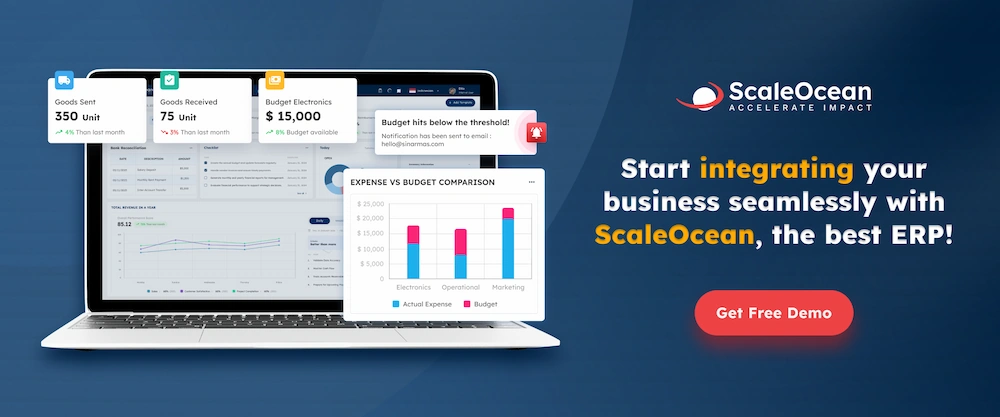
ScaleOcean is an ERP solution provider with its flagship product, ScaleOcean Atlas, designed to connect financial and operational management across business functions. For healthcare organisations, ScaleOcean Atlas can support broader business processes such as finance, HR, procurement, inventory, projects, reservations, and administrative workflows alongside clinic-related operations.
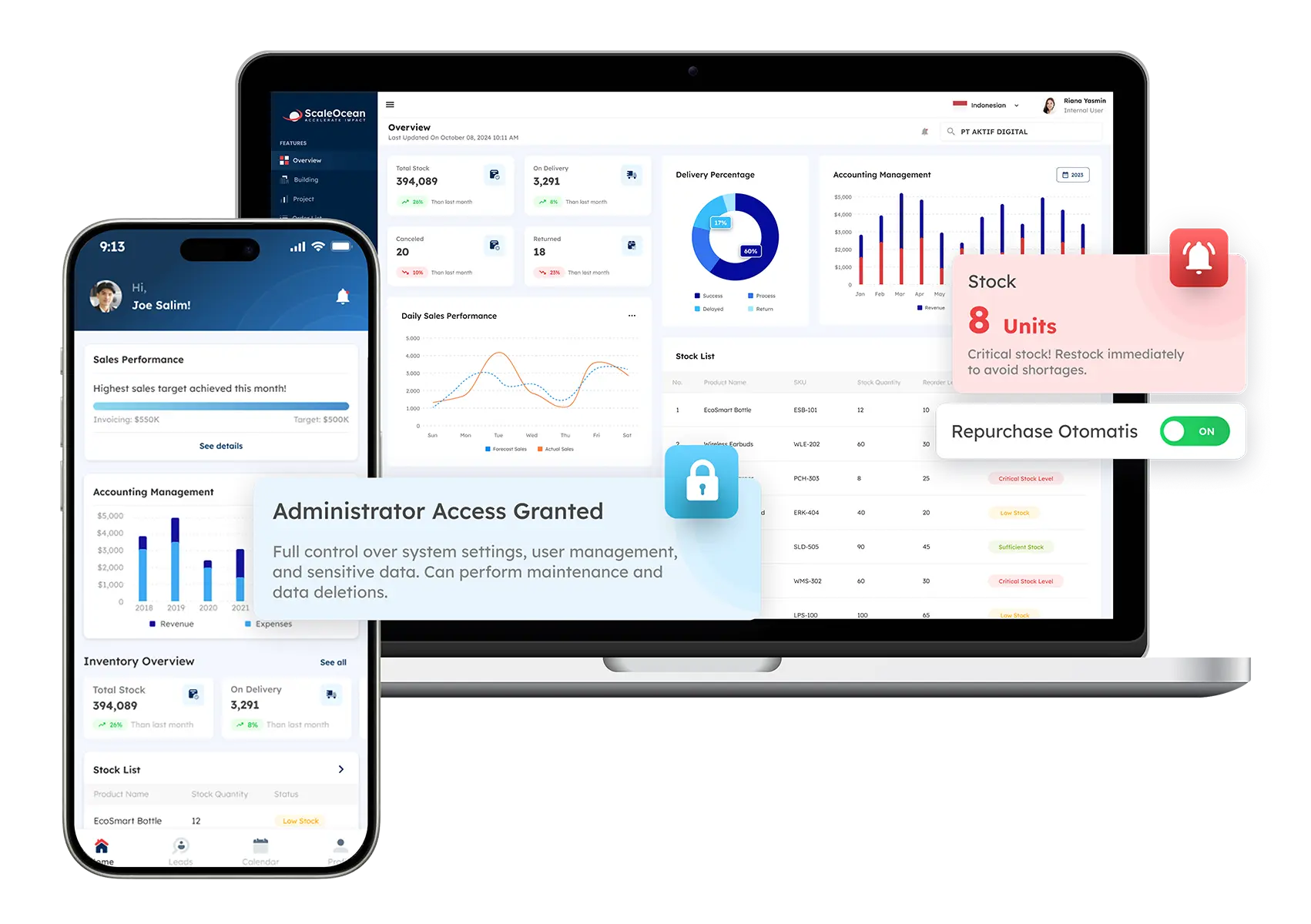
For multi-clinic groups, the platform provides configurable dashboards, workflows, role-based access, audit trails, multi-entity management, and ScaleMind-powered insights to support management across locations. ScaleOcean Atlas can also be integrated with mandatory or strategic national integrations, programme-specific integrations, and supporting ecosystem integrations, depending on the organisation’s requirements and integration scope.
For Singapore healthcare deployments, the integration approach can be configured around the applicable Singapore healthcare ecosystem requirements, including connectivity through relevant web-service bundles and standards such as NEHR Connectivity, Cyber/Data Security Certification, and Data Portability, where applicable. Schedule a consultation with ScaleOcean to discuss your clinic group’s workflow, integration requirements, implementation scope, and broader ERP needs.
Key Features:
Healthcare Group Operations Dashboard: Configure business indicators across clinics, branches, finance, workforce, inventory, and other functions.
Integrated Business Operations: Connect finance, procurement, inventory, HR, projects, reservations, and other business processes.
Configurable Workflows: Adapt approval and business processes to different organisational requirements.
Multi-Clinic Management: Support branch-level operations and consolidated management visibility.
Enterprise Access Control: Apply role-based access and audit trails to business activities.
Financial and Cost Management: Connect revenue, expenses, budgeting, accounting, and operational costs.
API-Ready Architecture: Support external system integration based on technical scope and requirements.
Pros
Cons
Connects clinic-group business management with finance, HR, procurement, inventory, and other ERP functions.
May provide broader functionality than required by a small clinic seeking only appointments and EMR.
Configurable workflows can accommodate different business and branch requirements.
Implementation requires process analysis and configuration to establish the appropriate structure.
Supports multi-location and enterprise-level management visibility.
Pricing depends on modules, implementation scope, integrations, and business requirements.
Connects clinic-related business processes with finance, HR, procurement, inventory, and other ERP functions within one platform.
Best for: Medium and large healthcare groups, multi-clinic organisations, specialist networks, and businesses that need an ERP layer connecting clinic administration with finance, HR, procurement, inventory, projects, and other enterprise operations.
ℹ️Why choose ScaleOcean?
ScaleOcean is suitable for organisations that need to manage clinic-related business operations as part of a broader ERP environment. It can connect finance, HR, procurement, inventory, reservations, projects, and other administrative workflows while allowing businesses to configure processes around their organisational structure.
2. Plato Medical
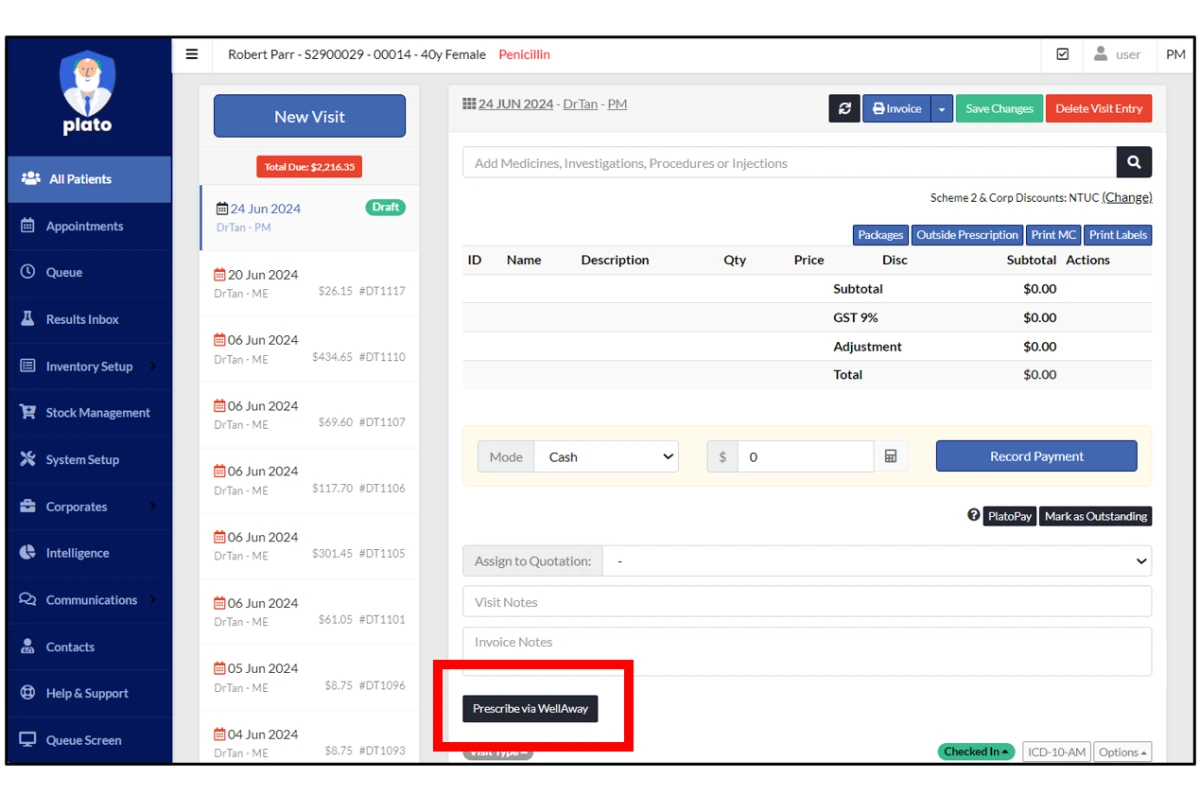
Plato Medical provides clinic management software covering appointments, patient registration, EMR, billing, inventory, reporting, patient communication, and teleconsultation.
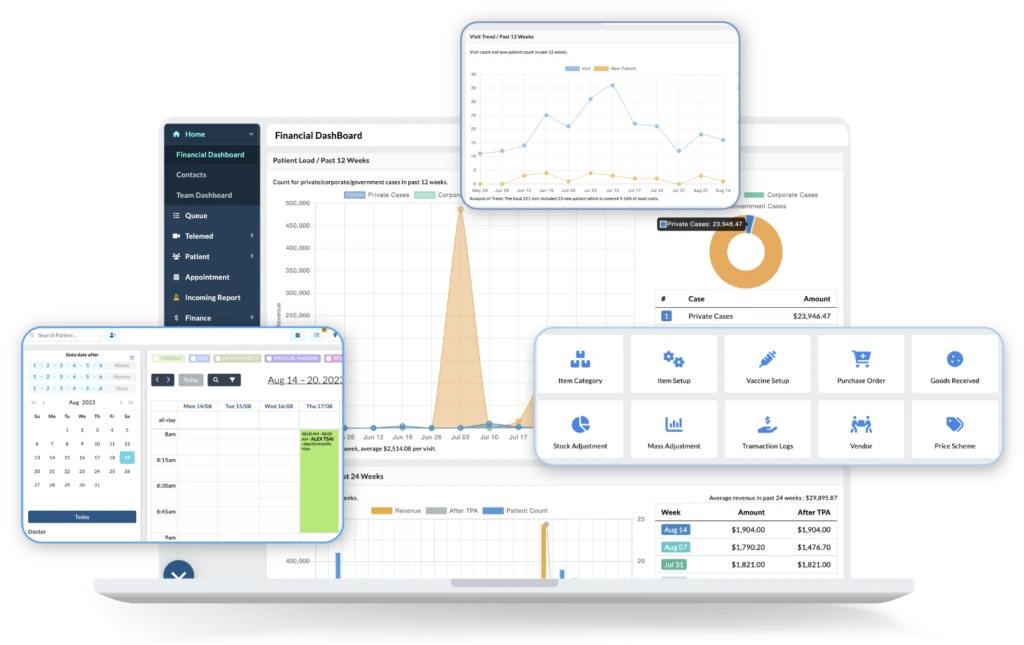
Its platform is designed for GP, specialist, dental, allied health, aesthetic, and group practices. Plato also provides features for multi-location groups, including centralised procurement, branch-level operations, patient records, analytics, and access controls.
Key Features:
Appointment and queue management
Patient self-registration
Integrated EMR
Teleconsultation
Multi-clinic management
Reporting and analytics
Pros
Cons
Broad clinic management capabilities across clinical and administrative workflows.
Some HSG-related reporting and training areas may require additional user attention.
Strong focus on system stability according to CFPS reviewers.
Certain newer functions may require clinics to keep up with product updates and training.
Supports multi-location and centralised management.
Current public pricing is not prominently published.
Best for: Small, medium, and large GP, specialist, dental, allied health, and group practices.
ℹ️Why choose Plato Medical?
Plato combines clinic operations, EMR, billing, inventory, patient engagement, and reporting within one healthcare-focused platform.
3. SGiMED
SGiMED is a configurable clinic management system covering patient records, EMR, appointments, teleconsultation, billing, patient services, analytics, and integrations. It serves GP, specialist, dental, allied health, aesthetic, medical-centre, and group practices.
SGiMED also provides group-practice functions and has integrated its system with Singapore healthcare services.
Key Features:
Complete EMR
Appointment management
Patient self-registration
Singpass-enabled registration
Billing and e-payment
Inventory and dispensing
Teleconsultation
Pros
Cons
Broad range of clinical, administrative, and patient-service functions.
The extensive feature set may require onboarding and training for new users.
Strong customisation and configurable workflows.
Some third-party administrator and insurance integrations may require additional assistance.
Supports group practices and multiple locations.
Current public pricing is not prominently listed.
Best for: Small, medium, and large clinics, specialist practices, allied health providers, and multi-location groups.
ℹ️Why choose SGiMED?
SGiMED Hummingbird combines configurable clinical workflows with patient services, analytics, integrations, and multi-practice capabilities.
4. LinkDR
LinkDr is a cloud-based clinic management system covering appointment scheduling, patient records, billing, inventory, reporting, patient engagement, and related healthcare integrations. The platform also provides a patient portal and mobile ecosystem.
LinkDr supports integrations involving laboratory and radiology systems and provides NEHR-related connectivity. Its current published subscription information lists a S$300/month plan with customisation, mobile app integration, data migration, and other services included under the stated package.
Key Features:
Appointment scheduling
Patient records
Billing and claims
Inventory management
Patient portal
NEHR integration
Pros
Cons
Connects clinical, administrative, and patient-facing workflows.
Advanced requirements may require vendor configuration.
Provides patient portal and mobile integration.
Pricing can vary depending on scope beyond the published subscription.
Supports healthcare ecosystem integrations.
Clinics should confirm the exact current scope of each local integration.
Best for: Small and medium clinics and growing healthcare groups that need connected patient, billing, inventory, and engagement workflows.
ℹ️Why choose LinkDr?
LinkDr combines clinic workflows with patient-facing tools and external healthcare integrations.
5. UNO CMS
UNO CMS provides a cloud-based clinic management system focused particularly on GP and group practices. Its functions include EMR, queue management, billing, claims, inventory, patient management, and business reporting.
UNO also supports SmartCMS-related claims workflows and describes its platform as NEHR- and Healthier SG-integrated and ready. Its group-practice tools provide consolidated visibility across locations, while access controls and audit trails support administrative governance.
Key Features:
Cloud-based EMR
Queue and patient-flow management
Billing and claims
Laboratory integrations
Audit trail
Granular access controls
Pros
Cons
Strong focus on Singapore GP workflows and government-related processes.
More specialised toward healthcare operations than broader enterprise ERP management.
Supports claims, EMR, queue, and group-practice functions.
Current public pricing is not listed.
Provides local support and data-management features.
Organisations with wider enterprise requirements may need additional business systems.
Best for: Small and medium GP clinics, group practices, and healthcare providers that prioritise Singapore-specific clinical workflows.
ℹ️Why choose UNO CMS?
UNO CMS focuses on connecting everyday GP operations with EMR, claims, queue management, inventory, and Singapore healthcare integrations.
6. SmartCMS
SmartCMS is a healthcare integration programme in Singapore, where healthcare IT partners and CMS vendors can integrate their systems with public healthcare systems by using web services.
The programme supports services related to healthcare data exchange and government schemes. Under the certification framework effective from December 2026, participating solutions must integrate with at least one web-service bundle and meet mandatory standards including NEHR connectivity, cyber/data security certification, and data portability.
Key Features:
Public healthcare system connectivity
Government programme integrations
Web-service bundles
CHAS-related services
Healthier SG-related services
Pros
Cons
Provides a structured framework for connecting CMS platforms with Singapore healthcare systems.
It is not a standalone CMS that clinics can purchase independently.
Supports government programme data exchange.
Actual functionality depends on the certified CMS vendor and selected service bundles.
Establishes mandatory integration and security requirements.
Clinics still need to select an underlying clinic management system.
Best for: Clinics that need to evaluate whether their selected CMS can participate in Singapore’s healthcare ecosystem and meet relevant integration requirements.
ℹ️Why choose SmartCMS?
SmartCMS is relevant because it provides the integration framework behind several Singapore healthcare data and government programme workflows.
7. Clinic Assist
Clinic Assist is a medical/dental clinic management platform built in the cloud by Assurance Technology. Some of its functions include pre-consultation functions, EMR, consultation workflows, billing, dispensing, inventory, accounting, analytics, group practices, and API integration.
It provides a wide range of functions that can be used for different workflows in day-to-day business, which enables various types of practices to carry out different patient-related tasks, such as patient record management, scheduling, billing, inventory management, and more.
Key Features:
Appointment booking
Patient registration
EMR and clinical notes
Billing and claims
Teleconsultation
Accounting
Analytics
Pros
Cons
Long-standing presence in the Singapore clinic software market.
Some users reported occasional downtime in the CFPS review period.
Broad clinical and administrative functionality.
Certain HSG-related reports and calculations may require careful review.
Supports HSG, CHAS, and TPA-related workflows.
Current public pricing is not clearly listed.
Best for: Medium and large clinics, GP groups, specialist practices, and medical organisations managing HSG, CHAS, TPA, or insurance workflows.
ℹ️Why choose Clinic Assist?
Clinic Assist provides a broad set of clinical and administrative workflows, making it relevant for practices that manage patient records, billing, inventory, government programmes, and third-party claims within a Singapore healthcare environment.
8. OtterSG
OtterSG is an AI-driven clinic management and EHR system that integrates all patient information, schedules, clinical notes, billing, inventory, tele-health, and workflow into a single platform. It can be used by individual practices and multi-location healthcare organisations.
The Singapore edition of its offering directly focuses on HIA readiness issues, including NEHR integration, connecting to the healthcare ecosystem, cybersecurity support, and data portability issues. The vendor also offers a Singapore HIA Readiness package in conjunction with its clinic management system.
Key Features:
Structured EHR
Clinical documentation
Billing and finance
Inventory
Telehealth
Patient communication
Multi-location management
Pros
Cons
Combines EHR, clinic management, telehealth, and AI workflows.
Some advanced capabilities are positioned within higher-tier plans.
Strong focus on Singapore HIA readiness.
Total cost can increase depending on selected readiness and support components.
Supports multi-location healthcare organisations.
Clinics should evaluate whether AI and broader features match their actual workflows.
Best for: Small and medium GP clinics, growing healthcare groups, and multi-location practices that want EHR, clinic management, and Singapore healthcare integration.
GPConnect is a clinic management system designed just for Singapore General Practitioners. It encompasses patient sign-in, appointments, EMR, drug administration, billing, and other clinic activities.
GPConnect is also a Tier-1 Healthier SG-compatible CMS. Over 200 GP practices have implemented GPConnect.
Key Features:
Patient registration
EMR
Medicine dispensing
Billing
NEHR contribution
SmartCMS services
Data portability
Pros
Cons
Designed specifically for Singapore GP workflows.
More specialised toward GP operations than broader enterprise healthcare management.
Strong alignment with national healthcare requirements.
Organisations outside the GP segment may require different functionality.
Supported by Synapxe and integrated with relevant national services.
Current public pricing is not listed.
Best for: Small and medium Singapore GP clinics and practices prioritising national healthcare connectivity.
ℹ️Why choose GPConnect?
GPConnect focuses on the workflows Singapore GPs use daily, from registration and consultations to dispensing and billing. Its alignment with NEHR, SmartCMS, and Healthier SG makes local healthcare connectivity a central part of its positioning.
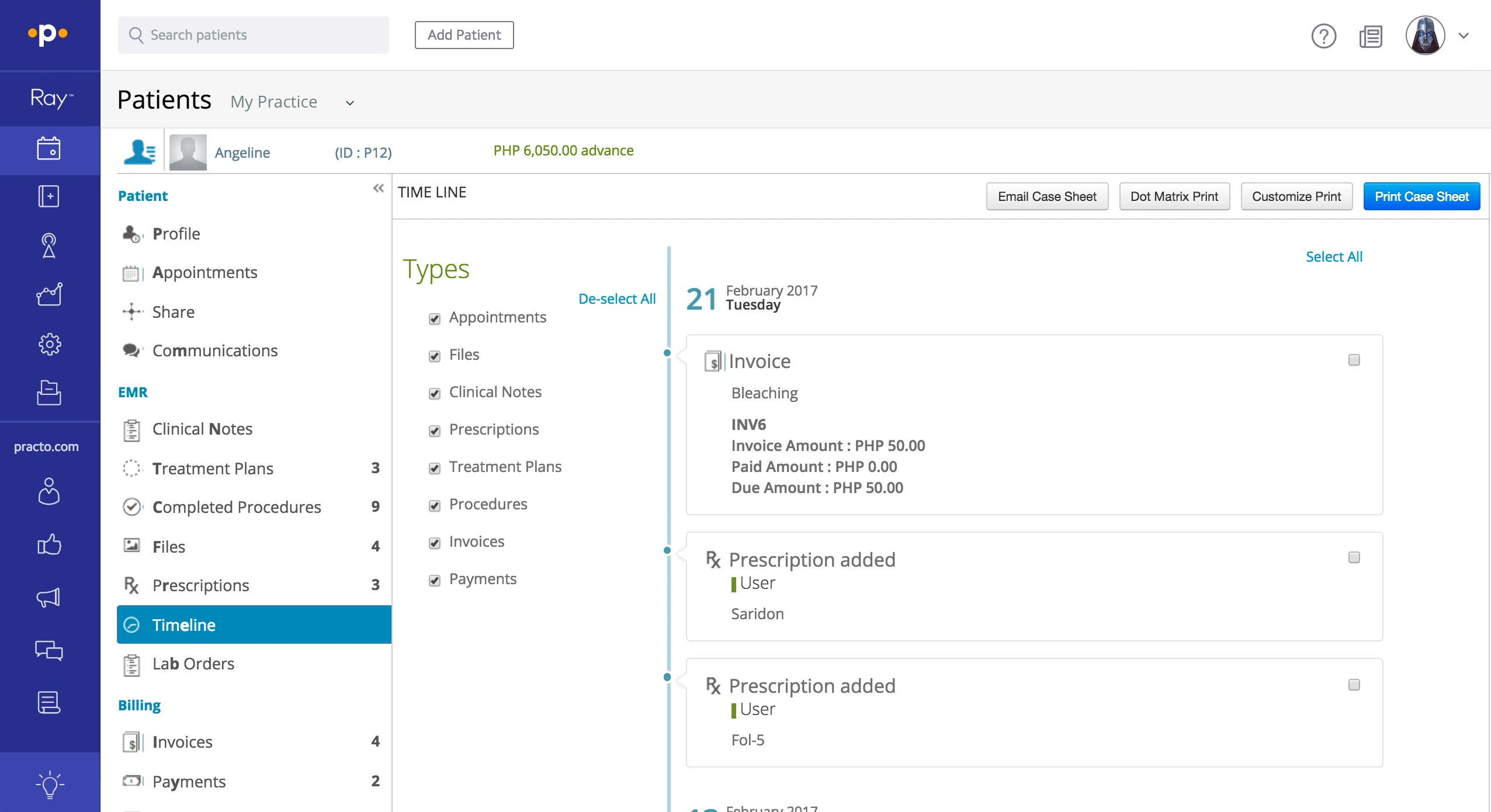
10. Practo Ray
Practo Ray is a Practice Management Software that includes features such as Appointment Scheduling, Patient Records, Billing, Inventory, Communication and Reporting. It is used in several markets, such as Singapore, and is suitable for clinics in various specialties.
The platform emphasizes appointment management and patient interaction, including features like appointment reminders, online booking, digital health records, expert billing, and inventory management.
Key Features:
Appointment calendar
Patient medical records
Professional billing
Inventory management
Mobile access
Patient record sharing
Pros
Cons
Broad practice-management functions for everyday clinic activities.
Some advanced requirements may need additional Practo products or configurations.
Strong appointment and patient communication features.
Singapore-specific national healthcare integration should be verified for the required use case.
Offers accessible pricing compared with larger enterprise systems.
Less focused on broader enterprise ERP processes.
Best for: Small clinics, individual practitioners, and medium practices that prioritise appointment, patient, billing, and communication management.
ℹ️Why choose Practo Ray?
Practo Ray combines appointments, patient records, billing, inventory, communication, and reporting in a practice-management platform.
Clinic Management Software vs. EMR, EHR, and HIMS
These terms are related but do not always describe exactly the same scope. A clinic management system generally combines administrative and clinical workflows, while EMR, EHR, and HIMS can refer to different levels of clinical records, interoperability, and healthcare information management.
Aspect
Clinic Management Software
EMR
EHR
HIMS
Primary Focus
Managing clinic operations and patient workflows
Digital medical records within a provider or practice
Longitudinal health records across healthcare settings
Broader healthcare information and management
Appointments
Usually included
Usually limited or integrated
Not necessarily the main focus
May be included
Billing
Commonly included
Usually limited
Usually limited
May be included
Clinical Records
Often included
Core function
Core function
Usually included
Interoperability
Depends on system
Usually more limited
Designed for broader information exchange
Depends on implementation
Use Case
Daily clinic management
Clinical documentation
Cross-provider health information
Healthcare organisation management
Singapore Context
May need HIA/NEHR capabilities if applicable
May form part of a larger CMS/HIMS
Can connect broader care information
Relevant term for HIA-compliant healthcare information systems
Clinic Management Software vs. Hospital Management Software
Clinic and hospital management systems both manage healthcare activities, but their scope can differ significantly. Hospitals generally require additional functions for inpatient care, beds, departments, operating theatres, and more complex clinical and financial structures.
Aspect
Clinic Management Software
Hospital Management Software
Primary Environment
Outpatient clinics and practices
Hospitals and large medical centres
Patient Flow
Appointments, queues, consultations
Outpatient, inpatient, emergency, and department flows
Bed Management
Usually not required
Commonly required
Inpatient Management
Usually limited
Core requirement
Billing
Clinic billing and claims
Complex billing, insurance, packages, and inpatient charges
Pharmacy
Dispensing and inventory
Pharmacy, inpatient medication, and broader inventory
Departments
Usually fewer departments
Multiple clinical and administrative departments
Scalability
Single or multiple clinics
Large healthcare organisations and hospital networks
How to Choose Clinic Management Software in Singapore
Clinic software should begin with the actual work processes of the clinic and not a list of features from a vendor. Technical and commercial considerations should then incorporate requirements unique to Singapore.
1. Map Your Clinic Workflows First
Record the existing journey of the patient from registration to consultation to prescription to billing to payment to claims to follow-up. Identify differences between branches for group practices and those processes that should be standardized.
A workflow map can also be used to look for redundant manual tasks. Businesses can then check the systems and compare them to see if they can support these systems without significant changes to operating the clinic.
2. Check Singapore-Specific Requirements
Ensure the system meets the relevant healthcare needs for your clinic, such as NEHR connectivity, HIA certification, SmartCMS services, Healthier SG, CHAS, and other integrations.
Do not rely solely on a vendor’s general statement that the platform is “Singapore-ready.” Ask which specific services are supported, what certification applies, and who is responsible for integration and ongoing compliance.
3. Evaluate Integration Capabilities
Determine existing systems for your clinic, including laboratories, payment providers, accounting software, patient applications, pharmacies, and healthcare networks. Next, determine if the CMS offers a natively integrated solution, API, or an accepted alternative.
If the size of healthcare groups is larger, then integration shouldn’t be limited to business systems, which are outside of the clinical environment. This can include finance, HR, procurement, inventory, and reporting systems.
4. Assess Data Security and Access Controls
Review the security measures in place and access controls to patient data. Access should be given based on the responsibilities of the user and not automatically granted to every clinic information.
Audit trails can also assist management in reviewing key system activities. Clinics should inquire of vendors regarding access, authentication, backups, encryption, data export, and incident handling.
5. Test Multi-Location Scalability
If the organization has or has the intent to have several clinics, test the system for multi-branch records, users, schedules, inventory, billing, and reporting.
An effective governance system in one clinic may not necessarily be effective across ten or twenty clinics. Evaluate central reporting, branch permissions, shared patient data, data transfer, and more before signing on.
6. Review Customisation and Workflow Flexibility
The format for a consultation, the billing requirements or rules, patient flow, inventory structure, and the approval process can vary from one medical specialty to another. A rigid system could drive teams to workarounds that lead to more administration.
Use configurable platforms to give increased flexibility if workflows vary from one department to another or one location to another. ScaleOcean Atlas also enables configurable workflows in finance, HR, procurement, inventory, projects, and professional services processes, for broader business operations.
7. Check Vendor Support and Long-Term Scalability
Software activation is not the only part of implementation. Clinics need to make sure they are aware of who is responsible for the data migration, configuration, testing, training, integration, troubleshooting, and post-go-live support.
Scalability is also important if the organisation expands to new locations, new staff, new services, or new systems. A platform should be judged by how well it accommodates those changes without structuring the system in an unnecessarily complex manner.
Conclusion
Clinic management software streamlines healthcare operations by integrating various clinical and administrative tasks into digital workflows that synchronize appointments, patient records, clinical workflows, billing, claims management, inventory management, reporting, and more. The extent of scope differs across platforms, with some specializing in clinical workflows, while others focus on a wider scope of healthcare administration.
For Singapore clinics, the selection process is a little more complicated, involving the need to address issues of NEHR connectivity, HIA-related certification, SmartCMS, Healthier SG, CHAS, data security, integration with laboratories, payment systems, and other healthcare services. Simply selecting software because of how many features it has available does not take into account the implementation and compliance considerations that might be necessary.
ScaleOcean Professional Services Software can support the business-management side of medium and large healthcare organisations by connecting finance, HR, procurement, inventory, reservations, projects, and other administrative workflows. Schedule a consultation with ScaleOcean to discuss how its configurable ERP workflows and business-management capabilities can fit your healthcare organisation’s operational structure.
Frequently Asked Questions About Clinic Management Software:
1. Does clinic management software integrate with NEHR in Singapore?
Some clinic management systems are designed and certified to contribute data to NEHR, but this is not universal. Clinics should verify the vendor’s current HIA/NEHR certification status and confirm which NEHR services the system supports before implementation.
2. Can clinic management software manage multiple clinic locations?
Yes, many clinic management platforms support multiple locations through shared patient records, branch-level users, appointment calendars, inventory, billing, and consolidated reporting. However, clinics should test whether the system can handle their specific branch structure and access requirements.
3. Can clinic management software manage pharmacy inventory?
Yes, many clinic systems include inventory and dispensing functions for medicines and medical supplies. Depending on the platform, features may include stock tracking, dispensing, barcode scanning, reorder alerts, purchasing, and inventory transfers between locations.
4. Is cloud clinic management software secure?
Cloud clinic management software can provide security features such as encryption, access controls, authentication, backups, and audit trails, but security depends on the vendor’s architecture and the clinic’s own practices. Singapore clinics should also evaluate the applicable HIA, cybersecurity, data portability, and PDPA requirements.
5. How long does clinic management software implementation take?
Implementation time varies according to the number of clinics, data volume, integrations, configuration requirements, training, and migration complexity. A simple clinic may require a relatively short onboarding process, while a multi-location healthcare group can require substantially more planning, testing, and data migration.













 Key Takeaways