

3-way matching is one of the important control activities in accounts payable that reconciles the three documents, such as the supplier invoice, purchase order, and goods receipt. This process crucial to avoid bills and charges for goods and services which may not have been ordered, received, or invoiced by the company.
There are many issues in the AP department, like the discrepancy between purchase orders and receipts, which may lead to overpayment or underpayment, and bypass the check system by using a fake invoice or by human error, losing money.
3-way matching process plays an important role in improving accounts payable accuracy. When PO, receipt, and invoice data are connected in one system, AP teams can validate payments more consistently, reduce manual checking, and focus on exceptions that need deeper review.
Based on the data collected by our team from Wise, automation can cut invoice processing times by up to 80% because it changes how AP teams handle document checking. In a manual process, teams must collect purchase orders, delivery notes, and invoices from different systems, emails.
This is why AP teams can process invoices faster, reduce repetitive admin work, and focus more on payment accuracy, cash flow, fraud prevention, and supplier relationships.
In this article, we will look into what three-way matching is, the importance of 3-way matching, and how to utilize it in a practical way to improve the AP process, minimize errors, and increase overall financial efficiency.
 Key Takeaways
- The three-way matching process is an important internal accounting control in the accounts payable area.
- The 3-way matching relies on: the Purchase Order (PO), the Goods Receipt Note (GRN), and the supplier’s invoice for verification.
- Implementing three-way matching matters for businesses by preventing overpayments, stopping fraud, simplifying audits, and improving cash flow management.
- ScaleOcean Accounting Software automates the matching process, reducing manual effort and errors to ensure your AP department operates at peak efficiency.
What Is Three-Way Matching?
Three-way matching is an important internal accounting control in the accounts payable area. As part of this process, it is very important to ensure that the three documents, such as purchase order, goods received, and supplier invoice, are equal in terms of numbers, goods, quantity, and price before the company pays the supplier.
For an accounts payable department, manual processing and matching of invoices can be challenging. The purchase order, goods received, and invoice are not matched. Avoid this problem as the data is wrong, and a dispute with the supplier or late payment.
When there are many POs and many transactions at once, manual processing and matching will be time-consuming, which will impact the cash flow and overall productivity of the company.
The above-mentioned issues can be minimized by adopting 3-way matching, which can be automated to validate invoices with POs/GRs with minimum manual effort, thus enhancing the accuracy and speeding up the approval cycle, and also providing a view of AP in real-time with an audit trail, thereby eliminating disputes.
Three-Way Matching Components and Documents
3-way matching is a vital accounts payable (AP) control to guard against overpayments and fraud by matching a vendor invoice against two internal documents to confirm payment is being made only for goods and services that were ordered and received.
The three crucial documents and components evaluated in this process are:
1. Purchase Order (PO)
The first formal procurement process document that is created and issued by the buyer to the supplier is called a purchase order. The document is clear with respect to the expectation and also provides a clear report of the transaction.
A purchase order is a very important component in three-way matching. The purchase order is the master document used to match the receipt of goods and invoices against. An incorrect purchase order could result in mismatches in the AP process.
2. Goods Receipt or Delivery Receipt
When goods are delivered by the supplier, the goods receipt (goods received note) is created, which ensures that the correct number or quantity of goods and their condition are received, and are delivered in line with the purchase order.
This is essential for 3-way matching as it gives evidence of the receipt of goods ordered by the company. It eliminates payment for erroneous or missing goods and guarantees that the accounts payable department only approves goods that have been delivered.
3. Supplier Invoice
The supplier invoice is the document that is sent to the customer after the goods or services have been delivered, and the supplier is requesting payment. It provides information on quantities, pricing, taxes, and a summary of the total amount payable.
This AP team would also check the invoice amount and the item quantity with the accounts and invoice, and authorize the payment if their amounts and quantities are consistent with the invoice and accounts.
How Does Three-Way Matching Work?

Three-way matching is an accounts payable control process that helps to guard against overbilling and fraud. It uses a cross-reference of the three main purchase documents (purchase order, delivery or goods receipt, and supplier invoice) before payment is made and ensures the company pays for only what was ordered.
The process starts when an authorized person decides that they want something that is either a product or a service, then creates a purchase requisition. This must be authorized and then becomes the purchase order, which is sent to the supplier.
The details specified in the PO include what is required, the quantity required, and the amount to pay (if agreed) for it. Then the goods or service must be delivered or performed, and an employee checks what has arrived against the PO (goods receipt) to ensure it matches what was requested.
Finally, the supplier’s invoice arrives in the accounts payable department, and the three documents are cross-referenced to ensure the goods receipt, purchase order, and supplier invoice match (the AP person then passes this invoice). If they match, the invoice is processed for payment; if they don’t match, the system flags the invoice for manual check, and the difference is investigated and dealt with.
Why Three-Way Matching Matters for Businesses?
Three-way matching is an accounting control system that requires the vendor’s invoice to match the original purchase order (PO) and the goods received note (GRN). With this process, businesses can be sure that the ordered amount, delivered amount, and invoiced amount match exactly before payment can be made to the supplier.
A well-established three-way matching process is necessary for companies that want tighter control over their finances. The implications of a three-way match go beyond just accounts payable. It helps to enhance vendor management, assist auditors, provide enhanced visibility over cash flow, and transform the AP department into a more proactive cost center for a business.
The Importance of the Three-Way Match:
1. Preventing Overpayments
One of the main benefits of using the three-way match system is to avoid overpayments or payments for items that are not received. The process will confirm the price or quantity against the PO and goods receipt.
Without three-way matching, a business may pay its suppliers higher amounts than expected or pay for more goods than were actually received. 3-way matching forces companies to pay based on contract prices and reduces unnecessary spending.
2. Ceasing Payment for Undelivered Goods
A key part of the three-way match process is utilizing the goods receipt, a process that assures the company does not pay for goods that were never received. A two-way match alone will not confirm the receipt of items, leaving businesses open to loss of shipments, missing items, or fraudulent invoices.
Using three-way matching with goods receipts confirms possession of an item before it is paid for. This is especially beneficial to companies in industries with a high inventory value or a complex supply chain, where this level of financial controls is a must.
3. Eliminating Fraud and Duplicates
The three-way match system can be a robust system to prevent various types of external and internal fraud. Invoices that do not have a corresponding PO and goods receipt, and fraud, will not slip through.
Also, the system will not allow duplicate payments of the same invoice, thereby further minimizing loss of finances and time in resolving duplicate invoices for the AP department.
4. Saving Money
The three-way match system can minimize money wasted. The validation process itself can help businesses identify and exploit discounts for early payment, and can help to avoid payments that are late and come with penalty charges.
A more efficient workflow due to the three-way match process also reduces bottlenecks in the AP department and enhances cash flow. This also helps businesses manage days payable outstanding more effectively by keeping invoice validation and payment timing under better control.
5. Streamlining Audits
An excellent bonus of using three-way matching is a simplified audit process. The system ensures all documents that should match have matched, thereby providing a direct audit trail that auditors can review in order to ensure accuracy and prevent fraud.
This not only speeds up the audit but also adds a layer of compliance to the internal controls and ensures management’s confidence in their financial reporting.
6. Improving Inventory Records
Three-way matching tighter control and management over inventory records. When goods are received, they are entered into a GRN, which then goes into the company’s inventory system for real-time tracking of stock.
Accurate inventory data will lead to fewer stock-outs, more accurate inventory control, less frequent manual counts, and better production planning for all businesses that want to optimize production output.
7. Enhancing Cash Flow
Efficient and timely invoice processing can improve cash flow management by allowing for accurate forecasts of payments that are due to vendors. This allows businesses to better manage their working capital and their payments due.
This enables companies to meet their obligations on time and improves working capital ratios of the business.
When to Use 3-Way Matching?

Implement the three-way matching procedure in the accounts payable module on all of the physical inventory orders, any high-dollar amount transactions, or transactions for any new suppliers.
Three-way matching checks the purchase orders, the goods receipt, and the supplier invoice against each other and guarantees that you are not paying for any goods that you didn’t order or don’t have.
With the appropriate application of the three-way matching procedure, you will ensure optimal financial control. It should be applied to all physical inventory and raw materials in order to guarantee that the amount and the quality delivered match the amount and quality expected.
This should also be implemented in any complex shipments involving various deliveries or multiple line items in order to ensure full payment isn’t rendered before shipment completion.
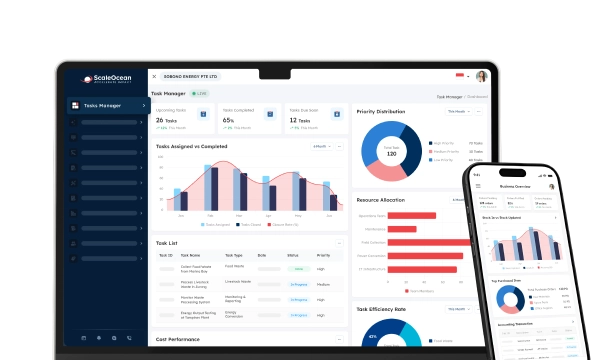
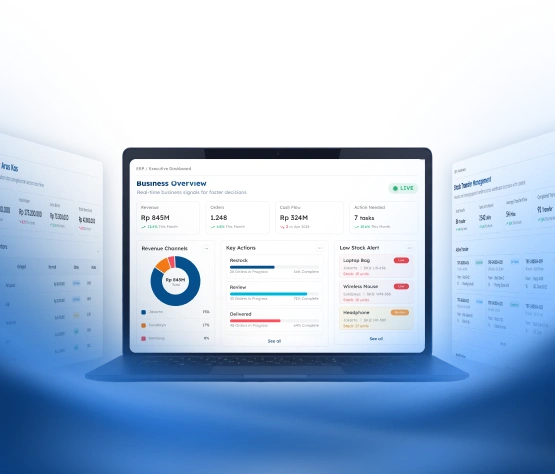
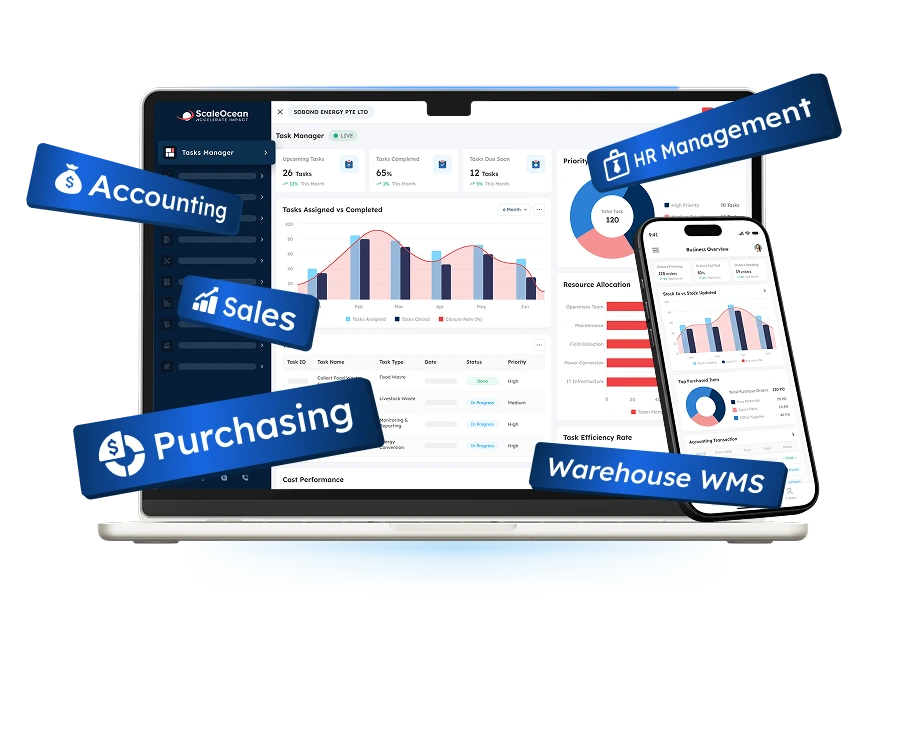
ScaleOcean accounting software helps with 3-way matching. It brings together purchasing, inventory, and accounting data in one place. This makes it easy to keep track of purchasing orders, goods receipts, and supplier invoices. You can use this information to match documents before approving payments.
Accounts payable can also be enhanced with automates the matching process, reducing manual effort and errors to ensure your AP department operates at peak efficiency. This allows for real-time reporting and analysis where mismatches are identified rapidly. Try our free demo to see how this software supports more accurate and efficient financial operations.
Three-Way Matching Example and Use Cases
A three-way match is an internal control that takes place within the Accounts Payable department. This ensures that you are paying for what you ordered, in the amount received, and for the negotiated price.
Let’s walk through how three-way matching might work with a manufacturing company. The company is called Innovate Corp., and they require 500 microchips. Innovate Corp requests a quote, and then the procurement department initiates a purchase order for 500 units of the microchips at ten dollars each, for a total cost of five thousand dollars, and forwards this to the supplier.
One week later, the microchips arrive at the warehouse. The shipping and receiving personnel count and inspect the 500 chips to ensure that they all arrived in satisfactory condition and that the 500 units were actually shipped. A goods receipt note (delivery note) is generated and references the original purchase order number.
Shortly thereafter, an invoice arrives at accounts payable (AP). Like the PO and the goods receipt note, it references Innovate Corp’s PO number. AP now compares the invoice quantity and unit price to the quantity and unit price listed on the PO and on the goods receipt note.
If the quantity or unit price on the invoice does not match what is listed on either the PO or the goods receipt note, the system flags it as a discrepancy. AP stops payment and investigates with the supplier in order to resolve the dispute and make sure Innovate Corp. only pays for what it ordered, in the quantity received.
This matching concept works the same way for services, where the “goods receipt” could be a signed timesheet or project completion approval. The core idea is applied: ensure the service or asset delivered is in accordance with the agreement and pay.
To make this process more reliable, businesses can use an integrated system like ScaleOcean to connect purchase orders, approvals, and invoices in one workflow, helping AP teams optimize 3-way matching with better accuracy and control.
Mistakes to Avoid in the 3-Way Matching Process
Mistakes in the 3-way matching process, comparing the purchase order (PO), receiving report, and vendor invoice, lead to overpayments, delayed approvals, and damaged vendor relationships. The most critical errors to avoid involve failing to address data discrepancies, relying on manual data entry, and ignoring partial shipments.
Carefully validating and automating the resolution of errors proactively saves money for the business and creates control over the entire payment process. Defining clear workflows and interdepartmental communication sets up a functional and stable accounts payable department.
Key Mistakes to Avoid:
1. Overlooking Tolerances
Having all discrepancies investigated, no matter how minute, wastes time and is not effective. For example, is an additional cent added to the unit price or one extra carton in a shipment? These should not require the same type of manual investigation as more significant errors.
By establishing realistic tolerance limits in the AP system, small discrepancies can be authorized and accepted without slowing down the payment process. With accounts payable automation software, the AP team can dedicate more time to high-risk exceptions that may have a significant monetary impact.
2. Delayed Receipt Logging
One of the most prevalent bottlenecks is when there is a delay in recording goods receipts. When a goods receipt is not posted promptly by the receiving department, it prevents AP from matching an invoice to the delivery, delaying payment and operational efficiency.
Mobile barcode scanners and effective training processes expedite invoice inspections and logs. By entering data in real-time, invoices will be matched, and early payment options will be fully utilized.
3. Vague Service Receipts
There may be more intangible evidence of service delivery, and less formal or missing acknowledgment; this could be an area prone to error. If no proof is available, AP cannot be certain that a service has been completed.
Approved time sheets signed by a supervisor or an official form for approval of a service confirm that it has been delivered. Formal confirmation of performance is just as important as proof of delivery of goods.
4. Ignoring Unit of Measure (UoM) Differences
A purchase order and an invoice may show different units of measure for the same item. This may throw up unnecessary mismatches due to the system’s inability to convert appropriately.
Unit conversions are handled correctly through good communication with suppliers and a robust AP automation system. By doing this, it eliminates the need for unnecessary exceptions and keeps the matching process smooth.
5. Poor Exception Workflows
Without well-defined exception processing, mismatches don’t get resolved. Exceptions languish because of a lack of ownership or current problem status.
An exception being automatically routed to the right team member, with clear instructions, establishes responsibility. A well-defined exception workflow ensures faster resolution times and prevents payment delays.
6. Late Inception of the PO
Sending a purchase order when an invoice has already been received negates the reason for authorization to take place beforehand. Retroactive purchase orders weaken internal control and can enable unauthorized purchases to be made.
The solution to maintaining internal control is to follow a strict policy, such as no purchase order, no payment. Purchase orders should be created before any procurement activity begins, so every purchase has a clear record from the start.
To make this control easier to manage, businesses can use an integrated system like ScaleOcean to connect purchase orders, invoices, and goods receipts in one workflow, helping AP teams optimize 3-way matching with better accuracy and fewer manual gaps.
Tips for Streamlining Three-Way Matching More Efficiently
Three-way matching checks the PO, goods receipt, and vendor invoice to avoid overpayment. Automating routing documents, tolerance levels, payment threshold, and vendor accuracy frees AP to analyze, develop vendor relationships, and maintain financial controls.
Ways to speed up the three-way match:
1. Set Smart Tolerance Thresholds
Smart tolerance thresholds help finance teams manage small differences between purchase orders, invoices, and received goods without stopping the whole payment process. For example, minor price or quantity variations can be accepted automatically when they stay within the company’s approved limit.
Setting smart tolerance levels in the AP system allows small exceptions to be automated, releasing the AP staff to investigate more critical issues that carry a true risk.
2. Adopt Automated OCR
Manual data entry of paper or PDF invoices is a major impediment in the AP workflow, as it is tedious and prone to error. OCR (Optical Character Recognition) technology can extract important invoice information, such as invoice number, invoice date, total amount, line item detail, and more.
Integrating OCR into the accounting system eliminates tedious keying and boosts accuracy, paving the way for accelerated AP workflow. This quality OCR forms the foundation for automated AP solutions and enables teams to process greater volumes more accurately.
3. Implement Direct Processing
Efficiency comes from automating through to payment with straight-through processing, meaning the invoice is processed from receipt to payment approval without human interaction. This is made possible with the combination of OCR data and a fully automated matching engine that compares the invoice, PO, and goods receipt note.
Once all items align and the system is satisfied with the matches and tolerance levels, automated payments are scheduled through accounts payable automation software. Small accounts payable (AP) departments will be able to handle increased volumes while maintaining complete visibility of every invoice throughout the entire AP process.
4. Digitize Receiving at the Dock
A three-way match depends heavily on the accurate and prompt recording of goods received. Paper-based logs are slow to process for comparison and invoice entry.
Provide a mobile device or barcode scanner to receiving personnel, ensuring accurate entry of incoming goods is transmitted to the ERP or accounting software in real time. This prevents bottlenecks and makes three-way matching a faster, more accurate process.
5. Consolidate Vendor Portals
AP departments spend an inordinate amount of time answering repetitive vendor inquiries regarding invoice payment status.
With a central vendor portal where suppliers can enter and view their invoices and track payments online, this administrative workload is reduced, and the vendor relationship is strengthened through increased transparency and self-service capability.
6. Train Receiving Teams
Even when a company uses automation, the process can still fail if the receiving team records the wrong quantity, item, or delivery details. That is why businesses need to train receiving teams to understand how their input affects invoice validation and payment accuracy.
The receiving department must know that every receipt they record will be used to match purchase orders, supplier invoices, and goods received. With proper training, finance teams can reduce mismatches, avoid payment delays, and maintain better control over the accounts payable process.
From the data our team got from Gather, AI is starting to play a bigger role in financial management, especially in accounts payable automation and three-way matching that already been adopted by 37% of finance functions. This makes AI useful for companies that want to reduce manual checking while keeping the payment approval process more accurate.
Comparison of Invoice Matching Methods (2-Way Match, 3-Way Match, and 4-Way Match)
Invoice matching methods are the accounts payable controls used by businesses to determine the accuracy of supplier invoices before payment is made. Invoice matching is an accounts payable process that verifies invoice data corresponds with the accompanying supporting documentation so the finance department can minimize overpayments, duplicate payments, and payment errors, whilst ensuring financial control.
The process can range from a basic check to a more comprehensive comparison. Two-way matching verifies the supplier invoice against the purchase order, while three-way matching also incorporates the goods receipt in order to check that the order has been fulfilled as agreed.
The optimal method relies on a number of variables, such as the cost of the purchase and the level of vendor risk. Today’s accounts payable solutions allow businesses to tailor the invoice matching process for differences in vendor profile, type of purchase, and level of risk involved.
| Feature | 2-Way Match | 3-Way Match | 4-Way Match |
|---|---|---|---|
| Documents Compared | Invoice and Purchase Order | Invoice, Purchase Order, and Goods Receipt | Invoice, Purchase Order, Goods Receipt, and Inspection Report |
| What It Verifies | Confirms that the billed quantity and price match the purchase order. | Verifies price and quantity and confirms the goods were actually received. | Verifies price, quantity, receipt, and that goods meet quality standards. |
| Level of Control | Basic | Strong | Very High |
| Best Use Case | Low-risk services, recurring charges, software subscriptions, and low-value items. | Physical goods purchases, inventory, and high-value procurement. Standard for most businesses. | High-value, technically complex, or custom-manufactured items where quality is critical. |
| Primary Advantage | Fast and simple with less administrative work. | Balances control and efficiency while preventing payment for undelivered goods. | Highest level of assurance and quality control before payment. |
Conclusion
Three-way matching is a payment methods to a supplier not occur until an invoice, a purchase order, and a goods received note have been thoroughly compared and are fully reconciled. This system ensures assets will be safe by preventing fraud, errors, and overpayments.
While three-way matching is time-consuming when performed manually, it is an important part of the AP workflow as it promotes financial control, audit readiness, and overall discipline in operations. Dealing with potential issues such as poor logging time of incoming documents or the time-intensive need for manually resolving exceptions will make for more efficient operation and tighter controls.
Modern technology helps to reduce three-way matching to an effective practice. ScaleOcean Accounting Software will help automate invoice verification, provide real-time visibility into approvals, and connect accounts payable to all financial functions.
Your team can then invest more time in high-value business decisions, while you have more confidence that all payments are accurate and within terms. Click the banner above for a free demo and to see how this software can boost your accounts payable processes now.
FAQ:
1. Can we do 3-way matching without an invoice?
In 3-way matching, the documents involved are 3: PO, GRN, and the Invoice. The process is complete only when all three come together. If the invoice is received before the GRN, the AP team should not approve payment until goods are confirmed to have been received. No GRN = No proof of delivery = No reason to pay.
2. What are common 3-way matching errors?
The most common causes are price variances, partial shipments, quantity variances, and old purchase order data.
3. How do you handle discrepancies in 3-way matching?
The invoice will be approved and payments made only if the data in all three documents matches. Any discrepancies will be noted on the invoice for further review. Incorrect payments are avoided by following this structured process.
4. Who is responsible for performing the 3-way match?
The buyer is responsible for checking the purchase through a 3-way match prior to payment being made to the supplier. This ensures that every step remains consistent from the time the buyer creates the purchase order to the time the payment schedule is finalized.





















.png)