

HR technology refers to the set of software and hardware tools that help streamline and automate the overall employee lifecycle, from initial hiring to final retirement. These solutions help organizations improve operational efficiency, provide employees with convenient self-service options, and enable data-driven analytics.
Based on our data collected by our team from the CPF Board, Singaporean businesses face major challenges with complex payroll and CPF filings. The change in regulations, an increase in the Ordinary Wage ceiling to S$8,000 by 2026, poses risks to both salary miscalculation and administrative burdens.
Many legacy systems are unable to handle updated requirements such as fluctuating foreign worker levies and compliance with newer PDPA standards, leading to inaccurate calculations, security vulnerabilities, and increased manual work.
The modern HR technology addresses these problems with automated payroll systems that are regularly updated with the new CPF rules. Such platforms use real-time dashboards and monitoring to ensure accurate reporting and regulatory compliance. Having a strong HR system is beneficial in assisting businesses to overcome increasing costs.
With these enabling technologies and their advantages, navigating the complexities of today’s workforce becomes more manageable. In the following sections, this article will clarify HR technology and its main elements, helping you realize how it can support business success.
 Key Takeaways
- HR technology is a set of software and hardware solutions used to help businesses automate, manage, and optimize the functions of human resources.
- HR technology utilizes seven core components, such as recruitment systems (ATS), payroll, and AI-based analytics, to digitalize processes and automate administrative work.
- Successful HR technology implementation requires a structured approach that prioritizes thorough data hygiene, the assembly of a cross-functional team, and strong executive sponsorship.
- ScaleOcean’s HRIS Management Software offers a unified solution, overcoming common implementation hurdles by providing an integrated, secure, and user-friendly platform that grows with your business needs.
What is HR Technology?
HR technology, or HR tech, is software and hardware that helps businesses automate and manage resources. This includes operations like recruitment, payroll, onboarding, and performance management. HR technology is used to organize employee data and administer the workforce.
The right HR technology helps companies reduce tasks so HR teams have more time to focus on important things. HR teams can then handle employee tasks in an effective and organized way.
HR tech includes tools that are used throughout an employee’s time at a company. These tools include things like systems to track job applicants, portals for employees to access their information, payroll software, and performance tracking. All these tools help businesses run efficiently and make sure they are following the rules. They also help make employees happier.
The Evolution of HR Technology
HR technology has developed into a more strategic, digital, and people-centered role, as compared to the manual, paper-based administration. It was initially developed in the 1970s and 1980s with digitized employee records, followed by the 1990s with HRIS and web-based systems.
Cloud HR software, SaaS services, automation, and AI have changed the HR field in recent years. They make the HR software easier to use, more flexible, and smarter so that it can keep up with the changing needs of modern businesses.
These new technologies help HR teams work more efficiently, stay compliant, and give employees a better experience by using advanced analytics and automation, as evidenced by the fact that there are more than 10 major companies.
The second stage was with the personal computers, client-server systems, and Human Resource Information Systems. These portals were useful in centralizing the payroll, benefits, attendance, and employee data to a single system. This led to a more organized and data-driven HR, although many systems remained difficult to operate.
The greatest change was the cloud-based HR software, SaaS platforms, automation, and AI. The technologies render the HR tools more accessible, scalable, and intelligent to suit the modern business world. HR technology can now assist teams to achieve efficiency, compliance, and a better employee experience through improved analytics and automation.
7 Core of HR Technologies

The core of HR technologies includes recruitment systems, payroll management systems, talent management software, human resource information systems, and AI-based analytics. These technologies help to digitalize processes and automate administrative work, which improves employee engagement.
1. Recruitment System
A recruitment system, also known as a tracking system, automates the hiring process. It helps to screen candidates and post job advertisements. This system is very important when dealing with a lot of applicants. It helps to keep the people and makes the hiring process more organized.
New recruitment software leverages AI to identify top candidates and automate interview scheduling; furthermore, it centralizes all recruitment data to streamline the entire hiring process. By utilizing the best HR software, companies can significantly boost operational efficiency while enhancing the candidate experience and strengthening their employer brand.
2. Onboarding System
Onboarding software helps to digitalize the process of hiring employees. It automates tasks like tax forms and policy acknowledgements. This reduces errors. Helps to keep records accurately.
Onboarding systems also help new employees to adjust to the company culture. They provide training. Help to set goals. This helps to increase engagement and retention in the term.
3. Payroll Management Systems
Payroll systems are a part of HR technology. They help to calculate wages, taxes, and benefits. This ensures that employees are paid correctly and on time.
New payroll solutions are integrated with time-tracking apps. Provide self-service platforms for employees. This allows employees to view their pay stubs and update their information without needing HR help.
4. Talent Management Software
Talent management software helps to build and retain a performing workforce. It aligns goals with business objectives and helps to develop future leaders.
This software helps leaders to identify employees and create career paths for them. It develops a workforce that can support long-term growth.
5. Human Resource Information System (HRIS)
HRIS is a database that stores all employee data. It integrates HR tools and provides a single source of truth. This helps to report and perform workforce analytics.
An HRIS streamlines administrative work and supports data-driven human capital management. Integrated with an employee scheduling software app, it also helps maintain labor law compliance and provides a comprehensive view of the workforce.
6. Performance Management Systems
Performance management is based on feedback and coaching. It helps to keep managers and employees aligned with expectations throughout the year.
These systems foster a culture of responsibility and development. They use features like 360-degree feedback and OKRs (Objectives and Key Results) frameworks. This model of engagement enhances individual work and motivation.
7. Human Capital Management (HCM)
HCM suites offer an integrated platform that encompasses the HR lifecycle. It includes core HR, payroll, talent, and workforce management. HCM solutions help to remove data silos and provide a user experience.
In organizations, HCM systems help to create a comprehensive perspective of the workforce. They enable decisions based on data. Although implementation is an undertaking, long-term gains can outnumber the initial investment.
8. Learning Management Software
A Learning Management System is a place where companies can provide training to their employees and keep track of their progress. This is useful for all kinds of training, like compliance training or leadership development. The Learning Management System makes sure that all employees can access the training they need, no matter where they are.
Modern Learning Management Systems help employees learn in a way that is personalized to them. They also let employees learn from each other. When a company invests in a Learning Management System, it shows that they care about their employees and want to help them grow. This can make employees happier and more loyal to the company.
9. Employee Engagement Software
There are tools that help companies understand how their employees feel about their jobs. These tools let companies learn about their employees’ opinions and create a work environment.
When companies ask for feedback, they can find out if their employees are happy or not. This helps them fix problems before they get worse. Now it is hard to find and keep good employees. So companies need to make sure they recognize and reward their employees for their good work. This helps them keep their employees and attract new ones.
10. Workforce Analytics and Planning Tools
There are tools that help companies look at data and understand what is happening with their employees. They can see things like how many employees are leaving, how many are being hired, and how well they are performing. This helps companies make decisions about their employees, which is a crucial aspect of understanding HR KPIs.
These tools help companies plan for the future. They can predict what skills they will need and find out if there are any gaps. This way, companies can make sure they have the employees to help them grow.
11. Employee Self-Service Portals
Employee Self-Service portals are websites that let employees look at and change their information. They can update their contact information, ask for time off, and look at their pay stubs anytime they want. They do not need to ask the HR department for help.
These portals are very useful for companies with employees in multiple locations. They save the HR department time so they can focus on important things.
12. AI and Analytics
Artificial intelligence is being used more and more in resources. It helps with things like hiring and keeping employees. Artificial intelligence can look at job applicants. Choose the best ones without being biased. It can also predict what training employees need to grow.
All through the employee lifecycle, AI offers a profound understanding of the workforce patterns and possible turnover. With this technology, it is shifting HR towards a more intelligent, predictive, and personalized approach to managing human capital.
ScaleOcean’s HRIS Management Software leverages these intelligent insights by providing an all-in-one ecosystem that automates operational tasks while centralizing workforce data. This integrated platform replaces disjointed processes with a single source of truth, enabling managers to transition from manual administration to predictive, data-driven human capital management.

Benefits and Limitations of HR Technology
HR technology simplifies the processes with automation and enables more rapid recruiting, effective onboarding, and data-driven talent management. It improves the employee experience through self-service portals and gives actionable analytics. Nevertheless, it has high implementation costs, possible data security threats, and less human interaction.
Benefits of HR Technology:
Employee Management
HR technology offers a centralized platform to address the whole employee lifecycle. With data, performance reviews, benefits, and many other aspects of an organization consolidated into one source of truth, organizations gain a better understanding of their operations and make sure that employee data is consistent and accessible.
The centralization benefits compliance and reporting. Electronic records are easy to retrieve, they can be used to audit or strategize, which helps to limit legal risks and improve overall human capital governance.
Task Automation
Implementing automation eliminates repetitive administrative liabilities like manual data input, payroll processing, and time-off tracking. Outsourcing such work to software enables the HR professionals to engage in high-impact strategic initiatives such as culture building and talent development.
Automated systems also help a lot in cutting human error in vital areas such as the calculation of salaries and benefits enrollment. This heightened accuracy leads to employee trust and also makes internal processes smooth and reliable.
Data-Driven Decision-Making
The new HR technology transforms the department into an active, data-oriented, strategic partner. Live analytics on the trends of hiring and turnover rates can enable the leadership to make evidence-based decisions that are not based on intuition.
Connecting HR metrics, such as engagement rates and recruitment efficiency, directly to the results of the business (profitability), HR can demonstrate its quantifiable value. This brings the role of HR to an important ally in the bottom line of the organization.
Recruitment and Onboarding
Applicant Tracking Systems (ATS) revolutionize the hiring process with very high screening rates on applicants’ resumes and automate communication with applicants. The efficiency enables the companies to get the best talent in a short time in very competitive markets.
Similarly, it will ensure that the new employees receive a suitable and welcoming induction. Additionally, through paperwork and orientation automation, employees can feel prepared from the get-go and are proven to retain and engage more over time.
Enhance Employee Experience
Contemporary systems are user-focused and provide self-service features, allowing employees to handle their own personal information, benefits, and leaves. This freedom is convenient and goes a long way in enhancing the whole working environment.
Also, the materials of ongoing feedback and recognition can create a positive atmosphere. By offering simple-to-operate growth and communication mediums, HR technology proves that the organization is indeed interested in its people.
Enabling Remote Work
Cloud-based HR systems are the backbone for the distributed teams and their management in the flexible work era. These tools ensure that all employees can, without cost, access the resources and support, regardless of their physical location.
Technology has helped create a consistent culture remotely, from virtual onboarding to digital performance check-ins. It allows managers to collaborate effectively with their co-workers so as to be productive and integrated in a borderless workplace.
Diversity, Equality, and Inclusion (DEI)
HR technology can be used to support DEI objectives through the use of tools that anonymize resumes to reduce unconscious bias during the initial screening. Other potential systemic issues, like pay disparities, can also be uncovered with analytics, and information about issues will enable the appropriate action.
With data-driven strategies, organizations can no longer rely on good intentions and take specific DEI initiatives that can be measured. This organized nature will bring a more inclusive workplace, and we know that this is a key source of innovation and business performance.
Continuous Performance Management
The technology has helped make the transition between the feared annuals and the real-time model of constant feedback. Performance management systems facilitate frequent check-ins and dynamism in goal setting so that employees are held together and motivated all year round.
With this forward-thinking practice, the assessment can be transformed into a joint coaching experience. By concentrating on continuous improvement, instead of previous errors, organizations can greatly improve the overall performance and morale among employees.
Limitations of HR Technology:
Data Quality and Silos
One of the major problems is maintaining the integrity of data in different platforms. Poor communication between systems leads to data silos and to overarching data redundancy and data inconsistencies, which affect the reliability of data reports and business decisions.
The quality of the input is the key to the effectiveness of any HR solution. To ensure quality and consistent data, constant monitoring and planning are needed, which may become a considerable administrative burden in itself.
Algorithmic Bias
Although AI has the potential to decrease human bias, it may also inadvertently strengthen the existing bias if the underlying data is compromised. A positive form of this is when an algorithm is trained based on the historically biased hiring practices that it can continue to perpetuate.
To minimize this, the algorithms should be constantly monitored for fairness, and human oversight should not be removed. In order to avoid legal and moral hazards, there is a need to strike a balance between self-fulfilling productivity and moral responsibility.
Loss of the Human Touch
Excessive dependence on automation could make HR feel like an impersonal and transactional system. Even critical interactions, including addressing sensitive employee problems or offering career advice, still demand empathy and a real human touch.
Technology must be seen as an aid to assist HR professionals and not to substitute them. This is aimed at automating routine tasks so as to create time to do the people-oriented aspects of the job, which require a personal touch.
High Implementation Costs and Shelfware
Implementation of new HR technology is expensive, as it comprises software costs, data transfer, employee training, and development. It also runs the risk of shelfware.
Companies must have a well-defined business case and an effective change management strategy to prevent squandering investment. The technology should be in line with the company culture and should be backed up by continuous training to ensure long-term value.
Security and Privacy Concerns
HR systems store valuable personal information, which is the best target of a cyberattack. The impact of a data breach can be devastating to the reputation of both the employees and the company as a whole, and therefore, data security is a paramount consideration.
Companies need to screen suppliers to be able to provide high-security rates and comply with laws and regulations such as GDPR. It is important that clear policies on encryption, data access, and storage are put in place when handing over employee data to cloud-based providers.
Technical Debt and Maintenance
HR technology needs to be constanty updated and maintained. The technical debt may grow when systems are not maintained or over-customized, thus complicating and rendering future upgrades both complex and expensive.
There must be a long-term technology lifecycle strategy in place. Energetic upkeep and periodic examination of the stack can be used to avoid the small technical problems from developing into a big strategic threat and to ensure the sustainability of the investment.
Factors to Consider When Selecting HR Technology

First, make sure HR technology has a good fit & core modules, followed by HR technology that has strategic AI & analytics, and then security & compliance. To achieve effective selection process, it should also be guided by total cost of ownership, reputation of the vendor and alignment with the specific business objectives, as opposed to the lowest price.
First, make sure HR technology has a good fit & core modules, followed by HR technology that has strategic AI & analytics, and then security & compliance. To achieve an effective selection process, it should also be guided by the total cost of ownership, the reputation of the vendor, and alignment with the specific business objectives.
1. Functional Fit & Core Modules
The major factor is having the platform fit your definite operational needs. The needs are clearly listed in the sections of payroll, recruitment, and performance management as essential or optional, indicating a priority in the selection process.
Instead, use its abilities in the areas that the business needs to be focused on, and not spend a lot of money on features that it doesn’t need. The end-users’ testing at various departments provides the software with functionality for real-world use.
2. Strategic AI & Analytics
Having access to and visualization of HR measures is a key component of a modern technology stack. There is a need for a platform that offers strong, user-friendly dashboards and reporting tools, which will enable them to see meaningful trends in the workforce at a single glance.
But new findings by Deloitte suggest that, although 59% of organizations take a tech-first approach to AI, they are 1.6 times more likely not to deliver returns on expectations than those taking a human-first strategy.
3. Scalability & Technical Integration
HR technology should catch up with the business to ensure that the business does not have to invest in its technology in the future at a high cost. The solution’s scalability will be tested to ensure the solution is scalable to support a growing population and new locations (national or regional offices).
In addition, it is essential that it is able to be integrated into the current finance or ERP system. Robust APIs and pre-built integrations provided by vendors would really minimize manual data entry, data silos and provide a seamless data exchange within the technology stack.
4. User Experience (UX) & Adoption
How user-friendly it is for people is the key to the success of an HR tech investment. A simple and user-friendly interface that works on devices makes it easy for employees, managers, and HR personnel to access the system.
As part of the selection process, to ensure the system is easy to use, we get demonstrations and have real users test the system. People will use a system to the greatest extent if it is easy to use. A complex interface can result in adoption and wasted resources.
5. Security & Compliance
HR vendors, having to deal with sensitive employee data, need to have measures in place to safeguard this data. Inquire of the vendor if he provides information encryption, security, and data disaster recovery protection for the organization’s sensitive information.
The platform should be able to help comply with the requirements of world data privacy laws like GDPR (General Data Protection Regulation). The next crucial element of the due diligence process is to ask for comprehensive security audits and certifications, assuring the vendor that he is doing his duty and keeping his legal and ethical obligations.
Implementation Best Practice of HR Technology
Implementing HR technology involves a methodical process that ensures data hygiene, builds a cross-functional team, and fosters executive buy-in. Establishing clear SMART goals and having strong change management practices help to promote employee adoption and facilitate smooth system integration.
To get these results, you need to focus on some steps:
1. Assess your HR needs
Before choosing a vendor, you should go through your HR processes and what you are looking to adjust in the process. This means considering and reflecting on how things are done now, and how things aren’t working. It’s crucial to listen to others within the organization including HR representatives, managers, and other employees.
This will give you a good indication of what you need, and will make sure that the new system is suitable for everyone.
Before choosing a vendor, you should go through your HR processes and what you are looking to adjust in the process. This means considering and reflecting on how things are done now, and how things aren’t working. It’s crucial to listen to others within the organization, including HR representatives, managers, and other employees.
This will give you a good indication of what you need, and will make sure that the new system is suitable for everyone.
2. Prioritize Integratio
HR systems have to integrate with other vital systems like finance, payroll, and IT in today’s businesses. This implies that you have to be prepared for how they will collaborate from the beginning.
It’s essential to work with the IT department and the vendor to draft a broad integration strategy to guarantee that systems integrate smoothly and operate efficiently over time. Having your technology strategy aligned with the latest in hr trends will ensure you’re in the right places as you evolve with the digital transformation of today.
3. Focus on Security
Security is a crucial aspect of HR technology, handling sensitive employee information and should not be taken lightly. To ensure a strong system before it launches, it is important that organizations collaborate with vendors and insider IT security groups to set up stringent protocols and test, test, and test again.
User access control, data encryption during transfer and storage and periodic and regular security audits are some of the key security practices. A proactive data privacy compliance plan is crucial to meet compliance standards and to foster employee trust.
Security is a crucial aspect of HR technology, handling sensitive employee information, and should not be taken lightly. To ensure a strong system before it launches, it is important that organizations collaborate with vendors and insider IT security groups to set up stringent protocols and test, test, and test again.
User access control, data encryption during transfer and storage, and periodic and regular security audits are some of the key security practices. A proactive data privacy compliance plan is crucial to meet compliance standards and to foster employee trust.
4. Set clear objectives
If you are going to bring new HR technology into your life, you must have clear and attainable objectives. This involves making a choice about what you want to achieve such as decreasing the amount of time to hire someone or cost. These goals should be written on a piece of paper.
Be sure everyone understands what they are. This will keep one on track and will be easier to track the effectiveness of the new system.
5. Choose the right technology
If you are going to bring new HR technology into your life, you must have clear and attainable objectives. This involves making a choice about what you want to achieve, such as decreasing the amount of time to hire someone or the cost. These goals should be written on a piece of paper.
Be sure everyone understands what they are. This will keep one on track and will make it easier to track the effectiveness of the new system.
6. Integrate with existing systems
During the rollout phase, teams should connect the new system with existing platforms step by step. Start with important areas like payroll and finance, since both often affect daily operations. After that, test each connection carefully to make sure data flows correctly between systems.
This approach helps the company build a more unified technology landscape without creating unnecessary disruption. It also gives each team more control during the transition. As the rollout continues, the business can fix technical issues early and keep the software implementation stable.
7. Invest in Training HR teams and employees
HR systems work only as well as the people who use them, and it is imperative to have a full training program to get high take-up rates. Educational sessions tailored to administrator, manager, and employee needs ensure that all users know how to interact with the system in a way that will work for them.
The new HR system is as good as its users. This implies that there is a requirement for training of your HR team and employees. The training needs to be adapted to the needs of each group and ensure that they know how to make the system as effective as possible.
Emerging Trends of HR Technology in 2026
HR technology in 2026 will be characterized by AI-powered agents handling recruitment, onboarding, and payroll tasks without human supervision. Key trends to be highlighted include generative AI agents, skills-based talent management, to blockchain for date security of HR and IT, in order to deal with complex and distributed workforces.
Key Emerging HR Technology Trends for 2026:
1. Generative AI Agents
HR technology has evolved from a chatbot to becoming a personal assistant in the form of generative AI agents who can assist employees and leadership with a more personalized touch. These intelligent assistants handle complicated queries and assist managers in composing performance appraisals and job descriptions, greatly enhancing organizational effectiveness.
This issues increasingly supported by National policy, and The Straits Times reports that Prime Minister Lawrence Wong said that the Government will take preventive measures to safeguard every worker, despite not being able to save every job role from being disrupted by AI.
2. Skills-Based Talent Management
Companies are moving away from traditional job roles to a more fluid skills-based approach with “skills intelligence” at its core. This technology generates an up to date roster of workforce skills, enabling flexible talent allocation and quicker team assembly.
AI-based systems can deduce skills from project work and performance data to match employee skills to business strategy. This method allows for clear career mapping, for staff members to understand how their existing skills can be transferred to different job positions.
3. Wellness & Mental Health Tech
Employee welfare is now a priority and mental health platforms are now part of the HR systems. These are confidential services that include counseling, mediation and financial coaching and are a comprehensive health program for the workforce.
In addition, these platforms can also help leadership tackle chronic stressors and burnout by analyzing anonymized data. By managing well-being proactively, you can be sure that your workforce is healthy and productive, and that your business is performing well.
4. Blockchain for Date Security
Blockchain in HR is used to establish secure, transparent systems for handling sensitive employee data. This technology will allow for the creation of tamper-proof records of one’s employment history, certifications, and other aspects of their personal information, giving employees more control over their personal data.
Early on, blockchain technology makes background checking and identity management for the professional much easier. Decentralized solutions provide a secure and trusted environment to ensure information ownership and organizational integrity, especially considering rising security concerns.
Implementing HR Technology Successfully with ScaleOcean
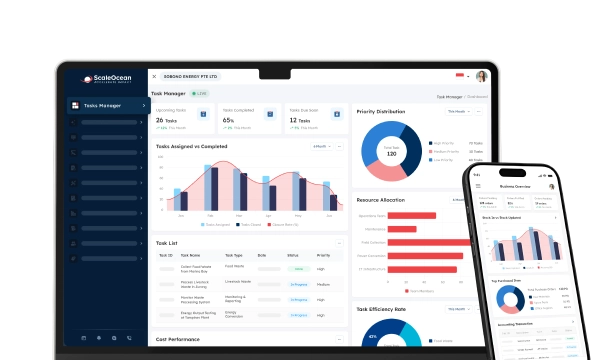
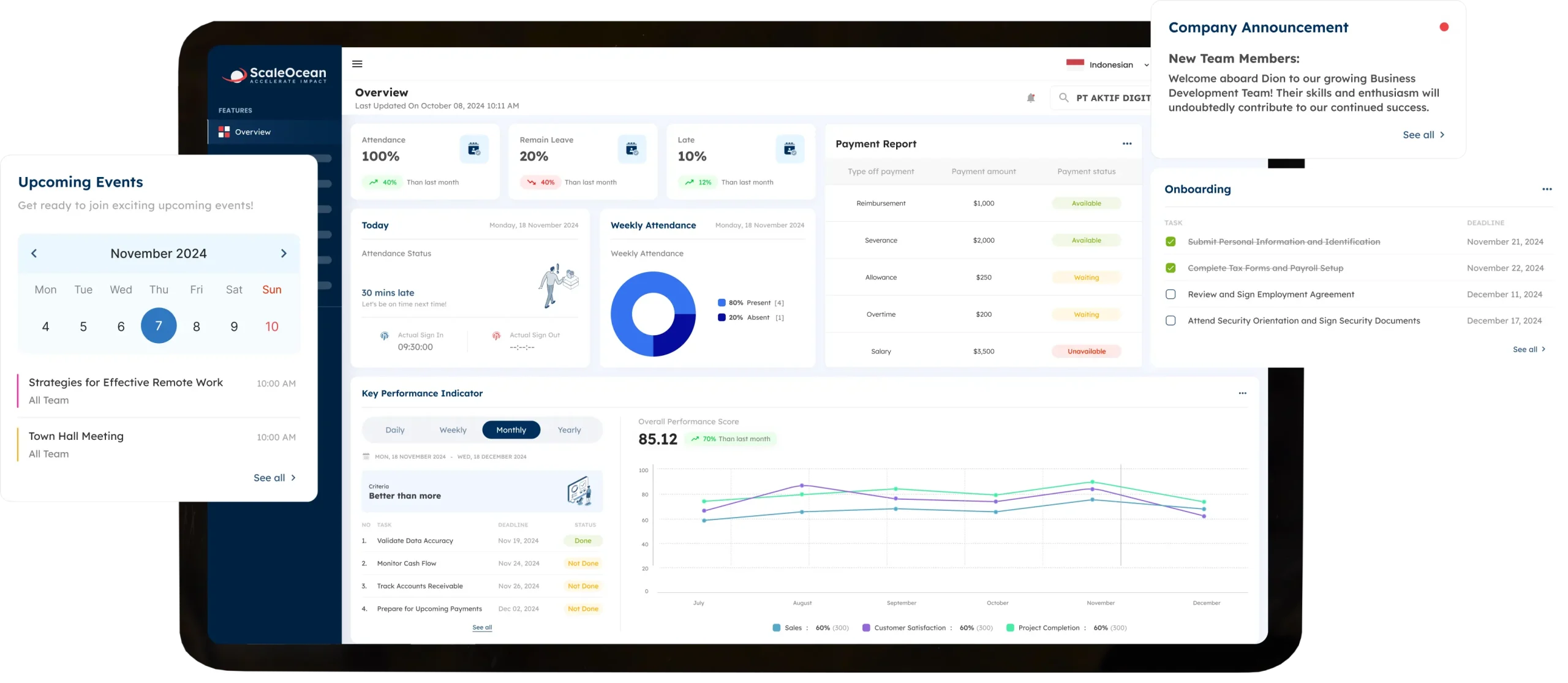 Companies have some troubles for their HR work because it is all over the place. They enter data by hand, and different parts of the company have records of their employees. The HRIS management software ScaleOcean can help fix these problems with a platform that does everything. This platform can automate tasks that businesses have to do over and over again.
ScaleOcean is pretty straightforward with its pricing. It is free for as many users as you want. You do not have to pay extra for each employee. This makes it easy for companies that are growing to manage their HR work without spending much money.
Furthermore, ScaleOcean is also eligible for a CTC grant, up to 70 percent of the cost of replacing with digital. This enables companies to upgrade their HR systems without the hefty price tag. It’s at that time that they will be able to ensure they are complying with all the rules and securing their data.
Some features that ScaleOcean has to make HR work easier are:
- Recruitment Management: This makes hiring people easier by automating everything from job postings to interviews.
- <strong>Payroll Management: This calculates salaries and taxes automatically so you can be sure they are right.
- <strong>E-attendance: This lets you record who is at work using face ID or fingerprints, so all the information is in one place.
- Leave Management: This makes it easy for employees to ask for time off and for managers to approve it.
- <strong>Performance Tracking: This helps you see how well employees are doing based on goals and numbers, so you can help them set goals and be more productive.
- Employee Portal: This is a way for employees to see their information, like their pay and attendance records.
These are a few of the ways that ScaleOcean can help your company. It is an investment for the long term. You can even sign up for a free demo to see how it works for yourself. This system is a proper tool for any company that wants to make its HR work better. This system can really help your organization succeed.
Conclusion
HR technology serves as a comprehensive digital ecosystem that streamlines and automates the entire employee lifecycle, from initial hiring to final retirement. These solutions improve operational efficiency, offer employees convenient self-service options, and harness data-driven analytics.
By integrating human resource processes, businesses increase productivity, eliminate administrative waste, and accelerate decision-making through real-time workforce insights. By 2026, AI-based tools will be essential in the analysis of real-time employee performance and the enhancement of efficiency.
HR tech helps businesses to enhance productivity, eradicate administrative waste, and accelerate decision-making with real-time data on the workforce. Disconnected systems, manual data entry, and poor visibility of employee records complicate organizational operations.
ScaleOcean HRIS Management Software will solve these issues by offering one site to manage recruitment, payroll, attendance, and performance tracking. Check out how pn this platform can enhance your HR and provide you with better insight into operations with a free demo from our team.
FAQ:
1. What is meant by HR technology?
HR tech (human resources technology) is a set of software and hardware technologies used to automate essential HR functions. These systems allow companies to improve administrative productivity, offer staff accessible self-service features, and utilize data-based insights for strategic planning.
2. What is an example of HR technology?
The most notable examples of these implementations include AI-powered hiring systems, virtualized training environments, and performance assessments driven by data analytics forecasting models to identify potential retention risks.
3. What is the future of HR technology?
2026 trends focus on leveraging AI to automate routine tasks and utilizing strategic technology to solve complex problems. These advancements aim to boost operational efficiency while fostering a more capable.



















.png)