

Assembly manufacturing is the vital process where pre-made parts are joined to create a finished product. It is the backbone of mass production, focusing on speed and precision to turn individual components into a functional whole.
Without this structured approach, firms risk massive inefficiency and rising expenses. Based on the data we found from Business Times, unit labor costs in Singapore’s manufacturing sector would rise by 1.2% in 2024, with total labor costs per worker increasing by 4%, outpacing productivity increases.
Failing to optimize assembly can lead to unsustainable budget leaks. This is why mastering assembly manufacturing is so important for protecting your margins. It allows a business to stay profitable despite rising labor costs, ensuring that every production line remains both highly efficient and agile.
So, with all of the risk and the need for a business to understand assembly manufacturing, this article will look at its definition, different assembly processes, their impact on cost savings, and how firms can improve production efficiency.
 Key Takeaways
- Assembly manufacturing is the precise stage where various pre-made components are combined to build a complete product.
- The difference between assembly and manufacturing is that manufacturing transforms raw materials into finished goods, while assembly focuses on combining pre-made parts to create a final product.
- The methods of assembly manufacturing include: assembly line, partial assembly, rivet assembly, weld assembly, and mechanical assembly
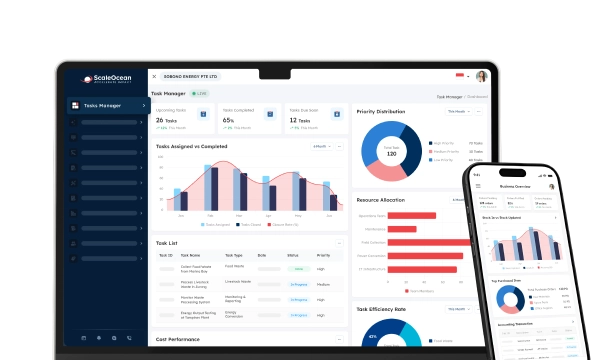
- ScaleOcean software manufacturing can provide a centralized platform that incorporates important manufacturing processes, including assembly and all process manufacturing.

What is Assembly Manufacturing?
Assembly manufacturing is the precise stage where various pre-made components are combined to build a complete product. This systematic process is essentially the way individual parts are transformed into a functional and ready-to-use unit.
Because it relies on these pre-made pieces, this method is quite different from raw fabrication. It focuses on the smart integration of existing parts, making it suitable for a mass production strategy that helps industries build quickly.
To keep that speed consistent, advanced tools and organized workflows are used to ensure every connection is perfect. By using this approach, a company is able to scale production efficiently while maintaining high standards for every item.
Assembly vs. Manufacturing: What’s the Difference?
While both assembly and manufacturing are integral parts of the production process, they differ in terms of scope and function.
1. Manufacturing
Manufacturing is the process of transforming raw materials into finished goods, including resource procurement, processing, machining, and quality control. This procedure frequently entails shaping, cutting, molding, or chemically changing materials to produce components.
2. Assembly
Assembly, on the other hand, is a phase of manufacturing that concentrates primarily on merging pre-made components into a finished product. It does not require material transformation, but rather the arrangement and integration of pieces by techniques like riveting, welding, or mechanical fastening.
In essence, production develops the pieces, whereas assembly connects them to make the finished product, assuring functioning and quality, which is the biggest production vs manufacturing difference.
3. Key Differences in Scope and Focus
After understanding each definition, it’s clear that assembly refers to the activity of assembling various components into a complete product, while manufacturing encompasses a broader process, from processing raw materials to producing finished goods.
Both play a crucial role in ensuring products are produced efficiently, consistently, and meet business quality standards. The following table outlines the scope and focus of assembly and manufacturing to help you understand the differences easily.
Main Benefits of Assembly Manufacturing
Adopting a structured assembly process is essential for scaling your production while maintaining top-tier quality. It turns complex engineering into a repeatable success, ensuring your business stays both fast and profitable.
To understand why this method is a cornerstone of modern industry, consider these primary advantages:
- Enhanced Production Efficiency: Structured assembly lines use specialized workflows to speed up output. This allows teams to build products much faster than manual, custom methods.
- Consistent Product Quality: Standardized processes and specialized tools ensure every unit meets the same high standard. This consistency reduces defects and keeps customers happy.
- Reduced Unit Costs: Mass assembly allows for economies of scale, lowering the price per item. Optimizing labor and materials leads to much higher profit margins.
- Final Product Realization: This is the stage where separate parts finally become a functional unit. It turns complex designs into tangible goods that are ready for market.
- Customization: Modern assembly lines are flexible enough to allow for specific feature changes. You can offer product variety without slowing down the entire line.
Main Types of Assembly Manufacturing
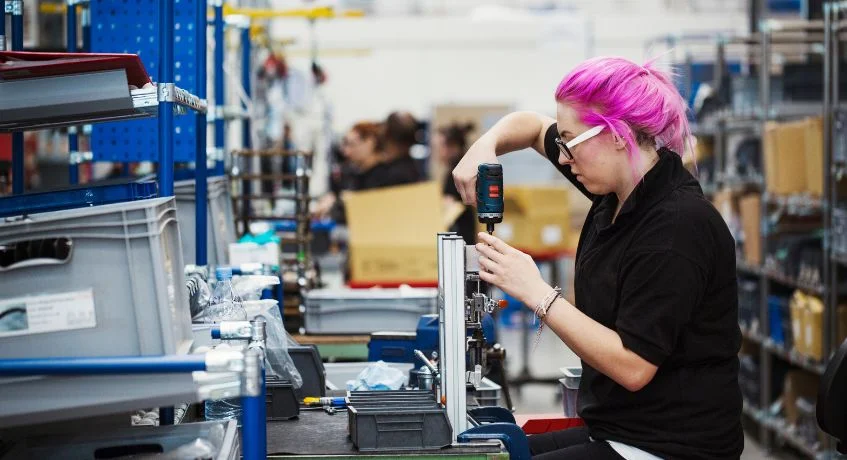 Assembly manufacturing is a structured process where individual components are brought together to form a final product. Depending on the complexity of the product and the scale of production, assembly can be done manually, automatically, or through an assembly line.
Each method has its own set of advantages, ensuring efficiency, quality, and customization in the production process.
Manual Assembly
Manual assembly is the traditional approach where workers physically put together products using their hands and tools. It’s often used in smaller-scale operations or when a product requires careful attention to detail or complex handling.
While it can be time-consuming, manual assembly offers great flexibility and precision. This manufacturing method is ideal for custom products or low-volume production, as it allows workers to focus on quality and ensure each item meets the specific requirements.
Automated Assembly
Automated assembly is all about machines and robots handling the tasks that used to be done by people. It’s perfect for mass production where speed, efficiency, and consistency are key to keeping up with high demand.
By using automated systems, businesses can cut down on labor costs, boost consistency, and ramp up production. Machines take on the repetitive work with accuracy, allowing manufacturers to produce more units with less room for error, making it highly efficient.
Semi-Automated Assembly
Hybrid or semi-automated assembly blends both human and machine power. In this setup, machines take care of repetitive tasks, while workers focus on areas that need flexibility, like problem-solving or handling more complex parts.
This combination offers the best of both worlds, bringing in the speed and consistency of automation but keeping the flexibility of manual work. It’s great for businesses that want to scale up production while still keeping the ability to make adjustments when needed.
Assembly Manufacturing Core Process
Transforming individual components into a polished final product requires a highly structured sequence of events. Each stage is meticulously designed to maximize speed while ensuring that the highest quality standards are met.
To achieve peak operational efficiency, every assembly line must follow these fundamental core stages:
1. Sourcing and Preparation
The sourcing and preparation stage is all about gathering the components and materials needed for the assembly process. This helps ensure everything is on hand and ready to go, so production can run smoothly without unnecessary delays.
Suppliers must provide high-quality parts on time. Proper planning here, supported by tools like PPC (Production Planning and Control), avoids disruptions down the line, ensuring the assembly process stays efficient, and the production keeps moving at the right pace.
2. Primary Assembly
During primary assembly, the basic components are put together to form the foundation of the final product. This involves tasks like securing parts, assembling smaller units, or connecting key components to form the main structure.
This part of the process requires a keen eye for detail. Skilled workers, along with automated tools, ensure everything is connected precisely, allowing the assembly line to work quickly while maintaining the highest standards of quality.
3. Component Integration
Component integration is where everything starts coming together. During this stage, the electrical, mechanical, and other subassemblies are merged into the main product, making sure everything works seamlessly as a single unit.
This is a critical phase because it ensures that all components perform well together. Proper integration guarantees the final product functions as expected and meets the necessary standards before moving on to the next steps in the process.
4. Quality Testing and Inspection
After integration, the product undergoes rigorous testing and inspection. Applying poka yoke in manufacturing helps prevent avoidable errors while ensuring the product functions properly, meets safety standards, and satisfies quality expectations.
Testing early in the process helps catch any potential issues before they escalate. It’s also the point where products are validated against industry standards and regulatory requirements, ensuring that customers get a product they can trust.
5. Finalization and Packaging
Once the product is fully assembled and working, it’s time for final adjustments. This stage involves ensuring every part is secure, cleaning the product, and performing a final visual inspection to make sure everything looks great.
After finalization, the product is carefully packaged for shipping. The packaging protects it during transport and includes all the necessary labels and instructions, helping the customer receive the product in perfect condition, ready to use.
Methods in Assembly Manufacturing
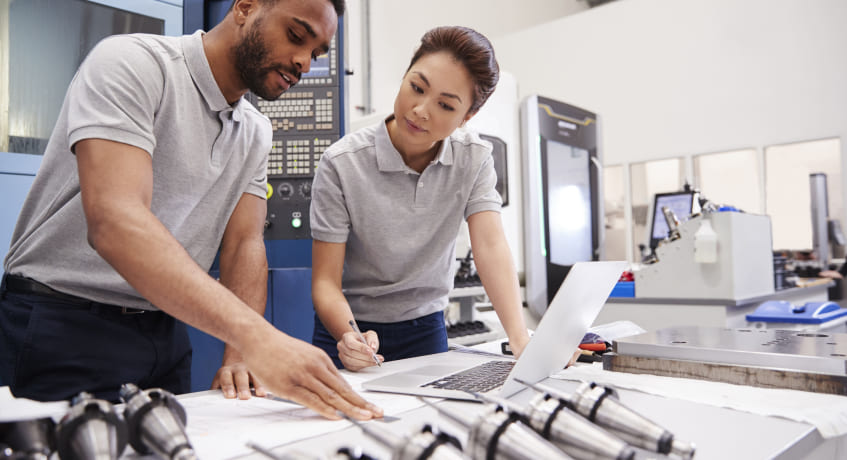
Selecting optimal assembly methods is critical in manufacturing since it directly affects production efficiency and cost-effectiveness. Manufacturers can save a lot of money by improving these processes.
The proper assembly method not only lowers labor expenses but also reduces material waste and improves product consistency, and it can be used alongside lean manufacturing. This process can involve various techniques, including:
1. Assembly Line
An assembly line, in which the product progresses from one workstation to another, with each station designated to carry out a particular task. This method is employed in the manufacturing of a wide range of products, such as vehicles, domestic appliances, and electronic devices.
This process includes products passing sequentially through a succession of workstations, with each station adding specific components or completing specified duties. This strategy improves efficiency by standardizing procedures, decreasing manual labor, and boosting production speed.
2. Weld Assembly
Weld assembly involves melting and fusing materials, resulting in a strong and lasting bond. This approach is critical for producing constructions with high strength and longevity, such as autos, heavy machinery, and metal frameworks.
Welded joints are seamless and can endure severe temperatures, making them the ideal choice for structural stability. However, welding necessitates competent personnel and sufficient safety precautions to achieve high-quality outcomes and prevent material distortion.
3. Screwing/Bolting
This method involves using fasteners to secure components in place, such as screws or bolts to securely join components. The fastener is inserted through pre-drilled holes in the parts and then tightened to hold them firmly together.
It allows for disassembly, making it ideal for repairs or adjustments. This method is commonly used in industries where components must be easily replaced or serviced.
4. Gluing/Adhesion
Adhesive bonding is a method of assembly manufacturing that uses adhesives to join materials together and is commonly applied to the surface to be bonded and then allowed to cure and create a strong bond.
This method is often used for materials that are difficult to fasten with mechanical methods, like glass or plastics. It offers smooth, aesthetic finishes and can also bond dissimilar materials, though it may not be as strong as mechanical fastening for heavy-duty applications.
5. Brazing/Soldering
This method, employing adhesives for the assembly of components, both brazing and soldering, involves joining metal parts by melting a filler metal, which has a lower melting point than the base metals.
In brazing, the filler metal melts above 450°C, while soldering occurs below that temperature. The filler metal flows into the joint by capillary action, creating a strong, durable bond.
This method is used for joining delicate or thin metal parts without weakening the base material, commonly seen in electronics and plumbing.
6. Partial
Partial assembly entails building a component of a product and then transporting it to another place for completion. This technique enables producers to split tasks across specialized facilities, increasing productivity and lowering operational expenses.
Businesses that use partial assembly can reduce manufacturing lead times and increase quality control, particularly when specific components require specialized skills or equipment for final assembly.
7. Rivet
Rivet assemblage links components with rivets, resulting in strong, vibration-resistant connectors for the aerospace, automotive, and construction sectors. It is a low-cost alternative to welding that does not require heat or substantial preparation.
According to the data we found from ProtoLabs, a crucial advantage is its ability to attach various materials, such as aluminum to steel or stainless steel to galvanized metal, which provides more flexibility than welding. This makes riveted joints long-lasting and dependable, particularly for permanent applications.
8. Mechanical
Mechanical assembly connected components using hardware such as screws, bolts, and nuts. This approach allows for quick disassembly for maintenance, upgrades, or repairs, making it excellent for electronics, appliances, and modular systems.
Unlike permanent attaching methods, mechanical assembly enables design flexibility and low-cost adjustments. However, producers must use adequate torque and fastening techniques to prevent loosening over time, particularly in high-vibration situations.
Best Practice of Assembly Manufacturing
Transforming assembly manufacturing into reality necessitates a systematic approach to guarantee efficiency, precision, and quality. Each phase, from the initial data submission to the final delivery, is vital in optimizing the overall process. Below are four straightforward yet impactful steps to finalize your assembly.
1. Staging (Provide Product Specifications)
Staging in the assembly process involves preparing all necessary components and parts for the assembly line. This step ensures that materials are organized, sorted, and easily accessible to workers, minimizing downtime during production.
It allows for a smoother flow, ensuring that all items are available at the right time to prevent delays in the assembly process.
For build-to-order manufacturing, providing detailed and accurate specifications is crucial as it ensures that manufacturers can fully understand your unique needs and customize the product accordingly. The more detailed the input, the more seamless the assembly process will be.
2. Mechanical and Electrical Assembly
Mechanical and electrical assembly combines both mechanical and electrical components into a functioning product. It’s crucial for ensuring the product operates as intended.
This step requires skilled technicians who are capable of assembling complex systems, including wiring, fitting mechanical parts, and ensuring all electrical connections are secure and functional.
3. Coordinate the Project
Successful assembly hinges on effective communication among all stakeholders. This phase entails synchronizing schedules, addressing any technical issues, and ensuring that all teams are aligned.
A well-coordinated project reduces the likelihood of delays, mitigates miscommunication, and maintains an efficient workflow.
4. Testing
Testing is a critical step to verify the functionality and quality of the assembled product. During this phase, products undergo various tests, including performance checks, safety assessments, and reliability tests, depending on the type of product.
It helps identify any defects or weaknesses early, ensuring the final product meets all necessary specifications and quality standards.
5. Request a Quotation
After clarifying the requirements, the manufacturer will issue a cost estimate that reflects the materials, labor, and complexity of production.
A clear and transparent quotation process is essential for budgeting and informed decision-making. Careful examination of the quote ensures it meets your expectations before moving forward with production.
6. Packaging
Packaging is the step in the assembly process where finished products are carefully packaged for shipping and distribution.
This step includes labeling, adding protective materials to prevent damage during transport, and ensuring that the product reaches customers in optimal condition. Proper packaging also includes branding and provides information for end-users.
7. Manufacturing, Quality Assurance, and Delivery
The concluding phase encompasses the fabrication of components, assembly of parts, and rigorous quality inspections. Thorough testing guarantees that the assembly adheres to industry standards before it is shipped.
Once it receives approval, the final product is meticulously packaged and delivered, ready for use or distribution.
Examples of Assembly Manufacturing in Various Industries
The use of assembly manufacturing methods is a solution for various industries to form everything easily. Each process and its application in each industry has different components that are precise and efficient. Here are some industries in production that usually use the assembly system, including:
1. Automotive
In the automotive industry, this method is used to build cars, trucks, and other vehicles. The process involves assembling various parts such as engines, chassis, and interiors into a complete vehicle. This method in automotive ensures high-volume production and consistent quality across vehicle models.
2. Electronics
Assembly manufacturing in the electronics industry is used for creating computers, televisions, smartphones, and other devices. In this industry, automated machines and pick-and-place robots are commonly used for precise component placement on circuit boards.
The assembly process is crucial to achieving the high performance and reliability required in consumer electronics.
3. Mechanical Engineering
In mechanical engineering, assembly manufacturing is applied to the production of machinery, equipment, and complex systems. This includes items like industrial machines, HVAC systems, and turbines.
The process often involves the precise assembly of various parts, including gears, motors, and hydraulic systems. Assembly lines and skilled workers ensure that the final systems meet the required specifications for performance, safety, and reliability.
4. Aerospace
In the aerospace industry, assembly manufacturing is used to construct aircraft, spacecraft, and components like engines and landing gear. This process requires high precision due to the safety and performance demands.
Automated systems, along with skilled workers, are involved in assembling parts such as wings, fuselages, and avionics. Rigorous testing and quality control are essential throughout the assembly process to ensure that the aircraft meets all safety regulations and performance standards.
5. Furniture
In the furniture industry, assembly manufacturing is used to create everything from office furniture to home furnishings. Components such as legs, frames, upholstery, and hardware are assembled to create the final product.
Automated and manual labor work in tandem to assemble the parts efficiently, ensuring quality and durability. This method allows for mass production of furniture while offering customization options for various designs and materials.
6. Medical Devices
Assembly manufacturing in the medical device industry involves creating products like diagnostic machines, implants, and surgical tools. The process requires strict adherence to quality control and regulatory standards due to the critical nature of these devices.
Precision assembly is key, with workers and machines collaborating to assemble intricate components like microelectronics, sensors, and casings to ensure proper function and safety for patient use.
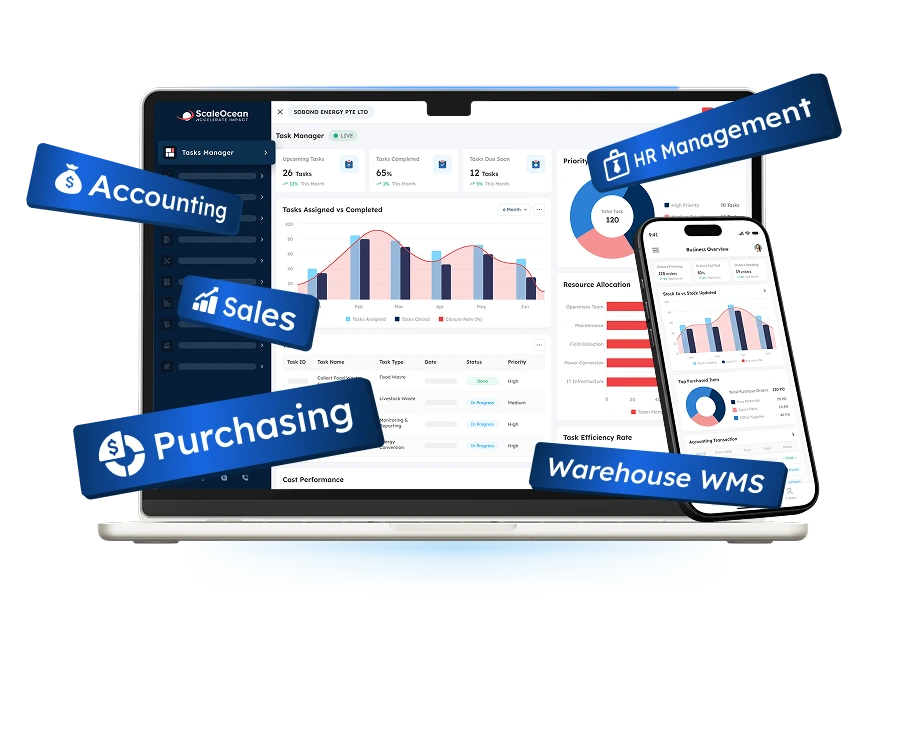
ScaleOcean manufacturing software optimizes assembly processes by providing a variety of features that improve production efficiency across various industries.
With high flexibility and comprehensive module integration, ScaleOcean provides a system that can be tailored to the needs of each industry sector.
Emerging Trends in Assembly Manufacturing
The assembly landscape is evolving as new technologies and strategies redefine how products are built. Staying ahead of these trends is vital for any manufacturer looking to boost efficiency and maintain a competitive edge.
To keep your operations modern and highly efficient, keep a close watch on these influential industry shifts:
- DfMA (Design for Manufacturing and Assembly): This trend focuses on designing products for easy assembly from the start. It simplifies parts and reduces complexity to lower costs and speed up production.
- Contract Manufacturing: More firms are outsourcing assembly to specialized partners. This allows businesses to scale quickly without investing in their own factory equipment.
- Data-Driven Optimization: Using real-time data helps factories identify bottlenecks instantly. Smart sensors and AI allow for constant tweaks that maximize assembly line output.
Design for Manufacturing and Assembly (DfMA)
DfMA is an engineering approach that emphasizes the enhancement of the manufacturing and assembly processes of a product, aiming to lower expenses and increase efficiency.
It is also a set of principles and techniques aimed at improving the design process to reduce production manufacturing costs and improve efficiency during assembly manufacturing.
The core idea is to design products in a way that simplifies the manufacturing and assembly processes, making them easier, faster, and cheaper to produce. DfMA involves analyzing the product design to identify potential production challenges, such as complex parts, difficult assembly processes, or expensive materials.
1. Key Strategies DfMA
- Reducing Part Count: By simplifying product designs and reducing the number of components, assembly becomes quicker and more efficient. Fewer parts lead to less complexity during both manufacturing and assembly, reducing the chances of errors and defects.
- Standardization of Parts: Using standardized components across different products helps streamline production processes. It simplifies inventory management, as companies only need to stock a limited set of parts.
- Designing for Ease of Assembly: In this approach, parts are designed to be easy to handle, align, and assemble. Factors like part orientation, assembly sequence, and the elimination of special tools are considered early in the design phase.
- Material Selection: Choosing materials that are cost-effective, readily available, and suitable for easy manufacturing is a core principle of DfMA. By opting for materials that are easier to process and assemble, companies can reduce production time and minimize costs.
2. Key Benefits of DfMA
- Cost Reduction: Optimized designs and simplified manufacturing methods contribute to lower overall production expenses.
- Accelerated Time-to-Market: By decreasing the amount of work required on-site, projects can be finished more swiftly, facilitating quicker product launches.
- Improved Quality: A stronger emphasis on quality assurance during manufacturing leads to greater consistency and a reduction in defects.
- Enhanced Efficiency: DfMA enhances both manufacturing and assembly processes, resulting in improved operational efficiency.
- Sustainability: By minimizing waste and conserving resources during production, DfMA promotes more sustainable manufacturing practices.
Assembly Manufacturing Efficiency with ScaleOcean Integrated Software
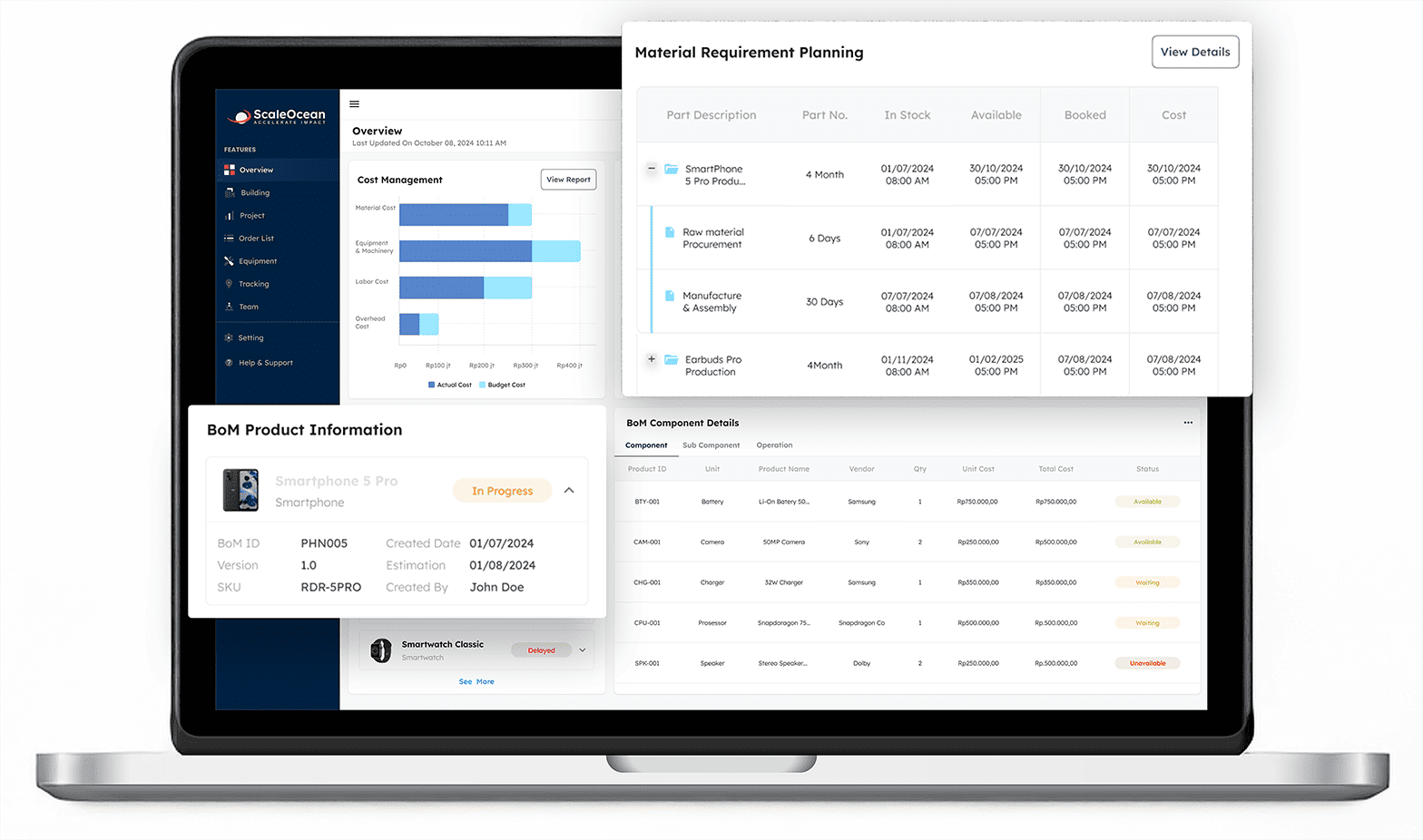
Implementing specialist software, such as ScaleOcean, can greatly improve assembly manufacturing efficiency by automating essential tasks and enhancing workflow coordination. Managing complex assembly activities manually can result in inefficiencies, errors, and delays, particularly in large-scale production.
ScaleOcean software manufacturing can provide a centralized platform that incorporates important manufacturing processes, including component tracking and real-time production monitoring. Businesses can use data-driven insights and automation to decrease costs, limit downtime, and increase overall assembly line efficiency.
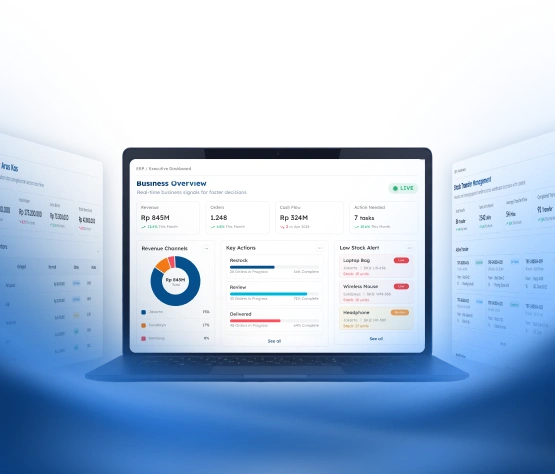
ScaleOcean allows manufacturers to have greater control and insight over their assembly operations, resulting in increased productivity and lower operational expenses. Interested in improving your production workflow? Get a ScaleOcean free demo today and discover how it can improve your assembly production operations.
- Bill of Materials (BOM) Management: Efficiently handles multi-level BOMs, ensuring accurate tracking of components, materials, and sub-assemblies throughout the entire production process.
- Production Scheduling: Optimizes assembly line operations by managing timelines, workloads, and resource allocation to prevent bottlenecks and delays.
- Inventory Management: Provides real-time stock monitoring, helping manufacturers reduce material shortages, prevent excess inventory, and streamline supply chain operations.
- Quality Assurance Tools: Integrate automated quality checks across assembly stages to reduce defects and ensure finished products meet industry standards.
- Supplier Management: Enhances communication with suppliers and vendors, ensuring on-time delivery of essential components while improving cost efficiency.
Conclusion
Assembly manufacturing is critical for successfully merging components into a final product, and the correct methods and processes influence cost savings, efficiency, and quality.
A well-structured methodology, combined with meticulous planning, sourcing, and quality control, provides seamless production while reducing errors. As production scales, technology-driven solutions become critical to preserving precision and efficiency.
To optimize assembly operations, companies want a centralized software solution that improves workflow coordination and quality management. ScaleOcean improves BOM monitoring, scheduling, and supplier management, increasing production efficiency.
Get a free demo today and learn how ScaleOcean can help you streamline your assembly production operations.
FAQ:
1. How can I find contract manufacturers for my new product?
1. Research Industry-Specific Manufacturers
2. Use Online Directories
3. Attend Trade Shows
4. Check Reviews and References
5. Request Proposals
6. Evaluate Capabilities
7. Consider Location and Logistics
8. Verify Certifications
2. Is assembly the same as production?
Assembly is a stage within manufacturing, not the entire process. While some use the terms interchangeably, manufacturing covers everything from raw materials to the final product, whereas assembly specifically refers to putting together pre-made components into a finished item.
3. What is the manufacturing or assembly process?
Process manufacturing creates products through chemical or mechanical transformations, common in industries like food and pharmaceuticals. Assembly manufacturing, however, focuses on joining individual parts to form a final product, as seen in automobile and electronics production.
4. What is an example of an assembly industry?
An assembly industry creates finished products by combining various pre-made components. Examples include automobile manufacturing, where engines and frames are assembled into cars, and electronics production, where parts like screens and circuits form computers, televisions, and watches.





















.png)