



Data onboarding is about getting data from every source together in a common repository that becomes accessible and actionable throughout the organization. Businesses need to make the most out of their data and ensure that any resulting decisions are accurate and efficient.
But in Singapore, dealing with data that constantly changes is a real challenge. The process of ensuring data is up to date and accurate is tedious, and there is a risk of inaccuracies and delays in the reporting task. The updating of data, both from the different departments and the outside sources, becomes a time-consuming task with the risk of inaccuracies and delays in reporting.
The answer is to adopt a robust solution for real-time data processing that can ensure all changes are automatically and immediately recorded. Automated data synchronization and strong connectors can help reduce manual inaccuracies and boost business efficiency.
In this article, we’ll delve into the reasons why data onboarding matters, as well as best practices for it. Continue reading to find out how you can make your data management more effective and improve overall productivity.
 Key Takeaways
- Data onboarding is the crucial process of moving data from a source into a target system.
- Challenges with data onboarding include data inconsistency, complexity, security risks, and prolonged development timelines.
- Effective data onboarding is critically important because it streamlines operations and enhances the overall customer experience.
- Best practice using data onboarding is standardization, and prioritizing security is essential for building a robust and scalable data onboarding strategy.
- ScaleOcean’s ERP Software provides an integrated solution that automates and secures the entire data onboarding process.
What is Data Onboarding?
Data onboarding is the process of integrating and importing data from various external sources into a centralized system or platform. It involves cleaning, validating, and organizing data to ensure it is accurate, structured, and ready for analysis or use within the organization’s digital system.
This whole idea is to make sure that the information is actually ready for analysis or any other important operational uses within your ERP. Think about it like bringing on a new team member.
You don’t just show them their desk and expect them to just know everything; you have to really integrate them into the company culture, the existing workflows, and all that, which is essential for maximum productivity.
Challenges of Data Onboarding
The first key step of creating any type of better system, even if involving a specific tool, is understanding the challenges of data onboarding, what they are, and why they occur.
1. Data Inconsistency
Sometimes data comes in all neatly packaged, neat, standard formats, but at other times, it comes from all sorts of sources in all kinds of different formats. It’s like having a headache, really, to integrate it, because I’m not facing any challenge in life that is more challenging. It’s a recurring problem that we come across.
Take a simple case: One system may have “SG” for Singapore, while SGP has another somewhere else… it just is. If these little differences aren’t adequately standardized in the process, things can get really confusing at a later date when any company relies on an ERP.
2. Complexity & Time
Onboarding by hand: slow and quite complicated, thinking of how many companies have very similar processes for onboarding, or onboarding is, you can understand the process: it’s for this that a lot of companies spend a lot of their time and money.
Needless to say, this manual way demands an in-depth knowledge and skill in managing it, and they are not always easily available. The complexity we tend to see with less effective tools usually comes with some pretty long delays, which oftentimes results in teams waiting for critical info. This definitely slows down the complete time-to-value of data, as a whole.
3. Privacy Concerns
When you’re handling sensitive customer data, which is especially true during any process, it really brings up some pretty serious privacy and compliance issues that you’ve just got to keep in mind. You absolutely need to make sure you’re following important regulations, things like GDPR or even PDPA.
A breach during this specific onboarding process can, let’s be honest, lead to some truly huge fines and, what’s often worse, a massive loss of customer trust across the board. This kind of data privacy concern is really not something you can afford to overlook.
4. Changes in Schema and Evolution
Data sources, it’s pretty clear they’re just not static; their overall structure, or the schema, can schema can really change over time. This kind of shifting can actually break your existing data pipelines without much warning at all, which is something we see happen quite a bit.
Your entire onboarding process really needs to be flexible enough to adapt to these changes. Because without that flexibility, you’re risking major data flow interruptions and, honestly, a lot of inaccurate reporting down the line, which is definitely not ideal for any ERP system or business looking at what tools might offer.
5. Prolonged Development Timelines
Building out custom solutions from scratch is just such a huge undertaking for any team. Getting something like that truly right often demands months and months of dedicated development work, which really adds up.
This whole process, it naturally pulls your skilled engineering resources away from other projects that are also quite important. And when you look at it, the opportunity cost associated with these prolonged development cycles can just be incredibly high for the business, something we often tend to underestimate a little.
6. Challenges in Security and Networking
When we talk about moving data between different systems, particularly across networks, you’re basically opening up a whole lot of security vulnerabilities. It’s a point where tools really shine, because you absolutely need to make sure this data is properly encrypted and protected as it moves.
Getting those network configurations squared away and really solidifying your security protocols, well, that’s just non-negotiable for effective onboarding. Honestly, a single weak link in this chain can seriously expose your entire data infrastructure to all sorts of risks, which nobody wants.
7. Absence of Real-Time Assistance
It’s really important that if anything goes wrong, you’re alerted right away. Often, many of these more traditional systems simply don’t provide a notification or assistance to businesses that meet their needs for businesses today.
What happens then is that problems can simply sit there, going unnoticed for hours or even days. This lack of immediate feedback or prompt assistance can quickly compromise data accuracy and lead to less-than-ideal decisions. With effective Master Data Management (MDM), businesses can improve data visibility, maintain consistency, and identify issues faster before they impact operations.
8. Insufficient Observability and Troubleshooting
If there’s any amount of data that’s traversing your systems, particularly as it kicked off with your ERP system, it’s really difficult to begin to figure out what’s wrong if you don’t know what’s going on inside of one of those pipelines.
Achieving good observability means you’re really going to need things like proper logs, detailed metrics, and effective traces. These are the tools that let you quickly identify and then resolve whatever issues pop up, giving you that deep insight into the whole process and how things are actually flowing.
Why is Data Onboarding Important?
Data onboarding is important for several reasons, especially in today’s data-driven business environment. This integration, especially with good ERP tools, really helps to boost your overall business productivity across the board.
1. Streamline Your Operations
Effective onboarding is really about getting the precise data into the hands of the right people and doing it quickly. This approach tends to work well because it significantly cuts back on manual tasks, which is crucial for managing your ERP systems efficiently.
With effective onboarding, your teams, instead of constantly wrestling with disparate pieces of information, really get to a point where they can just start using the data as it’s intended. We have found that research by PLOS One discovered that a structured onboarding correlates with higher performance and reduced turnover.
2. Improve Data Quality and Accuracy.
So, when we’re bringing new information into our systems, which is essentially what data onboarding is about, it really should involve cleaning up and then validating that data, ensuring it’s all good. This process is quite key because it means we’re only letting high-quality, accurate information come into the systems, making sure it’s solid from the start.
Truly trustworthy data is something that just has to be the absolute foundation for making any kind of good decision, and this applies across the board, especially when you’re looking at your ERP data. It just ensures that the information you’re bringing in that it’s actually trustworthy for business growth.
3. Faster Time-to-Value
Since your process will be completely automated and very effective, your data will be very usable right away. This way, with all of that, you are going to be faster in getting insights about how your software is operating, or even an ERP system, in general.
This way, you are going to be much faster in implementing any product launch or campaign. In that regard, this is going to shorten your time spent to get a return on investment on all of your previous data investments.
4. Enhance Customer Experience
It makes it so easy to get customer data in, just enough to ensure that you get this kind of personalization. That means you can truly get an idea of what these people need, and from that decide what you should offer.
And what you find from all that, well, it naturally leads to much happier customers, actually, and definitely more loyal in the long run. A truly great customer experience, and this is a big one, is a powerful competitive advantage, yes, but it’s also just a fundamental aspect of growth for any business today, particularly if you’re in the ERP space.
5. Ensure Compliance and Security
Once your data is in order from a structured onboarding process, the thing is, you’re managing it pretty systematically, aren’t you? Then you’re able to manage data security and compliance in a pretty systematic way.
This structured approach really protects your business from legal and financial risks, which can be quite a headache. It’s honestly crucial for maintaining a strong security posture, particularly in the ERP industry where so much sensitive data is flowing around, and this just makes good business sense.
How Data Onboarding Works: A Complete Step-by-Step Process
Every move taken in this particular journey has its personal importance, and so are all those factors involved, which are geared towards the proper and appropriate prep of all such data that lends towards the use that was planned in the system.
Frankly, it’s extremely important to just follow a step-by-step operation process while considering integrating with a couple of ERP systems. Without it, creating a really trustworthy and scalable data warehouse for your enterprise, which many instruments attempt to do, is significantly harder.
1. Data Collection
The initial pull is a lot more basic with regard to any business seeking to understand their workings later on. After all, the key goal here, for good data onboarding, is to get all these data elements into a single place.
This initial collection of data really sets the stage for everything that follows, making sure your data onboarding tools have a solid foundation for further processing and analysis down the line.
2. Data Cleaning and Validation
There are plenty of occasions when things don’t go as you’ve planned them from the start. Raw data doesn’t always come inexpensively, and certainly it’s not always perfectly clean, consisting of errors, duplicate values, and occasionally even data lacking.
After that initial scrubbing, the next practical step is always to apply various validation rules; this is to make sure that the data you’re preparing for onboarding actually meets all the quality standards that are required for proper operations. And really, this whole process, ensuring those rules are in place, is a critical factor for data accuracy.
3. Data Transformation
Therefore, one of the paramount considerations when deciding on what is really meant by data onboarding is getting all that data into a standard format, meaning it is usable for the target system you’re using. This could simply be, for example, you have different formats for dates or simply defining common names for categories, something that’s seen a lot when integrating with an ERP.
Ultimately, this whole transformation effort really ensures that all your data stays consistent. Having that kind of consistency makes it so much easier to analyze and compare information, especially when you’re bringing in data from all sorts of different sources, maybe through various tools, which is a big deal for clarity.
4. Data Integration
So, after all that necessary cleaning and the transforming of data, getting it just right, the data itself is then finally loaded into its target system. This system might be an ERP, a CRM, or even an analytics system for the business’s needs.
And this particular stage, it’s really where the data begins to truly become useful, actually adding value to the business and, like, making things happen. Because, well, it’s fundamentally about getting all that vital information right into the hands of users who, like, actually need to work with it, so they can really make good decisions based on it.
5. Data Enrichment
You’ve got your core data, but in some cases, especially in an ERP system, there seems to be a missing piece, doesn’t there? Data Enrichment is when you leverage that data along with data from other sources to provide you with a richer perspective.
It’s not uncommon to see businesses adding demographic data to this, perhaps even pulling it in through various tools. This specific kind of addition provides a significantly richer, more complete picture, which then allows for much more insightful analysis and better understanding of your overall market.
6. Data Monitoring and Maintenance
We often find it’s not simply a ‘set it and forget it’ situation at all, which many might initially think. That’s something you’ll have to monitor on a constant basis, ensuring that there are no mistakes or perhaps those little areas where you could notice performance.
And honestly, doing that regular maintenance consistently is what genuinely ensures the entire process can actually stay reliable over a good stretch of time. This approach is absolutely crucial for what we absolutely need in terms of long-term data health.
7. Mixed Source
With companies nowadays, you will see that businesses are accessing data from multiple places at the same time. It’s not only about internal databases, but also third-party applications and public data sets, all of which can result in a great variety!
Now, a process that is truly comprehensive, that can be set up to handle all this variation smoothly, unticked, without all the drama, would be very important, particularly for many ERP products on offer. It’s about aligning all those different sources with a cohesive system in which it makes perfect sense for the users, and it makes sense for better decision-making.
Onboarding data is a crucial step for businesses to ensure smooth and efficient integration of new data into their systems. Without the right tools, this process can be time-consuming, prone to errors, and challenging to manage, especially as data volumes grow.
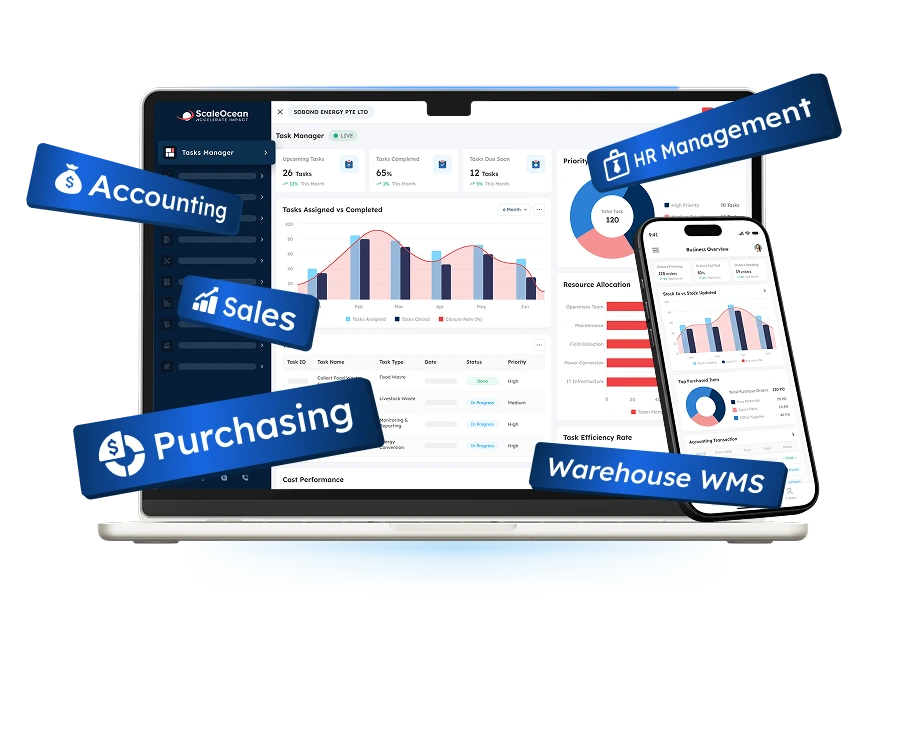
Enterprise Resource Planning (ERP) Software: This is a combination of integrated applications that a business can make use of to materialize and deal with essential processes like finance, supply chain, manufacturing, stock, and human resources. ERP systems enable the centralization of information, which can enhance efficiency and deliver real-time data insights to various departments.
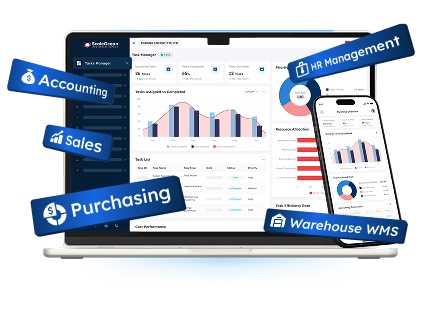
A software such as ScaleOcean ERP Software can solve this problem, though. This can be achieved by ScaleOcean, which facilitates seamless data import, real-time sync, and offers a variety of fields so that your data is clean, accurate, te and can effortlessly be taken into your work.
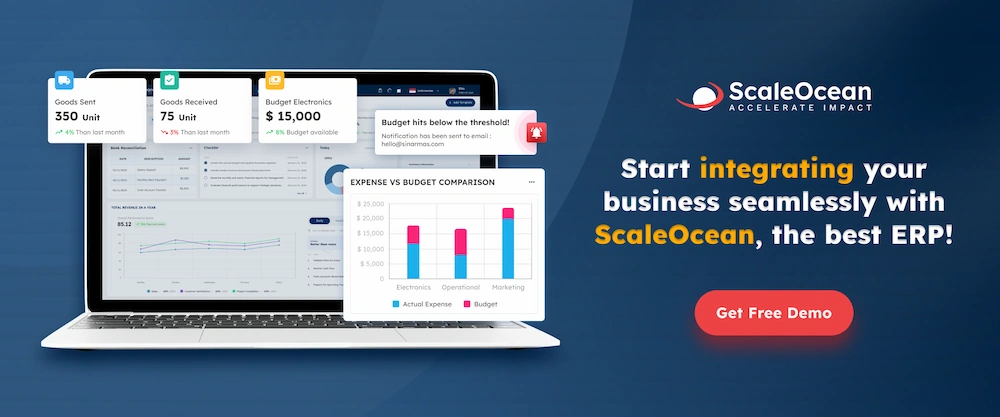
ScaleOcean automates important tasks and offers flexibility in data management to rapidly and effectively upload data, saving precious time and resources. There it goes, get the difference ready! Give it a spin and click the banner below to get a free demo today!

Why Data Onboarding Should Be Continually Improved?
With the environment, technology, and expectations changing over time within the business, data onboarding has to improve over time for a few key reasons. Let’s start analysing why data onboarding needs to be continuously improved:
1. Decrease Time to Value
If you can actually analyse the process you’re currently doing and then substantially improve it, you can make things a little quicker and more efficient. Which implies your beneficial data is not simply stuck somewhere; it is readily accessible for your teams a lot more quickly.
It’s often observed that the quicker your teams can actually get their hands on data, the faster they are also able to act on it. This directly accelerates business outcomes, which is really what we’re aiming for.
2. Reduce Churn
This kind of insight can help you identify the at-risk customers, and then take proactive steps to keep them from leaving, which is a major factor in churn reduction, with better and, more importantly, faster data on customer behavior.
In ERP systems, for example, the flow of data is often vvita land getting clear pictures from the tools is crucial. Problem, better onboarding practices – and better insights for your business – usually means you’re picking up some data that you never expected to see. This not only affects customer retention and loyalty, which is vital for continuous growth.
3. Win More Deals
It is of paramount importance for the sales and marketing teams to have the right data at the right time to beat the lead race and to actually convert the leads. That’s where this smoother, faster process really helps, ensuring that they receive the information that they need much, much earlier.
Due to this, these teams can actually connect with prospects in a much more effective manner. And when that occurs, it typically directly correlates to closing more business, which does not actually help bring in the money that much, anyway.
Best Practices and Considerations for Data Onboarding
If you want to create a really compelling strategy, it’s important to understand its significance and to have some good strategies to think about. These are the sort of factors that will really allow you to be successful in the long term.
Following these kinds of guidelines, particularly in the context of choosing integration with your ERP, can really help you to avoid these common pitfalls that we frequently see. It’s all about being forward-thinking and taking those initial steps in the right direction if you’re looking to have a smooth, efficient flow with all of your new data.
1. Automate Data Onboarding
An international, open‑access, peer‑reviewed academic journal, Journal of Frontiers in Multidisciplinary Research, studied client onboarding efficiency using document automation, highlighting that Automation is the key to an efficient workflow, making a big difference in how businesses handle their information.
This is particularly true when thinking about the comprehensive data meaning for modern ERP systems. It’s truly remarkable how much time you save when you start using specific tools to automate tasks, like the collection and transformation parts.
2. Standardize Data Across Systems
When you’re dealing with ERP systems, it’s just essential to establish really clear data standards and formats for your entire organization. This way, you ensure a certain level of consistency, which is super important for any onboarding process, regardless of its source.
So, once you have these standards down, like for your various tools, it really does make integrating and analyzing all that data so much smoother. The goal, of course, is to have that one, unified place, truly creating a single source of truth for the business, and that’s just a practical choice in most scenarios.
3. Data Security
Security should definitely be considered a main issue at any stage, from the start. It’s all about implementing really strong access control and making sure that all of the data, whether it’s just sitting there or moving around, is properly encrypted.
A secure process like this genuinely keeps your sensitive information protected, which is crucial. This helps build up trust with your customers and partners, something that’s pretty vital, particularly when we consider ERP trends in Singapore.
4. Data Observability
For effective data onboarding, using the appropriate tools is actually essential, and you are able to get to all your data pipelines with complete, real-time data visibility. This translates to the ability to track their performance and troubleshoot any problems that might arise with the minimum level of hassle. Of course, this is crucial in ERP.
Ultimately, good observability, especially when you’re managing various data onboarding tools, means you can pretty much detect and fix problems quickly. This is essential, as it truly ensures your critical data remains reliable and trustworthy, which is something every business really needs.
5. Implement Data Governance
It begins with establishing clear policies and procedures for the management of that information. This means that you will be on the lookout for defining specific roles and responsibilities and even specific rules about how it’s used, and it really can make a difference in the long run.
It really gives you that necessary framework, making sure data quality and compliance are always on point for your ERP system. This approach is absolutely a critical factor for long-term success.
6. Priority Data Quality
When you’re onboarding new data, particularly within a system like ERP, it really is crucial that you give ample consideration to the quality of that data at that point. From the beginning, you will want to include a variety of checks and validation points, which will make a huge difference.
Having really high-quality data is what truly leads to making better decisions and getting the business outcomes you’re aiming for, especially with all the data you’re onboarding. It’s just a practical choice in most scenarios to never, ever compromise on the integrity of your information, no matter what.
7. Use User-Friendly Tools
If you’re considering tools, they just have to be intuitive by design for everyone, from the geek community to the non-techs, too. It just means that more people within your organization are able to have their hands on and use their own real data, which is pretty powerful, right?
Having these kinds of user-friendly interfaces, especially in something like an ERP system, definitely lessens how much you have to lean on specialized IT teams for every little thing. It’s a practical choice, as it genuinely helps to democratize data access across the whole company, which is what we often aim for.
8. Flexibility
These are always changing over the years, as are the businesses, and in fact their needs, themselves, and the data resources they’re utilizing. So, as there are new changes, you want your process to be flexible enough in order to be able to adapt to that.
Types of Tools That Help with Data Onboarding
There are numerous types of tools you can adopt, such as ETL and Real-Time Data Platforms, with each tool having a specific set of advantages and catering to totally different requirements, contingent on the objectives that your business is looking to achieve.
When choosing a solution such as an ERP system, it certainly does help to familiarise yourself with all of these different options and gain a better understanding of which one is the most appropriate for your company in question. Except for having the right tool, which can make a really big difference to your operations.
1. Traditional ETL / ELT Platforms
These types of tools, called ETL (Extract, Transform, Load), have actually been around for quite some time. They’re usually deployed when you start moving incredibly huge amounts of data, which you might find in old, er, more traditional data setups that are associated with ERP systems.
ELT, which means Extract, Load, Transform, is definitely a more modern kind of approach we’re seeing. What it does is it loads all the raw data first, and then you handle the transformations later, which just gives you so much more flexibility, especially when you think about current onboarding needs.
2. Real-Time Data Platforms
If you’re referring to real-time data platforms, they’re systems designed to process streaming data, which is user-generated and updated on an ongoing basis. They are designed to consume and digest that information as soon as it flows through them, and in the ERP world, basic onboarding and integration is at the crux.
This immediate processing capability is truly what makes these platforms shine, especially for use cases demanding immediate insight. You see it in action with things like fraud detection, or powering those really critical live operational dashboards that give you an instant pulse on your business.
3. Custom Pipelines
This approach indeed puts them in the absolute most control and tailor that could be expected in terms of data and operational requirements – and that is a benefit particularly for their very unique needs.
However, this kind of truly custom work, it almost always demands significant engineering resources, both to actually get it built and then, importantly, to keep it well-maintained and running smoothly day-to-day. So, you’re definitely looking at a pretty direct trade-off between flexibility and effort here.
4. API Connectors and SDKs
A lot of SaaS apps, particularly those driven by ERP software, frequently have APIs that enable you to obtain a wide range of data. To smooth that whole onboarding thing a little, however, all connectors and SDKs come to the rescue, which makes pulling information you may need from these different services pretty easy.
These tools really do simplify the entire process of integrating with various third-party applications, which is a major hurdle for many businesses. Ultimately, they give you a standardized way to access the data that’s crucial for your operations.
5. Data Activation & Reverse ETL Tools
Do you do traditional ETL pulls to the data warehouse? Well, it’s kind of an upside-down take on all that with these tools, at least. They are actually integrating that valuable data into your business systems instead of your warehouse, into CRMs, or even your ERP systems.
The whole point here is to ‘activate’ your data, right? You’re taking those hard-earned insights and making sure they land directly in the hands of the people who can actually use them. It’s really about putting that intelligence right into the tools your teams are already working with every single day, which helps in truly closing the data loop.
Data Onboarding Use Cases

Data onboarding, in its actual definition and how it can actually benefit a business, is quite extensive and very varied amongst so many different departments and operations.
It’s a process that ends up with many, many of the programs that businesses are increasingly relying on that are vital to their data-driven business today, such as making sure that programs like ERP have all the data needed to function as they’re supposed to.
1. Audience Retargeting
It’s all about being able to display those ads that really resonate with those who have already been viewing your site. This entire process helps to get you back on track in front of those prospective customers that may have walked away for a few moments. After all, it’s a pretty strong approach,
2. Audience Suppression
Let’s say that we had a segment for data, for example, it is very beneficial to exclude existing customers whenever it comes to ad acquisition campaigns. This is really just a way of making sure you don’t waste any money on the people that have already converted, and let’s face it, you shouldn’t anyway in the realm of ERP.
What is data really doing here? This simple use case, especially with proper tools, truly works to improve marketing efficiency quite a bit. It helps ensure your budget is properly focused on attracting new customers, where that’s really the main point, right?
3. Conversion Tracking (CAPI)
This is a particular challenge if you’re looking at Facebook’s Conversion API or CAPI, as it’s sometimes called, it really, really depends on putting your data on board correctly. All this import process is what empowers you to accurately gauge ad performance, which can make a world of difference.
And that, when you get your data right, really helps you understand the actual return on investment for all your marketing efforts. It gives you a much more reliable picture of what’s truly working out there, and what perhaps isn’t, which is key for any business trying to use these kinds of tools.
4. Personalization
It really enables you to create a more in-depth customer profile when you are incorporating data, particularly via a strong onboarding process from all sorts of sources, including different customer touchpoints. This whole exercise then allows you to develop these very individual experiences, which is also good for users, on your website or perhaps in an app you are operating.
This kind of personalization, when done right, often leads directly to higher engagement with what you offer and, importantly, better customer satisfaction. It’s pretty clear that for any business, especially when thinking about how tools feed into ERP systems, this is a key driver for building long-term loyalty.
5. Global Compliance
In those different landscapes and regions, doing it well with those diverse countries, for global companies, effective onboarding becomes a key factor, managing all your information so you are aligned accordingly with the various regulations you will be dealing with in those regions.
Doing all of this correctly, it just pretty much ensures that you stay compliant. Frankly, when you’re thinking about managing international business risks, especially with data, getting these processes right from the start is essential; it’s a practical choice in most scenarios and one you definitely don’t want to overlook.
2026 Trends of Data Onboarding
Data is ever evolving and ever changing. This is true of our approach to data as well, and we’re witnessing some transformative trends this year that will largely dictate what data’s trajectory will look like in 2026.
To be able to bend the arc of these kinds of trends, particularly in an industry as tool-dependent as ERP, is going to be a critical, critical factor in your success. It’s not just knowing them; it is being ready for what is to come, what changes are to come.
1. Change Data Capture (CDC) as a Standard
Talking about which we mean when we’re talking about handling data, it’s Natural Change Data Capture (NCDC), as data changes happen. This is a big trend to efficiently copy data and is a common expectation when interacting with entities such as “onboarding” in enterprise resource planning (ERP) systems.
What’s cool about this is that it means you receive updates almost in real-time on your other systems you’re connected with, so that can save you a lot of time, right? I think it’s a much better idea; at least it’s much more efficient than the old batch processing model, which forces you to wait until something builds up to post it.
2. Declarative Configuration
If you’re at the point where you need to think about declarative tools, then you’re thinking more about the what rather than the how when it comes to data onboarding. It’s sort of saying, “OK, this is the final state I want for my data; I’m going to let you calculate the steps.
This whole process of building and managing those data pipelines is really, really easy, so obviously, there’s a big plus. Not to mention the fact that, once again, data onboarding is way more accessible for an extended target audience that may or might not be web coding fiends.
3. Automatic Schema Inference and Evolution
Like with modern tools a lot, and it seems like they’re focusing on these kinds of things, like data onboarding, they’re picking up the schema as it’s coming in. This type of system can truly make the entire manual process a little less tedious, a lot less bulky, a little less complex, and, for many teams, a lot easier.
4. Streaming-First Architectures
Batch processing was once the approach for businesses; however, there’s been a transition towards more focus on real-time streaming these days. It is thus that accommodating the continuous flow of information is increasingly part of the job when it comes to architectural design.
Oh, this whole movement? It’s just the need for real-time insights, and that’s what people always seek. Decisions need to be made faster, and businesses are looking to operational analytics in real time, typically from their ERP system, in order to make better decisions.
5. Hybrid Cloud and BYOC Deployments
The situation where both public and private clouds are involved is becoming a usual case nowadays. The “Bring your own Cloud” (or “BYOC”) idea can be seen as a perfect approach to implement such applications.
It will help the firm to conduct its processes in a cloud that suits it best. This will give the company many opportunities, in particular, control over data security and costs, which is quite important. After all, it is a crucial trend concerning enterprise data management; in particular, when you think about ERP and the process of data onboarding there.
6. Operational Analytics and Reverse Pipelines
Now, however, the emphasis starts to shift away from using data for high-level strategic analysis purposes to using them in real-time within the day-to-day operations of the business. Reverse ETL pipelines then become critical because they allow the insights to be pushed directly into the system that teams use on a daily basis.
The entire trend here lies in taking data actionability to a higher level by equipping the teams with the data they require to perform their tasks more effectively. It is right here that data onboarding becomes crucial, particularly in relation to your ERP software integration efforts.
Selecting the Appropriate Data Onboarding Tools
 Having a good idea of the actual data onboarding solution requirements and knowing the exact requirements of the data onboarding helps one a lot while finding a perfect solution for them. Let’s take a look at what you should know before you make an educated decision on your business:
1. Seamless Integrations
When you’re considerina g new system, particularly data onboarding meaning to your business, it actually does need to smoothly deal with all your present data stores, as well as any other programs you currently have.
Typically, it’s a great idea to find tools that include a variety of these pre-built connectors. These integration capabilities are very helpful to save development time, especially in an ERP environment. This can be a real timesaver, especially when you’re in an ERP environment. This makes the entire data onboarding process much smoother and enables teams to work with data instead of spending hours on setup and custom development.
2. Real-Time Data Onboarding
When you really think about it, do you need real-time data for your operations? If so, picking a tool that is written specifically for streaming data is really all but mandatory. It is indeed effective for many ERP industry experts, particularly if you’re looking for what “efficient data onboarding” means.
This type of rapid capability, allowing for data turnaround promptly, is extremely critical to all hyletype applications that require a quick and timely response. You can sometimes find companies that suffer without the proper data onboarding tools in place, so it’s not at all uncommon to see them struggling with data onboarding, which makes acquiring them a must-have for success.
3. Scalability
The amount of data that you need to import into your system will continue to increase over time; that’s just the nature of it! The specific ERP or data onboarding tools you pick really need to be capable of scaling right along with your business, which is crucial for long-term success and growth.
When you’re considering what data onboarding is and how it works, this is where opting for something cloud-native really starts to make a lot of sense. This kind of solution is built to handle those ever-increasing workloads without much fuss, ensuring you won’t suddenly find yourself outgrowing your investment.
4. Security and Compliance
When you’re looking at data onboarding tools for your ERP, robust security isn’t just an option; it’s pretty much non-negotiable. This means you’ll need to check for things like strong encryption, proper access controls, and, very importantly, those specific compliance certifications your industry requires.
Honestly, protecting all your valuable data, especially during the data onboarding process, is just fundamental; it’s really not up for discussion. You really need to confirm that any tool you use completely aligns with your industry’s specific security standards, because getting this wrong can be a major headache down the line.
5. Automation Capabilities
When you’re really digging into data onboarding, it’s pretty crucial to track down a tool that automates as much of the overall process as possible. This means it’s handling things like schema detection, making sure data validation is on point, and even doing the error handling itself.
Automation, overall, just seriously reduces how much manual effort is needed, which in turn boosts reliability significantly for your ERP data onboarding. It’s definitely the key to an efficient and scalable operation, allowing things to run more smoothly and without so many hiccups.
ScaleOcean is the Best Tool and Software for Data Onboarding
Navigating those tricky data onboarding challenges, getting all your information into new systems smoothly, really does demand a robust, integrated solution. This is where ScaleOcean’s ERP system truly shines for many businesses. It was built from the ground up to tackle these very problems head-on, which helps a lot.
At ScaleOcean, we understand that every business is unique, which is why ScaleOcean ERP Software is designed with high flexibility to adapt to your evolving needs. Whether you are a small startup or an enterprise, our platform offers the integrity of a reliable and secure system, ensuring that your data and operations are always protected.
With unlimited user access, you can scale your business without worrying about additional costs for adding users, providing your team with seamless, flexible access to the tools and data they need to drive success. ScaleOcean empowers you to grow freely, with the freedom and trust that comes with a solution designed for your business’s future.
Moreover, ScaleOcean aligns with CTC grant requirements, offering funding support up to 70%, so you can get the most out of your investment while fostering growth. ScaleOcean empowers you to grow freely, with the freedom and trust that comes with a solution designed for your business’s future.
Here are key features of ScaleOcean ERP Software:
- Seamless Data Import: Allows you to easily import data from various sources, such as spreadsheets, legacy systems, or third-party platforms, ensuring a smooth onboarding process without data loss or disruption.
- Data Mapping and Integration: The platform offers advanced data mapping capabilities to align the imported data with your internal system’s structure. This helps automate the integration of new data sources with existing systems, reducing manual effort.
- Real-Time Data Syncing: ScaleOcean syncs data in real-time, ensuring that the onboarding process reflects the most up-to-date information across departments. This allows for accurate and immediate access to critical data.
- Data Validation and Cleansing: Automatically validates and cleanses incoming data to ensure its accuracy and quality. It checks for duplicates, errors, and inconsistencies during the onboarding process, ensuring only high-quality data is retained.
- Customizable Data Fields: This flexibility ensures that Singapore businesses can onboard data efficiently, maintain compliance with government standards, and leverage the platform to drive operational excellence in a highly dynamic business environment.
- User-Friendly Interface: The user-friendly interface of ScaleOcean allows team members to quickly learn how to upload and manage data, ensuring that the onboarding process is smooth and doesn’t require extensive training.
- Bulk Upload and Automation: ScaleOcean supports bulk data uploads and automates repetitive tasks, reducing the manual workload during the onboarding phase. This allows businesses to onboard large amounts of data quickly and efficiently.
Conclusion
In the end, data onboarding is much more than just a technical process. It’s really the foundation of a data-driven business, allowing for growth in a rapidly advancing technological world. The challenges are real, from inconsistent data formats to security concerns, but they are not insurmountable.
Overcoming them is critical for any company that wants to operate more efficiently and reliably. ScaleOcean ERP Software can help you to move from manual, complex methods to an automated and secure system.
Using the right tools, it isn’t just about moving data; it’s about empowering your entire organization to make better, faster decisions and achieve its dedicated goals. Try our free demo now to see how ScaleOcean can handle your business’s entire lifecycle, from collection to integration and monitoring.
FAQ:
1. What is the meaning of data onboarding?
The methodical process of importing, processing, and integrating data into a new system is generally referred to as data onboarding.
2. What is the data onboarding process?
The data onboarding process involves importing, validating, and integrating new data into a system or platform, ensuring it aligns with the existing structure and business requirements. This process typically includes data mapping, cleansing, and transforming.
3. What is data onboarding software for a specific project?
Data onboarding software like ScaleOcean is a specific project is a tool that facilitates the seamless import, transformation, and integration of data from various sources into a project’s system or platform.




















.png)