


The accounts payable turnover ratio (APTR) is an important financial metric that indicates how well a company manages its short-term liabilities.
It indicates the average speed at which a company pays its bills within a year, and shows how efficient the company is, how well they manage cash flow, and whether it can meet debts and bills in a timely fashion.
Maintaining a positive APTR is essential for companies looking to ensure liquidity and stability in Singapore’s competitive and fast-paced economy.
Payables administration is crucial for not only fostering good supplier relations but also for helping companies ensure financial stability and enhance overall business performance.
 Key Takeaways
- The accounts payable turnover ratio is a short-term liquidity metric that measures how efficiently a company manages and pays its accounts payable to suppliers.
- To calculate APTR, gather financial data and use the formula: AP Turnover Ratio = Net Credit Purchases / Average Accounts Payable.
- Best practices for optimizing APTR include paying on time to maintain trust, aligning payment terms with cash flow, prioritizing payments with segmentation, and more.
- ScaleOcean SG’s ERP system enhances AP efficiency by automating the AP process, reducing errors, and speeding up payments.

What Is the Accounts Payable Turnover Ratio?
The accounts payable turnover ratio is a short-term liquidity ratio that indicates how well a company is doing to manage and settle its accounts payable to suppliers. Measures the number of times a corporation pays its average accounts payable over a period of time, typically 1 year.
This ratio is important to see how fast a company is able to pay its suppliers and is an indicator of short-term liquidity. The higher the ratio, the faster payments are made, and the lower the ratio, the slower the payment cycles. The AP turnover ratio is calculated using the formula below:
AP Turnover Ratio = Net Credit Purchases / Average Accounts Payable
The cost of goods sold (COGS) is another way of calculating the accounts payable turnover ratio. This strategy enables organizations to evaluate the ratio in terms of inventory and sales activities.
How to Calculate the Accounts Payable Turnover Ratio (APTR) and its Example
This step is crucial for calculating the Accounts Payable Turnover Ratio (APTR) and calculating the days payable outstanding. Begin by calculating the Average Accounts Payable using the formula:
Average Accounts Payable = (Ending Accounts Payable + Beginning Accounts Payable) ÷ 2
If the value of the accounts payable at the end of the year is $120,000 and the value of the accounts payable at the beginning of the year is $100,000, you would put these numbers into the formula:
Average Accounts Payable = ($120,000 + $100,000) ÷ 2
If they can be calculated, it comes out to (Average Accounts Payable = $110,000). This will show the average accounts payable balance, which represents the company’s typical liability for accounts payable for the year.
Now determine the APTR. Make the assumption that if the net credit purchases for the year are $500,000, then the average value of accounts payable is $110,000. Last but not least, put the numbers into the formula:
APTR = $500,000 ÷ $110,000 = 4.54
The APTR result indicates that during the year, the company paid its suppliers 4.54 times the average accounts payable balance.
This means that the company pays its suppliers just over four times per year, a fairly high AP turnover, implying good management of accounts payable and timely payments.
Interpreting the AP Turnover Ratio

The accounts payable turnover ratio is a useful indicator of how effectively a company manages its payables. It enables firms to assess their capacity to pay suppliers on schedule and to maintain sufficient cash flow.
This ratio is useful for determining a company’s financial health and operational efficiency. Understanding how to evaluate this ratio might help firms make better judgments about their payment strategy. The following are two major interpretations of the ratio:
- High AP Turnover Ratio: Shows a company pays suppliers on time, signaling strong cash flow. It reflects great financial health and high operational efficiency in managing debts.
- Low AP Turnover Ratio: Indicates longer wait times to pay debts, which may suggest liquidity issues. While it offers short-term cash relief, it often signals tight financial spots.
- Recommended Range: Depending on the industry, it is best to be in the range of 8 to 10. The range of 1:3 to 1:10 is considered to be a healthy ratio for management of accounts payable.
For example, a high AP turnover ratio of 6 means the company pays its suppliers quickly, indicating strong cash flow and effective debt management. On the other hand, a low ratio of 2 suggests slower payments, which could indicate potential liquidity challenges and tighter financial management.
Factors Influencing Accounts Payable Turnover Ratio (APTR)
Several factors influence the accounts payable turnover ratio, and understanding them is critical for firms seeking to manage their financial health successfully. According to IRAS, from 1 January 2023, businesses must account for GST on low-value goods purchased, except those directly linked to taxable supplies.
The following are the important elements that can influence this ratio:
Negotiated Credit Terms
Credit terms, such as Net 30, Net 60, or Net 90, can greatly influence a company’s AP turnover ratio. Longer payment terms allow companies to delay payments, lowering the AP turnover ratio. For example, if a business agrees to Net 90 with suppliers, it may pay its debts more slowly, reducing the ratio.
Conversely, shorter payment terms such as Net 30 encourage faster settlement and may increase the AP turnover ratio. Combined with 3-way matching, this approach helps companies verify transactions, pay suppliers promptly, and maintain more efficient cash flow management.
Cash Flow and Liquidity
A company’s cash flow and liquidity directly impact its AP turnover ratio. A company with strong cash reserves can settle its debts quickly, resulting in a higher AP turnover ratio. For example, if a business has solid liquidity, it may consistently pay suppliers within Net 30 terms, keeping the ratio high.
Consistent cash flow enables businesses to meet their financial obligations on time. For example, a company with stable cash flow will regularly pay its debts on schedule, maintaining a Net 30 payment cycle and boosting its AP turnover ratio, showcasing its operational efficiency.
Industry Standards
Industry standards often set the pace for payment terms and thus influence the AP turnover ratio. In industries like manufacturing, companies may have longer payment cycles due to inventory management needs, often operating with Net 60 or Net 90 terms, resulting in a lower turnover ratio.
Conversely, industries such as services may have shorter cycles and use Net 30 terms for quicker payments. For example, a service provider with Net 30 terms would likely have a higher AP turnover ratio due to faster settlement of accounts.
Economic Conditions
Broader economic conditions play a critical role in how companies manage their accounts payable. In times of economic uncertainty or recession, businesses may delay payments to preserve cash, potentially extending their payment terms to Net 60 or Net 90, lowering the AP turnover ratio.
According to AInvest, the deadline for ceasing corporate cheque processing has been extended by one year to the end of 2026, allowing sufficient time for companies to adjust their financial processes. During such times, managing cash flow is even more important for businesses to ensure financial stability.
Negotiating Discounts and Payment Conditions
Negotiating payment terms and discounts with suppliers can impact a company’s AP turnover ratio. For example, suppliers may offer a discount for early payment, such as 2% off for Net 30 terms, encouraging quicker payments and improving the AP turnover ratio.
On the other hand, if a company opts for extended payment terms, like Net 90, it can delay payments, reducing the AP turnover ratio. However, by negotiating favorable discounts, businesses can incentivize faster payments, positively affecting cash flow.
Leverage in Supplier Negotiations
Having strong leverage in supplier negotiations can affect a company’s AP turnover ratio. A company with strong financial stability may negotiate longer payment terms, such as Net 60 or Net 90, leading to a lower AP turnover ratio due to slower payments.
Conversely, a company in a competitive industry may negotiate shorter terms like Net 30 to maintain good supplier relationships and secure favorable pricing. This strategy can lead to a higher AP turnover ratio by encouraging timely payments and improving financial efficiency.
Effect on Working Capital Efficiency
A company’s AP turnover ratio influences working capital efficiency by determining how quickly it can convert its accounts payable into cash flow. For example, using Net 30 terms ensures timely payments and a higher ratio, aiding efficient working capital management.
Conversely, companies negotiating Net 60 or Net 90 terms with suppliers may delay payments, which might temporarily free up working capital. However, this can reduce the AP turnover ratio and potentially harm operational efficiency in the long run.
Best Practices to Optimize AP Turnover Ratio
Improving the accounts payable turnover ratio necessitates a systematic approach that ensures timely payments and effective cash flow management.
By managing this ratio, organizations can enhance supplier relationships, secure better loan terms, and improve their overall financial health through automation that streamlines payment processes. Here are some excellent practices for firms to implement:
- Pay On Time to Maintain Trust: Meeting deadlines builds a strong supplier reputation. This reliability often leads to better service and more favorable credit terms in the long run.
- Align Payment Terms with Cash Flow: Synchronize cash flow with payments. This is the balance that will not lead to liquidity gaps and will provide adequate liquidity for your vendors at all times.
- Prioritize Payments with Segmentation: Prioritize suppliers. Key vendors provide an effective way to maintain the critical relationship while maintaining a stable and healthy ratio.
- Review Contracts Regularly: Check contracts regularly for fairness. The renegotiation of old contracts is a good way to have a balance between your cash and vendor requirements.
- Secure Early Discounts Without Strain: If cash flow is in good shape, use early payment incentives. This reduces expenses without impacting your day-to-day financial needs.
- Use AP Turnover in Financial Models: Include this ratio in financial planning. Monitoring it helps predict future cash needs and identifies areas for process improvement. Additionally, using accounts payable software can streamline this process, making tracking more efficient.
Days Payable Outstanding (DPO) Metric
Days Payable Outstanding (DPO) is one of the important measures to assess the time taken by the company to clear its accounts payable. It offers information about a business’s cash flow and with suppliers.
This indicator is similar to the Accounts Payable Turnover Ratio, which shows how soon the company pays its suppliers. The formula to calculate DPO is simple:
DPO = 365 ÷ Accounts Payable Turnover Ratio
In this formula, “365” refers to the number of days in a year. This is used to convert the accounts payable turnover ratio, which is typically expressed as a number of times per year, into an actual number of days.
By calculating DPO, businesses can better manage their cash flow and optimize payment schedules with suppliers. A healthy DPO is typically between 30 and 60 days, although it can vary depending on the industry and the specific terms of supplier agreements.
The Role of ScaleOcean’s ERP Financial Automation in Enhancing AP Efficiency
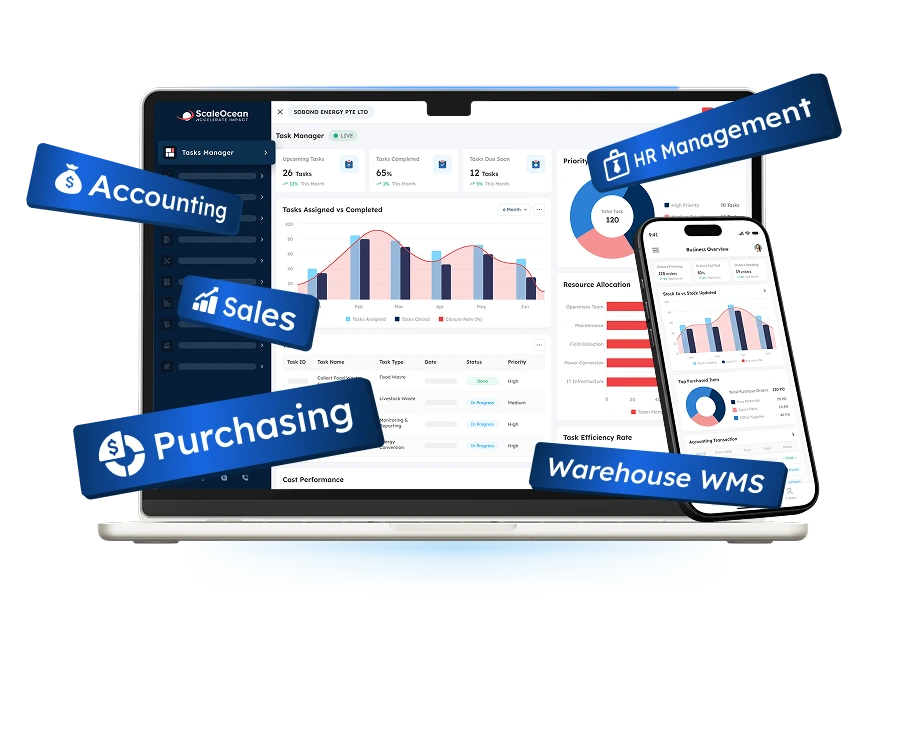
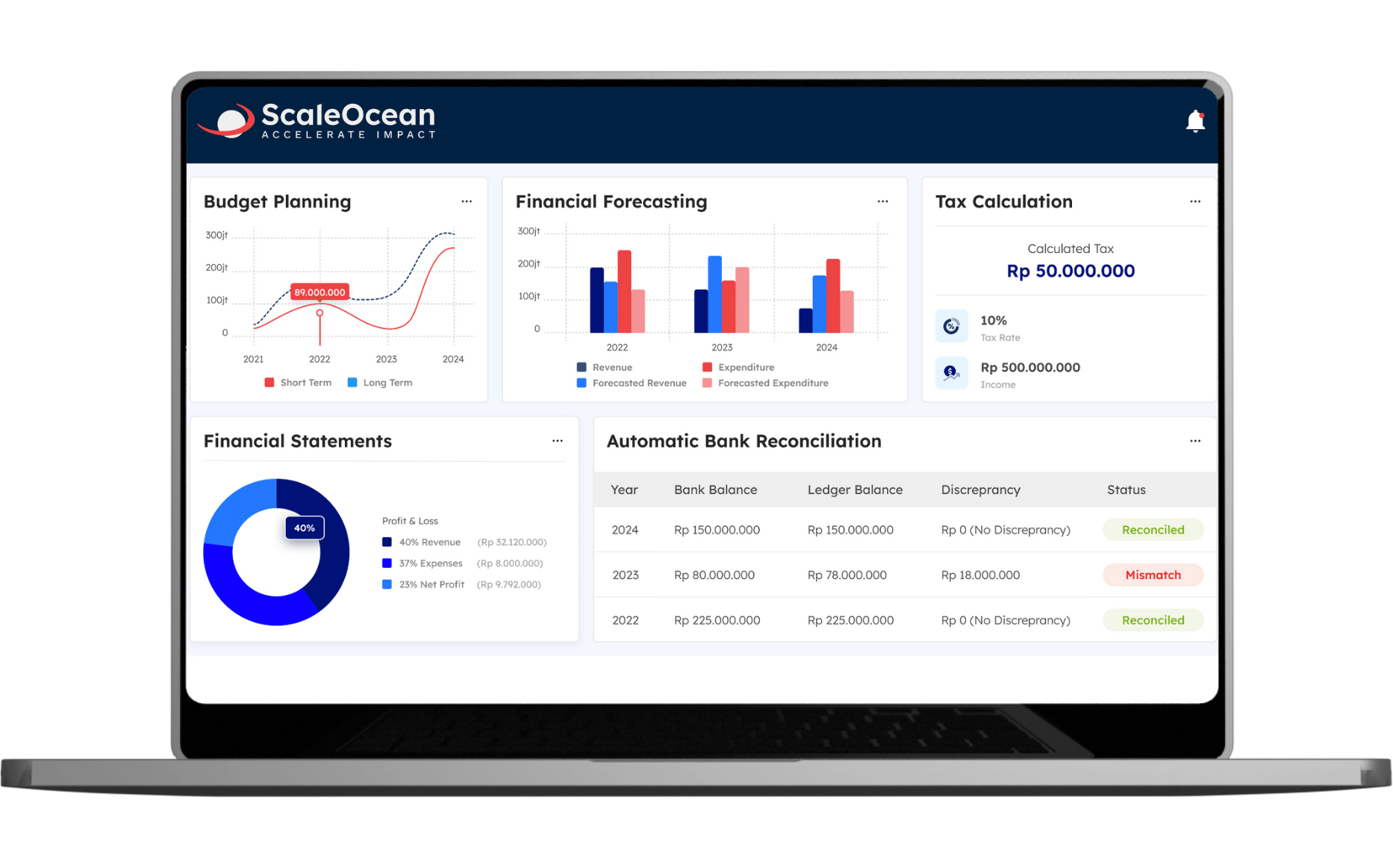 ScaleOcean SG’s financial automation solutions help organizations streamline their accounts payable (AP) processes. The innovative ERP system automates the entire AP workflow, eliminating manual effort, increasing accuracy, and speeding up payment processing.
Automation improves AP efficiency and the accounts payable turnover ratio (APTR) by decreasing errors, late payment penalties, and improving supplier relationships.
Many firms have increased their AP efficiency by using financial automation with ScaleOcean, saving time and increasing accuracy. ScaleOcean also provides a free demo, and with the help of Singapore’s CTC (Cost to Company) grant, firms can get financial assistance to adopt the solution.
ScaleOcean has the following key features:
- End-to-End Financial Automation: ScaleOcean ERP automates the entire accounts payable process, reducing manual effort, streamlining invoice management, and improving payment processing times.
- Real-Time Data Integration: The ERP system offers real-time data integration across all business operations, providing visibility into accounts payable, cash flow, and financial obligations.
- Customizable Workflow for Accounts Payable: ScaleOcean ERP provides the ability to customize workflows based on specific business needs.
- Smart Reporting and Analytics: With integrated reporting tools, ScaleOcean ERP offers actionable insights on financial operations, including accounts payable.
- Seamless Vendor Integration: The ERP system integrates with vendors’ platforms, ensuring seamless communication and faster processing of invoices.
Conclusion
The accounts payable turnover ratio (APTR) is an important indicator for determining how efficiently a company manages its financial commitments. A well-managed APTR not only provides continuous cash flow, but it also improves supplier relationships and demonstrates competent financial management, thereby boosting a company’s growth and sustainability.
Businesses can evaluate and streamline their accounts payable operations to improve their financial practices even further. ScaleOcean SG provides innovative financial automation solutions to assist businesses in achieving financial success by streamlining AP procedures, increasing accuracy, and maximizing cash flow. Discover how ScaleOcean can help your organization achieve its financial goals through automation.
FAQ:
1. What is another name for accounts payable turnover ratio?
The creditors turnover ratio, also called the payables turnover ratio, trade payables ratio, and accounts payable turnover ratio, all refer to the same metric, which measures how often a company pays off its debts to suppliers during a period.
2. How to improve accounts payable turnover?
1. Automate AP Process: Speed up payments by eliminating manual delays.
2. Negotiate Payment Terms: Collaborate with suppliers for mutually beneficial terms.
3. Centralize Vendor Management: Streamline vendor communication for efficiency.
4. Monitor Cash Flow: Regularly track cash flow to meet payment deadlines.
3. What is a good trade payables turnover ratio?
The ideal trade payables turnover ratio varies by industry, but a higher ratio generally signifies that a company is paying its suppliers efficiently and on time. To assess whether a ratio is good, it should be compared to industry standards and peer performance to ensure the company is operating optimally.
4. What is the best KPI for accounts payable?
1. Average payment period: Time taken to settle invoices.
2. Invoices paid on time: Percentage of on-time payments.
3. Invoices processed per day: AP staff efficiency.
4. PO-related invoices: Ensures invoice alignment with POs.
5. Invoice exception rate: Measures discrepancies in invoicing.
6. AP turnover ratio: Indicates supplier payment efficiency.





















.png)