

The Enterprise Development Grant (EDG) is one of Singapore’s key initiatives to help local companies strengthen capabilities, innovate, and expand internationally. In today’s environment of rising costs, tight talent markets, and constant pressure to transform, sustainable growth has become increasingly difficult for businesses.
So, the Enterprise Development Grant EDG addresses this by providing significant co-funding, enabling businesses to invest in upgrading, digital adoption, and overseas expansion without bearing the full financial burden. This makes it an essential tool for businesses seeking additional funding and long‑term competitiveness and resilience.
This guide explains how the Singapore Enterprise Development Grant works, what projects it supports, and the eligibility, application, and documentation requirements, along with practical tips to strengthen your proposal. Whether it’s your first application or a refinement of an existing plan, this article will help you apply with clarity and confidence.
 Key Takeaways
- The Enterprise Development Grant (EDG) helps Singapore businesses scale up, innovate, and expand internationally through co-funding support for strategic projects.
- EDG focuses on three key pillars: core capabilities, innovation and productivity, and market access to support business growth and transformation.
- To be eligible for EDG, businesses must be registered in Singapore, have 30% local equity, and demonstrate financial health and project feasibility.
- ScaleOcean ERP Software can help streamline operations, enhance efficiency, and strengthen your EDG application by supporting digital transformation and improving reporting accuracy.
What is the Enterprise Development Grant (EDG)?
The Enterprise Development Grant (EDG) is a Singapore Government grant scheme run by the Enterprise Singapore (ESG) to assist Singapore’s businesses to expand and upgrade. The EDG is not designed for basic off-the-shelf solutions – it’s geared toward strategic transformation and capability building.
Travelling to third-party consultant providers, incremental staffing, equipment, and specialised software are considered project-related costs and deemed to be eligible for funding, which is available on a reimbursement basis. Businesses can see if they are eligible for up to 50% of their expenses, and sustainability-oriented projects may see up to 70% being covered.
Reports indicated that in January 2026, EDG still contributed to the growth of the business landscape, adding approximately 11,700 firms to the EnterpriseSG landscape in 2025, up from 11,500 in 2024. The significant uptake indicates the increased importance of EDG for enterprises, underscoring its significance in addressing business challenges, costs, and innovations.
Three Pillars Of EDG
The Singapore Enterprise Development Grant has three strategies that support businesses in their growth and success. These pillars will help support your efforts, build upon your existing foundation, think creatively about innovation and efficiency, and consider new market possibilities.
The EDG can be a beneficial tool for any business thinking about changing and succeeding, as it covers many parts of growth:
Core Capabilities
This pillar is about improving the basics of a business. It guides strategy development, financial management, human capital, service excellence, and branding, etc. With enhancements to these fundamental services, businesses become resilient and set the stage for long-term success.
Innovation and Productivity
Here, EDG paves the way for efficient and innovative projects that support Environmental, Social, and Governance (ESG) goals. This encompasses product development, process optimisation, and automation, along with the focus of providing more value to businesses to work smarter.
In a rapidly evolving business landscape, businesses can improve productivity and stay competitive by leveraging new technology and optimising their processes.
Market Access
The last pillar supports businesses to expand overseas. It can help cover the risks associated with doing business overseas, with partnerships and market readiness programs, and help streamline the marketing process. Supported by the Singapore Enterprise Development Grant, your business will be able to look for fresh opportunities overseas and develop a more international footprint.
What Does EDG Support?
A single step toward change might be enough when it comes to growing a local company in Singapore. Instead of routine upgrades, business grants open doors to deeper shifts across operations. With a focus on skills, new methods, or moving into foreign markets, funding becomes possible where budgets once blocked progress.
Most businesses in Singapore can get half to nearly three-quarters of their project costs covered by the Enterprise Development Grant. Bigger companies usually land closer to one-third. When new tech tools are brought in, operations shift, or teams move into foreign markets, this shared funding opens doors. It lifts a company’s edge without carrying the full price alone.
How Can You Be Eligible for EDG?
A firm hoping to get the Enterprise Development Grant needs to be set up and active in Singapore. At least thirty percent of its ownership should belong to citizens or permanent residents here.
When reviewing requests, Enterprise Singapore checks how well each plan fits within the three core areas. You can also use ESG service software to make the job easier.
Most of the money needs to be available right away. Since payouts come only when bills are settled, cash flow matters. After each stage finishes, funds follow. Payment happens once everything’s been covered by the firm itself.
Fulfilling what’s listed here opens the door to backing through Singapore’s Enterprise Development Grant. Getting these right matters before anything else moves forward
Local Registration
Companies must be registered and actively operating in Singapore. This requirement ensures that EDG funding benefits businesses that contribute to the local economy and that projects are implemented in accordance with Singapore’s regulatory framework.
Ownership
At least 30% of the company’s equity must be held directly or indirectly by Singapore citizens or Permanent Residents, based on ultimate individual ownership. This condition guarantees that the Enterprise Development Grant EDG support strengthens businesses with a significant local stake, reinforcing Singapore’s long‑term economic resilience.
Financial Health
Applicants must demonstrate the financial capacity to complete the proposed project. This means showing that the company has stable resources and can sustain operations while undertaking transformation initiatives. By requiring financial soundness, EDG aims to ensure that projects are viable and that funding results in measurable, lasting impact.
How Do Businesses Apply for EDG?

Applying for the Enterprise Development Grant EDG requires careful preparation to ensure your proposal meets Enterprise Singapore’s expectations. For businesses applying for EDG, understanding proper Grant Management is essential for tracking project costs and ensuring compliance.
The process is structured but can feel complex if you’re new to government grants. Below is a step-by-step breakdown to help businesses navigate the application smoothly:
Step 1: Identify the Project
Set goals for your project by crystallizing the scope of your project. Enterprise Singapore seeks projects that can fit into one or more of the three categories of the Enterprise Development Grant Singapore: Core Capabilities, Innovation and Productivity, and Market Access. Be specific in your goals, outcomes, and projections for the continued growth and development of the business.
Step 2: Select a Consultant
If your project includes strategy, branding, or redesigning a process, having a competent consultant can enhance your application. Enterprise Singapore will look in favor of the consultant for their expertise, structure, and credibility in a bid. Make sure the consultant possesses the appropriate qualifications and background in projects eligible for the Singapore Enterprise Development Grant.
Step 3: Choose the Best ERP Software
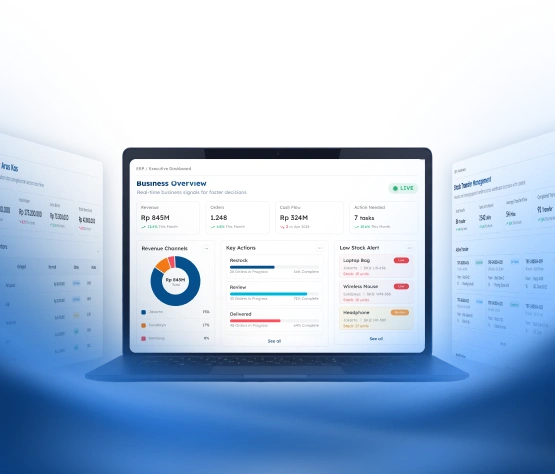
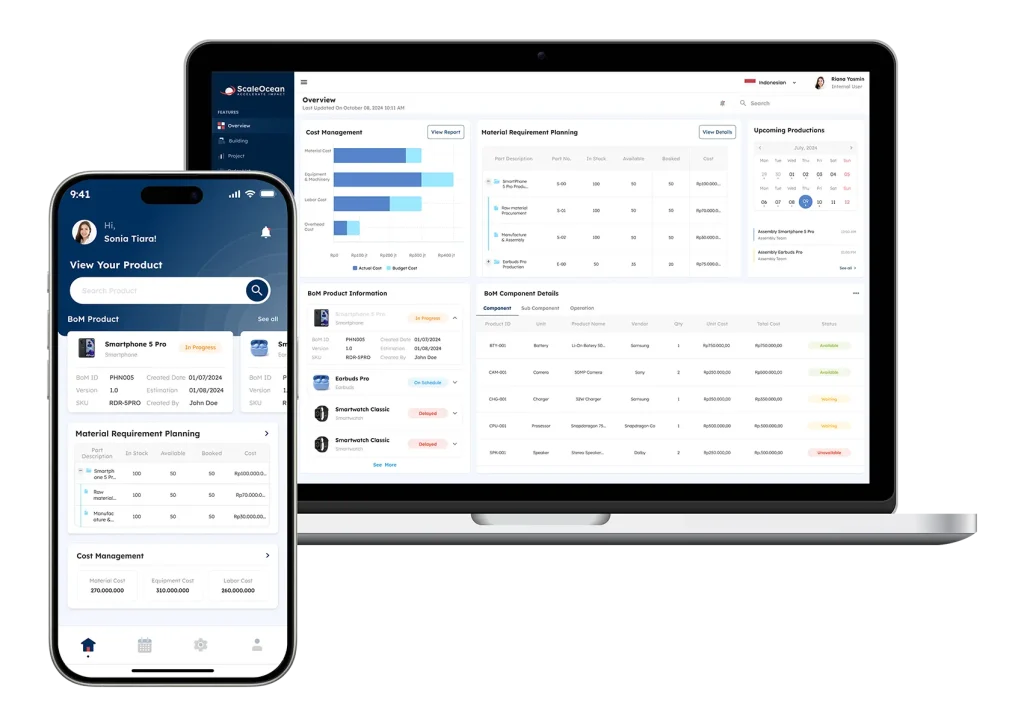 Developing a project with an Enterprise Resource Planning (ERP) system increases your likelihood of winning! ERP solutions have a strong overlap with EDG’s objectives, facilitating the digitisation and transformation of businesses. One can use ScaleOcean ERP Software, which is designed to fulfill Singapore’s Enterprise Development Grant requirements.
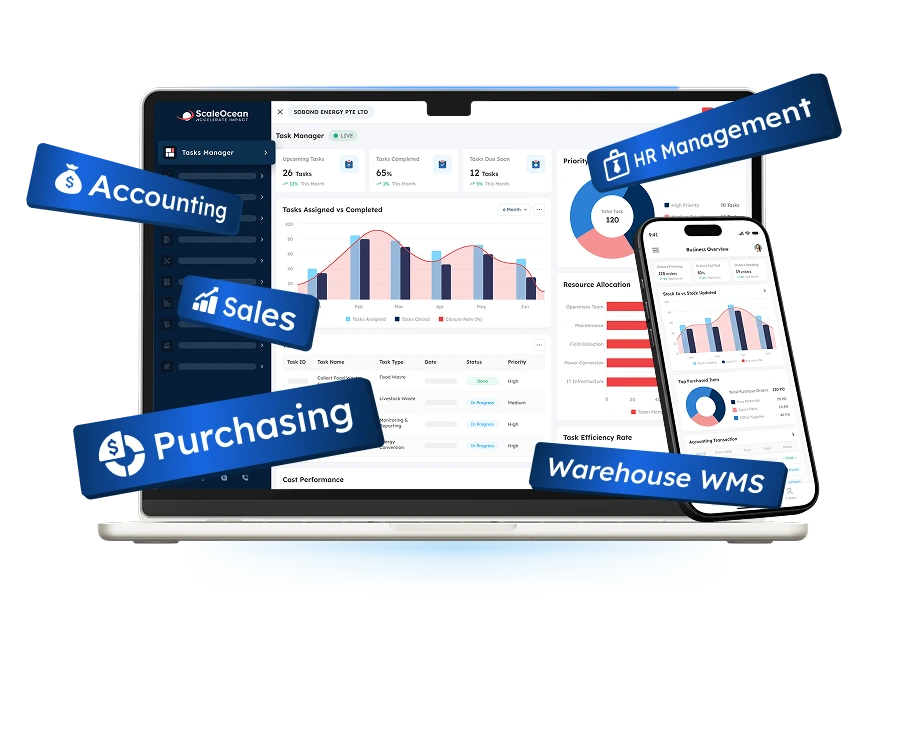
By implementing ScaleOcean, you are taking steps to eliminate manual methods and indicating that your business is dedicated to digital transformation to Enterprise Singapore. ERP streamlines financial, HR, inventory, and customer tracking in one place. It reflects your innovative and productivity intentions, and makes your proposal aligned with EDG’s goals for the best chance of approval.
However, if you are working on productivity‑based projects, having an Enterprise Resource Planning (ERP) system might help increase your chances of success at project approval. ERP solutions closely align with EDG’s goals of helping businesses go digital and transform their operations. One of the ERP options that you can choose is ScaleOcean ERP Software, which is a Grant-Ready system that is specifically designed to satisfy the Enterprise Development Grant requirements in Singapore.
With ScaleOcean, you’ll be updating your existing workflows and notifying Enterprise Singapore that your business is ready for digital transformation. ERP unifies the finance, HR, and customer management functions all on a single platform. It reflects an evident innovation and productivity drive and puts your proposal in step with the goals of the Enterprise Development Grant (EDG), raising the chances of funding being considered.
Step 4: Submit via the Business Grants Portal (BGP)
Proposal applications must go via the official Business Grants Portal. Make sure all necessary paperwork is submitted, such as financial statements, project proposal, and credentials of consultants. It is essential to get it right, or if information is missing, it could hold up the application or even result in its denial.
Step 5: Await Approval
Enterprise, Singapore, will consider your application once you have submitted it. The evaluation process takes into account considerations of eligibility, project feasibility, and links to the goals of EDG. The approval process tends to take longer, so enterprises should schedule ways.
What Documents Are Required to Apply for EDG?
Applying for the Enterprise Development Grant EDG requires careful preparation to ensure that all necessary information is provided. Enterprise Singapore (EnterpriseSG) evaluates applications based on both company credentials and project feasibility.
So businesses must submit a complete set of documents that demonstrate readiness, credibility, and impact as listed below:
Mandatory Company Documents
Applicants must provide their latest ACRA Bizfile (dated no earlier than six months before the project application), audited financial statements, and, if applicable, parent company financials. These documents confirm the company’s legal standing and financial health, ensuring that the applicant is a viable candidate for funding.
Quotations or Estimates
To justify project costs, companies need to submit quotations or cost estimates from vendors or service providers. This requirement ensures transparency in budgeting and helps EnterpriseSG assess whether the proposed expenses are reasonable and aligned with project objectives.
Project-Specific Documents
A detailed project proposal is also required, along with proof of quotations. This proposal should outline the project’s scope, objectives, and expected outcomes. By providing specifics, applicants demonstrate that the initiative is well‑planned and capable of delivering measurable results.
Consultancy Documents
If external consultants are engaged, applicants must include the consultant’s proposal and credentials. This allows EnterpriseSG to evaluate the consultant’s expertise and suitability, ensuring that qualified professionals support the project.
Projected Impact Figures
Finally, applicants must submit 3-year post‑project projections covering revenue, profit, staff remuneration, and impact on local workers. These figures help EnterpriseSG gauge the project’s long‑term benefits and its contribution to Singapore’s economy and workforce.
Here Are Tips for a Successful Application

The Enterprise Development Grant EDG eligibility doesn’t guarantee your success. A good application is clear and aligned with business strategy, and must be ready to execute. In addition to the essential information, applicants should also include details showing how their project makes a measurable impact.
Enterprise Singapore seeks initiatives beyond traditional developments to shore up capabilities within the organisation, enhance competitiveness in the long term, whether by innovation, improved productivity, or market extension.
Adhere to best practices to enhance your chances of doing well and communicate your projects’ value to Enterprise Singapore. Below are some tips on how to make an application a successful one:
Start Early
Start working on your proposal before time allows for a sufficient breakdown of documents, documenting your ideas, and making sure that your proposal complements any missing pieces. Planning in the early stages decreases the chance of any delays and makes your submission complete and polished when reviewed.
Be Clear and Concise
State project goals and outcomes clearly. When your proposal is clear, evaluators get a good idea of what you are doing and what impact your initiative will have on your business.
Prioritize Strategic Alignment
Be sure your project suits the company’s objectives instead of quick fixes. Once strategic alignment is demonstrated, it becomes evident that the effort will aid in the company’s further sustainable growth, making it more competitive in the future.
Ensure Financial and Operational Readiness
Show evidence of the financial resources and operational capacity of your business to implement the project. It reassures Enterprise Singapore that the initiative is viable and that funds would be utilized effectively.
Engage Experts
Seek advice from industry experts and/or consultants with knowledge of EDG requirements. They have the know-how to bolster your proposal, make sure it meets the guidelines, and boost your chances of getting a positive response.
Avoid common pitfalls
Don’t submit vague and incomplete proposals. Effective proposals typically focus on improvements in the efficiency of the business by addressing effective Business Process Management (BPM) aims of improved productivity.
Making your process relevant can make all the difference in convincing them. In addition to the documentation, successful projects sometimes depend on your ability to monitor and show the effects of your project. This is where there is real value to a structured approach, such as a system like ScaleOcean ERP.
Since the software is designed to capture the specific productivity data Enterprise Singapore seeks, it naturally organizes your operations into a format that is easy to verify. Using a system like this does the heavy lifting for you during the audit.
It provides clear, data-backed evidence to support your case, which helps streamline the verification process. It is a straightforward way to ensure you have the right documentation to claim EDG 50% while keeping your business transformation on track and fully transparent.

Where Can More Information About EDG Be Found?
Businesses need to consult official government resources for the most up‑to‑date and accurate information regarding the Enterprise Development Grant EDG. For detailed information on eligibility criteria, application process, and other details, refer to both the Enterprise Singapore website and the Business Grants Portal (BGP).
Conclusion
For businesses in Singapore, the Enterprise Development Grant EDG is an important instrument that provides financial assistance to boost core competencies, drive innovation, and enter foreign markets.
Businesses can increase their chances of approval by understanding the eligibility requirements, preparing the appropriate documentation, and aligning initiatives with long-term objectives. Demonstrating digital transformation is also a crucial requirement for a successful application.
So adopting an ERP system will help you demonstrate your dedication to productivity, innovation, and the digital transformation that’s essential to the Enterprise Development Grant Singapore mission. ScaleOcean ERP, a Grant-Ready solution, helps organizations streamline operations and submit stronger proposals that correspond with EDG’s objectives.
If your business is ready to take the next step, consider exploring ScaleOcean ERP to boost efficiency and enhance your EDG application. You can access a free demo to see how it transforms your operations and increases your chances of grant approval.
FAQ:
1. What is the timeline for the EDG grant?
Most EDG‑funded projects are expected to be completed within 12 to 18 months after the grant is approved. For initiatives under the Overseas Marketing Presence (OMP) category, the completion timeline is set: projects must finish within 12 months.
2. What does EDG cover?
The Enterprise Development Grant (EDG) provides funding for eligible costs such as consultancy services, software and equipment purchases, and workforce expenses. Local businesses can typically receive up to 50% support on these approved project expenditures.
3. How much is an EDG Grant?
In Singapore, the Enterprise Development Grant (EDG) generally funds up to 50% of eligible project costs for businesses, with sustainability projects qualifying for up to 70% support until March 2026. Larger companies typically receive up to 30% funding assistance.
4. Who is eligible for the EDG grant in Singapore?
To be eligible, a business must be registered and operating in Singapore, have at least 30% local ownership, and show financial capacity to start and complete the project. The initiated project should align with one of EDG’s pillars (Core Capabilities, Innovation and Productivity, and Market Access).





















.png)