

Sales management can assist your company in structuring your sales activities, overseeing your pipeline, and enhancing revenue performance through a structured operational approach. Yet many Singapore companies face difficulties because managers cannot keep track of ongoing deals.
In addition, limited pipeline visibility can hinder a salesperson, as they are unable to track prospects’ progress and the likelihood of closing a sale. As a result, businesses tend to take longer to make decisions and miss many potential opportunities across industries and markets.
This way, businesses improve sales efficiency, allowing timely control and oversight through consolidated dashboards and performance monitoring. Additionally, this facilitates better time-series forecasting and enhances communication between sales representatives and the management team.
The growing importance of sales management also appears in recent global investments in sales performance technologies. Our team has found that, according to Fortune Business Insights, the global sales performance management market was valued at USD 2.69 billion in 2024 and is projected to reach USD 14.19 billion by 2032, exhibiting a 16.52% CAGR.
Hence, a growing number of companies employ the sales management system to gain visibility, collaborate, and improve efficiency across the entire organization. What’s more, systemized automation enables the company to be proactive, improving customer interaction and sales.
 Key Takeaways
- Sales management is the process of coordinating sales activities, representatives, and operational strategies to effectively support sustainable revenue growth and productivity improvements.
- Types of sales management include B2C, B2B, enterprise, and SaaS approaches, depending on customer needs and business structures.
- Tips for effective sales management include forecasting, training, performance tracking, incentives, and the consistent development of structured sales processes.
- Technologies for sales management include CRM software, analytics systems, messaging applications, sales enablement tools, and project management platforms.
- ScaleOcean Sales System supports sales management by centralizing CRM, reporting, automation, and pipeline management, helping businesses consistently improve operational visibility and sales efficiency.

What is Sales Management?
Sales management is the activity of directing sales operations, personnel, and methods to ensure steady growth in a company’s revenue. This process involves not only outlining strategic goals but also motivating and guiding teams to achieve these targets.
A successful sales manager must cultivate a positive team environment, fostering collaboration and communication among team members. Additionally, effective sales management emphasizes improving customer relationships, which is essential for nurturing client loyalty and driving sustained sales growth.
Moreover, sales management should routinely contain essential practices such as sales forecasting, reporting, and performance analysis across all business practices. By implementing these practices, businesses gain valuable insights into market trends and customer behavior, enabling them to make informed decisions.
This proactive analysis also helps identify areas for improvement and optimize the sales process. As a result, companies can maximize sales efficiency, ultimately leading to increased revenue and a stronger competitive position in the marketplace.
What are the Aspects of Sales Management? The 4 P’s
The four basic principles of sales management serve to establish a framework for the continuous organisation of business activities and the enhancement of sales efficiency. They enhance cooperation for the sustainable increase of income, not only in sales.
Companies that understand what is sales management and use the 4Ps could gain valuable visibility into the business and an in-depth understanding of each other, and customers could also gain that through these programs today. Managers could have reliable control over operational performance through well-defined sales and planning processes.
1. People
Individuals still predominate in sales management, since sales representatives are the frontline touchpoint for whether your customer will buy from you in the end. Further, good teams enable sales representatives to deliver higher-quality communication and maintain a sustained focus on strong long-term relationships.
Sales managers also assist representatives by providing training, motivation, and other programs that support the ongoing achievement of sales targets. So, the organization enhances productivity while maintaining relatively high customer satisfaction in competitive markets.
2. Performance
Performance indicates the efficiency with which salespeople meet targets through systematic selling activities across their daily work. Other metrics include conversion ratio and business expansion over a certain period.
Today, sales managers routinely analyze performance data to pinpoint deficiencies and enhance performance efficiently. Consequently, corporate entities hold providers more accountable while motivating representatives to make ongoing improvements in service performance and measurable service outcomes.
3. Process
Process refers to well-defined procedures that sales representatives consistently use when engaging customers or in other sales operations. Additionally, efficiency is enhanced through effective coordination across processes, thereby reducing sales response times.
Adopting disciplined sales processes enables companies to achieve significant gains in efficiency and relationship management. As a result, the number of opportunities managed by each representative increases much more quickly while service quality remains constant across all the operations.
4. Planning
The purpose of planning includes formulating specific, measurable sales objectives to support future organizational growth and provide a clear path for the organization to run the business efficiently. Also, companies allocate resources strategically and train salespeople to adapt to market changes.
Sales managers also develop forecasting techniques that enable businesses to anticipate revenue opportunities more accurately, which can utilize sales forecast software tools. In turn, companies’ operations are becoming more robust, enabling them to make better decisions in their sales efforts and customer interactions.
What are the Different Types of Sales Management?

Various sales management methods enable organizations to meet specific customer and functional needs efficiently. Moreover, companies adjust these strategies based on the nature of the industry, the sophistication of transactions, and the revenue goal.
Knowing the various types of sales management and deeply understanding what is sales management can significantly ease and enhance customer relationship-building and operational flexibility. As a result, businesses adopt strategies to enhance long-term profitability in competitive fields.
1. B2C Sales Management
B2C selling is the sale of products directly to individual consumers through various channels. Also, leading businesses across the industry make every effort to accelerate deals and enhance customer ownership by responding to personal communication platforms.
Today, even in B2C settings, managers consistently track changes in consumer buying behavior and campaign performance. As a result, companies can enhance customer satisfaction and foster repeat purchases by streamlining sales processes. By leveraging AI for sales, businesses can gain deeper customer insights, predict purchasing patterns, and optimize sales strategies based on real-time data.
2. B2B Sales Management
B2B sales management description emphasizes business-to-business transactions and draws on personal selling and strategic negotiation associated with relationship maintenance. In addition, candidates allow for longer sales cycles and more informed handling of complex organizational buying needs.
Companies engaging in the B2B sales management example will commonly emphasize communication, trust-building, and enhanced customer-specific service solutions. As a result, organizations will enhance relationships and increase prospects for long-term agreements within competitive markets.
3. Enterprise Sales Management
Enterprise sales management strategically manages high-volume sales to major organizational accounts. Also, reps coordinate specialists and buyers through complex negotiations over long cycles.
While sales managers remain concerned with long-term forecasting accuracy and relationship development, they are also improving coordination of daily operations and securing profitable deals for large customer accounts.
4. SaaS Sales Management
SaaS Sales Management refers to a software business that uses a subscription model to generate revenue and retain clients. Additionally, representatives tend to focus on product demonstrations and highlight the platform’s advantages at every client meeting.
Using the SaaS sales management example, companies typically frequently check the onboarding process and subscription experience. It enhances customer relationships, leading to higher retention rates and rolling income.
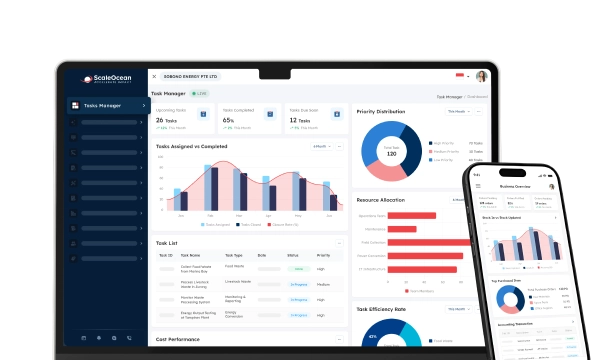
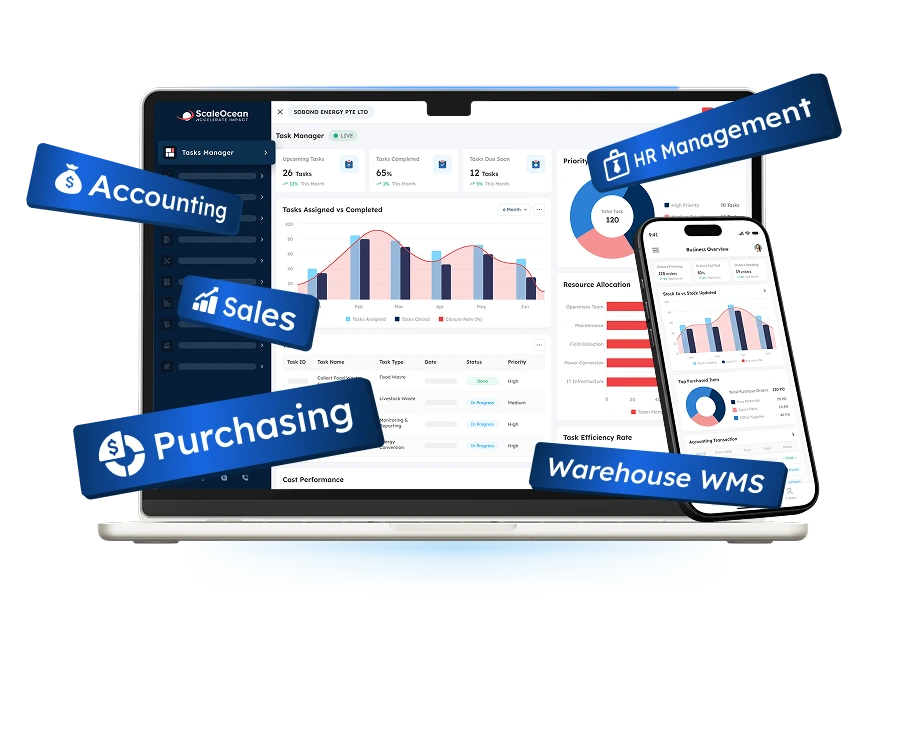
After establishing structured sales processes, businesses often require centralized systems to maintain consistent workflows across teams. ScaleOcean Sales System helps organizations integrate sales management, CRM, and reporting into a single connected operational platform.
ScaleOcean also supports customizable workflows, dashboards, and reporting features tailored toward specific operational requirements and Singapore market strategies. You can request a free demo today to explore how your company can improve pipeline visibility, coordination, and overall sales efficiency with ScaleOcean.

What does a Sales Manager Actually Do?
Sales managers perform operational functions that consistently support sales volume, individual sales representatives’ performance, and the collection and management of customer information. Also, they develop strategies and align sales efforts at all levels to achieve business plans.
Effective sales managers also oversee team performance and optimize delivery through disciplined and periodic leadership. This leads to improved prospect measurement and livelier coordination across sales functions and customer relationship management.
1. Recruiting
Selling is highly valuable for corporations seeking experienced representatives who can deliver effective support for long-term sales performance. When hiring, sales managers always review communication skills, and the role in newly structured hiring procedures typically accounts for these attributes.
Effective recruiting strategies also lower the attrition rate and greatly enhance the team productivity in today’s competitive business environment. Consequently, companies develop a trusted sales force and enhance customer relationship management, mainly in highly competitive industries.
2. Coaching and Training
Coach and train will develop employees’ skills through ongoing education and the formal execution of routes. Also, sales managers enhance and communicate best practices to the sales team so they can address customer objections.
The benefits of training businesses further included the routinization of operations and an improved customer experience. As a result, representatives are closing opportunities more quickly and delivering better selling performance across diverse customer encounters.
3. Goal Setting and Forecasting
Establish and communicate clear, measurable revenue goals for the organization that aid representatives throughout the process. At the same time, forecasting allows sales managers to anticipate sales opportunities and allocate resources more strategically.
There are many possible reasons why the sales managers constantly look at past information. One of them is data used to validate forecasting and daily operations scheduling. All of these will lead to reduced risk and better decision-making in the future.
4. Reporting and Analytics
Operational insight today requires reporting and analytics that enable better sales decisions and consistent, disciplined performance evaluation. It allows a sales manager to track conversion metrics and pinpoint operational inefficiencies in the reporting system.
Leading sales analytics help organizations gain major visibility into sales pipelines and customer engagement. As a result, companies amplify accountability and enhance the effectiveness of the sales process through measurable operational data and performance tracking.
5. Team Management
Guiding a team of representatives successfully around the sales job, balanced with a mixture of interacting and increased efficiency in the sales process. In addition, managers can identify solutions to operational problems and improve communication in the sales department.
Efficient team management substantially enhances employees’ determination and operational stability across all departments. As a result, the organization boosts workplace productivity while maintaining a steady customer flow and earning potential.
6. Shadowing
As a leadership mechanism, marketing managers can use shadowing to oversee representatives during customer meetings and sales procedures in real time. Also, improving effective communication skills would eliminate defects, and operational performance would be greatly enhanced through useful feedback.
Today’s shadowing sessions are designed to significantly enhance the impact of coaching and representatives’ confidence for sales managers. As a result, organizations have more customer interactions while achieving higher sales productivity across operational activities.
7. KPI Management
KPI indicators evaluate the sales management example and serve as specific objectives that support operational guidelines and clear responsibilities at all times. In addition, managers often control sales growth alongside the conversion ratio and customer-related actions.
At the same time, companies using KPI management excel at planning strategies more effectively and at raising operational transparency. On that account, firms diagnose performance deficiencies and boost sales efficiency across different functional sectors.
8. Sales Strategy
Sales strategy involves organizing efforts efficiently to achieve customer acquisition, customer retention, and revenue growth targets. Additionally, the sales manager’s role includes formulating tactical plans and adapting the sales effort to dynamic market conditions.
Enhanced sales strategies today significantly improve competitiveness and customer relationship management. In turn, other organizations continue to gain operational efficiency and benefit from long-term profitability across various industries and customer segments.
9. Pipeline Management
Pipeline management helps to systematically manage sales potential during customer acquisition and customer conversion today. Further, the manager is responsible for overseeing deal movement and identifying bottlenecks that impede sales and operations.
Today, companies that apply pipeline management gain better forecasting accuracy and revenue visibility. When supported by quoting software tools, teams can manage opportunities more systematically, prepare offers more efficiently, and maintain closer interactions with prospects and customers.
What are the Common Errors in Sales Management?

The failure of sales management description causes many companies to experience problems that lead to a dramatic reduction in productivity, profitability, and the quality of customer relationships. Furthermore, operational inefficiencies lead to communication losses and affect a company’s sales power.
Understanding what is sales management and the common sales management mistakes also helps companies enhance operational processes and decision-making today. As a result, businesses could boost teamwork and maintain stronger revenue and customer engagement.
1. Hiring & Retention
Unsuccessful hiring processes for representative positions tend to lead to decreased effectiveness and deteriorating customer relationships across the organization. In addition, inadequate retention practices are very costly and disrupt long-term organizational efficiency and effectiveness.
A lot of companies are working on hiring quality and maintaining existing staff, and they are probably more effective at creating operational consistency and employee engagement today than ever before. Consequently, businesses retain existing staff and maintain experienced sales teams, leading to continued ROI.
2. Adapting to Market Changes
Numerous companies have trouble optimally adjusting sales activity planning to shifting consumer demands and market innovations nowadays. At the same time, lagging in updates can decrease their competitiveness, as well as customer value and performance.
Companies that are responsive to market changes tend to be more flexible and to improve sales efficiency at any time. So, those companies secure stronger profitability, supporting sustainable operations to flourish.
3. Aligning Sales & Marketing
Very often, the sales and marketing teams are disconnected, which leads to inconsistent communication and considerable operational inefficiencies. Additionally, it dilutes lead quality and drastically impacts customer acquisition and conversion results.
Businesses that align sales and marketing activities also consistently improve collaboration and customer engagement today. Therefore, organizations strengthen operational coordination and increase conversion opportunities through integrated business strategies.
4. Balancing Admin & Coaching
Too much paperwork diminishes the chances of coaching and strongly weakens the representative development these days. Also, sales managers who handle too much paperwork may struggle to maintain optimal communication with the team.
For most firms today, efficiently managing both administration and coaching leads to improved productivity while reinforcing employee effectiveness. As a result, companies enhance organizational efficiency by nurturing ongoing representative growth across all areas of sales.
Tips to Achieve Good Sales Management
Concentrated sales management description practices are implemented by a wide range of thriving organizations today. Operational controls, strategic workload policies, and performance monitoring are applied consistently across various competitive environments.
Furthermore, the use of practical sales management tools is evidence of significant improvements, as organizations increase their productivity, efficiency, and effectiveness in the moment. As a result, organizations support decision-making more effectively and enjoy smoother interdepartmental cooperation between the sales action cycle and contacts.
1. Set Achievable Sales Goals
Achievable sales objectives allow sales teams to maintain their motivation, while business development objectives remain consistent day to day. Furthermore, this seems to enhance work efficiency by reducing undue competitiveness in sales.
Defining specific targets by sales managers will also significantly enhance the sales team’s accountability and effectiveness across all operations. As a result, organizations reinforce performance consistency while proactively encouraging representatives to implement sustainable operational improvements and deliver tangible results.
2. Forecast Future Sales
Planning future sales enables companies to allocate resources and operational strategies more accurately in line with growth opportunities. Furthermore, sales managers review records and consider potential market changes that may affect the company’s performance.
Aiding organizations in improving the forecasting accuracy considerably enhances their budgeting and decision-making processes. Meaning they can reduce uncertainty and maintain more stable operations amid dynamic customer needs and sales activities.
3. Track Sales Progress on All Key Metrics
Following sales development enables managers to measure representative efficiency and operational effectiveness across all processes nowadays. In addition, companies monitor conversion rates and regularly measure customer contact through key sales indicators.
Track important stats for many purposes and benefit from increased accountability and a broader view of the data, enabling regular game-time decision-making.
4. Make Data-Driven Decisions
In current research and implementation, using data to derive decisions delivers substantial business benefits. The benefits of refining operational accuracy and reducing the uncertainties in sales management description are significant. Managers will strive to establish measurable indicators by improving forecasting, strategy formulation, and customer contact activities.
The use of operational information in organizations undeniably increases their productivity and sales performance in competitive industries nowadays. Therefore, organizations boost decision-making without disrupting profitability through a systematic evaluation of their operations.
5. Identify and Select your Team
Choosing appropriate representatives benefits firms by preventing sales disruptions through effective customer management. Moreover, sales managers consider communication skills when identifying candidates, thereby contributing to the achievement of the company’s long-term strategic aims.
In general, large acquisition teams interact with customers in ways that help not only to secure sales but also to strengthen teamwork and overall internal operational efficiency. As a result, enterprises enhance customer interactions and grow their revenues, generally in highly competitive sales markets.
6. Set Up Sales Contests and Incentives
Sales contests and incentives motivate representatives to perform at a higher level more regularly. Also, cash competitions boost employees’ ambitions and greatly foster healthy competition across the entire sales business.
Organizations that use motivators improve their ability to motivate while dramatically increasing operational satisfaction among other organizations. As a result, sales representatives experience more sustained motivation while needing to communicate more effectively with customers and improve overall sales results.
7. Conduct Continuous Training, Coaching, and Skill Development
Consistent training provides representatives with consistent development of their communication, negotiation, and relationship management skills nowadays. Furthermore, training boosts operational efficiency and supports the organization’s long-term employee development.
Apart from skill enhancement, organizations benefit from a significant increase in learning agility and productivity, becoming better equipped to deal with today’s competitive markets. Organizations thus enhance their sales effectiveness and achieve persistent process improvement.
Best Technologies and Tools for Sales Management
Currently, most sales management technologies assist businesses in enhancing transparency and efficiency, and in building rapport in their operations. Also, they facilitate automation of as many processes as possible and foster effective cooperation between sales and marketing.
In addition to sales management technology use, the impact on projection precision and the business operations decision process is significant. Therefore, each corporation enhances productivity and maintains structure in managerial sales procedures in competitive environments.
1. Sales Management Systems
Business management systems aggregate functions that are essential for measuring performance and enhancing sales. Furthermore, they maximize the company’s visibility by automating information flow among different representatives through a unified operational control system.
With sales management software in place, organizations largely eliminate manual processes and operational inefficiencies. Thus, companies increase efficiency while increasing customer focus in their sales and reporting activities.
2. Customer Relationship Management (CRM) Software
CRM applications and software assist enterprises today in continuously establishing a systematic approach to capturing all customer information and facilitating reporting on customer relationship management activities. Reps efficiently manage communication routes and monitor customer responses through a single platform.
Moreover, customer retention and sales coordination are now enhanced thanks to businesses being strategic in their CRM software implementation. Thus, organizations can achieve high-quality engagement while simultaneously gaining greater operational clarity in customer relationship activities.
3. Instant Messaging Apps
Modern instant messaging tools enhance operational activities and considerably benefit communication, making it rapid among modern sales teams. Furthermore, it has a significant impact by enabling representatives to report instantaneously and coordinate with customers.
Enterprises that rely on messaging apps boost efficiency by eliminating communication lag and significantly increasing output. Hence, companies enhance their operational agility by more effectively organizing interactions between sales and customer relations functions.
4. Email Marketing Software
With email marketing software, firms can now automate customer interactions and run advertising campaigns smoothly. By the same token, organizations attract their target audience by delivering personalized messages to them in an advanced manner.
The adoption of email marketing tools by businesses has been particularly successful in enhancing lead generation and customer retention. As a result, companies easily enhance conversion opportunities and
5. Project Management Tools
Project management tools enable sales teams to organize tasks and enhance operational efficiency fairly in today’s conditions. Moreover, companies meet deadlines that consistently unify cooperation across diverse sectors and sales activities.
Organizations benefiting from a project management tool for processes have extensively increased efficiency and improved the workflow. That helps companies maintain organized management, reducing existing delays in sales and order follow-up.
6. Sales Enablement
Sales enablement tools enable sales representatives to use a variety of resources to communicate more effectively with customers and sell more consistently today. Additionally, companies leap to increase readiness among representatives while simultaneously providing convenient content across multiple operational activities.
When doing sales enablement, companies are also reaping a wide array of benefits in onboarding and sales team productivity. This results in salespeople enhancing the impact of their conversations with clients, all without sacrificing operational efficiency.
7. Analytics System
Analytics systems have enabled businesses to assess sales using controllable operational insights in real time consistently. Furthermore, managers’ common checkout patterns from performance monitoring systems are organized strategically to enhance forecasting.
Applying dashboards and analytics systems helps organizations to make decisions, optimize operational efficiency, and enhance operational transparency. Today, organizations improve sales efficiency while sustaining sustainable growth through data-driven operational management.
When implementing sales technologies, businesses often need integrated automation to support long-term operational scalability and consistent performance effectively. ScaleOcean Sales System automates follow-ups, reporting updates, and recurring sales activities through centralized operational management tools.
ScaleOcean also provides unlimited user access without additional licensing costs, efficiently supporting growing sales teams across Singapore operations. Request a free demo today to see how ScaleOcean can help your company streamlining collaboration, improve productivity, and support sustainable sales growth.
Conclusion
Sales management helps businesses improve pipeline visibility, operational coordination, forecasting accuracy, and customer relationship management consistently today. Furthermore, effective sales strategies and technologies enhance productivity and support sustainable revenue growth in competitive industries.
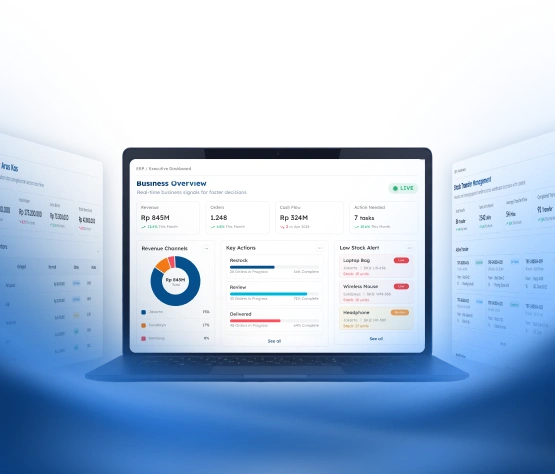
Businesses seeking greater operational efficiency often require integrated systems that effectively support sales automation and centralized reporting. ScaleOcean Sales System provides customizable workflows, CRM integration, pipeline monitoring, and real-time analytics within one connected operational platform.
ScaleOcean also supports unlimited users, branch integration, and automated sales activities, without additional operational complexity. Request a free demo today to discover how ScaleOcean can streamline sales management, improve visibility, and accelerate business growth across Singapore operations.
FAQ:
1. What are the 4 basic elements of sales management?
The four core elements of sales management are planning, organizing, directing, and controlling. These elements help businesses set sales objectives, assign responsibilities, manage team performance, and monitor operational progress effectively.
2. What is the 3-3-3 rule in sales?
The 3-3-3 rule in sales refers to a productivity and outreach framework designed to improve sales consistency and engagement. Generally, it involves focusing on three priorities, contacting three prospects, and completing three meaningful sales activities daily.
3. What is the golden rule of sales?
The golden rule of sales emphasizes selling customer outcomes instead of simply explaining product features. Businesses should focus on how their solutions solve problems, improve efficiency, or deliver measurable value for customers.
4. How to be a good sales manager?
Good sales managers combine leadership, communication, and coaching skills to consistently support team productivity and operational performance. They also strengthen decision-making through strategic planning, performance analysis, and effective customer relationship management.





















.png)