




As your Singapore small business expands, each new opportunity is like a brick wall blocking your pathway, causing your funds to take a hit. From investing in the latest technology capabilities to venturing into new international markets, a host of challenges confront businesses when it comes to funding.
You are able to create a website to optimise possibilities to offer the grant information on your company. Business grants come from a variety of sources: federal government, state agencies and private foundations.
In Singapore, business grants aren’t merely a foot in the door. They’re a necessary tool for businesses that wish to be innovative, grow, and competitive in a fast-paced market. These grants include many aspects of a business, such as technology upgrades and expansion to overseas markets.
We will discuss all that you want to know about business grants, the types of grants to which you can apply, new updates for 2026, and helpful tips to stand out when applying for one. Whether you’re a startup or an established business, these top 15 business grants for Singapore companies could be the key to accelerating your business growth, without adding to your debt pile. Let’s dive in!
 Key Takeaways
- Business grants are a type of funding provided by government bodies or privateorganisationss to support business growth.
- Eligibility criteria for business grants must be based in Singapore, locally owned (with a minimum of 30% ownership by Singapore citizens or permanent residents).
- The top 15 business grants available in Singapore for SMEs include Startup SG Founder, Startup SG Tech, EDG, PSG, CTC, and VFG.
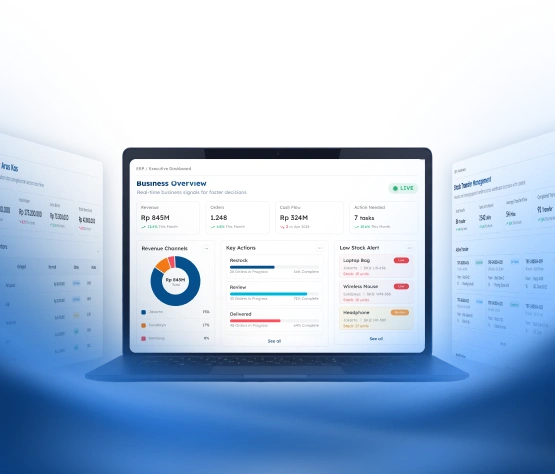
- ScaleOcean ERP software is here to make your grant application process smoother. It simplifies everything from tracking expenses to generating reports.

What are Business Grants?
Business grants are a type of funding provided by government bodies or private organisations to support business growth. The best part is that these grants typically don’t require repayment, making them a great opportunity for businesses that meet specific criteria set by the granting organisation.
These grants aim to help businesses grow by supporting activities like launching new projects, conducting research, or making tech investments. They’re a valuable resource for businesses that want to innovate, expand, or enhance their operations without putting financial strain on their resources.
In Singapore, business grants are crucial for encouraging entrepreneurship, embracing new technologies, and developing the workforce. For small and medium businesses, these grants offer a chance to access funding without the worry of repayment, helping them stay competitive in the market.
Business grants are given to help businesses fulfil certain objectives by the government or other organisations. These grants are available to companies to:
- Facilitate growth for businesses: Grants could finance a business’s expansion, including a new storefront or manufacturing.
- Employee training: Investments in staff development projects can include developing employee skills to make them more productive, or improving the capabilities of the workforce, which could also be funded by the grants.
- Cover research and development costs: Businesses can use grants to innovate and create new products or services, improving their competitiveness.
- Support sustainability efforts: There are grants available for environmentally friendly practices and technological solutions in businesses.
- Support marketing and education: Grants may also support visibility and outreach activities, as well as the acquisition of new customers and new market penetrations.
Who Can Apply for Business Grants Singapore?

For Singapore business grants, there are general requirements that must be met by all the various grant schemes. The business, for instance, has to be a Singaporean-based company, local, and viable financially. Read on to find out more about these criteria:
- Business based in Singapore: Must have business registration and physical presence in Singapore. This means the grants are helping to boost the local economy.
- Singaporean/PR ownership: Companies are required to have a 30% level of local equity ownership, that is, Singapore citizens or PRs need to have a significant shareholding in the company.
- Certificates confirming compliance with local regulations: There will also be certificates indicating compliance with the regulations, which businesses will be required to provide. They might include compliance with safety laws, building codes, or any other regulations applicable to the industry and/or company.
- Operational status: The business must be in operation when applying for the grants. That’s usually associated with financial aid not being offered to dormant or inactive businesses.
- Financial health: Companies should have a good credit rating and no non-compliance with regulatory authorities such as the Accounting and Corporate Regulatory Authority (ACRA) or Inland Revenue Authority of Singapore (IRAS).
These are overarching criteria to ensure that resources are directed to businesses that play a role in Singapore’s economy and workforce. The first step to getting financial help for any technology or expansion into overseas markets is meeting these requirements.
Benefits of Getting Business Grants
Business grants are anything but bad, as they could be of great benefit to your business without putting a strain on your finances. The primary benefit is that you do not have to repay grants, and the financial risk is very little. As a result, you have an amount of money up front and minimal liabilities.
By tracking the key performance indicator (KPI) related to the grant’s impact, businesses can ensure they are maximising the value of the financial support. Here are some other benefits you get:
- Access to capital: Grants provide capital to businesses to build innovations and/or scale without debt to enable them to invest in a growth program such as new technologies, market expansion, and/or staffing or human resources upgrades.
- Reduced risk: Grant funding allows businesses operating on riskier projects (such as research and development projects, or technology upgrades) to reduce the financial risk by allocating part of those project costs to grant funds.
- Tax relief and cost savings: Some grants provide tax relief or cost-saving amounts to cover the running expenses of the project. This saves businesses from financial losses, thereby enabling them to invest more in development or growth programmes.
- Foster innovation and growth: Grants promote innovation, research and development, and advancements in technology. For businesses based in Singapore, these grants offer potential growth possibilities and competitiveness in the market.
- Greater trust and market exposure: A successful grant application increases trust in the business, as the government has come to a decision that the business has a solid growth plan and is to be trusted by investors, business partners, and customers.
- Access to resources and networks: Mentoring, training and networking are available as one of the resources provided by many grants. These can enable businesses to acquire skills, gain access to industry leaders, and open new areas of business.
- Offer credibility and validation: Winning the government grant will lend credibility and validity to the business, giving it recognition among stakeholders if it has won and dedication if it hasn’t.
- Additional resources: Grants will also come with extra assets, for example, mentorship or networking opportunities, which help support a business’s growth and long-lasting success.
Top 15 Grants for Businesses in Singapore 2026

Depending on various needs of the business venture, there are up to 15 business-specific grants available in Singapore, including CTC, EDG, PSG, OTR, EEF and more.
Here’s a detailed explanation of all the top 15 business grants in Singapore that we have compiled for your reference:
1. Company Training Committee (CTC)
The CTC Grant is a support from NTUC (administered by e2i) to help businesses transform their workforce and businesses. This change is being driven by the business leaders. According to the Employment and Employability Institute, this plan for increasing the scale-up of the NTUC CTCs from 2022 to 2028 by the Government, which was pegged at S$300 million.
It provides companies with the tools and support needed to put in place projects that boost productivity, redesign jobs and boost employee career paths; thus, sustaining companies in the long-term.
Provider
The grant comes from NTUC, via its arm, e2i, which coordinates closely with business and unions for both company and worker development.
Goals
The CTC Grant primarily aims to drive both enterprise and workforce transformation. It improves innovation, productivity, and capabilities of businesses through redesigning processes and incorporating advanced technologies.
Additionally, the grant helps companies to work through job redesign, create career plans and put in measures to boost the wages of Singaporeans and permanent residents.
Level of Support
The grant can provide as much as 70% of the cost of eligible project initiatives, which includes vital project needs like software and equipment to support transformation efforts. It also contains financing for training, such as the training of OEM and software, as well as consultancy to help the companies join the transformation procedure efficiently.
Who Can Apply
To apply for Company Training Committee (CTC) grants in Singapore, businesses must meet several specific requirements. Here’s a brief overview of who can apply for Company Training Committee (CTC) grants:
- Unionised companies: Companies with an established partnership with the National Trades Union Congress (NTUC) and a Company Training Committee in place.
- Active in transformation initiatives: Companies must demonstrate a commitment to workforce transformation or capability building.
- Collaborative efforts: Employers, unions, and employees must work together to identify skill gaps and training needs within the company
How to Apply
To apply for the CTC Grant:
- Form a Company Training Committee (CTC) with NTUC, involving senior management and a representative from the workforce or union.
- Develop a transformation plan aligning with the grant’s business and workforce improvement goals.
- Engage with e2i to discuss and validate the transformation plan before submission.
- You must now submit applications through the e2i Grant Portal, as the system no longer accepts submissions via email or hardcopy. Applications are open from August 2022 to July 2026.
2. Enterprise Development Grant (EDG)
The Enterprise Development Grant (EDG) helps Singaporean companies grow, innovate, and venture into overseas markets.
The EDG grant supports projects that enable businesses to upgrade, transform, or expand internationally. It focuses on three main pillars: core capabilities, innovation and productivity, and market access.
Provider
The EDG grant is administered by Enterprise Singapore, a government agency that champions enterprise development.
Goals
The EDG aims to support businesses in building internal capabilities, driving innovation, improving productivity, and exploring overseas markets.
It offers assistance in areas such as strategy development, process redesign, financial management, human resources, human capital development, product development, and market access.
Level of Support
Eligible Singaporean Small and Medium-sized Enterprises (SMEs) can receive up to 80% of grant support for qualifying project costs, including consultancy fees, software, equipment, and manpower costs. This support will be available until 31 March 2026.
Who Can Apply
To qualify for the EDG, businesses must meet the following requirements:
- Registered in Singapore with a minimum of 30% ownership by local shareholders.
- Financially viable, with the ability to start and complete the project. While there’s no specific minimum annual turnover, a turnover of SGD400,000 to SGD1 million may enhance the application.
- The proposed project must focus on one of the grant’s three key areas: enhancing core capabilities, driving innovation and productivity, or expanding access to new markets.
How to Apply
Here are the steps to apply EDG:
- Eligibility check: Check to ensure that your firm meets the required criteria.
- Project classification: Select the appropriate classification of your project based on your requirements.
- Documentation: Prepare documentation required, such as your project proposal, financial report, etc.
- Application submission: Submit your application via the Business Grants Portal (BGP).
- Review process: The application period lasts for 8-12 weeks.
3. Productivity Solutions Grant (PSG)
The Singaporean government launched the Productivity Solutions Grant (PSG) to help businesses enhance productivity by providing funding for adopting IT solutions, equipment, and consultancy services.
The grant focuses on both sector-specific and generic solutions, such as digital marketing tools, e-commerce platforms, and automation technologies.
Provider
Enterprise Singapore administers the PSG grant in collaboration with other sector agencies. It aligns with Singapore’s Industry Transformation Maps (ITMs) and Industry Digital Plans (IDPs).
Goals
The main objective is to boost productivity and help businesses streamline operations through automation and digital solutions. This aligns with Singapore’s goal of transforming its economy by encouraging SMEs to leverage technology.
Level of Support
Since April 2023, the PSG has offered up to 50% funding support for eligible expenses, specifically covering pre-approved IT solutions and equipment. The funding is capped at SGD30,000 per business. For some sectors like food services and retail, this support may go up to 70-80%.
Who Can Apply
To qualify for the PSG, a business must:
- Be registered and operating in Singapore.
- Have at least 30% local shareholding.
- Have an annual sales turnover of under SGD100 million or employ fewer than 200 staff members.
- The purchased solutions or equipment must be used in Singapore.
How to Apply
Here are some steps you need to follow when applying for PSG:
- Select suitable solutions from the list of approved vendors.
- Obtain a quotation from the chosen vendor.
- Submit your application via the Business Grants Portal using your Corppass account.
- After approval, submit claims for reimbursement once the solution has been used for at least 30 days. The process typically takes around 6 weeks.
4. Startup SG Founder
The Startup SG Founder Grant is a government initiative aimed at helping first-time entrepreneurs in Singapore kickstart their innovative business ideas. It offers both financial assistance and mentorship to help entrepreneurs navigate the early phases of establishing their businesses.
Provider
This grant is one of Singapore’s startup grants that is administered by Enterprise Singapore (ESG), a government agency that supports enterprise development.
Goals
The main objective of the Startup SG Founder grant is to encourage and support aspiring entrepreneurs to develop innovative, high-impact startups. It helps them through mentorship and funding, allowing them to turn their business ideas into viable enterprises.
Level of Support
The grant provides up to SGD50,000 in startup capital. To receive the full amount, applicants must co-match SGD20,000 (i.e., invest SGD20,000 into their business). The support can be used for various startup costs, including product development, market validation, and business operations.
Who Can Apply
Here are the requirements your business needs to fulfill:
- Applicants must be first-time entrepreneurs with innovative business ideas.
- At least 30% of the equity should be held by the main applicants.
- The company must be based in Singapore and have been incorporated within the past six months.
- Founders must commit to working full-time on their startups and should not be employed elsewhere.
- The company must have 51% of shares held by Singapore Citizens or Permanent Residents (PRs).
How to Apply
Here’s how to apply for the Startup SG Founder program:
- Start by approaching an Accredited Mentor Partner (AMP) who will evaluate the business idea and issue a recommendation letter if they find the business viable.
- Once recommended, the startup submits its application to Enterprise Singapore along with required documents like a pitch deck, CVs, and a business profile.
- After submission, ESG reviews the application, and successful applicants receive a Letter of Offer. Following approval, startups work towards set milestones under the guidance of the AMP.
5. Startup SG Tech
The Startup SG Tech grant is a key initiative aimed at providing early-stage funding for startups looking to develop and commercialize proprietary technology solutions, such as ERP systems, and so on. It targets companies that are developing deep-tech products in sectors such as biomedical sciences, clean technology, advanced manufacturing, and more.
Provider
This grant is administered by Enterprise Singapore, with support from the Infocomm Media Development Authority (IMDA).
Goals
The primary goal of Startup SG Tech is to fast-track the development and commercialization of cutting-edge technologies, helping startups bring their products to market. It promotes innovation and scalable business models, potentially creating new markets or disrupting existing ones.
Level of Support
The Startup SG Tech grant provides funding support up to SGD500,000 for Proof-of-Concept (POC) projects and up to SGD1 million for Proof-of-Value (POV) projects. This grant is designed to help businesses develop proprietary technology solutions with strong technical or intellectual property content.
The grant covers up to 70% of qualifying costs, including product development, intellectual property, and prototyping and testing.
Who Can Apply
- The company must have been registered in Singapore within the last 10 years.
- At least 30% local shareholding.
- The company’s group annual sales turnover should not exceed SGD100 million.
- The startup should be working on proprietary technologies, with core R&D conducted in Singapore.
How to Apply
Startups can apply through the Business Grants Portal. The application process includes:
- Submit a detailed project proposal.
- A two-stage evaluation: Proof of Concept and Proof of Value, depending on the maturity of the technology.
- The timeline for processing the application can take a few months, as each application is reviewed based on its technological merit and commercialization potential.
6. Startup SG Accelerator
The Startup SG Accelerator is a government-backed initiative designed to strengthen Singapore’s startup ecosystem. It provides essential funding and support to incubators, accelerators, and venture builders that nurture high-potential startups.
By backing these enablers, the program helps startups gain access to mentorship, networks, and the tools they need to scale their businesses both locally and globally.
Provider
This grant is managed by Enterprise Singapore, a government agency responsible for fostering the growth and development of Singaporean enterprises.
Goals
The Startup SG Accelerator grant aims to empower startup enablers by supporting the creation of programs that strengthen Singapore’s entrepreneurial ecosystem.
These initiatives are designed to provide startups with crucial access to financing, markets, and talent, while also offering entrepreneurship training, management guidance, and mentorship to accelerate their growth, all while integrating Business Process Management (BPM) practices to streamline operations and enhance efficiency.
Level of Support
The grant’s level of support varies based on the needs and operational scale of the accelerator. Generally, the government offers co-funding of up to 70% of qualifying costs, with a cap based on the accelerator’s scope and the impact of their program.
Key aspects covered by the grant include operational costs, program development, and facilities (workspace or physical infrastructure).
Who Can Apply
Eligible applicants must be:
- Singapore-based incubators, accelerators, or venture builders
- Entities with a strong track record of nurturing startups, demonstrated by successful startup portfolios
- Programs that provide value propositions, such as market access, financing opportunities, and mentorship.
How to Apply
The application process involves:
- Eligibility assessment: Ensure your incubator or accelerator meets the criteria for the program.
- Business plan preparation: Submit a detailed plan covering your program structure, sector focus, and performance metrics.
- Application submission: Applications are submitted through the official EnterpriseSG portal.
- Review process: EnterpriseSG reviews the application and may request further information. The outcome is typically provided within five working days.
7. Grow Digital
The Grow Digital initiative is part of the SMEs Go Digital program, developed by the Infocomm Media Development Authority (IMDA) and Enterprise Singapore (ESG). This grant will enable Singaporean Small and medium enterprises (SMEs) to market their products into the overseas Business-to-Business (B2B) or Business-to-Consumer (B2C) market without having to establish a physical presence.
This is very much in keeping with ERP implementation, and a truly effective ERP can help to streamline business workflows, expand business reach, enable business from anywhere, and help lead the way for SMEs into international markets.
Provider
The grant is being contributed by the following agencies: IMDA and Enterprise Singapore (ESG), for the SMEs Go Digital program.
Goals
The Grow Digital grant aims to help their small and medium-sized enterprises (SMEs) increase their export activity using digital tools. It strives to enable businesses to expand into overseas markets through the digital medium, sales grow through e-commerce, and a presence online helps mitigate the perceived limitations of simply being “on the ground” in the overseas market.
Level of Support
The grant provides up to 70% funding for suitable costs to help businesses make it easier to sell their products in the external market. The grant focuses on key aspects such as digital platforms, training and consultancy, and online digital marketing.
Who Can Apply
Businesses must meet the following criteria to be eligible to apply for the Grow Digital grant:
- Have a registration & be running in SG.
- Must have a local ownership percentage of 30% or more.
- Yet the group sales turnover does not exceed a total of SGD 100 million (per year), or the group employment size does not exceed 200 employees (per year).
How to Apply
How to apply for the Grow Digital grant for interested SMEs:
- Gather documentation: Compile all the documents needed, such as the company registration procedure and business plans.
- Get in touch with the providers on the digital platform: Make contact with providers such as the Innovative Hub or other authorised providers to help with the installation.
- Apply: Applications can be made via the official grant portal on the IMDA or ESG websites.
- Approval Time: Approval process can take up to a certain time frame, and businesses are suggested to plan accordingly & keep in touch with the grant facilitators.
8. Operations and Technology Roadmap (OTR)
OTR is a funding opportunity that enables the creation of a strategy around technology to create greater operational efficiencies, growth, and innovation opportunities. It compiles a structured methodology by providing a way to introduce companies to a workshop that would look for technological solutions ie light of their market drivers and businesses.
Provider
The OTR program is made up of different partners, such as the Employment and Employability Institute (e2i) managed by the Agency for Science, Technology, and Research (A*STAR).
Goals
The two main activities of OTR grants are to assist companies in recognising technology gaps and technology planning for future technology adoption to improve the operational efficiency and competitiveness of companies.
With the assistance of these grants, companies will be encouraged to develop a feasible strategic plan to adopt the latest innovations, such as automation, data analysis, and advanced technology in manufacturing processes. In this way, it will assist in improving efficiency within the business organisation, reducing costs, and having an edge over other competing companies in the market.
Level of Support
The grant will fund up to SGD30,000, with up to 50% of the eligible businesses’ costs covered. It can be used to bring in consultants who can draw up customized operation and technology roadmaps.
Who Can Apply
To be eligible for this business grant, your business must:
- Be registered and operating in Singapore, with at least 30% of their ownership held by local shareholders.
- Have an annual sales turnover of no more than SGD 100 million or a workforce of no more than 200 employees, in the case of SMEs.
- Activities covered by the roadmap must primarily be conducted in Singapore.
- Tourism companies registered in Singapore are also eligible, and those with Company Training Committees can receive full subsidies from NTUC.
How to Apply
- Identify your operational challenges and technology needs.
- Work with certified consultants to develop a customised roadmap.
- Submit your application via the Business Grants Portal (BGP), including necessary documents such as quotations, business registration details, and project proposals.
- The application will be reviewed by the relevant government agency, and upon approval, businesses can proceed with engaging consultants.
9. Energy Efficiency Fund (EEF)
To help businesses, the Energy Efficiency Fund (EEF) has been developed, which will encourage the uptake of energy-efficient technology in reducing their environmental footprint. Strategically focused on businesses in the energy-intensive sector, the certification will help them reduce their energy expenses while reducing their carbon footprints in support of the Singapore Government’s Singapore Green Plan 2030.
Provider
The EEF is administered by the National Environment Agency (NEA) under Singapore’s overall framework of efforts to improve sustainability in industries.
Goals
The main goal of the EEF is to encourage energy-efficient technology adoption in industrial sectors, thus improving energy efficiency and reducing the carbon footprint of businesses. This will corroborate the Singapore Government’s effort to achieve carbon reduction targets in compliance with the Singapore Green Plan 2030.
Level of Support
The EEF will reimburse up to 70% of the qualifying costs for Small to Medium Enterprises (SMEs) and 30% of the qualifying costs for Non-SMEs. These include investments in items and equipment that can help potential processors improve energy efficiency, especially equipment and technology approved by the government. Advanced equipment that offers a great opportunity for energy savings: up to $350,000 for companies.
Who Can Apply
To qualify for the EEF, companies must:
- Be registered and operating in Singapore.
- Have a minimum of 30% local shareholding.
- For SMEs, the company should not exceed SGD100 million in annual sales turnover or 200 employees.
How to Apply
The application process is straightforward. Here’s the detail:
- Businesses can apply through the Business Grants Portal (BGP).
- Provide details on the energy-efficient technology or equipment you plan to adopt.
- The timeline may differ based on the project’s complexity, but submitting early is advisable due to the high demand.
10. Financial Sector Technology and Innovation (FSTI) Grant
A fresh push in Singapore’s finance world lifts how tech grows there. With FSTI 3.0 stepping up, interest surges in areas like Web 3.0, smart machines, number crunching, and rule-based tools
Provider
Managing money matters falls to MAS through its Financial Sector Development Fund. To keep things right, checking how grant rules are followed really counts – ensuring goals stay clean without hidden motives lurking underneath.
Goals
One goal behind FSTI is backing tech innovation, where stronger systems emerge through focused effort on tools that protect data. Progress in digital networks grows alongside work meant to sharpen how finance operates across Singapore.
With steady support, smarter methods take shape, helping institutions run smoother than before. Efficiency rises when fresh ideas meet real challenges in secure environments. The push forward comes not just from machines but from choices made today about safety and speed.
Level of Support
Half of what you spend could come back through FSTI support. Each project on the Centre of Excellence path gets as much as two million Singapore dollars, mainly for hiring people and space to work.
Instead of broad backing, the Innovation Acceleration route focuses sharply, building tools and turning fresh tech into real products, especially around Web 3.0 ideas. When it comes to handling ESG data, reporting, and insights, that specific effort pulls in half a million dollars per project.
Who Can Apply
Businesses eligible for the grant include:
- Financial institutions and fintech companies based in Singapore.
- Firms engaged in technological development or the implementation of innovative financial products.
- Companies participating in initiatives that support fintech talent development.
How to Apply
Here’s how to apply for the FSTI scheme:
- Draft your proposal: Develop a concise proposal focusing on the innovation, objectives, and project budget.
- Submit online: Apply via the MAS website or Business Grants Portal with the required documents.
- Engage with MAS: Respond to queries during the review process for clarity.
- Receive approval: Once approved, funds are disbursed based on project milestones.
Timelines vary based on the project’s complexity, but it generally takes several months from application submission to grant disbursement
11. Artificial Intelligence and Data Analytics (AIDA) Grant
Singapore pushes forward with tech in banking through a program called AIDA. This funding helps banks tap into smart tools that learn and adapt over time. Instead of staying behind, firms get backing to build systems that guide choices using facts.
Money flows to projects where machines spot patterns in numbers, shaping plans. Workers gain chances to grow skills when companies adopt these digital helpers. Change happens quietly as routines shift with smarter software at work.
Provider
The AIDA Grant comes from MAS under the FSTI scheme
Goals
AIDA funding helps businesses grow by tapping into artificial intelligence and data tools. One aim stands clear: automate tasks smarter through machine learning. Better choices come from solid data analysis; this pushes results forward. Staying ahead means adopting smart tech that works hard behind the scenes.
Level of Support
AIDA grants can cover up to 70 per cent of eligible project costs involving AI or data analytics development and implementation. Instead of listing categories, think of software tools, expert guidance, and learning programs – all supported under the initiative.
Because these elements drive progress, they receive focused backing through financial aid. While some funds go toward external advice, others fuel internal skill growth. Projects combining technology setup with team readiness often fit well within scope.
Who Can Apply
The grant is open to:
- Singapore-based Financial Institutions (FI) or Industry Consortia that plan to adopt AI and data analytics technologies.
- Businesses that can demonstrate how AI will enhance decision-making and generate richer insights.
- Businesses that provide a plan for upskilling or reskilling staff impacted by the AI project.
How to Apply
- Prepare a project proposal detailing the AI techniques to be used and the expected outcomes.
- Submit the completed application form at least 3 months before the project start date.
- If successful, provide regular project status reports and workforce Key Performance Indicators (KPI) to MAS.
12. Business Improvement Fund (BIF)
The Business Improvement Fund (BIF) seeks to promote technology innovation, the adoption of new tools, and the revamping of business models and processes, specifically within the tourism industry. This grant is designed to enhance productivity and competitiveness for tourism-related businesses in Singapore.
Provider
This business grant is provided by the Singapore Tourism Board (STB).
Goals
The Business Improvement Fund (BIF) aims to boost productivity and promote innovation in Singapore’s tourism industry. It helps businesses adopt technology, redesign processes, and transform business models to enhance efficiency and adapt to market changes, ensuring competitiveness and long-term sustainability.
Level of Support
The level of support offered under BIF can be up to 70% of qualifying costs for small and medium enterprises (SMEs) and up to 50% for non-SMEs. Some key aspects covered by the BIF include process redesign, technology adoption, and business model transformation.
Who Can Apply
To be eligible for the BIF, applicants must be:
- Businesses or companies registered in Singapore that are undertaking projects specifically focused on tourism.
- Tourism companies involved in capability development initiatives
- Technology companies create innovative products and services for the tourism sector.
How to Apply
- Declare if you are an SME or non-SME and submit an executive summary of the proposed project to STB_Incentives@stb.gov.sg.
- An STB officer will assess your project and advise on its eligibility for BIF support.
- Prepare a detailed project proposal using the downloadable template from STB.
- Collect relevant quotations for cost items.
- Log in to the Business Grants Portal (BGP) using your CorpPass to apply.
13. Enterprise Financing Scheme (EFS)
The Enterprise Financing Scheme (EFS) is an umbrella scheme covering various loan types, such as working capital loans, fixed asset loans, trade loans, venture debt, project loans, and more. It aims to provide businesses with access to financing at different stages of development, from daily operations to large expansion efforts.
Provider
This scheme is provided by Enterprise Singapore in partnership with several Participating Financial Institutions (PFIs) like DBS, OCBC, and Maybank.
Goals
The Enterprise Financing Scheme (EFS) helps Singapore businesses access financing for working capital, expansion, and asset acquisition. Its goals are to enhance financial resilience, support international growth, and encourage sustainable practices. By sharing risk with financial institutions, it improves loan access for businesses, especially SMEs.
Level of Support
The Enterprise Financing Scheme (EFS) offers support for various financing needs, providing up to 70% government risk-sharing with participating financial institutions. The scheme is designed to help businesses, especially SMEs, secure loans for different purposes, such as working capital loans, trade loans, asset financing, and green loans.
Who Can Apply
To be eligible for the EFS, businesses need to satisfy the following requirements:
- Be registered and physically present in Singapore.
- Have at least 30% local shareholding by Singaporeans or Permanent Residents.
- SMEs are defined as businesses with group revenue of up to SGD100 million or up to 200 employees.
How to Apply
- Applications are made directly to the PFIs, which will assess the business’s financial standing.
- Businesses can apply for multiple loans across different financial institutions as needed.
- The timeline for loan approval can vary depending on the financial institution.
14. Market Readiness Assistance (MRA) Grant
The Market Readiness Assistance (MRA) Grant is a financial support initiative designed to help Singaporean businesses expand into international markets by covering key overseas business activities such as market promotion, business development, and market setup.
Provider
The MRA Grant is provided by Enterprise Singapore, a government agency focused on growing and internationalizing Singaporean enterprises.
Goals
The MRA grant helps Singaporean SMEs expand into international markets by reducing financial risks. Its goals include supporting market entry, business development, and promotional activities, enabling companies to establish a presence and grow globally with less financial burden.
Level of Support
The MRA grant offers support of up to 70% of qualifying costs, capped at SGD100,000 per company per new market. This grant is designed to help SMEs in Singapore expand into international markets by covering key expenses in areas such as overseas market setup, business development, and market promotion.
Who Can Apply
For a company to qualify for the MRA Grant, it must meet the following criteria:
- Be registered and operating in Singapore.
- Ensure that at least 30% of the company’s equity is held by Singapore citizens or Permanent Residents.
- Be new to the target overseas market, meaning the company’s annual sales in that market must not exceed SGD100,000 in any of the past three years or employ fewer than 200 people.
How to Apply
- Ensure eligibility, then select the overseas market you want to expand into.
- Determine which activities to apply for, such as market promotion, business development, or market setup.
- Prepare required documents such as financial statements, quotations from vendors, and detailed project proposals.
- Submit your application through the Business Grants Portal using your Corppass account. The application processing time is typically 8-12 weeks.
- If your application is successful, you will receive a Letter of Offer outlining the grant amount awarded, along with the associated terms and conditions.
- Complete the project and submit claims for eligible expenses with the necessary audit reports.
15. SkillsFuture Enterprise Credit (SFEC)
The SkillsFuture Enterprise Credit (SFEC) is a grant designed to encourage employers in Singapore to invest in business transformation and workforce training. The SFEC aims to support both enterprise development and workforce upskilling, helping companies adapt to evolving market needs and technology.
Provider
The SFEC is administered by SkillsFuture Singapore (SSG) in collaboration with Enterprise Singapore (ESG), as part of the government’s efforts to upskill the local workforce and transform businesses.
Goals
The SFEC’s goals include supporting companies in adopting productivity-enhancing technologies and digital solutions while also promoting the upskilling of employees. By fostering both enterprise and workforce improvements, SFEC helps businesses stay competitive and resilient in a rapidly changing market.
Level of Support
The SFEC grant provides a one-off credit of up to SGD10,000, covering up to 90% of eligible costs. This funding supports two main areas, which are enterprise transformation (up to SGD7,000) and workforce transformation (at least SGD3,000).
Who Can Apply
To qualify for the SFEC, businesses must satisfy the following criteria:
- Maintain employment of at least three Singaporean citizens or Permanent Residents each month throughout the qualifying period.
- Have contributed at least SGD750 to the Skills Development Levy (SDL).
- Not be in default on SDL payments.
- Keep your business in good standing with the Accounting and Corporate Regulatory Authority (ACRA).
- Eligibility is evaluated automatically, and companies will receive a notification via email.
How to Apply
You do not need to apply for the SFEC. If your company qualifies, the S$10,000 credit will automatically be applied to eligible programs.
Businesses can use the credit for initiatives like the Productivity Solutions Grant (PSG) or the Enterprise Development Grant (EDG) by logging into the Business Grants Portal. The credit must be utilized by 30 June 2025.
To make it easier for you, we have summarised the information in the table below:
| Scheme Name | Agency | Type | Level of Support |
|---|---|---|---|
| Company Training Committee (CTC) | National Trades Union Congress (NTUC) | Workforce Development | Up to 70% co-funding |
| Enterprise Development Grant (EDG) | Enterprise Singapore | Business Growth and Transformation | Up to 80% of the grant supports |
| Productivity Solutions Grant (PSG) | Enterprise Singapore | Technology Adoption | Up to 50% of costs (70-80% for some sectors) |
| Startup SG Founder | Enterprise Singapore | Startup Support | Up to SGD50,000 in startup capital |
| Startup SG Tech | Enterprise Singapore | Startup Tech Innovation | Up to SGD500,000 for POC projects and SGD1 million for POV projects |
| Startup SG Accelerator | Enterprise Singapore | Startup Accelerator Support | Variable based on the accelerator |
| Grow Digital | IMDA and Enterprise Singapore | Digital Transformation | Up to 70% of qualifying costs |
| Operations and Technology Roadmap (OTR) | A*STAR | Technology Planning | Customized based on the roadmap, up to SGD30,000 |
| Energy Efficiency Fund (EEF) | National Environment Agency (NEA) | Energy Efficiency | Up to 70% of qualifying costs (30% for non-SMEs) |
| Financial Sector Technology and Innovation (FSTI) | Monetary Authority of Singapore (MAS) | Financial Sector Innovation | Up to 50% of qualifying expenses |
| Artificial Intelligence and Data Analytics (AIDA) Grant | Monetary Authority of Singapore (MAS) | AI and Data Innovation | Up to 70% of qualifying costs |
| Business Improvement Fund (BIF) | Singapore Tourism Board (STB) | Business Improvement | Up to 70% of costs |
| Enterprise Financing Scheme (EFS) | Enterprise Singapore | Business Financing | Variable loan amounts with up to 70% government risk-sharing |
| Market Readiness Assistance (MRA) Grant | Enterprise Singapore | International Expansion | Up to 70% of eligible costs |
| SkillsFuture Enterprise Credit (SFEC) | SkillsFuture Singapore (SSG) | Workforce and Enterprise Transformation | One-off SGD10,000 credit (up to 90% of costs) |
Challenges Business Grants for Singapore Companies
The implementation of business grants is a solution for every business, especially for those of you who are constrained by costs and need many business opportunities. However, business grants, although attractive, have conditions that must be met.
Behind the promise of funding are a series of applications, compliance rules, and strict requirements. Here are the challenges of business grants:
- Finding the Correct and Best Grant: Choosing the right grant can be tricky with so many options available. To make the process easier, businesses should consult experts or use online tools to match their needs with the best grant opportunities.
- Intense Competition: Grants are highly competitive, making it harder for smaller businesses to secure funding. To stand out, focus on submitting a strong application that highlights your business’s potential for growth and innovation.
- Complex Application Process: The application process can be complex, involving lots of paperwork. Businesses can simplify this by seeking help from specialists or using online resources to guide them through the steps and stay organized.
- Strict Eligibility Criteria: Grants often have strict eligibility requirements that can exclude some businesses. To avoid wasting time, make sure to thoroughly check the grant’s criteria before applying and ensure your business meets the conditions.
- Delayed Disbursement: Grant funds can be delayed, impacting project timelines. To handle this, businesses should plan their finances carefully, ensuring they have enough working capital to cover costs until the grant arrives.
- Ongoing Reporting Requirements: After receiving a grant, businesses must provide regular progress reports. Setting up a simple tracking system can help keep things organized, making it easier to meet reporting requirements without stress.
Navigating business grants can be challenging, but with the right tools, like ScaleOcean ERP, businesses can streamline processes, meet compliance requirements, and stay organized. ScaleOcean ERP simplifies tracking, reporting, and managing grants efficiently.

How does the Business Grants Portal Work?
To apply for a grant on the BGP Business Grant Portal in Singapore, you’ll need to follow a structured process designed to ensure eligibility and streamline your application. By understanding the requirements and steps involved, you can increase your chances of securing the necessary financial support for your business.
Here are the key steps to make business grants work:
1. Determine the Most Suitable Grant for Your Business Needs
The first step in using the Business Grants Portal is figuring out which grant is the best fit for your business goals. You’ll want to take time to review the eligibility criteria and objectives of each grant to ensure it aligns with your needs.
By focusing on grants that directly match your business objectives, you’ll save time and effort. This targeted approach also increases your chances of getting approved, as your business will meet the specific requirements set by the grant.
2. Establish Your Corpass Account
To get started with the Business Grants Portal, you need to create a Corpass account. This account is crucial for accessing digital government services in Singapore and managing your grant applications in a secure way. You’ll also need to verify your business.
Having a verified Corpass account helps ensure that you can securely access all the services available for businesses in Singapore. It acts as your gateway to managing grants and applications while keeping your business data safe and protected.
3. Complete Your Company Profile
Once your Corpass account is ready, it’s time to complete your company profile. Make sure to provide accurate, up-to-date information about your business. A well-done profile is essential for confirming your eligibility and speeding up the approval process.
Keeping your company profile current makes the entire application process much smoother. With the right details about your business size, industry, and financial status, you can ensure that the grant authorities have everything they need to process your application.
4. Submit Your Application
After choosing the right grant and completing your company profile, you can submit your application through the portal. Be sure to include all required documents and carefully follow the submission guidelines to avoid any delays or rejections.
Submitting a complete application is crucial for success. Double-check that all forms are filled out correctly and all supporting documents are included to make sure your application is clear and meets the portal’s requirements.
5. Monitor the Status of Your Application
Once your application is submitted, you can easily track its status through the portal. The system will keep you informed about any updates or requests for additional information so you always know where things stand and what to do next.
Keeping an eye on your application’s progress is important. Regularly check the portal for any updates or requests for more documents, and be quick to respond to keep everything moving smoothly.
6. Accept Your Offer Letter
If you’re successful, you’ll receive an offer letter through the portal. Take the time to carefully review the terms and conditions before accepting the offer. This ensures you understand the grant’s requirements and any commitments you’re making.
Once you’ve reviewed and are happy with the offer, you can accept the grant. Make sure to keep a copy of the accepted offer for your records, as this will be your official agreement with the grant provider.
7. Submit Your Claim
After receiving the grant, it’s time to submit your claim according to the instructions provided. This process involves submitting all necessary documentation to access the funds and use them for the project or business need specified in your application.
Submitting your claim correctly is key to receiving your grant funds without delays. Follow all the provided guidelines and submit any required documentation to process your claim quickly and efficiently.
Updated Rules of Business Grants Singapore 2026
These updates are reflected in the revised Business Grants Singapore Regulations for 2026. You can use ESG reporting software to help you. Here’s a breakdown of the key updates:
1. Corporate Income Tax (CIT) Rebate
A key update in 2026 is the introduction of a 50% Corporate Income Tax (CIT) rebate, with a cap of SGD40,000. This change helps companies reduce their tax burden, making it easier for them to manage operational costs.
To benefit from the CIT rebate, companies must employ at least one local staff member. This ensures that businesses receive a minimum rebate of SGD2,000, providing financial relief while supporting local employment. The rebate will be automatically applied when filing tax returns for YA 2026.
2. SkillsFuture Enterprise Credit (SFEC) Extension
The SkillsFuture Enterprise Credit (SFEC) extended until the second half of 2026, giving businesses more time to leverage the SGD10,000 credit. This credit can cover up to 90% of expenses related to enterprise transformation and workforce development.
This extension gives businesses an additional year to utilize the credit for skills upgrading programs, making it an ideal time for companies to enhance their workforce’s capabilities. If you haven’t fully used your SFEC credit, it’s a great opportunity to do so before the deadline.
3. Enterprise Financing Scheme (EFS) Enhancements
The Enterprise Financing Scheme (EFS) has received notable enhancements, including an increased maximum loan amount for working capital, now raised from SGD300,000 to SGD500,000. This is especially beneficial for small and medium-sized enterprises (SMEs) seeking better financing options.
These changes make it easier for SMEs to access the funds they need for operational and growth activities. With a higher loan quantum, businesses can now secure more capital to manage day-to-day operations or invest in their expansion without the same constraints as before.
4. Green Grants and Sustainability Push
With the expansion of the Enterprise Financing Scheme – Green, businesses in Singapore adopting green technologies will receive continued support until 2026. This aligns with Singapore’s Green Plan 2030 and strengthens the role of Environment, Social, and Governance (ESG) practices in helping companies lower their carbon footprint while generating economic value.
These changes reflect Singapore’s commitment to driving innovation, reducing operational costs, and supporting businesses in their journey toward sustainable growth. Make sure to check your eligibility and take advantage of these updated grants!
Can You Apply for Multiple Business Grants Singapore?

Yes, businesses in Singapore can apply for multiple business grants as long as they meet each grant’s eligibility criteria. The grant ecosystem allows companies to receive support across different areas, such as productivity, innovation, and workforce development, by being flexible.
For example, a business may use the Productivity Solutions Grant to improve operational efficiency through automation, while also applying for the Enterprise Development Grant to support broader transformation initiatives like process optimization or market expansion.
However, each grant must cover a different scope and cost item. Businesses cannot use two grants for the same expense, but they can combine grants strategically, such as using SkillsFuture Enterprise Credit for training costs and PSG for equipment investments.
How to Raise Your Chance of Getting Business Grants in Singapore
Obtaining a business grant in Singapore can significantly reduce costs and accelerate growth, but the competition is fierce. Understanding the right strategies can increase your chances of winning a grant. Here are some effective strategies to increase your chances of winning a business grant:
1. Understand the Grant Requirements
Each grant has specific eligibility criteria and objectives. Before applying, make sure your business aligns with the goals of the grant.
For instance, the Productivity Solutions Grant (PSG) focuses on technology adoption, so your project should demonstrate how it will improve productivity. A mismatch between your project and the grant’s focus can lead to rejection.
2. Prepare a Detailed and Realistic Proposal
You must submit a comprehensive proposal outlining how you will use the funding. Clearly define your project’s objectives, timeline, and measurable outcomes.
Ensure your budget is realistic and covers all necessary expenses. A well-structured, detailed plan shows you’ve thought through the entire process.
3. Leverage Multiple Grants
Many businesses don’t realize they can apply for multiple grants, as long as they don’t use them for the same expenses.
For example, you could apply for the Enterprise Development Grant (EDG) to expand into new markets while using the SkillsFuture Enterprise Credit (SFEC) to train your workforce.
4. Maintain Strong Financials and Compliance
Most grants, like the Enterprise Financing Scheme (EFS), require businesses to be in good financial standing.
Maintain your financial records well and fully adhere to Singapore’s tax laws and regulatory standards. Any red flags, like unpaid taxes or incomplete documentation, can harm your application.
5. Engage with Grant Consultants
If you’re unsure about the process, consider engaging grant consultants. These professionals can help identify the best grants for your business, assist in preparing applications, and ensure you meet all the requirements.
By aligning your business goals with the right grants, submitting thorough proposals, and maintaining financial discipline, you can significantly boost your chances of success.
6. Take Advantage of ERP Implementation
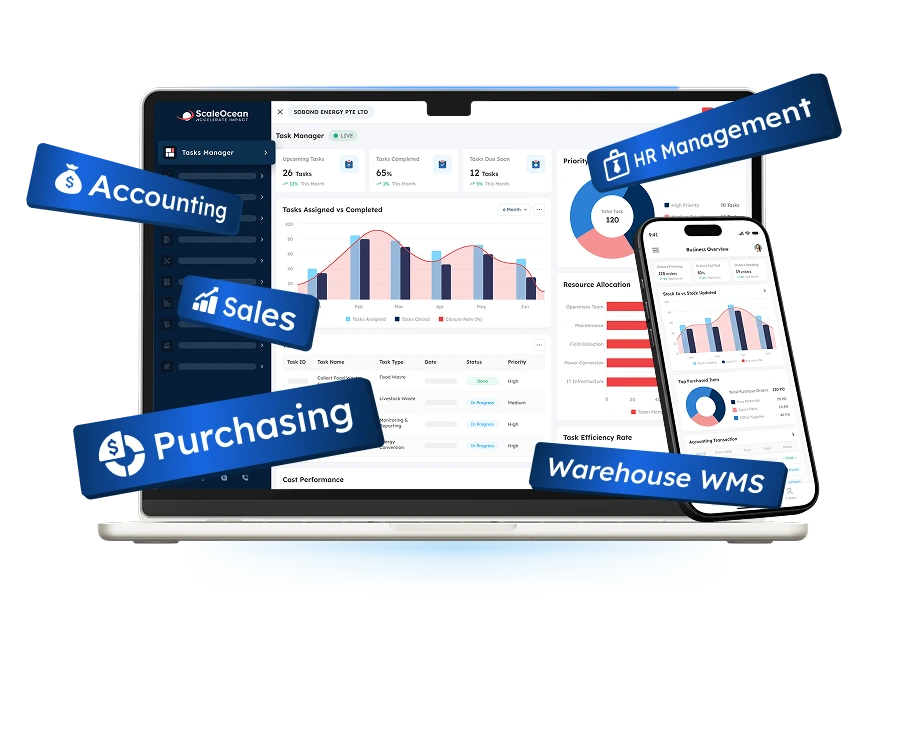
Implementing an ERP system can be a game-changer for businesses in Singapore looking to apply for and manage business grants. By centralizing all your data and automating key processes, an ERP system helps you stay on top of financial, operational, and compliance requirements, which are essential for grant applications.
ScaleOcean ERP software is here to make your grant application process smoother. With modules designed for finance, project management, and HR, it simplifies everything from tracking expenses to generating reports, ensuring you meet the requirements of grants like PSG and EDG.
Plus, ScaleOcean ERP is fully compatible with CTC grants, helping you access financial support for employee training and development. By streamlining your operations, ScaleOcean ERP ensures your business can easily leverage these grants and drive long-term financial growth.
Conclusion
Applying for grants is more than just a smart decision, as it’s a must for businesses that want to grow and stay competitive. Securing grants helps reduce costs, improve operations, and open doors to new markets, allowing businesses to expand with confidence.
Grants like the PSG and MRA offer the financial support needed to adopt new technology or expand globally. These opportunities can provide your business with a much-needed boost. The longer you wait, the more opportunities pass you by, so why not take advantage?
With ScaleOcean ERP, you can equip your business to manage and apply for grants more effectively. It offers the transparency and scalability that grant providers look for, making your company more attractive to funding opportunities. So, try ScaleOcean’s free demo today.
FAQ:
1. What is the best way to get a small business grant?
You can find small business grants through government agencies, state organizations, and private companies. Start your search with resources like Grants.gov, your local Small Business Development Center, and nonprofits like the Local Initiatives Support Corp.
2. Who is eligible for the Singapore grant?
To be eligible for a Singapore grant, applicants must be Singapore Citizens or Permanent Residents, at least 18 years old, and residing in Singapore. You will need SingPass to access the Our SG Grants portal for submitting your application.
3. Who is eligible for the Singapore Enterprise Grant?
To qualify for the Singapore Enterprise Grant (EDG), businesses must be registered in Singapore with at least 30% local shareholding. Additionally, they must meet a minimum annual sales turnover of SGD 400,000, as per the criteria set by Enterprise Singapore.
4. Who is eligible for the SME grant?
To qualify for the SME grant, businesses must have no more than 200 employees within their group and be registered in Singapore. Foreign-owned companies must have at least one Singapore citizen or Permanent Resident as a shareholder. Most SME grants prioritize locally owned companies.





















.png)