



Performance management is often misunderstood, seen as just the yearly review. But it’s so much more than that, really. It’s a continuous process that helps align your people with your company’s big-picture goals.
SPOR reports that newly created positions accounted for 47.3% of all job vacancies, largely due to business expansion. This highlights the critical need for effective performance management, ensuring new talent is quickly aligned with shifting goals to support continuous organizational success and growth.
This article will break down what effective HR performance management truly involves and why it’s so critical for growth. We’ll explore the key components and best practices to get it right.
 Key Takeaways
- Performance management is a continuous dialogue between leaders and team members, ensuring individual efforts directly support company objectives.
- Discover the key components of performance management, such as clear goal setting, continuous feedback, and forward-looking development planning to foster growth.
- Following performance management best practices like using SMART goals, 360-degree feedback, and technology ensures the process is fair, effective, and data-driven.
- ScaleOcean’s HRIS streamlines the entire performance management cycle, from goal setting to reviews, making it easier to build a high-performing team.
What Is Performance Management?
Performance management is a continuous dialogue between leaders and team members, ensuring individual efforts directly support company objectives. It’s about cultivating a supportive environment where every employee can truly thrive and contribute their best work.
Moving beyond rigid annual reviews, performance management operates as an ongoing cycle of setting clear goals, tracking progress, and delivering timely, constructive feedback. The primary goal is to seamlessly align teams with the company’s vision and empower their success.
Why Is Performance Management Important?
Performance management is crucial for business expansion. It ensures individual contributions sync with company goals, driving overall success. By connecting daily work to larger aims, it fosters accountability and improvement, cultivating a high-performing and dynamic workforce. Key benefits include:
1. Boosts Employee Engagement
When employees consistently receive feedback, they really start to feel seen and genuinely valued within the organization. This feeling is a truly huge driver for overall employee engagement in the company’s broader mission, as anyone in HRIS would tell you.
It’s actually not just about, you know, pointing out mistakes, but also making sure to really recognize achievements when they happen, which is equally important. Consistent recognition, it turns out, really does build morale and truly motivates people to invest even more of themselves into their daily work.
2. Improves Productivity
Knowing exactly what you are supposed to do, like the goals and the objectives, just removes a lot of that confusion that typically happens in the workplace. If you know what to do, then, naturally, you are going to be more productive. It’s a simple truth.
But with continuous feedback, you see, you can also “steer” in real-time, which is a great feature of an HR performance management system.
Rather than having to wait until the end of the year for some problem to be corrected, managers can coach workers when they need it, which is often the key to success.
3. Increases Employee Retention
Employees, in general, are more likely to remain within a company if they are able to see a pathway forward in the company. And performance management, particularly a strong performance management process, definitely helps build that very pathway, as it’s really a lot about development and growth.
As we know, losing a good employee can be extremely expensive, both in terms of dollars and also team dynamics. By ensuring that you set goals, provide feedback, and promote growth opportunities, you’re basically giving your best and brightest a reason to stick around.
4. Strengthens Communication
This whole performance management process essentially institutionalizes a regular, truly meaningful dialogue between managers and their team members, which is so valuable. It shifts communication from being, you know, sporadic and reactive to something that’s much more planned and proactive.
These structured conversations really ensure that nothing genuinely important falls through the cracks, which can happen easily otherwise. Both managers and employees get a dedicated time to actually discuss progress, any challenges they might be facing, and even career aspirations.
5. Informs Strategic Decisions
Performance data, when gathered properly, provides genuinely valuable insights for high-level business planning, which is really helpful for an HRIS. It helps leaders to identify top performers for succession planning and also to pinpoint any skill gaps across the organization, which is a big deal.
With a truly clear view of your workforce’s overall capabilities with a workforce analytics software, you’re able to make much smarter choices about things like training investments, promotions, and even powerful and strategic hiring. Performance management data guides the company’s long-term strategic planning.
Key Components of Performance Management
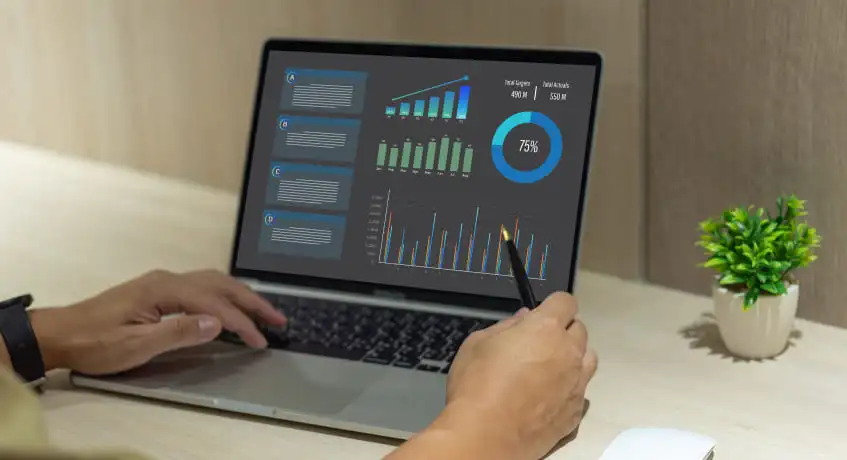
Effective performance management relies on integrated components, like key performance indicators, to drive continuous growth. From setting clear direction to future planning, these elements are key to fostering a high-performance culture. Key components include:
1. Goal Setting
Quite simply, it all begins with well-articulated goals. They should absolutely be something that is developed by the employee and the manager; this tends to be a good way to ensure the employee is “on board” and understands what is expected.
It’s also vital that these goals are in line with the goals of the department and the company. This is what makes individual work so much more impactful. And it helps employees feel a sense of purpose – they know what they are doing matters.
2. Ongoing Feedback
Let’s face it, annual reviews aren’t really cutting it anymore to support employee development. We need feedback to be an ongoing discussion, preferably in those regular one-on-one meetings and even in casual touch points. It helps employees keep on track with timely feedback.
You’ll find that this type of loop in communication is very effective in enhancing the relationship between the manager and the employee. It also makes feedback less evaluative and more coaching. We want feedback to be a gift and not a curse.
3. Performance Evaluation
Despite regular feedback, a review is needed. Evaluations give you an overview of performance based on past data, not just today.
Based on the report we found from HRM Asia, a Slack survey of 1341 Singapore workers found 30% of companies invest in technology to boost productivity, while 35% are using artificial intelligence (AI), second only to India.
This assessment, of course, should be a dialogue, not a monologue. This is an opportunity to provide feedback on performance and on any difficulties. This is to ensure a fair and accurate evaluation for future HR planning and development.
4. Development Planning
Performance management, after all, should be more about the future than the past. And part of that is certainly the development of a healthy development plan, which is about developing new skills and opportunities for career advancement.
This plan, of course, should be tailored to the individual’s career goals and also the needs of the organization. This could take the form of some training programs, mentoring, or new projects. This makes performance management a talent-management tool within an HRIS.
Performance Management Process and Cycle Planning
The performance management cycle is vital for continuous employee development, monitoring, and recognition. Strategic process planning provides the necessary structure, ensuring the effort is cohesive and goal-oriented for sustained long-term growth and success. Key steps in the cycle include:
1. Monitoring and Coaching
So, this first stage, monitoring and coaching, is all about those daily interactions, the real-time stuff. Managers should really be there, actively watching employee performance and offering real-time coaching; this is actually where that much-talked-about continuous feedback loop truly sparks into life.
Effective monitoring, you know, it’s not about micromanaging at all. It’s more about being readily available to support your team, help clear roadblocks, and just provide guidance when it’s needed, which in turn helps employees really improve their performance on an ongoing basis.
2. Development
In the development phase, the emphasis is really brought to the development of the individual. This is a phase where employees really take the initiative to develop themselves, but only with the encouragement and support of the manager and the rest of the organisation.
So this could be training workshops, online training, or even a mentor. The role of the organisation here is to ensure those necessary resources are available for development to occur.
This type of talent development almost always yields a huge return on investment, as you end up with a more skilled and motivated workforce, making it a win-win for the individual and the company.
3. Reviewing and Rating
The reviewing and rating phase is a critical part of workforce management, where employee performance is measured against objectives set at the beginning of the cycle. This evaluation requires a structured and thorough approach rather than a casual review.
It should be a more holistic assessment that considers all the feedback and information we have, and hopefully an objective one. So, we might rate, we might rank, and we might do any number of things as part of this HR performance management process, but the point should be about the discussion.
It can be a good time to discuss successes, difficulties, and what has been learnt, and this type of review certainly lays the groundwork for the next round of goal setting and development.
4. Rewarding and Recognizing
The final stage of this performance management process is all about acknowledging and properly rewarding good performance, which is pretty critical. This reinforces those desired behaviors and genuinely motivates employees to keep performing at their best and reduce employee absenteeism. Rewards can include bonuses, raises, or simple recognition.
Recognition, you know, can be something as straightforward as public praise or even just a thoughtful thank-you note. The main thing is to always make that link between solid performance and its reward super clear and consistent, which effectively closes out the current performance cycle and really builds momentum for the next one.
The performance management process contributes to continuous improvement and success within the team. With the help of ScaleOcean ERP, companies will be able to optimize the processes of monitoring, coaching, and training while making performance reviews and incentives data-driven.

Performance Management Best Practices
For performance management to be effective, adopt best practices that tie back to business objectives and motivate staff. When applied, these practices make performance management an effective means for building a performance culture. Best practices include:
1. SMART Goal Setting
In terms of goal setting, we often talk about SMART, which is Specific, Measurable, Achievable, Relevant, and Time-bound. It’s a great way to avoid any ambiguity, so that everyone understands exactly what’s expected and the employee and manager are all on the same page.
It’s not enough to say “increase sales”, right? Rather, a SMART goal would be something like “Grow quarterly sales by 10% by the end of Q3, by winning five new enterprise accounts”, and that makes it much easier to measure and assess performance.
2. Choose the Right Approach
I mean, there really isn’t one approach to performance management that fits all. Indeed, the right solution really depends on your culture, industry, and goals.
Some companies thrive on a quantitative, objective approach, while others might prefer a more qualitative and developmental approach.
You really do have to sit down and develop a system that works for you, and I reckon you might even need different approaches for different jobs within an organisation. The key is to be smart and choose a method that will support your employees and company objectives.
3. Continuous Performance Management
The move from those annual reviews to continuous performance management is, as we’ve discussed, important. That is, having ongoing check-ins, feedback, and adjustments to goals throughout the year makes it a much more relevant and fluid process.
This way, you can deal with problems as they arise and recognise achievements in the moment, so that performance and development issues are always at the forefront of your mind. It’s really about “baking in” performance management into the normal work, rather than just doing it as a massive annual thing.
4. Management by Objectives (MBO)
Management by Objectives, or MBO, is basically when managers and employees work together to identify, monitor, and document objectives for a period of time.
What’s interesting is that it really only focuses on the “what”, the outcomes, rather than the “how,” which often allows employees more flexibility in how they do their jobs, and that can be a pretty powerful motivator.
MBO is a great way to ensure that everyone’s goals are in line with the broader organisational objectives. So this provides a direct link between what people are doing day-to-day and what the organisation is looking to achieve, and that’s a very strong motivator for focused performance.
5. 360-Degree Feedback
360-degree feedback is not just getting feedback from an employee’s boss, but from a whole range of people, their peers, their direct reports, and sometimes even their customers. So you get a more well-rounded, better-rounded, and comprehensive picture of an employee’s performance.
The feedback can really shine a light on the blind spots and provide deeper insights into someone’s development. It can be really useful to encourage a culture of collaboration and shared responsibility. Feedback must be given constructively and carefully.
6. Set Up a Formal System
Even though we want performance management to be ongoing and feel like a dialogue, it’s also important to have a formal system in place. This includes a process, timing, and some decent technology to support it, which helps to achieve consistency and equity in the whole organisation.
Without the formal process, it can become quite arbitrary, with some managers being consistently great, and others, well, not so great. Having a process helps ensure everybody’s getting the same treatment, which is really important to lifting people’s morale.
7. Help Workers Create Employee Development Plans
Performance reviews should indeed always be forward-focused, right? Employees and managers must develop an individual learning plan, identifying specific actions and objectives to help employees learn and improve their career progression.
This really helps employees feel like the organisation is looking ahead to their career, and shifts the conversation from looking back to looking forward. This emphasis on development is, of course, a major component when it comes to employee retention.
8. Employ Technology
Attempting to manage continuous performance in a manual way? That’s really hard to do, you know. Technology, particularly an HRIS, can help automate many of those administrative activities, such as check-in prompts, goal tracking, and centralising all the feedback.
So, when you use tech, managers can spend more time doing what’s important, such as having quality conversations with their team. It also provides useful metrics for you to inform strategic planning, so the right technology can be a true game-changer for your performance management strategy.
9. Meet & Train Managers
Let’s face it, your managers are the key to successful performance management. If they’re not trained to set appropriate goals, provide effective feedback, or conduct difficult conversations, it’s all going to go out the window, so they absolutely need to be trained.
This should focus on both the process and the required skills, and I’ve discovered that role-playing and coaching techniques are particularly beneficial to this end.
By focusing on training your managers, you’re making one of the best investments you can to ensure your performance appraisal efforts will be a success.
10. Employ Technology
Using an HRIS system is really the way to go when it comes to making the whole performance management process smooth sailing for all parties.
It makes it easier to capture goal setting, feedback, and all of that important performance data, so that teams can be more aligned and monitor progress along the way. Technology has a major role in providing consistency, which allows the process to be applied consistently throughout the organisation.
Leveraging ScaleOcean’s HRIS system streamlines the process of performance management through technology, offering integrated and real-time data collection functions, allowing managers and employees to build a performance management process that is more equitable for all parties involved.
Performance Management vs. Performance Appraisal
Performance appraisal is often a scheduled, formal meeting (often annually), which aims to review an employee’s past year’s performance and performance challenges. Although providing a crucial retrospective assessment, it is only one element of the broader performance management system.
In contrast, performance management is a fluid process that focuses on development, coaching, and growth with an eye on the future. The focus is on future capability, not reflecting on past performance. Here’s a comparison between both performances:
| Feature | Performance Management | Performance Appraisal |
|---|---|---|
| Focus | Continuous improvement, development, and alignment with goals. | Evaluation of past performance and results. |
| Frequency | Ongoing with regular feedback and coaching. | Conducted annually or at set review periods. |
| Approach | Collaborative and forward-looking. | Formal and evaluative in nature. |
| Timing Focus | Future-oriented, guiding improvement and planning. | Past-oriented, reviewing completed work. |
| Outcomes | Enhances employee growth and engagement. | Provides ratings and performance summaries. |
Performance Management Approaches: Modern vs. Traditional
Traditional performance management was often an inflexible, hierarchical practice based on annual reviews and forced rankings that often frustrated employees. Its focus on evaluation rather than development limited the potential for ongoing development and feedback.
Today’s performance management is a flexible, collaborative, and growth-oriented approach. It employs regular one-on-one meetings, coaching, and data-based insights to build future potential and ensure individual goals are perfectly aligned with the company’s strategic plans. Here’s how they measure up:
| Feature | Traditional Performance Management | Modern Performance Management |
|---|---|---|
| Focus | Evaluates past performance and results. | Emphasizes growth, learning, and future goals. |
| Frequency | Conducted annually or semi-annually. | Ongoing with regular feedback and check-ins. |
| Approach | Top-down and manager-driven. | Collaborative and employee-centered. |
| Outcomes | Produces ratings and appraisals. | Encourages development and continuous improvement. |
Optimize Performance Management Easily Using Scaleocean’s HRIS
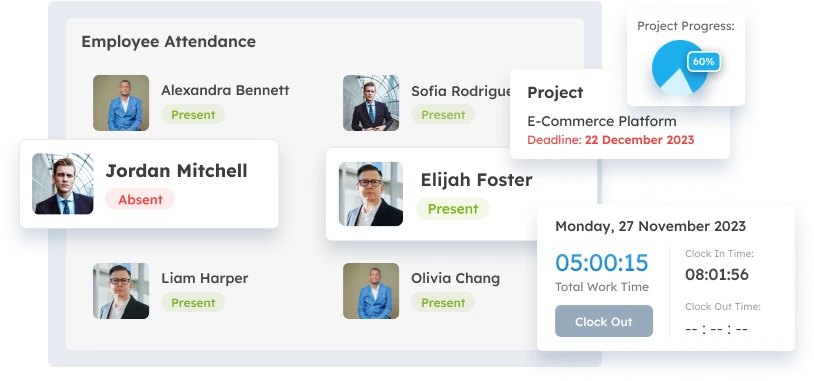
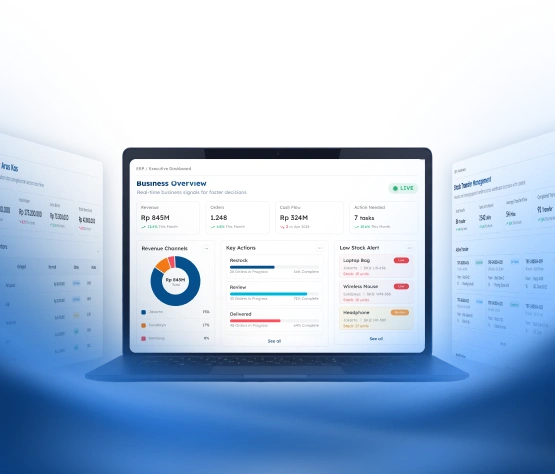
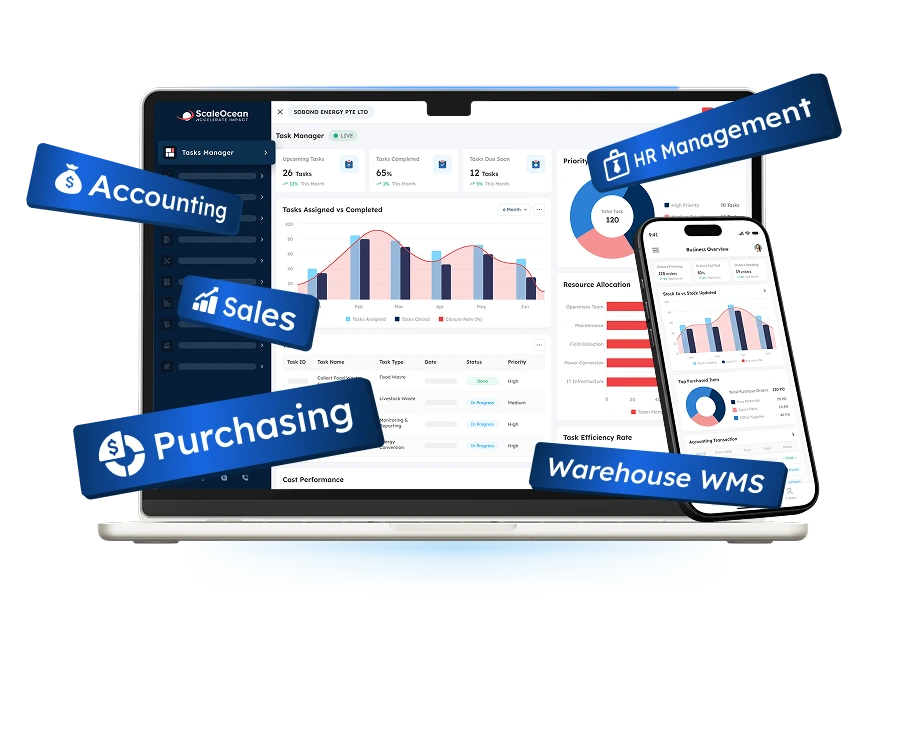
ScaleOcean’s HRIS streamlines performance management via robust features, such as unlimited users at no added cost, flexible, scalable systems, excellent after-sales support, and AI-powered analytics. This drives smarter, faster decisions for maximum organizational effectiveness.
This solution boosts efficiency and is ideal for businesses seeking the CTC grant, accelerating ROI realization. ScaleOcean delivers solutions precisely customized to meet diverse industry requirements. Here are the key features of ScaleOcean software:
- Centralized Data Platform: All performance data is stored in one system for quick access and efficient evaluations.
- Automated Performance Tracking: Tracks goals and progress automatically, ensuring accurate and transparent insights.
- Real-Time Feedback System: Enables instant feedback and continuous reviews to boost engagement and performance.
- Personalized Employee Development: Suggests training programs based on performance results for targeted growth.
- Integration with Key Modules: Seamlessly connects HR, payroll, and projects to improve collaboration and efficiency.
Conclusion
Performance management has transitioned from annual reviews to a continuous growth cycle. Its focus is now on proactive feedback, development, and cultivating a supportive culture that truly empowers employees, thereby strengthening the organization’s long-term success and resilience.
As your trusted partner, ScaleOcean provides integrated business solutions and HRIS software to easily simplify performance management. The platform boosts efficiency, offers powerful data-driven insights, and offers a free demo that lets you explore its full capabilities before committing.
Performance Management FAQ:
1. What are the 5 elements of performance management?
1. Goal Setting
2. Continuous Feedback
3. Performance Reviews
4. Employee Development
5. Recognition and Rewards
2. What are the 5 C’s of performance management?
1. Clear Expectations
2. Communication
3. Collaboration
4. Consistency
5. Coaching
3. What are the four areas of performance management?
1. Setting Objectives
2. Monitoring Performance
3. Providing Feedback
4. Reviewing and Developing
4. What is the goal of performance management?
Performance management aims to boost employee productivity by establishing clear goals, offering regular feedback, and providing opportunities for professional growth, ensuring alignment with business objectives to foster organizational success.


















.png)