




Net Present Value (NPV) is a tool that determines the overall worth of an investment by figuring out what its future profits are worth today. It accounts for the time value of money, meaning that future income is less valuable than today’s. It compares an initial investment to expected future profits.
According to data we found from the Ministry of Finance, Singapore, a typical developed country spends about 2% of its GDP to service debts, hence the importance of the profit-generating ability of an investment to cover initial costs and future financial commitments.
As a decision-making tool, NPV is invaluable in finding whether or not a project should be pursued, and it is often used to prioritize projects that have the highest potential return. Firms that use NPV will be sure which projects should go forward and which should be looked into again.
Therefore, in this article, we will discuss what Net Present Value (NPV) is, how to find it by using the formula, and explain by means of examples. So let’s begin.
 Key Takeaways
- Net Present Value (NPV) is a calculation used to determine the value of future income in present terms. It compares income generated against costs and calculates expected profitability based on the investment time period.
- The NPV formula (NPV = Cash flow / (1 + i)t – Initial investment) is key in determining whether future income will exceed the cost of the investment itself.
- Calculating an NPV includes: NPV of the Initial Investment, NPV of future cash flows, selecting a discount rate, and Full Calculation of Present Value.
- Accounting software packages like ScaleOcean simplify the task of calculating NPV, with data being transferred instantly, giving companies the ability to make informed investment decisions.

What is Net Present Value (NPV)?
Net Present Value (NPV) is the present value of all expected cash flows over time, both positive and negative. It is an important tool to be used in both finance and accounting for estimating the possible profitability of an investment.
NPV helps in determining the value of financial opportunities, such as securities, companies, capital projects, and new ventures. It is considered particularly useful in any project with a cash flow, including cost savings and long-term investments.
Businesses have used NPV in decision-making, allowing them to get a feel for how much they might make from an investment. When you take the time value of money into account, you are much more sure of the investment’s overall profitability.
Net Present Value (NPV) Formula
For investment decision-making, the use of the Net Present Value (NPV) formula is significant as it can determine the overall profitability of a project and the potential that it will provide more than the operating costs associated with the project itself.
The formula takes into consideration the time value of money. Here’s the NPV formula if there’s one cash flow from a project that will be paid one year from now:
NPV = Cash flow / (1 + i)t – Initial investment
Here are the detailed explanations of the formula:
- “i”: The discount rate (interest rate) applied to future cash flows.
- “t”: The time period (usually years) for which the discount rate is applied.
Here’s the NPV formula if you are analyzing a longer-term project with multiple cash flows:
NPV = ∑t=0n Rt / (1 + i)t
Here are the detailed explanations of the formula:
- “∑”: Summation symbol, representing the total of all cash flows over time.
- “t=0”: The starting time period, typically the present.
- “n”: The final time period in the calculation.
- “Rt”: Cash flow at time period t.
- “i”: Discount rate, reflecting the time value of money.
- “t”: The time period in which the cash flow occurs.
Example of NPV Calculation

Let’s consider a scenario where a business has the option to invest $500,000 in a new project expected to generate $10,000 monthly for four years. Alternatively, the business could place the same amount in real estate, with an expected return of 5% annually. The risks associated with both options are considered equivalent.
There are two key steps in calculating the NPV of the project:
Step 1: NPV of the Initial Investment
The investment in the project is made upfront, so this is the first cash flow to include in the calculation. Since it’s paid immediately, there’s no need to discount the $500,000 spent at the start of the investment.
Step 2: NPV of Future Cash Flows
In this step, you calculate the value of future cash flows by identifying the number of periods and the discount rate. Future cash flows are adjusted to reflect their value in today’s terms, considering the time value of money.
Here’s how to break it down:
- Identify the number of periods (t): The project will provide monthly cash flows for four years, which equals 48 periods (4 years × 12 months).
- Identify the discount rate (i): The alternative investment in real estate yields a 5% annual return. To account for monthly cash flows, the annual discount rate needs to be converted into a monthly compound rate. Using the formula, the monthly compound rate is approximately 0.407%.
Formula:
Periodic Rate = ((1 + 0.05)^(1/12)) – 1 = 0.407%
Assuming the monthly payments are made at the end of each month, the first cash flow happens one month after the project starts. These future cash flows must be adjusted for the time value of money. This can easily be done using a calculator or spreadsheet.
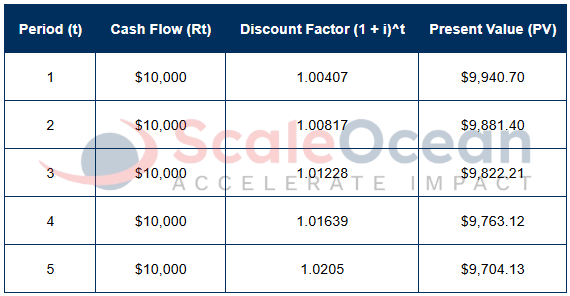
Here’s the table illustrating the first five payments based on the calculated periodic rate of 0.407%:
Full Calculation of Present Value
The full calculation involves adding up the present values of all 48 monthly cash flows, adjusted by the 0.407% monthly discount rate. Assuming the cash flows happen at the end of each month, the present value of each cash flow is calculated and summed.
The NPV formula can be expressed as:
NPV = -$500,000 + ∑(t=1 to 48) (10,000 / (1 + 0.00407)^t)
This formula sums the present value of each monthly cash flow over the 48 periods, discounted to the present.
In this case, the NPV is positive, indicating that the project will generate more value than its initial cost. If the NPV had been negative, it would mean the investment wasn’t worth pursuing. This shows that, based on this calculation, the project is a good investment.
How to Calculate Net Present Value (NPV) Using Excel
The calculation of NPV using Excel helps businesses evaluate the profitability of investments, as the expected return can be compared against an initial investment cost, after adjusting for the discount rate.
Below are the steps to calculate an NPV using the figures provided from the table above:
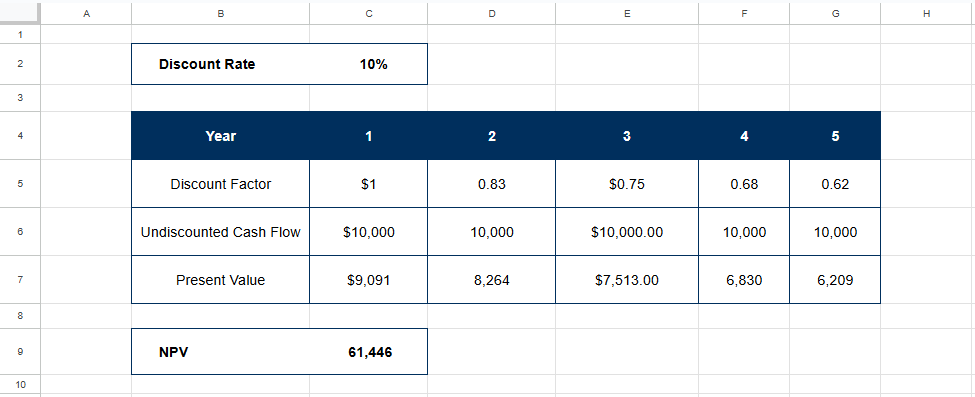
To begin your NPV calculation using Excel, the discount factor for each cash flow for each respective year needs to be applied, where the Undiscounted Cash Flow for Year 1 (10,000) is multiplied by the Discount Factor for Year 1 (0.91) =C6 C5, and so on for each cash flow year.
These are then recorded within the cells. After all respective cash flows are recorded, the present values should be visible within the cell as below. In addition, to determine the total NPV, the values should be summed together = NPV(B2, C7/F7).
Where B2 is the discount rate and C7/F7 represents the calculated present values for each cash flow year. As it stands, the NPV calculated is 61,446.
What is the Purpose of NPV?
Net Present Value (NPV) provides a business with the ability to estimate the overall worth of an investment. It does this by calculating the present value of expected future cash flows versus an initial cash outflow investment.
It determines whether an investment should proceed by calculating whether a potential investment will have a positive cash flow and be profitable for years to come.
The NPV tool allows the business owner to determine which new projects or new acquisitions are feasible from an investment point of view.
If a business must choose between two potentially successful ventures, NPV can identify which investment offers the higher return, while EBITDA helps assess the operating performance supporting each projection.
NPV accounts for the time value of money, ensuring that future income can be adjusted accurately according to potential risks and the opportunity cost of the money tied up in the project.
Negative vs Positive NPV
A positive NPV indicates that an investment’s expected benefits exceed its associated costs, suggesting it can create long-term value. It can help businesses evaluate both investment viability and operational earning potential before approving a project.
A negative NPV suggests that the costs will outweigh the benefits. This commonly means that the project would not be profitable and should be either rejected or reconsidered, highlighting the risk of wastage of funds.
Applications of NPV
Net present value is widely used by business executives to assess the profitability and financial viability of a particular investment.
It is one of several key financial metrics that allow businesses to assess whether an investment will provide sufficient financial returns by evaluating future cash flows at present value. Some of the key uses of NPV are as follows:
Capital Projects
Used when comparing the cost of a substantial investment to expected long-term profits, particularly within the capital-intensive industries such as construction, or for projects such as expansions.
They are utilized as a way to guide businesses on investment decisions when there are significant sums of money involved.
According to data we found from IRAS allows businesses that acquired assets during YAs 2021, 2022, and 2024 to amortise their cost over two years, which has an impact on the financial appraisal and NPV of projects.
Mergers and Acquisitions
When looking to buy another business, NPV is used to work out the financial value of the business being purchased.
Future cash flows expected from the business can be worked out using the NPV formula to gauge whether or not the business should be purchased. This is an essential part of capital budgeting in businesses.
New Product Development
Firms can determine how worthwhile it is for them to invest in a new product line by working out the NPV of any future sales the product will generate.
This is because a company needs to know whether the returns from a new product will outweigh the cost of developing it.
Cost-Cutting Initiatives
NPVs can also be used to help a business decide whether implementing cost-cutting initiatives would be beneficial in the long run.
Companies can see the future savings from each initiative and find the value of the money saved today by working out the NPV of the saved income, which helps businesses make sensible decisions as it guides them to measure whether the investment or cost savings initiatives are worthwhile.
NPV vs Payback Period and IRR
The Payback Period indicates the amount of time that it will take for the investment to generate enough cash flows to recover the initial outlay. It is the most basic calculation for making business decisions and is frequently used during hasty checks.
The Payback Period has a key limitation of not considering the time value of money or cash flows beyond the Payback Period.
IRR represents the discount rate at which a project’s net present value (NPV) is zero, which represents the estimated % return generated on investment.
The calculation of IRR often incorporates the operating margin, which shows the efficiency of a company and indicates the profitability levels within the business.
Unlike a Payback Period, which only shows the investment recovery time without taking into consideration time value, an NPV calculation includes cash flows throughout the investment period. It is the most preferred method among businesses.
Drawbacks of NPV
There are certain limitations to using NPV. Firstly, the accuracy of the net present value calculation relies on assumptions about expected future cash flows and other factors, which cannot be precisely forecasted.
Analyzing the potential downside to any approach provides businesses with a fuller understanding of how to make appropriate decisions. Some of the biggest problems that businesses come across when utilizing NPV are as follows:
Requires Accurate Cash Flow Projections
The net present value needs to rely on cash flows projected in advance. While accurate cash flows are required in order to work out the net present value, businesses are unable to provide completely accurate projections in advance due to the dynamic nature of the market.
A small error in estimating the NPV can have large discrepancies in the calculation, so companies must use a variety of data.
Sensitive to Discount Rate
The outcome can be drastically affected by changes in the discount rate. This makes a positive or negative result in NPV easily achievable with even minor changes to this variable, so businesses must calculate it carefully.
Complex for Multi-Stage Projects
Multi-stage projects involving long-term cash flows over several years are very difficult to estimate.
Complex multi-stage projects need detailed analysis and consideration from various perspectives, and the value of the total NPV changes with adjustment and manipulation.
How to Calculate NPV More Easily with Accounting Software

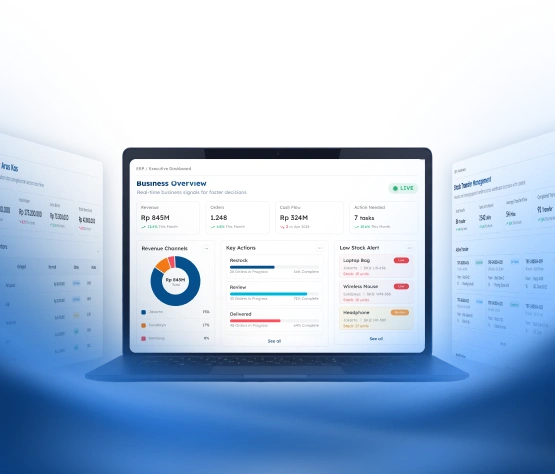
Accounting software can simplify the NPV calculations. Automating the process using ScaleOcean accounting software can help companies reduce manual mistakes and ensure that the calculation is accurate and reliable.
Companies will gain real-time access to financial data using ScaleOcean, allowing for the adjustment of discount rates and custom input settings.
Cash flow is often boosted when integrated with existing accounting systems, and companies will be kept up-to-date with new financial metrics to help improve investment choices.
Companies can experience first-hand how easy it is to simplify their financial analysis by trying the ScaleOcean free demo or taking part in a CTC grant so that they may see how far the ScaleOcean software can aid them.
There are many unique features that come with the ScaleOcean accounting software. They include:
- Automated Financial Analysis and Reporting: automates financial reports, ensuring quick, accurate insights for better investment decisions.
- Real-Time Cash Flow Tracking: tracks cash flow in real-time, providing businesses with up-to-date financial data for informed decisions.
- Seamless Integration for NPV Calculation: integrates financial data, simplifying NPV calculations and improving investment decision accuracy.
- Cash Flow Forecasting: automatically forecasts cash flow, helping businesses plan for future investments and operational needs.
- Comprehensive Financial Reporting with Customization: offers customizable financial reports to track performance and enhance strategic financial analysis.
Conclusion
The NPV metric is important for assessing the profitability of an investment project as it measures whether the net future cash flows from a project justify the initial outlay required.
Businesses should utilize this analysis to make sound financial choices and maximize their potential for investment, especially when using financial software.
Consider ScaleOcean’s accounting software to perform NPV calculations more efficiently and effectively, ensuring improved decision-making for your company.
FAQ:
1. What does the NPV tell you?
NPV helps determine if an investment is worthwhile by comparing the expected returns with the initial investment. A positive NPV indicates the project will be profitable, while a negative NPV signals a potential loss, guiding businesses in their decision-making process.
2. What is better, NPV or IRR?
NPV is often preferred over IRR as it provides a tangible monetary value for an investment’s profitability. While IRR offers a percentage return, NPV considers the time value of money and gives a clearer understanding of how much value the project will add.
3. What is the NPV of 10,000 at 7%?
To calculate the NPV of S$10,000 at a 7% discount rate for one year, the formula is 10,000 / (1 + 0.07), resulting in S$9,345. For multiple years, each year’s cash flow is discounted to present value and summed up for the total NPV.
4. Is a higher or lower NPV better?
A higher NPV is preferable as it indicates that the investment’s returns exceed its costs, making it a more profitable choice. Conversely, a lower or negative NPV means the project may not provide sufficient returns, suggesting it should be reconsidered or avoided.























.png)