

A purchase requisition (PR) is an internal form or digital request created by an employee to obtain approval for acquiring goods or services. It ensures proper authorization and an audit trail to help control spending. A PR usually contains the Request date, preferred supplier, a detailed list of goods or services, and an estimated budget.
According to GovTech, the Singapore Government allocated S$3.3 billion for ICT in FY23, focusing on cloud applications and co-development with industry. This highlights the growing role of digital solutions in enhancing procurement efficiency.
This article discusses the significance of purchase requisitions, their distinction from purchase orders, and the procedures involved in the workflow. It also discusses frequent issues and the advantages of standardized request forms. Read further to gain useful insights into optimizing procurement procedures and increasing operational efficiency.
 Key Takeaways
- A purchase requisition is a formal internal request to procure goods or services, initiating the procurement process by ensuring company approval before moving forward.
- Purchase requisitions are crucial in the procurement process, helping businesses ensure accountability and promote better planning and budgeting.
- The purchase requisition workflow steps are identifying needs, creating requisitions, approval processes, compliance checks, supplier selection, price negotiations, and finalizing the purchase order.
- ScaleOcean’s purchasing software automates the requisition process by integrating with other ERP modules, streamlining workflows, enhancing efficiency, and improving cost control.

What is a Purchase Requisition?
A purchase requisition is a formal request within a company to purchase products or services. An employee or department usually recognizes a need and submits it to the procurement team. The requisition starts the procurement process, confirming that the company approves the purchase before advancing.
The paperwork typically contains information such as the requested items, quantities, budget implications, and vendor details. Once the relevant authority approves the purchase requisition, the procurement team issues a purchase order to complete the transaction with the supplier.
A valid purchase requisition contains key components such as Requestor information, Item/Service descriptions, Document purpose, Suggested Vendor, and Budget Allocation.
The Importance of a Purchase Requisition for an Organization
A buy requisition is important for optimizing the procurement process and keeping control of organizational spending. It ensures that relevant authorities approve all purchases, lowering the possibility of unauthorized or fraudulent spending.
By requesting consent before making any purchases, companies can better manage their financial resources. Furthermore, a purchase requisition facilitates budget tracking and improves operational efficiency.
It promotes open communication across departments, ensuring that everyone is on the same page about procurement requirements. When effectively managed, this procedure improves resource allocation and contributes to the organization’s seamless operation.
In Singapore itself, the government, through the Government Procurement Act 1997, provides more detailed procedures and requirements for public procurement, including how contracting authorities should structure requisitions, tender documentation, and procurement stages.
Why Are Purchase Requisitions Important in the Procurement Process?

Purchase requisitions are an essential component of the procurement process, ensuring that firms manage their purchasing process and activities properly. They serve to streamline processes and keep spending under control by serving as a formal request for products or services.
They also give structure to the purchase process, assuring transparency and accountability at all stages. Here are the benefits and why they’re important in the procurement process:
1. Control Over Spending
A purchase requisition helps businesses control spending by requiring approval before any purchase. It ensures purchases stay within budget, preventing spontaneous buying and wasteful expenditures.
According to ITA, almost 76% of the Government’s ICT spending, or SGD2.5 billion, will go to bulk tenders, which reduce costs, time, and effort for public agencies. This mirrors the principle of cost control in procurement.
2. Accountability
By documenting the demand for items, the purchase requisition process provides responsibility for procurement decisions. It guarantees that all purchases are properly justified and approved by the appropriate departments.
This accountability can help to prevent the misuse of business finances while also encouraging more thoughtful and studied purchasing selections.
3. Clear Communication
Purchase requisitions foster straightforward communication across departments, ensuring everyone is on the same page when acquiring materials. They clearly outline what is required and why, reducing confusion and errors. This transparency promotes efficient communication between departments and ensures proper distribution of resources.
4. Better Planning and Budgeting
Purchase requisitions improve planning and resource allocation efficiency. Organizations can better manage their purchase activities and lower the risk of overpaying by identifying demands ahead of time. This proactive strategy promotes financial stability and ensures that resources align efficiently with business objectives.
5. Audit Trail
Purchase requisitions create an important transparency for the audit trail that the organization can use for future reference. By tracking what employees request, approve, and purchase, they help ensure that all purchases are valid and permitted.
This documentation proves invaluable for internal audits and helps protect the organization from fraud or mismanagement. Furthermore, it can be used to assess the salvage value of assets as they age, ensuring proper disposal or resale.
What is the Difference Between Purchase Requisition vs Purchase Order?
When it comes to procurement, two key papers perform separate but interwoven roles: the purchase request and the purchase order. Though both are necessary for procuring products and services, they serve distinct functions within an organization’s procurement process.
To help you better understand the differences between the two, here is a comparison table between Purchase Requisition (PR) and Purchase Order (PO) based on a variety of parameters:
| Parameters | Purchase Requisition (PR) | Purchase Order (PO) |
|---|---|---|
| Definition |
|
|
| Usage |
|
|
| Purpose |
|
|
| Audience |
|
|
| Binding nature |
|
|
| Sequence in procurement |
|
|
| Details |
|
|
| Outcome |
|
|
Steps in the Purchase Requisition Workflow
The buy requisition workflow is a standardized process that ensures efficient procurement within a company. Each stage helps to guarantee that the correct goods or services are purchased while ensuring financial management and operational efficiency.
A well-managed requisition process enables precise tracking and timely approvals, resulting in smooth procurement operations. Here are the main steps in this workflow:
1. Identifying a Need
The initial step in the workflow is to identify the need for goods or services within the organization. This could be due to operational constraints, production deadlines, or the necessity for new equipment. Once discovered, the requirement is documented for future action.
2. Creating the Purchase Requisition
After identifying the need, the relevant department creates the purchase requisition. This document specifies the goods or services needed, the amount, and any special specifications like delivery time or quality standards. It acts as the official request to begin the procurement process.
3. Review and Approval
Once the department establishes the requisition, the appropriate authority within the organization reviews it. The review process ensures that the request aligns with budget limits, operational requirements, and company priorities.
4. Compliance Check
Following acceptance, the team conducts a compliance check to confirm that the request complies with corporate policies, external requirements, and industry standards. This assessment reduces any possible legal or financial risks linked with procurement. It ensures that the purchase meets both company norms and regulatory needs.
5. Supplier Selection
After the compliance check, the procurement team picks a supplier that can fit the requirements. Reliability, affordability, and historical performance are all considered while selecting suppliers. In some cases, a blanket order may be placed to secure long-term supply agreements at a pre-agreed price.
6. Negotiating Prices
After selecting a supplier, the procurement team negotiates the purchase price and terms. This procedure guarantees that the company gets the best value for money while keeping acceptable terms with the provider. Effective negotiating can result in cost savings and improved terms, such as discounts or longer delivery times.
7. Final Approval
After the price and terms have been negotiated, the relevant authority must approve the final decision. This approval confirms that all parts of the purchase, including the supplier, price, and delivery information, have been agreed upon. The team then properly closes the request, and they create a purchase order to begin the transaction.
8. Convert to Purchase Order
After the final approval, the procurement team converts the purchase requisition to a purchase order and forwards it to the selected supplier. This document formally confirms the purchase and makes both parties legally bound to carry out their obligations as specified in the purchase order.
Common Challenges of Purchase Requisitions
Despite their importance in procurement, purchase requisitions can be difficult to manage. These issues can result in delays, inefficiencies, and a lack of responsibility. Addressing these concerns is critical to maintaining a seamless and efficient shopping experience. Some of the common issues are:
1. Lack of Standardization
Without a uniform purchase request process or form, departments may employ multiple formats. This might confuse, delays in approval, and difficulties in tracking requests. Standardizing the process improves consistency and better communication among teams, much like the role of a purchase journal in maintaining consistent financial records across departments.
2. Delays in Approval
A sluggish approval process can cause considerable delays in the procurement timeframe. When requisitions are not assessed promptly, they can cause operational disruptions and impair delivery timelines. Timely approval is critical for keeping projects on track and maintaining operational efficiency.
3. Lack of Transparency
If there is no clear tracking mechanism for requisitions, it is difficult to determine the progress of each request. Lack of openness can result in misconceptions and mismanagement of resources. Implementing appropriate tracking tools keeps all stakeholders informed and aligned.
4. Non-compliance
Noncompliance with company policies and processes may result in unlawful purchases. This can result in budget overruns, legal concerns, and wasteful spending. Ensuring that all requisitions comply with internal regulations is critical for maintaining financial management and responsibility.
5. Inadequate Documentation
Requisitions containing inadequate or faulty information can lead to confusion and errors in the procurement process. This may result in incorrect purchases or delays in acquiring the correct things. Clear and complete documentation ensures that all relevant information is captured, lowering the likelihood of errors.
Standardized Purchase Requisition Forms
A uniform purchase requisition form is critical for maintaining consistency across departments. Organizations can use a consistent format to ensure that all necessary details are collected in a clear and orderly manner. This eliminates the possibility of losing crucial information like item descriptions, quantities, or approval signatures.
Furthermore, a consistent form simplifies the approval process, making it easier for managers to examine and approve requisitions. Businesses can eliminate errors and avoid unnecessary delays by avoiding confusion and providing the correct information at all times, resulting in smoother procurement procedures.
Example of Purchase Request Form
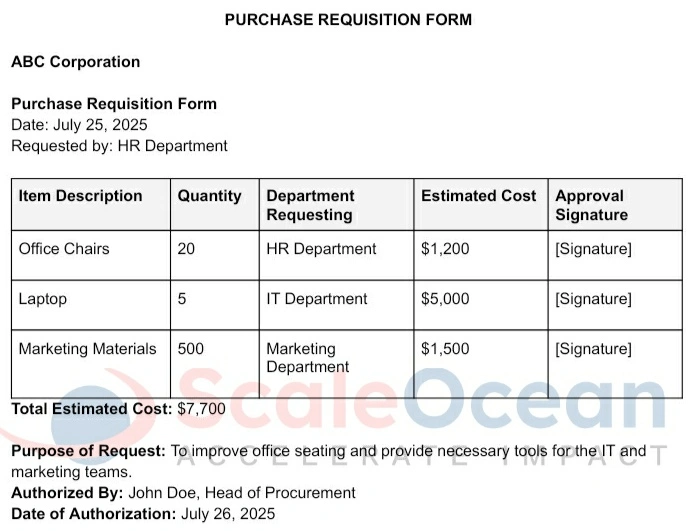
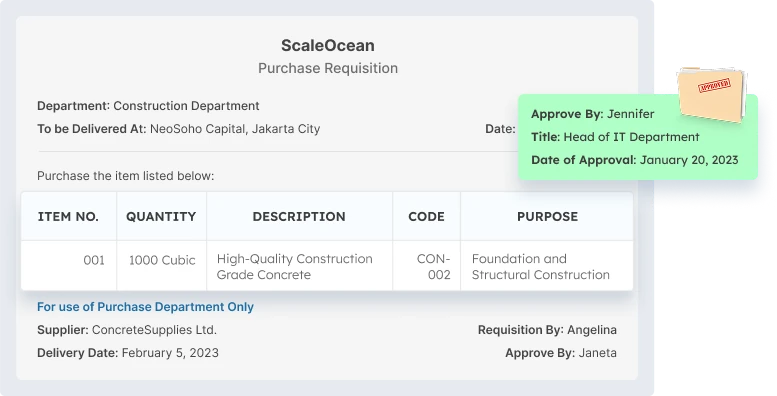
The HR department at ABC Corporation evaluates the requirement for new office chairs, laptop computers, and marketing materials to support planned team activities and initiatives. On July 25, 2025, they submit a buy demand form requesting 20 office chairs, 5 laptops, and 500 marketing materials.
The document is sent to the department’s budget manager for review. After ensuring that the expected total cost of SGD7,700 is within budget, the requisition is authorized. The purchasing staff then checks the inventory to see whether there is any available stock. If there is no excess inventory, they select a supplier, confirm pricing, and place a buy order for the necessary items. Below is a sample of the Purchase Requisition Form:
Automating the Purchase Requisition Process with Purchasing Software ScaleOcean
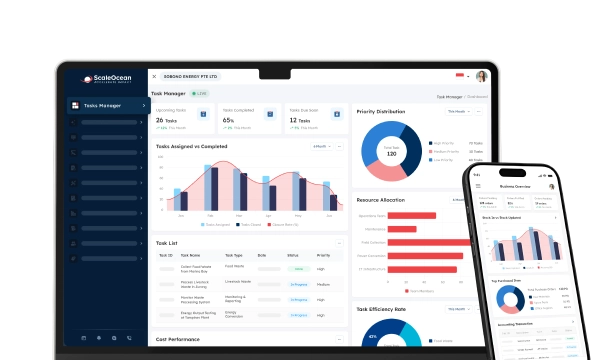
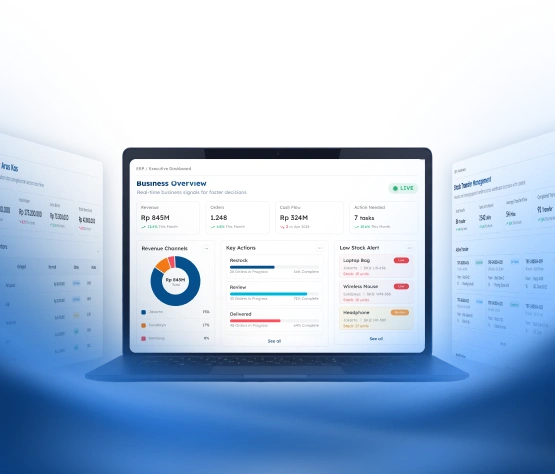
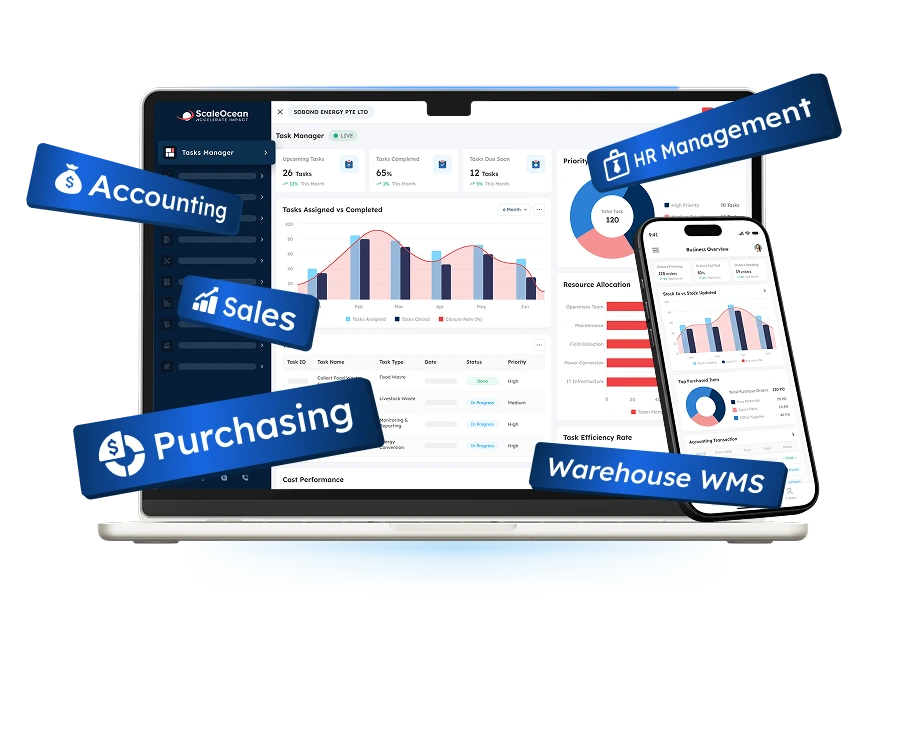
ScaleOcean’s purchasing software automates the process of creating, approving, and tracking purchase requisitions, simplifying procurement. It conveniently connects with other ERP modules to provide real-time monitoring and automated workflows.
This increases operational efficiency, decreases errors, and improves cost control, allowing firms to make more informed purchase decisions.ScaleOcean provides a free demo that allows organizations to explore the system’s full capabilities and see the benefits for themselves.
ScaleOcean is also eligible for CTC awards, which provide financial assistance to enterprises for the software’s implementation. This makes it an even more cost-effective choice for businesses seeking to optimize their procurement processes. The ScaleOcean program has several essential characteristics, which are listed below:
- Automated Procurement: ScaleOcean automates purchase requisitions, approvals, and tracking, reducing manual errors and speeding up the process.
- ERP Integration: Seamless integration with other ERP modules like Accounting and Inventory, providing a comprehensive view of procurement.
- Real-Time Budget Tracking: Monitors purchase requisitions against budgets in real time, ensuring financial compliance.
- Vendor Performance Evaluation: Automatically evaluates vendors, helping businesses choose the best suppliers.
- Cost Savings & Efficiency: Tracks cost savings and optimizes purchasing decisions, reducing errors and administrative work.
Conclusion
The buy requisition procedure is critical for increasing procurement efficiency and accountability. Businesses that adopt a systematic strategy can reduce errors, improve spending management, and improve overall operational performance. A well-managed requisition system lays the groundwork for more efficient procurement and assures alignment with company objectives.
ScaleOcean provides a comprehensive purchasing software solution that will help you streamline and automate your procurement process. ScaleOcean’s software improves the overall procurement procedure by seamlessly integrating across several ERP modules. Businesses that use this software can profit from increased control, fewer manual duties, and more efficient purchasing procedures.
FAQ:
1. What is the meaning of a purchase requisition?
A purchase requisition is a formal internal request made by an employee or department to obtain goods or services. It serves as the first step in the procurement process, requiring approval before the creation of a purchase order (PO). This document helps ensure purchases are necessary, within budget, and aligned with company needs.
2. What’s the difference between PR and PO?
The difference between a Purchase Requisition (PR) and a Purchase Order (PO) lies in their function. A PR is an internal request for approval to purchase goods or services, while a PO is an official order sent to the supplier, confirming the purchase terms, such as price and delivery. The PR starts the procurement process, and the PO finalizes it.
3. Is a purchase requisition mandatory in Singapore for all businesses?
A purchase requisition is highly recommended for businesses in Singapore, especially those that are publicly listed or subject to strict financial audits. For smaller businesses, it is considered good practice to control spending and ensure proper authorization in the procurement process.
4. What are the 7 steps of a requisition?
1. Identify Need: Recognize the requirement for items or services.
2. Create Requisition: Document the requisition with details of items, quantity, and specifications.
3. Review & Approve: Have the requisition reviewed and approved by the relevant authority.
4. Compliance Check: Ensure the requisition meets regulations and company policies.
5. Select Supplier: Choose a supplier based on price, reliability, and delivery.
6. Negotiate Price: Negotiate terms and price with the selected supplier.
7. Create Purchase Order: After approval, generate and send the purchase order to the supplier.
5. What are the 5 parts of a purchase requisition?
1. Description: Detailed description of the requested items or services.
2. Quantity: Specifies how much of the item is needed.
3. Justification: Reason for the purchase request.
4. Delivery Info: Required delivery dates or timelines.
5. Cost Estimate: The expected cost or budget for the items.





















.png)