

The Singapore business sector is as well-organized, robust, and efficient due to the reliable tax system.
We also managed to find some data from beneath the Ministry of Finance in Singapore that said the GST, or goods and services tax, was introduced by the government in Singapore as a broad-based consumption tax in 1994, and it is currently being implemented at a rate of 8% (as at 2023).
Goods and services tax is levied on almost all goods and services, which helps the companies be more actively involved in managing the running of the business, and fosters a high standard of market transparency and efficiency.
Singapore’s Inland Revenue Authority, IRAS, is the pillar that governs this tax structure and assists companies in complying with their GST regulations.
The IRAS has set down very clear conditions for a rigid application of GST laws.
The IRAS guides companies in performing tax compliance duties, including the issuance and keeping of tax invoices, and also takes on a role in enforcing rules for tax filing with companies of all types.
 Key Takeaways
- A tax invoice is an official document issued by a GST-registered supplier to a GST-registered customer, detailing the sale and GST charged, serving as proof for accurate tax record-keeping.
- Key requirements of a tax invoice include the phrase “Tax Invoice,” supplier and customer details, invoice number and date, and more components that will ensure clarity and compliance.
- Tax invoice formats must comply with IRAS rules to ensure compliance and avoid issues, with key types being E-Invoicing and Digital Invoices.
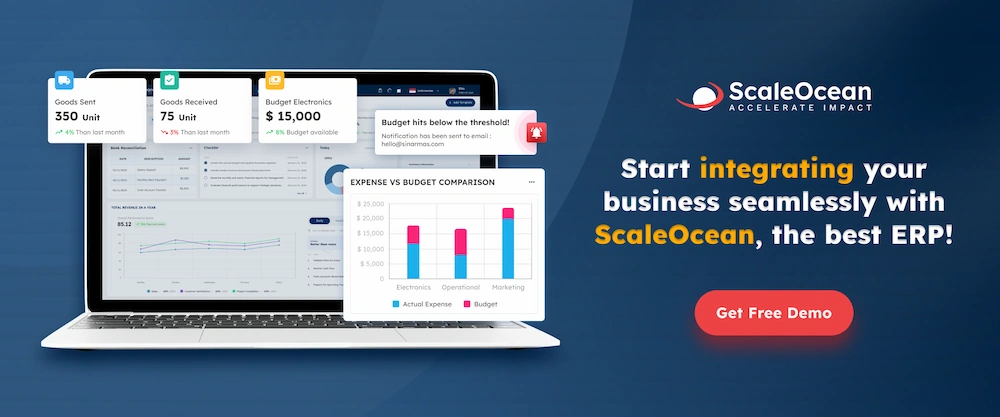
- ScaleOcean accounting software are gonna assist organizations in reducing manual errors and administrative workload, resulting in increased operational efficiency.
What Is a Tax Invoice?
A tax invoice is an official document delivered by a registered seller (GST-registered provider) of taxable goods or services to another person who is registered for GST (GST-registered consumer).
It details the supply of goods or services and includes a breakdown of Goods and Services Tax (GST) charged. These documents represent the official record of a sale and play a crucial role in a firm’s records for accurate tax calculations and other purposes.
The provider must include specific information regarding, for example, a detailed description of the goods or services that is accompanied by quantities, unit price, and the rate of tax charged on it to comply with GST legislation, and a breakdown of tax components.
Customers use tax invoices to retrieve input tax credits, which they then set off against any GST that they would have incurred on their respective purchases against any GST that they would have incurred from their sale transactions, to effectively determine their tax liabilities and for efficient tax planning purposes.
This method facilitates efficient tax computation and ensures both suppliers and customers are compliant and correctly submit their GST returns to their respective Inland Revenue Authority of Singapore (IRAS).
Key Requirements of a Tax Invoice
To comply with GST legislation, a tax invoice must incorporate a number of crucial elements that assist in identifying the purpose and tax elements involved in a specific transaction. The elements can be broadly summarized as:
- The phrase “Tax Invoice” is displayed prominently: “Tax Invoice” should be prominently displayed, enabling it to be distinguished from other forms of invoice, e.g., Proforma invoices, to ensure compliance with GST legislation.
- The Supplier’s Name, Address, and GST Registration Number: The supplier’s name, address, and GST number must appear on the invoice to confirm GST registration and allow IRAS tracking.
- The Customer’s Name and Address: The customer’s name and address define the relationship and ensure proper allocation of input tax credits and monitoring of tax transactions.
- Invoice Number & Date of Issue: This unique invoice number is for organizational purposes, and the date of issue is for the purposes of the 30-day invoicing requirement of GST.
- Description of the supply: A clear and complete description of the good/service being supplied is important for transparency and correct reporting of GST for both the buyer and supplier.
- Quantity and price per unit: This details each supply and its unit price so that the pre-GST amount can be determined.
- Total amount payable excluding GST: The customer will be able to see the pre-tax value of each item of supply to accurately calculate the GST.
- GST amount charged: The customer is also shown the amount of GST applied.
Total amount payable, including GST: The customer should be shown the overall payment, including GST. - Signature: This provides proof that the supply is authorized by the supplier.
Simplified Tax Invoices
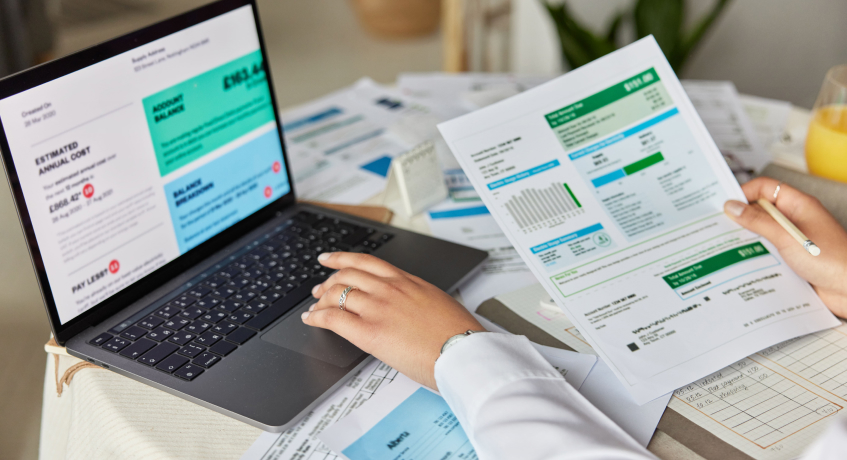
It may also be permissible for a firm to supply simplified tax invoices instead. These are tax invoices appropriate for supplies where the total value payable, including GST, is under $1,000.
There is no obligation to issue a tax invoice for zero-rated or exempt supplies. The following information (which is less detailed than on a standard tax invoice) should be supplied in a simplified tax invoice.
- Supplier’s name and GST Registration Number: A simplified tax invoice must include the supplier’s name and GST registration number. This provides important authentication of the supplier’s GST status in Singapore.
- Date of Supply: The date should show the day the goods or services were supplied by the supplier. This can be very important for accurately tracking input tax returns and ensuring you file for the appropriate tax period.
- Description of the supply: As with the standard tax invoice, the goods or services being supplied need to be itemized, so that both buyer and supplier clearly understand the transaction. This can reduce any ambiguity related to the goods or services.
- Total amount payable including GST: The full amount payable by the consumer should be clearly itemized. This helps both parties clearly understand how GST has been added to the purchase price.
Methods for calculating GST on tax invoices
When you are calculating GST on a tax invoice, there are two methods you can use when working in Singapore. Whichever one you select, remember to stick with it so that it is applied consistently, and you avoid making any mistakes in your accounting.
The following methods are accepted when applying GST to a tax invoice:
- Itemized GST Calculation: This method applies 9% GST to each of the individual items purchased and adds them up. For example, if an item costs $11.74 and it has 9% GST applied to it, $1.74 GST and $10.00 is the pre-GST cost.
- Total Value GST Calculation: The total value of the goods or services purchased is calculated before adding GST and the 9% GST applied. Using the same examples, $11.74 for the first item. If you buy the second item and it is $23.48 with 9% GST applied, the pre-GST cost will be $20.00, and the GST will be $3.48.
When to Issue a Tax Invoice
Businesses must issue tax invoices within 30 days from when they supply the products or services, as stated by the IRAS. By ensuring businesses submit their tax returns and report tax on time, this requirement guarantees businesses maintain correct tax records at the required frequency.
This criterion helps organisations stay organized by meeting their obligations to manage their accounts properly. This would be essential not only for efficiency purposes, but also for corporate tax and to remain compliant with laws and regulations.
Businesses should remember that only sales of goods and services to GST-registered customers require a tax invoice to be issued.
Non-GST registered customers should be issued with an invoice or receipt, as their tax returns do not involve collecting GST. This will differentiate the processes into a more efficient one to prevent unwanted hassle for businesses when they sell to non-GST-registered parties.
According to the data we found from IRAS, with effect from 1 April 2026, businesses applying for optional GST registration will be required to comply with the GST InvoiceNow Requirement.
This aims to ensure businesses can comply with the new provisions, stay updated, maintain good accounting records, and also provide relevant documentation for the authorities at all times.
Formats for Tax Invoices
Tax invoice formats need to adhere to local tax legislation, which includes IRAS specifications in Singapore. Using the correct format ensures compliance requirements and will help to reduce possible issues that may arise when they undergo an audit or tax filing exercise.
This needs to be done meticulously by all businesses, as it serves to reduce complications. Businesses should follow them very carefully.
The types of formats vary according to what you are selling, and also according to jurisdiction. For example, certain formats will cater to the GST requirements while others will apply to international selling. Let’s have a further look at the sub-categories of tax invoice format:
E-Invoicing
An e-invoice facilitates the entire process, and by generating and transmitting invoices electronically, it complies with the IRAS requirements. Using the best invoice software in Singapore can also aid businesses in creating valid tax invoices.
An e-invoice will ensure that the processes involved are smooth, reduce administrative work, and hence minimize errors in calculations when transacting for tax purposes.
E-invoicing saves time in terms of transmission and storage, as they will be readily available when requested. As such, this has to be consistent throughout for auditing processes to prevent issues.
Digital Invoices
Digital invoices help organizations facilitate the entire process and are easily prepared and managed. They ensure IRAS compliance once these invoices are sent to customers through the correct means.
It aids in keeping track of sales and operations much more efficiently, decreasing overall errors that may occur when dealing with them as such.
When compared with e-invoicing, digital invoices require businesses to prepare and file them themselves and store them online instead. It is useful to differentiate when it comes to understanding the terms ‘invoice vs receipt‘.
The Importance of Accurate Tax Invoicing
Having the correct and accurate e-invoicing will reduce the chances of errors as well as prevent any further action by IRAS towards the businesses concerned.
Misinformation in tax invoices can lead to businesses paying penalties or going through IRAS audits, which will only bring inconvenience to their business and operations. Moreover, businesses will need tax invoices to retrieve input tax credits, so they do not over-pay the GST.
Functions of Tax Invoicing and why tax invoicing is significant are:
- Tax Savings: Proper claim of tax invoice deductions will lower your overall taxable amounts. Hence, your business has not overpaid its GST.
- Financial Documentation: A correct tax invoice will show clear information for bookkeeping and analysis, which would make managing and operating finances much smoother.
- Inspection and Compliance by Tax Authorities: You’ll remain compliant when these are filed properly, thereby avoiding penalties and speeding up inspections.
- Customers can Claim Input Tax Credit: Businesses that have the necessary documents, including tax invoices, will be allowed to claim the input tax credits from the Inland Revenue Authority of Singapore (IRAS). Hence, they can avoid overpayment on GST.
- Business Operations: Track your sales, inventory, cash flows, and ease conflicts customers have with regard to certain issues, allowing smooth business operations.
- Time Efficiency: Reduces the manual effort and time required when filing tax returns, as all the necessary documentation for taxes is automated, enabling quicker turnaround time.
- Insights and control: By having clear information on sales and payments in your tax invoices, you can manage your transactions more effectively, thus strengthening business operations and financial management.
- Cost Savings: Through claims of your deductions on sales and services, you prevent over-payments on GST, and unnecessary expenses when facing audits or any issue that occurs within business operations.
- Strategic Edge: Staying compliant with tax requirements and enhancing efficiency can place your business at a greater advantage over your competitors and attract credible customers.
Streamlining Tax Invoice Management with ScaleOcean
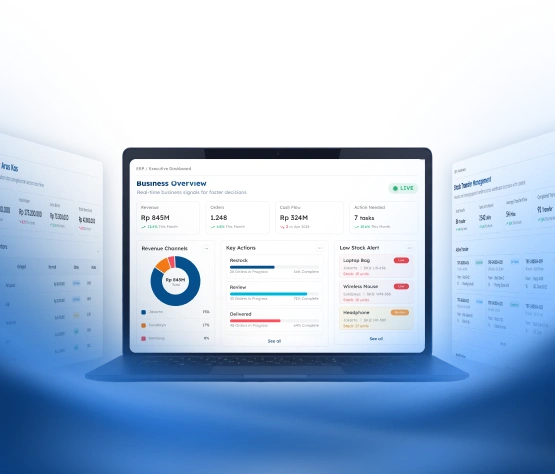
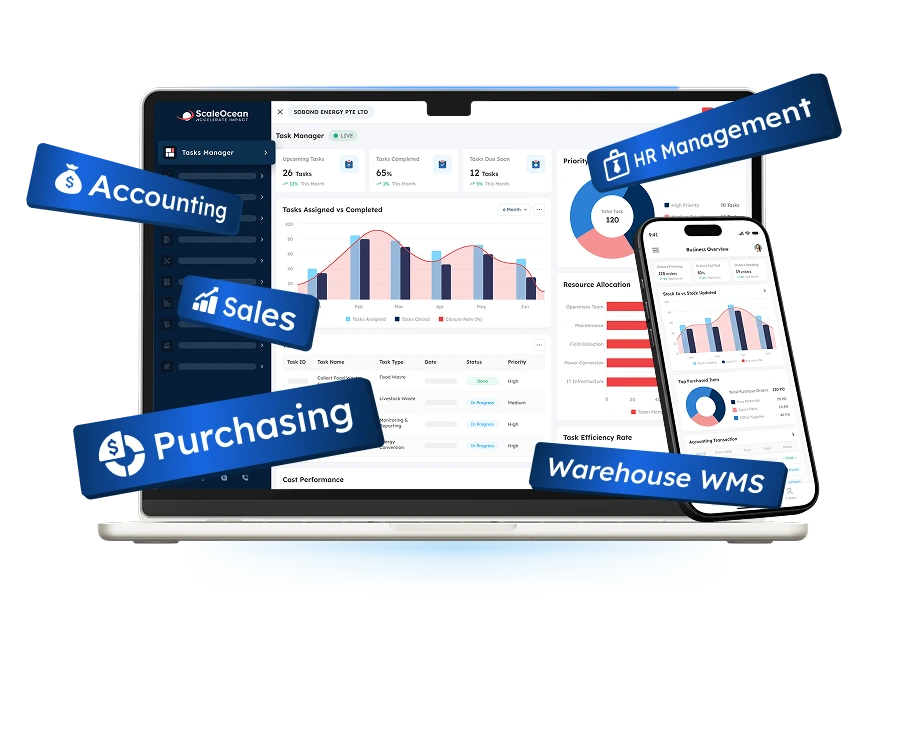
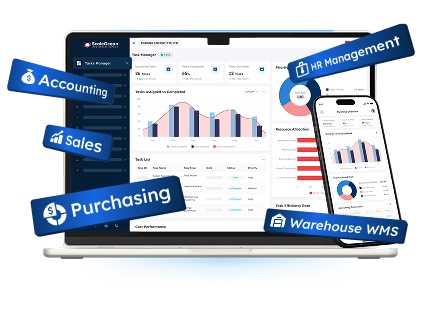
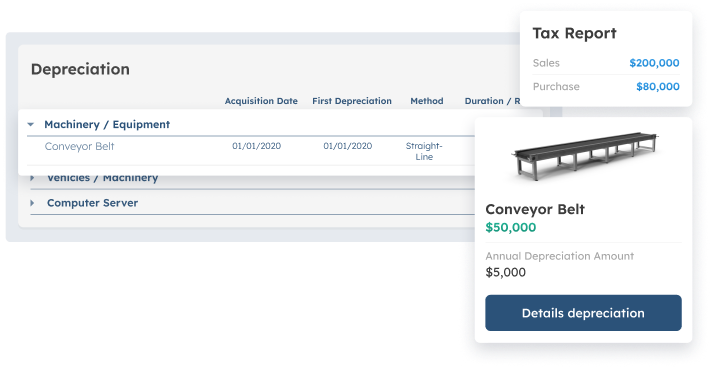 ScaleOcean aims to manage your business operations across various industries. It helps businesses to reduce the margin of errors and administrative effort of sales processes, consequently improving overall operational efficiency.
One of the features of ScaleOcean software is to improve tax compliance and ensure the correct issuance of tax invoices in accordance with IRAS.
Utilizing the IRAS invoicing software in Singapore can help streamline tax invoice issuance, which is a benefit of using ScaleOcean as well.
It removes the chance for errors, ensures all businesses comply with regulations, and also helps businesses avoid audits from tax authorities in terms of tax reporting.
ScaleOcean also allows a free demo of its services and provides access to the CTC (Cost-to-Company) Grant. The primary features included in ScaleOcean software are the following:
- Automated Tax Invoice Generation Compliant with IRAS Standards: ScaleOcean ensures automated generation of tax invoices that adhere to the Inland Revenue Authority of Singapore (IRAS) standards.
- Seamless Integration with Accounting Systems: The software seamlessly integrates with existing accounting systems, allowing tax-related data to flow smoothly between invoice generation and accounting records.
- Real-time GST Tracking and Reporting: ScaleOcean offers real-time tracking and reporting of GST transactions, providing businesses with an up-to-date view of their tax liabilities.
- Efficient Invoice Customization: With customizable invoice formats, ScaleOcean allows businesses to tailor invoices to their specific needs while ensuring compliance with tax regulations.
- Automatic Reconciliation and Payment Tracking: The platform simplifies payment reconciliation and invoice tracking by automating these processes.
Conclusion
Understanding the requirements for tax invoicing is crucial for businesses to comply with IRAS regulations.
Having correctly prepared tax invoices helps businesses to fulfill tax obligations, maintain efficient business accounts, and at the same time lower risks associated with penalties from IRAS for errors and omissions made, and it will ensure your accounting records are clean for business auditing and filing.
With changes to the GST regulations coming into force in Singapore from 1 April 2026, it is important that businesses continue to stay well-informed and adhere to these standards.
Digital solutions such as ScaleOcean accounting software will provide an efficient platform to simplify tax invoice generation.
With automatic billing and easy integration, the time it takes to generate the invoicing process will be significantly sped up, as well as having real-time information to effectively handle your tax liabilities.
FAQ:
1. What is a tax invoice in Singapore?
A GST-registered supplier issues a tax invoice to a GST-registered customer in Singapore, detailing the GST amount on goods or services. It allows customers to claim input tax credits and ensures compliance with IRAS regulations.
2. Is a tax invoice a receipt?
No, a tax invoice is not the same as a receipt. A tax invoice includes GST details and is essential for tax reporting. A receipt serves only as proof of payment, lacking the tax-related information needed for GST filings.
3. What is the difference between an invoice and a tax invoice?
A tax invoice includes GST details like the amount charged, issued by a GST-registered supplier for tax reporting. A business may not include tax details in a general invoice. It can use it for basic payment requests without needing to comply with GST regulations.
4. What is the difference between a tax invoice and a proforma invoice?
A tax invoice is an official document that includes GST details for tax reporting, in compliance with IRAS rules. A proforma invoice is a preliminary quote without GST. It is used for proposed transactions and is not legally binding or for tax purposes.




















.png)