
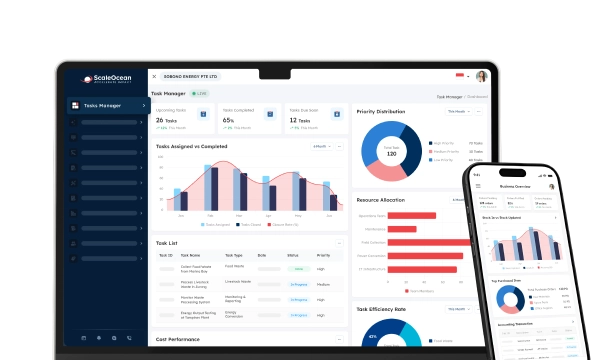

Sales pipeline management software is a digital tool designed to manage and track sales opportunities across the sales funnel. By providing visibility into leads, deal stages, customer interactions, and sales performance, the software enables sales teams to make sound revenue decisions and improve the accuracy of their sales forecasts.
As businesses in Singapore expand, customer touchpoints and sales channels grow, and sales opportunities multiply, making sales increasingly complex to manage. Common issues include disjointed sales data, inconsistent sales follow-up, limited sales pipeline visibility, inaccurate sales forecasting, and challenges in coordinating cross-team sales.
Sales teams could be working on opportunities in a spreadsheet or multiple tools, which makes it harder for sales leaders to understand where the opportunities are in the pipeline. Sales pipeline management software can solve these problems by consolidating all of your sales data and providing real-time sales data on opportunities for revenue.
With the help of our team, we accessed data from IMDA and found that 95.1% of Singapore’s SMEs were adopting at least one digital space in 2024, indicating that the trend of businesses moving to digital continues. Digital transformation underscores the need for sales pipeline management software that offers more sales visibility, automates tasks, and facilitates data-driven sales forecasting.
Read this article to understand what sales pipeline management software is, why Singapore businesses need it, the key features to consider, and the top sales pipeline management software options available in 2026.
 Key Takeaways
- Sales pipeline management software is a digital sales solution that helps businesses manage leads, track opportunities, monitor deal progress, and improve revenue forecasting through centralised sales data.
- Common challenges in managing sales pipelines include fragmented sales data, limited opportunity visibility, inaccurate forecasting, manual sales administration, inconsistent sales processes, and difficulties coordinating between sales and other departments.
- The top 10 sales pipeline management software in Singapore for 2026 include ScaleOcean Atlas, Salesforce Sales Cloud, HubSpot Sales Hub, Pipedrive, Monday Sales CRM, Clari, Bigin by Zoho, Insightly CRM, Freshsales, and Copper CRM.
- ScaleOcean Sales Software helps businesses manage sales pipeline operations through configurable ERP workflows that connect customer data, sales activities, operational processes, and ScaleMind-powered insights to improve opportunity visibility and sales decision-making.
What Is Sales Pipeline Management Software?
Sales pipeline management software is a technology solution that is used to handle as well as track the sales pipeline from the initial lead generation to the final sale. It provides the sales team with a structured perspective of each lead, and they will know who the deal is in the hands of, what may be an issue, and what they need to focus on.
Sales pipeline software collects and centralizes customer information, sales activities, and opportunity data, while traditional sales tracking systems involve spreadsheets or multiple forms of communication. This makes it easier to monitor pipelines for sales representatives and managers.
Sales pipeline management software gives more visibility from one sales pipeline into various teams, regions, and sales channels for enterprise sales operations. Opportunities can be monitored, sales performance can be analysed, forecasting accuracy can be enhanced, and sales activities can be correlated with the overall revenue targets of the business.
When sales pipeline management software is integrated with other business systems and CRM, businesses can offer customers a single platform to access all of their pipeline customer data, business information, and operational data.
 Also Read: What is Sales Management Software? Top 10 Solutions in 2026
Common Challenges When Managing Sales Pipeline Without Software
Managing a sales pipeline without software relies on manual tracking, leading to missed follow-ups, scattered data, and zero real-time visibility.
1. Fragmented Sales Data
Many businesses will keep their customer information in spreadsheets, emails,nd various applications. This broken-down sales process makes it challenging for sales teams to get access to accurate and up-to-date opportunity information.
Some individual managers without a central sales pipeline may not be aware of the exact location of deals in the sales pipeline, who the customers are, or how deals are being managed by other teams.
2. Poor Sales Forecasting Accuracy
To make effective sales forecasting, you need information and data regarding the following: opportunities, sales stages, where the customers are in the process, and how long it is expected to take until they go through the stages and are closed. Manually tracking systems can be difficult to predict,nd the data may be missing or outdated.
A good sales pipeline management software will also be able to analyse the opportunity data and determine the trend, allowing the sales leaders to make more accurate revenue predictions.
3. Manual Sales Administration
Sales teams are frequently found to be spending much of their time on updating spreadsheets, creating reports, and manually following up on leads. All of these administrative tasks are time-consuming and time that could be used to generate revenue with customers.
Sales pipeline management software’s automation features can help to reduce repetitive tasks by structuring sales activities, reminders, reporting, and opportunity updates.
4. Limited Pipeline Visibility
If pipeline visibility is not available in real time, sales managers can find themselves in a situation where they don’t know if their opportunities need to be addressed or where potential revenue risks lie.
A sales pipeline management system provides dashboards and analytics that allow businesses to monitor opportunity progress, identify bottlenecks, and improve sales performance through better sales forecasting capabilities.
5. Inconsistent Sales Processes
Even in the same company, the sales approach of teams, departments, and regions can vary. If not standardised, the sales processes can vary and are hard to measure.
Sales pipeline management software helps businesses define sales stages, improve teamwork, and ensure smooth processes for managing sales opportunities.
Why Do Businesses Need Sales Pipeline Management Software?

With sales pipeline management software, businesses can streamline and automate their sales processes, likely resulting in better sales management and handling.
For Singapore businesses with multiple sales teams, customer segments, or revenue streams, the right sales pipeline solution can help businesses make more accurate predictions, streamline sales processes, and facilitate better collaboration between teams.
1. Improve Sales Visibility Across Multiple Opportunities
When information is spread across various systems, emails, or spreadsheets, it can be difficult to manage several sales opportunities at once. Sales teams can find it difficult to determine which deals are in need of action, to keep track of customer interactions, and to gain a clear view of pipeline performance.
Sales pipeline management software brings together sales opportunities, deal stages, customer activities, and sales progression into one platform, offering a centralized view of the opportunities. This enables the sales manager to keep a ack of the pipeline movement and also pinpoint the risks or opportunities.
2. Increase Sales Forecast Accuracy
A key aspect of business planning is accurate sales forecasting, which is crucial for allocation of resources and revenue management. But when sales data is incomplete, out-of-date, or manually entered, and businesses use multiple quoting software tools to handle pricing and proposal processes, it becomes unreliable.
Sales pipeline management software helps to enhance the accuracy of sales forecasts by studying opportunity stages, historical sales data, deal progress, and expected closing time. These insights can help sales leaders make more informed forecasts and strategic decisions.
3. Reduce Manual Sales Administration
Sales teams can spend a lot of time updating spreadsheets, opportunity records, reports, and keeping up with follow-up activities. These administrative tasks can take time that can be spent on customer engagement and sales.
Sales pipeline management software automates repetitive tasks like activity tracking, reminders, reporting, and opportunity updates. This assists salespeople in spending more time in customer relationship-building and keeps sales data organized and up to date.
4. Support Multi-Team Sales Operations
Sales teams in enterprise businesses may have a number of teams, locations, industries o, or customer segments. If there is no system, the sales process can vary among teams, making performance monitoring and collaboration more challenging.
Sales pipeline management software involves structured sales workflows that enable sales teams to keep consistent processes and track individual and overall performance. Managers can track sales activity from one team to another and manage opportunities to perfection.
5. Improve Collaboration Between Sales and Other Departments
Collaboration among multiple departments such as marketing, finance, customer service, and operations is often required for sales performance to be effective. Teams could lack valuable information in sales data when it is isolated, which can hinder customer relationships and business decisions.
Sales pipeline management software helps to improve collaboration by linking sales data to other company activities. Teams can access accurate customer data, opportunity status, and pertinent business data to increase team coordination.
How Does Sales Pipeline Management Software Work?

Sales pipeline management software will help the team keep notes and follow up with potential customers from first contact through a closed deal, all through a visual, centralized dashboard.
Linking sales data with real-time information can enhance collaboration, make better revenue predictions, and help businesses uncover opportunities that need urgent attention.
1. Capture and Organise Leads
The initial phase is the collection and centralisation of information on potential customers from various sources, including website enquiries, marketing campaigns, referrals, or direct sales efforts. Sales pipeline management software organizes all the information related to leads into a system that is structured so that it is easy to access and is managed by sales teams.
Rather than managing leads on different spreadsheets or manually, businesses can centralise lead data, monitor customer interactions, and assign leads to salespeople. This ensures consistency in the handling of leads and helps to avoid lost leads.
2. Qualify Sales Opportunities
After leads are collected, sales teams need to evaluate which opportunities have the highest potential for conversion. Sales pipeline management software helps businesses qualify opportunities by analysing customer requirements, engagement levels, deal value, and sales progress.
With qualification features, sales teams can focus on the most valuable prospects and ensure that resources are used efficiently. For enterprise organizations with multiple opportunities to track, it helps to make better use of sales resources and prioritize sales efforts to the opportunities with the best prospects.
3. Track Deal Progress Through Pipeline Stages
After qualifying opportunities, the software monitors the movement of opportunities through the predefined sales stages. The phases can involve initial contact, needs assessment, proposal, negotiation, and closing. AI for sales can enable businesses to further leverage opportunity patterns, prioritize deals, and further enhance sales decision-making across the sales pipeline.
Deal status, bottlenecks, and follow-up activities can be monitored by sales reps and managers to ensure they are carried out on time. Real-time pipeline visibility helps businesses gain better insights into their sales performance and understand how to streamline their sales processes.
4. Analyse Pipeline Performance
The final stage involves analysing sales pipeline data to evaluate performance and support decision-making. Sales pipeline management software provides dashboards and reports that show metrics such as conversion rates, sales cycle duration, revenue forecasts, and team performance.
With AI-assisted analytics, businesses can identify sales trends, predict potential outcomes, and improve future sales strategies. These insights help sales leaders make data-driven decisions and align sales activities with broader business objectives.
Sales Pipeline Management Software vs CRM Software: What Is the Difference?
Sales pipeline management software will follow leads through a series of sales stages, and CRM (Customer Relationship Management) software will have a comprehensive database of all customer interactions, relationships, and data throughout the entire lifecycle.
Both solutions assist enterprises in managing client details; the key distinction is their emphasis. Sales pipeline management software offers more visibility into revenue opportunities and sales stages, while CRM software encompasses broader customer interactions, such as communication history, customer service, and relationship management.
| Aspect | Sales Pipeline Management Software | CRM Software |
|---|---|---|
| Primary Focus | Manages sales opportunities, deal stages, and revenue pipeline performance. | Manages overall customer relationships, interactions, and customer lifecycle. |
| Main Purpose | Helps sales teams track opportunities and improve conversion processes. | Helps businesses maintain customer records and improve customer engagement. |
| Key Data Managed | Leads, opportunities, deal stages, sales activities, revenue forecasts, and conversion rates. | Customer profiles, communication history, support records, and customer preferences. |
| Sales Visibility | Provides detailed visibility into pipeline movement and opportunity progress. | Provides broader visibility into customer relationships and engagement history. |
| Best Used For | Sales teams focused on improving pipeline management and revenue forecasting. | Businesses managing customer relationships across sales, marketing, and service functions. |
| Integration Capability | Often integrates with CRM, ERP, and business systems to improve sales operations. | Often integrates with marketing, sales, customer service, and operational tools. |
Brief Comparison: Top 10 Sales Pipeline Software Options
Businesses selecting sales pipeline management software should evaluate factors such as company size, sales complexity, integration requirements, reporting capabilities, and scalability.
The following comparison highlights several sales pipeline software options based on their primary focus, suitable business users, key capabilities, and pricing approach.
| Platform | Best For | Key Features | Pricing |
|---|---|---|---|
| ScaleOcean Atlas | Medium and large enterprises | ERP-integrated sales workflows, configurable pipeline management, AI-assisted insights, real-time dashboards, and business data integration | Custom pricing based on business requirements |
| Salesforce Sales Cloud | Large enterprises with complex sales operations | Opportunity management, sales automation, forecasting, analytics, and CRM capabilities | Subscription-based pricing |
| HubSpot Sales Hub | Small to medium businesses | Pipeline tracking, email automation, sales reporting, lead management, and CRM integration | Free and paid plans available |
| Pipedrive | Sales teams and growing businesses | Visual sales pipeline, deal tracking, activity reminders, automation, and reporting | Subscription-based pricing |
| Monday Sales CRM | Small to medium businesses and collaborative sales teams | Custom sales workflows, dashboards, automation, customer tracking, and team collaboration | Subscription-based pricing |
| Clari | Enterprise sales organizations focused on forecasting | Revenue forecasting, pipeline analytics, deal inspection, and sales performance insights | Custom pricing |
| Bigin by Zoho | Small businesses and growing sales teams | Pipeline management, contact management, workflow automation, and sales tracking | Subscription-based pricing |
| Insightly CRM | Small to medium businesses managing customer relationships | Opportunity tracking, project management, workflow automation, and reporting | Subscription-based pricing |
| Freshsales | Small to medium businesses seeking sales automation | Lead scoring, pipeline tracking, email automation, AI-assisted insights, and CRM tools | Subscription-based pricing |
| Copper CRM | Businesses using Google Workspace | Pipeline management, relationship tracking, workflow automation, and Google integration | Subscription-based pricing |
Top 10 Sales Pipeline Management Software in Singapore for 2026
As businesses grow and develop with multiple sales teams, customer segments, and changing revenue goals, they require a comprehensive sales tracking solution that’s more than just a collection of spreadsheets or disjointed tools.
Companies should consider factors such as sales process complexity, team size, integration capabilities, reporting features, customisation options, security requirements, and scalability when selecting sales pipeline management software. The right solution should support current sales operations while adapting to future business growth.
1. ScaleOcean
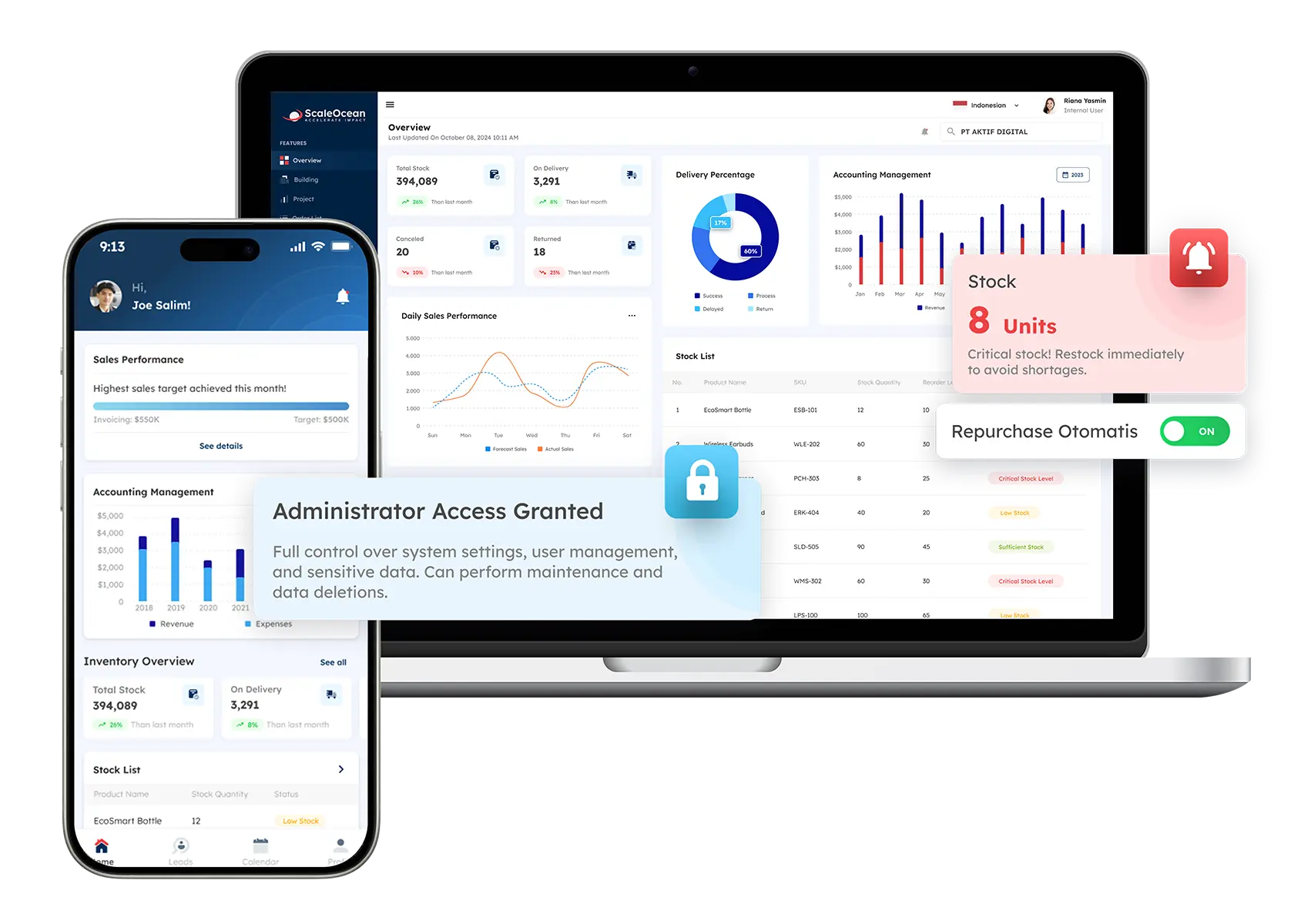
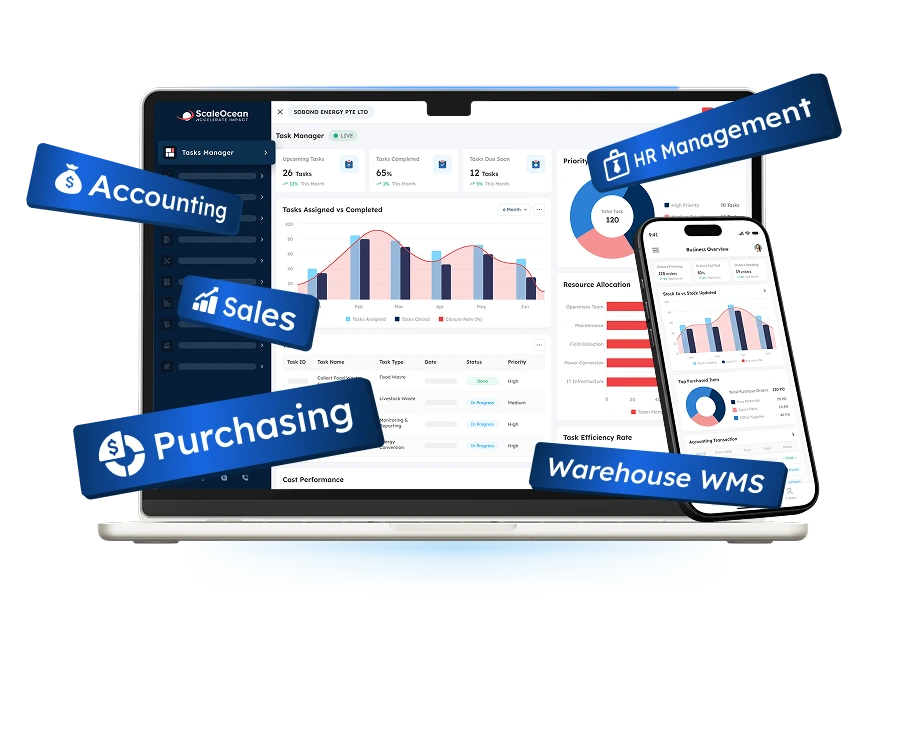
ScaleOcean is an ERP solution provider offering its flagship platform, ScaleOcean Atlas, designed to support medium and large enterprises with complex sales operations and business management requirements. This software allows businesses to align customer opportunities, operational data, and revenue activities within one integrated platform.
ScaleOcean Atlas can be used in multiple business architectures such as multi-location organizations, departments, projects, and customer requirements. The platform offers companies visibility into their sales pipeline, opportunity tracking, customer management, and includes ScaleMind AI-powered insights for improved sales forecasting and decision-making.
A structured governance framework is also provided through role-based access, approval workflows, and audit trails. The system has been optimised and complies with PDPA regulations and local financial reporting standards, including IRAS and GST requirements in Singapore. Additionally, it can be customised to support EDG and CTC requirements, subject to company eligibility and qualifying project costs. Schedule a consultation with ScaleOcean to discuss configurable sales pipeline workflows.
Key Features:
- Enterprise-wide sales pipeline visibility
- AI-assisted opportunity forecasting and sales insights
- Lead and opportunity management
- Configurable sales workflows and approval processes
- Real-time sales dashboards and reporting
- Integration with finance, CRM, ERP, and operational processes
- Role-based access, audit trails, and data governance
| Pros | Cons |
|---|---|
| Connects sales pipeline management with broader ERP processes instead of operating as a standalone sales tracking tool. | May provide broader capabilities than required for small businesses with simple sales tracking needs. |
| Configurable workflows allow businesses to align sales processes with existing operational requirements. | Implementation requires business process analysis to configure workflows according to specific requirements. |
| Combines sales data, customer information, operational insights, and AI-assisted analytics within one platform. | Pricing depends on business requirements, modules, integrations, and implementation scope. |
| Supports scalable implementation as businesses expand sales teams, locations, and operational complexity. |
Best for: Medium and large enterprises, multi-location organizations, professional services companies, manufacturing businesses, construction companies, and organizations managing complex sales operations.
ℹ️ Why choose ScaleOcean?
ScaleOcean helps businesses manage sales pipeline activities through configurable ERP workflows that adapt to specific business requirements. Instead of managing sales opportunities separately, businesses can connect pipeline tracking, customer information, operational data, and reporting processes within one integrated platform.
2. Salesforce Sales Cloud
Salesforce Sales Cloud is a CRM-based sales platform designed to help businesses manage customer relationships, sales opportunities, and revenue operations. The platform provides tools for tracking leads, managing deals, automating sales activities, and analysing sales performance.
It is commonly used by organizations that require comprehensive CRM capabilities and scalable sales management features. Businesses can configure sales workflows, create dashboards, and manage customer interactions across different sales channels.
Key Features:
- Opportunity management
- Sales forecasting
- Lead tracking
- Workflow automation
- Sales analytics dashboards
- CRM integration capabilities
| Pros | Cons |
|---|---|
| Provides extensive CRM capabilities for managing complex sales operations. | Implementation and configuration may require significant planning for complex organizations. |
| Offers advanced sales analytics and forecasting features. | Businesses may require additional tools for broader ERP and operational management. |
| Supports scalability for organizations with large sales teams and customer databases. | The wide range of features may require user training and customisation. |
Best for: Large enterprises, global sales organizations, and businesses requiring advanced CRM-based sales management.
ℹ️ Why choose Salesforce Sales Cloud?
Salesforce Sales Cloud provides businesses with CRM-based sales management capabilities that help organizations track opportunities, automate sales processes, and improve visibility into customer relationships.
3. HubSpot Sales Hub
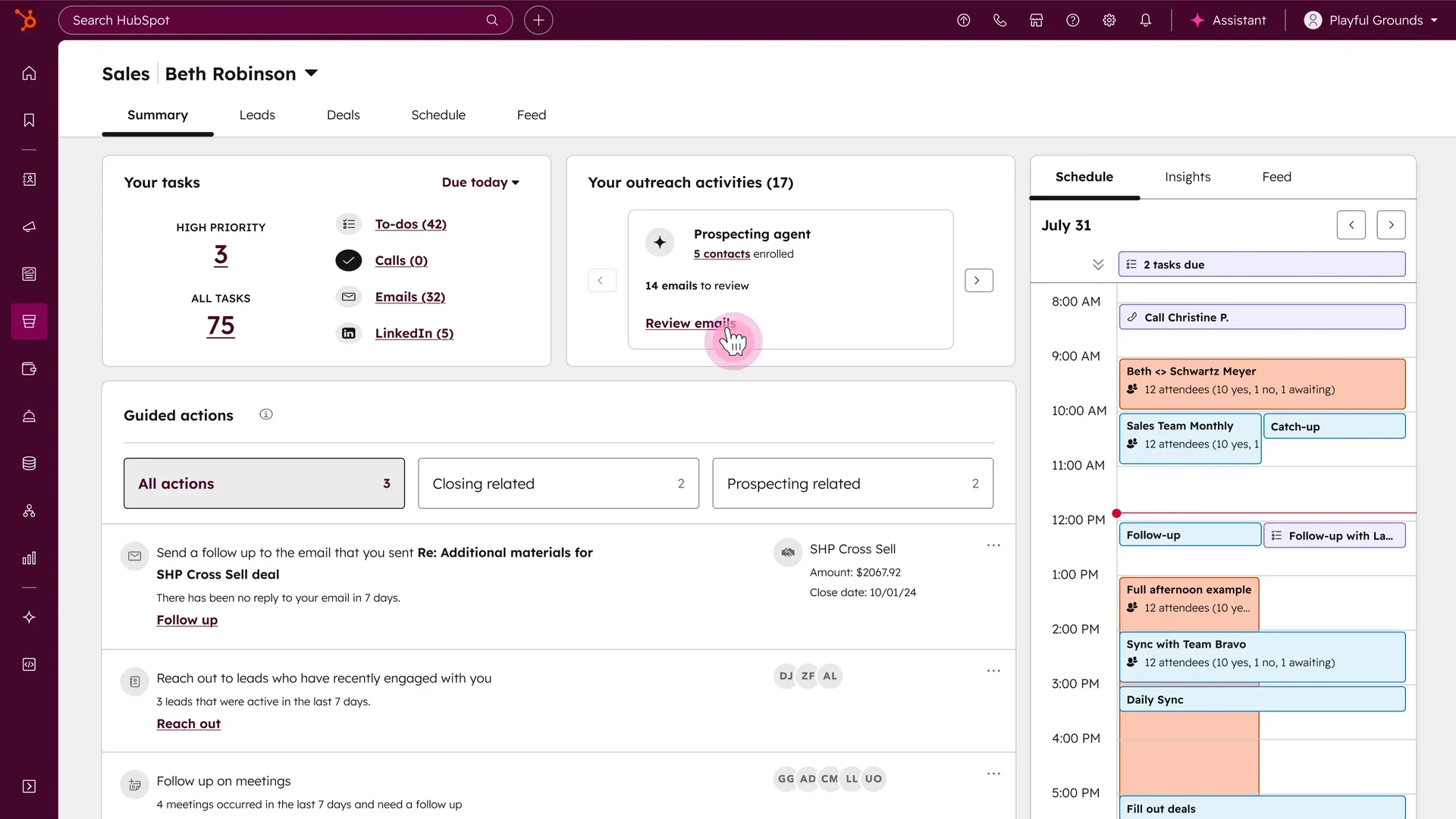
HubSpot Sales Hub is a sales platform that helps businesses manage leads, customer interactions, and sales pipelines through a centralised CRM environment. The platform combines pipeline tracking, sales automation, reporting, and customer communication features.
It is commonly used by growing businesses that need a structured way to manage sales opportunities while maintaining visibility into customer engagement activities.
Key Features:
- Deal pipeline management
- Contact management
- Email tracking and automation
- Sales reporting
- Lead management
- CRM integration
| Pros | Cons |
|---|---|
| Provides an easy-to-use interface for managing sales pipelines and customer interactions. | Enterprise businesses with complex workflows may require additional configuration. |
| Offers automation tools that help reduce repetitive sales activities. | Advanced enterprise features may require higher-tier subscription plans. |
| Supports sales reporting and visibility through CRM dashboards. | Businesses requiring integrated ERP processes may need additional systems. |
Best for: Small to medium businesses, growing sales teams, and organizations looking for CRM-based pipeline management.
ℹ️ Why choose HubSpot Sales Hub?
HubSpot Sales Hub helps businesses manage sales opportunities through CRM-based pipeline tracking, automation, and reporting features designed to improve sales visibility and customer engagement.
4. Pipedrive
Pipedrive is a sales pipeline management platform designed to help businesses organise deals, track customer interactions, and manage sales activities through a visual pipeline interface. The platform focuses on helping sales teams understand deal progress, prioritise opportunities, and maintain consistent follow-up processes.
Pipedrive allows businesses to customise sales stages according to their sales processes and provides tools for activity tracking, reporting, and workflow automation. It is commonly used by organizations looking for a straightforward solution to improve sales pipeline visibility.
Key Features:
- Visual sales pipeline management
- Deal tracking
- Sales activity reminders
- Lead management
- Sales reporting dashboards
- Workflow automation
| Pros | Cons |
|---|---|
| Provides a visual pipeline interface that helps sales teams monitor deal progress. | Businesses requiring broader ERP functionality may need additional systems. |
| Allows sales teams to customise pipeline stages based on their sales process. | Advanced enterprise workflows may require additional configuration. |
| Supports activity tracking and reporting to improve sales organisation. | Companies managing complex multi-department operations may require more integrated solutions. |
Best for: Small to medium businesses, sales teams, and organizations requiring visual pipeline management.
ℹ️ Why choose Pipedrive?
Pipedrive provides businesses with a structured visual approach to managing sales opportunities. Its pipeline tracking and activity management features help sales teams organise deals and improve sales process visibility.
5. Monday Sales CRM
Monday Sales CRM is a sales management platform that helps businesses organise customer relationships, track opportunities, and customise sales workflows. The platform provides flexible dashboards and workflow configurations that allow teams to adapt sales processes according to their operational needs.
It helps sales teams work together by having a single place for customer data, deal progress, communication activities, and sales performance data. Workflows can be set up to enhance coordination and ensure more visibility over sales activities.
Key Features:
- Customisable sales pipelines
- Deal and contact management
- Sales dashboards
- Workflow automation
- Team collaboration tools
- Reporting and analytics
| Pros | Cons |
|---|---|
| Provides flexible workflows that can be adapted to different sales processes. | Businesses with highly complex enterprise sales requirements may need additional configuration. |
| Supports collaboration through shared dashboards and team visibility. | Advanced CRM and ERP integrations may require additional setup. |
| Allows businesses to customise sales workflows according to their processes. | Large organizations may require governance structures for managing multiple workflows. |
Best for: Small to medium businesses, collaborative sales teams, and organizations requiring flexible workflow customisation.
ℹ️ Why choose Monday Sales CRM?
Monday Sales CRM helps businesses manage sales pipelines through customisable workflows, dashboards, and collaboration features that improve visibility into customer opportunities and sales activities.
6. Clari
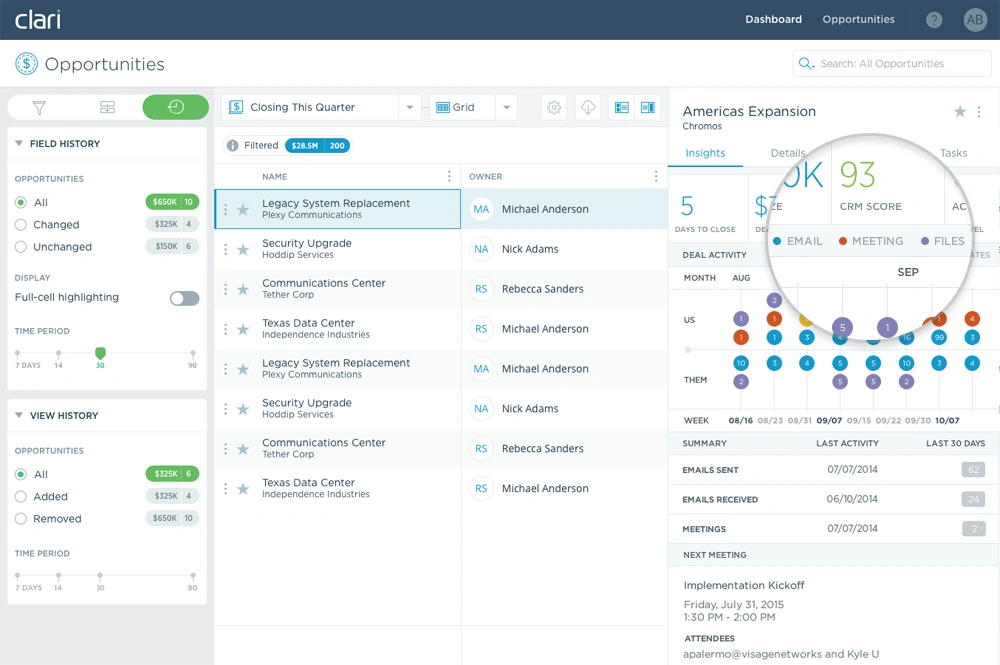
Clari is a revenue operations platform designed to help businesses improve sales forecasting, pipeline visibility, and revenue planning. The platform focuses on analysing sales data to help organizations understand deal health, forecast outcomes, and improve revenue predictability.
Clari provides analytics capabilities that allow sales leaders to review pipeline performance, identify risks, and improve alignment between sales teams and business objectives.
Key Features:
- Revenue forecasting
- Pipeline analytics
- Deal inspection
- Sales performance insights
- Revenue intelligence
- Sales activity analysis
| Pros | Cons |
|---|---|
| Provides advanced revenue forecasting and pipeline analytics capabilities. | May provide more capabilities than required for small businesses with simple sales processes. |
| Helps sales leaders analyse pipeline health and revenue performance. | Implementation may require alignment between sales teams and existing processes. |
| Supports data-driven decision-making through revenue intelligence. | Businesses may require additional platforms for broader operational management. |
Best for: Medium to large enterprises, revenue teams, and organizations focused on sales forecasting and pipeline analytics.
ℹ️ Why choose Clari?
Clari helps organizations improve revenue visibility by analysing pipeline data, forecasting performance, and providing insights that support sales planning and decision-making.
7. Bigin by Zoho
Bigin by Zoho is a pipeline-focused CRM solution designed for small businesses and growing sales teams. The platform provides tools for managing customer relationships, tracking deals, and automating sales activities through a simplified interface.
Bigin helps businesses organise sales processes without requiring complex CRM implementation. It provides essential pipeline management capabilities while supporting customer communication and sales activity tracking.
Key Features:
- Contact management
- Workflow automation
- Activity tracking
- Email integration
- Sales reporting
| Pros | Cons |
|---|---|
| Provides a simple approach to managing sales pipelines and customer information. | Large enterprises may require more advanced sales and operational capabilities. |
| Offers workflow automation to improve sales activity management. | Complex enterprise workflows may require additional customisation. |
| Provides accessible pipeline features for growing businesses. | Businesses needing integrated ERP processes may require additional solutions. |
Best for: Small businesses, startups, and growing sales teams looking for simple pipeline management.
ℹ️ Why choose Bigin by Zoho?
Bigin by Zoho provides businesses with simplified pipeline management features that help organise customer opportunities, automate sales activities, and improve sales process visibility.
8. Insightly CRM
Insightly CRM is a customer relationship management platform that helps businesses manage sales opportunities, customer relationships, projects, and workflows. The platform integrates pipeline management with CRM, enabling businesses to monitor opportunities and keep customer data in sync throughout the sales journey.
Insightly supports businesses by providing visibility into customer interactions, deal progress, and sales activities. It is commonly used by organizations that need a combination of sales pipeline tracking and project management capabilities within one platform.
Key Features:
- Sales opportunity management
- Contact and customer relationship tracking
- Workflow automation
- Project management integration
- Sales reporting dashboards
- Custom fields and pipelines
| Pros | Cons |
|---|---|
| Combines sales pipeline management with CRM and project tracking capabilities. | Businesses requiring advanced enterprise ERP integration may need additional solutions. |
| Provides customisable workflows to support different sales processes. | Complex sales operations may require additional configuration and setup. |
| Offers reporting features to help businesses monitor opportunities and customer activities. | Larger organizations may require more specialised revenue management capabilities. |
Best for: Small to medium businesses, professional services companies, and organizations requiring CRM with sales pipeline capabilities.
ℹ️ Why choose Insightly CRM?
Insightly CRM helps businesses manage customer relationships and sales opportunities through integrated pipeline tracking, workflow automation, and reporting features.
9. Freshsales
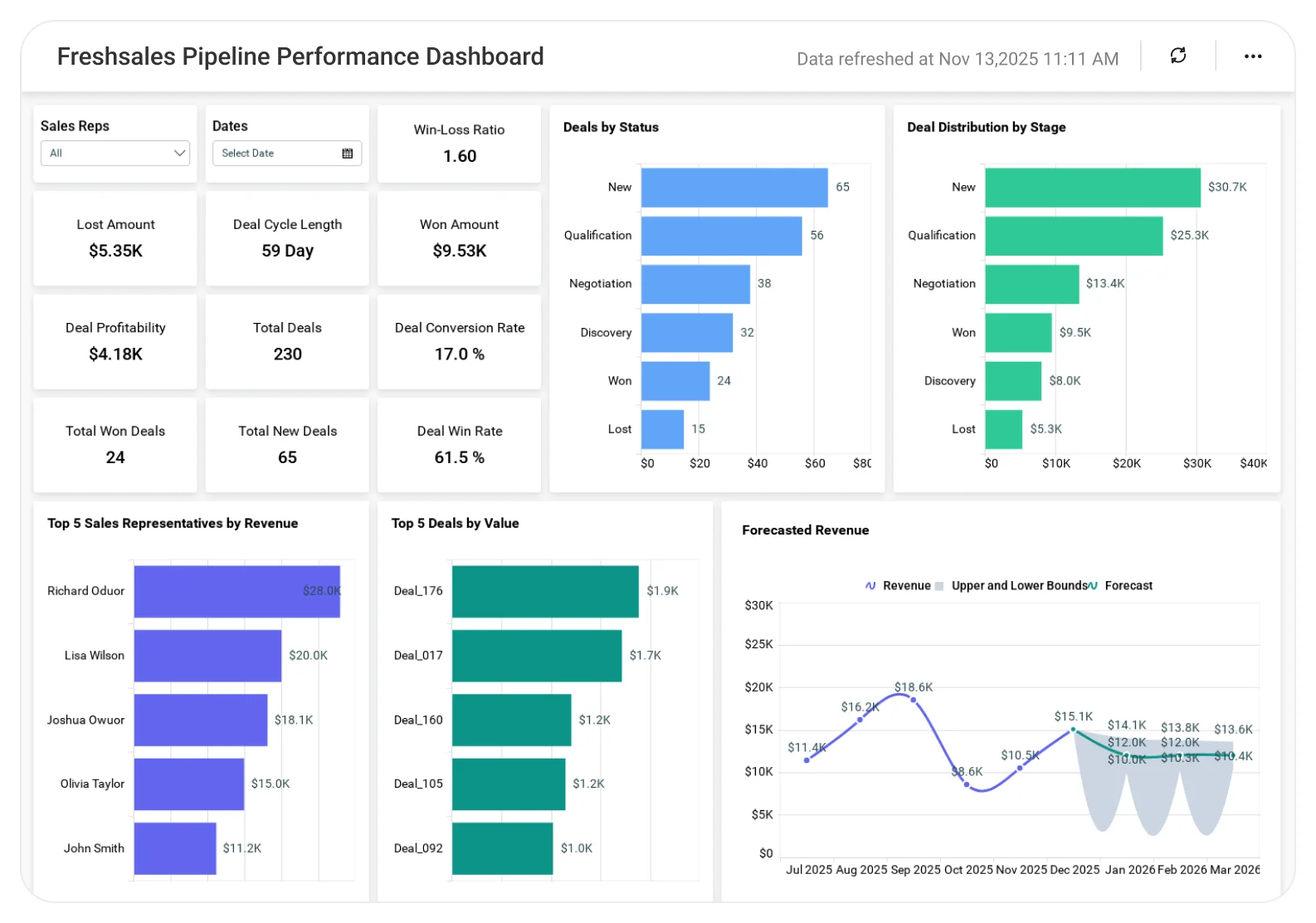
Freshsales is a CRM and sales automation solution for businesses to organize leads, monitor opportunities, and enhance sales productivity. The platform offers sales teams tools to structure customer data, automate activities, and track the pipeline.
Freshsales supports businesses by combining contact management, sales tracking, and AI-assisted insights. It helps sales teams prioritise opportunities and improve engagement throughout the customer journey.
Key Features:
- Lead management
- Sales pipeline tracking
- AI-assisted insights
- Email automation
- Contact management
- Sales reporting
| Pros | Cons |
|---|---|
| Provides sales automation features that help teams manage leads and opportunities efficiently. | Enterprise businesses with complex processes may require additional customisation. |
| Includes AI-assisted capabilities to support sales insights and opportunity prioritisation. | Businesses requiring broader ERP workflows may need additional integrations. |
| Offers dashboards and reporting tools to improve sales visibility. | Advanced enterprise requirements may require more extensive platform configuration. |
Best for: Small to medium businesses, growing sales teams, and organizations seeking sales automation features.
ℹ️ Why choose Freshsales?
Freshsales provides businesses with sales automation, pipeline management, and AI-assisted insights to help teams improve lead management and sales performance.
10. Copper CRM
Copper CRM is a customer relationship management tool that integrates seamlessly with Google Workspace environments. The platform integrates with existing productivity tools to streamline businesses’ sales funnel, customer management, and communication workflows.
Copper CRM is a relationship-based CRM solution that enables teams to manage customer data, track opportunities, and engage with customers. It is frequently adopted by businesses aiming for sales pipeline features integrated into their current collaboration platform.
Key Features:
- Sales pipeline management
- Customer relationship tracking
- Google Workspace integration
- Workflow automation
- Contact management
- Sales reporting
| Pros | Cons |
|---|---|
| Provides sales pipeline management within a familiar productivity environment. | Businesses outside the Google Workspace ecosystem may require additional adjustments. |
| Supports relationship management by connecting customer information and communication history. | Complex enterprise sales operations may require broader business system integration. |
| Helps teams organise opportunities and improve sales collaboration. | Advanced workflow requirements may require additional configuration. |
Best for: Small to medium businesses, professional services companies, and teams using Google Workspace.
ℹ️ Why choose Copper CRM?
Copper CRM helps businesses manage customer relationships and sales opportunities by connecting pipeline management with everyday productivity workflows.
How to Choose the Right Sales Pipeline Management Software in Singapore
Choosing the right sales pipeline management software in Singapore starts with mapping your existing sales workflow and matching it to a platform that fits your team size, budget, and local integration needs.
For Singapore businesses, several factors should be considered before selecting a sales pipeline solution:
1. Evaluate Business Process Compatibility
Businesses should select software that matches their existing sales workflows and customer management processes. A flexible solution allows organizations to customise pipeline stages, approval flows, and reporting structures according to their requirements.
For enterprises with complex sales cycles, configurable workflows help ensure the software supports existing processes rather than forcing teams to adapt to rigid structures.
2. Check Integration With Existing Business Systems
Sales pipeline software should integrate with existing CRM, ERP, finance, marketing, and operational systems. Connected systems help businesses reduce data silos and provide sales teams with more complete customer and operational information.
According to the data our team gathered from Reuters, Singapore continues strengthening its digital infrastructure, with major technology investments supporting wider business digitalisation. For example, AWS announced a S$12 billion investment to expand its cloud infrastructure in Singapore, reflecting the increasing demand for connected digital systems that support business operations.
Integration capabilities are especially important for enterprises managing multiple departments that need access to updated sales and customer data. By connecting sales pipeline software with broader business systems, organizations can improve collaboration, maintain consistent information, and support more efficient decision-making.
3. Consider Scalability and Security
As businesses grow, sales teams, customer data, and operational complexity may increase. Companies should choose software that can support additional users, locations, workflows, and reporting requirements.
Security features such as role-based access, audit trails, and data governance capabilities are also important for protecting sensitive customer and business information.
4. Review Vendor Implementation Support
Successful software adoption depends not only on technology but also on implementation support. Businesses should evaluate whether vendors provide guidance for workflow configuration, system integration, training, and ongoing support.
A structured implementation approach helps organizations maximise the value of sales pipeline management software and ensure smoother adoption across teams.
Conclusion
Sales pipeline management software is a digital sales solution that helps businesses manage leads, track opportunities, monitor deal progress, and improve revenue forecasting. By centralising sales data and automating sales processes, the software enables organizations to improve pipeline visibility, collaboration, and decision-making.
For Singapore businesses, challenges such as fragmented sales data, complex customer journeys, inconsistent follow-ups, and limited forecasting accuracy can make sales operations more difficult to manage. Sales pipeline management software provides a structured approach to organise opportunities, improve sales efficiency, and align sales activities with business growth objectives.
ScaleOcean Sales Software helps businesses manage sales pipeline operations as part of a broader ERP ecosystem rather than as a standalone sales tracking tool. Through configurable workflows, integrated business data, and ScaleMind-powered insights, businesses can improve opportunity management, sales forecasting, and collaboration across departments. Schedule a consultation with ScaleOcean to explore how an integrated sales pipeline solution can support your organisation.
FAQ Sales Pipeline Management Software:
1. What features should sales pipeline management software have?
Sales pipeline management software should include features such as opportunity tracking, lead management, pipeline customisation, sales dashboards, reporting analytics, automation tools, and integration capabilities with CRM or ERP systems to support efficient sales operations.
2. How does AI improve sales pipeline management?
AI improves sales pipeline management by analysing sales data, identifying opportunity trends, supporting forecasting accuracy, prioritising leads, and providing insights that help sales teams make better decisions based on customer and pipeline information.
3. Can sales pipeline software integrate with ERP systems?
Yes, sales pipeline software can integrate with ERP systems to connect sales activities with operational, financial, and customer data. This integration helps businesses gain broader visibility and improve coordination between sales and other departments.
4. Is sales pipeline management software suitable for enterprise businesses?
Yes, sales pipeline management software is suitable for enterprise businesses, especially those managing multiple sales teams, complex sales processes, and large volumes of customer opportunities. Enterprise solutions typically provide scalability, workflow configuration, reporting, and integration capabilities.
5. How does sales pipeline software help improve sales forecasting?
Sales pipeline software improves forecasting by analysing opportunity stages, historical performance, deal progress, and expected closing timelines. These insights help sales leaders create more accurate revenue projections and identify potential risks earlier.



















.png)