Import and export software provides a digital system that handles all facets of international business processes, such as customs processing, tracking, trade compliance issues, and financial settlement. With limitations on international trade becoming ever more stringent, businesses require accurate systems to minimize business risks.
But the majority of companies reuse the same trade data across purchase orders, invoices, packing lists, bills of lading, and TradeNet declarations. So, this extra work increases admin costs and the risk of expensive document errors.
Repetitive processes can result in inconsistent data between commercial documents and customs declarations, causing delays at customs, permit rejections, and increased storage costs, which cut directly into margins and service.
As a result, import-export software integrates trade data and automates controls and links between logistics and finance. It enables companies to optimize their document flow, gain a better outlook on their shipments, and stay within regulations, supporting growth in international commerce.
Key Takeaways
Import export software is a platform that centralizes international trade operations by automating documentation, compliance, shipment tracking, and financial processes within one connected platform.
Import export software benefits include optimizing supply chains, improving financial management, reducing operational risks, and supporting better business decision-making through integrated data.
Comparing leading import export software like ScaleOcean, Descartes, and VISCO enables businesses to evaluate solutions based on operational requirements, functionality, and long-term scalability.
ScaleOcean Logistics Software helps businesses streamline import export operations through integrated ERP capabilities, improving compliance, efficiency, and supply chain visibility.
Import export software is a comprehensive business management application that handles international trade processes from procurement to delivery. It consolidates all customs paperwork and provides tracking, inventory, and accounting.
Instead of manually filling in spreadsheets, the program checks deal accuracy before submission to customs authorities and 3PL logistics. In that way, companies reduce paper errors, speed up customs clearance procedures, and comply with international supply chain requirements.
How Does Import Export Software Work?
Import export software integrates transaction information from procurement, inventory, finance, and transportation modules into a single database. It automatically creates consignment notes, customs declarations, invoices, and transport documents based on uniform data.
The software constantly checks shipment data for trade compliance, tax compliance, and customer documentation compliance before submission. At the same time, traders follow inventory movement and financial transactions through real-time dashboards.
A robust import-export software solution provides integrated compliance management, logistics tracking and visibility, inventory management, and financial automation in one system. These features allow businesses to cut back on paperwork while increasing efficiency and regulatory compliance.
The scope of the following offerings reflects typical issues faced in international trade, covering everything from customs paperwork and shipment visibility to financial reconciliation and warehouse management. They all aim to enable faster exports and imports with increased transparency and efficiency.
1. Landed Cost Tracking
Landed Cost Tracking also tracks the total import cost, including product pricing, freight, insurance, customs duty, tax, and handling outgoings. This enables businesses to precisely determine their real profit margin before offering imported products for sale.
Accurate landed cost visibility facilitates more strategic pricing approaches and purchasing decisions among multiple vendors and countries. Additionally, finance teams can eliminate manual calculations and ensure uniform cost allocation for each imported shipment.
2. Automation Customs Compliance & Document
Automation Customs Compliance & Document automatically prepares shipping paperwork and validates regulatory compliance before submitting to customs. Businesses can hence cut down on laborious processing and enhance shipping documentation accuracy for all international shipping.
System-driven generation of invoice, packing list, certificate, permits, and customsdeclaration based on centralized transaction data. Source data and templates are built within the system to validate compliance requirements and reduce Customs risk, supporting faster clearance across multiple trading destinations.
3. Shipment Tracking
Shipment Tracking offers real-time tracking throughout transportation from supplier departure to final customer delivery. Consequently, businesses track shipment status and react promptly in case of delays or other unforeseen logistical disruptions.
Integrated tracking consolidates information from freight forwarders, shipping carriers, and logistics partners in a single dashboard. Operations teams, on the other hand, enhance customer communication by providing more precise delivery estimates and managing shipments proactively.
4. Letter of Credit Tracking
The system monitors payment deadlines and checks whether documents are approved. It also provides information on when projects are due in international commerce. Therefore, companies, crafters, and suppliers can manage financial developments and time-sensitive communications.
It also informs finance teams when key deadlines and outstanding documentation are approaching. It also provides a single source of visibility that improves cash flow planning and avoids payment delays or penalties.
5. Container Tracking
For businesses, daily container tracking provides real-time information on its location, transportation events, and estimated time of arrival. Thus, companies enhance logistics planning and reduce the uncertainty in international transportation activities.
Real-time container visibility allows quicker response to port congestion and route adjustments, unexpected delays of shipments, etc. It also allows warehouse staff to more proactively schedule receipting activities and optimize utilization of labor, equipment, and space by providing better arrival estimates.
6. Multi-Currency Financial & Forex
Multi-Currency Financial & Forex oversees transactions across several currencies. It automatically monitors changes in exchange rates so the finance teams can provide more precise reporting, and this minimizes errors in FX calculation.
Accounting software calculates gains, losses, payments, and currency conversion values using common accounting principles. Additionally, organizations can improve budgeting decisions while keeping transparent accounting for all cross-border trading.
7. ERP Software Integration
ERP Software for import export activity with finance, procurement, inventory, warehouse, and sales modules via centralized business data. This cooperation occurs through synchronized data, avoiding double manual entries.
Integrated workflows eliminate isolated data silos and enable a complete view of supply chain operations. Organizations can also automate the entire flow from order receipt to financial reconciliation much more efficiently.
8. Multi-Warehouse and Inventory
Multi-Warehouse and Inventory handles the stock held in multiple warehouses with support for international purchasing and shipping. This enables customers to keep inventory visibility accurate in multiple and complex supply chains.
The software automatically coordinates warehouse movement with inbound shipping, outbound shipping, and stock transfers. Operations teams reduce stock differences, increase shipping efficiency, and improve inventory plan accuracy.
Main Benefits Using Import & Export Software
Import & export software enhances cross-border business activities by streamlining documentation, ensuring stronger compliance, and integrating logistics with finance. These benefits are increasingly critical for growing corporations in need of operational efficiency and risk mitigation on the international stage.
These benefits illustrate how import-export software enables quicker trade completion, enhanced financial control, and improved supply chain visibility. These combined features help the organization excel and gain a competitive advantage.
1. Supply Chain Optimizations
Supply chain optimizations use centralized operational data to streamline coordination of procurement, warehousing, transportation, and distribution. As a result, companies minimize delays while maximizing inventory visibility and shipment throughput among global supply chains.
Real-time visibility helps companies identify supplier disruptions, transportation bottlenecks, and changes in customer demand sooner. Automated workflows optimize planning and coordination with other departments and logistics providers.
2. Trade Finance & Payment Facilitation
Trade Finance & Payment Facilitation is a single platform introduced for handling invoices, letters of credit, foreign currency conversions, and banking documentation. As a result, this reduces the time to receive payments directly and increases the transparency of cash flows.
Automated financial workflows alleviate administrative burdens and diminish variance in payments executed worldwide. Moreover, the finance function improves cash flow management while adhering to global trade payment regulations.
3. Risk Management & Forecasting
Risk Management & Forecasting enables a company to identify risks and challenges related to compliance, logistics, and finance before they affect operations. As a result, businesses take preemptive action based on past data and predictive insights.
Enabled reporting reveals shipment status, supplier performance, inventory flow, and trade costs via deploying single-pane dashboards. Further, it increases management confidence by enabling them to make better forecasts and predict responses with reduced variability.
4. Integration with Other Systems
Integration with other systems such as ERP software for export and import links warehouse management, accounting, procurement, and customer relationship management. As a result, enterprises stop operating with duplicate information while enhancing the uniformity of processes within departments.
Integrated business systems also automatically synchronize information across all departments so that all entered information is shared and all departments receive accurate trade information. Therefore, productivity will be enhanced, and decision-making will be supported in terms of the international Trading process.
Who Usually Uses Import Export Software?
Import export software is beneficial for businesses that buy, manufacture, ship, or sell overseas. Each industry has its nuances, but understanding what documentation is required is a shared concern.
The software is suitable for companies facing complicated supply chains, various trading partners, and international rules and regulations. Therefore, firms enhance their efficiency and minimize manual work in global trade practices. A real-world example shows why digital trade platforms have become increasingly important for importers and exporters.
Our team found that The Financial Times reported that businesses, including Singapore’s DBS, accelerated the digitization of trade documents and letters of credit to keep international shipments moving during supply chain disruptions, improving efficiency and resilience across cross-border operations.
1. Global Trade & Supply Chain Management
Import/export software supports global trade & supply chain management teams in facilitating international sourcing & customs compliance, and moving inventory effectively through transportation channels. They ensure transparency in complex cross-border supply chain operations.
Sharing trade information centrally allows suppliers, freight forwarders, warehouses, and business groups within organizations to work better together. It allows companies to streamline operations and reduce shipment lead times while ensuring accuracy and compliance with applicable regulations.
2. Wholesalers
Wholesalers use import/export software to handle buying procedures from other countries, restock inventories, and deliver customers’ orders effectively. As a result, stocks are always available and buying prices from other countries are kept down.
The software automates the preparation of customs documentation and the tracing of shipments involving several suppliers and various distribution channels. Additionally, wholesalers benefit from reduced delays that can affect customer delivery by speeding up inventory planning.
3. Regional & Local Logistics in Singapore
Import-export and local logistics companies in Singapore use import-export software to manage customs clearance, freight documentation, and shipment visibility. This enables them to enhance operational efficiency and deliver timely cross-border freight transportation solutions.
Because all carriers, customs brokers, and customers utilize integrated logistics workflows, there is decreased paperwork and efficient communication. In addition, all companies can improve service reliability thanks to accurate shipment tracking and automated customs administration.
4. Manufacturing
Import-export software helps manufacturers control imported raw materials, exported finished goods, and international dealings with suppliers. As a result, the manufacturing schedule can be maintained even with horizontal and vertical sourcing activities.
End-to-end inventory and procurement processes enhance material availability while avoiding avoidable production downtime. Moreover, manufacturers ensure compliance with international trade policies while controlling costs.
5. Agriculture
Farmers and agricultural enterprises use import/export software solutions to handle shipments from their farms, warehouses, or manufacturing plants abroad for crops, fertilizers, seeds, machinery, and other farming products. For example, they benefit from improved documentation accuracy without losing track of their products in export.
Compliance with import regulations, qualification, and export documentation requirements for each market helps prevent delays and ensures product quality. Additionally, this saves time for agricultural exporters.
6. Apparel
Import-export software helps apparel companies coordinate with foreign suppliers, plan production, track inventory movements and repackaging, and make export deliveries to international buyers. As a result, apparel enterprises become more responsive to their customers while reducing sourcing costs.
Real-time shipment tracking enables companies to respond easily to possible seasonal demand fluctuations or delayed suppliers. Moreover, common documentation provides efficient customs clearance for apparel trade around the world.
7. Food Distribution
Food distributors rely on import/export software to source products from international markets effectively, to keep stock rotation in order, and to provide products to customers at the right time. Hence, companies maintain product availability and work towards food safety standards.
Integrated warehouse and shipment visibility reduce the risk of spoilage and enhance distribution networks’ inventory planning. Besides, distributors improve customer satisfaction through proven lead times and documented norms.
8. Trading Companies
A trading company’s import-export software enables them to manage purchases, communicate with suppliers, customize according to Customs rules, handle logistics, and conduct international financial transactions from a single system. Therefore, such software enhances the company’s efficiency in its trading operations.
Centralized trade management enables organizations to make faster business decisions and eliminate the administrative headaches of managing trade across borders. In addition, organizations can enhance profitability through better visibility into all phases of international trade processes.
Best Export Import Software in Singapore 2026: Comparison Table
Choosing the right import export software depends on your business size, operational complexity, and international trade requirements. While every platform offers different capabilities, the best logistics management software should improve compliance, streamline documentation, and increase supply chain visibility.
The comparison below highlights 8 leading import export software solutions available in Singapore. Each platform serves different business needs, making it easier to identify the software that best fits your import and export operations.
Software
Best For
Standalone Features
ScaleOcean
Medium to large enterprises in logistics, manufacturing, wholesale distribution, retail, FMCG, automotive, chemicals, and trading businesses managing complex import-export operations.
Integrated ERP platform, import-export workflow automation, AI insights, customs documentation management, landed cost tracking, multi-currency finance, inventory and warehouse management
Magaya Supply Chain
Logistics providers and freight forwarding businesses
Best Import Export Software in Singapore 2026: Complete Review
Choosing the best import export software involves more than comparing feature lists or pricing plans. Businesses should evaluate how each platform supports customs compliance, shipment visibility, inventory management, and financial processes throughout international trade.
The following review will thoroughly examine 8 leading import export software solutions commonly used by businesses in Singapore. Each platform offers different strengths depending on operational complexity, company size, and cross-border trade requirements.
1. ScaleOcean
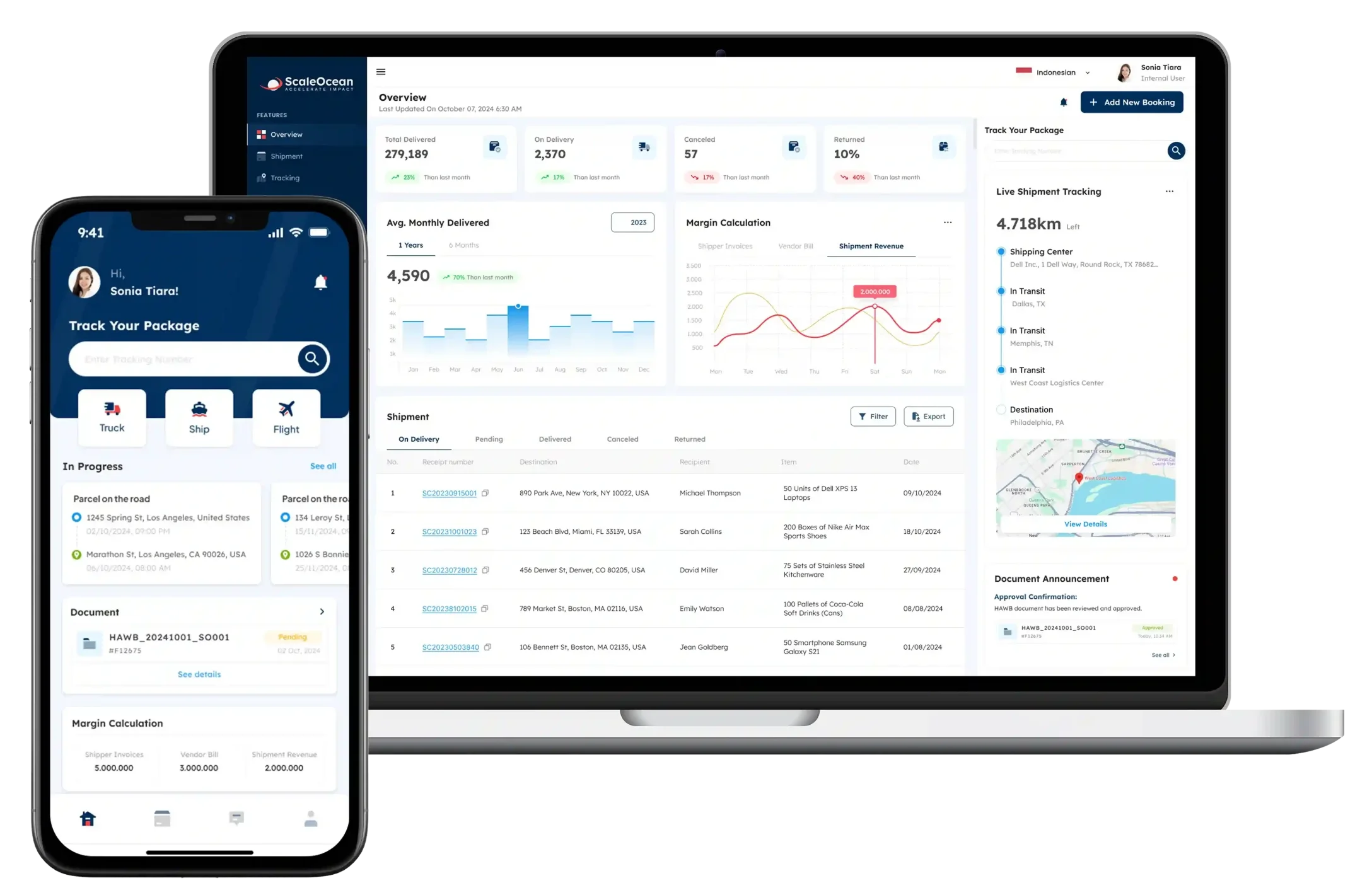
ScaleOcean logistics software is a comprehensive ERP platform designed for medium to large enterprises managing complex import and export operations. Beyond standard cloud software, it adapts workflows, approval processes, and system integrations to match each organization’s operational requirements.
The platform combines more than 200 integrated modules, flexible API connectivity, and ScaleMind to deliver intelligent, end-to-end import export management across procurement, logistics, inventory, finance, and compliance. Additionally, cloud or on-premises deployment, and unlimited users, enable businesses to scale efficiently while maintaining long-term operational flexibility.
Schedule a consultation with our experts to discuss your business requirements and discover how ScaleOcean can support your long-term international trade strategy.
Key Features of ScaleOcean:
ERP, WMS & Finance Integration: Connects procurement, warehouse, finance, freight forwarders, and approved TradeNet front-end within a unified workflow.
HS Classification & Customs Management: Centralizes HS code management, customs valuation, GST schemes, and origin tracking for consistent trade compliance.
Controlled Goods Screening: Automatically checks controlled goods requirements and supports permit management before shipment processing.
Exception Management: Detects missing permits, invoice mismatches, and compliance issues while automatically preventing high-risk shipments.
Audit Trail & Document Repository: Stores trade documents with complete audit histories for easier compliance, reporting, and regulatory inspections.
Pros
Cons
Business-based pricing ensures companies pay only for required modules.
Dedicated consultants align the system with operational requirements before implementation.
Modular implementation based on business priorities.
Transparent implementation timeline based on operational analysis.
Supports phased deployment, allowing gradual digital transformation with lower implementation risk.
ScaleOcean tailors its implementation to each company, so pricing requires a consultation with our experts first.
ScaleOcean’s Implementation prioritizes long-term stability over rapid deployment.
Best For: Medium to large enterprises requiring an integrated ERP platform to manage complex import-export operations, customs compliance, logistics, inventory, and financial processes across multiple entities or locations. sebutin industri lainnya
ℹ️ Why Choose ScaleOcean for Import Export Management
ScaleOcean Atlas combines import export management with a fully integrated ERP platform while adapting to each organization’s industry-specific workflows and operational requirements. Its configurable workflows, end-to-end operational coverage help businesses streamline international trade while maintaining efficiency as operations grow.
2. Magaya Supply Chain
Magaya Supply Chain import export software helps businesses manage shipping, warehouse operations, and international trade activities through a centralized platform. It supports logistics processes while improving operational visibility across supply chain workflows.
The software includes tools for shipment management, inventory control, and trade documentation within one system. Additionally, businesses can organize logistics activities while reducing manual administrative tasks.
Key Features of Magaya Supply Chain:
Shipment management
Warehouse management
Trade documentation
Inventory tracking
Pros
Cons
Supports logistics operations
Centralized shipment data
Easy document management
Advanced customization may require additional setup
Some features suit logistics-focused businesses better
Implementation varies by business requirements
Best For: Medium to large logistics providers, freight forwarders, customs brokers, and distribution companies managing international shipping and warehouse operations.
ℹ️ Why Choose Magaya Supply Chain for Import Export Management?
Magaya Supply Chain offers a centralized platform for managing logistics, warehouse activities, and shipping documentation. It helps businesses improve operational visibility while organizing international trade processes more efficiently.
3. Descartes
Descartes import export software provides businesses with tools for customs compliance, transportation management, and global trade operations. It helps organizations manage cross-border logistics while supporting international regulatory requirements.
The platform combines shipment visibility, trade documentation, and transportation planning within an integrated environment. Furthermore, businesses gain better oversight of import and export activities across multiple trading regions.
Key Features of Descartes:
Customs compliance
Transportation management
Shipment visibility
Trade documentation
Pros
Cons
Supports global trade operations
Improves shipment visibility
Includes compliance tools
Configuration depends on operational needs
Some modules require additional implementation
Better suited for established operations
Best For: Medium to large enterprises, logistics companies, and organizations managing international transportation and customs compliance across multiple countries.
ℹ️ Why Choose Descartes for Import Export Management?
Descartes combines customs compliance, transportation management, and shipment visibility within one platform. The software supports businesses handling international logistics and complex cross-border trade activities.
4. VISCO
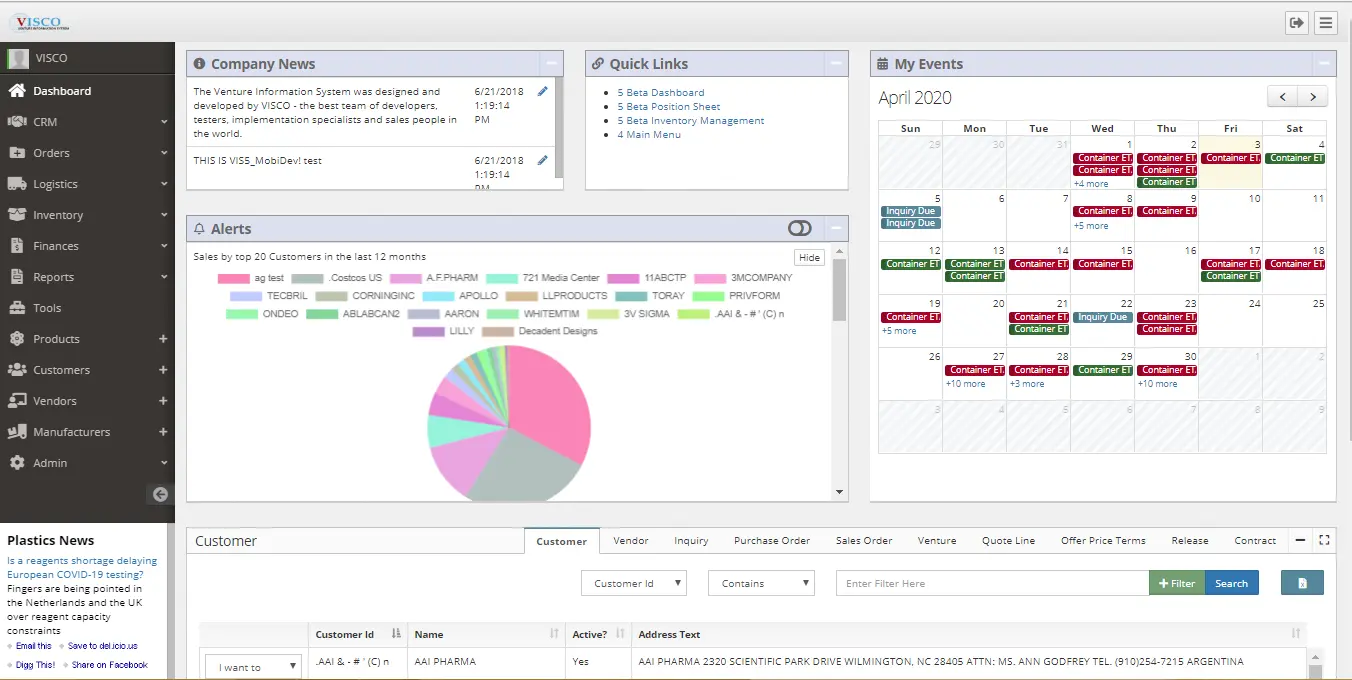
VISCO import export software helps businesses manage international trading processes, inventory, and financial records from a centralized system. It supports organizations involved in importing, exporting, and distribution activities.
The platform simplifies operational workflows by organizing trade documents, inventory information, and purchasing activities. Additionally, businesses gain greater consistency across daily import and export operations.
Key Features of VISCO:
Trade documentation
Inventory management
Order processing
Financial reporting
Pros
Cons
Supports trading operations
Centralized business data
Simple reporting tools
Features vary by implementation
Customization may require configuration
Better suited for structured workflows
Best For: Medium-sized trading, wholesale, and distribution companies managing regular import and export transactions.
ℹ️ Why Choose VISCO for Import Export Management?
VISCO provides businesses with practical tools for handling trade documentation, inventory, and order management. It supports more organized international trading workflows through centralized operational management.
5. Shipping Solutions Software
Shipping Solutions import export software focuses on creating export documentation and supporting international trade compliance. It helps businesses prepare shipping paperwork while reducing manual document preparation.
The software includes document templates and compliance tools for organizations involved in exporting products internationally. Furthermore, businesses can improve documentation accuracy across export transactions.
Key Features of Shipping Solutions Software:
Export documentation
Compliance support
Document templates
Reporting tools
Pros
Cons
Simplifies export paperwork
Easy document creation
Supports compliance processes
Focuses mainly on documentation
Limited operational functionality
Additional systems may be required
Best For: Small to medium exporters and businesses primarily requiring export documentation and compliance management.
ℹ️ Why Choose Shipping Solutions Software for Import Export Management?
Shipping Solutions Software helps businesses prepare export documents while supporting international compliance requirements. It provides a straightforward approach to managing export paperwork efficiently.
6. Moiboo
Moiboo import export software helps businesses organize trade workflows, shipment activities, and customer information within one platform. It supports companies managing routine import and export operations across multiple transactions.
The software centralizes operational information while improving visibility into shipping activities and documentation. Additionally, businesses can manage international trade records more consistently.
Key Features of Moiboo:
Trade workflow management
Shipment monitoring
Customer management
Reporting tools
Pros
Cons
Centralized workflow management
Supports shipment monitoring
Organized business records
Features depend on business needs
Customization varies by deployment
May require integration with other systems
Best For: Small to medium trading businesses and distributors managing routine international import and export operations.
ℹ️ Why Choose Moiboo for Import Export Management?
Moiboo helps businesses organize trade workflows and shipment activities through a centralized management system. The platform improves operational visibility while simplifying routine import and export processes.
7. Focus Softnet
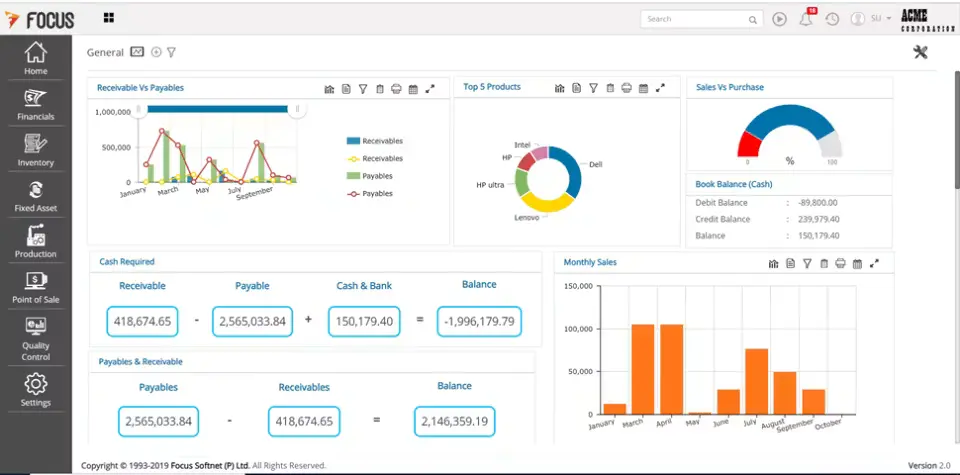
Focus Softnet import export software combines ERP functionality with trade management capabilities for growing businesses. It supports operational processes by connecting finance, inventory, procurement, and trading activities.
The software centralizes business information while helping organizations coordinate import and export operations more effectively. Furthermore, integrated workflows improve consistency across multiple departments.
Key Features of Focus Softnet:
ERP integration
Inventory management
Accounting
Procurement management
Pros
Cons
Integrated business functions
Supports operational visibility
Centralized financial data
Configuration depends on requirements
Implementation varies by business size
Some functions require additional modules
Best For: Medium-sized businesses seeking ERP for export import with integrated import, export, inventory, and financial management capabilities.
ℹ️ Why Choose Focus Softnet for Import Export Management?
Focus Softnet combines ERP and trade management functions within one platform. Businesses can manage operational processes while maintaining better coordination across finance, inventory, and procurement.
8. IncoDocs
IncoDocs import export software helps businesses create and organize international shipping documents through a cloud-based platform. It supports exporters by simplifying document preparation and collaboration with trading partners.
The platform provides document templates and centralized file management for international trade activities. Additionally, businesses can standardize export documentation while reducing manual administrative work.
Key Features of IncoDocs:
Commercial document generation
Export templates
Cloud document storage
Document sharing
Pros
Cons
Easy document creation
Cloud-based access
Supports export workflows
Primarily focuses on documentation
Limited operational management features
Additional business systems may be needed
Best For: Small to medium exporters and trading businesses primarily managing export documentation and international shipping paperwork.
ℹ️ Why Choose IncoDocs for Import Export Management?
IncoDocs simplifies international shipping documentation through centralized cloud-based document management. It helps exporters prepare consistent trade documents while improving collaboration across export processes.
Important Criteria for Choosing the Right Software for Your Import Export Workflow
The imports exports software you choose should include features that help you meet compliance, run more smoothly, and prepare for expansion down the road. Moving beyond simple shipment management, you should look for a package that helps you adapt to new trade rules and expand to new markets.
When looking for software to help traders, consider software that minimizes compliance risks, facilitates customs management, and maximizes trade incentives, thus ensuring a more reliable and cost-effective import/export process.
1. Automated Documentation Compliance
Automated Documentation Compliance automatically creates, reviews, and compiles trade documents while auditing the provision of information to satisfy customs and regulatory demands. As a result, companies reduce errors that delay intercontinental shipments and create compliance liabilities.
The software automatically checks invoices, packing lists, permits, certificates, and shipping documents before sending them. Centralizing documentation also enables easier audits and maintains consistent files for international exchanges.
2. Localized Customs & Tax Integration
Localized Customs & Tax Integration addresses country-specific customs processes, tax requirements, and electronic customs declarations for international trade situations. This helps companies to stay compliant while avoiding customs delays due to improper customs submission.
The software automatically calculates applicable duties, taxes, and reporting obligations mandatedby destination-country regulations. It also helps organizations make cross-border operations more efficient and provide greater financial accuracy.
3. Incentive & Duty Drawback Tracking
Incentive & duty drawback tracking monitors relevant government incentives, tax relief schemes, and duty recovery opportunities throughout the international trade process. As a result, the companies will benefit from lower import costs and available incentives.
Automated tracking guarantees complete supporting documentation for every approved transaction and reimbursement request. In addition, finance teams see improved compliance and reduced exposure to possible trade cost reductions.
How to Choose the Best Export Import Software for Your Business?
Choosing the best ERP import export software requires evaluating both your current operational needs and future business growth. The right solution should improve compliance, streamline workflows, and support efficient international trade management.
Consider these important factors before selecting an ERP import export software platform:
Business Process Compatibility: Choose software that supports your import, export, warehousing, procurement, and financial workflows without requiring complicated manual processes. Consequently, your teams can improve productivity while maintaining operational consistency.
Regulatory Compliance Capabilities: Select software that automatically manages customs documentation, tax calculations, permits, and changing trade regulations across your target markets. Furthermore, automated compliance reduces shipment delays and costly regulatory penalties.
Integration with Existing Systems: Ensure the software connects seamlessly with ERP, accounting, warehouse management, CRM, and logistics platforms. Therefore, departments share accurate data while eliminating duplicate manual entries.
Real-Time Visibility and Reporting: Prioritize solutions offering live shipment tracking, inventory monitoring, financial reporting, and operational dashboards. Additionally, centralized insights help management make faster and more informed business decisions.
Scalability and Customization: Look for software that grows alongside your business through configurable workflows, additional modules, and multi-country support. As operations expand, the platform should continue supporting increasing transaction volumes without sacrificing performance.
Vendor Support and Implementation: Evaluate implementation services, user training, technical support, and ongoing software updates before making your decision. Reliable vendor support helps businesses maximize long-term software value while minimizing operational disruptions.
Conclusion
Import export software helps businesses simplify customs compliance, automate documentation, improve shipment visibility, and connect logistics with financial operations. By selecting software that aligns with operational complexity and future growth, organizations can reduce manual work while managing international trade more efficiently.
ScaleOcean logistics software delivers more than standalone import export management by integrating trade operations with finance, inventory, procurement, warehouse, and other ERP functions within one platform. Its flexible workflows and enterprise-focused design help businesses streamline cross-border operations while maintaining compliance and operational visibility.
If your organization is looking to modernize its import and export processes, ScaleOcean Atlas provides a solution tailored to your business requirements. Schedule a consultation with our experts today to explore how the platform can help optimize your international trade operations and support long-term business growth.
FAQ Mining Industry Software:
1. What information should businesses prepare before choosing import export software?
Prepare details about your trade workflows, shipment volumes, customs requirements, warehouse operations, existing systems, and reporting needs. Clear business requirements help vendors recommend software that fits your operations and future growth.
2. Should a company choose standalone import export software or ERP integration?
Standalone software suits businesses focused mainly on trade documentation, while ERP integration, just like ScaleOcean’s, is better for companies needing connected finance, inventory, procurement, and logistics processes. The right choice depends on operational complexity and scalability goals.
3. What integrations should import export software provide?
Import export software should integrate with ERP, accounting, warehouse management, CRM, shipping carriers, freight forwarders, customs platforms, and banking systems. These integrations reduce duplicate data entry and improve operational visibility.
4. How can businesses evaluate the best import export software in Singapore?
Compare software based on compliance capabilities, integration options, automation, scalability, implementation support, and total cost of ownership. Request demonstrations to confirm the solution matches your business processes before making a decision.













 Key Takeaways