

Multi-currency accounting software is a financial system that records, converts, and reports transactions across multiple currencies using accurate exchange rates. As Singapore businesses expand globally, they need consistent financial visibility despite growing foreign-currency complexity.
However, many enterprises still depend on disconnected systems and manual processes for currency management. Consequently, spreadsheet-based revaluation, reconciliation, and regulatory reporting increase operational risks while delaying accurate financial close.
Additionally, fluctuating exchange rates, cross-border payments, and multiple reporting currencies complicate financial operations. Without automated currency management, businesses struggle to maintain accurate financial statements, consolidated reporting, and compliance with international accounting requirements.
Therefore, businesses increasingly adopt multi-currency accounting software to automate currency conversion, financial consolidation, and foreign exchange accounting. The right solution improves financial accuracy while supporting global expansion, regulatory compliance, and faster business decision-making.
 Key Takeaways
- Comparing multi-currency accounting software requires evaluating currency coverage, automation, integrations, scalability, business structure, and long-term ownership costs.
- Multi-currency accounting software is a platform that helps businesses manage international transactions accurately while improving financial visibility, compliance, and operational efficiency.
- Key features of multi-currency accounting software include exchange rate automation, multi-entity consolidation, compliance tracking, multilingual support, and foreign exchange gain tracking.
- Benefits of multi-currency accounting software include improved reporting accuracy, broader payment options, stronger compliance, enhanced transparency, and smarter cash flow planning.
- ScaleOcean streamlines multi-currency accounting through configurable ERP capabilities, financial automation, and enterprise-ready workflows supporting sustainable international business growth.
Compare Multi-Currency Accounting Software Options in Singapore 2026
The following comparison highlights the primary positioning of each platform based on target business size, international accounting capabilities, and overall strengths for businesses operating across multiple currencies.
| Software | Best Used For | Key Strength |
|---|---|---|
| ScaleOcean | Medium to large enterprises, multi-entity organizations, and businesses with complex international financial operations. | AI-powered ERP with integrated ScaleMind AI assistance, multi-currency accounting, automated exchange rate management, configurable workflows, 200+ integrated modules, Singapore GST compliance, unlimited users, and cloud or on-premises deployment. |
| Xero | Small businesses | Supports multiple currencies, cloud-based bookkeeping, and a straightforward interface for basic international accounting. |
| QuickBooks Online | Small and medium-sized businesses (SMBs) | Multi-currency bookkeeping, financial reporting, and accounting features for growing businesses. |
| Zoho Books | Enterprise operations | Multi-currency accounting with workflow automation and integration within the Zoho business application ecosystem. |
| NetSuite | Enterprise operations | ERP platform with financial management, global subsidiaries support, and enterprise financial reporting. |
| Sage Intacct | Mid-market businesses | Financial management platform with automation, reporting, and multi-entity accounting capabilities. |
| Botkeeper | Accounting firms | Intelligent bookkeeping and outsourced accounting services for firms managing multiple client accounts. |
| Ramp | Growth companies | Corporate spend management, expense tracking, and finance automation with support for international business spending. |
Complete Reviews of 8 Best Multi-Currency Accounting Software
Choosing the best accounting software in Singapore depends on your organization’s transaction volume, business structure, compliance requirements, and international growth plans. Below are eight solutions widely used by businesses in Singapore, each serving different operational needs and company sizes.
1. ScaleOcean – For Global Medium-Large Enterprise & Multi-Entity
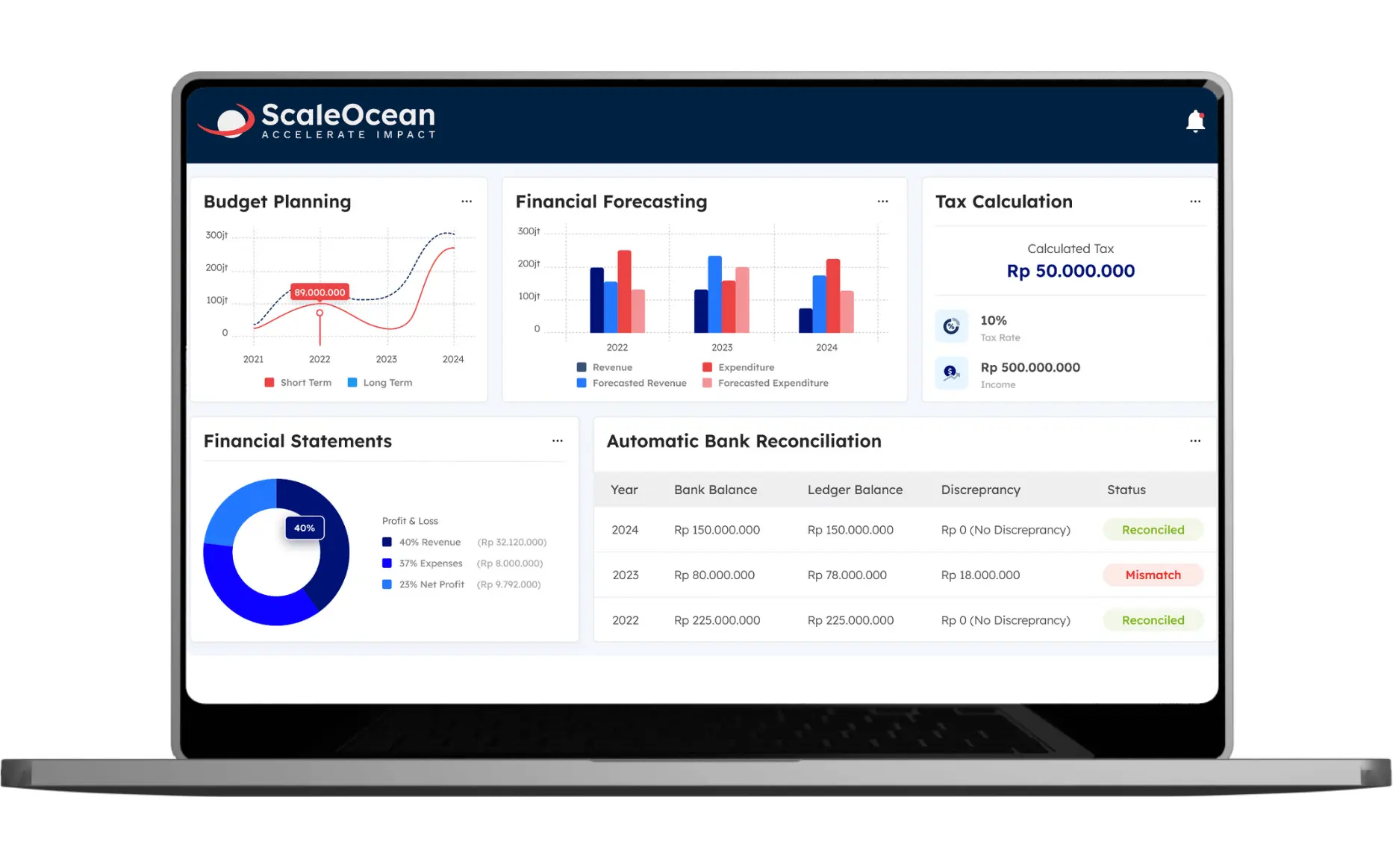
ScaleOcean helps medium and large enterprises manage multi-currency transactions, multiple legal entities, and consolidated financial reporting within one integrated financial platform. Unlike standalone accounting software, it customizes exchange rate policies, approvals, revaluation, settlements, and workflows to fit each company’s actual finance processes.
Additionally, ScaleOcean combines accounting, treasury, procurement, inventory, and operational data into one system, eliminating disconnected processes as businesses expand. With consultative implementation, scalable multi-entity management, unlimited users, and flexible deployment options, organizations get a platform that grows with evolving business and reporting needs.
The platform is optimized for Singapore businesses, complies with PDPA and local financial reporting requirements, and aligns with EDG and CTC grant requirements. Schedule a consultation with the ScaleOcean team to see how ScaleOcean Atlas can streamline multi-currency accounting, automate financial consolidation, and support your international operations.
Key Features of ScaleOcean:
- Multi-Currency General Ledger: to record transactions across multiple currencies while maintaining a single financial source of truth.
- Functional Currency per Entity: to support subsidiaries operating with different functional and presentation currencies.
- Automated Exchange Rate Management: with configurable exchange rate policies and automatic currency updates.
- Singapore GST Currency Conversion: for accurate GST calculations on foreign currency transactions in compliance with local regulations.
- Realized and Unrealized FX Calculation: to automatically distinguish settlement gains or losses from period-end revaluation adjustments.
| Pros | Cons |
|---|---|
|
|
Best For: Medium to large enterprises, multinational companies, and multi-entity organizations that require configurable multi-currency accounting, financial consolidation, and scalable ERP capabilities to support complex international operations.
ℹ️ Why Choose ScaleOcean for Multi-Currency Accounting Software
ScaleOcean goes beyond basic currency conversion by helping enterprises manage multi-currency accounting across complex organizational structures. With configurable financial workflows, enterprise-grade ERP integration, and support for Singapore’s regulatory requirements, it helps businesses streamline global financial operations, improve reporting accuracy, and scale confidently as international operations grow.
2. Xero – For Small Businesses
Xero multi-currency accounting software is a cloud-based accounting solution that helps businesses record transactions in multiple currencies and manage everyday bookkeeping. It supports businesses operating across different countries through a web-based platform.
The software includes accounting, invoicing, bank reconciliation, and financial reporting features for growing businesses. Additionally, users can connect third-party applications to extend functionality based on operational requirements.
Key Features:
- Multi-currency accounting
- Bank reconciliation
- Online invoicing
- Financial reporting
| Pros | Cons |
|---|---|
|
|
Best For: Small businesses and startups that need cloud accounting with basic multi-currency capabilities for international customers, suppliers, or online sales.
ℹ️ Why Choose Xero for Multi-Currency Accounting Software?
Xero offers essential multi-currency accounting features within an easy-to-use cloud platform, making it suitable for businesses that require straightforward foreign currency bookkeeping without complex enterprise financial management.
3. QuickBooks Online – For SMB Operations
QuickBooks Online multi-currency accounting software is a cloud accounting solution that helps businesses manage bookkeeping, invoicing, and foreign currency transactions. It supports daily financial operations through a centralized online platform.
The software includes accounting, expense tracking, and reporting tools suitable for growing companies. Additionally, businesses can connect selected third-party applications to support operational workflows.
Key Features:
- Multi-currency accounting
- Expense tracking
- Online invoicing
- Financial reporting
| Pros | Cons |
|---|---|
|
|
Best For: Small and medium-sized businesses that need cloud-based accounting with standard multi-currency capabilities for everyday financial management.
ℹ️ Why Choose QuickBooks Online for Multi-Currency Accounting Software?
QuickBooks Online provides essential multi-currency accounting features alongside bookkeeping and reporting, making it suitable for businesses managing international transactions with relatively straightforward accounting requirements.
4. Zoho Books – For Enterprise Operations
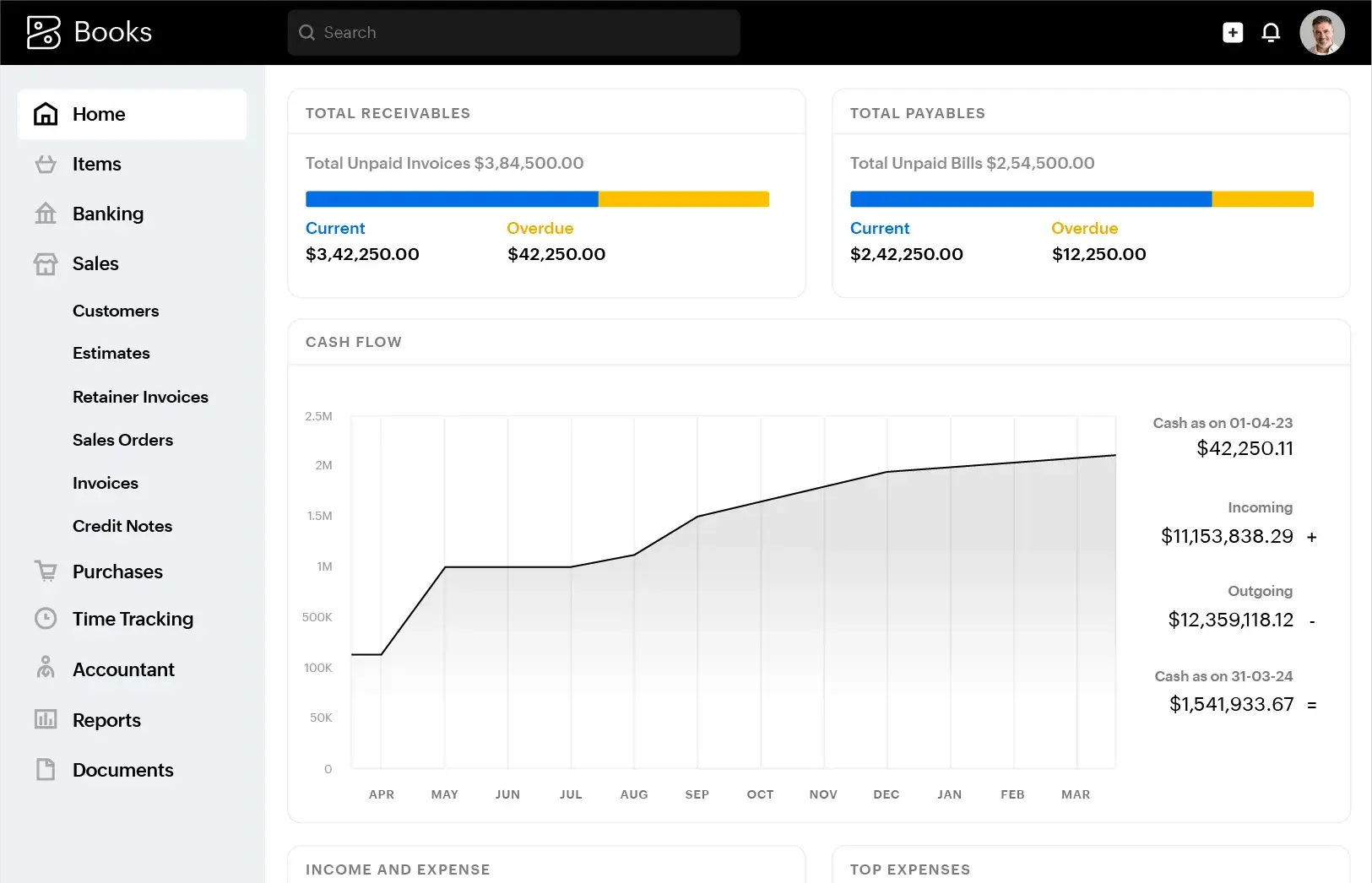
Zoho Books multi-currency accounting software is a cloud-based accounting platform that supports financial management across multiple currencies. It helps businesses manage accounting processes while connecting with other Zoho applications.
The software offers automation, invoicing, and reporting features through an integrated cloud environment. Additionally, users can customize workflows according to their operational requirements.
Key Features:
- Multi-currency accounting
- Workflow automation
- Bank reconciliation
- Financial reporting
| Pros | Cons |
|---|---|
|
|
Best For: Growing businesses and enterprises already using Zoho applications that require integrated accounting with multi-currency support.
ℹ️ Why Choose Zoho Books for Multi-Currency Accounting Software?
Zoho Books combines standard multi-currency accounting with workflow automation, making it a practical option for businesses seeking cloud accounting within the broader Zoho ecosystem.
5. NetSuite – For Enterprise Operations
NetSuite multi-currency accounting software is an enterprise financial management solution supporting global accounting and multiple currencies. It helps organizations manage financial operations across subsidiaries and international business units.
The software combines accounting with broader business management capabilities through a unified ERP platform. Additionally, it supports consolidated reporting for organizations operating globally.
Key Features:
- Multi-currency accounting
- Financial consolidation
- Multi-entity management
- Financial reporting
| Pros | Cons |
|---|---|
|
|
Best For: Large enterprises and multinational organizations managing multiple subsidiaries and complex international financial operations.
ℹ️ Why Choose NetSuite for Multi-Currency Accounting Software?
NetSuite provides multi-currency accounting as part of a broader enterprise ERP platform, supporting organizations that require centralized financial management across international operations.
6. Sage Intacct – For Mid-Market Business
Sage Intacct multi-currency accounting software is a cloud financial management solution designed for growing organizations. It helps businesses manage accounting processes across different currencies and business entities.
The software emphasizes automation, financial visibility, and reporting through cloud-based accounting tools. Additionally, organizations can streamline financial operations using centralized financial information.
Key Features:
- Multi-currency accounting
- Financial automation
- Multi-entity management
- Financial reporting
| Pros | Cons |
|---|---|
|
|
Best For: Mid-market organizations seeking cloud financial management with multi-currency accounting and reporting capabilities.
ℹ️ Why Choose Sage Intacct for Multi-Currency Accounting Software?
Sage Intacct offers cloud-based financial management with standard multi-currency functionality, making it suitable for organizations focused on accounting automation and reporting.
7. Botkeeper – For Accounting Firms
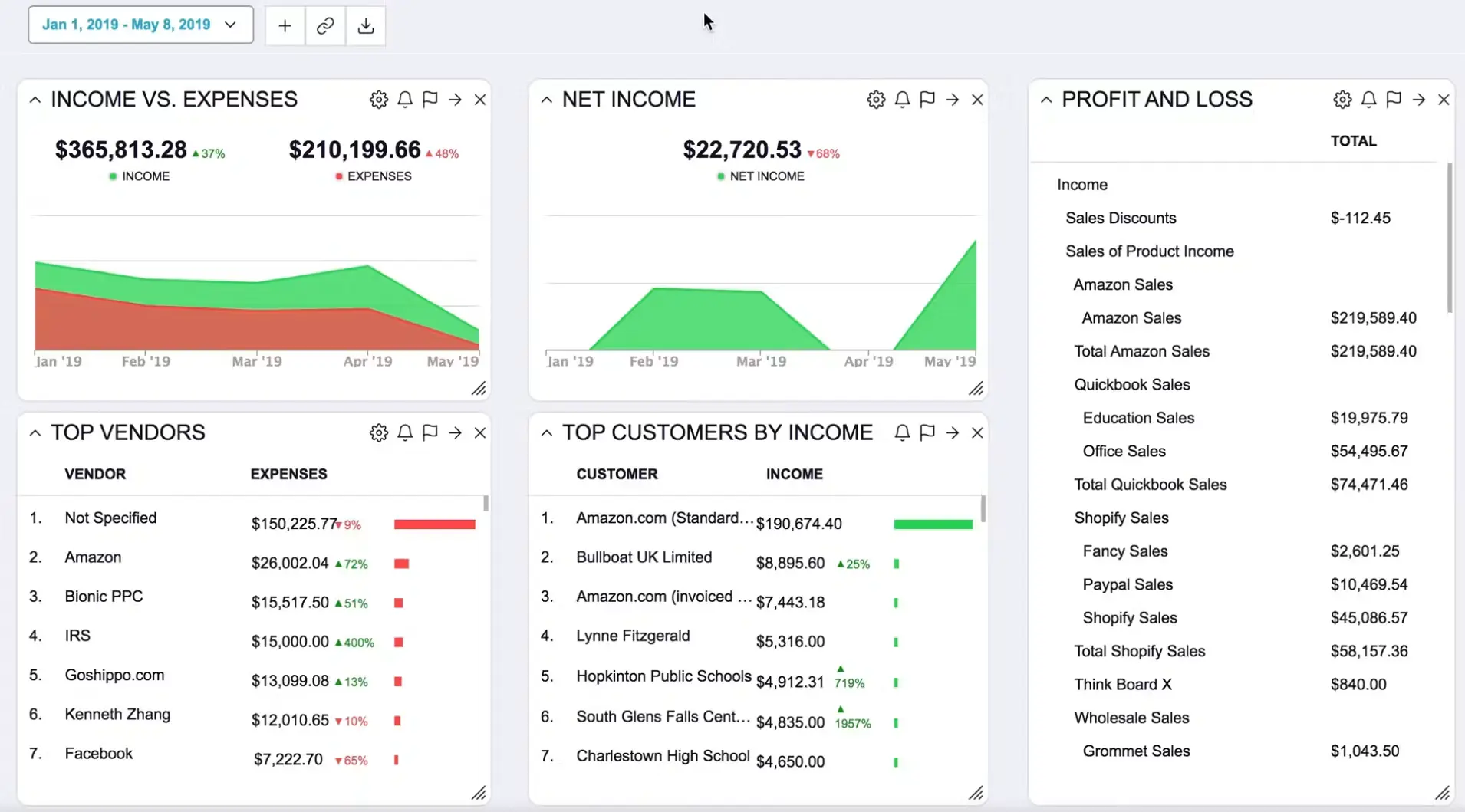
Botkeeper multi-currency accounting software combines bookkeeping services with automation to support accounting operations. It helps accounting firms manage routine financial tasks while improving operational efficiency.
The platform focuses on automating bookkeeping processes through cloud technology and financial workflows. It also supports firms that handle financial records for multiple business clients.
Key Features:
- Automated bookkeeping
- Transaction categorization
- Financial reporting
- Cloud platform
| Pros | Cons |
|---|---|
|
|
Best For: Accounting firms and finance service providers managing bookkeeping activities for multiple business clients.
ℹ️ Why Choose Botkeeper for Multi-Currency Accounting Software?
Botkeeper combines bookkeeping automation with basic multi-currency accounting support, helping accounting firms improve efficiency in routine financial processes.
8. Ramp – For Growth Companies
Ramp multi-currency accounting software is a financial management platform that helps businesses manage expenses, corporate spending, and accounting processes. It supports international business transactions through integrated finance tools.
The software focuses on spend management while connecting financial data with accounting workflows. Additionally, businesses can monitor expenses using centralized financial information.
Key Features:
- Expense management
- Corporate cards
- Bill payments
- Financial reporting
| Pros | Cons |
|---|---|
|
|
Best For: Growth-stage companies looking to streamline corporate spending, expense management, and financial operations alongside basic multi-currency support.
ℹ️ Why Choose Ramp for Multi-Currency Accounting Software?
Ramp provides multi-currency financial management alongside expense automation, making it suitable for businesses prioritizing spend control and operational efficiency.
How is the Multi-Currency Accounting Software Market in Global & Southeast Asia?
The global multi-currency accounting software market continues expanding as international trade, digital commerce, and cross-border investments accelerate. Consequently, businesses increasingly require automated financial platforms supporting multiple currencies and international accounting regulations.
Meanwhile, Southeast Asia is experiencing rapid adoption as regional businesses actively expand into neighboring and global markets. Singapore, in particular, drives demand through its international financial ecosystem, multinational headquarters, and growing cross-border digital economy.
Furthermore, cloud accounting platforms encourage businesses to centralize financial operations across international subsidiaries and currencies. Companies now prioritize automation, real-time reporting, and seamless integrations instead of relying on fragmented financial systems.
Our team found a recent example from itnews Asia. They reported Singapore-based Carousell Group, which implemented a cloud ERP platform to unify financial processes across seven Southeast Asian markets. The company reported faster month-end closing, improved financial visibility, and more efficient consolidation after replacing manual reporting processes.
The example above highlights how integrated multi-currency financial systems support regional expansion and cross-border operations.
Common Challenges in Multi-Currency Accounting
Managing multiple currencies creates operational challenges extending beyond simple exchange rate conversion. Therefore, businesses require systems handling accounting accuracy, regulatory compliance, financial consolidation, and cross-border transaction processing simultaneously.
Without dedicated multi-currency accounting software, finance teams often perform repetitive manual adjustments across several disconnected applications. As a result, financial reporting becomes slower, less accurate, and increasingly difficult as international operations continue expanding.
1. Managing Exchange Rate Volatility
Exchange rates fluctuate continuously, affecting receivables, payables, assets, liabilities, and profitability across international operations. Consequently, manual currency updates frequently create inaccurate financial statements and inconsistent reporting periods.
Modern accounting software automatically updates exchange rates while calculating realized and unrealized foreign exchange gains or losses. Therefore, finance teams maintain accurate books without performing repetitive manual currency adjustments.
2. Complying with Accounting Standards
International accounting standards require businesses to distinguish functional, transaction, and presentation currencies consistently across financial records. Additionally, organizations must preserve historical exchange rates supporting accurate audit trails and regulatory reporting.
Accounting software automates currency translation according to GAAP and IFRS requirements while maintaining historical exchange rate records. Consequently, businesses simplify audits and reduce compliance risks during financial reporting periods.
3. Permanent Currency Locks
Some accounting platforms permanently lock base currencies after initial configuration, significantly limiting future business flexibility. Consequently, organizations undergoing expansion or restructuring encounter costly migration projects and operational disruptions.
Flexible accounting software supports evolving organizational structures without forcing businesses into restrictive currency configurations. Therefore, finance teams adapt systems efficiently while maintaining historical financial accuracy and reporting continuity.
4. Tiered Paywalls
Many accounting platforms restrict essential multi-currency capabilities behind expensive subscription upgrades or premium licensing tiers. As a result, growing businesses unexpectedly face increasing operational costs as international activities expand.
Transparent accounting solutions include comprehensive currency management without charging separately for critical financial capabilities. Consequently, organizations control software costs while supporting sustainable international business growth.
5. Executing Multi-Entity Consolidation
Global organizations often consolidate financial information from subsidiaries operating with different functional currencies and reporting standards. Therefore, manual consolidation processes consume considerable time while increasing reconciliation errors.
Multi-currency accounting software automates intercompany eliminations, currency translation, and consolidated financial reporting across business entities. As a result, organizations accelerate financial close while improving reporting consistency and accuracy.
6. Overcoming Software Limitations
Basic accounting systems often lack advanced foreign currency features that support multinational financial operations effectively. Consequently, finance departments depend on spreadsheets to compensate for missing accounting capabilities like cloud accountingcloud accounting.
Comprehensive accounting software manages multiple currencies, exchange differences, tax calculations, and financial reporting within one integrated platform. Therefore, businesses eliminate manual work while improving operational efficiency and financial visibility.
7. Incurring Hidden Banking Fees
Cross-border transactions often include unexpected conversion charges, settlement fees, and intermediary banking costs. Consequently, businesses struggle to accurately monitor actual international payment expenses and foreign exchange impacts.
Integrated accounting software records banking fees alongside foreign currency transactions using centralized financial data. As a result, organizations analyze transaction costs effectively while improving budgeting and international cash flow management.
What Industries Typically Use Multi-Currency Accounting Systems?
Many industries require multi-currency accounting because they regularly conduct international purchasing, sales, investments, or financial reporting. Therefore, automated currency management supports greater financial accuracy across global business operations.
Manufacturing, wholesale distribution, logistics, retail, professional services, technology, hospitality, and financial services commonly adopt these solutions. Multinational enterprises and regional headquarters also benefit from centralized financial consolidation across international subsidiaries.
Furthermore, import-export businesses process supplier invoices, customer payments, and banking transactions using multiple foreign currencies daily. Consequently, automated accounting reduces manual work while strengthening financial control and reporting consistency.
What is Multi-Currency Accounting Software?
Multi-currency accounting software enables businesses to record, convert, reconcile, and report financial transactions using multiple foreign currencies automatically. It applies exchange rates consistently while supporting accurate international financial reporting and regulatory compliance.
Unlike traditional accounting systems, advanced platforms manage functional, transaction, and presentation currencies within one integrated environment. Consequently, organizations improve reporting accuracy while simplifying consolidation, foreign exchange accounting, and global financial management.
Key Features of Multi-Currency Accounting Software

Effective multi-currency accounting requires more than converting one currency into another. Therefore, modern software combines automation, compliance, and financial controls to simplify global accounting while reducing manual work.
The following features help businesses manage international transactions, improve reporting accuracy, and support regulatory compliance. As a result, finance teams gain better visibility while streamlining day-to-day accounting operations.
1. Real-Time Exchange Rate
Real-time exchange rates automatically update foreign currency values using current market data. Consequently, businesses record transactions with greater accuracy while minimizing manual exchange rate adjustments.
Finance teams also produce more reliable financial reports because currency conversions remain consistent throughout accounting periods. Therefore, organizations reduce reconciliation errors and improve financial decision-making.
2. Exchange Rate Automation
Exchange rate automation applies predefined conversion rules whenever foreign currency transactions occur. As a result, businesses eliminate repetitive calculations while maintaining consistent accounting treatment across financial records.
The software also automates period-end currency revaluations using configurable exchange rate policies. Consequently, finance teams accelerate month-end closing while improving reporting accuracy.
3. Multi-Entity Consolidation
Multi-entity consolidation combines financial information from subsidiaries operating with different functional currencies. Therefore, organizations generate consolidated financial statements without manually converting every transaction.
The system also automates currency translation and intercompany eliminations during financial consolidation. Consequently, businesses improve reporting consistency while shortening financial closing cycles.
4. Automated Invoicing Multi-Currency
Automated multi-currency invoicing allows businesses to issue invoices using customers’ preferred currencies. Consequently, international transactions become more convenient while improving the overall customer payment experience.
The software automatically converts invoice values into reporting currencies while preserving original transaction amounts. Therefore, businesses simplify reconciliation and maintain accurate accounting records.
5. Compliance Tracking
Compliance tracking monitors accounting activities according to financial regulations, tax requirements, and reporting standards. Consequently, businesses reduce compliance risks while maintaining complete financial documentation.
The software also preserves transaction histories and historical exchange rates for audit purposes. Therefore, finance teams prepare regulatory reports more efficiently and accurately.
6. Cryptocurrency Support
Some accounting platforms support cryptocurrency alongside traditional currencies within the same accounting environment. Consequently, businesses can record digital asset transactions using consistent accounting processes.
The software tracks cryptocurrency valuations based on configurable accounting policies and exchange rates. Therefore, organizations improve financial visibility while accommodating evolving payment methods.
7. Multi-Language Document Support
Multi-language document support generates invoices, purchase orders, and financial documents in different languages. Consequently, businesses communicate more effectively with international customers, suppliers, and subsidiaries.
The software maintains standardized accounting information regardless of the selected language. Therefore, organizations improve operational consistency across global business activities.
8. Line-Item Extraction
Line-item extraction automatically captures invoice details from uploaded financial documents using intelligent document recognition. Consequently, businesses reduce manual data entry while improving accounting accuracy.
The extracted information populates accounting records and transaction details automatically. Therefore, finance teams process invoices faster while minimizing administrative workloads.
9. Gain and Loss Tracking
Gain and loss tracking automatically calculates realized and unrealized foreign exchange differences throughout accounting periods. Consequently, businesses maintain accurate financial statements without performing complex manual calculations.
The software records appropriate accounting entries whenever exchange rates change between transaction and settlement dates. This improves financial transparency while simplifying foreign exchange reporting.
Benefits of Using Multi-Currency Accounting Software
Managing international finances manually often leads to inconsistent reporting, delayed reconciliations, and unnecessary administrative work. Therefore, multi-currency accounting software automates essential financial processes while improving accuracy across global operations.
These capabilities help businesses simplify foreign currency management while strengthening financial control and regulatory compliance. Consequently, organizations gain greater efficiency, visibility, and confidence as they expand into international markets.
1. Automation of Exchange Rate Tracking
The software automatically updates exchange rates using reliable market data throughout daily accounting activities. Consequently, businesses reduce manual calculations while maintaining accurate foreign currency transaction records.
Automated exchange rate tracking also improves consistency across invoices, payments, and financial reports. Therefore, finance teams spend less time correcting currency conversion errors.
2. Painless Tracking of Forex Gains and Losses
Multi-currency accounting software automatically calculates realized and unrealized foreign exchange gains and losses. Consequently, businesses eliminate complex manual adjustments during month-end and year-end financial closing.
Accurate gain and loss calculations also improve financial reporting and profitability analysis. Therefore, organizations make better decisions based on reliable financial information.
3. Seamless Compliance and Reporting
The software supports accounting standards while maintaining complete records for audits and financial reporting. Consequently, businesses simplify compliance with local regulations and international accounting requirements.
Historical exchange rates and transaction records remain accessible throughout reporting periods. Therefore, finance teams prepare financial statements more efficiently and accurately.
4. Broader Payment Options
Businesses can invoice customers and receive payments in multiple international currencies. Consequently, customers enjoy greater flexibility without needing to convert currencies before payment.
Supporting multiple currencies also strengthens international customer relationships and business opportunities. Therefore, organizations improve competitiveness across global markets.
5. Streamlined Invoicing and Global Payments
Automated invoicing simplifies billing customers in their preferred currencies while maintaining consistent accounting records. Consequently, businesses reduce manual work and accelerate payment processing.
Integrated payment tracking also improves reconciliation between invoices, bank transactions, and customer receipts. Therefore, finance teams manage global payments more efficiently.
6. Enhanced Compliance
Built-in financial controls standardize accounting processes across departments and international operations consistently. Consequently, organizations reduce reporting risks while strengthening internal governance practices.
Automated validation and approval workflows further improve financial accountability during daily operations. Therefore, businesses maintain stronger compliance with less administrative effort.
7. Increased Transparency
Centralized financial information provides complete visibility into foreign currency balances and international transactions. Consequently, decision-makers access reliable financial insights without relying on disconnected spreadsheets.
Real-time reporting also helps organizations consistently monitor performance across entities and currencies. As a result, businesses make faster, more informed strategic decisions.
8. Smarter Cash Flow Management
Real-time visibility into multi-currency balances helps businesses forecast future cash requirements more accurately. Consequently, finance teams manage liquidity while minimizing unnecessary foreign exchange exposure.
Improved forecasting also supports investment planning and international business expansion effectively. Therefore, organizations allocate financial resources with greater confidence and control.
How to Choose the Best Multicurrency Accounting Software for Your Business?
Selecting the right multi-currency accounting software requires evaluating your current operational requirements alongside future international expansion plans. Therefore, businesses should prioritize solutions that balance financial accuracy, flexibility, automation, and long-term scalability.
Rather than focusing only on software price, organizations should assess functionality, integration capabilities, and ongoing operational value. Consequently, the right platform supports sustainable growth while simplifying global financial management.
1. Assess Currency Coverage and Rate Sourcing
First, confirm the software supports every currency your business currently uses and may require in the future. Additionally, verify that exchange rates come from reliable sources with automatic updates.
Comprehensive currency coverage reduces operational limitations as international activities continue expanding. Therefore, businesses maintain accurate financial records without relying on manual currency conversions.
2. Evaluate Foreign Exchange (FX) Automation Capabilities
Choose software that automates currency conversion, exchange rate updates, revaluation, and foreign exchange gain or loss calculations. This reduces manual work while improving accounting consistency.
Strong FX automation also accelerates month-end financial closing and minimizes reporting errors. Therefore, businesses improve operational efficiency while maintaining reliable financial statements.
3. Match the Software to Your Business Structure
The accounting platform should align with your organizational structure, subsidiaries, reporting requirements, and future expansion plans. Additionally, verify that it can support increasing operational complexity without major system changes.
Scalable software adapts as businesses establish new entities or enter international markets. Consequently, organizations protect long-term technology investments while maintaining financial consistency.
4. Check Banking and Integration Options
Evaluate whether the software integrates with banks, ERP systems, payment gateways, payroll, and other business applications. Consequently, organizations eliminate duplicate data entry while streamlining financial operations.
Integrated platforms also improve data accuracy by synchronizing with accounting information system automatically across departments. Therefore, finance teams gain better visibility through centralized business data.
5. Analyze Total Cost of Ownership
Finally, compare implementation costs, subscription fees, maintenance expenses, training requirements, and future upgrade charges carefully. Additionally, identify licensing limitations that could increase costs as your business grows.
The most affordable software does not always provide the greatest long-term value. Therefore, organizations should evaluate scalability, functionality, and ongoing support before making a final investment decision.
Conclusion
Multi-currency accounting software helps businesses automate foreign currency management, improve financial accuracy, simplify compliance, and streamline global operations. Choosing the right solution enables organizations to scale internationally while maintaining reliable financial reporting and stronger operational control.
For businesses seeking more than standalone accounting software, ScaleOcean Atlas delivers a configurable enterprise platform that combines multi-currency accounting with finance, procurement, inventory, and operational management. Its flexible architecture supports growing organizations with complex financial structures while remaining aligned with Singapore’s regulatory and reporting requirements.
Schedule a consultation with our experts to discover how ScaleOcean can simplify multi-currency accounting, automate financial consolidation, and support your long-term international growth. Our team will assess your business requirements and recommend a solution tailored to your operational and financial objectives.
FAQ Multicurrency Accounting Software:
1. Does company size affect the type of multi-currency accounting software required?
Yes. Small businesses typically need basic multi-currency bookkeeping, while mid-sized and large enterprises often require automation, multi-entity consolidation, compliance features, and ERP integration to support more complex international operations.
2. Why does monthly revenue matter when selecting multi-currency accounting software?
Monthly revenue often reflects transaction volume and operational complexity. Higher revenue businesses usually benefit from software that offers automation, scalability, stronger financial controls, and advanced reporting to support growing international operations.
3. Can a company with one legal entity use multi-currency accounting software?
Yes. Even with one legal entity, businesses can use multi-currency accounting software to invoice customers, pay suppliers, manage foreign-currency bank accounts, and track exchange-rate gains or losses accurately.
4. How many currencies should the accounting software support?
The software should support all currencies your business currently uses while accommodating future expansion. Many modern accounting platforms support dozens or even more than 160 currencies, allowing businesses to scale internationally without changing systems.






















.png)