

Efficiency and transparency are essential, especially in international transactions. According to Ask Gov, when exporting goods from Singapore, the value declared for the shipment should be based on the commercial invoice, not a proforma invoice.
Proper use of proforma invoices allows businesses to clearly communicate anticipated costs and terms, helping Singapore businesses streamline their operations and build stronger client relationships.
This article discusses the essential features of proforma invoices, such as their components, benefits, and comparison to other forms of invoices. Business leaders will get vital insights into using proforma invoices to increase communication, secure funding, and manage foreign transactions more efficiently.
 Key Takeaways
- A proforma invoice is a preliminary document sent by a vendor to a customer to estimate the cost of goods or services before delivery or shipment.
- Issuing a proforma invoice involves key steps like initiation, review, confirmation, and final invoice issuance, ensuring clarity and agreement before completing the sale.
- To create an effective proforma invoice, focus on clarity, consistent format, relevant information, and utilize software tools for accuracy and efficiency.
- ScaleOcean accounting software automates proforma invoicing, reducing errors, ensuring compliance, and supporting scalability to simplify financial management for businesses.
What Is a Proforma Invoice?
A proforma invoice is a preliminary document sent by a vendor to a customer to estimate the cost of goods or services before delivery or shipment. It includes estimated expenses, terms of sale, and delivery schedules, but does not require payment. It ensures both parties align before order confirmation.
A pro forma invoice’s primary aim is to provide a detailed breakdown of expenses, allowing the buyer to better understand the pricing and terms. It also helps businesses secure finance and gives the essential information for customs clearance, resulting in smoother international transactions and eliminating any delays.
How Does a Proforma Invoice Work?
A first look at the deal comes through a pro forma invoice, showing what things will likely cost, delivery included, along with tax and extras. Buyers get clarity on how much they’ll need to pay ahead of any binding decision, even though actual freight prices might shift due to outside influences.
Most companies rely on pro forma invoices when they need sign-off inside the organization. Early clarity around pricing and conditions cuts down on repeated emails later. Miscommunication slows things down; this step keeps everyone on the same page ahead of time. Deals move forward more smoothly once both sides agree up front.
Customs officers often rely on pro forma invoices to figure out import fees. These documents show the agreed price, give a rough idea of how heavy the shipment might be, and then add up possible taxes or extra charges. Instead of acting like a bill, they stay informal, so nobody has to pay right away, which keeps everything in an early phase before money changes hands.
Key Components of a Proforma Invoice

Before any goods move across borders, sellers often send a preview of what’s due. This paper shows prices and conditions, one step ahead of shipping. Clarity matters here, misunderstandings cost time and money. Names of buyer and seller appear first, setting who’s involved. The key elements are:
1. Seller and Buyer Details
Knowing who’s involved matters, names, where they’re based, how to reach them. When these pieces are correct, confusion drops away fast. A straight path opens up between people, which just so happens to be what keeps things moving smoothly later on.
On top of that, adding when things happen, and who bought or sold matters just as much. That info makes it easier later to find the right paper trail while keeping payments clear. It keeps the buyer and seller moving together without mix-ups along the way.
2. Description of Goods or Services
Found within the document, a detailed breakdown shows exactly which goods or services are involved, along with how many and their specific features. Because clarity matters, each side gains shared awareness of expectations, reducing chances for misunderstanding down the line.
Clarity grows when buyer or vendor conditions are clearly stated. With such detail in place, mutual understanding takes shape avoiding confusion about deliverables while creating a foundation for cost control later on. Expectations become fixed only once specifics are recorded deliberately.
3. Estimated Costs
Here, cost details appear clearly on the proforma invoice, unit pricing, overall sums, tax figures, delivery charges, along with processing fees. Clarity of this kind prepares the buyer for what payment obligations will follow.
A well-prepared cost projection supports financial planning while lowering risks tied to invoice disagreements later. When figures are clear, confidence grows between parties – misinterpretations fade into background noise. Payment flow improves naturally under such conditions.
4. Terms and Conditions
Payment terms, delivery schedules, and how long offers remain active appear clearly within this section. One side learns when money must be sent; the other discovers when work should arrive. Clarity forms early, reducing chances of later confusion.
A fixed delivery date matters equally to the purchaser and the supplier. As timing becomes transparent, completion expectations take shape. When deadlines are defined clearly, progress tends to stay on course. Without such markers, workflow interruptions may arise unexpectedly. Clarity of schedule supports reliability across every phase.
5. Customs Information
Beginning with global shipments, the proforma invoice holds key customs data such as HS codes, source nation, and endpoint location. Since accurate paperwork supports border processing, the timely movement of items is more likely when information aligns with regulations.
When full customs details are provided, problems in transit tend to disappear. Compliance with national rules follows naturally, smoothing operations across borders. Efficiency rises as a result, especially for companies moving goods worldwide.
Key Advantages of Using a Proforma Invoice
A rough price note helps buyer and seller see exactly how things will go. Costs pop up one by one – taxes here, delivery there, maybe some extra handling tucked in. Nothing sneaks through unseen when details sit out in the open like this. Missteps fade away once everyone reads from the same page. This topic serves several key purposes, each of which can positively impact the process:
1. Provides Clarity
A proforma invoice gives both the buyer and seller a clear view of what the transaction will entail. It lists estimated costs, including taxes, shipping, and handling fees, ensuring that there are no surprises later. This clarity prevents misunderstandings during the process.
It also helps the buyer prepare financially by providing a detailed breakdown of the expected charges. Knowing the cost in advance ensures that both parties are on the same page, making it easier to plan budgets and negotiate any changes before the final invoice is issued.
2. Serves as a Preliminary Agreement
The proforma invoice acts as an informal agreement between the buyer and seller. It allows both sides to review the key terms before committing to the sale. By clearly stating the costs and conditions, it ensures that both parties are aware of the financial implications.
While not legally binding, the document sets the framework for the transaction. It offers the buyer an opportunity to assess the deal and request any changes before a formal contract is signed, helping reduce the risk of disputes later in the process.
3. Facilitates Cross-Border Transactions
For international transactions, a proforma invoice is essential for customs clearance. It includes important details like the goods’ value, shipping costs, and origin, ensuring compliance with import/export regulations. This speeds up the border clearance process.
Moreover, it helps avoid delays in shipping by providing customs authorities with the necessary documentation. Having this information upfront ensures that both parties can meet their obligations efficiently, making cross-border trade smoother and less prone to complications.
4. Demonstrates Professionalism
A proforma invoice signals you mean business. Because it lays out every cost clearly, the buyer sees exactly where things stand. When details are upfront like that, confidence grows between both sides. Reliable connections often start with moments like these. Seeing everything spelled out makes cooperation feel less risky. It just works better when nothing hides in the shadows.
Ahead of the closing moment, sharing a straightforward, well-organized write-up shows the seller knows how things should run in real commerce. This kind of move quietly signals competence – making the buyer feel steady about who they’re working with, which often paves the way for fewer hiccups down the road.
The Process of Issuing a Proforma Invoice
Issuing a proforma invoice is a simple process with several critical components. It begins with document preparation and ends with the final invoice issuance. Throughout the process, both the buyer and seller make certain that all agreements are agreed upon and that expectations are clear. Here’s how it works in a few easy steps:
1. Initiation
Starting off, the seller puts together a proforma invoice after getting a message from the buyer. Next comes pricing – clear numbers, split into parts so each piece makes sense. Handling methods tag along at that point, tied closely to when delivery happens. Item labels line up beside amounts and pre-collected prices nearby. Once all pieces lock into place, it goes straight away to the buyer.
2. Review and Negotiation
After the proforma invoice shows up, go through all details carefully. Each item, like price, payment method, and delivery timing, deserves attention. If anything looks odd or unclear, request clarification. Adjustments may happen, depending on what needs fixing.
Once conversations start, terms settle quickly, so agreement comes early. Because e-invoicing systems stay updated, adjustments roll through on their own, making sure both parties match step by step. Not much needs saying after that.
3. Confirmation
Once both sides have spoken, confirmation arrives once the buyer approves the terms shown in the proforma invoice. Approval usually shows up as a written go-ahead, possibly paired with an official order passed to the supplier. When all those lines are up, attention turns to moving the items from point A to B.
4. Final Invoice Issued
Payment comes due right after delivery. The seller draws up the official invoice at that point. This paper is how they formally ask for their money following completed service. Different from the initial quote, it details the exact amount owed today. All terms met, the transaction closes here. This document ensures tax rules are followed. Accurate details mean figures land properly in the logs.
Difference Between a Proforma Invoice and Other Types of Invoices
Understanding the many sorts of invoices is critical in the corporate sector for payment management and transparency. Each invoice type serves a distinct purpose, based on the stage of the transaction and the legal obligations involved. The following is an overview of the significant distinctions between a proforma invoice and other types of invoices:
1. Proforma Invoice
A proforma invoice is primarily used to outline estimated costs before goods or services are delivered, offering a preview of the financial commitment. It is often used to secure financing, facilitate customs clearance, or inform the buyer about expected charges before finalizing the deal.
While a proforma invoice does not require payment, it sets the tone for future transactions, ensuring that the buyer and seller align on costs. Since it’s not legally binding, no formal cancellation is needed, and it allows the seller to adjust estimates before issuing a final, binding invoice.
2. Commercial Invoice
A commercial invoice is generated once the transaction has been completed. While a proforma invoice provides an estimated breakdown, a commercial invoice includes the actual costs, making it legally binding. This document marks the completion of a sale and officially requests payment from the buyer.
Unlike the proforma invoice, which offers only an estimate and is typically used for planning purposes, the commercial invoice serves as the final record of the transaction. It includes comprehensive details on the products delivered, payment terms, and any additional charges, ensuring clarity and legal compliance.
3. Sales Invoice
A sales invoice is issued after the sale is concluded, confirming the final amounts due for the goods or services provided. In contrast to the proforma invoice, which is a pre-transaction estimate, a sales invoice serves as the official document for payment collection and serves as proof of the completed sale.
Whereas a proforma invoice serves to outline anticipated costs and secure early agreements, a sales invoice demands payment for the completed transaction. This final invoice ensures both the buyer and seller are on the same page regarding what has been exchanged, reducing ambiguity once the goods or services are provided.
4. Credit/Debit Note
Credit or debit notes come into play after a commercial or sales invoice has been issued, typically used to adjust the amount due if there’s an error or change in the transaction. While the proforma invoice focuses on estimations before delivery, these notes are reactive, correcting figures once goods or services have been delivered.
Unlike a proforma invoice, which is issued before any payment or delivery takes place, credit or debit notes modify the agreed-upon transaction amounts post-sale. These adjustments ensure that both parties are financially aligned after the goods or services have been exchanged, providing a more accurate final financial record.
When Should Businesses Use Proforma Invoices?
A document sent ahead of time often helps companies manage steps in a deal more smoothly. Before any payment occurs, details like cost, conditions, or shipping methods appear clearly on this version of an invoice. Here are some serious situations where a proforma invoice should be used:
1. Pre-Sale Stage
A detailed estimate gives buyers an idea of what they will pay prior to any agreement. Starting with each part priced separately, it includes amounts and conditions clearly laid out. Because figures are visible upfront, choices become easier when checking affordability. With full details shown early, confidence grows alongside clearer judgment.
2. Securing Financing
Seeking trade finance often means submitting a proforma invoice to lenders. Although simple in form, it outlines expected expenses and confirms the nature of the agreement. Because clarity matters, companies rely on this record to assess validity
3. Customs Procedures
A proforma invoice holds significance in international trade due to its inclusion of essential data needed for customs processing. Because accurate product descriptions appear within, officials assess applicable fees without confusion. When quantities and prices are clearly stated, evaluation by border agencies becomes more efficient.
4. Negotiations
A document issued before finalizing trade details sets expectations around cost, shipment terms, and timeframes for payments. Agreement on these elements comes more easily when each side reviews identical information ahead of commitment.
How to Create an Effective Proforma Invoice
Clear details make a proforma invoice useful. Before anything ships, having everything spelled out keeps buyer and seller on the same page. Getting it right shows care; small things matter more than you might think. To ensure that your proforma invoice is both accurate and professional, there are a few key factors to consider:
1. Clarity
Every detail counts when sharing numbers, conditions, or exact features. Even tiny errors might turn into bigger issues down the line. When everything gets laid out clearly, mistakes during handover become less likely.
2. Format
When every version looks the same way, errors tend to slip away quietly. Sticking to one layout keeps things correct, particularly if the same deal comes around again.
3. All Important Details Included
Payment timing, along with export document handling, needs exact wording. Missteps fade once everyone views identical details. Agreement happens naturally when transparency leads.
4. Use Software Tools
One benefit of invoicing software lies in its ability to handle repetitive tasks without manual input. With such systems, generating precise draft invoices becomes a routine step. Efficiency often improves when steps follow a set pattern.
ScaleOcean can be the best option to automate, lowering the risk of human error, saving time, and guaranteeing that your bills are consistently prepared and comprehensive. Businesses that use dependable software can focus on higher-level responsibilities while ensuring their billing is precise.
Example of a Proforma Invoice
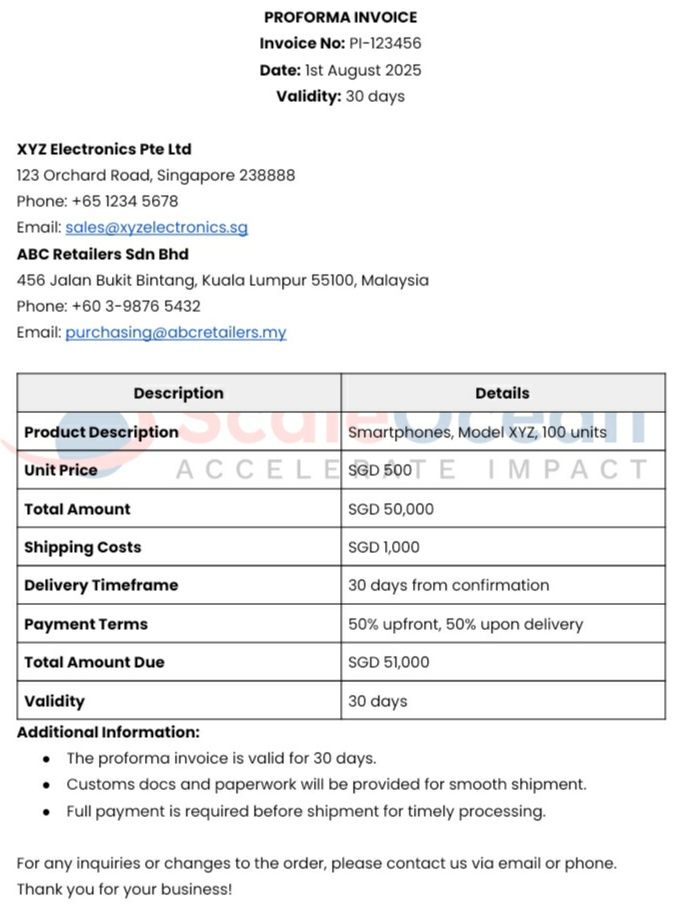
A proforma invoice is a preliminary document that details the projected prices and terms of a transaction before actual shipment or delivery. It is often used in international trade to verify that all sides comprehend the agreement.
For example, a Singapore-based electronics supplier sends a proforma invoice to a Malaysian shop for a large order of smartphones, outlining the goods, pricing, shipping expenses, payment terms, and other critical details, ensuring transparency and clarity before the final sale. Here’s how the example might look:
Best Practices for Creating Proforma Invoices
When producing a proforma invoice, make sure that all details are correct, legible, and in accordance with applicable requirements. This reduces misconceptions and facilitates seamless transactions. By adhering to standard practices, you can ensure that your proforma invoice is effective for both local and foreign commerce.
Here are some important best practices to follow:
1. Accuracy
Ensure that all details, including product descriptions, quantities, and costs, are precise and correct. This includes verifying unit prices, totals, and any taxes. Any inaccuracies in these facts can cause confusion, delays, and even disputes. Ensuring accuracy helps to preserve confidence between buyer and seller, making the transaction go more smoothly.
2. Clarity
Use basic and unambiguous language to ensure that all people involved understand what is happening. Avoid jargon and sophisticated terminology that may generate confusion. Clearly state the conditions of sale, payment schedules, and any other pertinent information. This will allow both parties to agree on the terms without ambiguity, eliminating the possibility of misunderstandings.
3. Compliance
According to Singapore Customs, importers may face penalties for non-compliance with the Customs Act, the Regulation of Imports and Exports Act (RIEA), and related regulations. This highlights the importance of ensuring your proforma invoice meets international trade standards, including necessary customs details such as HS codes, country of origin, and destination information, to avoid delays and penalties.
4. Consistency
Maintain a uniform structure for all of your invoices to make record-keeping easier and more professional. Consistent formatting ensures that all necessary information is included each time. It also establishes a consistent standard for your company, making it easier for customers to interpret and process information swiftly.
Streamlining Proforma Invoice Management with ScaleOcean Accounting Software
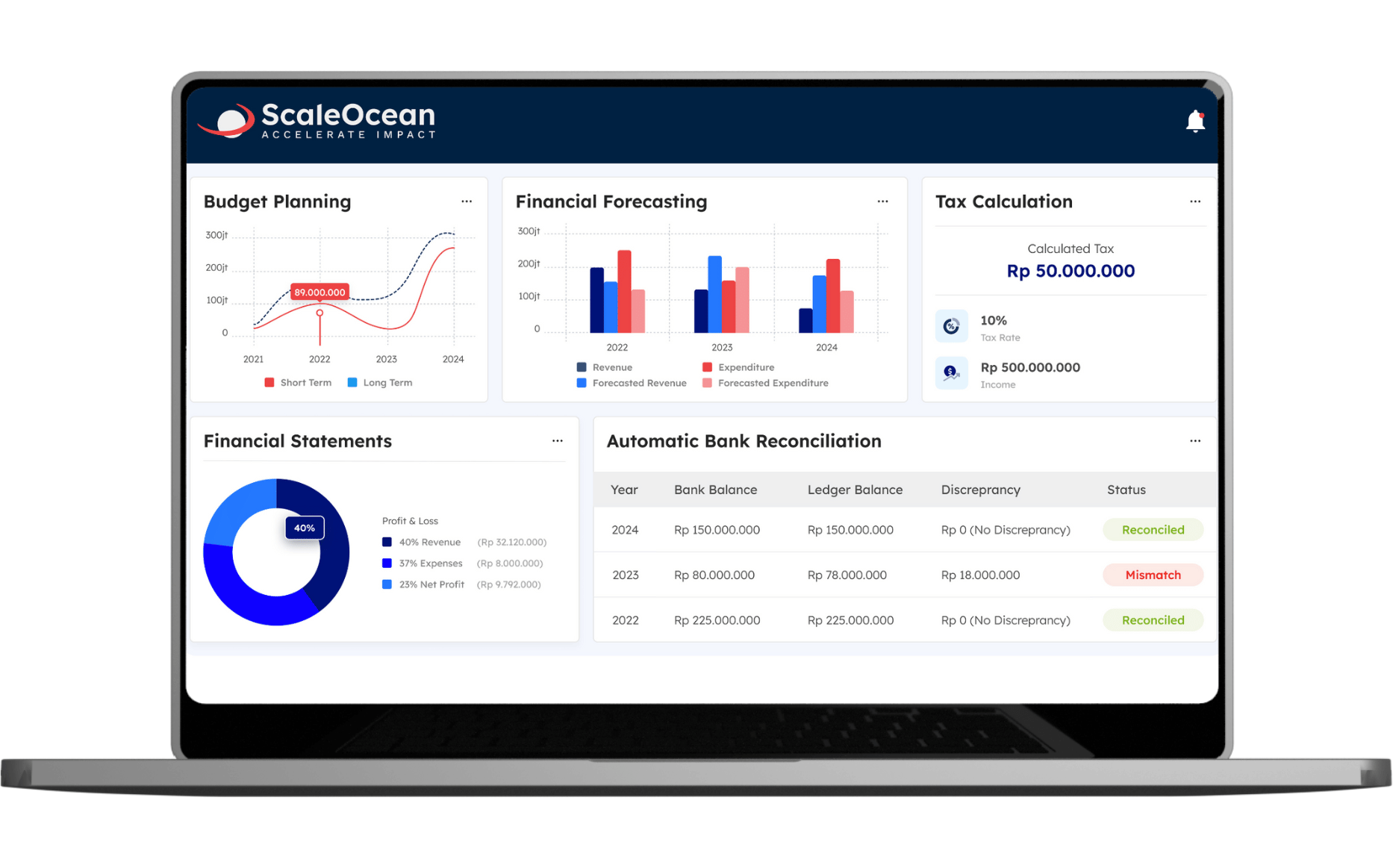
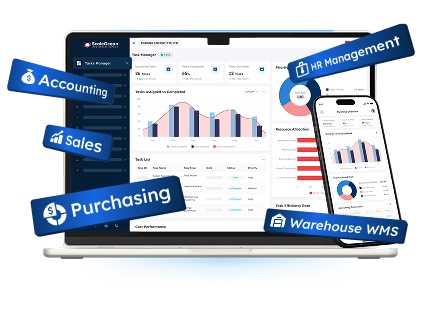
ScaleOcean accounting software is a complete software solution that simplifies and automates invoicing operations, allowing businesses to better manage their financial activities. ScaleOcean helps organizations decrease the stress of manual invoicing and streamline operations.
The program increases efficiency by reducing errors, guarantees compliance with changing rules, and allows for scalability to accommodate corporate expansion without the headache of human invoicing.
We provide a free demo to help you see how ScaleOcean can revolutionize your billing process and discover its capabilities firsthand. Furthermore, ScaleOcean is qualified for the CTC grant, which assists firms in implementing digital solutions. The following are the main features of ScaleOcean software:
- Automated Invoice Creation: Quickly generate accurate proforma and commercial invoices, streamlining your invoicing process.
- Customizable Templates: Easily tailor invoices to your business requirements for consistent, professional documentation.
- Integration with Inventory Management: Automatically update stock levels in real-time, ensuring invoices reflect accurate inventory data.
- Multi-Currency Support: Facilitate global transactions by handling multiple currencies effortlessly.
- IFRS Compliance: Ensure adherence to international financial reporting standards for consistent and reliable accounting.
Conclusion
Proforma invoices play an important role in the pre-sale process, allowing businesses to provide clarity to clients and establish clear expectations for both sides. These invoices, which outline expected costs, terms, and delivery deadlines, aid in the smooth operation of businesses, particularly in international trade. They ensure that all relevant details are conveyed up front, eliminating the possibility of misunderstandings or disputes later on.
The effective use of proforma invoices can greatly increase corporate efficiency by streamlining transactions and fostering openness, which promotes client trust. When managed appropriately, they result in smoother transactions and stronger relationships. ScaleOcean accounting software makes it easy to create precise and efficient proforma invoices, allowing businesses to retain smooth financial management while increasing client satisfaction.
FAQ:
1. What is a proforma invoice?
A proforma invoice is a document that outlines the estimated cost, terms of sale, and delivery information for goods or services before they are shipped or provided. It is essentially a preliminary bill and is not intended to request payment, but rather to inform both parties about the expected charges and conditions.
2. What is the difference between an invoice and a proforma invoice?
The primary distinction is that a proforma invoice serves as an estimate and is not legally binding, typically issued before the actual delivery of goods or services. In contrast, a commercial invoice is the final document sent after the delivery, which is legally binding and requests payment from the buyer.
3. Should you pay on a proforma invoice?
No, payment should not be made based on a proforma invoice. Since it is an estimate and not an official request for payment, payment should only be made when the commercial invoice is issued, which reflects the actual charges after delivery.
4. Why do people issue pro forma invoices?
Proforma invoices are issued to provide buyers with an early estimate of costs, terms, and delivery schedules before an order is confirmed. They are particularly useful for securing financing, assisting with customs processes in international trade, and ensuring both parties are aligned on the transaction details before proceeding.





















.png)