




Franchise management software is a centralized platform that helps businesses manage franchise operations, locations, agreements, royalties, inventory, and performance data across an expanding network with greater operational control.
For Singapore retailers, however, growth can quickly expose gaps between outlets when POS, inventory, customer, and franchise data remain fragmented across separate systems and operational processes across the growing network.
These gaps can delay decisions, increase administrative work, and create inconsistent customer experiences, while franchise owners struggle to monitor performance and maintain operational standards across different locations consistently.
Therefore, businesses need connected franchise management software to coordinate daily operations, strengthen visibility, and support expansion without relying heavily on manual processes that slow franchise growth unnecessarily over time.
 Key Takeaways
- Franchise management software is a platform that centralizes operations, financial processes, compliance, communication, and data across growing franchise networks for improved control and visibility.
- Comparing leading franchise management software helps businesses evaluate different platforms based on their primary focus, features, suitability, and operational requirements.
- Tips to choose franchise management software include assessing workflow requirements, usability, integrations, franchise portals, security controls, pricing, and testing environments.
- ScaleOcean helps enterprise franchises manage complex workflows through flexible ERP capabilities, supporting operational control, scalability, and connected business processes.
What is Franchise Management Software?
Franchise management software is a business system that connects franchisors with franchisees through shared workflows for operations, finance, compliance, reporting, and performance management across multiple locations at scale.
It typically centralizes outlet information, franchise agreements, royalty calculations, inventory, sales, audits, and customer data, allowing headquarters to manage multiple locations more consistently and efficiently across the wider franchise network.
 Also Read: Top 6 Retail Apps for Your Businesses in Singapore 2026
Why Does a Business Use Franchise Management Software?
Businesses use franchise management software to control growing networks while reducing the operational complexity that comes with multiple locations, owners, systems, and reporting requirements across different markets and regions.
Moreover, the software gives franchisors clearer oversight, automates repetitive tasks, and helps franchisees follow standardized processes without sacrificing visibility into local performance and daily operations across the wider network.
1. Guarantees Brand Consistency
Franchise management software standardizes operating procedures, promotional materials, product information, and service requirements across every franchise location, helping teams deliver consistent customer experiences every day.
Consequently, franchisors can distribute approved guidelines centrally, while managers monitor compliance and reduce variations that could weaken customer trust, brand recognition, and service quality across the network.
2. Automates Royalty Collection
Franchise management software automates royalty calculations by collecting sales data and applying predefined rates, agreements, deductions, and reporting rules across franchise locations with greater accuracy and consistency each month.
As a result, finance teams can reduce manual calculations, improve payment accuracy, identify outstanding franchise fees before they affect cash flow or franchise relationships, and improve accountability.
3. Simplifies Quality Audits
Franchise management software simplifies quality audits by scheduling inspections, assigning checklists, recording findings, and tracking corrective actions across multiple outlets through centralized workflows and standardized procedures across the wider network.
Furthermore, managers can review audit results centrally, compare locations, and follow unresolved issues without relying on spreadsheets or disconnected communication channels that unnecessarily slow corrective action across busy franchise networks.
4. Accelerates Territory Sales
Franchise management software accelerates territory sales by combining location data, outlet performance, market information, and expansion planning within one platform for faster franchise development decisions with better visibility.
Therefore, franchise teams can identify promising areas, evaluate existing coverage, and coordinate new opportunities while reducing delays caused by scattered information and disconnected planning processes.
5. Centralizes Data Insights
Franchise management software centralizes data insights by combining sales, inventory, customer, financial, and operational information across franchise locations, providing more complete network-level visibility for decision-making.
With unified reporting, leadership can compare outlet performance, identify trends, and make faster decisions based on consistent information rather than isolated spreadsheets and disconnected reports across the franchise network.
6. Streamlines Supply Chains
Franchise management software streamlines supply chains by connecting purchasing, inventory, supplier coordination, and outlet demand across the franchise network through shared operational information and workflows for every outlet.
Additionally, centralized visibility helps teams identify stock requirements earlier, coordinate replenishment, and reduce shortages or excess inventory across locations while supporting more reliable purchasing decisions across the network.
When Should Businesses Use Franchise Management Software?

Businesses should use franchise management software when manual processes begin delaying location openings, leading to missed royalty fees, creating inconsistent customer experiences across outlets and franchise operations, and increasing administrative workloads.
Similarly, growing franchise networks benefit when headquarters struggles to coordinate operations, monitor franchisee performance, or maintain consistent standards across increasingly complex locations and ownership structures.
For Singapore businesses, adoption becomes especially valuable when fragmented POS, inventory, finance, CRM, and franchise data prevent leaders from gaining reliable network-wide visibility and making timely decisions across multiple outlets.
A real-world example comes from Tony Roma’s, which has used an all-in-one franchise management platform to support its restaurant operations. According to The Sun, the restaurant chain uses the software to produce training manuals as part of its broader technology strategy.
The example shows how franchise management software can support more than administrative tasks. For a multi-location restaurant brand, centralized training materials can help communicate operating procedures consistently, while digital tools can complement broader initiatives involving inventory, customer experience, and operational efficiency.
This use case is particularly relevant to Operations & Compliance Tracking, where franchise businesses need to ensure that employees across locations can access standardized procedures and follow the same operational requirements.
Quick Comparison of the Best 8 Franchise Management Software
The best franchise management software varies by business model, network size, and operational priorities. The comparison below highlights each platform’s general focus, intended use, and notable capabilities.
| Software | Primary Focus | Best Suited For | Key Features |
|---|---|---|---|
| ScaleOcean Franchise Software | Integrated franchise and business management | Singapore medium-sized to enterprise businesses managing complex, multi-outlet operations | Centralized management across franchise operations, inventory, purchasing, finance, CRM, and other business processes |
| FranConnect | Franchise lifecycle management | Franchisors managing franchise development and multi-location operations | Franchise development, onboarding, operations, field visits, marketing, and financial management |
| FranchiseSoft | Franchise administration and relationship management | Emerging and established franchisors | Franchisee management, onboarding, training, audits, support, and royalty management |
| ServiceTitan | Field service and franchise operations | Service-based franchise businesses | Scheduling, dispatching, work orders, reporting, and multi-location operational management |
| Jolt | Operational execution and compliance | Restaurants, retail, and other multi-location businesses | Digital checklists, task management, employee scheduling, compliance, and operational monitoring |
| Operandio | Multi-location operations management | Franchise and multi-unit businesses, particularly food service | Audits, checklists, training, supplier management, location launches, and dashboards |
| Hubler | Franchise financial and compliance management | Franchise networks requiring centralized administrative control | Contract management, compliance tracking, royalty calculations, onboarding, and financial reporting |
| Franscape | Franchise and activity-based business management | Class-based and activity-focused franchise businesses | Franchise reporting, royalty collection, location management, customer bookings, and staff management |
Top 8 Franchise Management Software in Singapore for 2026
As franchise networks expand, businesses need software that connects franchise operations with wider retail management system processes rather than managing franchisee information separately. The following solutions represent different approaches to franchise management, from dedicated franchise platforms to broader enterprise systems.
1. ScaleOcean Franchise Software
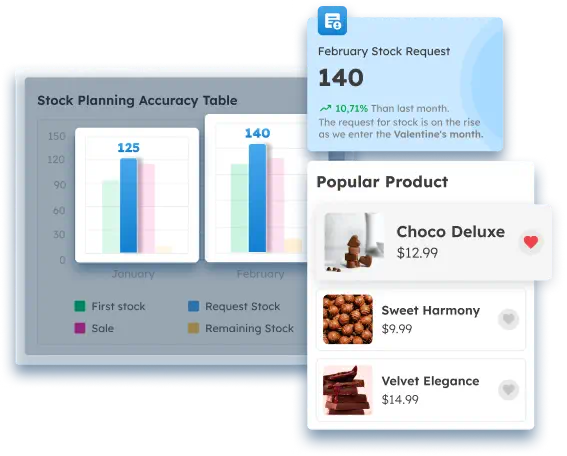
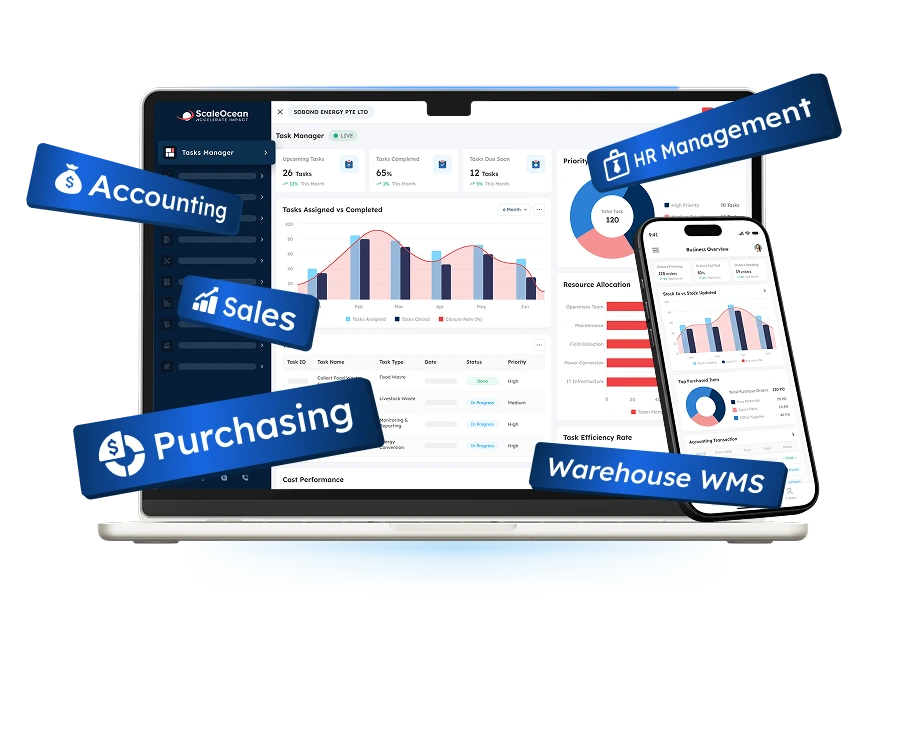
ScaleOcean Retail Software centralizes franchise operations through its flagship platform, ScaleOcean Atlas, an adaptable ERP backbone that connects outlets, franchisees, POS, inventory, royalties, contracts, and finance within one operational system, while supporting Singapore-specific governance.
Moreover, its configurable workflows, embedded ScaleMind intelligence, and unlimited-user governance help enterprises coordinate approvals, monitor exceptions, and scale networks while meeting PDPA requirements, local financial reporting, and EDG and CTC grant requirements.
Schedule a consultation with ScaleOcean experts to map your franchise processes, identify integration priorities, and determine how Atlas can support your Singapore expansion strategy with a tailored implementation.
Key Features of ScaleOcean Franchise Software
- Demand and Stock Intelligence: ScaleOcean analyzes sales history, seasonality, promotions, locations, and SKU movements to support accurate replenishment planning. Consequently, businesses can reduce outlet stockouts while preventing excessive inventory accumulation across other locations.
- Role-Based Access and Audit Trail: ScaleOcean limits user access according to outlet, entity, function, or responsibility while recording changes and approvals. This helps businesses strengthen data governance, transaction traceability, and PDPA-aligned access controls.
- Automated Royalty and Franchise Fee Management: ScaleOcean automates royalty, marketing, technology, and other franchise fee calculations based on agreed contracts. This reduces discrepancies between franchise reports, POS transactions, and payments submitted to headquarters.
- Multi-Entity and Multi-Outlet Architecture: ScaleOcean separates and consolidates data across entities, countries, regions, franchisees, and outlets within one system. As a result, enterprise groups can manage complex structures without maintaining disconnected operational databases.
- Centralized Product, Price, and Promotion Rules: ScaleOcean allows headquarters to centrally manage SKUs, categories, price lists, discounts, promotional periods, and outlet-specific product policies. This helps maintain consistent pricing and promotional execution across franchise locations.
| Pros | Cons |
|---|---|
|
|
Best For: Medium to large franchise enterprises in Singapore managing multiple outlets, entities, or franchise partners that need a configurable system to connect franchise operations with accounting, inventory, sales, purchasing, contracts, and other core business processes.
ℹ️ Why Choose ScaleOcean for Franchise Management Software:
ScaleOcean is a strong choice for franchise enterprises that need more than basic franchisee administration, offering configurable solutions that adapt to complex business structures, workflows, and long-term operational requirements.
2. FranConnect
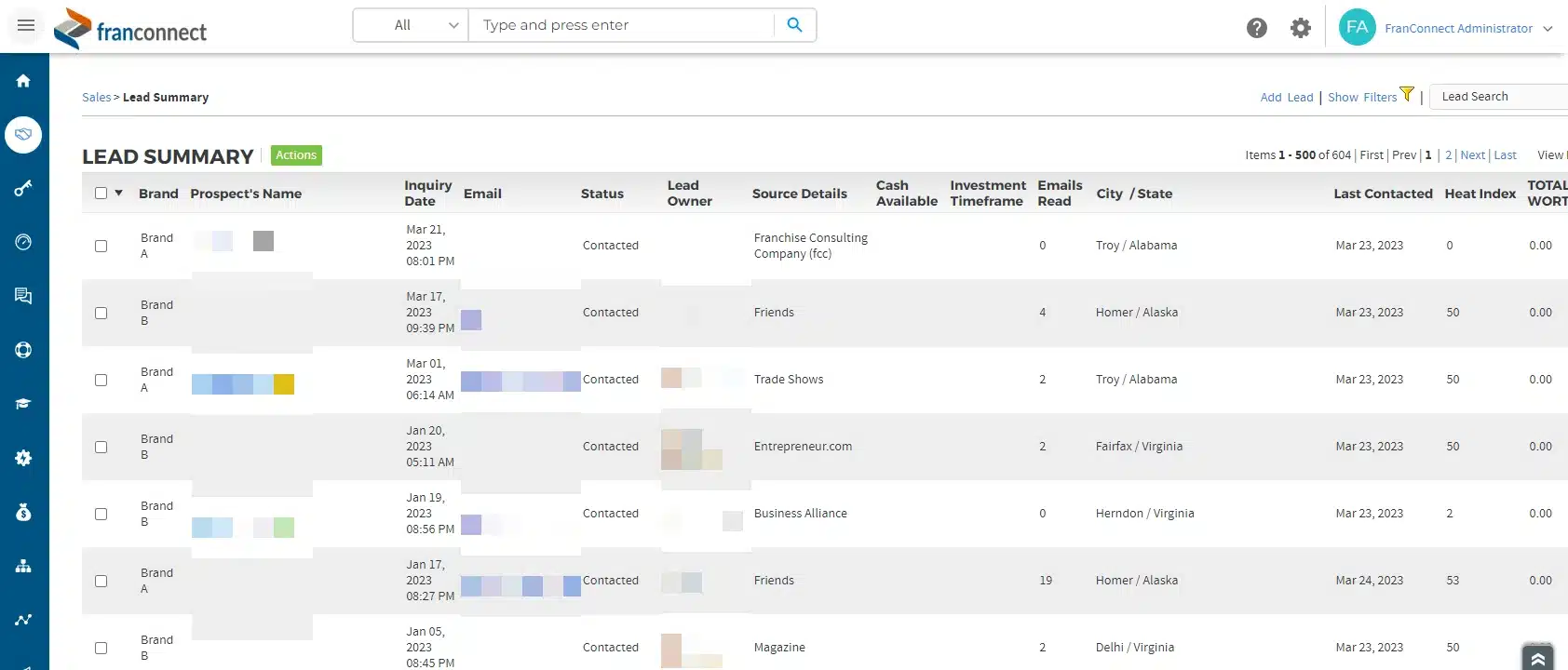
FranConnect Franchise Management Software is a platform for managing franchise development, onboarding, operations, and performance across multiple locations. It brings franchise-related activities into one system for franchisors and franchisees.
Its main functions cover franchise sales, onboarding, field operations, training, reporting, and franchisee support. Therefore, it can be used to manage different stages of the franchise lifecycle from one platform.
Key Features of FranConnect:
- Franchise development
- Franchisee onboarding
- Operations management
- Performance reporting
| Pros | Cons |
|---|---|
|
|
Best For: Medium to large franchise businesses managing multiple locations and requiring dedicated tools for franchise development, onboarding, operations, and performance monitoring.
ℹ️ Why Choose FranConnect for Franchise Management Software?
FranConnect is a dedicated platform for businesses that want a single platform covering several stages of franchise management, rather than relying on separate tools for development, onboarding, and operations.
3. FranchiseSoft
FranchiseSoft Franchise Management Software is a platform designed to manage franchisor and franchisee activities, including franchise sales, onboarding, training, finance, and ongoing support. It also provides centralized records for franchise locations and partners.
Its functions include franchisee management, royalty administration, compliance, marketing, and reporting. As a result, businesses can use it to organize franchise information and administrative processes in one platform.
Key Features of FranchiseSoft:
- Franchisee management
- Royalty management
- Training and LMS
- Franchise reporting
| Pros | Cons |
|---|---|
|
|
Best For: Small to large franchise businesses that primarily need dedicated tools for franchisee management, onboarding, training, royalties, and franchise reporting.
ℹ️ Why Choose FranchiseSoft for Franchise Management Software?
FranchiseSoft can suit businesses looking for a dedicated franchise platform with administrative, training, CRM, and financial functions grouped into one system.
4. ServiceTitan
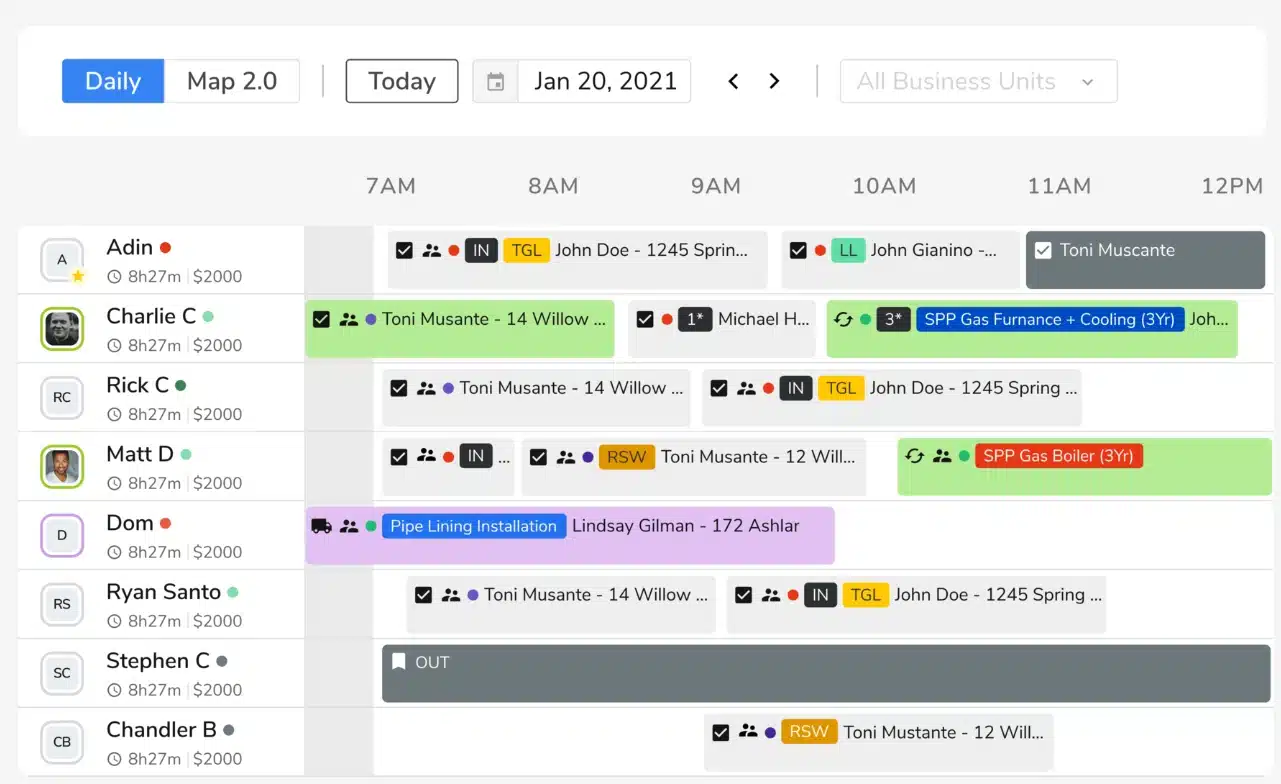
ServiceTitan Franchise Management Software is a franchise platform focused mainly on field service businesses such as HVAC, plumbing, electrical, and other service-based operations. It combines franchise management with scheduling, job operations, and performance tracking.
The platform helps franchisors standardize procedures and monitor sales, revenue, KPIs, and other operational information across locations. It also supports customer communication and field-service workflows.
Key Features of ServiceTitan:
- Scheduling and dispatching
- Job management
- KPI tracking
- Workflow automation
| Pros | Cons |
|---|---|
|
|
Best For: Medium to large franchise businesses in field-service industries, particularly those managing technicians, appointments, service jobs, and multiple operating locations.
ℹ️ Why Choose ServiceTitan for Franchise Management Software?
ServiceTitan is a good fit when franchise management is closely connected to field-service activities and businesses need operational tools alongside franchise oversight.
5. Jolt
Jolt Franchise Management Software is an operations management platform designed to help franchises manage daily tasks, employee activities, compliance, and location procedures. It supports businesses across food service, retail, hospitality, and similar industries.
Its main functions focus on standardizing recurring tasks, monitoring operations, managing employees, and maintaining records across locations. Therefore, it is particularly relevant for businesses that prioritize consistent day-to-day execution.
Key Features of Jolt:
- Digital checklists
- Employee scheduling
- Forms and inspections
- Food safety monitoring
| Pros | Cons |
|---|---|
|
|
Best For: Small to medium franchise businesses, especially restaurants, retail outlets, and hospitality operators that need straightforward tools for daily operations, employee management, and compliance.
ℹ️ Why Choose Jolt for Franchise Management Software?
Jolt can be suitable for businesses that mainly need to standardize outlet-level tasks, checklists, employee activities, and compliance rather than manage extensive franchise administration.
6. Operandio
Operandio Franchise Management Software is a multi-location operations platform that helps franchises manage daily execution, staff training, location launches, and network activities. It combines franchise management with operational and learning tools.
Its functions include audits, checklists, employee training, supplier management, franchise recruitment, and location opening processes. This makes it useful for businesses managing operational consistency across multiple units.
Key Features of Operandio:
- Digital audits and checklists
- Employee training
- Location launch management
- Supplier management
| Pros | Cons |
|---|---|
|
|
Best For: Small to large franchise and multi-unit businesses that need to manage outlet operations, employee training, audits, and location openings across multiple sites.
ℹ️ Why Choose Operandio for Franchise Management Software?
Operandio can fit businesses that prioritize operational execution and staff development while needing centralized visibility across their franchise or multi-location network.
7. Hubler
Hubler Franchise Management Software is a platform for managing franchisee information, contracts, compliance, financial processes, and outlet onboarding. It connects franchise-related activities with existing POS and accounting systems.
Its functions include contract management, compliance tracking, accounts receivable, financial reporting, and franchisee onboarding. Businesses can therefore use it to organize administrative and financial activities across franchise locations.
Key Features of Hubler:
- Contract management
- Compliance tracking
- Franchisee onboarding
- Financial reporting
| Pros | Cons |
|---|---|
|
|
Best For: Medium to large franchise businesses that need structured franchise administration, contract oversight, compliance monitoring, and financial management across multiple outlets.
ℹ️ Why Choose Hubler for Franchise Management Software?
Hubler can be a choice when franchise administration, contractual obligations, compliance, and financial tracking are the main priorities for managing a growing franchise network.
8. Franscape
Franscape Franchise Management Software is a platform for managing franchise networks, locations, customers, staff, payments, and operational information. It is particularly oriented toward class-based and activity-focused businesses.
Its functions include royalty management, location management, staff administration, customer bookings, payments, and franchise reporting. It also provides tools for managing customer and operational information across different locations.
Key Features of Franscape:
- Royalty management
- Location management
- Staff management
- Customer bookings
| Pros | Cons |
|---|---|
|
|
Best For: Small to medium franchise businesses, particularly class-based, education, fitness, leisure, and activity-oriented businesses that combine franchise management with bookings and customer services.
ℹ️ Why Choose Franscape for Franchise Management Software?
Franscape can suit businesses that need franchise oversight alongside customer bookings, staff management, payments, and location administration in an activity-based operating model.
Essential Features for Franchise Software
Franchise management software should provide connected tools that help franchisors control franchise development, daily operations, financial processes, communication, and supply chains across multiple locations.
The right feature set depends on network size and operating complexity. However, these capabilities generally provide the foundation for managing franchise relationships and maintaining consistent performance.
1. Franchise Development & CRM
Franchise development and CRM tools manage prospective franchisees, applications, communications, onboarding, and relationship records throughout the franchise sales process. This gives teams clearer visibility into franchise development activities.
Additionally, centralized CRM information helps franchisors track prospects from initial contact through approval and onboarding. As a result, teams can coordinate follow-ups and maintain organized franchisee records.
2. Operations & Compliance Tracking
Operations and compliance tracking tools help franchisors standardize procedures, monitor outlet performance, schedule inspections, and document corrective actions. These functions support consistent execution across different franchise locations.
Moreover, centralized checklists and audit records make it easier to identify operational gaps and follow up on unresolved issues. Therefore, headquarters can maintain standards without relying entirely on manual monitoring.
3. Royalty & Financial Automation
Royalty and financial automation calculates franchise fees, processes financial records, and supports reporting based on predefined agreements and transaction information. This reduces repetitive administrative work for franchise teams.
Furthermore, automated calculations can improve consistency when managing different royalty structures across franchisees. Finance teams can then spend less time reconciling figures and investigating avoidable calculation discrepancies.
4. Network Communication
Network communication features provide centralized channels for announcements, updates, documents, notifications, and discussions between franchisors and franchisees. This helps ensure important information reaches relevant locations consistently.
In addition, centralized communication reduces dependence on scattered messaging platforms and email threads. Consequently, franchisees can access operational updates and important resources from a more organized communication environment.
5. Supply Chain Management
Supply chain management connects purchasing, inventory, suppliers, replenishment, and distribution across franchise locations. This visibility helps businesses coordinate product availability while controlling purchasing activities across multiple outlets.
Moreover, centralized supply chain information allows teams to monitor stock requirements and supplier performance more effectively. As a result, franchise networks can respond faster to demand changes and inventory issues.
Tips for Choosing the Right Franchise Management Software for Your Workflow

Choosing franchise management software requires businesses to evaluate how each platform fits their existing workflows rather than selecting features based only on popularity or software rankings.
First, identify operational priorities, then compare functionality, integration, usability, security, implementation requirements, and pricing. This approach helps businesses avoid adopting systems that create unnecessary complexity.
Additionally, consider how the software will support future franchise expansion and changing operational requirements. A suitable platform should remain practical as the franchise network grows and processes become more complex, and be compatible with order fulfillment software.
Key Evaluation Steps for Choosing Franchise Software
A structured evaluation process helps businesses compare franchise management software according to practical operational requirements. It also reduces the risk of overlooking important technical, financial, or usability considerations.
Before selecting a platform, involve relevant teams from operations, finance, IT, and franchise management. Their input can reveal requirements that may not appear during an initial software demonstration.
1. Map Your Workflow First
Map existing franchise workflows before evaluating software, including onboarding, approvals, royalties, purchasing, audits, reporting, and communication. This provides a practical reference for comparing software capabilities.
Next, identify manual steps, duplicated information, and recurring bottlenecks within those workflows. Consequently, businesses can prioritize software that addresses genuine operational problems instead of adopting unnecessary functionality.
2. Prioritize Mobile Usability
Prioritize mobile usability when franchisees and outlet managers frequently work away from headquarters or use smartphones during daily operations. Mobile access can simplify approvals, inspections, communication, and task completion.
Additionally, test the software across different devices and screen sizes before making a decision. A system that works poorly on mobile devices can reduce adoption among distributed franchise teams.
3. Verify Integration Options
Verify integration options for a retail POS system in Singapore, accounting, inventory, payment, CRM, e-commerce, and other systems already used by the business. Compatible integrations can reduce duplicate data entry and disconnected workflows.
Furthermore, ask vendors about APIs, supported connectors, implementation requirements, and integration limitations. This helps businesses understand whether the software can connect reliably with their existing technology environment.
4. Test the Franchise Portal
Test the franchise portal using realistic franchisee tasks rather than relying solely on demonstrations. Review how easily users can access documents, submit information, complete tasks, and communicate.
Moreover, involve actual franchise users during testing to identify usability problems early. Their feedback can reveal navigation difficulties or unnecessary steps that internal administrators may overlook.
5. Check the Security Roles
Check security roles to determine how administrators can control access to financial, customer, employee, franchise, and operational information. Clear permissions help prevent unauthorized users from accessing sensitive business data.
Also, review authentication, audit logs, approval controls, and user activity records during evaluation. These safeguards provide greater visibility into system activity while supporting stronger internal data governance.
6. Analyze the Pricing Structure
Analyze pricing beyond the advertised subscription rate by reviewing implementation, integrations, support, training, users, modules, and potential transaction charges. These additional costs can significantly affect total ownership expenses.
Therefore, request a detailed pricing breakdown before selecting a platform. Comparing the complete cost structure helps businesses determine whether the software remains financially suitable as their franchise network expands.
7. Demand a Sandbox Environment
When possible, demand a sandbox environment before implementation, allowing teams to test workflows without affecting live operational data. This provides a safer way to evaluate configuration and usability.
Additionally, use realistic franchise scenarios during sandbox testing, including outlet creation, royalty calculations, approvals, and reporting. The results can reveal configuration gaps before the software goes live.
Red Flags to Watch Out For When Choosing Franchise Software
Businesses should evaluate potential warning signs before committing to franchise management software, particularly when vendors make broad promises without clearly explaining implementation requirements or ongoing costs.
Careful due diligence can uncover limitations that demonstrations may not reveal. Therefore, businesses should question unclear timelines, additional charges, and restrictions that could affect long-term software usability.
1. Long Implementation Timelines
Long implementation timelines can delay operational improvements and increase project costs, particularly when businesses need to coordinate multiple franchise locations. However, complex requirements may legitimately require additional preparation.
Therefore, ask vendors to clearly explain implementation stages, dependencies, responsibilities, and estimated timelines. This helps businesses distinguish necessary project work from avoidable delays caused by inefficient planning.
2. Hidden Onboarding Fees
Hidden onboarding fees can increase the total software investment beyond the initial subscription price. Businesses should therefore confirm whether implementation, training, migration, integrations, support, or configuration incur additional charges.
Moreover, request a complete cost breakdown before signing an agreement. Transparent pricing makes budgeting easier and prevents unexpected expenses from appearing after implementation has already started.
3. Rigid Customization
Rigid customization can become problematic when franchise businesses have different workflows, approval structures, reporting requirements, or operating models across locations. Consequently, fixed processes may force teams to change practical workflows unnecessarily.
Before choosing software, confirm which modules, workflows, reports, permissions, and integrations can be configured. Flexible configuration can help businesses adapt the system without creating excessive workarounds or manual processes.
Conclusion
Franchise management software helps businesses centralize franchise operations, automate royalties, monitor compliance, coordinate supply chains, and maintain visibility across multiple locations more efficiently.
For Singapore enterprises, ScaleOcean Retail Software provides a flexible ERP ecosystem that supports complex franchise workflows while connecting essential business processes through configurable modules and integrated operational management.
Schedule a consultation with ScaleOcean experts to discuss your franchise requirements and identify the right configuration for improving operational control, scalability, and long-term business performance.
FAQ Franchise Management Software:
1. Which industries can use franchise management software?
Franchise management software suits industries such as food and beverage, retail, hospitality, education, fitness, healthcare, automotive, and professional services with multiple locations or franchisees.
2. How many locations should a business have before using franchise management software?
There is no fixed number. Businesses can adopt it from their first few locations when manual processes become difficult to manage, particularly for royalties, compliance, reporting, and communication.
3. Can franchise management software integrate with POS and accounting systems?
Yes. Many platforms can integrate with POS, accounting, inventory, CRM, payment, and other business systems through APIs or built-in connectors, reducing duplicate data entry.
4. Is franchise management software suitable for international franchise expansion?
Yes. It can support international expansion through multi-location management, centralized reporting, localized workflows, and scalable processes. Platforms like ScaleOcean can further support complex expansion requirements.





















.png)