Recruitment Management System is a digital platform that organizes, tracks, and automates hiring activities from job posting to onboarding, helping businesses manage recruitment workflows more efficiently and consistently across departments.
Today, companies receive hundreds of applications for a single vacancy, yet many hiring teams still rely on spreadsheets and email threads. Consequently, manual workflows often create bottlenecks that significantly slow hiring decisions.
One common challenge businesses face is slow, inefficient manual recruitment processes. Recruiters spend excessive time scheduling interviews, reviewing resumes individually, and coordinating communication, which increases hiring delays and operational costs across departments.
According to the data our team found from Mordor Intelligence, the recruitment software market is projected to grow from USD 3.77 billion in 2026 to USD 5.5 billion by 2031, reflecting rising demand for structured hiring solutions.
Therefore, organizations increasingly adopt modern recruitment platforms to streamline hiring activities, reduce administrative workload, and improve candidate experiences. By centralizing recruitment data, businesses can accelerate hiring cycles while maintaining accuracy and professional communication standards.
So in this article, we will take an in-depth look at the essential features of effective recruitment platforms, explore how they benefit businesses, and provide a guide to help you optimize your hiring strategy and attract top talent efficiently.
Key Takeaways
A Recruitment Management System is specialized software designed to support recruitment teams in planning, executing, and monitoring hiring activities.
A Recruitment Management System is specialized software designed to support recruitment teams in planning, executing, and monitoring hiring activities. It consolidates recruitment tasks into one platform, enabling better coordination between recruiters, hiring managers, and candidates.
Unlike traditional hiring methods, this system replaces scattered communication channels with structured workflows. As a result, recruiters gain clear visibility into candidate progress, ensuring timely follow-ups and reducing confusion throughout the recruitment process.
Additionally, the system allows organizations to standardize hiring practices across departments. Standardization ensures consistent evaluation criteria, reduces bias risks, and strengthens compliance with company hiring policies and external employment regulations.
Furthermore, businesses benefit from improved transparency because managers can monitor recruitment pipelines in real time. This visibility helps leaders make informed decisions while forecasting workforce needs more accurately and aligning hiring strategies with business goals.
How Do Recruitment Management Systems Work?
Recruitment Management Systems operate by integrating recruitment activities into a unified digital workflow. Initially, recruiters create job postings and distribute them across multiple platforms simultaneously, reducing repetitive tasks and saving valuable administrative time.
Next, the system collects applications automatically and stores them in a centralized database. Recruiters can then filter candidates based on predefined criteria, ensuring that only qualified applicants proceed to the next recruitment stages.
After screening, the system assists with interview scheduling by syncing calendars and sending automated notifications. Consequently, recruiters avoid scheduling conflicts while candidates receive timely reminders, improving overall communication efficiency and reducing missed interview appointments.
Finally, the system generates reports that analyze hiring performance metrics. These insights enable HR teams to identify delays, optimize recruitment strategies, and continuously refine hiring processes to achieve faster and more effective workforce acquisition outcomes.
What are the Key Features of Recruitment Management Systems?
Recruitment Management Systems provide multiple functional features designed to streamline hiring workflows. Each feature addresses specific recruitment challenges, ensuring that organizations maintain efficiency while managing growing volumes of candidate applications effectively.
Moreover, these features work together to create an integrated recruitment environment. When combined, they reduce repetitive manual tasks, strengthen collaboration between hiring teams, and enhance overall recruitment accuracy across different organizational levels.
Additionally, advanced features often support scalability for organizations experiencing workforce growth. As hiring demands increase, businesses can maintain structured processes without sacrificing speed, quality, or candidate engagement throughout recruitment stages.
Therefore, understanding what is recruitment management systems and their key features helps organizations evaluate software capabilities effectively. By identifying essential functionalities, companies can select systems that align closely with recruitment objectives, operational workflows, and long-term workforce planning strategies.
Centralized Talent Pool
A centralized talent pool stores all candidate information in a single accessible database. Recruiters can quickly search profiles, compare qualifications, and revisit past applicants when new vacancies emerge within the organization, a capability that can also be supported by talent management system software.
Additionally, this feature reduces dependency on scattered storage methods such as spreadsheets or emails. Consequently, recruiters maintain organized candidate records, improve retrieval speed, and ensure consistent data management across recruitment cycles and departments.
Applicant Tracking System (ATS)
An Applicant Tracking System monitors candidate progress throughout each recruitment stage. Recruiters track application status, schedule interviews, and document feedbackefficiently while maintaining structured hiring workflows across multiple job positions.
Furthermore, ATS functionality enhances collaboration between hiring managers and HR teams. By sharing real-time updates, stakeholders stay informed about recruitment progress, enabling faster decision-making and minimizing delays caused by fragmented communication channels.
AI-Powered Screening & Matching
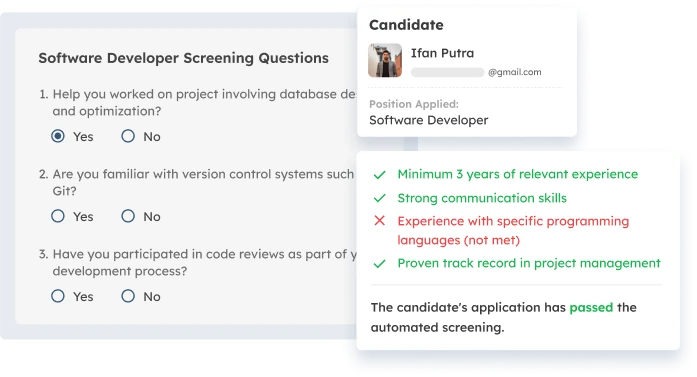
AI-powered screening tools analyze resumes automatically by matching candidate qualifications with predefined job requirements. This technology significantly reduces manual review time while improving accuracy in identifying candidates with relevant skills and experience.
Moreover, automated matching minimizes human bias by applying consistent evaluation criteria across all applications. As a result, recruiters focus on strategic decision-making rather than repetitive administrative tasks, improving overall recruitment efficiency and fairness.
Automated Communication
Automated communication tools send emails, reminders, and notifications to candidates throughout recruitment stages. These updates keep applicants informed about interview schedules, status changes, and required actions without manual intervention from recruiters.
Additionally, consistent communication strengthens candidate experiences by reducing uncertainty during hiring processes. When candidates receive timely responses, organizations build professional reputations while decreasing dropout rates before job offers are finalized.
Onboarding Management
Onboarding management features assist HR teams in preparing documentation and guiding new hires through initial employment procedures. Automated workflows ensure that employees complete required forms accurately before their first working day.
Furthermore, structured onboarding reduces confusion and accelerates employee readiness. When new hires receive clear instructions and timely access to resources, organizations improve productivity levels and create smoother transitions into operational roles.
Candidate Relationship Management
Candidate Relationship Management tools maintain long-term communication with potential candidates. Recruiters store interaction history, enabling personalized outreach when suitable job opportunities become available within the organization.
Additionally, nurturing candidate relationships strengthens employer branding and talent retention. By maintaining consistent engagement, businesses build trust with skilled professionals, increasing the likelihood of attracting qualified applicants during future recruitment campaigns.
Analytics & Reporting
Analytics and reporting features generate detailed recruitment performance insights. Recruiters analyze metrics such as time-to-hire, candidate sources, and hiring success rates to identify process inefficiencies and optimize decision-making strategies.
Moreover, visual dashboards simplify data interpretation for managers and executives. With clear performance indicators, organizations monitor recruitment trends effectively and implement improvements that enhance workforce planning accuracy and operational efficiency.
Automation Suite
Automation suite capabilities streamline repetitive recruitment activities across multiple workflow stages. Tasks such as resume sorting, interview scheduling, and document generation occur automatically, significantly reducing administrative workload for recruitment teams.
Additionally, workflow automation supports scalability during high-volume hiring periods. Organizations maintain consistent hiring quality while managing increased applicant numbers, ensuring that recruitment timelines remain efficient even during rapid business expansion phases.
What are the Benefits of Recruitment Management Systems?
Recruitment Management Systems deliver measurable advantages that directly impact hiring speed, operational efficiency, and workforce quality. By replacing manual steps with structured workflows, organizations reduce delays and maintain consistent hiring outcomes across departments.
Moreover, these systems support data-drivendecision-making throughout recruitment cycles. When recruiters access accurate hiring insights, they adjust strategies proactively, reduce repetitive tasks, and ensure consistent communication with candidates during each hiring phase.
Additionally, improved coordination between stakeholders strengthens collaboration during recruitment planning and execution. With centralized information access, teams avoid miscommunication while maintaining transparency across recruitment pipelines and departmental hiring responsibilities.
Therefore, businesses that implement recruitment technology often experience reduced administrative burden and stronger workforce planning capabilities. These benefits collectively support sustainable hiring practices and enable your business to adapt quickly to changing workforce demands.
Increased Speed
Recruitment Management Systems significantly accelerate hiring timelines by automating repetitive recruitment tasks. Consequently, recruiters reduce manual workloads and respond faster to applications, ensuring candidates move smoothly through screening and interview stages.
Additionally, faster hiring cycles prevent talent loss caused by delayed responses. When organizations shorten recruitment timelines, they secure qualified candidates quickly and maintain competitive advantages in industries where skilled professionals remain highly sought after.
Cost Savings
Implementing recruitment technology reduces operational costs associated with manual hiring processes. Organizations minimize spending on administrative labor, reduce printing requirements, and avoid duplicated work that commonly occurs within fragmented recruitment systems.
Furthermore, faster hiring reduces vacancy-related productivity losses. When positions remain unfilled for shorter periods, teams maintain operational continuity, ensuring projects progress efficiently without interruptions caused by insufficient workforce availability.
Better Quality of Hire
Recruitment Management Systems improve hiring accuracy by enabling structured evaluation processes. Recruiters compare candidate qualifications consistently, ensuring hiring decisions align closely with job requirements and organizational performance expectations.
Moreover, advanced filtering and assessment tools highlight candidates with strong skill alignment. As a result, organizations recruit individuals who contribute effectively to business goals, strengthening long-term workforce productivity and reducing employee turnover risks.
Enhanced Candidate Experience
Recruitment platforms improve communication consistency throughout the hiring journey. Candidates receive automated updates, interview reminders, and feedback notifications, which reduce uncertainty and create more transparent recruitment experiences.
Additionally, positive hiring experiences strengthen employer branding. When candidates encounter professional and responsive recruitment processes, they develop favorable impressions, increasing the likelihood of accepting offers and recommending the organization to others.
Automated Workflows
Automated workflows streamlinecomplex recruitment activities across multiple stages. Tasks such as resume sorting, scheduling interviews, and sending reminders occur automatically, allowing recruiters to focus on strategic hiring decisions instead of administrative duties.
Furthermore, workflow automation reduces the risk of manual errors. By following predefined sequences, organizations maintain standardized recruitment processes while ensuring that every hiring stage proceeds according to established operational guidelines.
Integration
Recruitment Management Systems integrate seamlessly with HR, payroll, and other enterprise platforms. This connectivity ensures that candidate data flows smoothly between systems, including attendance and absence management tools, without requiring manual data transfers or repetitive entry tasks.
Additionally, integrated environments improve overall workforce management visibility. When recruitment data connects with broader HR operations, organizations maintain accurate employee records and support more effective long-term workforce planning strategies.
What Types of Companies Should Use RMS?
Organizations across various industries benefit from implementing recruitment technology, especially when hiring activities involve multiple stakeholders and high application volumes. Companies that rely on structured hiring workflows typically achieve better recruitment efficiency and workforce planning outcomes.
For example, medium-sized businesses experiencing rapid expansion often require scalable hiring solutions. By adopting structured recruitment systems, these companies maintain consistent hiring standards while managing increasing workforce demands without creating operational bottlenecks.
Large enterprises also benefit significantly due to complex recruitment structures. Multiple departments frequently recruit simultaneously, and centralized recruitment systems help coordinate hiring efforts while ensuring compliance with company policies and industry regulations.
Additionally, companies operating across multiple locations require synchronized recruitment processes. When hiring activities occur across regions, recruitment platforms ensure consistent workflows, maintain centralized records, and simplify reporting across distributed organizational units.
Solutions such as ScaleOcean Talent Management System offer flexible configurations that adapt to complex workflows across various industries. Consequently, organizations maintain consistent hiring structures while aligning recruitment processes with industry-specific operational requirements.
Who Needs a Recruitment Management System?
Recruitment Management Systems support various organizational roles that participate in hiring decisions. From executive leaders to operational staff, these systems enhance coordination, reduce communication gaps, and strengthen collaboration across recruitment-related responsibilities.
Moreover, different stakeholders rely on recruitment data for distinct purposes. While HR professionals manage hiring pipelines, department leaders evaluate candidate suitability, and staff members assist with onboarding coordination throughout employment transitions.
Additionally, centralized recruitment systems reduce confusion between roles during hiring activities. By assigning responsibilities within structured workflows, organizations ensure each stakeholder completes tasks accurately and maintains accountability throughout recruitment processes.
Therefore, understanding what is recruitment management systems and which roles benefit from recruitment technology helps organizations implement systems effectively. When stakeholders align responsibilities with system capabilities, businesses achieve smoother hiring processes and maintain consistent workforce management practices.
Human Resource Directors or Coordinators
Human Resource Directors and Coordinators oversee recruitment planning, policy enforcement, and hiring performance tracking. Recruitment systems provide them with centralized dashboards that display hiring progress, enabling more informed workforce management decisions.
Additionally, these professionals rely on reporting tools to evaluate recruitment efficiency. With access to detailed hiring metrics, they identify delays, optimize recruitment workflows, and ensure compliance with organizational hiring standards and regulatory requirements.
Hiring Managers
Hiring Managers participate actively in evaluating candidates and conducting interviews. Recruitment systems allow them to review candidate profiles quickly, submit structured feedback, and collaborate efficiently with HR teams during hiring decision processes.
Furthermore, streamlined communication tools support faster decision-making among hiring teams. When managers access real-time updates, they avoid delays in providing feedback, ensuring that recruitment timelines remain efficient and candidates receive timely responses.
Department Leaders
Department Leaders depend on recruitment systems to monitor staffing needs and workforce readiness. These tools provide visibility into candidate pipelines, enabling leaders to forecast workforce availability and plan operational activities more accurately.
Additionally, structured recruitment data supports better collaboration between departments. When leaders access shared recruitment insights, they coordinate hiring priorities effectively and ensure that staffing plans align with overall organizational goals and timelines.
Staff Members
Staff Members often support onboarding tasks and assist with initial employee integration activities. Recruitment systems guide them through documentation processes, ensuring that required forms and resources are completed accurately and submitted on schedule.
Moreover, clear onboarding workflows improve communication between new employees and support staff. When responsibilities remain well-defined, staff members contribute to smoother transitions, helping new hires adapt quickly to workplace procedures and expectations.
Popular Recruitment Management Systems in 2026
Many organizations evaluate several recruitment platforms before selecting the most suitable solution. Therefore, comparing vendors based on their strengths and ideal use cases helps businesses identify systems that align with hiring complexity, workforce size, and automation requirements.
Additionally, modern Recruitment Management System Software differs in specialization, ranging from AI-driven automation to candidate relationship management and enterprise-scale hiring. The following comparison table highlights ten widely recognized recruitment systems and their primary strengths.
Vendor
Best For
Key Strength
ScaleOcean
Customized enterprise workflows tailored to specific business needs
Unified recruitment workflows integrated with broader HR and workforce management systems.
Recruit CRM
Recruitment agencies and staffing firms
Combines ATS and CRM functionality designed to manage clients, candidates, and recruitment pipelines efficiently.
Lever
Relationship-driven hiring teams
Integrated ATS and CRM capabilities support candidate nurturing and collaborative hiring processes.
Team-based hiring workflows and customizable pipelines support cross-functional collaboration during recruitment processes.
Breezy HR
Small to medium-sized businesses
User-friendly recruitment automation tools designed for simplified job posting and candidate tracking workflows.
PeopleForce
Small to mid-sized organizations
All-in-one HR and ATS capabilities provide centralized talent management at an accessible scale.
Greenhouse
Data-driven hiring teams
Structured hiring tools, analytics dashboards, and standardized interview processes improve hiring quality and consistency.
SmartRecruiters
Enterprise-level recruitment
Scalable talent acquisition platform designed to support high-volume hiring and global workforce expansion.
MokaHR
AI-powered enterprise recruitment
Advanced AI automation and candidate matching significantly accelerate screening and hiring accuracy.
After reviewing the comparison above, organizations can explore each recruitment management system in greater detail. The following sections highlight core functions, features, and suitability to help businesses evaluate potential recruitment solutions effectively.
1. ScaleOcean
ScaleOcean’s Talent Management System is designed to simplify hiring through centralized workflows and automation. Moreover, the platform supports unlimited users without additional licensing costs, enabling HR teams and hiring managers to collaborate without restrictions.
Furthermore, ScaleOcean offers customizable recruitment workflows that allow businesses to define stages according to hiring policies. This flexibility supports compliance with local regulations while ensuring recruitment processes remain structured, transparent, and aligned with operational requirements.
The platform also integrates recruitment activities directly with HRIS modules, allowing candidate information to convert automatically into employee records after hiring decisions. Consequently, organizations eliminate repetitive data entry and maintain consistent workforce data across departments.
In addition, ScaleOcean operates through a secure cloud-based infrastructure that centralizes candidate data storage. Therefore, teams across multiple locations collaborate efficiently while maintaining strong data protection standards that support regulatory compliance and organizational security requirements.
Moreover, the system supports Singapore-specific compliance, including GST requirements and alignment with local financial reporting standards. Businesses may also qualify for digitalization grants such as PSG or CTC Grant programs up to 50-70%, reducing implementation costs through government subsidies.
Key Features of ScaleOcean Talent Management Software:
Automated Applicant Tracking System (ATS): ScaleOcean simplifies enterprise hiring by centralizing job postings, candidate tracking, and hiring decisions within a single dashboard. Consequently, recruiters manage large applicant volumes efficiently without switching between multiple tools or platforms.
AI Resume Screening: The system automatically scans resumes and matches candidate qualifications with job descriptions using AI-powered algorithms. As a result, recruiters identify suitable applicants faster while reducing manual review time and minimizing selection inconsistencies.
Compliance & Fair Hiring Support: ScaleOcean documents each recruitment stage transparently, enabling organizations to maintain fair hiring practices. Therefore, companies comply more easily with Singapore labor regulations while preparing accurate recruitment reports for audit or compliance purposes.
Seamless Onboarding Integration: Once recruiters approve candidates, the system automatically populates centralized employee databases with their information. Consequently, HR teams avoid duplicate data entry while accelerating onboarding workflows and ensuring accurate employee records across organizational systems.
Pros
Cons
Flexible configuration adapts to unique organizational recruitment policies and workflows.
Part of a full ERP ecosystem that connects recruitment with finance, operations, and workforce planning.
Modular implementation allows companies to activate recruitment functions gradually based on priorities.
Applies a consultative approach to design recruitment workflows based on business structure and hiring requirements.
Scaleocean has many varied features and modules, so you must first consult with the ScaleOcean team to get the right solution.
Scaleocean is less suitable for small companies because it offers features and modules for large businesses with complex processes.
Best For: Medium to large enterprises that manage complex recruitment workflows and require scalable systems that support long-term operational growth and structured digital transformation initiatives.
2. Recruit CRM
Recruit CRM Recruitment Management Systems are designed to help recruitment agencies manage candidates, clients, and hiring pipelines within one platform. It combines applicant tracking and client relationship tools to support structured recruitment workflows.
The system mainly supports agency-based hiring activities by organizing candidate records and communication history. As a result, recruiters maintain clearer records and manage multiple hiring projects more efficiently across different clients.
Key Features of Recruit CRM:
Applicant Tracking and Candidate Database
Client and Candidate CRM Tools
Resume Parsing and Job Management
Email Integration and Workflow Tracking
Pros
Cons
Combines CRM and ATS functions in one system.
Supports recruitment agency workflows.
Helps manage multiple hiring pipelines.
Provides centralized candidate records.
May feel complex for internal HR teams.
Customization options can be limited.
Some advanced tools require upgrades.
Reporting depth may vary by plan.
Best For: Recruitment agencies and staffing firms that manage multiple clients and ongoing hiring projects.
3. Lever
Lever Recruitment Management Systems focuses on collaborative hiring and candidate relationship management across recruitment teams. The platform supports structured communication between recruiters and hiring managers throughout the recruitment stages.
This system helps teams maintain organized hiring pipelines while tracking candidate progress efficiently. Additionally, it supports long-term engagement with candidates, which helps organizations maintain consistent hiring workflows across departments.
Key Features of Lever:
Applicant Tracking System
Candidate Relationship Management Tools
Interview Scheduling Support
Recruitment Workflow Tracking
Pros
Cons
Supports collaborative hiring processes.
Provides organized recruitment workflows.
Helps maintain structured hiring pipelines.
Offers centralized communication tracking.
Setup may require initial configuration.
Pricing may increase with added users.
Some features depend on integration tools.
Reporting customization may be limited.
Best For: Mid-sized companies that require collaborative recruitment workflows across multiple hiring teams.
4. Workable
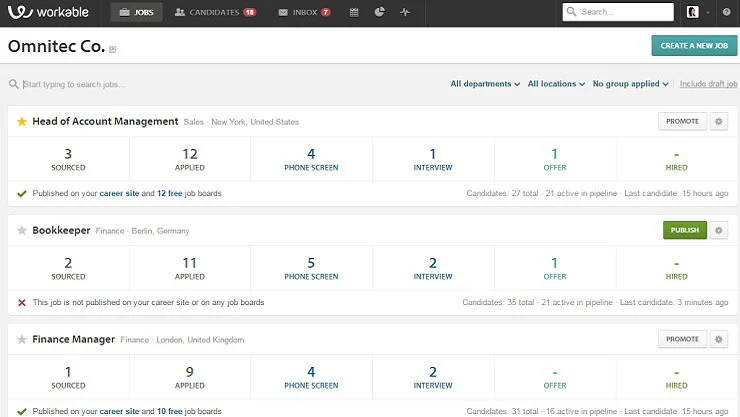
Workable Recruitment Management Systems provide hiring tools that help businesses publish job postings and track candidates across recruitment channels. The platform simplifies hiring by combining sourcing, screening, and interview scheduling tools in one place.
The system supports organizations that manage frequent hiring activities and require structured workflows. Consequently, hiring teams maintain visibility into recruitment progress while managing candidate information across different job roles.
Key Features of Workable:
Multi-Channel Job Posting
Applicant Tracking Dashboard
Resume Screening Tools
Interview Scheduling Support
Pros
Cons
Supports job posting across multiple platforms.
Provides structured hiring workflows.
Offers centralized applicant tracking.
Helps manage frequent hiring tasks.
Advanced tools may require higher plans.
Customization depth may be limited.
Some integrations may need configuration.
Reporting features vary by subscription.
Best For: Small to mid-sized businesses that frequently recruit employees across multiple job openings.
5. Recruitee (Recruits)
Recruitee Recruitment Management Systems provide collaborative hiring tools that help teams manage recruitment pipelines and candidate communication efficiently. The platform focuses on improving coordination between recruiters and hiring managers during structured hiring processes.
The system supports organizations that require clear role assignments and shared visibility into hiring stages. As a result, teams manage recruitment responsibilities more effectively while maintaining consistent workflows across different departments.
Key Features of Recruitee:
Collaborative Hiring Pipelines
Candidate Tracking Dashboard
Team Feedback and Evaluation Tools
Job Posting Management
Pros
Cons
Supports team-based hiring collaboration.
Provides clear recruitment pipeline visibility.
Helps standardize hiring workflows.
Encourages structured candidate evaluations.
Interface setup may require adjustments.
Advanced reporting tools may be limited.
Custom integrations may need configuration.
Some features depend on subscription level.
Best For: Mid-sized companies that require collaborative hiring workflows across multiple departments.
6. Breezy HR
Breezy HR Recruitment Management Software offers user-friendly hiring tools that help organizations manage candidate applications and recruitment workflows. The platform emphasizes simplicity, allowing recruiters to organize hiring activities without a complex technical setup.
The system supports businesses that handle moderate hiring volumes and require structured communication with applicants. Consequently, recruiters maintain organized recruitment pipelines while ensuring timely updates throughout the hiring process.
Key Features of Breezy HR:
Applicant Tracking System
Visual Recruitment Pipelines
Interview Scheduling Tools
Candidate Communication Features
Pros
Cons
Provides an intuitive recruitment interface.
Supports structured hiring pipelines.
Helps manage moderate hiring volumes.
Offers organized candidate communication.
Custom workflow flexibility may be limited.
Reporting tools may not suit complex needs.
Advanced integrations may require upgrades.
Some automation features depend on plans.
Best For: Small to mid-sized businesses that need simple and structured recruitment workflows without heavy system complexity.
7. PeopleForce
PeopleForce Recruitment Management Systems combine recruitment and HR management capabilities into a unified platform. The system helps organizations manage hiring pipelines while maintaining employee-related records within the same environment.
The platform supports businesses seeking integrated HR solutions that connect recruitment processes with workforce data management. Therefore, organizations maintain consistent employee information from hiring stages through ongoing workforce administration activities.
Key Features of PeopleForce:
Recruitment and HR Management Integration
Candidate Tracking Dashboard
Employee Data Management Tools
Reporting and Workflow Monitoring
Pros
Cons
Combines recruitment with HR management tools.
Provides centralized workforce data visibility.
Supports structured hiring workflows.
Helps maintain consistent employee records.
Feature depth may vary by module selection.
Implementation may require initial setup time.
Customization may depend on system configuration.
Some integrations may require additional setup.
Best For: Small to mid-sized organizations that want recruitment tools integrated with broader HR management functions.
8. Greenhouse
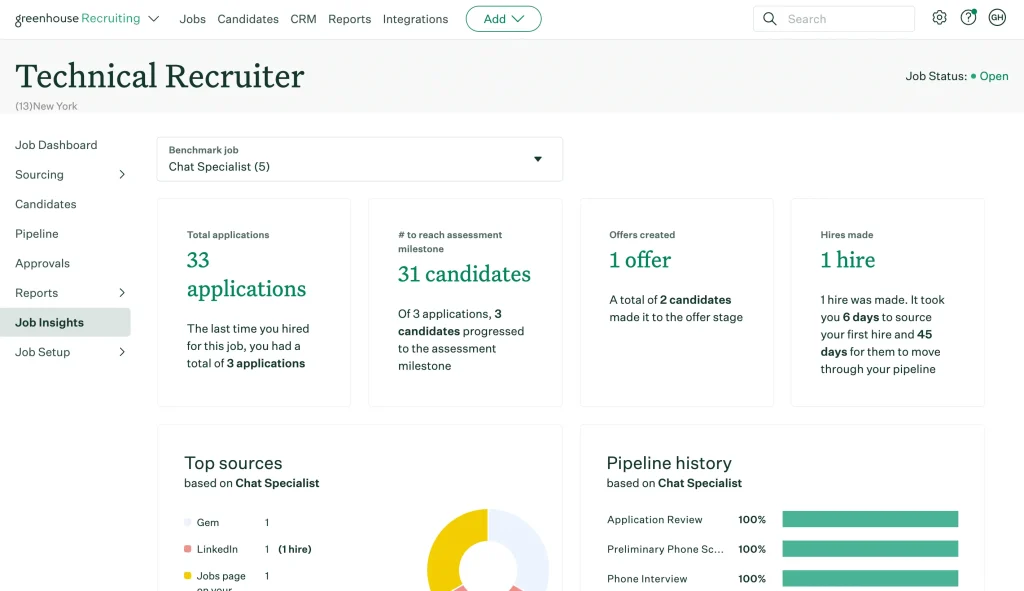
Greenhouse Recruitment Management Systems focuses on structured hiring processes that help organizations standardize recruitment stages and evaluation methods. The platform supports consistent hiring decisions by organizing candidate workflows and interview feedback in one environment.
The system helps teams apply consistent assessment criteria across different job roles. As a result, organizations maintain organized recruitment workflows while improving visibility into hiring progress and candidate evaluation outcomes.
Key Features of Greenhouse:
Structured Interview Workflows
Candidate Evaluation Scorecards
Recruitment Pipeline Management
Reporting and Hiring Analytics
Pros
Cons
Supports standardized hiring processes.
Provides organized evaluation tools.
Helps maintain structured recruitment stages.
Offers centralized hiring visibility.
Setup may require planning and configuration.
Pricing may be higher for smaller teams.
Some features require training to use effectively.
Custom integrations may need additional setup.
Best For: Mid-sized to large companies that require standardized hiring processes and structured recruitment workflows across departments.
9. SmartRecruiters
SmartRecruiters Recruitment Management Software provides enterprise-level hiring tools designed to support large-scale recruitment operations. The platform organizes recruitment workflows across departments while maintaining centralized candidate tracking and communication management.
The system supports organizations that handle high-volume recruitment activities across multiple locations. Consequently, hiring teams maintain consistent recruitment processes while managing large numbers of applicants efficiently.
Key Features of SmartRecruiters:
Enterprise Recruitment Workflow Management
Centralized Candidate Tracking
Multi-Location Hiring Support
Reporting and Performance Dashboards
Pros
Cons
Supports large-scale recruitment operations.
Provides centralized hiring visibility.
Helps manage multi-location hiring.
Offers structured recruitment pipelines.
Implementation may require dedicated planning.
System setup may take longer initially.
Customization may require technical support.
Some advanced tools require higher plans.
Best For: Large enterprises that manage high-volume recruitment across multiple departments or geographic locations.
10. MokaHR
MokaHR Recruitment Management Systems provide recruitment tools that support candidate tracking and structured hiring workflows. The platform focuses on simplifying recruitment activities through organized candidate pipelines and automated screening support.
The system helps organizations manage recruitment tasks while maintaining consistent hiring progress visibility. As a result, recruiters maintain organized candidate records and track application stages more effectively across hiring cycles.
Key Features of MokaHR:
Candidate Tracking System
Automated Resume Screening
Recruitment Pipeline Management
Interview Scheduling Tools
Pros
Cons
Supports organized recruitment pipelines.
Provides automated screening support.
Helps maintain structured hiring workflows.
Offers centralized candidate tracking.
Feature depth may vary by subscription level.
Some tools require initial configuration.
Integration options may depend on the setup.
Reporting features may vary across plans.
Best For: Mid-sized companies that require structured recruitment tools with automated screening and organized hiring workflows.
Before selecting a recruitment management platform, organizations should evaluate how well the system supports long-term hiring efficiency and workforce planning. Solutions like ScaleOcean Talent Management System help centralize candidate data, standardize workflows, and reduce manual coordination across recruitment teams.
With configurable workflows and integrated HR modules, the platform supports scalable recruitment operations while maintaining consistent workforce data. Request a free demo today to explore its capabilities.
Tips for Choosing a Recruitment Management System
Selecting a Recruitment Management System software requires careful evaluation to ensure compatibility with organizational hiring needs and long-term workforce strategies. Therefore, businesses should assess operational requirements, available resources, and expected hiring volumes before making final decisions.
Additionally, choosing the right system involves balancing functionality, usability, and scalability. By focusing on practical requirements instead of unnecessary features, organizations avoid overspending while maintaining efficient recruitment processes that support consistent hiring outcomes.
Define Needs vs. Wants
Organizations should begin byidentifying essential recruitment requirements before exploring optional system features. This approach helps teams focus on tools that directly support hiring efficiency rather than selecting software based on non-essential capabilities.
Additionally, distinguishing between needs and preferences prevents unnecessary system complexity. When businesses prioritize operational necessities first, they reduce implementation challenges and ensure recruitment tools align closely with daily hiring responsibilities.
Prioritize Core Functionality
Businesses should prioritize core recruitment functionssuch as applicant tracking, communication management, and reporting tools. These essential features support daily hiring activities and ensure that recruitment workflows remain structured and efficient across departments.
Moreover, focusing on fundamental capabilities improves user adoption rates. When employees interact with intuitive and practical tools, organizations reduce training requirements while maintaining consistent recruitment performance across different hiring teams.
Check for Seamless Integration
Organizations should confirm whether recruitment systems integrate smoothly with existing HR and operational platforms. Seamless integration prevents data duplication and ensures that candidate information flows consistently across recruitment, onboarding, and workforce management systems.
Furthermore, connected systems improve operational visibility across departments. When recruitment data links with other business functions, such as the timesheet
tracking, managers maintain accurate records while supporting long-term workforce planning and administrative efficiency.
Evaluate Scalability and Future-Proofing
Businesses should evaluate whether the system supports organizational growth and changing recruitment demands. Scalable platforms allow companies to manage increasing hiring volumes without requiring major system replacements or disruptive operational changes.
Additionally, future-proof systems adapt to evolving workforce requirements and technological advancements. By selecting scalable solutions, organizations maintain operational stability while preparing recruitment workflows for long-term business expansion.
Validate with Demos and Trials
Organizations should request product demonstrations and trial access before committing to a recruitment system. These evaluations allow teams to test workflows directly and confirm whether the platform supports daily recruitment responsibilities effectively.
Moreover, trials help stakeholders identify usability challenges early in the decision process. When businesses test systems in real scenarios, they make more informed decisions and reduce the risk of selecting unsuitable recruitment solutions.
Recruitment Management System vs. Attendance Management System
Recruitment Management Systems and Attendance Management Systems serve different roles within workforce management, yet both contribute to operational efficiency. Therefore, understanding their differences helps organizations implement systems that address specific workforce management needs without overlapping functions.
While Recruitment Management Systems Software focuses on hiring activities such as sourcing and evaluating candidates, Attendance Management Systems monitor employee presence and working hours.
Both systems support organizational transparency by maintaining accurate records that assist reporting and compliance activities.
Recruitment Management System: Focuses on managing the hiring lifecycle from job posting to candidate selection. It helps recruiters organize applicant data, coordinate interviews, and track hiring progress to ensure structured recruitment workflows across departments.
Attendance Management System: timFocuses on tracking employee attendance, working hours, and leave records after hiring is completed. This system ensures accurate time tracking, supports payroll calculations, and helps managers monitor workforce discipline and productivity levels.
Although both systems operate at different workforce stages, they complement each other when integrated. Recruitment systems manage talent acquisition, while the best attendance tracking software supports workforce monitoring and maintains a structured employee management lifecycle from hiring to daily operations.
Future Trends of Recruitment Management System in 2026
Recruitment Management Software continues evolving as organizations adopt new technologies to improve hiring efficiency and workforce planning accuracy. Therefore, businesses increasingly rely on digital innovations that simplify recruitment tasks and support data-driven hiring strategies.
Additionally, emerging technologies reshape how recruiters interact with candidates and manage hiring workflows. By understanding what is Recruitment Management Systems and their upcoming trends, organizations prepare their recruitment processes to adapt to changing workforce expectations and technological advancements.
AI & Machine Learning
Artificial Intelligence and Machine Learning technologies are becoming essential components of modern recruitment systems. These technologies analyze candidate data automatically, helping recruiters identify suitable applicants faster while reducing manual screening workloads across recruitment pipelines.
Moreover, AI tools support predictive hiring decisions by identifying patterns in candidate performance data. As a result, organizations improve hiring accuracy while minimizing repetitive administrative tasks that previously required significant manual effort from recruitment teams.
Mobile-First Solutions
Mobile-first recruitment platforms are gaining popularity as candidates increasingly use smartphones to search and apply for jobs. These solutions enable applicants to submit resumes, schedule interviews, and receive updates directly through mobile devices.
Additionally, mobile accessibility improves recruiter responsiveness during hiring activities. When recruitment tools function efficiently across devices, organizations maintain communication consistency while supporting flexible hiring processes across remote or distributed teams.
Government-Led Platforms
Government-led recruitment platforms are emerging to support standardized hiring practices across industries. These platforms help organizations connect with verified candidate databases while ensuring compliance with employment regulations and reporting requirements.
Furthermore, collaboration with government systems improves workforce transparency and reporting accuracy. By integrating with official recruitment channels, organizations strengthen regulatory compliance while expanding access to qualified talent pools within regulated employment sectors.
Conclusion
Recruitment Management Systems help organizations manage hiring workflows more efficiently by centralizing candidate data and automating repetitive tasks. As discussed throughout this article, structured recruitment processes improve hiring speed and support better workforce planning decisions.
As hiring demands continue increasing, organizations require systems that support structured talent management across departments. ScaleOcean Talent Management System Software helps centralize recruitment workflows, maintain organized candidate records, and support consistent hiring operations across growing teams.
ScaleOcean is suitable for medium to large enterprises that require scalable talent management beyond basic hiring tools. With configurable workflows and integrated HR modules, the platform supports long-term workforce growth. Request a free demo today to explore its capabilities.
FAQ:
1. What is the difference between ATS and RMS?
RMS operates at the top of the recruitment funnel, proactively identifying and engaging talent. ATS handles active applicants by managing job postings, interviews, and offers, then passes hires to HRMS, which manages payroll, attendance, performance, and compliance post-hire.
2. What is the software that can estimate the monthly hiring volume?
Workforce planning software or recruiting capacity planners estimate monthly hiring volume by analyzing historical data, current headcounts, and growth goals to forecast hiring needs and recruiter capacity.
3. What is the software that can primarily hire local full-time staff or global contractors?
Employer of Record (EOR) and Global HR platforms enable hiring of local full-time staff and global contractors by managing payroll where you have a legal entity and acting as the legal employer or payment processor where you don’t.
4. What are the 7 stages of recruitment?
1. Identify vacancies and hiring needs
2. Create a job description
3. Begin the talent search
4. Screen and shortlist candidates
5. Interview and assess candidates
6. Select the successful candidate
7. Transition from offer to onboarding










 Key Takeaways