


Operating margin is an important measure of a company’s efficiency. It measures the percentage of profit a company earns after deducting all its operating expenses, such as salaries, raw materials, rent, etc., from sales revenues.
It allows businesses to understand how effectively the core business is functioning and is making a profit from sales.
Also, we found an example provided by IRAS for a distribution entity, which is a distributor for its Group; the transfer pricing document for the distribution entity (being the distribution entity for its Group) based on comparable data (2016-2018) supported an operating margin of 3%-5% for its distribution function in Singapore.
The Operating margin is essential as it can be analyzed to measure profitability and for industry comparison. Operating margin can vary across industries, and technological entities generally have higher operating margin than retail entities.
Using the operating margin allows us to discover where we may improve business practices and make better financial decisions.
 Key Takeaways
- Operating margin is a crucial financial ratio that shows how much profit a company retains from sales after subtracting operating costs.
- Operating margin is calculated using this formula: Operating Income Revenue 100, and this indicates the profitability of a company after covering all of its operating expenses.
- Factors like cost management, pricing, sales volume, revenue growth, and operating size are responsible for determining operating margin. Effective management of all of these factors should boost profit.
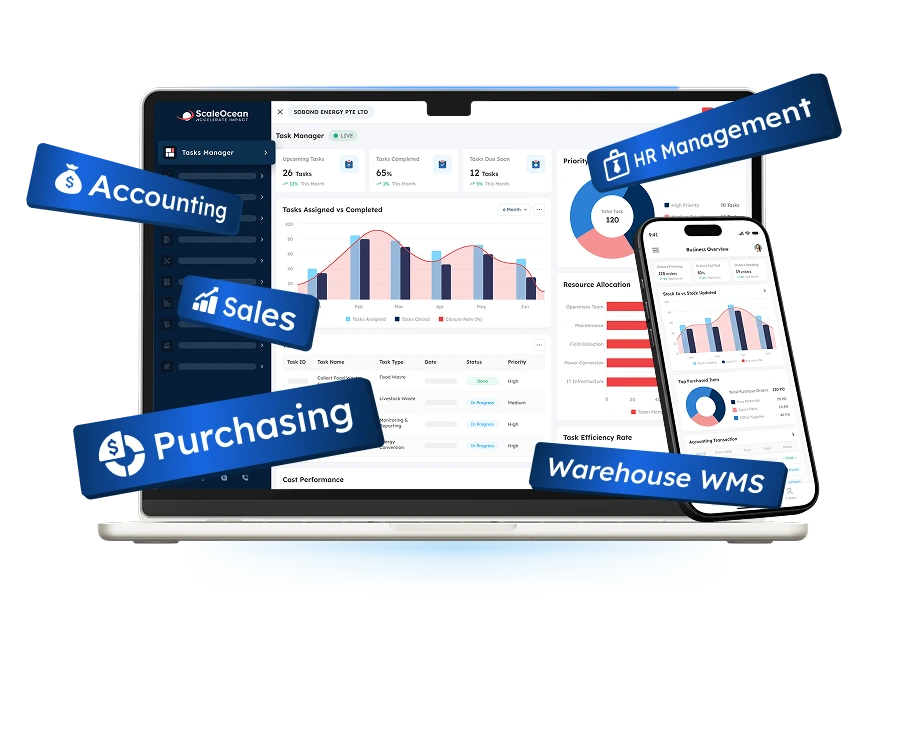
- ScaleOcean’s Revenue Management Software supports and measures operating margin and profitability, which integrates a host of other features and supports data-driven decisions.

What Is Operating Margin?
Operating margin is a vital financial ratio that shows the percentage of profit a company retains from its sales after accounting for the deduction of its operating expenses.
Such expenses typically include things such as wages, raw materials, rent, utilities, and other overheads which are essential for the running of the business on a day-to-day basis.
By using the operating margin calculation, a company is able to analyze its ability to effectively manage and control operating costs whilst still ensuring that it generates revenue.
If a high operating margin is shown, it generally implies that a business is very effective at converting sales into actual profit.
How to Calculate Operating Margin
To determine operating margin, knowledge of the profitability a business makes after sales minus all of the operating expenses incurred is necessary.
The formula used to calculate operating margin is below and is an important ratio to help a business determine how effectively it is running its operations:
Operating Margin = Operating Income ÷ Revenue × 100
Within the above calculation, operating income relates to any profits made from the normal operations of a business and is exclusive of all non-operating income and expenses such as taxation or interest, whereas revenue is based on the sales a business makes over a certain period.
To arrive at a percentage for ease of comparison with other businesses, the operating income value is divided by the revenue figure and multiplied by 100.
To put this into a practical example, a business may have a revenue of $2,000,000 and an operating income of $500,000. To calculate the operating margin, simply input these values into the formula:
Operating Margin = $500,000 ÷ $2,000,000 × 100
This would result in an operating margin of 25%, meaning that for every dollar of revenue made, the business makes a profit of 25 cents before tax and interest.
In this example, the 25% operating margin indicates that the business is very effective at turning its sales into actual profit and that the management has put sound operating procedures in place to ensure high levels of control are present, enabling good cost control.
Higher operating margins generally mean a stronger profit margin. Based on a statement from ACRA Singapore, the Net Profit Margin (%) denotes what fraction of sales is left after taking all the expenses into account.
A 7% margin indicates that $7 out of $100 of sales are available for distribution. A higher operating margin indicates that a business is managing its core operation effectively and profitably.
Why Is Operating Margin Important?
 The operating margin is a critical financial metric because it is indicative of a business’s ability to make a profit on its core operations.
This ratio helps businesses, investors, and stakeholders identify how cost-effective the company is operating, as well as making profits as effective as possible.
A high margin shows good efficiency, while a low margin indicates inefficient operations. A better understanding of this ratio helps people to make important decisions. Below are reasons why the operating margin is essential:
- Indicator of Operational Efficiency: A high operating margin indicates that the business is effectively turning its sales into profit before interest and tax are taken into account.
- Profitability Assessment: Allows management to determine whether their business model is sustainable, excluding non-operating items that could affect a comparison (e.g., Interest and tax).
- Investment Decision Tool: Indicates the extent to which the company is worth investing capital in. It provides investors with a reliable ratio when attempting to predict the potential value of their shares.
- Insight into Financial Health: Reveals the “cushion” the company has in the case of fixed costs or a significant downturn in sales performance.
- Industry Comparison for Valuable Insights: The operating margin will provide an “apples-to-apples” comparison that allows businesses to determine if another company is running more cost-effective operations.
- Attracting Investors with Strong Profitability: A high operating margin suggests a strong competitive advantage or a “moat” in which to operate, and makes it attractive to investors.
Operating Margin by Industry
Operating margins can differ significantly depending on the industry, as certain business sectors may inherently be more profitable than others.
For instance, industries such as the technology sector and pharmaceuticals, for example, tend to have a higher operating margin than other industry sectors due to having very low overhead costs associated with business operations in relation to profit generated.
Now let’s look at some industry sectors that generate high and low operating margins:
High Operating Margin
Businesses in industries with high operating margins usually produce goods or services that are in high demand and at a good value that customers will pay a premium for.
For example, the tech sector and the medical industry, for instance are known for producing high operating margins, mainly due to the low costs incurred to produce goods and services, leading to a significant profit.
This usually ensures that a high operating margin gives a business the capacity to reinvest into areas like development and research, as well as allowing business growth with minimal input. High operating margins will also prove beneficial to external funding and investment into the business.
Low Operating Margin
Businesses in the manufacturing industry and the retail sector, for example, will usually make a low operating margin, predominantly due to high costs incurred in terms of operational requirements and customer costs.
In addition to high costs, they may also be affected by competition in the sector they work in; this may force price margins down in order to compete, also not enabling a very high operating margin.
Even though there may be a low operating margin achieved, some businesses may be profitable through effective use of business resources and a large volume of sales generated.
However, if these specific operating criteria aren’t effective or monitored closely, businesses could be operating with a poor operating margin that leads to a negative business value.
Factors Affecting Operating Margin
It can be influenced by factors that directly impact a company’s performance and its ability to generate profits in the core business. Companies can find out more about these factors through the preparation of a cost-benefit analysis to study the effect each factor has on the operating margin.
Good management of all these factors can help in increasing operating margins to ensure that the company continues to be healthy and financially viable. Factors that impact the operating margin are:
Cost Control
Efficient control of running costs and production expenditure has a lot to contribute to an increase in operating margins.
This can be done by reducing waste of materials and resources, decreasing the cost of labor and raw materials, improving the manufacturing procedures, and all other factors that lead to the effective running of the business.
A financial audit of a business may reveal hidden costs and expenditures where money can be saved. The higher the control on the costs of the business, the greater is the portion of revenue that remains as operating profit, hence helping in an increased operating margin.
Pricing Strategy
A sound pricing policy is essential to maintain healthy operating costs. In order to stimulate growth, prices should be maintained at competitive levels that can generate customer demand and increase sales while still covering costs.
Nevertheless, while underpricing can erode profits, it is equally important to aim for the right blend of competitive pricing and stability to ensure continued financial health.
Revenue Growth
An increase in revenue will result in better operating margins, provided there is a reasonable increase in expenditures. As revenue grows, it would also lead to an increase in profitability.
If there is an increase in revenue at an increased rate of costs, then this would negatively impact the operating margins.
Operational Scale
The large enterprises achieve economies of scale and can command higher operating margins because they are able to reduce per-unit cost and produce at a lower rate.
As it grows, the business distributes costs over a larger number of products, thereby reducing cost per product.
Improving Operating Margin
The operating margin of a company has to be improved through better processes and efficiency to ensure that the business is making profits, and it also helps to have a better competitive position in the market.
Here are some efficient methods that would help to improve operating margins:
Cost Reduction
Identification of bottlenecks and losses within production and operations leads to cost reduction and consequently to higher operating margins. A financial audit of the different operational activities can identify any waste in terms of labor and material utilization.
A step towards making the production line process automated and the use of technology would contribute positively to improving operating margins.
Process Optimization
Business processes can be improved by the reduction of any redundancies that exist between workforces of the same and across different departments.
Identifying bottlenecks and solving problems through effective research would further increase the profitability of the organization by improving the operating margin of the business. Use of automation within the business can be very helpful in such cases.
Technology Integration with ScaleOcean’s Revenue Software
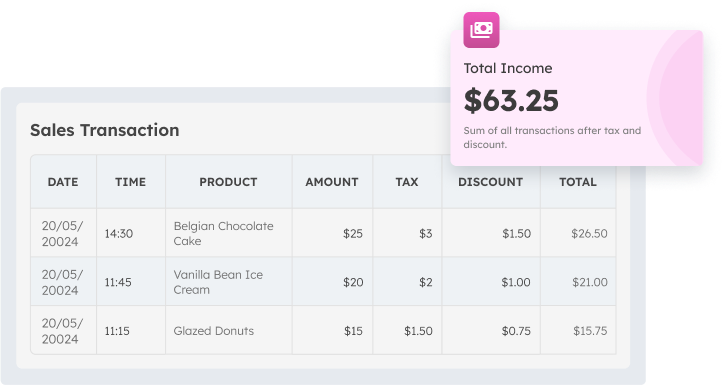 ScaleOcean Accounting Software is a complete solution tailored to maximize revenue and efficiency. It provides sophisticated, adaptable options that let you adapt pricing to changing market and demand conditions.
ScaleOcean’s Accounting Software is one of the most popular and widely used Finance ERP software in the market, which comes with sophisticated customizable features that allow the business to set up its prices dynamically based on demand.
Being one of the best in the market, it allows for real-time tracking of operating margins with accuracy so that the right decisions can be made in time for the effective management of cost of revenue.
With its ability to improve decision-making and increase operating profit by lowering business expenditures, it is a great choice for businesses that aspire to achieve growth in revenue at a rapid pace with effective cost and revenue management.
The company has also made its product available for trial by providing a free demo. The solution is also qualified for the CTC award. The below are a few attributes of ScaleOcean’s Software:
- Comprehensive Cost Control: ScaleOcean helps businesses track and manage costs across departments, improving cost control and enhancing operating margins by reducing inefficiencies.
- Real-time Data for Better Decisions: Real-time analytics enable faster, more informed decisions, optimizing operations and positively impacting operating margins.
- Automated Processes to Reduce Labor Costs: Automation cuts labor costs by reducing manual tasks, improving efficiency, and boosting operating margins.
- Integrated Modules for Seamless Operations: ScaleOcean’s integrated system reduces bottlenecks and inefficiencies, helping businesses increase profitability and improve operating margins.
- Scalable and Flexible for Growth: ScaleOcean adapts to business growth, ensuring costs remain controlled and operating margins are protected.
Strategic Sourcing
Strategic sourcing involves lowering the cost of buying raw materials. This can be accomplished through negotiation of improved payment terms with suppliers, getting bulk deals, or building long-term relations with suppliers that allow for competitive pricing.
Lower costs of the materials will ultimately help the business to increase operating margin.
Conclusion
Operating margin is a metric that indicates the profit earned by the company on its business revenue after accounting for variable costs. Operating margin is thus the barometer to judge the effectiveness of the business’s core operations.
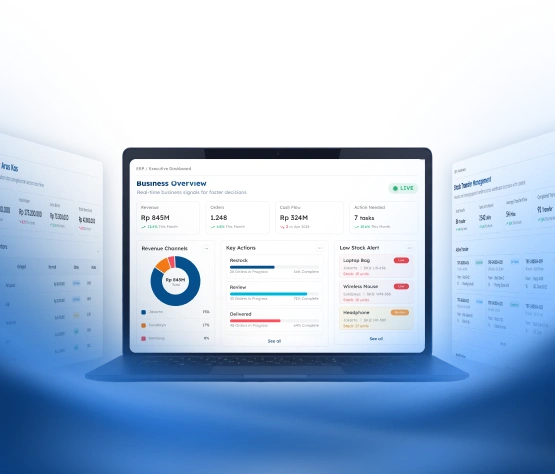
With the help of advanced accounting software such as ScaleOcean, managing your business and improving operating margins can be easier than imagined. Explore the features and try out the free demo to find out how you can maximize your revenue while decreasing operational costs.
FAQ:
1. Is 20% margin the same as 25% markup?
No, a 20% margin is not the same as a 25% markup. For example, a 20% margin equals a 25% markup, but a 30% margin corresponds to a 42.9% markup, and a 40% margin equals a 66.7% markup. The two metrics are calculated differently.
2. Is 20% operating margin good?
A 20% operating margin is considered excellent in many cases, as it suggests the company is efficiently controlling its operating costs and generating solid profit from its revenue. However, the ideal margin varies across industries, with some sectors, like technology, typically seeing higher margins than others, like retail.
3. Is operating margin the same as EBIT?
Yes, operating margin and EBIT (Earnings Before Interest and Taxes) are essentially the same. Both reflect the profitability of a company from its core operations, excluding interest and tax expenses, and provide insight into how effectively a business is managing its operational costs.
4. Is 5% a good operating margin?
A 5% operating margin is considered modest, though it can be acceptable depending on the industry. Some industries with higher operating costs, such as retail, may have lower margins, while sectors like technology tend to have higher operating margins. A 5% margin suggests there may be opportunities for improved cost management.





















.png)