
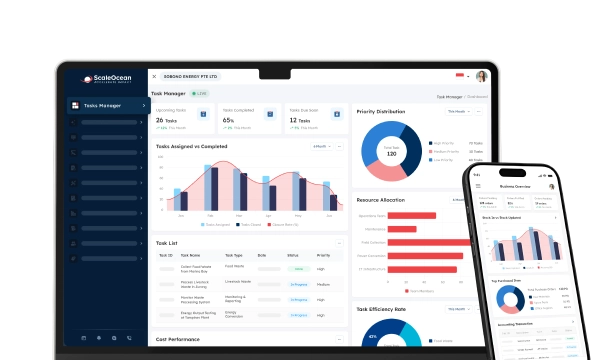

Contractor management software is digital software used to manage external contractors from a single platform, which includes registering contractors, document handling, compliance monitoring, work allocation, performance tracking, and payment coordination. This software enables companies to coordinate activities with contractors throughout the project life cycle.
For enterprises in Singapore, managing contractors across multiple projects can be challenging due to fragmented contractor information, manual document verification, and limited visibility into progress. These challenges are especially common in industries such as construction, facility management, manufacturing, and property management that rely on external contractors.
But to address these challenges, businesses require solutions to manage contractors that are integrated with the rest of their business operations. An integrated platform allows companies to link and manage contractor information with project execution, procurement, finance, document approvals, and reporting, rather than having to manage it separately.
Our team’s insights from BRJ Singapore revealed that construction companies were the top adopters of construction technologies in the region, with an average of 7.3 technologies used to support project operations. This reflects the increasing relevance of digital platforms that enable businesses to increase the visibility of projects, control their contractors, and increase their operational efficiency.
Continue reading to learn about the top contractor management software in Singapore, their features and benefits, whether they’re suitable, and how businesses can choose the right software for their operational needs.
 Key Takeaways
- Contractor management software is a digital solution that helps businesses manage contractor relationships through a centralized platform, including work assignments, performance monitoring, and reporting.
- Key features of contractor management software include contractor database management, document tracking, onboarding workflows, contractor scheduling, performance monitoring, reporting, and integration with ERP or business systems.
- The top 10 contractor management software platforms in Singapore include ScaleOcean Atlas, Procore, Buildertrend, Autodesk Build, Contractor+, Jobber, Salesforce Field Service, Mitti by SafetyCulture, Facilio, and Work Wallet.
- ScaleOcean helps businesses manage contractor operations through configurable ERP workflows that connect contractor management with project management and reporting while adapting to specific business requirements.
What Is Contractor Management Software?
Contractor management software is a platform that is designed to manage the relationship with contractors from their initial signing to their involvement in a project, their tracking, and to make sure that they fulfill their contractual obligations. The software provides a framework for the information relating to contractors, documents, agreements, and operational activities.
Unlike traditional contractor tracking methods that rely on spreadsheets, emails, and separate documentation systems, contractor management software centralizes contractor-related data in one platform. This allows businesses to improve visibility into contractor availability, project involvement, compliance status, and performance records.
A centralized system will aid in managing administration and promote collaboration among project managers, procurement, finance, and contractors for companies working on multiple projects with multiple contractors.
With the integration of contractor management into the business processes, companies can optimize project execution and ensure that external resources are managed effectively.
Why Do Businesses Need Contractor Management Software?
Contractor management software is essential for businesses to consolidate external talent tracking, automate adherence to compliance, and avoid the pitfalls and risks of manual spreadsheets.
A contractor management system allows businesses to establish a more structured strategy by tying in contractor data, project activities, and workflows.
1. Improve Contractor Visibility Across Multiple Projects
For companies with several projects to handle, the availability of contractors, tasks assigned to contractors, project involvement, and progress toward completion can become problematic. Teams on a project might have to spend a lot of time gathering information from multiple sources if there is no visibility.
A contractor management platform is a tool that enables companies to keep better track of contractors’ activities within projects. Managers can keep track of the assignments made by the contractors, the advancement of the project, and the allocation of resources.
2. Reduce Manual Contractor Administration
Manual handling of contractor documents, approvals, onboarding, and assignments can add to administrative workload. Contractors may be recorded in multiple departments, which can cause problems if there is a need to have up-to-date information.
Contractor Management Software (CMS) is a solution that can simplify administration processes, manage contractor data, automate approval workflows, and eliminate repetitive manual tasks.
3. Strengthen Compliance and Risk Management
Businesses that work with contractors need to take into account the compliance of contractors. Businesses must keep up-to-date records of contractor qualifications, agreements, safety records, and business needs.
A contractor management system with structure allows companies to monitor significant paperwork and enhance overall compliance visibility. This decreases the danger of omitting important information and enhances audit readiness.
4. Faster Contractor Onboarding Process
Onboarding a contractor includes several stages such as registration, document submission, document verification, approval, and assignment to a project. Untracked onboarding processes can also impact the productivity of projects and resources.
With contractor management software, you can streamline the onboarding process by establishing a consistent workflow for gathering and finalizing necessary details and approvals.
With configurable workflows, ScaleOcean Atlas helps businesses adapt contractor onboarding processes based on their internal requirements, project structures, and approval procedures. This allows companies to create a smoother onboarding experience while maintaining operational consistency.
5. Improve Cost Management
Costs of the contractors can be a major factor in project budgets, particularly if the business has several contractors, work orders, and project needs at the same time. It can be harder to keep an eye on the budget if there is not a clear picture of the expenses that are being incurred by the contractors.
A connected contractor management system enables businesses to keep more effective records of costs, resource allocation, project spending, and so on that relate to contractors.
6. Enhance Collaboration Between Departments
Contractor management involves more than one department, such as project management, procurement, finance, HR, and operations. Lacking connected workflows, communication gaps can emerge and hinder decision-making.
An integrated platform enables departments to access the right information from the contractor, while ensuring a consistent data flow throughout the business processes.
By integrating contractor workflows with project management software features, businesses can enhance coordination and enable project teams to manage contractor activities alongside other project tasks.
Key Features of Contractor Management Software

Contractor management software acts as a single, digital platform to manage the entire independent worker experience, from onboarding and compliance to daily routines.
1. Contractor Database Management
A single contractor database stores and manages critical contractor data in a centralized platform. This can contain information about the contractors, company information, certifications, contact information, previous project history, and more.
In the absence of a centralized database, companies may have to go through several files or systems to check the details of contractors. This can be a drag on decision-making and can be challenging to handle a large contractor network.
2. Contractor Onboarding and Document Management
The contractor onboarding process requires multiple documents to be gathered, reviewed, and approved before contractors work on projects. This can include agreements, certifications, compliance documents, safety records, and more.
Manual onboarding methods can lead to delays, as there may be multiple departments involved in reviewing and approving paperwork. A digital contractor management system can help streamline contractor onboarding processes and enhance document management.
3. Contract and Agreement Tracking
When dealing with contractor agreements, businesses must track the specifics of the agreement, scope of work, timing, payments, and renewal. If not tracked, it may be difficult for companies to handle updates to contracts or determine when they are coming up for renewal.
Contract management features enable businesses to retain improved oversight of contractor contracts, while making sure that the necessary details are available to the appropriate teams.
This enables planning to be done more effectively, lowers administrative risks, and aids in contractor management during the life cycle of the project.
4. Unified Contractor Scheduling and Assignment Management
Assigning contractors to the right projects requires visibility into contractor availability, skills, workload, and project requirements. Poor coordination can lead to resource conflicts, delays, and inefficient workforce allocation.
Contractor management software helps businesses organize assignments by connecting contractor information with project schedules and operational requirements. This allows managers to allocate resources more effectively.
5. Performance Monitoring and Reporting
The tracking of contractor performance allows businesses to assess the progress, quality of work, timelines, and efficiency of the project operations. If not reported, it can be difficult for companies to know what contractors are contributing to and what they are getting out of projects.
Businesses can use a contractor management system to monitor the necessary performance data and create reports for informed decision-making.
6. Integration With ERP and Business Systems
Incorporating contractor management workflows into other business systems, like ERP, finance, procurement, and project management platforms, makes contractor management more effective. Integration eliminates data silos and provides access to a unified set of information to different departments.
For instance, contractor assignments may be related to project budgeting, procurement necessities, payment procedures, and financial reporting. This gives businesses a better understanding of the operations of their contractors.
How Contractor Management Software Works

Contractor management software is an online application that integrates the onboarding, tracking, verification, and payment processes of third parties and subcontractors from a single interface and is hosted in the cloud. It eliminates cumbersome paper records and streamlines business processes.
Step 1: Contractor Registration and Verification
The process begins when contractors submit their company details, qualifications, certifications, and required documentation. Businesses can review and verify contractor information before approving them for project participation.
A digital registration process helps companies maintain accurate contractor records and ensure only verified contractors are assigned to relevant projects.
Step 2: Document Review and Approval
After registration, submitted documents are reviewed according to company requirements and compliance standards. Approval workflows help ensure documents are checked by the appropriate teams before contractors proceed.
Businesses can also improve document coordination through structured workflow management software that helps standardize approval processes across departments.
Step 3: Contractor Assignment and Work Management
Once approved, contractors can be assigned to projects based on availability, expertise, location, and business requirements. Managers can track assignments and monitor whether contractor resources align with project needs.
A centralized assignment process helps businesses avoid scheduling conflicts and improve resource utilization across multiple projects.
Step 4: Performance Tracking and Payment Processing
The final stage involves monitoring contractor performance, reviewing completed work, and processing payments based on agreed terms. Accurate records help businesses evaluate contractor performance and maintain reliable financial documentation.
By connecting contractor data with project and financial workflows, companies can improve payment accuracy and maintain better visibility into contractor-related costs.
Contractor Management Software vs. Traditional Contractor Tracking
Contractor management software automates onboarding, compliance tracking, and real-time visibility, whereas traditional tracking relies on manual spreadsheets, paper, and disjointed communication.
| Comparison | Contractor Management Software | Traditional Contractor Tracking |
|---|---|---|
| Data Management | Centralizes contractor profiles, documents, assignments, and project information within one platform. | Information is often stored across spreadsheets, emails, and separate files, making data retrieval more difficult. |
| Document Management | Provides structured document storage, approval workflows, and better tracking of contractor records. | Requires manual document collection and verification, increasing administrative workload. |
| Compliance Tracking | Helps businesses monitor contractor requirements, certifications, and compliance documentation more effectively. | Makes compliance monitoring more challenging due to limited visibility and manual checking processes. |
| Contractor Assignment | Supports structured contractor scheduling and assignment based on project requirements. | Assignments are often managed manually, increasing the risk of scheduling conflicts. |
| Reporting and Visibility | Provides dashboards and reports to monitor contractor performance, project progress, and operational data. | Requires manual data consolidation before generating reports and insights. |
| System Integration | Can connect with ERP, project management, procurement, and finance systems. | Usually operates separately from other business systems, creating data silos. |
Industries That Benefit From Contractor Management Software
Construction, manufacturing, and technology are among the top industries that rely on contract management software to handle complex vendor relationships and compliance tracking.
1. Construction and Project Management
Construction and engineering firms may have several contractors, subcontractors, suppliers, and project teams working on their various projects in multiple locations. If not managed properly, businesses can encounter issues with contractor documentation, tracking project progress, managing resources, and compliance monitoring.
A contractor management program is designed to facilitate the organization of contractors, job assignments, monitoring of job workflow, and important records for a construction company. It also facilitates collaboration between project managers, contractors, procurement, and finance departments.
Recommended software:
- ScaleOcean Atlas supports construction businesses through configurable ERP workflows that connect contractor management with project management, procurement, inventory, finance, and operational reporting.
- Procore offers collaborative tools and project communications, documentation management, and field tools specifically designed for construction.
2. Field Service & Home Maintenance
Field service companies are dependent on contractors and technicians to execute setup, repair, inspection, and maintenance duties in various locations. When dealing with external teams, you’ll need to see who’s available for work, what’s being done, when it’s being done, and what the customer needs.
Contractor management software is a system used to manage contractors and resources in the field and to optimize communications between the office teams and field workers. This allows companies to maintain service levels without having to manage a rigid workforce.
Recommended software:
- Work Wallet includes scheduling, dispatching, customer management, and technician operations.
- ScaleOcean Atlas enables service businesses to integrate contractor activities with scheduling, work orders, asset management, inventory, and financial workflows in one centralized platform.
3. Safety, Compliance, and Facility Operations
Manufacturers will often rely on external contractors for equipment maintenance, special manufacturing tasks, installation, and even operational support. Coordinating the use of these external resources involves coordination among contractors, production teams, procurement, and finance.
Contractor management software solutions can enhance the transparency of contractor assignments, services performed, documentation, and service expenses for manufacturers. Seamless integration with ERP processes enables businesses to synchronize contractor operations with production needs.
Recommended software:
- Autodesk Build provides construction and industrial project management capabilities for documentation, collaboration, and field activities.
- ScaleOcean Atlas supports manufacturing businesses by connecting contractor management with production, procurement, inventory, asset management, and financial processes.
4. Production and Manufacturing
Cleaners, security guards, repairs, maintenance, and building services are frequently provided by contractors, especially by property management companies. When you have multiple service providers, it is important to keep track of their performance and schedule, and have accurate contractor records.
Contractor management software assists the property business in organizing contractor data, handling service requests, assignment management, and enhancing visibility of outsourced activities.
Recommended software:
- ScaleOcean Atlas allows property and facility companies to handle contractor workflows in addition to maintenance, asset control, procurement, and financial management processes.
- Facilio provides facility management capabilities for maintenance operations, work orders, asset tracking, and service coordination.
Core Comparison Overview for the Best Contractor Management Software
Choosing the right contractor management software depends on business requirements, operational complexity, and the level of integration needed.
The following comparison provides an overview of several contractor management software platforms commonly considered by businesses in Singapore based on their primary focus, target users, and mobile accessibility.
| Software Platform | Primary Focus | Best For | Is a Mobile App Available? |
|---|---|---|---|
| ScaleOcean | ERP-based contractor management with integrated project, procurement, finance, and operational workflows. | Medium and large enterprises managing complex contractor operations. | Available through mobile-accessible ERP capabilities. |
| Procore | Construction project management, collaboration, and contractor coordination. | Construction companies and project-based businesses. | Yes. |
| Buildertrend | Residential construction project management and client communication. | Builders, remodelers, and residential contractors. | Yes. |
| Autodesk Build | Construction documentation, field collaboration, and project management. | Construction and engineering organizations. | Yes. |
| Contractor Plus | Contractor business management, estimates, scheduling, and invoicing. | Small contractors and service businesses. | Yes. |
| Jobber | Field service scheduling, customer management, and job tracking. | Small and medium service businesses. | Yes. |
| SafetyCulture | Safety inspections, compliance tracking, and operational checks. | Businesses prioritizing safety and compliance management. | Yes. |
| SAP Fieldglass | External workforce and contingent labor management. | Large enterprises managing complex external workforce networks. | Available through SAP mobile solutions. |
| Facilio | Facility management, maintenance workflows, and service coordination. | Property and facility management companies. | Yes. |
| ServiceTitan | Field service management, scheduling, dispatching, and technician operations. | Service businesses managing field teams. | Yes. |
Top 10 Contractor Management Software Platforms in Singapore
Choosing the right contractor management software depends on a company’s operational requirements, contractor volume, project complexity, and integration needs. Some platforms focus on contractor documentation and compliance, while others provide broader capabilities by connecting contractor activities with project management, finance, and ERP workflows.
The following list identifies the top 10 contractor management software platforms that are generally considered by businesses in Singapore, along with their key functions, features, advantages, disadvantages, and suitability for various business needs.
1. ScaleOcean
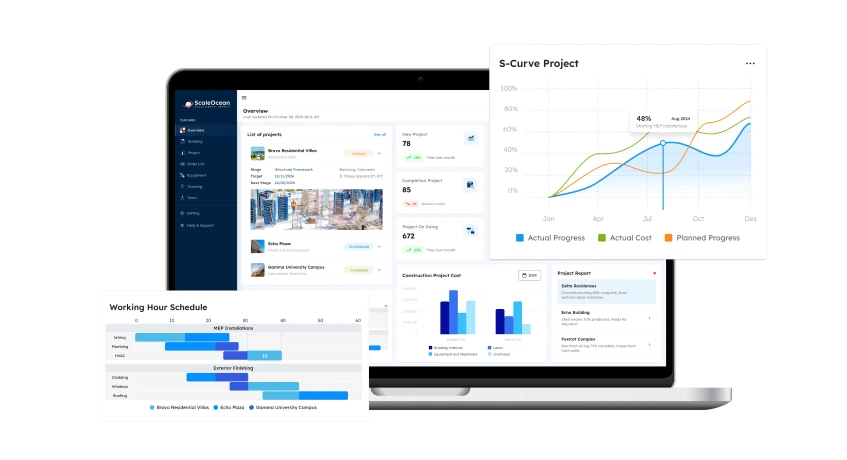
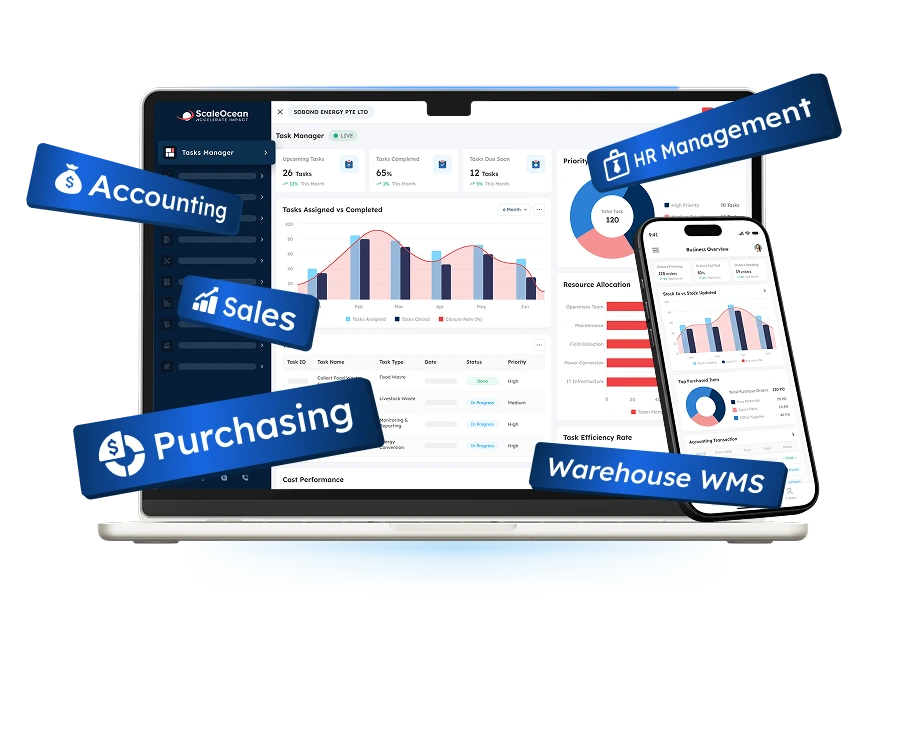
ScaleOcean is an ERP solution provider with its flagship product called ScaleOcean Atlas, which is designed to support medium and large businesses with complex contractor management. Unlike stand-alone contractor tracking software, ScaleOcean Atlas offers an industry-specific ERP ecosystem, which can be tailored to business workflows and allows companies to manage contractors’ activities.
ScaleOcean can be configured to fit different business structures, such as companies with several projects and work teams. The platform also enables businesses to connect all aspects of their contractor management, procurement, finance, and reporting processes in a single system with ScaleMind-powered insights, enhancing visibility and coordination of external resources.
A structured governance framework is also provided through access controls, approval workflows, and audit trails. The system has been optimized and complies with PDPA regulations and local financial reporting standards, including IRAS and GST requirements in Singapore. Additionally, it can be customized to support EDG and CTC requirements. Schedule a consultation with ScaleOcean to explore how configurable ERP workflows can support your contractor management requirements.
Key Features:
- Contractor database and profile management
- Configurable contractor onboarding and approval workflows
- Project, resource, and contractor assignment management
- Procurement and financial workflow integration
- Real-time dashboards and operational reporting
- Role-based access control and audit trails
| Pros | Cons |
|---|---|
| Designed for enterprise contractor management complexity, including multi-project operations and connected business workflows. | May provide broader capabilities than required for small businesses with simple contractor tracking needs. |
| Provides configurable workflows that allow businesses to align the system with existing operational processes. | Implementation requires business process analysis to ensure optimal configuration. |
| Connects contractor activities with project management, procurement, finance, and reporting within one platform. | Pricing depends on modules, integrations, and implementation scope rather than fixed packages. |
| Supports scalable implementation, allowing businesses to expand capabilities as operational requirements grow. |
Best for: Medium and large enterprises, construction companies, engineering firms, property management groups, logistics businesses, and organizations managing complex contractor operations.
ℹ️Why choose ScaleOcean?
ScaleOcean helps businesses manage contractor operations through ERP workflows configured based on their specific requirements. Instead of adapting to a rigid system, businesses can implement workflows, modules, and configurations that align with their operational processes across contractor management, projects, finance, and reporting.
2. Procore
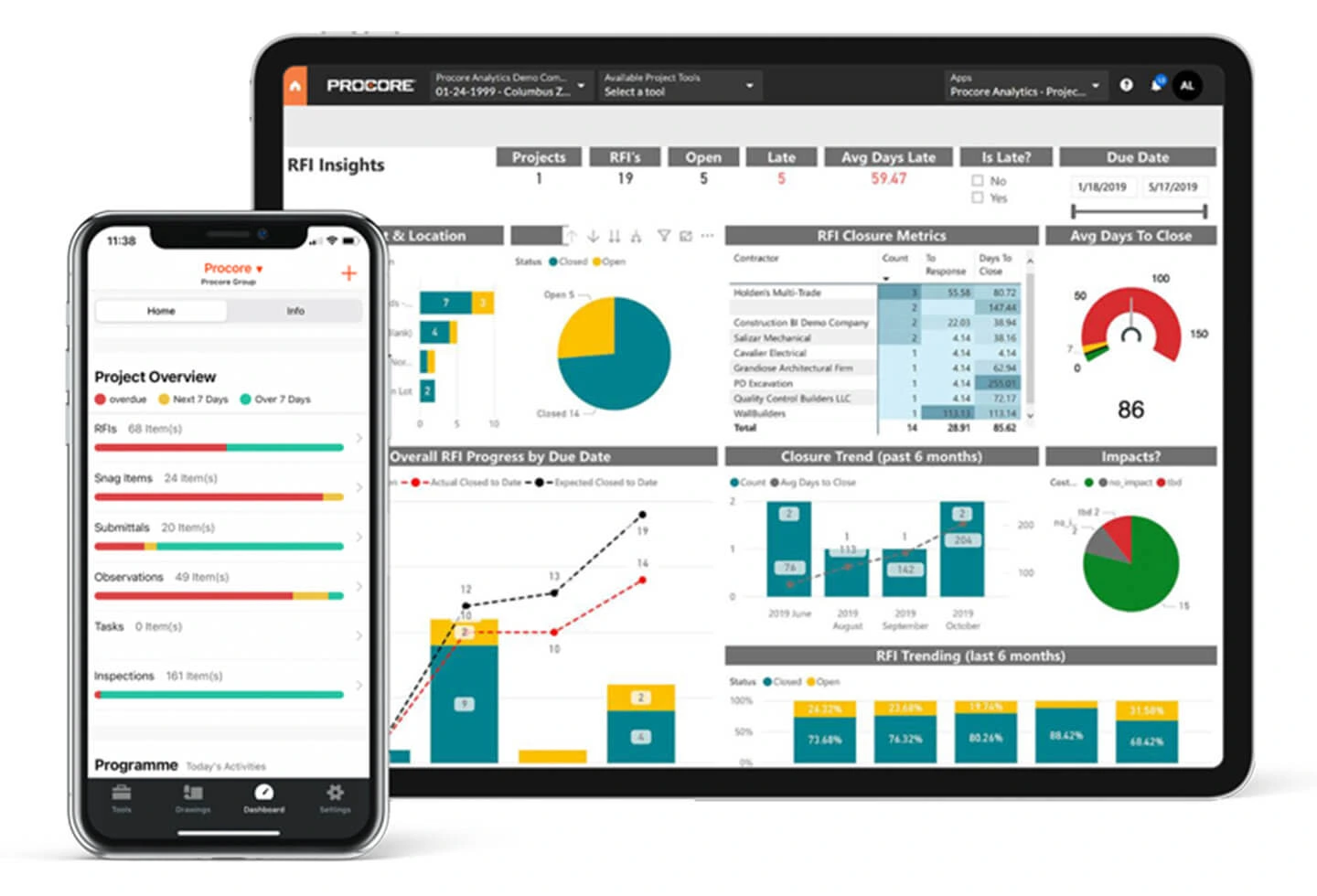
Procore is a construction management platform that helps businesses communicate, document, and collaborate between project teams and contractors, and manage project activities in the field. The platform is designed to enhance coordination across the construction life-cycle, bringing together project stakeholders, owners, and contractors in a single environment.
Procore offers construction companies a suite of tools to help manage project information, track things in the field, keep documents organized, and enhance communication with external contractors. It provides a step-by-step reduction in information gaps that might arise in cases of several contractors working on the same project.
Key Features:
- Construction project management
- Contractor collaboration and communication
- Document and drawing management
- Field activity tracking
- Project scheduling and reporting
| Pros | Cons |
|---|---|
| Provides construction-focused capabilities for managing project documents, communication, and contractor collaboration. | Businesses looking for broader ERP functions such as finance, procurement, or enterprise resource planning may require additional systems. |
| Helps project teams maintain better visibility into field activities and project information. | May require configuration and integration when used across complex multi-department operations. |
| Supports collaboration between contractors, project managers, and stakeholders. | Primarily designed around construction workflows rather than broader business operations. |
Best for: Construction companies, engineering firms, contractors, subcontractors, and organizations managing project-based operations.
ℹ️Why choose Procore?
Procore helps construction businesses manage project collaboration, documentation, field activities, and contractor communication through a centralized construction management platform.
3. BuilderTrend
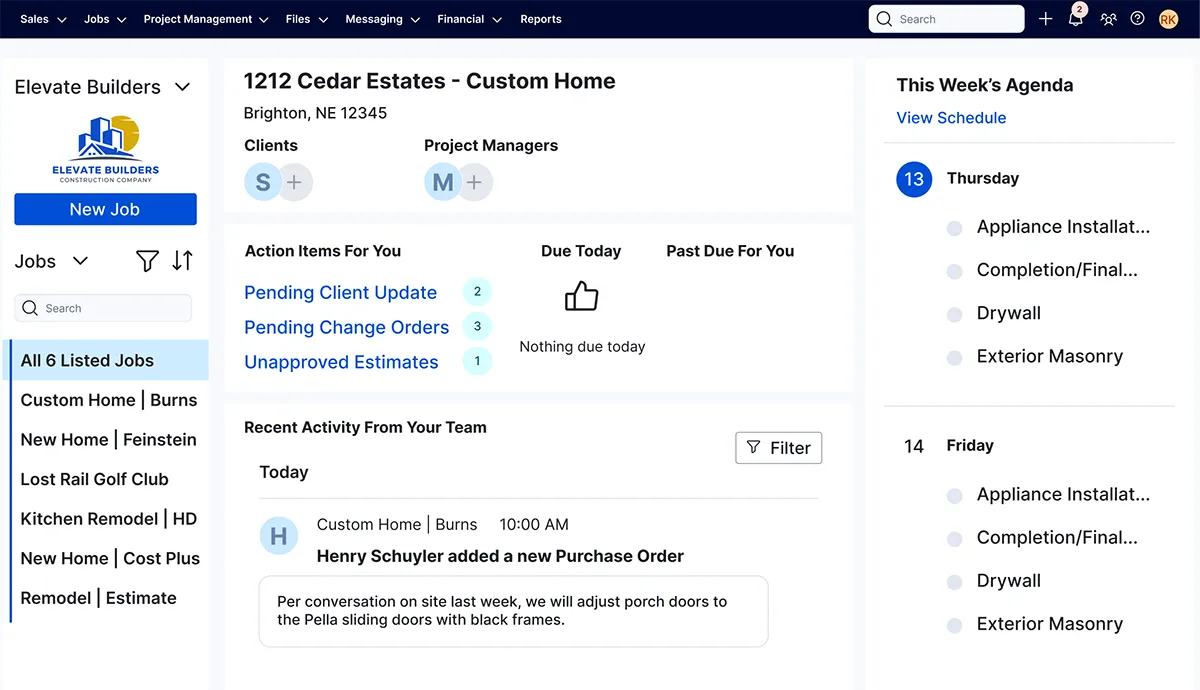
Buildertrend is a construction project management platform designed for residential builders, remodelers, and contractors to manage customer communication, project scheduling, budgeting, and daily operations. The platform focuses on helping construction businesses organize projects from planning through completion.
For companies managing residential construction projects, Buildertrend provides tools to coordinate contractors, track project progress, communicate with clients, and manage operational activities. It helps teams improve organization by bringing project information into one platform.
Key Features:
- Project scheduling and task management
- Customer relationship management
- Budgeting and cost tracking
- Contractor communication
- Project documentation
| Pros | Cons |
|---|---|
| Provides integrated project management tools suitable for builders and residential contractors. | May not fully address complex enterprise requirements involving multiple departments and advanced ERP workflows. |
| Helps contractors organize scheduling, budgeting, and customer communication. | Businesses with complex procurement, inventory, or financial processes may need additional solutions. |
| Suitable for companies seeking a centralized platform for project coordination. | Designed mainly for construction workflows rather than broader contractor ecosystems. |
Best for: Small to medium construction companies, residential builders, remodelers, and contractors managing customer-focused projects.
ℹ️Why choose Buildertrend?
Buildertrend helps residential construction businesses manage projects, customer communication, scheduling, budgeting, and contractor coordination through a centralized platform.
4. Autodesk Build
Autodesk Build is a construction management solution designed to support project collaboration, documentation, quality management, and field operations. It helps construction teams connect office and field activities while improving visibility across project workflows.
The platform supports contractors and project teams by organizing construction documents, tracking issues, managing project information, and improving communication between stakeholders. It is commonly used by businesses managing complex construction projects.
Key Features:
- Construction document management
- Field collaboration tools
- Issue tracking and resolution
- Quality and safety management
- Project reporting
| Pros | Cons |
|---|---|
| Provides strong construction documentation and collaboration capabilities for project teams. | Businesses seeking complete ERP capabilities may need integration with additional business systems. |
| Helps teams manage field activities and project information more effectively. | May require customization to support workflows outside construction project management. |
| Supports collaboration between contractors, engineers, and project stakeholders. | The platform is more specialized toward construction operations rather than general enterprise management. |
Best for: Construction firms, engineering companies, contractors, and project teams managing documentation-heavy projects.
ℹ️Why choose Autodesk Build?
Autodesk Build helps construction teams improve project collaboration, documentation management, field coordination, and operational visibility throughout the construction lifecycle.
5. Contractor Plus
Contractor Plus is a contractor business management platform designed to help contractors manage estimates, scheduling, invoicing, customer information, and daily operational activities. The platform focuses on simplifying business administration for contractors by bringing essential workflows into one centralized system.
For small and medium contractor businesses, Contractor Plus provides tools to organize project details, track job progress, manage customer communication, and improve administrative efficiency. It helps contractors reduce manual paperwork while maintaining better visibility into ongoing work.
Key Features:
- Project and job management
- Scheduling and calendar management
- Estimating and invoicing tools
- Customer relationship management
- Expense tracking
| Pros | Cons |
|---|---|
| Provides practical contractor management tools for scheduling, estimates, and project administration. | Large enterprises with complex workflows may require broader ERP capabilities. |
| Helps smaller contractors organize daily operations and customer-related activities. | May require additional integrations for advanced finance, procurement, or enterprise reporting. |
| Offers mobile accessibility for contractors managing field activities. | Primarily focuses on contractor business operations rather than multi-industry enterprise management. |
Best for: Small contractors, independent service providers, and businesses requiring basic job management and administrative support.
ℹ️Why choose Contractor Plus?
Contractor Plus helps contractors manage scheduling, estimates, invoicing, customer information, and daily operational activities through a centralized platform.
6. Jobber
Jobber is a field service management platform designed to help service businesses organize customer management, scheduling, quoting, invoicing, and job tracking. The platform focuses on improving operational efficiency for businesses managing field teams and service-based work.
For companies that coordinate technicians, contractors, or mobile service teams, Jobber provides tools to manage assignments, customer communication, and service workflows. It helps businesses improve coordination between office teams and field workers.
Key Features:
- Job scheduling and dispatch management
- Customer management
- Quotes and invoicing
- Mobile workforce management
- Client communication tools
| Pros | Cons |
|---|---|
| Provides field service tools for managing jobs, schedules, and customer interactions. | Businesses managing complex enterprise contractor ecosystems may require more comprehensive solutions. |
| Helps service teams coordinate field activities through mobile-accessible features. | May require additional platforms for advanced ERP integration and financial management. |
| Suitable for businesses focused on improving scheduling and service delivery processes. | Mainly designed for field service operations rather than broader contractor management. |
Best for: Small to medium field service businesses, maintenance companies, and organizations managing mobile service teams.
ℹ️Why choose Jobber?
Jobber helps field service businesses manage scheduling, customer communication, quoting, invoicing, and job tracking through a centralized platform.
7. Salesforce Field Service
Salesforce Field Service is a field service management platform designed to help businesses manage mobile workforces, service operations, scheduling, and customer-related activities. The platform focuses on improving coordination between field teams, contractors, dispatchers, and customers through connected workflows.
For businesses managing external technicians, service contractors, or distributed field teams, Salesforce Field Service provides tools to optimize scheduling, assign resources, track work progress, and improve operational visibility. The platform can also connect field activities with broader customer relationship management processes through the Salesforce ecosystem.
Key Features:
- Field service scheduling and dispatch management
- Contractor and workforce assignment
- Mobile workforce management
- Work order tracking
- Customer and service history management
- Real-time operational visibility
| Pros | Cons |
|---|---|
| Provides strong field service capabilities for managing schedules, work orders, and mobile teams. | Businesses requiring deeper contractor lifecycle management may need additional configuration or solutions. |
| Integrates with Salesforce CRM to connect service operations with customer information. | Implementation can require careful planning for businesses with complex operational workflows. |
| Supports mobile access for teams managing field activities. | May be more extensive than required for small businesses with simple contractor tracking needs. |
Best for: Medium to large service companies, field operations teams, utilities, maintenance providers, and businesses managing mobile contractors.
ℹ️Why choose Salesforce Field Service?
Salesforce Field Service helps businesses coordinate field operations, manage work orders, optimize scheduling, and improve communication between service teams and customers.
8. Mitti by SafetyCulture
Mitti by SafetyCulture is a contractor and workforce management platform designed to help businesses manage contractor onboarding, compliance requirements, documentation, and operational processes. The platform focuses on improving contractor visibility and simplifying safety-related workflows.
For businesses managing contractors in operational environments, Mitti by SafetyCulture helps teams organize contractor information, monitor compliance status, and maintain better oversight of external workers. It is particularly useful for industries where safety procedures and contractor verification are important considerations.
Key Features:
- Contractor onboarding management
- Compliance and document tracking
- Contractor verification workflows
- Safety management processes
- Digital reporting and inspections
| Pros | Cons |
|---|---|
| Provides contractor compliance and safety management capabilities for operational environments. | Businesses requiring complete ERP integration may need additional systems. |
| Helps businesses improve visibility into contractor documentation and verification processes. | Focuses more on contractor compliance and safety rather than broader project and financial workflows. |
| Supports digital safety processes and operational reporting. | Companies with complex multi-department requirements may require further customization. |
Best for: Construction companies, industrial businesses, facility operators, and organizations prioritizing contractor compliance and safety management.
ℹ️Why choose Mitti by SafetyCulture?
Mitti by SafetyCulture helps businesses manage contractor onboarding, compliance documentation, safety processes, and operational reporting through a digital contractor management platform.
9. Facilio
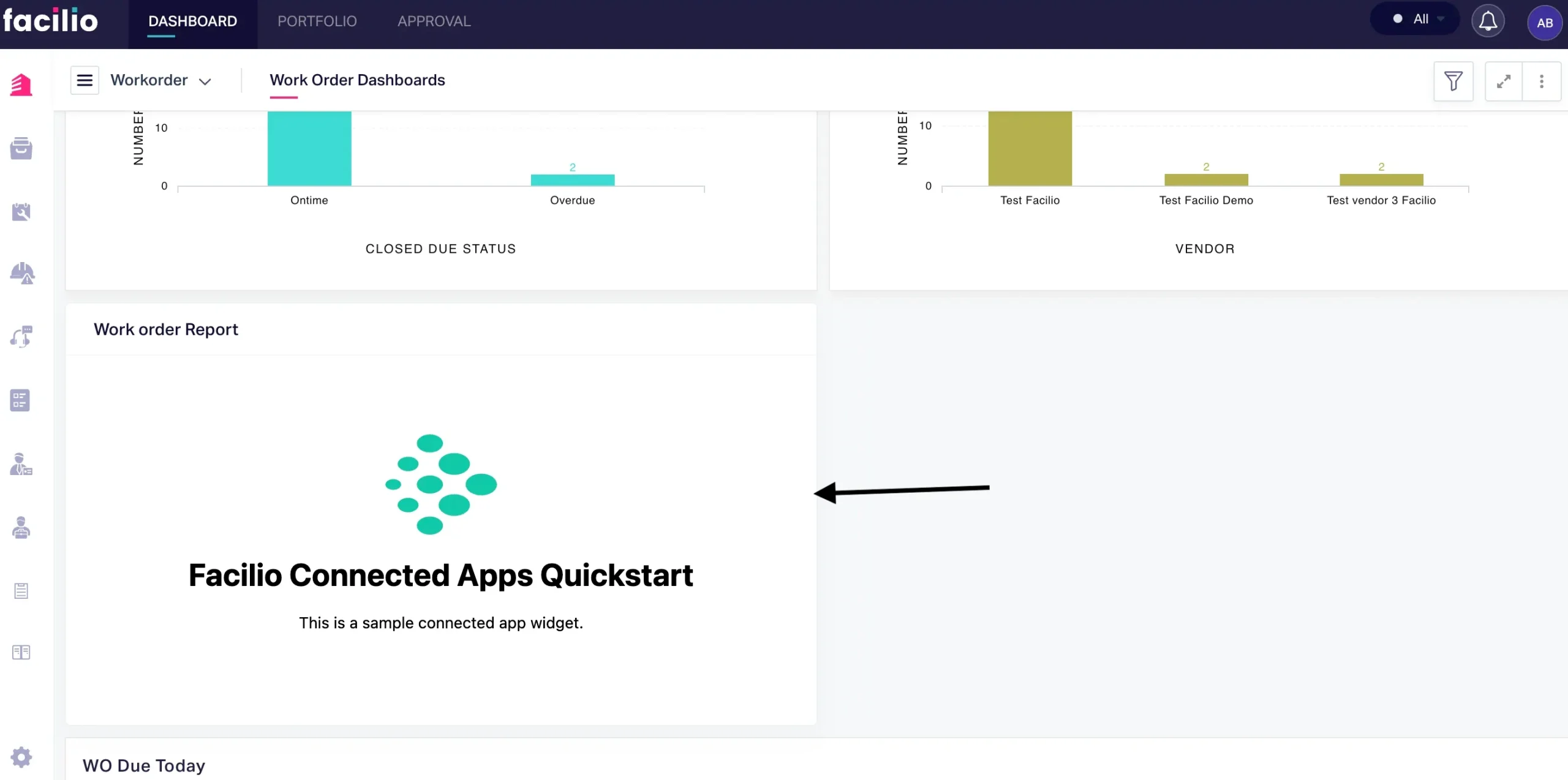
Facilio is a facility management platform designed to help businesses manage building operations, maintenance activities, work orders, and service coordination. The platform focuses on improving operational visibility for property teams by connecting maintenance workflows, assets, and service activities within a centralized system.
For organizations that rely on external contractors for repairs, inspections, and facility services, Facilio helps teams coordinate maintenance requests, track work progress, and improve communication between internal teams and service providers.
Key Features:
- Facility maintenance management
- Work order tracking
- Asset management
- Contractor and service coordination
- Operational dashboards and reporting
| Pros | Cons |
|---|---|
| Provides facility management capabilities for coordinating maintenance activities and service providers. | Businesses requiring broader ERP capabilities may need additional platforms for finance, procurement, or enterprise workflows. |
| Helps property teams improve visibility into work orders, assets, and maintenance activities. | The platform is primarily focused on facility operations rather than general contractor lifecycle management. |
| Supports digital collaboration between facility teams and external service providers. | Complex multi-industry organizations may require further customization to match their operational structures. |
Best for: Property management companies, facility operators, commercial buildings, and organizations managing outsourced maintenance services.
ℹ️Why choose Facilio?
Facilio helps businesses manage facility operations, maintenance workflows, asset information, and service coordination through a centralized facility management platform.
10. Work Wallet
Work Wallet is a contractor management platform designed to help businesses manage contractor compliance, workforce onboarding, safety documentation, and operational requirements. The platform focuses on simplifying contractor administration and improving visibility into contractor status.
For businesses working with multiple contractors, Work Wallet helps organize compliance information, verify contractor requirements, and streamline workforce management processes. It supports organizations that need better oversight of external workers while maintaining operational standards.
Key Features:
- Contractor onboarding
- Compliance document management
- Workforce verification
- Safety and qualification tracking
- Contractor database management
| Pros | Cons |
|---|---|
| Helps businesses simplify contractor onboarding and compliance management. | Organizations seeking integrated ERP capabilities may require additional platforms. |
| Provides better visibility into contractor qualification and documentation status. | May focus more on compliance management rather than broader operational workflows. |
| Supports businesses that need structured contractor information management. | Businesses with complex project, finance, or procurement requirements may need further integration. |
Best for: Construction companies, industrial businesses, and organizations managing contractor compliance and workforce documentation.
ℹ️Why choose Work Wallet?
Work Wallet helps businesses manage contractor compliance, workforce documentation, onboarding processes, and operational requirements through a centralized contractor management platform.
What Is the Difference Between Contractor Management Software and a Vendor Management System?
Contractor Management Software (CMS) targets individual external employees and site compliance, whereas the bigger picture of a company’s relationship with staffing agencies and external business suppliers is handled by a Vendor Management System (VMS).
| Comparison | Contractor Management Software | Vendor Management System |
|---|---|---|
| Primary Purpose | Designed to manage contractors, subcontractors, and external workers involved in projects or operational activities. | Designed to manage suppliers, vendors, and third-party service providers. |
| Main Focus | Focuses on contractor onboarding, work assignments, compliance tracking, documentation, and performance monitoring. | Focuses on supplier relationships, procurement processes, contract management, and vendor evaluation. |
| Managed Parties | External workers, subcontractors, project teams, and service contractors. | Suppliers, manufacturers, distributors, and external business partners. |
| Common Use Cases | Construction projects, engineering services, facility maintenance, field operations, and outsourced workforce management. | Procurement management, supplier sourcing, purchasing activities, and vendor performance evaluation. |
| Key Information Managed | Contractor profiles, certifications, project assignments, work progress, and compliance records. | Vendor contracts, pricing information, purchase orders, supplier details, and service agreements. |
| Business Integration | Commonly integrates with project management, HR, finance, procurement, and operational workflows. | Commonly integrates with procurement, purchasing, inventory, and finance systems. |
For businesses that use contractors as well as vendors, an integrated ERP system can help to connect external vendors with other business processes. This will improve the visibility of projects, procurement, financial, and operational workflows.
How to Choose the Right Contractor Management Software in Singapore
Selecting the right contractor management software requires businesses to evaluate their operational needs, contractor complexity, compliance requirements, and long-term scalability.
For Singapore enterprises, factors such as data protection, access control, audit requirements, and operational flexibility should be considered to ensure the software can support business growth.
1. Consider Business Requirements and Contractor Volume
Businesses should first evaluate their contractor management requirements, including the number of contractors managed, project complexity, and existing operational challenges. A company managing a small number of contractors may require basic tracking capabilities, while enterprises handling multiple projects may need more advanced workflow management.
Understanding contractor volume and operational requirements helps businesses identify essential capabilities such as contractor onboarding, document management, compliance tracking, scheduling, reporting, and system integration.
Based on the insights our team gathered from The Straits Times, JTC Corporation has implemented digital technologies such as common data platforms to improve collaboration and scheduling across construction projects. This highlights the importance of selecting contractor management software that can support structured project operations and enhance collaboration between stakeholders.
2. Evaluate Integration Capabilities
Contractor management software should seamlessly connect with existing business systems to avoid disjointed data and lessen repetitive manual work. Businesses can achieve a more cohesive operational environment by integrating with ERP, project management, procurement, finance, and HR systems.
For instance, contractor assignments can be related to project schedules, procurement needs, payment processes, and financial reporting. This will allow teams to have access to the same information and enhance departmental coordination.
3. Prioritize Security and Compliance
When Singapore enterprises deal with contractor information, security and compliance are significant factors to consider. Personal data, certifications, agreements, and operational documents required for proper protection and access management may all be part of the contractor records.
A reliable contractor management solution will feature governance components that enable businesses to have secure information handling and enhance accountability.
Singapore Enterprise Concerns:
- PDPA Compliance
Companies will need to ensure that their contractor management systems help them adhere to the Singapore Personal Data Protection Act (PDPA) in relation to the responsible handling of personal data. Effective data management can minimize risks to organizations when dealing with unauthorized access and the misuse of information.
- Access Management
Role-based access controls enable businesses to specify which users are allowed to access, edit, or approve any contractor-related information. This will help safeguard sensitive information and ensure that employees can access the required data for their duties.
- Audit Trail
Audit trails offer transparency of system activity, such as changes, approvals, and updates made by users. This helps with enhanced accountability and ensures businesses are kept informed on operational reviews and compliance requirements.
With ScaleOcean Atlas, businesses can manage access controls, approval workflows, and audit trails to maintain a secure flow of contractor data. The system has been optimized for PDPA requirements and local financial reporting requirements such as IRAS and GST requirements (where applicable).
4. Choose a Scalable Solution for Future Growth
Businesses need to look at how their business is poised to grow to see if they can accommodate more users, projects, locations, and contractors. in their contractor management software. Solutions that are sufficient to satisfy the present needs might not be enough as the complexity of the business grows.
A scalable platform enables companies to slowly add capabilities to the system instead of replacing existing systems. It’s especially important for companies that are growing their contractor numbers and increasingly complex processes.
Conclusion
Contractor management software is a digital solution that helps businesses manage contractor relationships, including onboarding, documentation, work assignments, compliance tracking, performance monitoring, and reporting. By centralizing contractor information and operational workflows, businesses can improve coordination and maintain better visibility across contractor activities.
But manual contractor management can lead to issues like disjointed data, slow approvals, restricted compliance oversight, and lack of coordination among diverse contractors. An integrated contractor management solution enables companies to streamline their workflows, foster collaboration, and link contractor activities to business activities.
ScaleOcean project management software manages contractor operations through configurable ERP workflows designed around their specific requirements. With integrated operations, governance features, and secure data management, ScaleOcean supports businesses in improving contractor visibility and operational efficiency. Schedule a consultation with ScaleOcean to explore how configurable ERP workflows can support your contractor management requirements.
Frequently Asked Questions About Contractor Management Software:
1. How does contractor management software improve compliance?
Contractor management software improves compliance by helping businesses organize contractor documentation, monitor requirements, manage approval processes, and maintain accurate records. This allows teams to track compliance information more efficiently and reduce administrative risks.
2. What industries use contractor management software?
Contractor management software is commonly used by industries that rely on external workers, including construction, engineering, manufacturing, logistics, facility management, and field service businesses. These industries use the software to improve contractor coordination and operational visibility.
3. Is contractor management software suitable for small businesses?
Yes, contractor management software can support small businesses by simplifying contractor records, scheduling, documentation, and communication. However, businesses should select solutions based on their operational complexity and future growth requirements.
4. How does contractor management software integrate with ERP systems?
Contractor management software can integrate with ERP systems by connecting contractor information with processes such as procurement, project management, finance, inventory, and reporting. This creates better data visibility and helps businesses manage contractor operations within a unified platform.



















.png)