
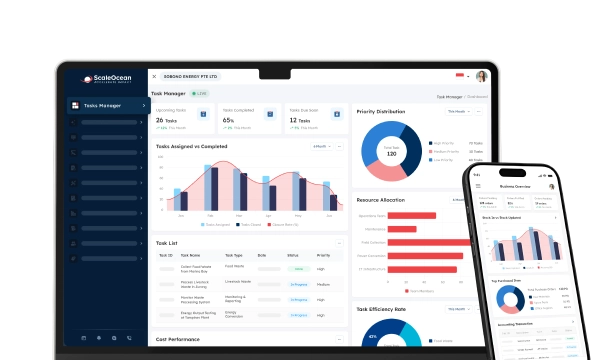

Delivery management software is a solution that helps businesses to plan, monitor, and optimize their delivery workflows, ranging from order to delivery. It combines important features such as order entry, driver allocation, route optimization, dispatching, and live tracking and proof of delivery into a single system.
Given the complexity of delivery processes, there are several problem areas that Singapore businesses need to navigate, such as lack of real-time visibility, inefficient routing, manual handling of dispatching, and siloed logistics data. The absence of a coherent system leads to delivery delays, higher operating costs, and inconsistent service for fleets and carriers and for customer needs.
A delivery management system can help overcome these challenges, reducing the need to manually manage vital delivery processes and improving visibility into business operations. Real-time fleet tracking, automated notifications, and predictive analytics reporting are only a few of the capabilities that help businesses optimize delivery operations and make informed decisions.
Despite the data we can collect from IMDA, adoption of technology remains important to help businesses become more efficient and effective in their operations and productivity through digital transformation. This underlines the growing demand for connected digital platforms that can help businesses to optimize processes and gain full visibility based on data in various sectors.
Read this article to know what delivery management software is, how a delivery management system works, the key benefits and features, and the top 8 delivery management solutions available in 2026.
 Key Takeaways
- Delivery management software helps businesses optimize logistics operations by automating delivery workflows, improving route planning, tracking fleets, and enhancing customer visibility.
- A good business requires a delivery management system that will help it deliver on time to its customers.
- The best delivery management software solutions in 2026 include platforms with different capabilities and suitability based on business size, delivery volume, automation needs, and logistics complexity.
- ScaleOcean provides an integrated logistics platform that connects delivery management with inventory, warehouse, finance, sales, and operational workflows through configurable modules and scalable capabilities.
What is a Delivery Management System?
Delivery management software is a digital solution that can help businesses to schedule, monitor, and optimize their delivery operations, from order to delivery. All core functions such as order management, driver assignment, route optimization, dispatch, real-time tracking, and proof of delivery are handled in one system.
Unlike basic delivery tracking tools that only show shipment locations, delivery management software manages the complete delivery workflow. It supports businesses in handling order allocation, route planning, dispatch operations, proof of delivery, and performance monitoring to improve efficiency across the entire delivery process.
A delivery management system can help overcome these challenges by optimizing key logistical aspects and offering more visibility and control over delivery operations. Intelligent dispatching, real-time fleet monitoring, automated alerts and notifications, and analytics reporting enable businesses to optimize delivery operations and make intelligent decisions swiftly, based on accurate operational data.
How Does a Delivery Management System Work?
A delivery management system refers to a software platform that automates and optimizes the physical transport of goods from a business to a customer. DMS works by connecting orders, drivers, vehicles, customers, and operational data within one centralized platform.
1. Order Capture
The delivery process begins when delivery requests are collected from different sources, such as e-commerce platforms, online marketplaces, customer portals, sales channels, or internal business systems.
A delivery management system consolidates important order details, including customer information, delivery addresses, product requirements, preferred delivery schedules, and special instructions. This creates a centralized order database that allows logistics teams to process requests more accurately while reducing manual data entry and potential order errors.
2. Task Assignment
After orders are captured, the delivery management system assigns delivery tasks to available drivers based on operational factors such as delivery location, vehicle capacity, driver availability, workload distribution, and delivery priority.
Instead of manually coordinating assignments through calls or messaging platforms, logistics teams can use automated workflows to distribute delivery jobs more efficiently. Drivers receive clearer instructions regarding delivery locations, schedules, customer requirements, and task priorities.
3. Route Optimisation
Route optimization helps businesses determine the most efficient delivery routes by analyzing factors such as customer locations, traffic conditions, delivery time windows, vehicle availability, and operational constraints.
By optimizing delivery sequences, businesses can reduce unnecessary travel distances, lower fuel consumption, improve vehicle utilization, and increase the number of deliveries completed within a specific timeframe.
For logistics providers managing multiple drivers, route optimization is essential to maintaining delivery efficiency. Advanced delivery management software can also support dynamic adjustments when unexpected situations occur, such as traffic disruptions, urgent deliveries, or changes in customer availability.
4. Automated Dispatch
Automated dispatch enables logistics teams to distribute delivery tasks quickly without depending on manual coordination between dispatchers and drivers.
By reducing manual dispatch activities, businesses can improve communication between planning teams and drivers while maintaining smoother delivery operations. This is especially valuable for companies managing high delivery volumes where manual coordination can become time-consuming and difficult to scale.
5. Real-Time Tracking
Real-time tracking provides continuous visibility into delivery progress by monitoring driver locations, shipment status, and estimated arrival times.
Through GPS-based tracking, logistics managers can understand current delivery conditions, identify potential delays, and provide more accurate updates to customers. This improves transparency while allowing businesses to take corrective action before service issues occur.
6. Proof of Delivery (POD)
Proof of Delivery (POD) allows drivers to digitally confirm completed deliveries through electronic signatures, photos, timestamps, barcode scanning, or delivery notes.
Unlike traditional paper-based confirmation methods, digital POD creates more reliable delivery records that can be accessed easily by logistics teams and customers. This helps reduce paperwork, improve delivery verification, and resolve disputes more efficiently.
7. Analytics & Reporting
Delivery management software collects operational data from orders, drivers, routes, and completed deliveries to generate performance insights.
For organizations planning long-term logistics growth, reporting capabilities also support better resource planning by identifying operational patterns, improving decision-making, and helping businesses scale delivery activities more effectively.
Businesses looking to compare delivery technology options can also explore the best logistics management software to understand how different platforms support automation, visibility, and logistics optimization.
Why Do Businesses Need a Delivery Management System?

To streamline logistics and reduce fuel and manpower expenses, businesses require a delivery management system that will help them deliver on time to their customers. The system offers a unified platform for businesses that have several drivers, vehicles, and customer needs, streamlining their operations and ensuring consistent delivery efficiency.
1. Drastic Operational Cost Reductions
Business logistics management software enables companies to keep a check on logistics costs by optimizing routes, eliminating unnecessary transportation activities, and enhancing the utilization of the fleet.
Key benefits include:
- Lower Fuel Consumption: Optimized delivery routes help reduce unnecessary mileage and improve fuel efficiency.
- Fewer Damaged/Lost Goods: Deliveries are monitored and digitally recorded to minimize handling mistakes and delivery accountability issues
- Minimized Driver Overtime: Automated planning and effective task distribution ensure drivers make deliveries within their allocated time.
2. Streamlined Logistics and Automation
Manual delivery management can lead to delays, miscommunication, and inefficiency. A delivery management system streamlines key delivery processes, making it easier to coordinate dispatchers, drivers, warehouses, and customers.
Key benefits include:
- Instant Dynamic Dispatching: Automatically assigns delivery tasks based on driver availability, location, workload, and delivery priority.
- Paperless Proof of Delivery: Enables digital delivery confirmation through signatures, photos, timestamps, and electronic records.
- Real-Time Fleet Visibility: Provides live updates on vehicle locations, delivery status, and operational progress.
3. Modern Customer Experiences
Customers are becoming increasingly demanding of faster deliveries, accurate delivery promises, and transparency of the entire delivery process. The delivery management software can help businesses to offer a trustworthy and responsive delivery experience.
Key benefits include:
- Live Status Tracking: Customers can see the status of the delivery of the items in real time.
- Accurate ETAs: More reliable estimated arrival times based on delivery conditions and route information.
- Instant Feedback Loops: Speeds up customer, driver, and logistics communication.
4. Data-Driven Scalability
As delivery operations scale, companies require accurate operational data to support their growing order volumes, fleet size, and delivery needs. A delivery management system offers a holistic view of the data, enabling businesses to track their delivery performance, pinpoint areas for improvement, and streamline logistics operations to scale.
Key Features of a Delivery Management Software
Delivery management software is a digital solution that allows businesses to plan, assign, track, and complete deliveries, all from a single centralized platform. In the case of businesses with intricate logistics operations, specific functions should not only enhance the efficiency of everyday deliveries but also facilitate scalability, integration, and data-driven decision-making.
1. Route Optimization
Route optimization helps businesses determine the most efficient delivery routes by analyzing factors such as delivery locations, traffic conditions, vehicle capacity, and delivery priorities.
This feature helps reduce unnecessary travel distances, improve fuel efficiency, and maximize the number of deliveries completed within a given timeframe. For companies managing multiple vehicles or service areas, optimized routing improves operational efficiency while maintaining reliable delivery schedules.
2. Intelligent Dispatch & Assignment
Intelligent dispatch and assignment features automate the process of allocating delivery tasks to drivers based on availability, location, workload, vehicle type, and delivery requirements.
By reducing manual planning, businesses can assign deliveries faster, balance driver workloads, and respond more effectively to changes such as urgent orders, delays, or cancellations.
3. Live GPS Tracking
Live GPS tracking provides real-time visibility into vehicle locations, driver movements, and delivery progress.
This feature allows logistics teams to monitor fleet activities, identify delays, improve customer communication, and make faster operational adjustments when unexpected situations occur.
4. Electronic Proof of Delivery (ePOD)
Electronic proof of delivery enables drivers to digitally confirm completed deliveries through signatures, photos, timestamps, barcode scans, and delivery notes.
By replacing manual paperwork, ePOD improves delivery accuracy, reduces administrative tasks, and creates reliable digital records that can be accessed for verification and reporting.
5. Automated Alerts
Automated alerts help businesses and customers receive timely notifications regarding important delivery events.
The system can provide updates related to delivery status changes, delays, failed attempts, route deviations, or completed deliveries. This improves communication between logistics teams, drivers, and customers while reducing the need for manual follow-ups.
6. Driver Mobile App
A driver mobile application allows delivery personnel to access assigned tasks, navigation instructions, customer details, and delivery updates directly from their devices.
With mobile access, drivers can update delivery statuses in real time, upload proof of delivery, communicate operational issues, and complete tasks more efficiently while on the road.
7. Real-Time Customer Notifications
Real-time customer notifications improve delivery transparency by providing updates throughout the delivery journey.
Customers can receive information such as order confirmation, driver status, estimated arrival times, and successful delivery notifications. This helps businesses create better customer experiences and reduce uncertainty around delivery schedules.
8. Performance Analytics and Reporting
Performance analytics and reporting help businesses evaluate delivery operations using data from routes, drivers, vehicles, and completed deliveries.
These insights allow companies to measure delivery performance, identify operational bottlenecks, improve resource planning, and make informed decisions to enhance logistics efficiency.
9. Integration with Other Systems
Integration capabilities allow delivery management software to connect with other business software, such as Enterprise Resource Planning (ERP), Warehouse Management Software (WMS), Customer Relationship Management (CRM), e-commerce, and accounting software.
For businesses with complex delivery processes, ScaleOcean Atlas provides a centralized platform to optimize their delivery processes and connect them with their logistics, sales, finance, and inventory systems. Flexible workflows and sharing data throughout the business enable greater collaboration between teams and logistics to be more easily scaled up.
What Makes the Best Delivery Management Software?
When comparing delivery management software solutions, it’s important to take into account more than just the features that are offered. Factors to consider are the platform’s capabilities in handling delivery complexity, workflows, integrations, and future scalability.
An optimal solution should enhance delivery efficiency and be flexible in adapting to varying order volumes, fleet size, and customer expectations. They are such things as route optimization, real-time GPS tracking, digital proof of delivery, one-platform automation, and analytics.
1. True AI Route Optimization (Not Just Basic Mapping)
Ideal delivery management software should offer more than just basic mapping features and navigation, but offer more sophisticated route optimisation.
The system handles several aspects like delivery locations, traffic information, vehicle capacity, delivery scheduling, and priority to optimize the routes. It would save time for businesses on commuting, help them utilize their vehicles better, and increase the efficiency of their deliveries.
2. A Driver-First Mobile App
The delivery management system needs to have a mobile application that can be used by the drivers for help throughout the day.
An app that is driver-friendly enables delivery staff to be able to access tasks, get directions to the jobs, customer information, and delivery instructions right from their mobile device. Simple mobile workflows that allow you to reduce errors, ensure adoption, and update delivery in realtime, while being easy to use.
3. Flawless Integrations (API Architecture)
The delivery functions will probably be handled by several systems today, such as ERP, warehouse management software, eCommerce systems, CRM, and accounting software.
Ideal delivery management software is going to provide flexible options for integration with APIs, in order to facilitate data exchange processes between various systems. This avoids data duplication, improves data quality, and offers visibility throughout the logistics process.
4. Proactive, Branded Customer Communication
To create trustworthy delivery experiences, communication with customers is an essential element. The best delivery management system will be able to inform customers until they reach the end of the delivery process.
Automated notifications, custom tracking pages, and delivery status or ETA details ensure that customers are always in the loop and also reduce support queries.
5. Predictive and Clear Analytics
A delivery management system should do more than simply generate delivery reports. With advanced analytics, businesses can gain clearer visibility into delivery performance, identify inefficiencies, and take action based on accurate operational data.
By analyzing delivery trends, driver performance, route effectiveness, and logistics costs, businesses can make better decisions and prepare their operations for future growth. Solutions such as ScaleOcean Atlas can support this process by bringing delivery data and operational insights into one integrated platform, helping teams plan, and respond more effectively.
Who Uses Delivery Management Software?
Delivery management software in e-commerce, retail, logistics, and food and field service industries is used to optimise the planning, tracking, and fulfilment of deliveries to customers.
Whether it’s a small business with only a few smaller operations, or a business fleet and a multi-location operation, delivery management systems can help businesses automate their workflows, enhance customer experiences, and ensure consistent delivery performance.
1. E-Commerce & Retailers
E-commerce and retail businesses use delivery management software to manage increasing order volumes, customer expectations, and complex delivery schedules. As online shopping continues to grow, retailers need efficient delivery coordination to maintain fast fulfillment and provide reliable customer experiences.
Our team’s research and knowledge of the DHL data confirm that e-commerce sales continue to grow and businesses are under pressure to deliver more timely, accurate, and reliable customer experiences to customers globally. It highlights the importance of delivery management software for delivering improved delivery coordination and providing visibility into the delivery process for retailers.
The system helps the retailer to control deliveries from warehouses or store/fulfillment centres and provide greater order status and customer information visibility.
2. Food, Beverage & Perishables
Efficient delivery management is needed in the food, beverage, and perishable goods industry because of delivery time constraints, product handling needs, and temperature-sensitive products.
There is delivery management software that can help these businesses to optimize routes, keep track of deliveries in progress, and guarantee that products are delivered on time.
3. Logistics, Couriers & 3PLs
Logistics companies, couriers, and Third-Party Logistics (3PL) companies will deal with multiple customers, delivery addresses, and vehicles simultaneously.
This delivery management system helps to automate the dispatching process, monitor the fleet, create proof of delivery, and improve service visibility for these companies for different clients.
4. Healthcare & Pharmacy
For the healthcare and pharmacy industry, delivering sensitive products, urgent delivery, and strict service requirements are fundamental requirements for reliable delivery processes.
The delivery management software helps to coordinate deliveries, which means that the delivery teams are aware of what is happening with their deliveries, have a delivery schedule, and have accurate delivery records.
5. Home Services & B2B Distribution
Home service companies or B2B distributors are typically connected to a couple of appointments, delivery points, and teams in the field, and need to coordinate and accurately schedule all of them more frequently than not.
These businesses demand delivery control systems to run their businesses smoothly, take care of tasks, and improve their communication with customers.
6. Courier Companies
Delivery management software is used by courier companies to handle a huge amount of deliveries, optimize delivery routes, and provide reliable delivery.
This helps the courier operator to manage drivers, track goods, notify drivers and customers about various activities, and provide more transparency in the delivery process.
7. Field Service Providers
In the field service industry, delivery management software is deployed to manage the workforce in the field, service appointments, equipment transportation, and customer needs.
Field activities can be mapped to tracking and scheduling, boosting workforce efficiency and ensuring services are completed on time.
8. 3PL Providers
3PL providers require delivery management systems to manage complex logistics operations involving multiple clients, warehouses, transportation networks, and service requirements. The software helps 3PL companies improve operational visibility by connecting order management, delivery execution, tracking, reporting, and customer communication in one platform.
For 3PL businesses managing diverse client requirements, ScaleOcean Atlas provides flexible and configurable workflows that allow companies to adapt delivery processes based on different service levels, approval flows, and operational needs. This helps logistics teams manage varying customer requirements more efficiently while maintaining consistent processes across multiple delivery operations.
Top 8 Delivery Management Systems Software Covered in 2026
For 2026, delivery businesses need more than spreadsheets, phone calls, and manual coordination to manage drivers, routes, orders, tracking, and customer updates. The right delivery management software can simplify dispatching, optimize routes, improve fleet visibility, automate proof of delivery, support mobile drivers, and provide better insights into delivery performance.
The following 8 delivery management software solutions are worth considering based on fleet size, delivery complexity, operational workflows, tracking capabilities, integration requirements, automation features, pricing approach, and long-term scalability.
1. ScaleOcean
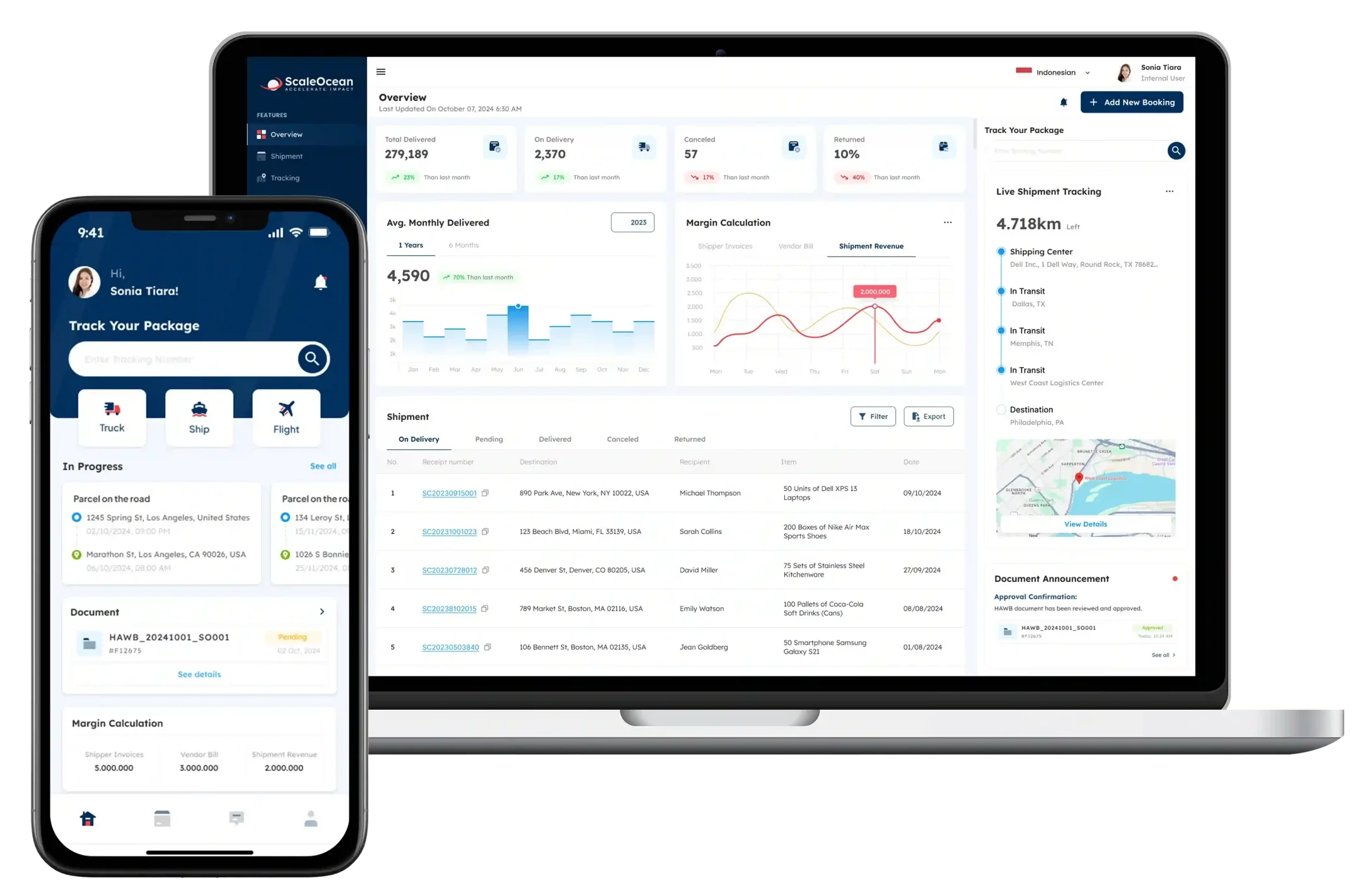
ScaleOcean is an integrated delivery management platform for medium to large enterprises that need to manage complex delivery operations, including order processing, fleet coordination, route planning, tracking, and logistics workflows within one ecosystem.
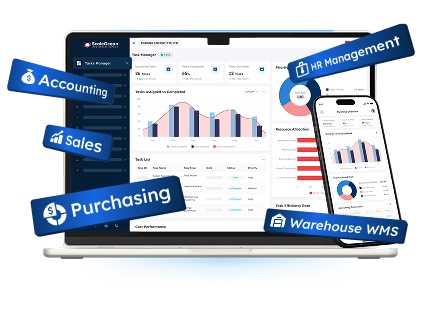
ScaleOcean Atlas Logistics connects delivery operations with inventory, sales, purchasing, accounting, and customer management. With ScaleMind embedded as an AI Business Assistant, teams can use connected operational data to support delivery decisions, monitor performance, and identify relevant insights.
This system has been optimized and complies with PDPA regulations and local financial reporting standards, including GST and IRAS-related reporting requirements in Singapore. ScaleOcean can also be customized to support EDG and CTC requirements, subject to eligibility. Schedule a consultation with our team to explore configurable delivery workflows and deployment options that fit your logistics needs.
Key features:
- Automated order-to-delivery workflow management
- Delivery status and exception management
- Digital proof of delivery
- Delivery cost and margin monitoring
- SLA monitoring and performance alerts
- Customer delivery notifications
- Delivery analytics and operational reporting
- Role-based access and approval controls
- Integration APIs for connected logistics systems
| Pros | Cons |
|---|---|
| Uses a consultative implementation approach that analyzes logistics processes, business structures, delivery requirements, and operational workflows before configuration. | Its enterprise-level capabilities may be more extensive than required for small businesses with simple delivery scheduling needs. |
| Provides configurable workflows and unlimited-user options, allowing companies to expand access across departments, branches, and operational teams without per-user growth limitations. | Pricing requires business requirement analysis because modules, integrations, deployment options, and operational complexity influence the final scope. |
| Supports unlimited users, allowing businesses to expand system access across teams without increasing costs based on user volume. | Implementation focuses on accuracy, workflow alignment, and long-term scalability rather than a quick generic setup. |
| Supports gradual module activation, allowing businesses to prioritize delivery functions first and expand capabilities as operational needs grow. |
Best for: Medium and large enterprises, logistics providers, distributors, manufacturers, retailers, 3PL companies, multi-branch businesses, and organizations requiring integrated delivery and ERP capabilities.
ℹ️Why choose ScaleOcean?
ScaleOcean supports configurable delivery workflows, fleet visibility, route optimization, analytics, and AI-based delivery insights through ScaleMind, providing businesses with a more intelligent and scalable approach to delivery management.
2. Track-POD
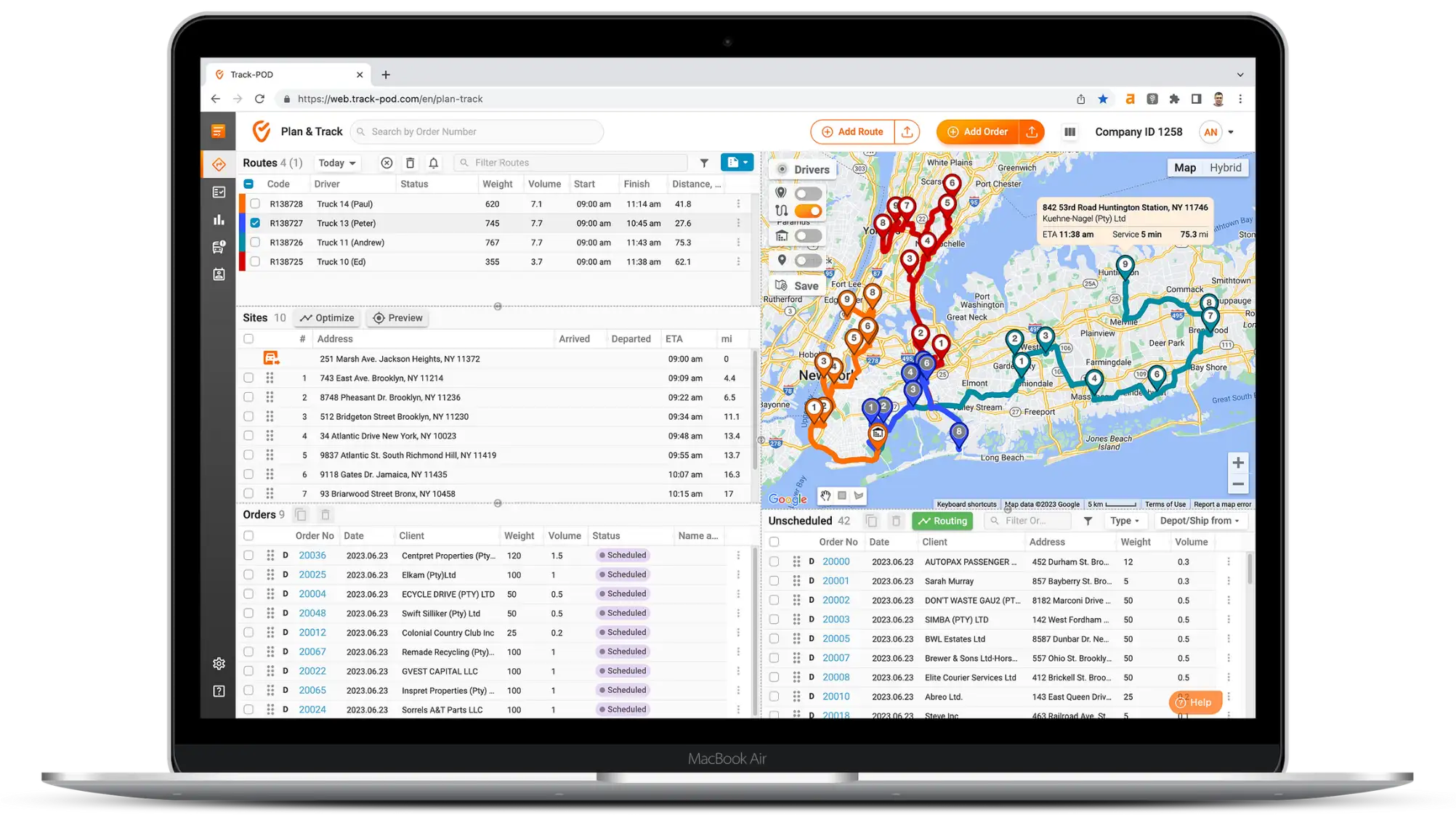
Track-POD is a delivery management platform designed to help businesses manage last-mile delivery operations, driver activities, and proof of delivery processes through a centralized system. The platform focuses on improving delivery visibility by connecting dispatch teams, drivers, and customers throughout the delivery journey.
The system supports businesses that need to manage daily delivery tasks, optimize routes, monitor driver performance, and provide customers with real-time delivery updates. Its focus on digital proof of delivery and delivery automation makes it suitable for companies looking to replace manual paperwork and improve operational tracking.
Key features:
- Driver mobile application
- Real-time GPS tracking
- Customer notifications
- Delivery scheduling
- Barcode scanning
| Pros | Cons |
|---|---|
| Provides strong digital proof of delivery capabilities that help businesses replace paper-based delivery confirmation processes. | Companies requiring broader ERP-level integration may need additional solutions beyond delivery-focused functionality. |
| Offers driver-focused mobile tools that help simplify delivery updates and field execution. | Advanced operational customization may require additional configuration depending on business requirements. |
| Supports route planning and delivery tracking to improve last-mile visibility. | Businesses managing highly complex logistics networks may need to evaluate scalability requirements carefully. |
Best for: Small and medium delivery companies, retailers, courier businesses, distributors, and organizations that need digital proof of delivery and last-mile delivery visibility.
ℹ️Why choose Track-POD?
Track-POD helps businesses manage delivery operations through route planning, driver applications, GPS tracking, digital proof of delivery, and customer notifications.
3. Shipday
Shipday is a delivery management platform designed to help businesses coordinate local deliveries, manage drivers, and improve delivery tracking. The platform is commonly used by restaurants, retailers, and small businesses that need a simple way to organize delivery operations without relying on manual communication.
The system helps businesses manage delivery assignments, monitor driver locations, and provide customers with delivery updates. With its focus on last-mile delivery coordination, Shipday supports companies looking to improve delivery visibility and streamline daily dispatch activities.
Key features:
- Delivery dispatch management
- Driver mobile application
- GPS tracking
- Route management
- Order integration
- Delivery analytics
| Pros | Cons |
|---|---|
| Provides an accessible delivery management option for businesses starting digital delivery operations. | Enterprise businesses may require deeper workflow customization and broader operational integrations. |
| Helps simplify driver coordination and delivery tracking for local delivery operations. | Advanced logistics planning requirements may require additional evaluation. |
| Supports customer-facing tracking features that improve delivery transparency. | Businesses with complex multi-location operations may need more comprehensive enterprise features. |
Best for: Small businesses, restaurants, local retailers, and companies managing simple last-mile delivery operations.
ℹ️Why choose Shipday?
Shipday helps small delivery teams manage dispatching, driver tracking, customer notifications, and delivery visibility through a simple platform.
4. Detrack
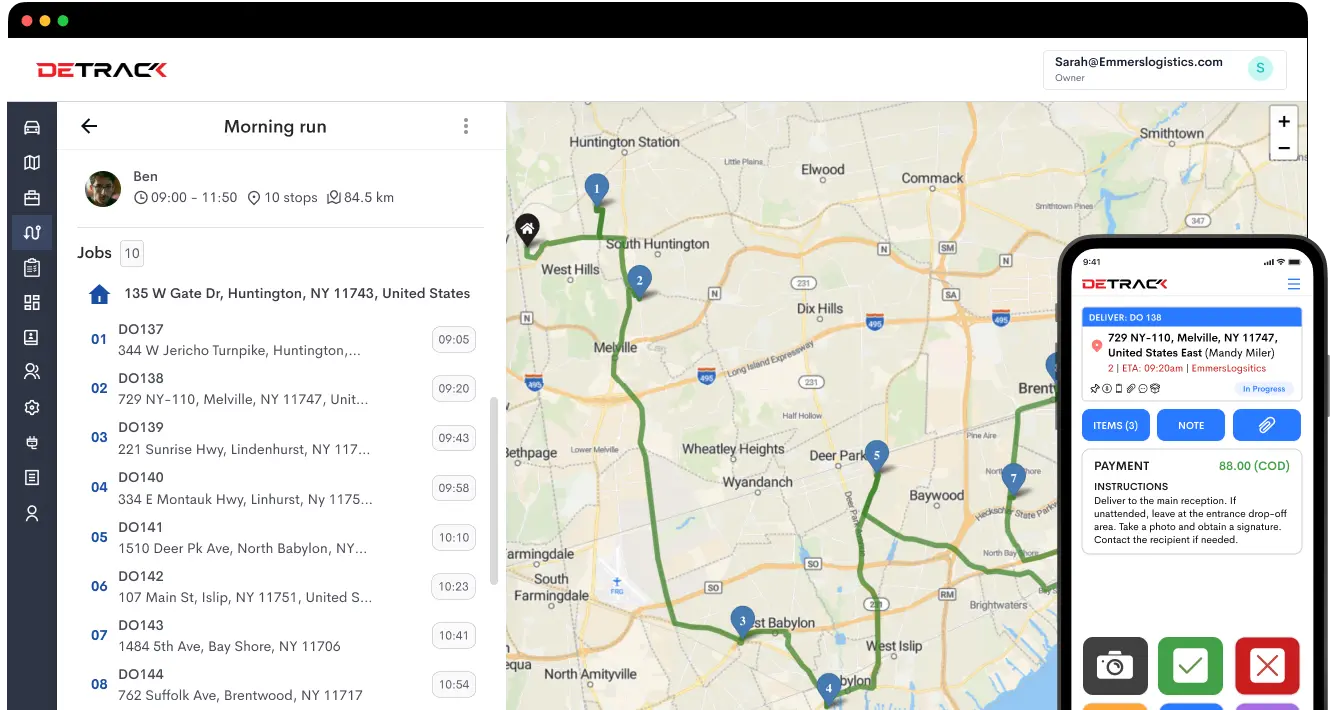
Detrack is a delivery management platform designed to help businesses manage last-mile delivery operations, driver activities, and proof of delivery processes through real-time tracking and digital workflows. The platform helps companies replace manual delivery coordination with more structured delivery planning, tracking, and confirmation processes.
The system supports delivery scheduling, driver management, GPS tracking, electronic proof of delivery, and customer notifications. With these capabilities, Detrack helps businesses improve delivery visibility, reduce paperwork, and maintain better coordination between dispatch teams and drivers.
Key features:
- Delivery scheduling and task assignment
- Driver mobile application
- GPS tracking and live delivery updates
- Electronic proof of delivery (ePOD)
- Photo and signature capture
- Customer notifications
| Pros | Cons |
|---|---|
| Provides practical last-mile delivery features that help businesses improve tracking visibility and delivery confirmation. | Businesses requiring full ERP capabilities may need additional systems for broader operational management. |
| Supports mobile driver workflows that simplify delivery updates and field execution. | Highly complex logistics operations may require additional customization or integration assessment. |
| Suitable for various delivery industries requiring digital proof of delivery and real-time status updates. | Enterprise businesses should evaluate scalability requirements when managing multiple locations or large fleets. |
Best for: Small and medium businesses, courier companies, retailers, distributors, and logistics teams that require reliable last-mile delivery tracking.
ℹ️Why choose Detrack?
Detrack helps businesses manage delivery scheduling, driver coordination, GPS tracking, and digital proof of delivery through a centralized delivery platform.
5. Onfleet
Onfleet is a last-mile delivery management platform that helps businesses coordinate drivers, optimize delivery workflows, and improve customer communication. The platform focuses on simplifying delivery execution through automated dispatching, route planning, tracking, and digital delivery confirmation.
The system connects dispatch teams, drivers, and customers through one platform, allowing businesses to manage delivery assignments, monitor progress, and provide real-time updates. Onfleet is commonly used by companies that require efficient local delivery management and improved customer visibility.
Key features:
- Automated dispatching
- Driver mobile application
- Delivery notifications
- Proof of delivery
- API integrations
- Delivery analytics
| Pros | Cons |
|---|---|
| Provides strong last-mile automation capabilities through dispatching, routing, and customer communication features. | Companies looking for broader ERP functions may require complementary solutions. |
| Improves customer delivery experiences through real-time tracking and automated notifications. | Businesses with complex enterprise workflows may need to evaluate customization requirements. |
| Supports integrations that allow businesses to connect delivery operations with existing applications. | Large-scale logistics networks may require additional planning for multi-region deployment. |
Best for: Small to medium businesses, e-commerce companies, retailers, food delivery providers, and organizations focused on improving last-mile delivery performance.
ℹ️Why choose Onfleet?
Onfleet helps businesses streamline last-mile delivery through automated dispatching, route optimization, driver coordination, customer tracking, and delivery analytics.
6. Routific
Routific is a delivery route optimization platform designed to help businesses plan efficient delivery routes, manage drivers, and improve transportation productivity. The platform focuses on simplifying route planning by using delivery data, vehicle information, and operational constraints to create optimized schedules.
The system helps businesses reduce manual route planning efforts while improving delivery efficiency through automated route generation, driver coordination, and delivery tracking. Routific is commonly used by companies that manage local deliveries and require a practical solution for improving fleet utilization and daily delivery planning.
Key features:
- Automated route optimization
- Driver mobile application
- GPS tracking
- Customer notifications
- Route analytics
- Fleet performance monitoring
| Pros | Cons |
|---|---|
| Provides effective route optimization capabilities that help businesses reduce planning time and improve delivery efficiency. | Companies requiring complete logistics management beyond routing may need additional operational systems. |
| Offers a simple interface that helps delivery teams quickly create routes and manage daily transportation activities. | Enterprise businesses with complex workflows may need to evaluate customization and integration capabilities. |
| Supports businesses looking to improve fleet utilization and delivery planning accuracy. | Advanced ERP, warehouse, or financial integration may require additional solutions. |
Best for: Small and medium delivery companies, local distributors, retailers, food delivery businesses, and organizations that prioritize route planning efficiency.
ℹ️Why choose Routific?
Routific helps businesses optimize delivery routes, coordinate drivers, manage schedules, and improve transportation efficiency through automated planning tools.
7. Genic Solutions
Genic Solutions is a Singapore-based business platform that provides delivery and field service management capabilities for companies managing mobile teams, customer requests, schedules, and operational activities. The platform is designed to help businesses organize service-related workflows while improving visibility across daily operations.
The system supports activities from receiving customer requests, scheduling tasks, assigning teams, tracking progress, and managing operational updates. Its local market focus makes it suitable for Singapore businesses looking for a platform that supports service and delivery coordination within a structured workflow.
Key features:
- Task assignment management
- Customer management
- Inventory tracking
- Operational reporting
- Workflow management
| Pros | Cons |
|---|---|
| Provides a locally oriented option for Singapore businesses managing delivery and service activities. | Large enterprises should evaluate whether the platform supports complex multi-entity operations and advanced governance requirements. |
| Supports operational workflows from customer requests and scheduling to task completion. | Businesses requiring extensive logistics automation may need additional evaluation of available capabilities. |
| Helps businesses reduce manual coordination for delivery and mobile workforce activities. | Companies with highly complex supply chain requirements may require broader ERP integration. |
Best for: Small and medium Singapore businesses, service providers, maintenance companies, delivery teams, and organizations managing mobile operations.
ℹ️Why choose Genic Solutions?
Genic Solutions helps businesses manage delivery and service operations through scheduling, customer management, task coordination, and workflow automation.
8. FarEye Fleet
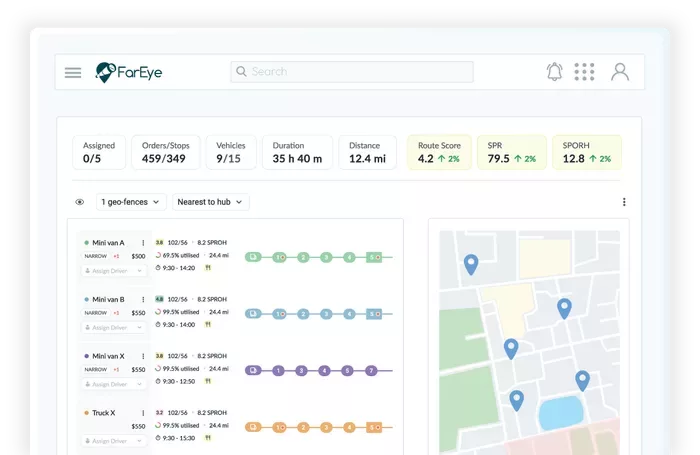
FarEye Fleet is a delivery management and logistics technology platform designed to help businesses optimize transportation operations, manage delivery networks, and improve last-mile visibility. The platform focuses on connecting carriers, drivers, customers, and logistics teams through a centralized system.
The system supports businesses in managing delivery planning, fleet operations, shipment tracking, customer communication, and operational analytics. With capabilities designed for complex logistics environments, FarEye Fleet helps organizations improve delivery performance, increase transparency, and manage transportation activities at scale.
Key features:
- Delivery planning and orchestration
- Route optimization
- Real-time fleet tracking
- Driver management
- Automated notifications
- Carrier management
| Pros | Cons |
|---|---|
| Provides enterprise-level delivery orchestration capabilities for businesses managing complex transportation networks. | Small businesses with simple delivery requirements may not need the platform’s broader enterprise capabilities. |
| Supports multi-carrier and multi-location logistics operations with centralized visibility. | Implementation may require more planning due to the complexity of enterprise logistics environments. |
| Offers analytics capabilities that help businesses evaluate delivery performance and operational trends. | Organizations should assess integration requirements before deployment to ensure alignment with existing systems. |
Best for: Large enterprises, logistics providers, retailers, manufacturers, e-commerce businesses, and companies managing complex delivery networks across multiple locations.
ℹ️Why choose FarEye Fleet?
FarEye Fleet helps organizations manage complex delivery operations through transportation orchestration, fleet visibility, route optimization, customer communication, and logistics analytics.
How to Choose the Right Delivery Management Software?
To choose the right delivery management software, evaluate your fleet size, required automation, and integration needs using a structured selection framework. The right system should support current workflows while providing flexibility for future expansion.
Step 1: Define Your Delivery Operation Size
Before comparing delivery management software options, businesses should first evaluate their operational scale, including fleet size, delivery volume, service coverage area, order complexity, and future growth plans. The right platform should match the company’s current requirements while remaining scalable as delivery operations expand.
Micro-logistics businesses usually operate with a small number of drivers and handle local deliveries with simpler workflows. These businesses typically need essential capabilities such as delivery scheduling, route planning, driver coordination, tracking, and proof of delivery without complex customization or extensive integrations.
Growing mid-market logistics companies often manage higher order volumes, multiple drivers, wider delivery areas, and increasing customer expectations. At this stage, businesses require more structured workflows, better operational visibility, reporting capabilities, and integration with other business systems to improve efficiency and support expansion.
Enterprise and multi-hub logistics operations require more advanced delivery management capabilities to handle large fleets, multiple locations, complex delivery networks, and diverse operational requirements. These businesses typically need scalable platforms with workflow customization, ERP integration, centralized reporting, and real-time visibility across different logistics activities.
Step 2: Compare Platforms by Market Tier
After identifying the business size and delivery complexity, companies should compare delivery management platforms based on their operational requirements. Different market segments require different capabilities, from simple route planning for small delivery teams to enterprise-level solutions that support multiple hubs, integrations, and complex logistics workflows.
The table below compares suitable delivery management software options based on fleet size, recommended solutions, and pricing approaches.
| Market Tier | Target Fleet Size | Top Recommendations | Ideal Pricing Model |
|---|---|---|---|
| Micro-Logistics | 1–5 drivers | Shipday, Routific, Detrack | Affordable subscription pricing with essential delivery features such as route planning, tracking, and proof of delivery. |
| Growing Mid-Market | 6–30 drivers | ScaleOcean, Track-POD, Onfleet, Genic Solutions | Flexible pricing based on required modules, users, integrations, delivery volume, and operational requirements. |
| Enterprise / Multi-Hub Operations | 30+ drivers | ScaleOcean, FarEye Fleet, Onfleet | Customized enterprise pricing based on implementation scope, integrations, deployment model, and business complexity. |
Selecting the right delivery management software depends on more than fleet size alone. Businesses should also evaluate their delivery volume, integration requirements, workflow complexity, reporting needs, and future expansion plans to ensure the chosen platform can support long-term operational growth.
For companies operating in Singapore, evaluating solutions that align with local business requirements, compliance needs, and broader logistics processes can help maximize technology investments. Platforms that connect delivery management with ERP, inventory, and operational systems provide greater visibility across the entire logistics ecosystem.
Step 3: Assess the Billing Model (Hidden Leakage)
Before investing in delivery management software, businesses should evaluate the pricing structure beyond the initial subscription cost. Different platforms may use different billing approaches, such as pricing based on users, drivers, delivery volume, transactions, features, or implementation requirements.
Small businesses often prioritize predictable pricing with essential delivery capabilities, while growing and enterprise companies need to consider scalability costs as operations expand. Understanding the billing model helps businesses avoid unexpected expenses related to additional users, integrations, customization, or advanced features.
Companies should also review long-term ownership costs, including implementation, training, support, maintenance, and future expansion requirements. A transparent pricing structure allows businesses to select a solution that aligns with their operational needs and growth strategy.
Step 4: Verify Your Integration Stack
Before implementing a delivery management system, businesses should ensure that the platform can connect with their existing technology ecosystem. Integration capabilities are important for maintaining accurate data flow between delivery operations, inventory management, warehouse processes, sales channels, and financial systems.
Businesses with simple delivery workflows may only require basic integrations with order platforms or customer systems. However, companies managing complex logistics operations typically need deeper connectivity with ERP, WMS, CRM, e-commerce platforms, and accounting systems.
A well-integrated delivery management system helps reduce data silos, minimize manual updates, improve operational visibility, and create a more connected logistics environment that supports future scalability.
Future Trends in Delivery Management Systems
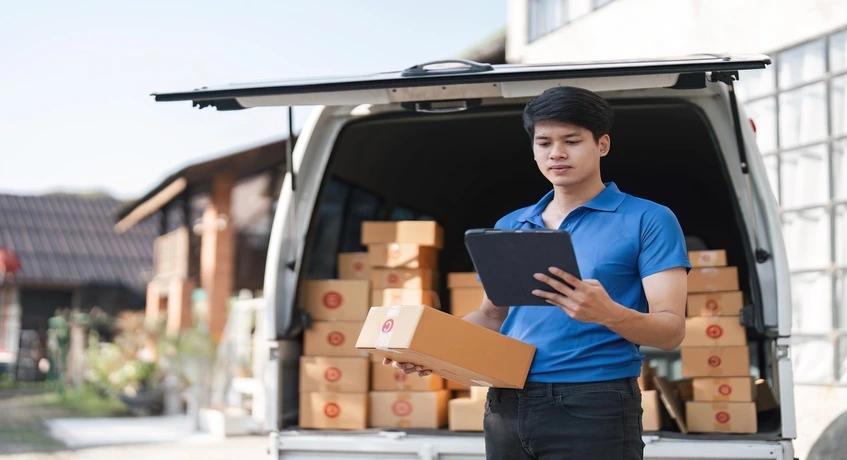
Key trends are AI, autonomous automation, and sustainability, and these are expected to be central aspects of the future use of DMS to cut costs on last-mile shipments.
This trend will take businesses to a new level in how they monitor deliveries; this will enable more efficient decision-making, more effective predictions of demand, and more customizable delivery schedules.
1. Drone Delivery Ecosystems
Drone delivery systems represent a new means of transporting things during last-mile activities as well as a means that will allow more transportation flexibility, less use of the physical transportation network, and quicker delivery times.
Autonomous aerial vehicles are being tested for rapid transportation of lighter and more time-sensitive goods, as well as delivery into locations which can’t easily be reached by conventional methods. The effective deployment and control of these aerial vehicles will result in even more successful delivery scheduling, navigation, real-time tracking, and monitoring of systems.
2. Self-Driving Ground Rovers
There are many options available for last-mile delivery, one of which is ground rovers for these short-haul delivery networks. Self-propelled ground rovers may have a number of uses that will enable last-mile delivery to people in homes as well as through various communities and places of business and industry.
Ground rovers will help cut costs in labor-intensive final-leg deliveries and increase efficiency for companies when setting flexible delivery options as well.
3. Autonomous Freight Trucks
Autonomous freight trucks are expected to transform long-distance transportation by improving fleet utilization and reducing operational limitations.
For logistics providers managing large transportation networks, autonomous vehicles can support more consistent delivery schedules, optimize route execution, and improve transportation capacity. As this technology develops, integration with delivery management systems will become important for coordinating autonomous fleets.
4. Machine Learning ETAs
Machine learning-powered estimated arrival times (ETAs) allow delivery systems to provide more accurate predictions by analyzing historical delivery data, traffic conditions, weather patterns, and operational factors.
More accurate ETAs help businesses improve customer communication, reduce delivery uncertainty, and allow logistics teams to respond proactively to potential delays. This capability also supports better planning by identifying delivery patterns and improving scheduling decisions.
5. Carbon Footprint Tracking
Sustainability is becoming a key consideration in logistics operations as businesses focus on reducing environmental impact and improving transportation efficiency.
Future delivery management systems will increasingly include carbon footprint tracking capabilities to measure emissions from delivery activities. This allows companies to evaluate fuel consumption, optimize routes, and make more sustainable transportation decisions.
6. Interactive Dynamic Tracking
Interactive dynamic tracking will provide more advanced visibility compared to traditional shipment status updates.
Future systems will allow customers and logistics teams to access real-time delivery information through interactive maps, live route progress, driver updates, and estimated arrival changes. This improves transparency while creating better communication between businesses, drivers, and customers.
7. Hyperlocal Deliveries
Hyperlocal delivery focuses on fulfilling customer orders within smaller geographic areas through nearby fulfillment locations, stores, or micro-warehouses.
This approach helps businesses shorten delivery distances, improve same-day delivery capabilities, and respond faster to customer demand. Delivery management systems will play an important role in coordinating local inventory, driver availability, and optimized delivery routes to support hyperlocal operations.
Conclusion
Delivery management software helps businesses improve logistics efficiency by automating delivery workflows, optimizing routes, improving fleet visibility, and creating better customer experiences. From order capture and dispatching to tracking and analytics, the system enables companies to manage delivery operations through a more structured and connected approach.
However, selecting the right delivery management platform requires businesses to consider operational complexity, fleet size, integration requirements, scalability, and long-term business goals. Small delivery teams may prioritize simplicity, while enterprises require configurable workflows, multi-location support, and deeper integration capabilities.
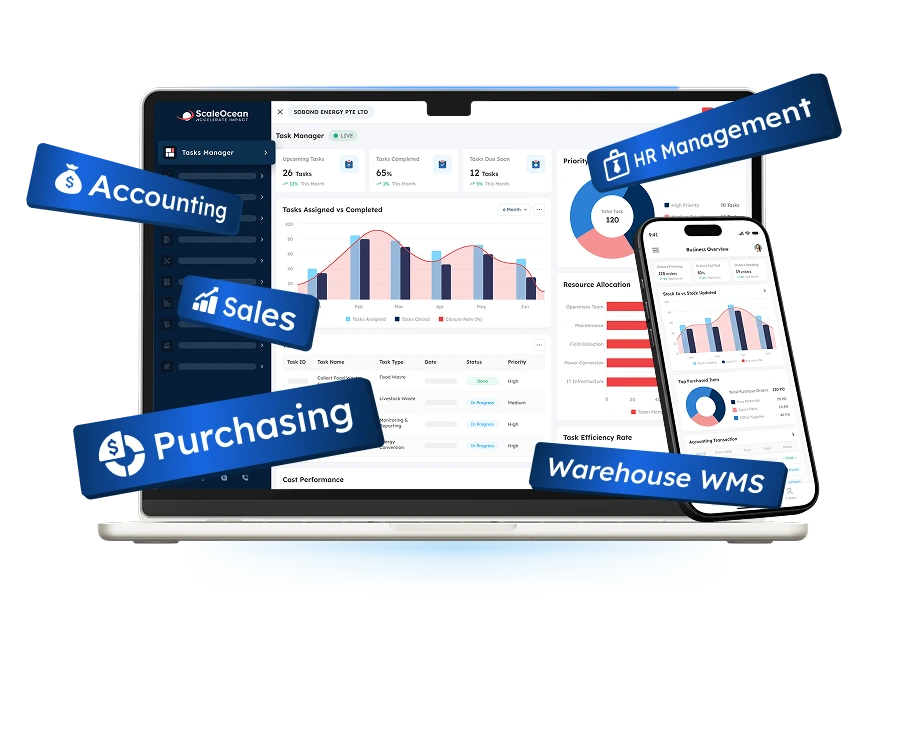
ScaleOcean logistics ERP software provides a flexible platform that supports delivery management, inventory, warehouse, finance, sales, and operational workflows within one ecosystem. With configurable modules and scalable capabilities, businesses can evaluate how the system fits their logistics requirements and future growth plans. Schedule a consultation with the ScaleOcean team to discuss your operational requirements, implementation scope, and the optimal system configuration to support your logistics processes.
FAQ Delivery Management System:
1. Can delivery management software integrate with ERP or online store platforms?
Yes, delivery management software can integrate with ERP systems, e-commerce platforms, warehouse management systems, and other business applications through APIs or built-in connectors.
2. Should businesses build their own custom delivery platform or use delivery management software?
Most businesses benefit from using ready-made delivery management software because it provides proven features such as route optimization, tracking, and proof of delivery without requiring significant development resources. Custom platforms may be suitable for companies with highly specific workflows, but they often require higher investment, longer development timelines, and ongoing maintenance.
3. How does delivery management software improve logistics efficiency?
Delivery management software improves logistics efficiency by automating delivery assignments, optimizing routes, tracking vehicles in real time, and providing operational insights.
4. Is delivery management software suitable for enterprise logistics operations?
Yes, delivery management software is suitable for enterprise logistics operations, especially for companies managing multiple warehouses, delivery hubs, fleets, and customer requirements.




















.png)