

Data integration is the process of connecting, consolidating, and synchronizing business data from multiple systems into a consistent, trusted, and accessible source. Consequently, Singapore enterprises rely on integrated data to support faster decisions and regulatory compliance.
However, many enterprises across Singapore still operate multiple subsidiaries, legacy systems, cloud applications, and external partner platforms simultaneously. As a result, disconnected information slows reporting, weakens collaboration, and increases operational costs.
Moreover, businesses cannot compete effectively when finance, sales, operations, and customer information remain inconsistent across departments. Data integration meaning establishes accurate, complete, secure, and traceable information that strengthens productivity, customer experiences, and sustainable business growth.
 Key Takeaways
- Data integration is the process of connecting information across enterprise systems, creating consistent, accurate, and accessible data that supports faster business decisions and operational efficiency.
- Choosing data integration techniques enables businesses to balance scalability, flexibility, governance, and real-time performance according to operational and technical requirements.
- Data integration benefits include reducing manual errors, improving collaboration, enhancing data quality, and accelerating business insights through reliable enterprise-wide information.
- Choosing the best integration platform requires evaluating business environments, technical requirements, security, scalability, usability, and platform capabilities before implementation begins.
- ScaleOcean unifies enterprise data, workflows, and approvals through one operational backbone, helping Singapore businesses eliminate silos and accelerate digital transformation.
What is Data Integration?
Data integration is the merging of data from different applications, multiple servers, databases, cloud applications, and business lines into a common environment, allowing employees to use the same information without manually resolving data conflicts.
For example, a complex data transfer can be data integration, which incorporates correct formats, validates records, de-duplicates, and propagates changes between connected applications. This creates a dependable foundation for analytics, automation, compliance, and corporate reporting.
How Does Data Integration Work? Data Integration Phase & Lifecycle
Data integration operates within a lifecycle that ensures business data is accurately transferred between source and destination systems. As a result, organizations receive consistent, protected, and timely data at all stages of their operations.
Individually, each phase addressed the technical and operational requirements at the stages prior to information being exposed for reporting, analytical, and operational workflows. In addition, ongoing monitoring of data quality was crucial as applications, processes, and organizations evolved.
1. Planning Phase
The planning step defines the Business goals, scope of integration, the involved systems, stakeholders, Governance needed, and the business results. In this way, the organization minimizes implementation risk before technical development.
Additionally, they analyze the current application base, infrastructure, security policies and controls, compliance requirements, and further scalability needs. Thus, integration initiatives are kept consistent with the enterprise initiatives and digital transformation agenda.
2. Mapping Phase
During the mapping phase, the correlation between source data and destination fields, business rules, and common enterprise definitions is established. As an outcome, this ensures uniformity of data across system integration and reporting tools.
Developers record transformation logic, validation rules, naming conventions, and dependencies amongst various business entities before the development phase. Hence, organizations reduce errors that normally occur during enterprise integration.
3. Ingesting Phase
The ingesting phase gathers data from files, databases, ERP or CRM applications, cloud applications, spreadsheets, APIs, or third-party providers. For this reason, organizations centralize operational data before starting any business transformation.
Multiple ingestion techniques are designed to allow batch processing, scheduled synchronization, or real-time stream processing, as needed by a business, choosing approaches that optimize response time, data correctness, scalability, and infrastructure investments.
- Extracting data: Data extraction facilitates the retrieval of needed data from various business systems without affecting business process activities. In addition, companies can collect structured and unstructured data, store it, and prepare it for transformation and integration into data warehouses.
- Data Synchronization: Data synchronization provides ongoing updating of applications accessing the source data when there are business changes. This enables the sharing of fresh records while minimizing duplicate effort and incompatible reporting between enterprise applications.
4. Transforming Phase
The transforming stage automatically standardizes, converts, de-duplicates, enriches, and applies predefined business rules to data. Thus, consolidated information is meaningful, precise, and ready for the enterprise to use.
During the transformation, organizations standardize currencies, product codes, customer IDs, and reporting formats across subsidiaries. As a result, you get a consolidated report with standardized business definitions for the entire organization.
5. Validating Phase
The validating phase ascertains completeness, consistency, accuracy, and integrity before integrated information is available for operational use. As a result, businesses minimize reporting errors and enhance confidence in enterprise decision-making.
Validation also detects Null values, duplicate records, unauthorized data changes, and anomalies through automated quality controls, so the organization corrects problems in the data before they impact business operations or executive reporting.
Quality assurance assesses integration performance by implementing set validation rules, tracking metrics, and auditing procedures. In addition, organizations ensure they maintain reliable enterprise data while enabling governance, compliance, and continuous operational improvement.
6. Cataloguing Phase
The cataloguing stage makes details of existing datasets, metadata, ownership, lineage, business definitions, and access rights available in central repositories, allowing employees to easily find accurate information without duplicating it.
Complete catalogues enhance governance with open information about data origins, usage policies, and relationships across functional domains. Consequently, enterprises promote collaboration while supporting regulatory compliance and internal responsibilities.
7. Monitoring Phase
The monitoring phase continuously monitors the overall status of the integration, synchronization status, processing failures, system availability, and data quality. Thus, the technical team can address issues before any business impact.
As business needs change, enterprise data enables analysis of performance patterns, streamlining processes, and modifying integration rules. Thus, data remains accurate, scalable, secure, and aligned with enterprise needs.
Key Techniques and Approaches of Data Integration

Current enterprises employ a mix of data integration techniques depending on the infrastructure, business needs, latency requirements, and system complexity. Thus, choosing the right approach to data integration leads to scalability, best operational efficiency, and ease of long-term maintenance.
Rather than choose one architecture for every workload, most organizations blend single and hybrid integration architectures. Thereby optimizing performance, flexibility, governance, and implementation cost while enabling continuous digital transformations.
1. ELT (Extract, Load, Transform)
ELT pulls data out, loads it into a centralized platform, and performs transformations post-loading. This enables cloud data warehouses to process large volumes of data faster thanks to their built-in computing power.
This method is suitable for organizations performing huge analytical processing, with scalable cloud infrastructure and modern storage and other technologies. So, ELT allows transforming data easily without repeatedly extracting information from source systems.
2. ETL (Extract, Transform, Load)
ETL extracts data, transforms it, and loads the transformed data into the target system. Standardized data is stored for use in reporting or for operational use.
Most organizations are adopting ETL for regulatory reporting such as financial reporting, administration of healthcare services, or manufacturing. This is because the datasets being transformed adhere to well-established governance and validation requirements.
3. Change Data Capture (CDC)
Change Data Capture is a technique used to identify changed, inserted, or deleted records in source systems, rather than repeatedly reprocessing full datasets. Business organizations thus save bandwidth and achieve quicker synchronization between business applications.
Provide near real-time data to operational reporting, operational analytics, and customer-facing systems that need fresh information from the business for effective operation. Enterprises can improve responsiveness without burdening processing.
4. Application-Based Integration (API-Driven)
API driven integration allows different applications to communicate with each other securely via a common interface and a set of protocols. This allows businesses to integrate ERP, cloud services, CRM, 3rd party applications, etc.
Contemporary APIs also provide authentication, tracking, scalability, and versioning during enterprise integration applications. Thus, companies can innovate faster, with significant changes in current business applications.
5. Data Virtualization
Data virtualization enables access to disparate information in a consolidated manner without copying datasets from source into a common repository. This enables users to construct queries involving combinations of several data sources while the data stays in their respective locations.
Organizations benefit from quicker implementation because virtualization limits replication of data and storage in the enterprise. As a result, analysts can integrate data while minimizing infrastructure complexity and duplication.
6. Federated Data Integration
Federated data integration seeks to integrate several autonomous sources through single unified queries, while maintaining each of the distinct databases and ownership models. Thus, organizations cooperate without centralizing their operational systems.
This method enables organizations with subsidiaries, acquisitions, or regulated units such as finance to maintain separate technological landscapes and control policies. As a result, visibility increases without violating operational autonomy and regulatory obligations.
7. Bulk or Batch Data Movement
Batch data movement. This mode transfers huge amounts of data periodically, and not as a continuous process during daily operations. Thus, clients achieve better infrastructure usage and predictable processing.
Numerous financial reports, payroll systems, and legacy analytics rely on batch processing on a certain schedule to function correctly. As such, batch integration has value even as the need for real-time data grows.
8. Message-Oriented Data Movement
Message-oriented integration means that information is exchanged through asynchronous messages between applications, even if the operation of all systems is not simultaneous. This aspect increases the robustness and reduces the interdependence in distributed environments.
Message queues provide delivery assurance during interruptions or unforeseen traffic surges that can occur in enterprise systems. As a result, companies maximize system operation and uptime while enhancing the scalability and flexibility of their applications.
9. Hybrid Data Integration
Hybrid data integration is a mixture of cloud, on-premises, batch, and real-time integration that is put together as part of an integrated architecture. As a result, companies update bit by bit rather than wiping out all the legacy applications in one go.
Many Singapore enterprises conduct hybrid integration as they still find their current infrastructure capable of running important operational processes across all departments. This way, various organizations gain the benefits of flexibility with reduced chaos risks and investment cost.
10. AI Data Integration
Gathers all information regarding your data sources and intelligently suggests optimal mappings and transformations through anomaly detection, recommendation engine, and machine learning technologies. Aibo automatically optimizes the data transformation process and reduces manual configuration.
AI can also identify continuous abnormal activity in data by scanning all interconnected business systems, enabling your IT teams to reach solutions sooner before your operational performance suffers.
11. Middleware Integration
Middleware integration uses mediating software to enable interaction among various applications, databases, services, and enterprise platforms. So, organizations lower connection overhead without establishing many point-to-point connections.
In addition, middleware provides uniform security, control, message queuing, and workflow management across different technology areas. Thus, enterprises adopt a more manageable solution that scales to future business and application growth.
When Do Companies Need Real-Time Data Integration?
Instantaneous data integration may be required when operational data from different systems must continuously inform decisions. Here, the time between transactions and reporting may significantly impact productivity, customer satisfaction, and profit.
Companies that handle e-commerce, banking, manufacturing, logistics, healthcare, or customer service mainly need instant synchronization between enterprise applications. This allows employees to update quickly without breakdowns between processes due to stale data.
For example, Singapore’s IMDA highlights that Gulf Marine integrated its ERP and operational workflows using enterprise integration technology, reducing quotation processing by 30%, saving more than 530 working hours monthly, and improving customer service. Similarly, Fullerton Health automated claims processing and achieved 87% faster financial reconciliation through integrated systems.
Singapore’s IMDA also highlights organizations including McDonald’s Singapore, Grand Hyatt Singapore, NTUC FairPrice, and Plover Trip that leverage integrated business data to improve operational efficiency, personalize customer experiences, strengthen analytics, and support digital transformation initiatives.
Major Benefits of Data Integration for Business

Data integration provides quantifiable business benefits such as increases in operational efficiency, improved data quality, better collaboration, and greater enterprise transparency across the company. These benefits allow companies to make more informed business decisions based on reliable and consistent business information.
The value of these advantages grows with the adoption of cloud applications, AI, automation, multi-entity operating models in the enterprise, and more. Integrated data provides that scalable platform for a sustainable digital transformation and lasting business success.
1. Reduces Manual Errors
Through data integration, information is transferred seamlessly between business applications, minimizing duplicated data entry and reconciliation. This automation results in fewer human errors and steady reporting to the infrastructure.
Once everyone uses the integrated systems, staff will spend less time fixing duplicated or conflicting data accumulated separately in each department. As a result, departments can concentrate on activities with higher added value.
2. Enhances Collaboration
Integrated data allows all departments to look at the same reliable data, regardless of the application they use each day. As a result, finance, sales, operations, and management work more efficiently together without conflicting business records.
Cross-functional teams can make decisions much faster because current information is available in real time across all connected applications. In turn, this enables the organization to improve communication and make enterprise-wide decisions and execution faster.
3. Improves Data Quality
Before data is accessed for operational use, data integration utilizes validation, standardization, deduplication, and governance. As a result, enterprises can have trusted, complete data across the enterprise.
Enhanced data quality also maximizes compliance, business intelligence, planning, and customer relationship management in many areas. Ultimately, the organization relies on accurate enterprise data for strategic planning rather than inconsistent reporting.
4. Speeds Up Insights
Integrated information equips employees with up-to-the-minute dashboards and analytics, eliminating the need to consolidate data from various sources. This means decision-makers can detect trends, opportunities, and operational risks faster.
Real-time or near-real-time synchronization allows organizations to respond proactively to changing business conditions and customer expectations. As a result, organizations can enhance their agility while still having a competitive edge in rapidly changing marketplaces.
Application Integration vs Data Integration
Although the terms are often used interchangeably, application integration and data integration solve different business challenges within enterprise technology environments. Therefore, understanding their differences helps organizations select the appropriate architecture for digital transformation.
Application integration focuses on connecting systems so they exchange transactions and automate business processes in real time. Conversely, data integration consolidates information into consistent, trusted datasets for analytics, reporting, governance, and enterprise-wide decision-making.
| Aspect | Application Integration | Data Integration |
|---|---|---|
| Primary objective | Connects applications and automates workflows | Consolidates and standardizes enterprise data |
| Focus | Business processes and system communication | Data consistency and accessibility |
| Typical technology | APIs, middleware, iPaaS, messaging | ETL, ELT, CDC, data pipelines |
| Data movement | Transaction-oriented and event-driven | Batch, streaming, or scheduled synchronization |
| Main outcome | Faster operational processes | Trusted analytics and reporting |
| Common example | ERP automatically updates CRM after an order | Sales, finance, and inventory data combined into one dashboard |
Data Integration Tools That Can Be Used in Businesses
Modern organizations need to search through the data integration market for solutions that support cloud applications, legacy systems, databases, APIs, and enterprise governance requirements simultaneously. Therefore, choosing the right platform depends on business size, infrastructure, and integration complexity.
1. ScaleOcean
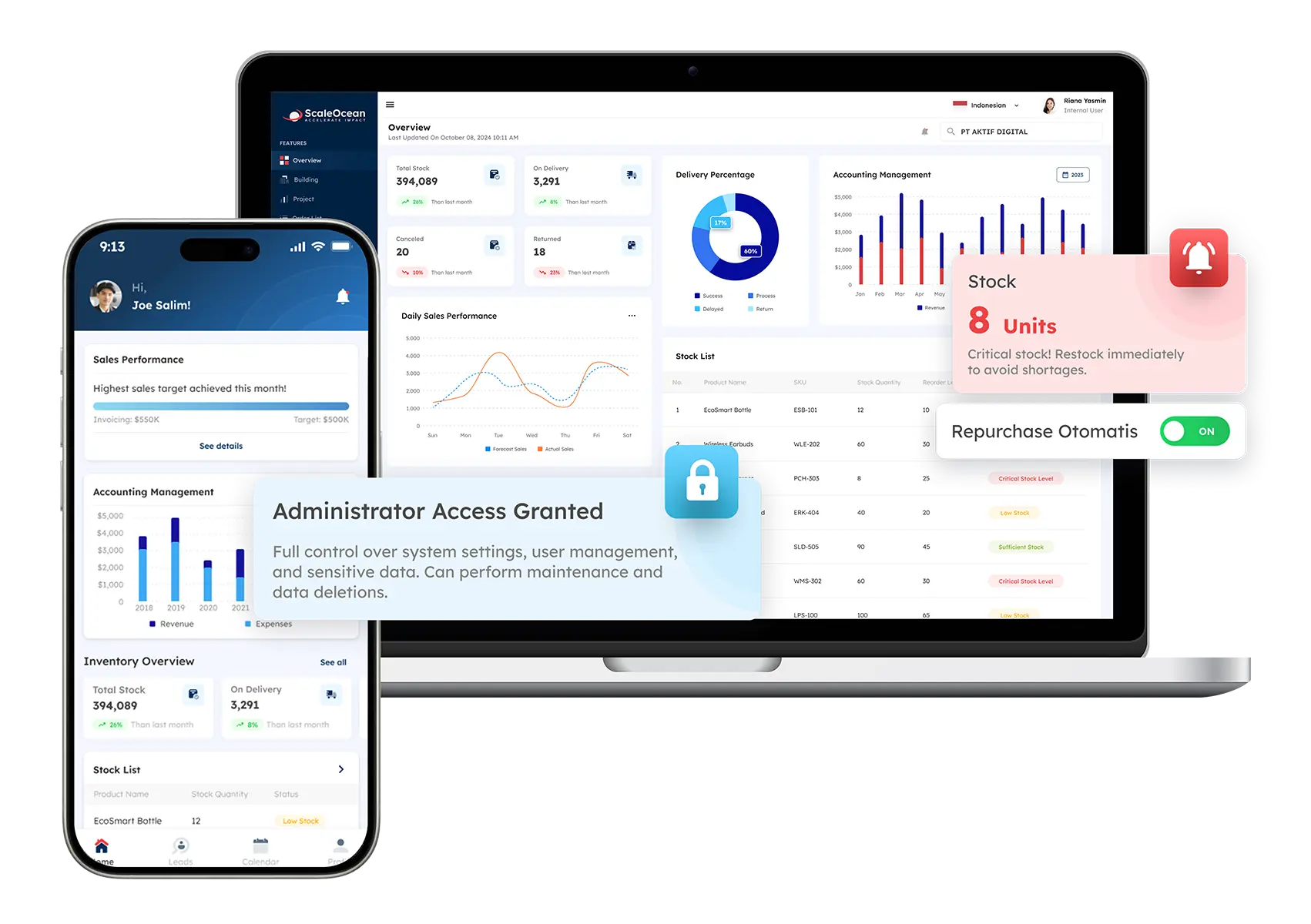
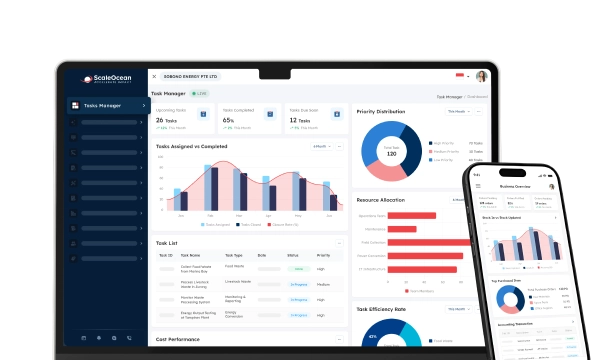
ScaleOcean provides seamless data integration through its flagship ERP platform, ScaleOcean Atlas, connecting business data, workflows, and approvals within a single operational backbone. Consequently, organizations access every business process from one unified system instead of switching between multiple applications while maintaining consistent information across departments, entities, and business functions.
The platform provides more than 200 integrated modules, flexible API connectivity, embedded ScaleMind AI assistance, and deployment options for both cloud and on-premises environments. It also supports unlimited users, PDPA-aligned governance, Singapore financial reporting standards, and implementation approaches aligned with relevant EDG and CTC Grant requirements.
Schedule a consultation with our experts to explore how ScaleOcean can unify your enterprise data while supporting scalable digital transformation.
2. Fivetran
Fivetran specializes in automated ELT pipelines that continuously synchronize data into modern cloud data warehouses with minimal maintenance. As a result, analytics teams spend less time managing connectors and pipeline reliability.
Its extensive connector library supports hundreds of SaaS applications, databases, and cloud platforms for enterprise analytics. Therefore, organizations accelerate business intelligence initiatives while reducing engineering workloads.
3. Airbyte
Airbyte is an open-source data integration platform supporting customizable connectors for cloud applications, databases, and enterprise systems. Consequently, engineering teams gain greater flexibility than many proprietary integration solutions.
Organizations can also develop custom connectors according to business requirements without vendor restrictions. Therefore, Airbyte is ideal for businesses requiring adaptable, developer-friendly integration environments.
4. AWS Glue
AWS Glue is Amazon’s serverless data integration service designed for analytics, machine learning, and cloud-based data engineering workloads. Consequently, organizations automate ETL development without managing underlying infrastructure.
The platform integrates closely with Amazon’s cloud ecosystem while supporting metadata management and scalable processing capabilities. Therefore, AWS users simplify enterprise data preparation and analytics deployment.
5. Informatica
Informatica offers enterprise-grade data integration, governance, quality management, metadata management, and master data management within one platform. Consequently, large organizations manage complex integration requirements more effectively.
Its automation recommendations and hybrid deployment capabilities support highly regulated industries with demanding governance standards. Therefore, Informatica remains a leading solution for enterprise-scale integration initiatives.
Real Use Cases of Data Integration in Business
Data integration creates measurable business value by connecting information across operational systems instead of maintaining isolated datasets. Consequently, organizations improve efficiency, customer experiences, and decision-making through unified enterprise information.
A practical example of data integration is Sobono Group, a Singapore-based clean energy company managing more than 150 new projects every week and 10,000 request orders monthly. As operations expanded, the company needed inventory, procurement, project management, delivery scheduling, budgeting, and finance to operate as one connected ecosystem instead of isolated applications.
Before implementing ScaleOcean, Sobono Group relied on fragmented operational processes that limited visibility across departments. Manual inventory management increased the risk of stock shortages and overstocking, disconnected delivery schedules complicated project execution, and budget monitoring lacked sufficient transparency for timely management decisions.
To address these challenges, Sobono Group implemented ScaleOcean ERP as its integrated operational backbone and has continued the partnership for more than 7 years. The platform integrated inventory, procurement, delivery, project management, budgeting, and finance into a unified system, enabling all departments to access real-time data.
Instead of transferring information between spreadsheets and disconnected applications, employees now access synchronized records throughout the entire business process. Inventory availability, procurement requests, project milestones, delivery, expenditure, and financials remain connected, enabling faster coordination and better decision-making.
The business impact has been significant, as ScaleOcean for Sobono Group increased profitability by 87%, automated the processing of more than 10,000 request orders each month, and reduced financial report generation to approximately 10 seconds, demonstrating how integrated enterprise data directly improves operational efficiency and management visibility.
Wee Khoon OH, the Founder and Managing Director of Sobono Group, described how the platform enhanced daily operational visibility.:
“Since we started using ScaleOcean, it’s been so much easier to track our inventory, project milestones, and budgets, faster and more accurately. Their team was super responsive during the implementation, which really helped everything run smoothly.”
This case demonstrates that companies don’t always need to replace every existing application. With well-planned integration strategies, clear data ownership, proper approval controls, and connected workflows, current systems can function more efficiently as a unified environment.
ScaleOcean’s flagship platform, ScaleOcean Atlas, links enterprise applications, operational data, and approvals through a flexible business backbone. Its consultative approach begins with process mapping and data readiness assessment, while ScaleMind AI offers insights, alerts, and controlled actions within authorized workflows.
The platform also ensures compliance with PDPA governance and local financial reporting standards. Qualifying projects may align with EDG and CTC Grant requirements, pending evaluation and approval. Contact us and schedule a consultation to learn how ScaleOcean can streamline manual coordination and enhance operational visibility.
To understand why Sobono Group chose ScaleOcean as its operational solution, you can view the following story.

How to Choose the Best Data Integration Tools and Platforms
Selecting a data integration platform requires evaluating technical compatibility alongside long-term business objectives, scalability, governance, and operational requirements. Therefore, organizations should prioritize solutions that support future digital transformation instead of immediate integration needs alone.
1. Assess Your Data Environment
Organizations should first identify existing applications, databases, cloud services, data volumes, integration frequency, and regulatory obligations before selecting any platform. This improves implementation efficiency while reducing compatibility risks.
Understanding future expansion plans is equally important because enterprise technology environments continue evolving. Therefore, scalable integration platforms deliver greater long-term value than short-term technical solutions.
2. Evaluate Based on Key Selection Criteria
Every integration platform offers different capabilities, deployment models, and pricing structures that affect long-term business value. Therefore, organizations should evaluate solutions using objective technical and operational criteria instead of focusing solely on initial implementation costs.
Selecting a platform with balanced functionality, scalability, security, and usability minimizes future migration challenges as business requirements evolve. Consequently, enterprises achieve sustainable integration while maximizing returns from their technology investments.
- Security & Compliance: Enterprise platforms should provide encryption, role-based access, audit trails, monitoring, and regulatory compliance capabilities. Consequently, organizations protect sensitive business information while satisfying governance and security requirements.
- Ease of Use: User-friendly interfaces, automation, visual workflow builders, and comprehensive documentation simplify implementation across technical and business teams. This reduces deployment time while improving user adoption.
- Customization: Integration platforms should support configurable workflows, transformation rules, APIs, and custom connectors for unique operational requirements. Consequently, businesses adapt technology without redesigning existing business processes.
- Connector Ecosystem: Extensive prebuilt connectors simplify integration between ERP, CRM, cloud services, databases, and third-party applications. This accelerates implementation while minimizing custom development efforts.
- Pricing and Scalability: Businesses should evaluate licensing models alongside future growth, processing capacity, infrastructure requirements, and ongoing maintenance costs. Consequently, organizations avoid expensive migrations as operational complexity increases.
3. Match Your Use Case to the Right Platform Category
Different categories of integration platforms address different operational priorities, technical architectures, and business objectives across organizations. Therefore, selecting a solution that matches the intended use case improves implementation success and long-term performance.
Businesses should also consider existing infrastructure, internal technical expertise, and expected future expansion before choosing a platform category. Consequently, organizations deploy integration solutions that remain effective as operational demands continue growing.
- Cloud ELT Platforms (Best for Centralizing Data): Cloud ELT platforms efficiently consolidate enterprise information into centralized cloud warehouses for analytics and business intelligence. Consequently, organizations accelerate reporting while minimizing infrastructure management.
- Enterprise ETL Suites (Best for On-Prem & Complex Logic): Enterprise ETL platforms support sophisticated transformations, governance, and legacy environments requiring extensive business rules. Regulated industries can maintain high data quality and compliance standards.
- Application Integration Platforms / iPaaS (Best for Operational Syncing): iPaaS solutions synchronize transactions, automate workflows, and connect SaaS applications through APIs and event-driven architectures. Consequently, organizations streamline operational processes across distributed technology ecosystems.
- Data Orchestrators (Best for Code-First Data Engineers): Data orchestrators manage complex pipelines, scheduling, dependencies, and monitoring through code-driven development environments. Therefore, engineering teams maintain scalable, automated, and highly reliable enterprise data workflows.
Conclusion
Data integration unifies enterprise information across applications, eliminates operational silos, improves data quality, and enables faster decision-making. Consequently, businesses strengthen collaboration, automate workflows, and build a trusted foundation for scalable digital transformation.
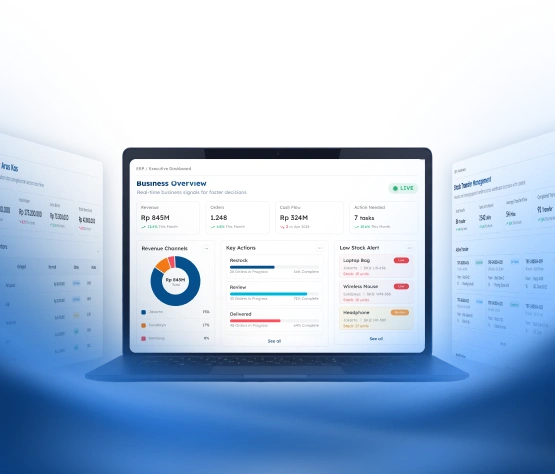
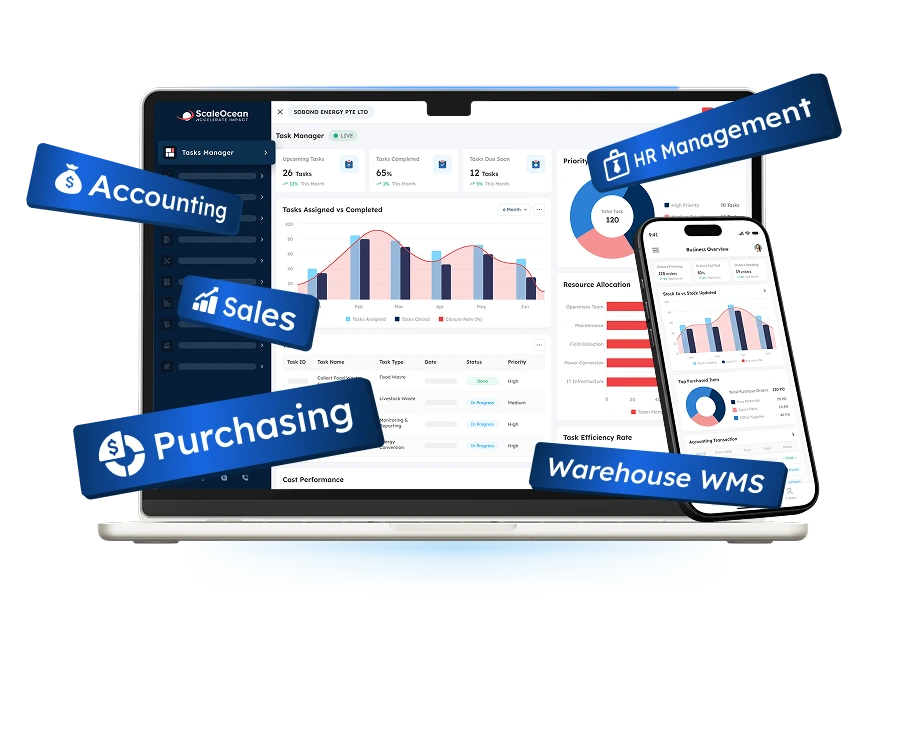
ScaleOcean connects enterprise data, workflows, and approvals through one configurable operational backbone while supporting legacy systems, cloud applications, and multi-entity operations. Furthermore, embedded ScaleMind AI, flexible APIs, and over 200 integrated modules help organizations improve visibility and operational efficiency.
The platform is optimized for Singapore’s PDPA requirements and local financial reporting standards while aligning with relevant EDG and CTC Grant requirements. Schedule a consultation with our experts to discover how ScaleOcean Atlas can accelerate your enterprise data integration journey.
FAQ Data Integration:
1. What data sources can be connected through data integration?
Data integration can connect ERP, CRM, HR, accounting software, databases, cloud applications, spreadsheets, IoT devices, APIs, data warehouses, and legacy systems. This creates a unified, consistent view of business information across the organization.
2. What is meant by a target system in data integration?
A target system is the destination where integrated data is stored, processed, or accessed after extraction and transformation. Examples include data warehouses, ERP systems, analytics platforms, business intelligence tools, or centralized operational databases.
3. Can data integration connect legacy systems?
Yes. Modern data integration platforms use APIs, middleware, connectors, or Change Data Capture (CDC) to connect legacy systems with cloud applications and newer platforms. This enables gradual modernization without immediately replacing existing systems.
4. What risks should be considered in data integration?
Key risks include poor data quality, security vulnerabilities, inconsistent data mapping, compliance issues, integration failures, and performance bottlenecks. Strong governance, validation, monitoring, and access controls help reduce these risks.



















.png)