




Warehouse Management System (WMS) is a software solution that helps businesses that deal with inventory management and distribution activities. As companies in the Philippines continue to grow, manual operations are no longer enough to maintain operational efficiency.
WMS can optimize warehouse management and minimize the costs, from real-time inventory management to error reduction in order fulfillment. Therefore, implementing the right system can improve operations performance.
 Key Takeaways
- Warehouse Management System (WMS) is software that helps businesses optimize inventory management and distribution through real-time tracking.
- The features of a WMS include inventory management, barcode and RFID capabilities, lot and batch tracking, stock forecasting, order picking and packing, and multi-warehouse visibility.
- ScaleOcean Atlas for Warehouse Management helps businesses streamline inventory control, and supply chain management within one integrated ERP platform.

What is a Warehouse Management System (WMS)?
Warehouse Management System (WMS) is software that helps manage and optimize the everyday operations of a warehouse, such as receiving, storing, tracking inventory, picking, packing, shipping, and restocking.
In simpler terms, a Warehouse Management System software is a centralized solution to which businesses can track their inventory movements as soon as the goods are received at the warehouse and until they are shipped to the customer.
Nowadays, Warehouse Management Systems offer real-time visibility into inventory, automate repetitive tasks, and connect with other business systems like ERP, accounting, procurement and transportation management.
Furthermore, a study published in International Journal of Research in Interdisciplinary Studies revealed that the use of technology in the warehouse and inventory management make significant contributions to the operational performance and efficiency of the warehouse.
Hence, the importance of implementing digital warehouse solutions to aid business growth and operational excellence is emphasized further, and the solutions can greatly enhance warehouse management.
When Do You Need a Warehouse Management System?
Many companies make use of spreadsheets or manual records as their initial warehouse management. But as businesses expand, such methods can become ineffective. Therefore, some businesses may need a WMS solution if business experiences the following situations:
- Limited Inventory Visibility: Manual tracking can cause discrepancies between recorded inventory levels and the actual situation, resulting in limited inventory visibility.
- Inefficient Picking Routes: Spending more time moving around the warehouse by employees decreases their productivity, and the labor costs.
- Poor Warehouse Utilization: When fast-moving products are stored in hard-to-reach areas, this is another cause of poor warehousing utilization. Moreover, implementing proper warehouse racking helps optimize storage layouts.
However, if manual warehouse operations are becoming challenging to manage, then maybe warehouse best practices of WMS is the solution that can improve inventory. Then the inventory management becomes more organized and more practical, and the inventory flow becomes much easier.
The 5 Benefits of a Warehouse Management System
When it comes to managing stock, inventory, and goods in a facility, Warehouse Management System (WMS) is essential for streamlining operations. Implementing WMS offers numerous advantages for businesses, including the following key benefits:
1. Improved Inventory Visibility & Tracking
One of the key advantages of a Warehouse Management System is real-time inventory visibility. Using RFID and barcode scanning, a WMS automatically tracks inventory movement, improves stock accuracy, reduces inventory losses, and supports faster operational decisions.
2. Reduced Storing and Labor Costs
There are a lot of manual warehouse operations that may be causing you inefficiency in space usage and high labor costs. WMS can automate storage allocation, inventory updates and task assignments to improve warehouse organization, maximize storage space, and increase employee productivity.
3. Optimized Routes, Pick, and Packing
Besides, WMS optimizes the picking and packing process by providing optimal picking routes, smart order grouping, and minimizing picking time in the warehouse. This boosts order accuracy, expedites order fulfilment and optimizes overall warehouse efficiency.
4. Better Customer & Supplier Relations
Good inventory information and on-time delivery improves relationships with customers and suppliers. A WMS can help businesses minimize shipping mistakes, deliver accurate inventory data and ensure timely delivery, leading to greater customer satisfaction.
5. Increased Overall Efficiency
A Warehouse Management System enables operations to be more efficient by minimizing manual intervention in repetitive tasks. Staff can be allowed to engage in more value-added tasks, and managers can access real-time data that will help them improve business growth.
Features & Functions of a WMS That Solve Those Issues
Most WMS systems come with a number of useful features that help to solve warehouse problems. These capabilities enable companies to enhance inventory accuracy and boost overall efficiency. Here are some WMS essential features:
- Local Marketplace Integrations: Seamlessly synchronizes orders, inventory, and fulfillment processes with e-commerce marketplaces and sales channels.
- Multi-Warehouse Visibility: Offers real-time warehouse visibility across all multiple warehouses, including warehouse receiving, helping to monitor stock availability and transfers.
- Barcode & RFID Capabilities: Supports barcode and RFID technology to enhance inventory management, get the stock right, and minimize manual data entry mistakes.
- Lot & Batch Tracking: Controls and monitors products by lot or batch number to ensure greater inventory tracking, quality control, and regulatory compliance.
- Order Picking & Packing: Optimizes picking routes and packing workflows to improve order picking accuracy, reduce fulfillment time, and increase warehouse productivity.
- Stock Forecasting: Provides insights from data analysis to support business decisions, such as forecasting demand and determining appropriate stock levels.
- Warehouse Task Management: A WMS helps coordinate daily warehouse activities, including material handling, putaway, and stock movement to improve operational efficiency.
Top Best Warehouse Management System in the Philippines
Before implementing warehouse systems, it’s essential to explore the solutions and find the most suitable warehouse software. One of the most popular WMS software for businesses in the Philippines are the following:
1. ScaleOcean Atlas for Warehouse Powered with ScaleMind AI
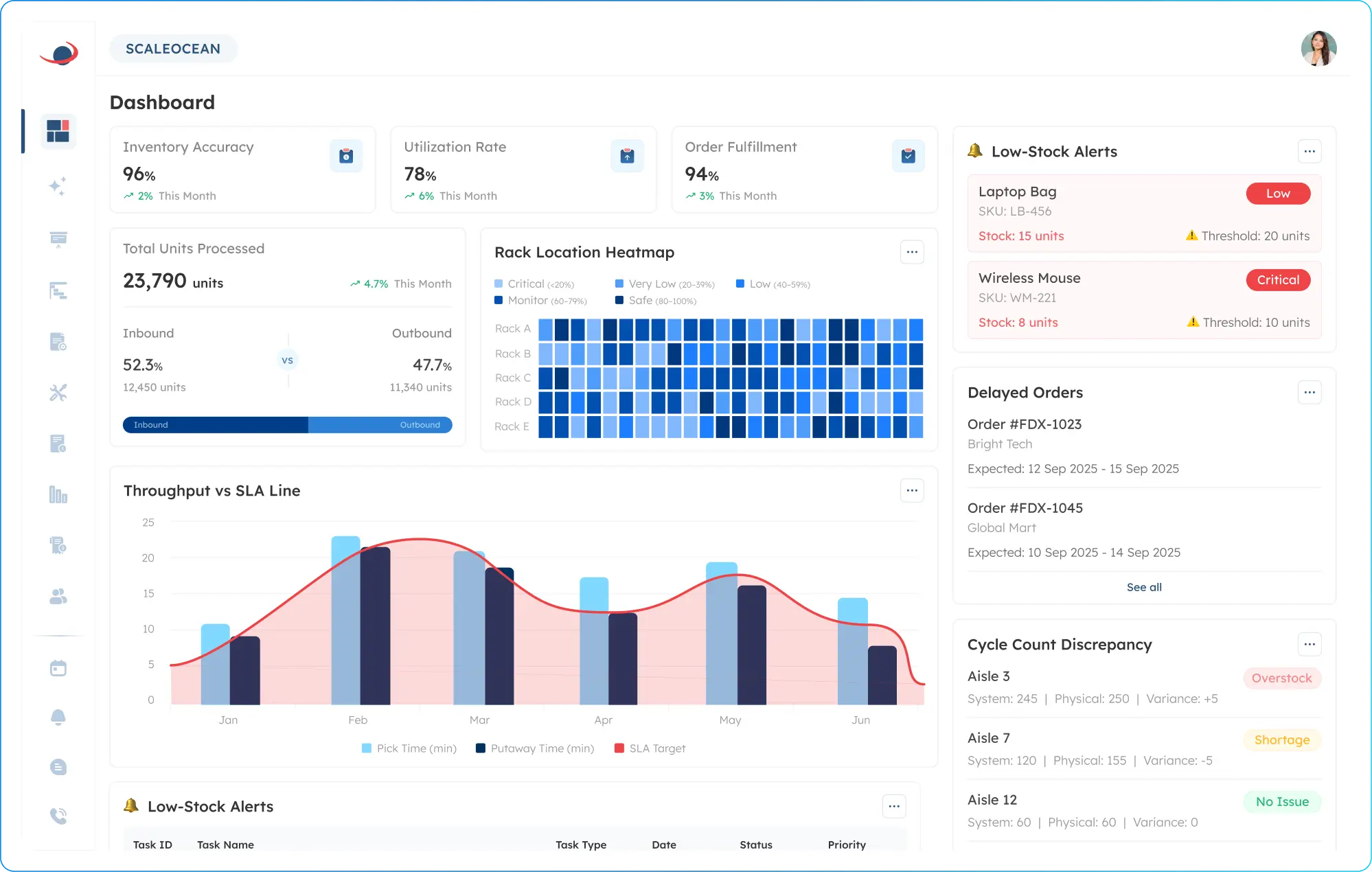
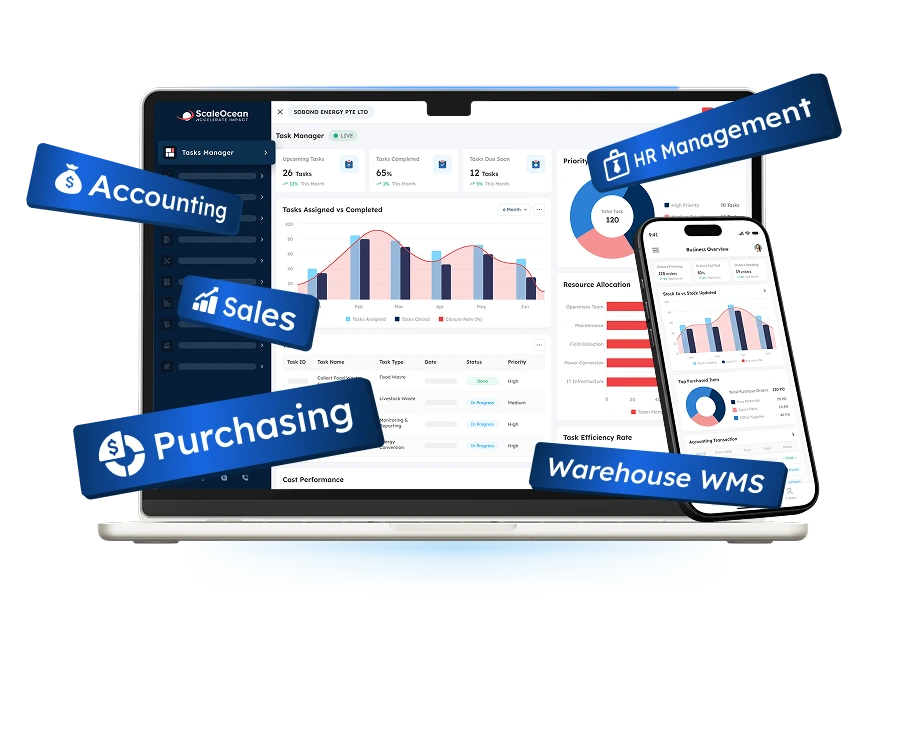
ScaleOcean Atlas is a cloud-based and AI-driven Warehouse Management System (WMS) that aims to simplify your warehouse operations, achieve greater inventory accuracy, and enhance supply chain activities.
The solution is applicable to manufacturing, distribution and retail, and logistics companies. Furthermore, one of the key features of ScaleOcean Atlas for Warehouse is their built-in ERP (Enterprise Resource Planning) system which links warehouse functions to sales, stock and supply-side.
Additionally, businesses can request a free demo prior to implementation to get a better idea of how the system can benefit their warehouse operations. Some of its features include:
- Real-Time Inventory Management: Provides real-time visibility of inventory movements and stock levels among the warehouses.
- Barcode Management: Automates the receiving, picking, and shipping process and also reduces manual error in the process.
- Multi-Warehouse Management: Has the ability to control inventory in multiple warehouses from a single platform.
- AI-Powered Analytics: Generates insights and predictions to help with better inventory planning and decision-making.
- Warehouse Automation: Automates warehouse flows and replenishment, and makes stock transfers.
- ERP Integration: Integrates warehouse functioning with purchasing, accounting, sales and supply chain management.
Website: https://scaleocean.com/ph/solution/warehouse-management-systemhttps://scaleocean.com/ph/
| Pros | Cons |
|---|---|
|
|
Suitable for:
ScaleOcean Atlas for Warehouse Management provides solutions for medium to large manufacturing, distribution, retail, wholesale, and logistics companies in the Philippines that demand an integrated ERP and Warehouse Management Systems.
Pricing:
ScaleOcean Atlas for Warehouse Management provides flexible pricing to match the scale of the implementation, chosen modules, number of users and complexity of the business. See some of the ScaleOcean Atlas pricing options here.

2. PayRecon WMS
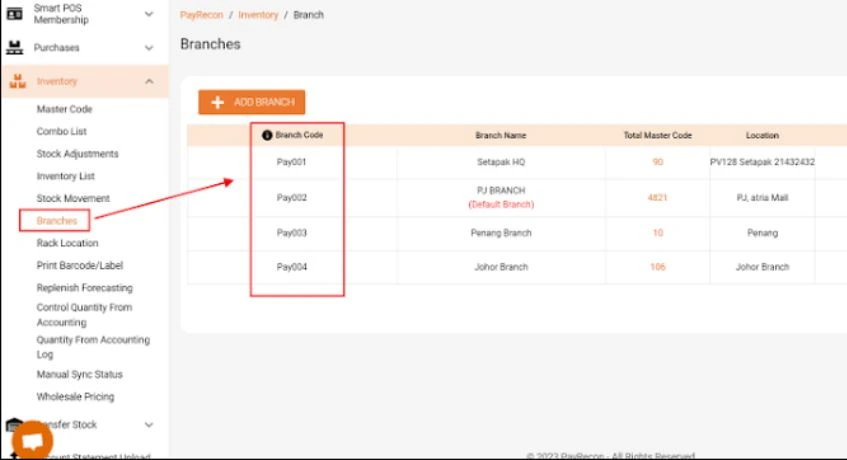
PayRecon WMS is designed to provide businesses with a warehouse management system that facilitates better stock management, warehouse visibility and order fulfillment processes. The system is ideal for distributors, retailers, and companies looking to automate management.
Additionally, PayRecon WMS offers live inventory tracking and optimizes warehouse processes. The platform ensures businesses have accurate stock records and enhance their operational efficiency. The following are some of the features:
- Real-Time Inventory Tracking: PayRecon keeps track of inventory movements and real-time tracking across the different warehouses.
- Barcode Integration: Supports barcode scanning to get more accurate inventory.
- Order Fulfillment Management: It improves picking, packing and shipping.
- Warehouse Reporting: Additionally, it produces warehouse reporting to monitor warehouse performance and data.
| Pros | Cons |
|---|---|
|
|
Pricing:
PayRecon offers flexible pricing depending on the size of the warehouse, the needs of operation and the scope of implementation. A quotation can be requested for pricing that suits a business’s warehouse operations.
Suitable for:
PayRecon WMS is ideal for small to medium distributors, wholesalers and retailers in the Philippines.
3. SpringBoard
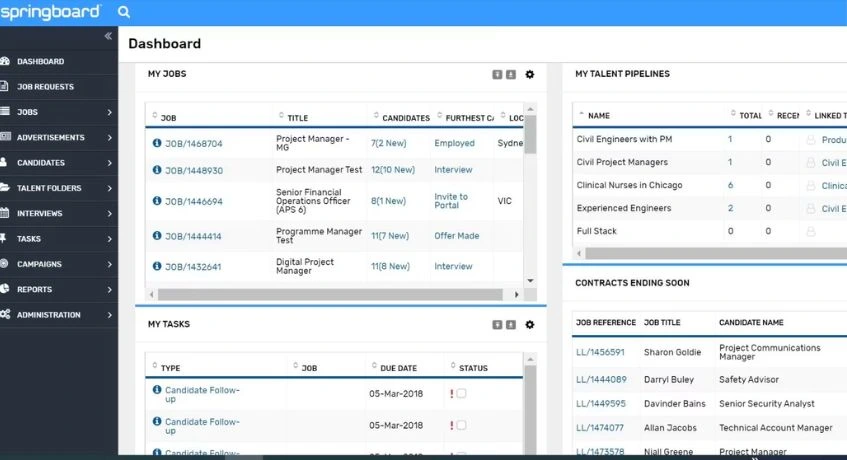
The business management software solutions provider SpringBoard provides warehouse and inventory management solutions for fast-expanding businesses. It aids organizations in better inventory management and streamlined operation.
Moreover, SpringBoard’s user-friendly interface and flexible inventory management tools facilitate digitalization in the warehouse, beneficial for SMEs. Here are some features within SpringBoard, which include:
- Inventory Management: View all stock and inventory transactions in real-time within SpringBoard.
- Order Management: Covers order and fulfillment management for customers.
- Purchasing Integration: Integrates warehouse activities with Purchase activities.
- Multi-Location Inventory: This feature enables inventory management from different locations.
Website: https://blog.springboard.com.ph/services/technology-offshoring-outsourcing/
| Pros | Cons |
|---|---|
|
|
Suitable for:
SpringBoard offers customized pricing based on the modules implemented and the company’s operational requirements.
Pricing:
SpringBoard is suitable for SMEs looking to digitalize inventory and warehouse operations.
4. Microsoft Dynamics 365 WMS/SCM
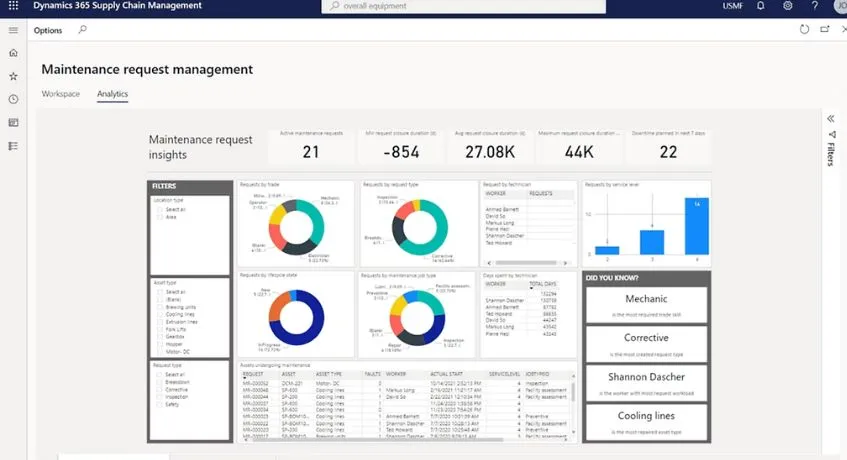
Microsoft Dynamics 365 Supply Chain Management is an enterprise level solution to optimize warehouse and inventory and supply chain management. The platform allows businesses to streamline their warehouse operations and automate tasks.
Microsoft Dynamics 365 WMS seamlessly integrates with the Microsoft ecosystem, enabling companies to integrate supply chain operations into a single platform. These are some of the features of Microsoft Dynamics 365:
- Advanced Warehouse Management: Enables more complex warehouse processes and automation.
- Real-Time Inventory Visibility: This feature provides visibility of inventory in different locations/warehouses.
- AI-Driven Analytics: Provides predictive insights for better decision-making.
- Labor and Resource Management: In addition, this feature for schedules, allocates, and maximises staffing and productivity.
Website: https://www.microsoft.com/en-us/dynamics-365/
| Pros | Cons |
|---|---|
|
|
Suitable for:
Microsoft Dynamics 365 is suitable for companies with a medium to large size that have complex warehouse and supply chain operations.
Pricing:
Microsoft Dynamics 365 is a subscription-based licensing agreement, and the implementation, customization, and support services may come with extra charges.
5. BrightPearl WMS
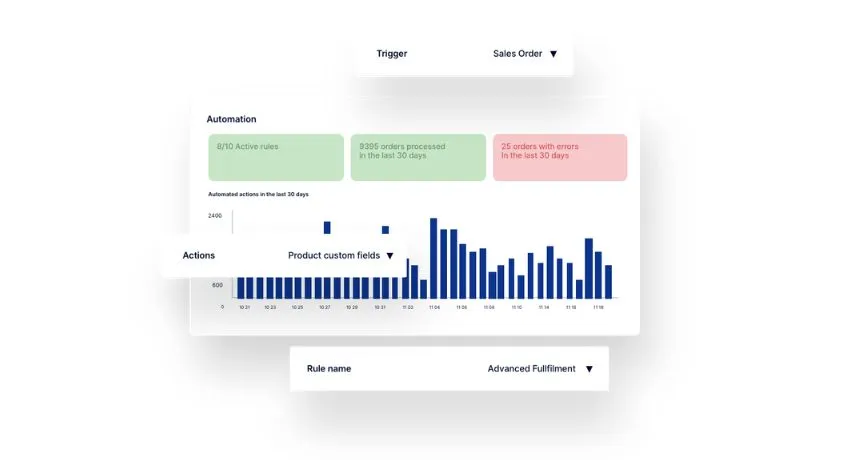
BrightPearl is a cloud warehouse and retail operations system for wholesale and retail business. It supports companies in optimizing their inventory and warehouse management processes, alongside their multi-channel order fulfillment.
Additionally, BrightPearl WMS has a cloud-based feature which combines warehouse management, inventory control, and order management to support seamless omnichannel operations. Here are some of the features within the BrightPearl WMS:
- Omnichannel Order Management: Synchronizes orders from multiple sales channels.
- Inventory Visibility: Tracks stock levels in real time.
- Warehouse Automation: Streamlines warehouse workflows and fulfillment.
Website: https://www.brightpearl.com/
| Pros | Cons |
|---|---|
|
|
Pricing:
BrightPearl offers for custom pricing based on transaction volume and business size.
Suitable For:
BrightPearl is suitable for retailers, wholesalers, and omnichannel e-commerce businesses.
6. Honeywell WMS
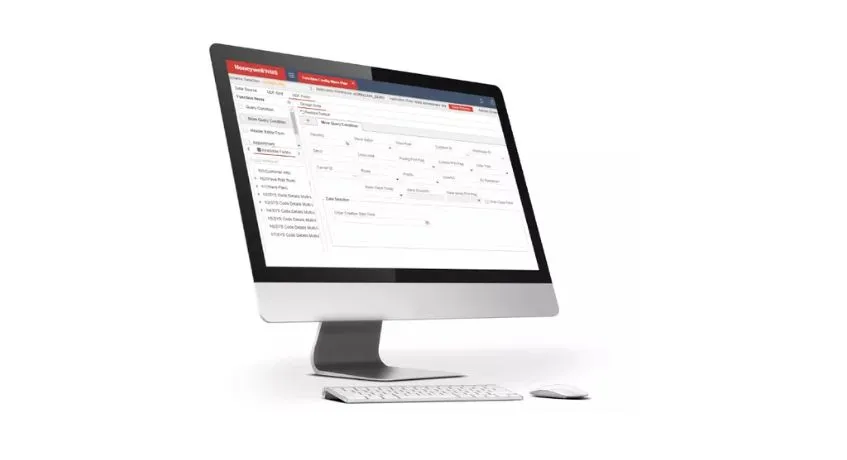
Honeywell WMS is an enterprise warehouse management solution designed to improve warehouse productivity, inventory visibility, and operational efficiency. The system is commonly used by large distribution centers and logistics companies.
Furthermore, Honeywell WMS emphasizes warehouse automation and workforce optimization to support complex warehouse environments. Here are some features of Honeywell WMS that can improve warehouse operations:
- Warehouse Automation: Honeywell automates warehouse workflows and material management.
- Labor Management: Therefore, it improves workforce productivity and task allocation.
- Real-Time Inventory Tracking: Provides accurate inventory visibility.
Website: https://automation.honeywell.com/au/en
| Pros | Cons |
|---|---|
|
|
Pricing:
Honeywell offers enterprise pricing based on warehouse complexity, automation requirements, number of facilities, and deployment scope.
Suitable For:
Large logistics providers, manufacturers, and distribution centers requiring warehouse automation.
7. SAP Extended Warehouse Management
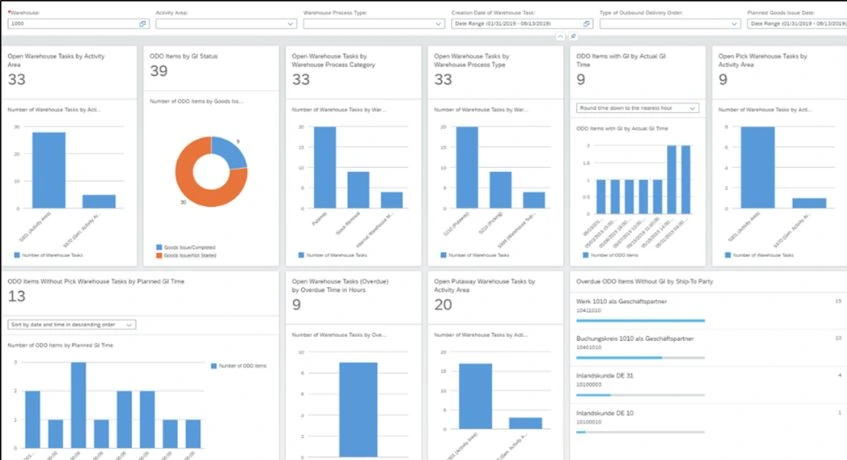
SAP Extended Warehouse Management (EWM) is a comprehensive warehouse management solution designed for enterprises with advanced logistics requirements. The software enables businesses to optimize warehouse processes and automate supply chain operations.
In addition, SAP EWM is widely recognized for handling highly complex warehouse environments. Thus, making it suitable for large enterprises with sophisticated logistics operations Below here are features included within SAP EMW:
- Advanced Warehouse Process Management: Supports inbound, outbound, and internal warehouse processes.
- Labor Management: Optimizes workforce productivity.
- Yard Management: Manages vehicle movements and dock scheduling.
- Inventory Optimization: Enhances inventory control and visibility.
Website: https://www.sap.com/sea/
| Pros | Cons |
|---|---|
|
|
Pricing:
SAP EWM pricing varies according to licensing model, deployment type (cloud or on-premise), implementation complexity, number of users, and required integrations.
Suitable For:
Large enterprises and multinational companies managing highly complex warehouse operations.
8. Infor WMS
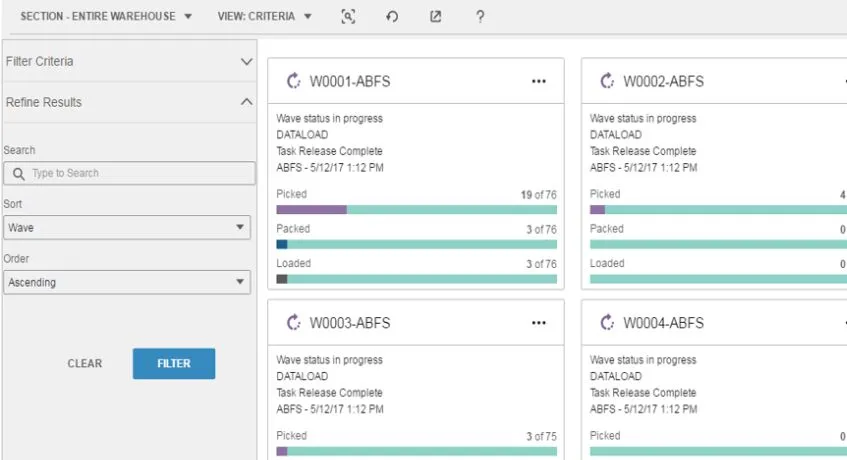
Infor WMS is an advanced warehouse management platform designed to optimize inventory control, warehouse execution, and labor productivity. The solution is ideal for businesses operating complex supply chains and large distribution networks.
Infor combines automation, analytics, and warehouse optimization capabilities to improve operational efficiency. Below are some of the features included in Infor WMS for warehouse management operations:
- 3D Warehouse Visualization: Improves warehouse planning and space utilization.
- Labor Management: Monitors employee productivity and performance.
- Task Management: Automates warehouse activities and workflows.
- Inventory Optimization: Enhances stock accuracy and replenishment.
Website: https://www.infor.com/
| Pros | Cons |
|---|---|
|
|
Pricing:
Infor provides customized pricing based on warehouse scale, number of users, deployment model, and business requirements.
Suitable For:
Medium and large enterprises operating multiple warehouses or complex distribution networks.
9. Zoho Inventory
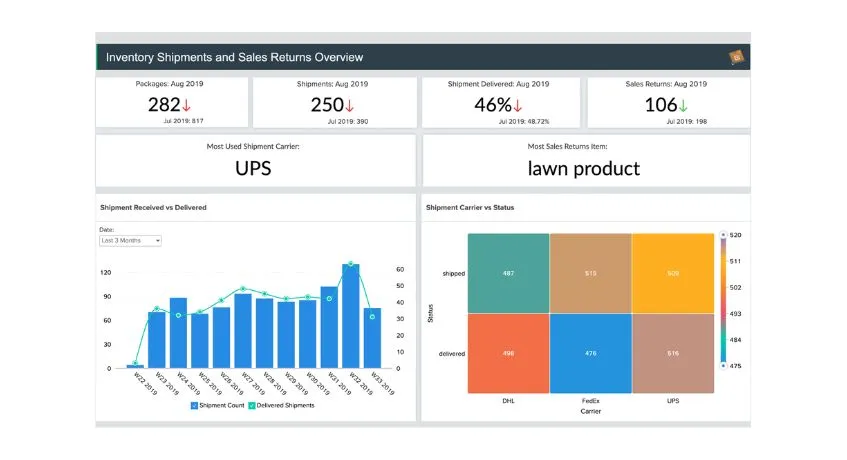
Zoho Inventory is a cloud-based inventory and warehouse management solution designed primarily for SMEs. The platform helps businesses automate inventory control, order management, and stock monitoring processes.
The software is particularly suitable to growing businesses due to its affordability, ease of use, and integration with the Zoho ecosystem. Below are some of the features in Zoho Inventory:
- Inventory Tracking: Zoho Inventory can monitor stock levels and transactions in real time.
- Order Management: Manages customer orders and fulfillment processes.
- Barcode Scanning: Supports faster and more accurate warehouse operations.
Website: https://www.zohocorp.com/
| Pros | Cons |
|---|---|
|
|
Pricing:
Zoho Inventory offers transparent subscription plans starting at approximately US$29 per organization per month, with higher-tier plans providing additional warehouses, users, and automation features.
Suitable For:
Zoho Inventory is competent for SMEs, retailers, wholesalers, and e-commerce businesses.
10. Fishbowl Warehouse Management Software
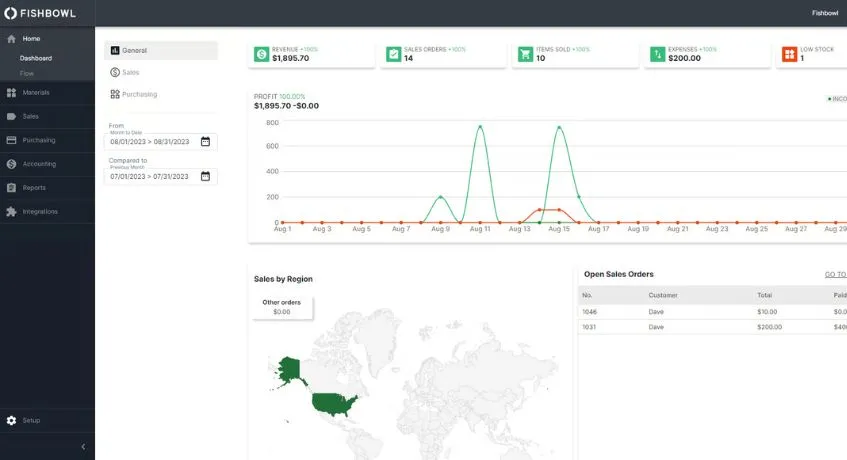
Fishbowl is an inventory and warehouse management software designed for manufacturers and distributors. The platform helps businesses improve inventory accuracy while streamlining warehouse and fulfillment operations.
Fishbowl integrates inventory management with manufacturing processes, thus making it particularly suitable for production-oriented businesses. Here are some of the features of Fishbowl:
- Inventory Control: Maintains accurate stock records.
- Barcode Management: Improves inventory accuracy and tracking.
- Order Fulfillment: Streamlines shipping and order processing.
Website: https://www.fishbowlinventory.com/
| Pros | Cons |
|---|---|
|
|
Pricing:
Fishbowl offers custom quotation; pricing varies based on deployment and business requirements.
Suitable For:
Therefore, it’s capable for manufacturers, distributors, and inventory-intensive businesses.
11. BlueYonder
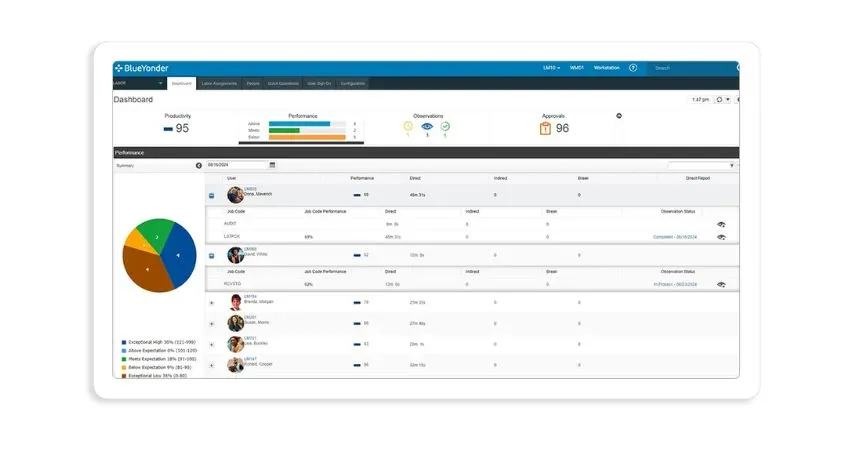
BlueYonder is an AI-driven warehouse and supply chain management platform designed for enterprises seeking advanced automation and predictive analytics to improve operational performance.
The platform leverages artificial intelligence and machine learning to optimize warehouse processes and supply chain efficiency. Below are some of the features to maximize warehouse operational in Blue Yonder:
- AI-Powered Forecasting: Supports demand prediction and planning.
- Warehouse Optimization: Enhances warehouse productivity.
- Labor Management: Improves workforce allocation and utilization.
- Inventory Visibility: Provides real-time inventory tracking.
Website: https://blueyonder.com/
| Pros | Cons |
|---|---|
|
|
Pricing:
Blue Yonder provides enterprise-level pricing tailored to warehouse complexity, AI capabilities, implementation scope, and supply chain requirements. Pricing is available through direct consultation.
Suitable For:
BlueYonder is the right choice for large enterprises requiring AI-powered warehouse and supply chain optimization.
12. Oracle Netsuite
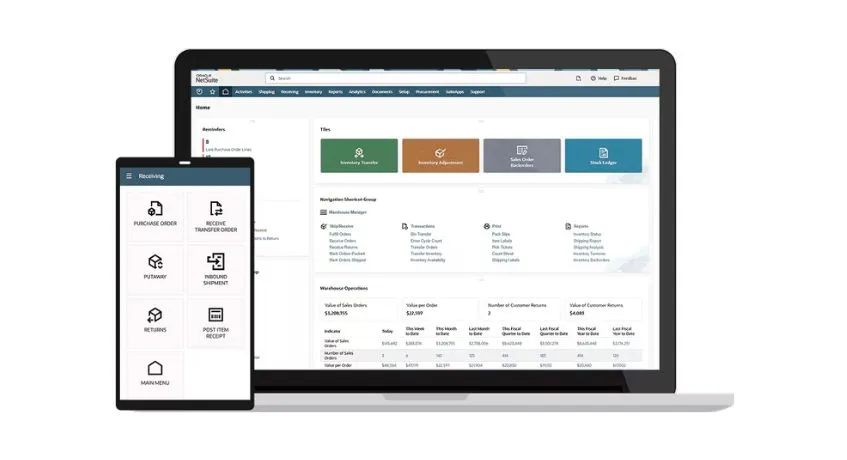
Oracle NetSuite is a cloud ERP platform that includes warehouse and inventory management capabilities. The solution enables businesses to manage inventory, warehouse activities, and financial operations within a single system.
Moreover, Oracle Netsuite integrated cloud ecosystem that provides comprehensive business visibility and operational control across departments. Below are some of the features included in Oracle NetSuite that can boost warehouse management:
- Inventory Management: Tracks inventory in real time.
- Warehouse Management: Streamlines warehouse operations.
- Order Management: Supports order processing and fulfillment.
- Demand Planning: Improves inventory forecasting and planning.
Website: https://www.netsuite.com/
| Pros | Cons |
|---|---|
|
|
Pricing:
Oracle NetSuite uses a subscription-based pricing model consisting of platform licensing, user licenses, optional modules, and implementation services. Total costs vary depending on organizational requirements.
Suitable For:
Oracle NetSuite is appropriate for medium to large businesses seeking an integrated cloud ERP and warehouse management solution.
13. ECount Inventory management
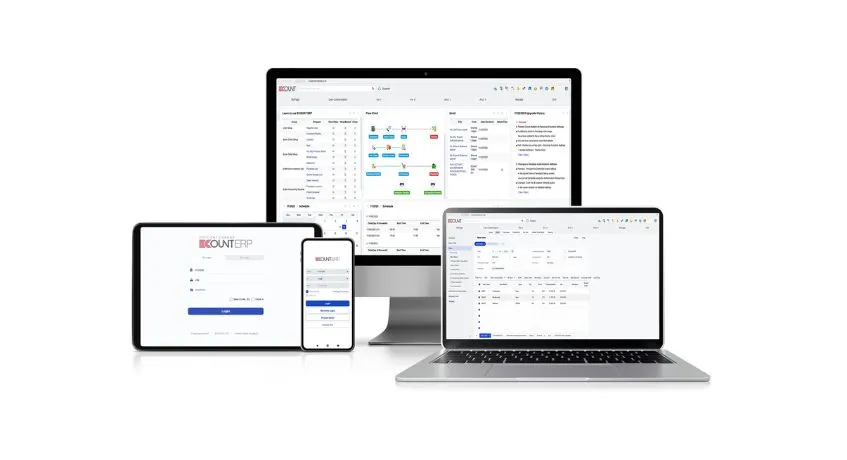
ECount is a cloud-based ERP and inventory management system designed for SMEs seeking affordable warehouse management capabilities. The software helps businesses improve inventory control and operational efficiency.
ECount provides essential warehouse and inventory functionalities while maintaining cost efficiency, making it suitable for growing businesses. Here are some of the features included in ECount:
- Inventory Tracking: Monitors stock levels and movements.
- Warehouse Management: Supports warehouse operations and stock control.
- Purchasing Management: Connects procurement activities with inventory.
- Sales Management: Integrates warehouse and sales processes.
Website: https://www.ecount.com/us/
| Pros | Cons |
|---|---|
|
|
Pricing:
ECount offers transparent subscription pricing starting at approximately US$55 per month, which includes unlimited users. This makes it an affordable option for businesses seeking predictable software costs.
Suitable For:
Small and medium-sized businesses looking for an affordable ERP with warehouse and inventory management capabilities.
In Conclusion
In today’s rapidly changing markets, a Warehouse Management System is vital for businesses to stay competitive. There are numerous benefits, including enhancing visibility, cutting down on costs, optimizing orders, and boosting efficiency.
For businesses in the Philippines looking for a comprehensive and scalable solution, the ScaleOcean Atlas for Warehouse Management can help streamline warehouse operations, improve inventory accuracy, and integrate warehouse processes.
ScaleOcean Atlas enables companies to control business inventory, warehouses, orders, barcode and RFID systems all in one single solution. This helps companies to enhance inventory accuracy and get visibility throughout their supply chain.
You can also request a free demo to see how ScaleOcean Atlas can support your warehouse and supply chain operations and help your business achieve higher operational efficiency.
FAQ:
1. Which software is best for warehouse management?
The best warehouse management software depends on your business size, industry, budget, and operational needs. Compare features, scalability, integration capabilities, ease of use, and pricing to find the solution that best supports your warehouse operations.
2. Is WMS difficult to learn?
Not necessarily. Most modern WMS platforms are user-friendly and include training or onboarding resources. With proper guidance and regular use, employees can quickly learn the system and manage warehouse operations more efficiently.
3. How many types of WMS are there?
There are three main types of WMS: standalone, cloud-based, and integrated WMS. Standalone systems operate independently, cloud-based solutions are hosted online, and integrated WMS functions as part of an ERP or supply chain management platform.















.png)