




Inventory forecasting software helps businesses predict warehouse needs and customer demand by analyzing historical data. It evaluates past sales performance, market trends, and buying behaviors to ensure optimal inventory control.
This software is important to enhance business productivity and examine the next step to maintain customers’ expectations. Furthermore, to help you leverage its full potential, this article covers key strategies to maximize your inventory forecasting software solutions.
 Key Takeaways
- Inventory forecasting software helps businesses predict customer demand, optimize inventory levels, and improve purchasing decisions using AI analytics.
- The features of inventory forecasting software include AI predictive analytics, inventory tracking, purchase order management, demand forecasting, and stock optimization.
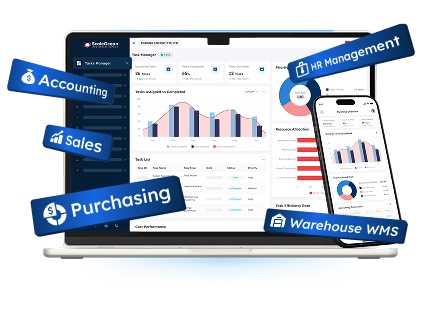
- ScaleOcean Atlas combines AI-powered inventory forecasting with inventory management, warehouse operations, procurement, sales, accounting in one platform.
What is an Inventory Forecasting Software?
Inventory forecasting software is a digital solution that predicts future inventory demand using historical sales data, purchasing trends, supplier performance, and customer behavior.
Rather than relying on assumptions, businesses can use statistical models and artificial intelligence (AI) to estimate how much inventory should be ordered and when replenishment should occur.
Modern inventory forecasting systems connect with inventory management, purchasing, accounting, and point-of-sale (POS) systems to generate more accurate demand forecasts.
Instead of manually reviewing hundreds or thousands of SKUs, businesses receive automated recommendations that help optimize purchasing decisions while minimizing inventory risks.
For Philippine businesses, inventory forecasting becomes increasingly important during seasonal events such as Christmas, Holy Week, Back-to-School periods, payday sales, and major online shopping campaigns like 9.9, 10.10, or 11.11.
As companies expand across multiple warehouses and stores, inventory forecasting software provides centralized visibility into inventory movement, enabling more accurate purchasing and long-term business planning.
Why is Inventory Forecasting Software Important?
Inventory forecasting software plays a vital role in balancing inventory investment with customer demand. With this, businesses can proactively anticipate future demand. Here are the reasons why forecasting software is important:
- Reduces Stockouts & Lost Sales: This can predict future demand before inventory reaches critical levels and ensure products remain available when customers need them.
- Prevents Overstocking: Secondly, forecasting software recommends appropriate purchase quantities which reduce excess inventory that occupies warehouse space and increases carrying costs.
- Improves Cash Flow: Another benefit of forecasting software is, it can allow businesses to invest in inventory based on actual demand forecasts instead of guesswork.
- Supports Seasonal Planning: Another reason is, it identifies recurring sales trends, helping businesses prepare inventory for holidays, promotional campaigns, and peak shopping seasons.
- Minimizes Disruptions: Forecasting software also offers better demand visibility, allowing purchasing teams to account for supplier lead times and avoid emergency procurement.
- Enables Scalability: With forecasting software, it can automate forecasting across thousands of SKUs, multiple warehouses, and sales channels. This makes inventory planning manageable as operations grow.
Moreover, a study published in the Future Business Journal found that a medium-sized distributor using AI-powered demand forecasting achieved a forecast error of only 0.69% and aimed to reduce inventory shortages by 15% within one year of implementation.
Towards the Future: The Role of AI In Inventory Forecasting Solutions
Traditional forecasting methods primarily rely on historical averages and manual calculations. However, with AI, this software transforms inventory forecasting by analyzing significantly more variables. Here are some practices in inventory software:
- Learns Changing Demand: AI-powered forecasting continuously improves as it processes new sales and inventory data. Instead of relying on fixed forecasting rules, it adapts to changes in customer buying behavior or supplier performance.
- Analyzes Multiple Factors: Unlike traditional forecasting methods, AI evaluates numerous variables simultaneously or including historical sales. This analysis helps businesses make more reliable inventory decisions.
- Detects Unusual Inventory Early: AI quickly identifies unexpected increases or decreases in product demand. These early alerts help reduce unnecessary stock purchases while minimizing the risk of running out of high-demand products.
- Provides Intelligent Recommendations: In addition to forecasting future demand, AI offers practical suggestions for the ideal reorder quantity. This enables businesses to automate planning and make faster decisions.
The 13 Best Inventory Forecasting Software for Long-term Scalability
Choosing the right inventory forecasting software depends on your business size, industry, operational complexity, and long-term growth plans. Here are the best inventory forecasting software solutions to help improve forecast accuracy:
| Software | Key Strength | Best For |
|---|---|---|
|
ScaleOcean Atlas |
AI-powered forecasting with real-time inventory visibility and automated replenishment |
Businesses needs integrated inventory forecasting across multiple warehouses and operations |
|
Inventory Planner |
Simple demand forecasting and purchase planning with eCommerce integrations |
Retailers, wholesalers, and growing eCommerce businesses |
|
StockTrim |
Automated reorder recommendations and safety stock optimization |
Wholesalers and manufacturers seeking simple inventory optimization |
|
Netstock |
Inventory optimization with supplier performance monitoring |
Distributors and manufacturers managing demand and supplier reliability |
|
Cin7 |
Omnichannel inventory management combined with forecasting |
Retail and eCommerce businesses selling across multiple channels |
|
Prediko |
Easy inventory planning and purchasing automation for Shopify brands |
Fast-growing direct-to-consumer and Shopify businesses |
|
EazyStock |
Inventory optimization focused on reducing carrying costs while maintaining service levels |
Businesses looking to balance inventory investment and product availability |
|
Logility |
AI-driven demand forecasting and end-to-end supply chain planning |
Large enterprises with complex, multi-location supply chains |
|
GMDH Streamline |
New ItemMachine learning-based inventory, demand, and supply planning for large SKU volumes |
Medium to large manufacturers, wholesalers, and distributors |
|
Infor Forecasting Software |
Integration between inventory forecasting, manufacturing, and supply chain planning |
Large manufacturers and distributors with complex operations |
|
Oracle Planning |
Enterprise-level scenario modeling, financial planning, and inventory forecasting |
Large enterprises with complex financial and supply chain planning needs |
|
Fuse Inventory |
Easy-to-use demand forecasting, purchasing, and replenishment tools |
SMEs and growing distributors seeking straightforward inventory planning |
|
RELEX |
Automated replenishment and multi-location retail supply chain optimization |
Medium to large retailers, grocery chains, wholesalers, and consumer goods companies |
1. ScaleOcean Atlas for AI-Powered Inventory Forecasting
Forecasting inventory manually becomes increasingly challenging as businesses expand. Many companies struggle to predict customer demand accurately, leading to stockouts, excess inventory, and missed seasonal opportunities.
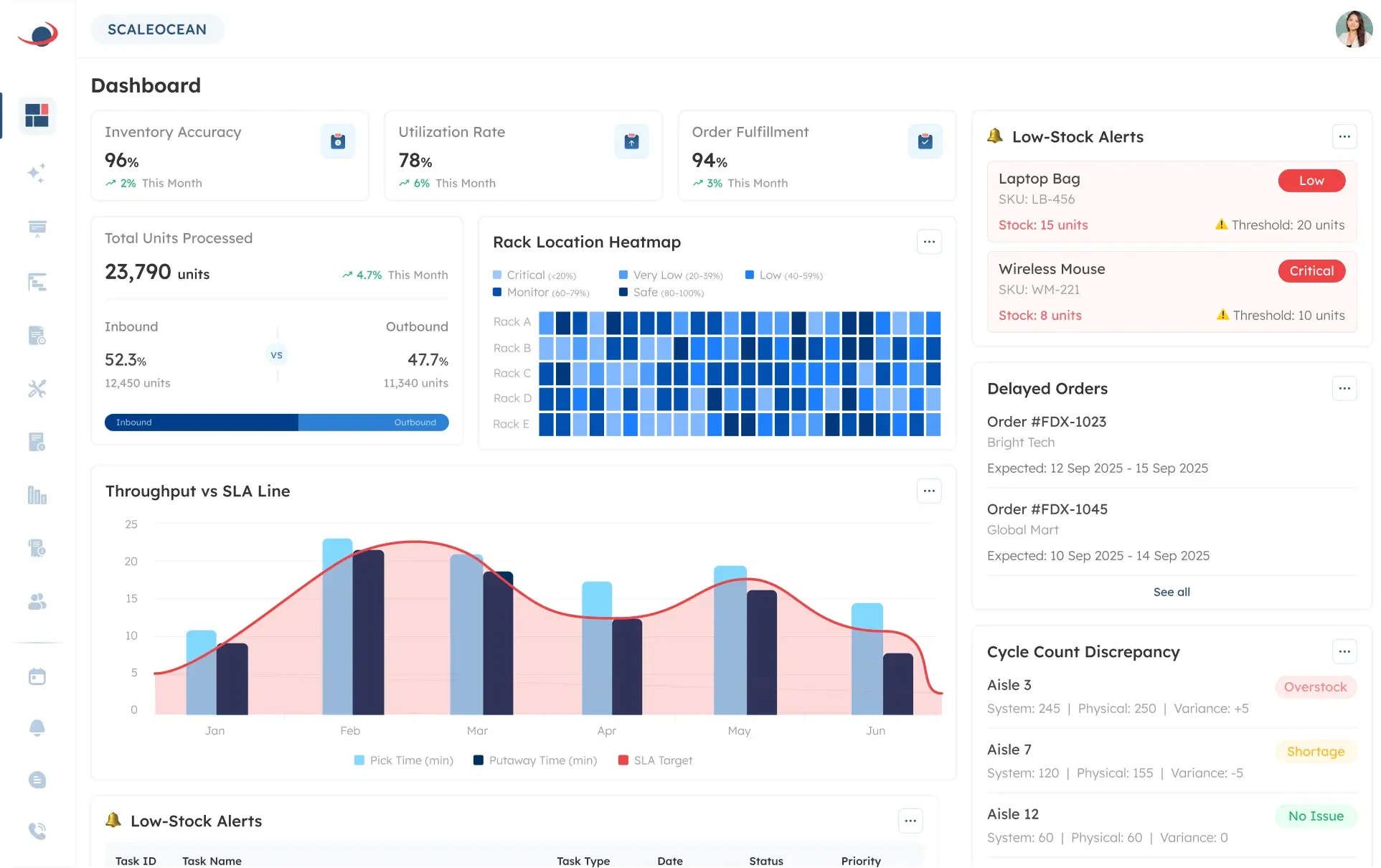
To overcome these challenges, inventory module of ScaleOcean Atlas combines AI-powered inventory forecasting with real-time inventory management to help businesses make smarter decisions.
Rather than relying solely on historical sales data, the system analyzes inventory movement, purchasing history, and stock turnover. It automatically sets reorder points and safety stock levels to prevent stockouts while minimizing holding costs.
Additionally, the embedded AI assistant, ScaleMind, provides businesses easy access to their inventory levels across multiple warehouses. Schedule a consultation today to discover how ScaleOcean Atlas simplifies forecasting. Some of the features include:
- AI-Powered Inventory Forecasting: Forecast future demand using historical sales, purchasing trends, supplier lead times, and inventory movement to improve forecast accuracy.
- Real-Time Inventory Tracking: Automatically update inventory quantities across warehouses after every receipt, transfer, production, or sales transaction.
- Safety Stock Optimization: Calculate appropriate safety stock levels based on demand variability and supplier lead times to reduce inventory risks.
- Barcode & QR Code Integration: Improve inventory accuracy by automating receiving, stocktaking, picking, transfers, and warehouse operations with barcode and QR code scanning.
- Multi-Warehouse Inventory Management: Monitor inventory availability across multiple warehouses, branches, and distribution centers from a centralized dashboard.
- Integrated Procurement Management: Generate purchase requisitions and purchase orders directly from forecasting recommendations to streamline procurement planning.
| Pros | Cons |
|---|---|
|
|
- Pricing ScaleOcean: Final pricing depends on the solution and project requirements; contact ScaleOcean team for more pricing information.
- Rating Capterra ScaleOcean: 5.0/5
2. Inventory Planner
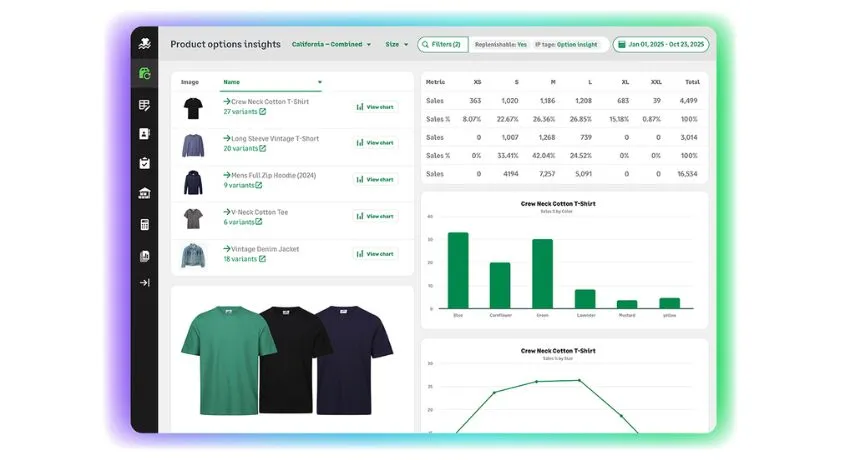
Inventory Planner is a program that is used to manage a warehouse or storage room. This enables retailers, wholesalers and e-commerce companies to streamline their demand forecasting tasks through historical sales data and seasonal patterns.
Additionally, this platform integrates with various e-commerce platforms and ERP systems also make inventory planning more efficient. It’s also ideal for multi-channel and seasonal small and growing businesses. The features include:
- Demand Forecasting: Forecast future demand with historical sales information and seasonal demand trends.
- Purchase Planning: Make purchase recommendations from the forecasted demand and supplier lead time.
- Optimized Inventory: Keep stocks at optimal levels and get automated reorder suggestions.
- Seasonal Sales Analysis: Plan stock levels for regular sales and special events.
| Pros | Cons |
|---|---|
|
|
- Pricing Inventory Planner: Pricing varies depending on business needs and requirements.
- Rating Capterra Inventory Planner: 4.6/5
3. StockTrim
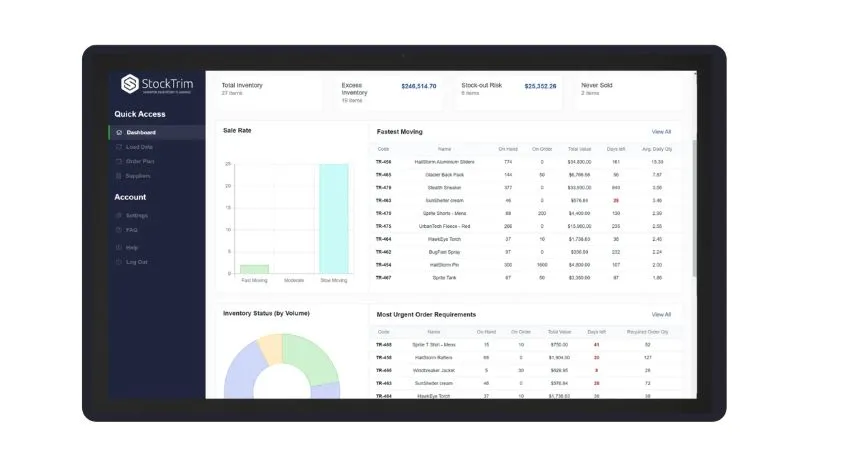
For growing businesses, it’s common to see inventory imbalances as manual forecasting fails to accurately forecast changing customer demand. Therefore overstocking increases storage costs, while stockouts result in lost sales opportunities.
StockTrim provides advanced technology that offers accurate forecasts of future needs and automatically suggests reorder amounts.The site is especially good for wholesalers and manufacturers. It has several important characteristics such as:
- Purchase Order Recommendations: Get recommended quantity to reorder based on sales forecast.
- Safety Stock Optimization: Determine size of buffer stock to minimize stockouts.
- Lead Time Analysis: Take supplier delivery performance into account for procurement planning.
| Pros | Cons |
|---|---|
|
|
- Pricing StockTrim: Starts at $199/month.
- Rating Capterra StockTrim: 4.9/5
4. Netstock
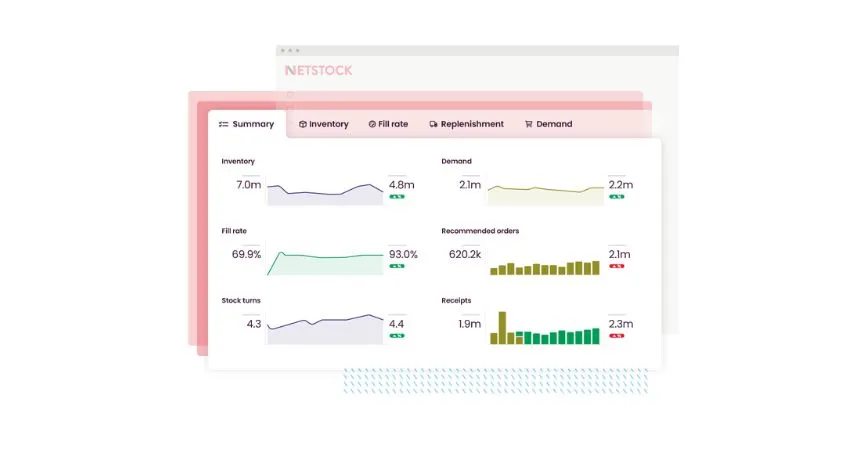
Many distributors and manufacturers are having problems between the demands of their customers and the investment in inventory. It can cause over costs when ordering too much, while ordering too little affects customer satisfaction and service levels.
Netstock enables businesses to better plan their inventory needs and optimize them with demand forecasting and supplier performance monitoring. It has inventory optimization tools to keep the inventory in good balance. Some of the features are:
- Inventory Forecasting: Predict upcoming inventory needs using predictive analytics.
- Demand Planning: Enhance the buying process with past sales trends.
- Supplier Performance Monitoring: Evaluate supplier reliability and lead times.
- Inventory Classification: Prioritize inventory based on business value and inventory movement.
| Pros | Cons |
|---|---|
|
|
- Pricing Netstock: Contact the provider for pricing tailored to your business needs.
- Rating Capterra Netstock: 4.8/5
5. Cin7
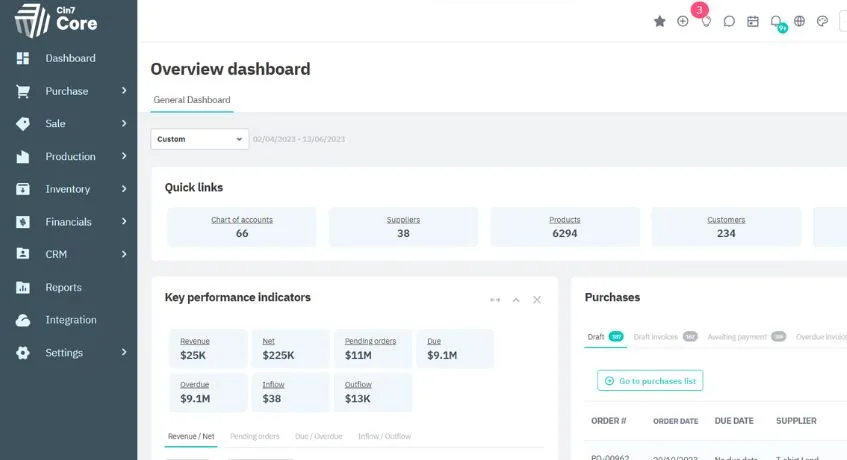
Managing inventory across physical stores, warehouses, and online marketplaces common to have an inconsistent inventory system. If there is no central forecasting, companies could end up overselling products or out of the popular items.
Cin7 integrates inventory forecasting, inventory management, warehouse, and order fulfillment into one cloud solution. Some features for businesses to consider when synching inventory from multiple sales channels are:
- Inventory Forecasting: Predict the future demand based on the previous sales.
- Omnichannel Inventory Management: Control the inventory in all stores and the online marketplaces.
- Warehouse Management: Increase visibility and movement of inventory in the warehouse.
| Pros | Cons |
|---|---|
|
|
- Pricing Cin7: Starts at $349/month.
- Rating Capterra Cin7: 4.3/5
6. Prediko
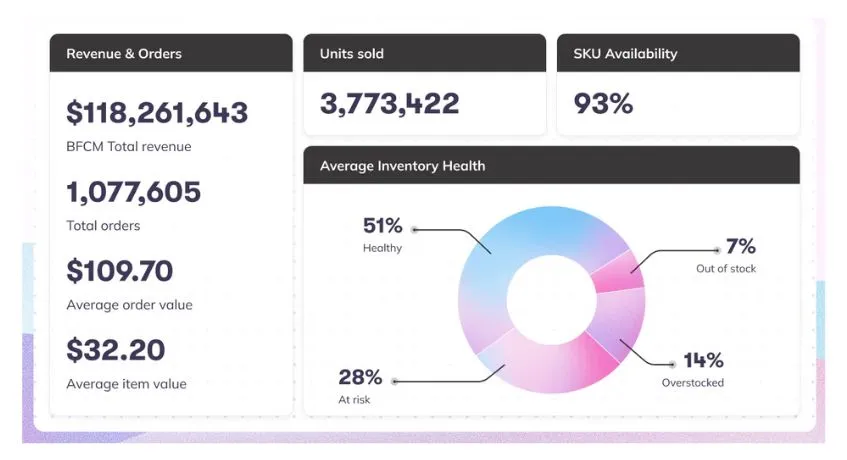
Prediko helps direct-to-consumer brands automate inventory planning through demand forecasting and purchasing recommendations. The dashboard of its visual planning application allows companies to track stocks and anticipate future sales.
It helps fast-growing business with Shopify which often struggles to predict inventory due to expanding product catalogs. Moreover, manual planning also carries a risk of over-selling high velocity products. Some of the features to help forecast demand:
- Demand Forecasting: Forecast the demand for inventory based on the historical sales data.
- Inventory Planning: Plan for inventory to be replenished according to sales forecast.
- Purchase Order Management: Simplify purchasing workflows.
- Shopify Integration: Connect directly with Shopify inventory.
| Pros | Cons |
|---|---|
|
|
- Pricing Prediko: Starts at $49/month.
7. EazyStock
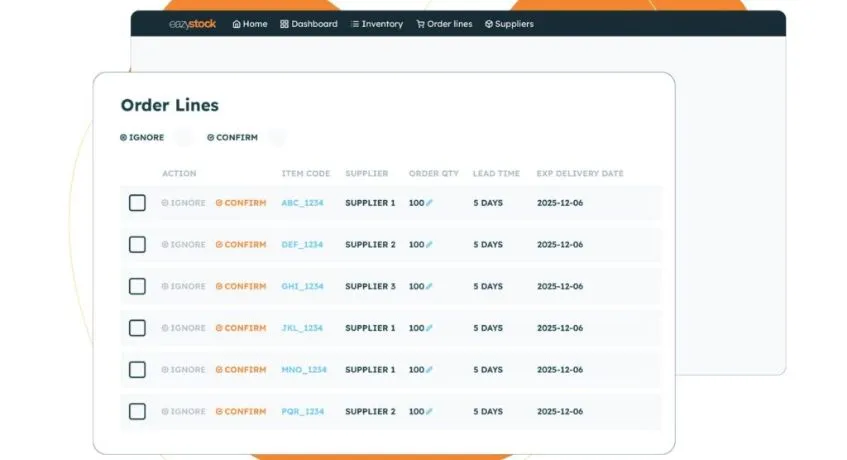
Having too much safety stock can lead to businesses having high storage costs and a low inventory turnover ratio. But, not enough inventory has a negative impact on customer service. Therefore, EazyStock helps solve these challenges.
EazyStock helps companies optimize their stock by matching customers’ inventory needs with the inventory investment. In addition, it uses analytics to give recommended replenishment quantities based on forecasting models. Here are the features include:
- Inventory Optimization: Maintain an optimum level of inventory while keeping in mind the expense of the inventory.
- Demand Forecasting: Predict future purchasing requirements.
- Service Level Planning: Maintain target inventory availability.
| Pros | Cons |
|---|---|
|
|
- Pricing EazyStock: Pricing is determined based on the company’s specific requirements.
- Rating Capterra EazyStock: 4.7/5
8. Logility
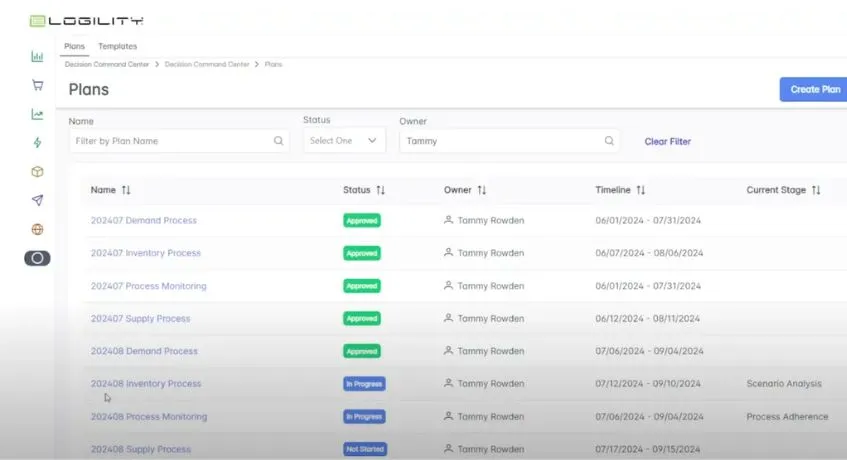
In the case of a complex supply chain, large enterprises can often find it challenging to manage inventory planning at multiple warehouses. Unlike traditional forecasting techniques, which may not be able to capture the changing market dynamics.
However, Logility solves these problems using predictive analytics to improve demand forecasting, inventory optimization, and end-to-end supply chain planning. Here are some of the features include:
- Demand Forecasting: Enhance the accuracy of forecasts with machine learning.
- Supply Chain Planning: Coordinate inventory across multiple locations.
- Inventory Optimization: Reduce excess inventory while maintaining service levels.
| Pros | Cons |
|---|---|
|
|
- Pricing Logility: Pricing varies according to the scope of implementation and features needed.
- Rating Capterra Logility: 4.6/5
9. GMDH Streamline
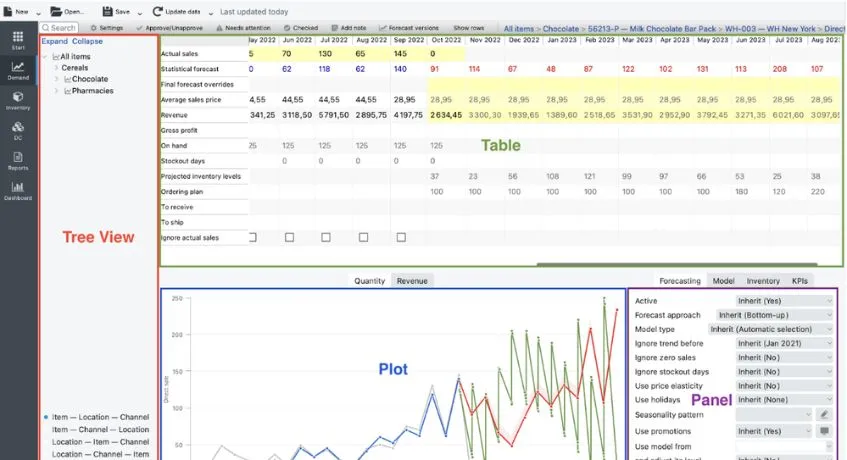
GMDH Streamline is the ninth recommendation of the forecasting inventory software. It simplifies inventory planning based on machine learning, which enhances the accuracy of forecasts. Also, it is good for manufacturers, wholesalers and distributors.
Furthermore, the platform can track past transactions, stock trends, and demand fluctuations, these features enabling companies to keep their stock levels in check and lower stocking costs. Here are a few of the characteristics:
- Inventory Optimization: Suggest optimal levels of stocks based on the demand pattern.
- Supply Planning: Coordinate the supply and production of goods and services according to the expected demand.
- Forecast Accuracy Monitoring: Evaluate the accuracy of the forecasts and continually make improvements to them.
| Pros | Cons |
|---|---|
|
|
- Pricing GMDH Streamline: Businesses can request a customized pricing quote.
- Rating Capterra GMDH Streamline: 4.8/5
10. Infor Forecasting Software
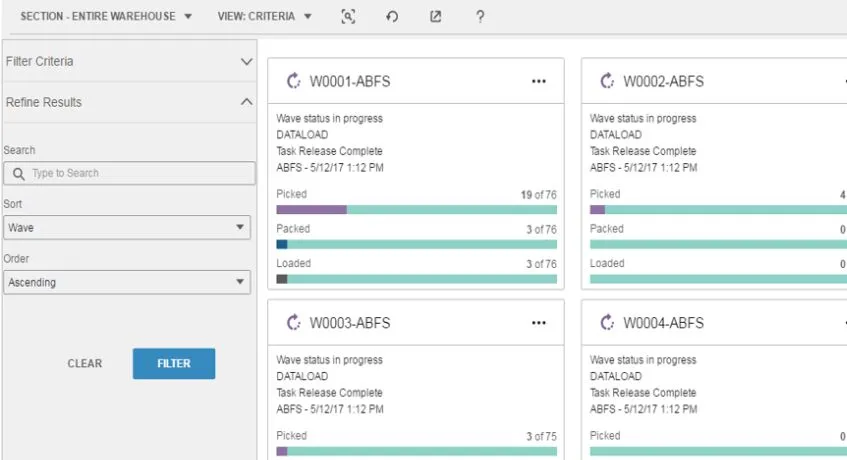
When inventory planning is not linked to operations, forecasting inventory across multiple facilities and production sites can become challenging. With Infor Software, it offers better forecasting to look at deep inventory demand.
Further, Infor Forecasting Software enables companies to anticipate needs while incorporating inventory planning into business needs. It is especially suitable for manufacturing companies and big distributors.
- Inventory Planning: Maximize inventory to future demand forecasts.
- Production Forecasting: Match up manufacturing plans with anticipated demand.
- Advanced Analytics Dashboard: Track analytics for inventory performance and forecasting.
| Pros | Cons |
|---|---|
|
|
- Pricing Infor Forecasting Software: Contact the provider to receive a quote based on your requirements.
- Rating Capterra Infor Forecasting Software: 3.7/5
11. Oracle Planning & Forecasting
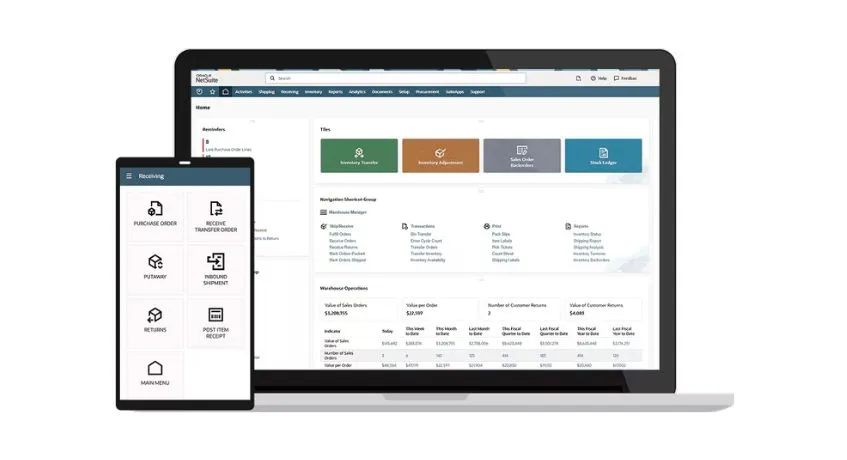
Oracle Planning & Forecasting is another option to consider for optimizing inventory stock levels for daily operations. It offers enterprise level forecasting, financial planning and supply chain analytics.
The platform is used for enhancing the demand forecasting process, and also for synchronizing inventory planning with the business goals. Thus, it is fit for companies that have intricate operating structures. Some of the features are:
- Scenario Modeling: Perform multiple planning scenarios to make decisions.
- Inventory Planning: Optimize inventory investments across locations.
- Financial Planning Integration: Connect inventory forecasts with budgeting and financial planning.
| Pros | Cons |
|---|---|
|
|
- Pricing Oracle Planning & Forecasting: Pricing varies according to the scope of implementation and features needed.
- Rating Capterra Oracle Planning & Forecasting: 4.5/5
12. Fuse Inventory
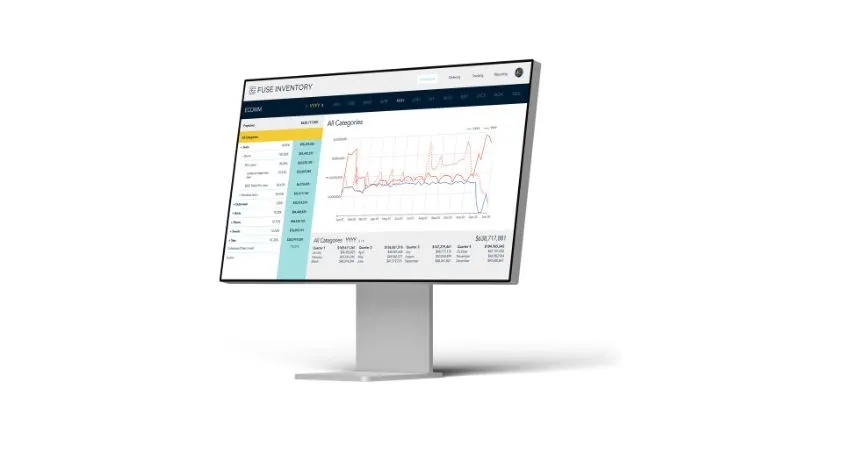
Fuse Inventory is another software that is recommended to enhance inventory demand. It streamlines inventory forecasting, automates buying and inventory tracking, and enables businesses to use a single platform to predict demand.
Furthermore, it provides an intuitive interface that makes it a convenient solution for enterprises looking for predictive tools without the added complexity of enterprise resource planning (ERP) systems. Below here are the features include:
- Demand Forecasting: Make a prediction of future inventory needs based on past sales.
- Purchase Planning: Automate purchasing recommendations.
- Inventory Replenishment: Keep stock levels at an optimum level.
| Pros | Cons |
|---|---|
|
|
- Pricing Fuse Inventory: The cost varies depending on the business size, needs, and selected features.
13. RELEX
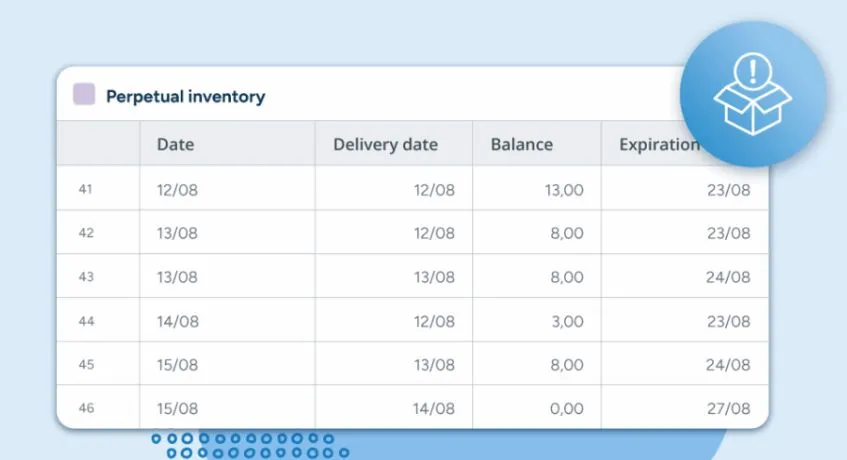
RELEX, an inventory forecasting, replenishment, merchandising and supply chain optimization supply chain planning platform. It provides a way to solve retailers’ issues with product management of thousands of items in various stores.
With this, RELEX offers machine learning to constantly analyze customers’ demand and market conditions. Moreover, it is popularly used by grocery chains, wholesalers and consumer goods companies. Below here are the features:
- Automated Replenishment: Recommend optimal reorder quantities automatically.
- Promotion Forecasting: Forecast requirements for inventory during promotions and other seasonal events.
- Multi-Location Planning: Plan inventory across multiple store locations, warehouses, and distribution centres.
| Pros | Cons |
|---|---|
|
|
- Pricing RELEX: Businesses need to contact the provider for a personalized pricing quote.
- Rating Capterra RELEX: 4.6/5
Key Features You Need in an Inventory Forecasting System
The ideal inventory forecasting software solutions should do more than just forecast demand. It should consider several factors of inventories and sales to make accurate forecasts. These are the characteristics that all businesses should have:
- AI Predictive Analytics: Leverage artificial intelligence to get better sales predictions, supplier performance analysis, customer behavior analysis, lead time estimates, and factors influencing sales.
- Monitor Inventory Levels: Keep a close watch on stock availability in real time across warehouses to ensure an accurate forecast based on the right stock data.
- Tracking Purchase Orders: Ability to track pending purchase orders and incoming inventory; enables inventory to be accounted for when it is en route.
- Analyze Historical Data: Analyze previous sales performance to identify recurring demand patterns, product life cycles, and long-term purchasing behavior.
- Forecasting Requirements: Make forecasting of inventory for various time periods, like weekly, monthly, quarterly or yearly.
- Predict Demand and Seasonality: Analyze the seasonal demand, holidays, promotions, and trends in the market to predict shifts in customer buying patterns.
- Optimizing Stock Level: Ensure that inventory levels are not too high to avoid overstocking and carrying costs. The system should suggest the quantities to buy.
- Calculate Sales: Know how fast products are selling and have the ability to detect fast, slow, and obsolete stock. By comprehending sales velocity, businesses can prioritize replenishment and ensure optimal inventory turnover.
These capabilities help businesses to make better purchasing decisions, increase the accuracy of their forecasts, and manage the right levels of inventory to help support sustainable business growth.
In Conclusion
Businesses can use inventory forecasting software solutions to forecast sales better, minimize stockouts, prevent overstocking, and manage cash flow better. With reliable forecasts, companies can lower inventory costs and customer satisfaction.
AI-driven forecasting simplifies businesses in the Philippines to respond to seasonal demand, promotions, and supply chain disruptions. Real time, instead of manual planning, means better inventory decisions.
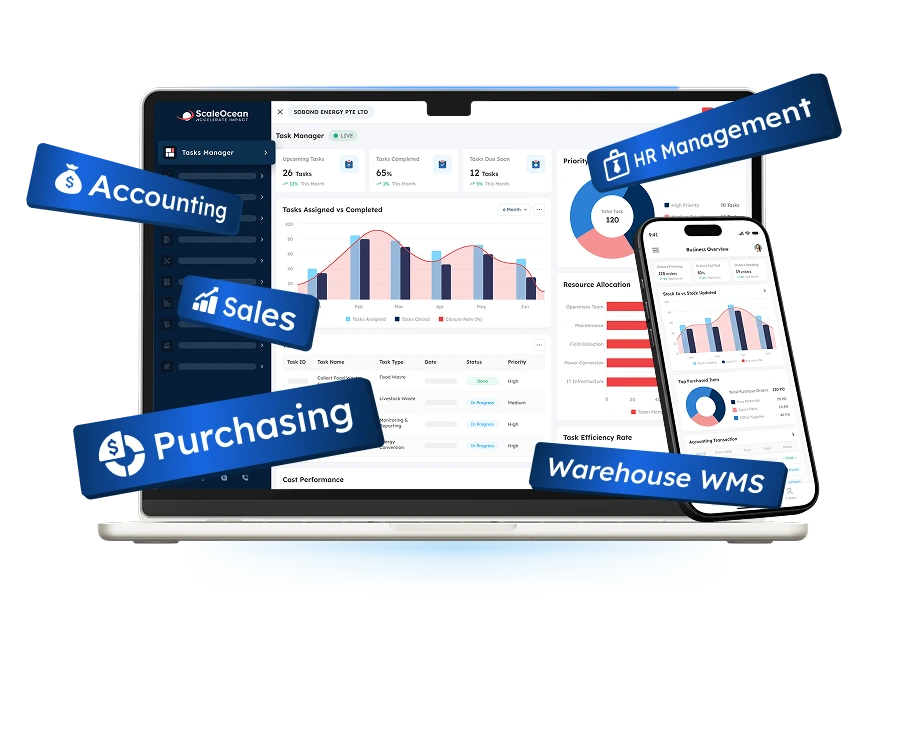
The inventory module of ScaleOcean Atlas goes beyond forecasting, it integrates inventory, warehouse, procurement, purchasing, accounting, manufacturing, and sales into one platform.
Additionally, ScaleOcean Atlas embedded by ScaleMind AI, delivers intelligent recommendations to improve inventory planning. Whether you manage retail, wholesale, or multi-warehouse operations, it helps optimize inventory forecasting.
Book a consultation today to learn how it can help optimize inventory management and contribute to the sustainable expansion of your business.
FAQ:
1. Why is inventory forecasting software important?
Businesses can use it to keep the right amount of goods in stock, manage their cash flow, lower storage expenses, and plan for seasonal sales volumes, in addition to making informed purchasing choices.
2. How does AI improve inventory forecasting?
Within the software AI models evaluate customer orders, supplier performance, and seasonal factors to produce more accurate predictions. It also reorders quantities and offers potential inventory risk analysis.
3. Which inventory forecasting software is suitable for growing businesses?
The right software depends on business needs. Also, you can try inventory module by ScaleOcean Atlas, it offers integrated ERP capabilities and provides inventory planning features.















.png)