
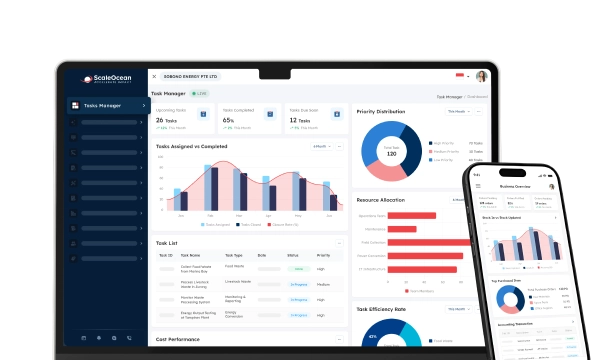

Obviously, running a construction business is way more different than running your typical sari-sari store. From project management to procurement – complexity at another level, which is why it is no surprise that companies implement construction ERP software.
Other than the processes mentioned before, these kinds of systems may also automate the processes of accounting and project management. If your current operations are getting hard to manage, then it may be a sign to start implementing modern solutions.
Whether you’re ready to implement or not, this article is going to provide explanations as to what a construction ERP is and its features, and 10 top recommendations of the best ones in the Philippines. Alamin natin kung alin ang swak sa business mo!
 Key Takeaways
- Construction ERP software is a system that is designed to help improve the efficiency of construction companies.
- Some of the common features include job-costing, project management, payroll, field visibility, and procurement.
- Choosing the best construction ERP for you should be based on your needs, budget, and the specific offerings of vendors.
- ScaleOcean Atlas for Construction ERP is our top pick due to its local-focus and flexibility, followed up by SAP S/4 HANA and Sage Intacct.
What is Construction ERP Software?
Construction ERP software is a specialized solution that integrates project management, accounting, inventory management, and field monitoring under one platform. Its key features usually involve real-time field data, procurement, and contract management.
Despite the declining global investment trend and the Philippines’ geographical challenges, the construction industry has always been one of the most consistent industries in terms of growth. A research by Mordor Intelligence speculate it will continue growing with a CAGR of 6.51% until 2031.
This is primarily due to high-government involvement and investment into the market, as well as partnerships with the private sector, as can be seen through the Pambansang Pabahay Para sa Pilipino program as part of the wider Build Better More initiative.
Suffice to say, as the Philippines construction industry keeps evolving, so will its business processes. The choice to adopt ERP systems is, yes, to increase efficiency and output throughout an organization; But also to remain competitive and to sumabay sa agos ng modernisasyon.
Features and Modules in a Construction ERP Software

Now that you know construction ERP’s role in the current landscape, it is time to explore the why of its importance. As previously mentioned, this system is bundled with a variety of features and modules – often customized as per the need of individual companies – which include:
- Job Cost Accounting: Real-time tracking of material, equipment, and labor costs that is compliant to BIR.
- Project Management: Assists in planning, tracking schedule performance index (SPI), and executing every construction project type.
- Labor & Payroll: Allocate and oversee construction labor, ensuring compliance, and automatically calculate and administer payroll.
- Subcontractor Management: Handling lien waivers, contracts, and relationships with subcontractors.
- Field Visibility: Provides higher visibility of on-field conditions, including time logs and changes in order management.
- Purchasing & Procurement: Ensuring that every piece of material or equipment needed for each project is accommodated.
How to Choose the Best Construction ERP Software?
Choosing a construction ERP software in the Philippines is like dadaan sa butas ng karayom. It’s not something that should be done compulsively, because a software may look flawless from afar, but it’s only when you live with it do you see its flaws – by then, it’s too late.
So, even if you’re not considering implementing one, there’s no harm in reading up about the general system-picking process. In short though, you should find not the best software, but the best construction management software for you – consider some of these:
- Your Specific Needs: Identify what you really need at that point in time, what are you struggling with, the bottlenecks? Knowing this gives you clarity for better decisions.
- Project Scale: What is the current scale of your projects? If you’re currently handling small-to-medium-scale residential projects, then you may need 1 million features.
- Local Compliance: Is the system designed to be compliant with BIR, SSS, and PD 1069 (National Building Code)? Can you wait for it to be customized for compliance?
- Implementation Budget: What’s your current budget? Can you afford to implement on-premise systems and subsequently, IT teams? How many users will there be?
- Free Demo: Does the provider offer free demos or equal? Will they assist you throughout the process?
Top 10 Best Construction ERP Software
As with everything in life, not every construction ERP system is created equal. Some will say that X software is better, whilst others will say Y system is the optimal choice – both with multitudes of different reasons. The truth? There is no one best system.
It is entirely dependent on your specific needs. If a provider manages to design a system that covers all your operations at a price you deem fair, then that is the best solution for you. But, a smaller company may call it, “too complex” as it is too optimal of a construction system for them.
Despite this, this article will try to provide a list of the top 11 best construction ERP software in the Philippines you can implement, highlighting some of the selling points and disadvantages. Again, piliin ang solusyong pinakaangkop para sa iyo:
| Software | Key Strength | Best For |
|---|---|---|
|
ScaleOcean Atlas |
Customizable construction ERP with broad industries, AI forecasting, inventory integration, contract management, and unlimited users |
Companies that need a flexible, end-to-end ERP tailored to their business processes |
|
SAP S/4HANA |
ERP with a wide range of features and a global user community |
Large construction companies with complex operations |
|
Sage Intacct Construction |
Robust construction-focused accounting capabilities |
Construction businesses looking for accounting and financial management |
|
Acumatica Construction |
Native cloud ERP with easy access across devices |
Small to midsize construction businesses |
|
Oracle NetSuite |
Broad range of ERP features and modules with strong adoption among global companies |
Larger businesses that need a general ERP with extensive management capabilities |
|
Foundation Software |
Construction-specific accounting functionality |
Construction companies looking for specialized accounting |
|
Microsoft Dynamics 365 |
Flexible ecosystem that lets businesses select and integrate different systems |
Businesses that need flexible ERP components |
|
Procore |
Comprehensive software specifically designed around construction management |
Construction companies seeking a dedicated construction management platform |
|
Viewpoint Vista |
Established construction ERP with accounting, HR, project management, and procurement capabilities |
Construction businesses looking for a legacy construction ERP with accounting integration |
|
CMiC |
Cloud-based construction management platform with mobile access |
Construction companies seeking a cloud-based system |
1. ScaleOcean Atlas for Construction ERP
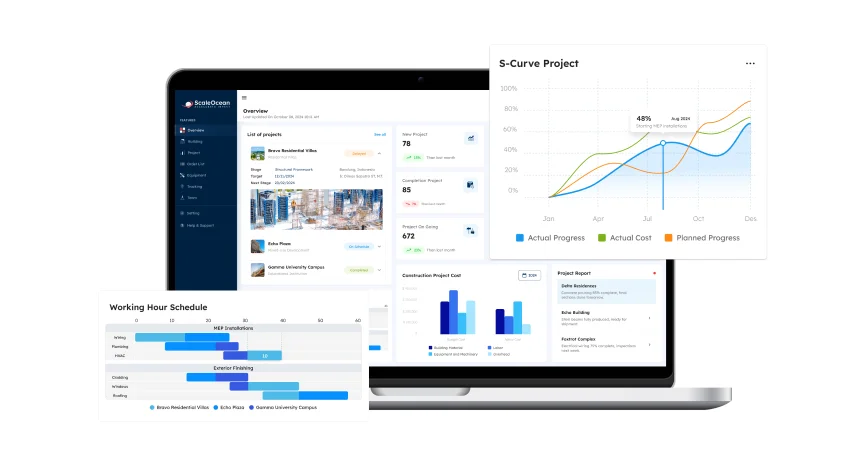
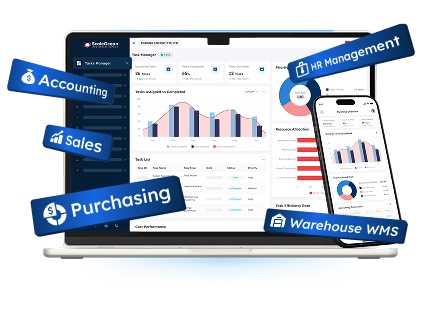
ScaleOcean Atlas for Construction is a relatively new player in the Philippines market. It is pioneered by a regional (SEA) provider with +10 years of experience, known for offering world-class systems for local markets.
One of its main selling-points is the unlimited-user offering, meaning that once the system specifications and implementation costs have been discussed, the software can be used by existing employees and future ones, making it a future-proof solution.
In addition, it also allows businesses to try out the software through a consultation with the experts. This is especially helpful for companies implementing their first software and/or wanting a hands-on experience before jumping to a decision. Some of the expected features include:
- Full-Accounting Suite: BIR-compliant accounting for everything transaction related, from purchasing to payroll management.
- AI-Forecasting: Equipped with ScaleMind AI capabilities, it provides businesses with insights on future performance and also stock levels.
- Inventory Integration: Turns the overseeing of materials and equipment into a simple process, automatically notifying procurement needs when it reaches reorder point.
- Contract Management: Allows you to manage contracts with all subcontractors, as well as ensuring compliance with local regulations as per regulated by the DOLE.
- Highly Customizable: Unlike many providers, ScaleOcean Atlas operates on a needs-first basis, customizing their systems based on the specific needs of every business.
| Pros | Cons |
|---|---|
|
|
- ScaleOcean Atlas Pricing: Final pricing depends on the required modules, users, customization, and implementation requirements. Contact the ScaleOcean team for pricing information.
- ScaleOcean Atlas Capterra Rating: 5.0/5
2. SAP S/4 HANA
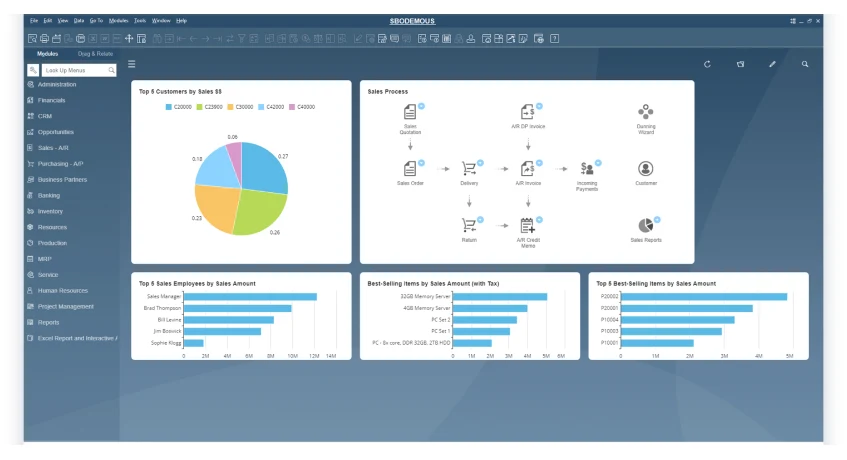
SAP S/4 HANA, as its name suggests, is a cloud ERP solution offered by SAP. It is perhaps one of the most well-known providers on this list due to their extensive backgrounds and global reach – implemented by many companies.
Its advantage is rather clear, it provides a complete set of solutions for a wide range of business processes and needs. However, despite the rich amount of features, this construction ERP system may not be the most suitable for all Filipino businesses.
Why? Ironically, its greatest strengths are also its greatest weaknesses. Despite its robustness, a business may not be able to utilize every feature, not to mention SAP S/4 HANA is also rather infamous for its complex implementation process, which may take away precious time.
| Pros | Cons |
|---|---|
|
|
- SAP S/4HANA Cloud Pricing: Pricing is based on business requirements, users, deployment, and selected solutions. Contact SAP for pricing information.
- SAP S/4HANA Cloud Capterra Rating: 4.3/5.
3. Sage Intacct Construction
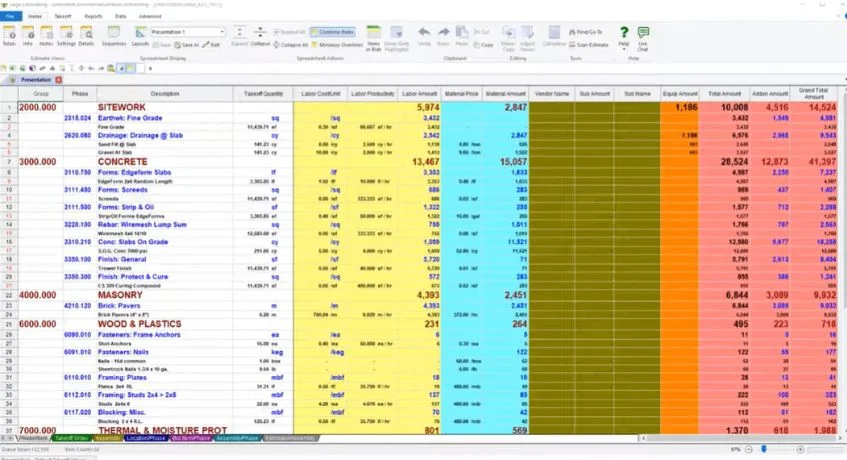
Sage Intacct is actually more well-known as an accounting software provider, rather than a general ERP software for construction companies one. But it does have a solution specifically designed to assist with the construction accounting process.
Despite its accounting-nature, its inclusion in this list is driven primarily by the fact that accounting is one of the most complex parts in handling construction projects end-to-end. You may also integrate it with other softwares for a more complete solution.
However, if you’re not willing to go through the hassle of identifying and purchasing multiple system subscriptions, then Sage Intacct is probably not the solution for you, unless you’re looking for a software specific for accounting, of which other options may be better.
| Pros | Cons |
|---|---|
|
|
- Sage Intacct Pricing: Custom pricing is available based on the features and number of users required.
- Sage Intacct Capterra Rating: 4.3/5.
4. Acumatica Construction
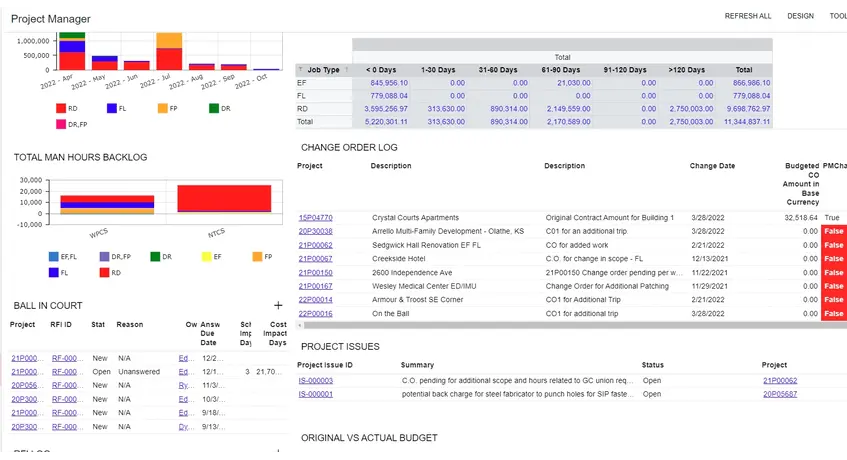
Acumatica, founded in 2008, is widely known as one of the first cloud-native ERP providers in the industry, not to be confused with the pioneering of SaaS. It entered the market when the cloud-based market was mature enough and then used it as a solid foundation for growth.
Due to it being cloud-based, it; like ScaleOcean Atlas, is very easy to access, requiring only a stable internet connection and hardwares like tablets and mobile phones. Acumatica Construction is specifically designed for small-to-midsize businesses, which is both a plus point and negative.
If you or your company is a relatively small business, meaning you’d have around 200-500 users, then Acumatica may be a suitable choice. But if your operations are limited to the Philippines, then you may benefit more from a localized ERP construction software.
| Pros | Cons |
|---|---|
|
|
- Acumatica Construction Pricing: Contact the vendor for pricing. Costs depend on your business requirements and selected solution.
- Acumatica Cloud ERP Capterra Rating: 4.4/5.
5. Oracle NetSuite
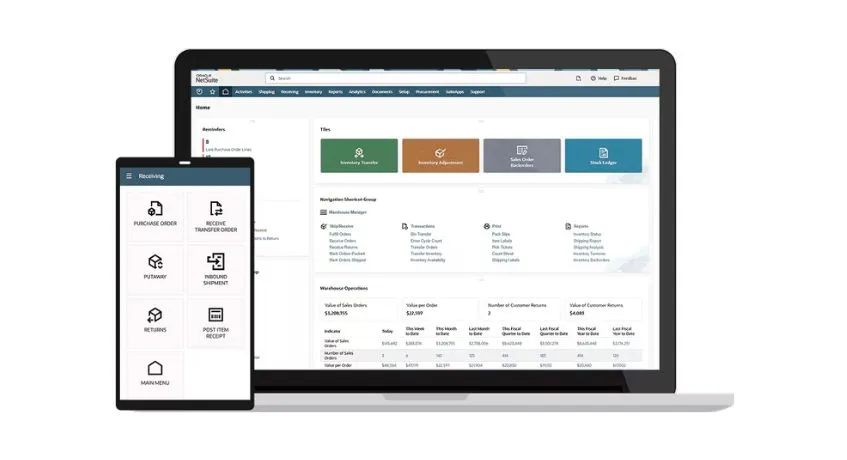
Another prominent name in the ERP industry, Oracle NetSuite is perhaps one those names that pop out whenever someone mentions the term “ERP”. It is no surprise to see that some of the biggest companies often implement it – the keyword here is “biggest”.
Often compared to SAP S/4 HANA, this ERP system also provides a rather complete set of features and modules. However, it is more so a general ERP system than one which is specifically designed for the construction industry.
Do not be mistaken, most operational needs are often covered with the core system. But if you need a deep-dive construction solution, you may need an extension via SuiteApps; also from Oracle, which may further increase costs and complexity – Nakakainis…
| Pros | Cons |
|---|---|
|
|
- Oracle NetSuite Pricing: Contact the vendor for pricing. The final cost depends on the selected modules, users, and business requirements.
- Oracle NetSuite Capterra Rating: 4.2/5.
6. Foundation Software
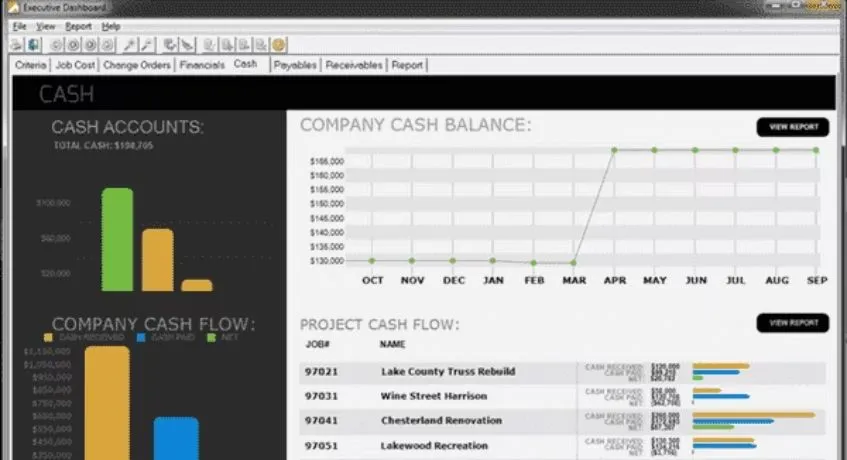
Much like Sage Intacct, Foundation Software is oftentimes more well-known as an accounting system. Unlike Intacct, which also provides a general accounting solution, Foundation is a provider that is specific to accounting within the construction industry.
It is also equipped with some project management features, but these are not its main focus. Traditionally on-premise, it also offers a cloud-based SaaS version, though some features may be exclusive to only the former – both requiring concurrent subscription (pay per x user(s)).
If you’re looking for an ERP strong in accounting for your construction business, then Foundation could be the choice for you. But if you’re looking for a more complete suite of features, then it is better to consider the previous ERP construction softwares.
| Pros | Cons |
|---|---|
|
|
- Foundation Software Pricing: Contact the vendor for pricing based on your construction business requirements.
- Foundation Software Capterra Rating: 4.3/5.
7. Microsoft Dynamics 365
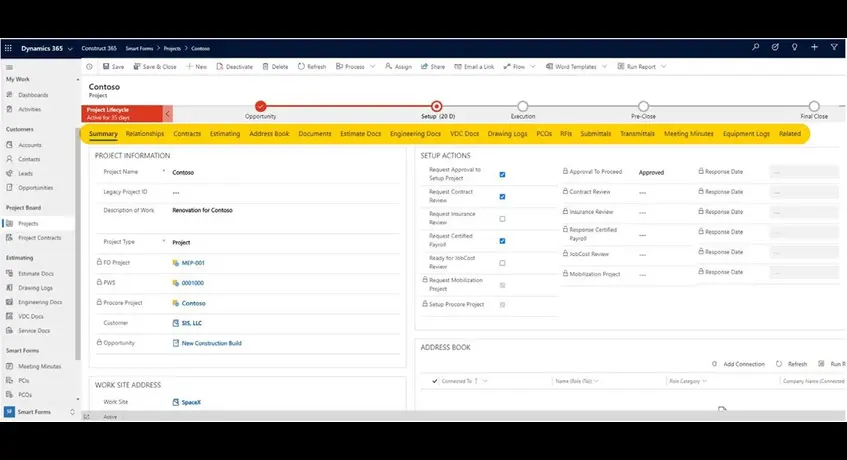
Considered one of the “Big-3” of ERP systems alongside SAP and Oracle, Microsoft Dynamics 365 is, as its very name suggests, an ERP software designed by Microsoft. Although it is less accurate to call it one software, and more so a collection of multiple systems.
This means that if you only need the solutions for business process A, B, and C, then you need only implement part X, Y, and Z of the Microsoft Dynamics ecosystem. Although this means higher flexibility, this means that you can’t just go “one-and-done” with it.
In addition, although customizable, the initial systems that you’d get are more akin to blank slates since the intention was for broad, general use, rather than for specific industries. To enable customization, you’d typically have to work with Microsoft’s Philippines partners.
| Pros | Cons |
|---|---|
|
|
- Microsoft Dynamics 365 Pricing: Starts at ₱3.127,40 ($50) per user/month, with Enterprise and Premium plans available at higher rates.
- Microsoft Dynamics 365 Capterra Rating: 4.4/5.
8. Procore
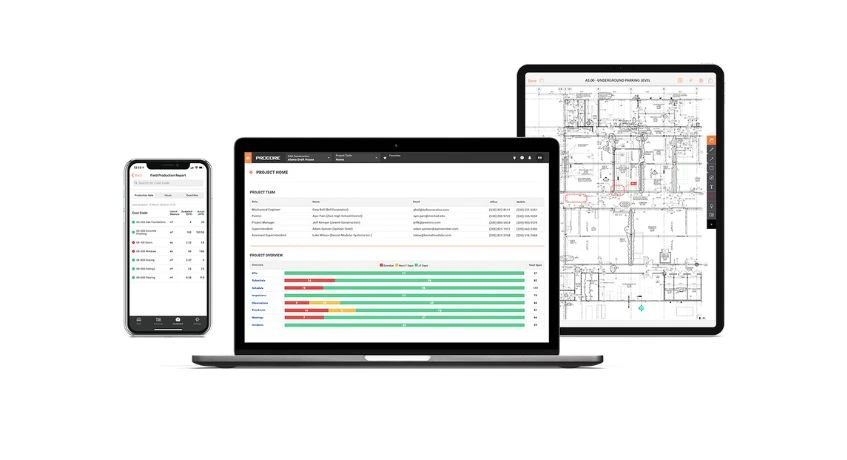
Procore can be said to be one of the icons in the world of construction ERP systems, as it is a complete solution that is specifically curated for the construction industry. Unlike the other systems before, Procore actually covers every aspect of your business process.
But it does have its strengths and weaknesses. For instance, despite having finance-related features and modules, you may benefit more from an integration with another accounting software, perhaps something like Sage Intacct and Foundation as mentioned prior.
You may wonder why it is placed so low if it is both robust and specific. The reason behind this evaluation is its pricing model that is based on a percentage of annual construction volume (ACV) rather than per user, which makes it rather expensive for big-scale construction projects.
| Pros | Cons |
|---|---|
|
|
- Procore Pricing: Pricing can vary depending on the products selected and construction volume.
- Procore Capterra Rating: 4.5/5.
9. Viewpoint Vista
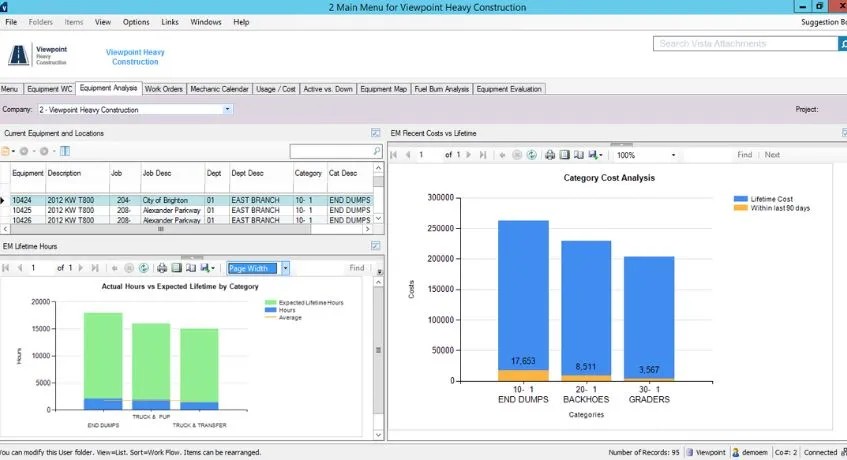
Not as well known as some of the previous systems, Viewpoint Vista is also another accounting-centric construction ERP. Yes, ERP, as in it also contains HR, project management, and procurement features.
Though, like the other accounting-focused systems on this list, the features outside of that focus have room for improvement. Furthermore, according to reviews on SoftwareAdvice, the customer service leaves a lot to be desired, with some citing months-long waiting times.
It is also historically deployed on-premise, although Trimble (the company behind it) has been trying to move towards a cloud-based approach. Yet, the latter seems to still be in its infancy, as some reviews expressed some dissatisfactions, particularly the implementation process.
| Pros | Cons |
|---|---|
|
|
- Viewpoint Vista Pricing: Contact the vendor for pricing based on your business requirements.
- Viewpoint Vista Capterra Rating: 3.8/5.
10. CMiC
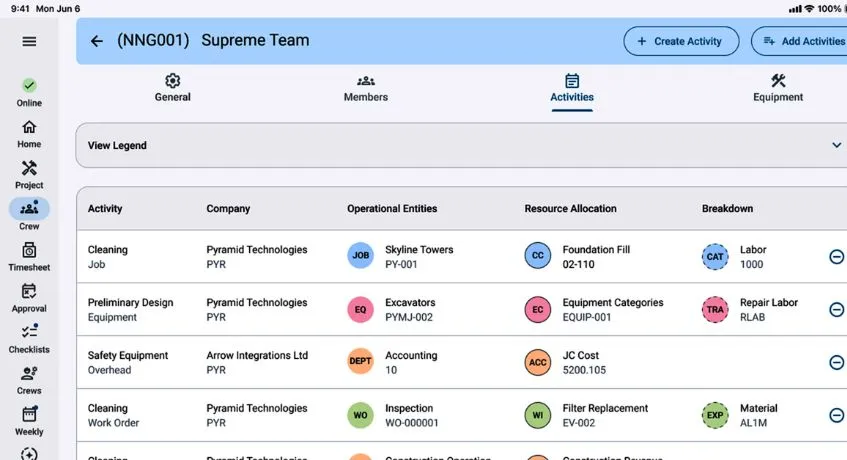
CMiC is a construction management software that is entirely cloud-based, equipped with mobile access also. Despite its placements, its package is relatively complete, containing multiple features for multiple issues, designed specifically for the construction industry.
However, a deeper dive on its customer reviews reveal some hidden downsides. According to some reviews on TrustRadius, the implementation process is rather complex, requiring numerous back-to-back sessions with consultants.
Its outputs are also reported to be inconsistent, both in terms of forecasting and job billing generation. If you desperately need a system to be up-and-running in a short amount of time (2-3 months), then this system may not be the best choice for you.
| Pros | Cons |
|---|---|
|
|
- CMiC Pricing: Contact the vendor for pricing based on your construction business requirements.
- CMiC Capterra Rating: 4.2/5.
In Conclusion
Hopefully, this article has shed further light on some notable construction ERP systems that you can implement and their pros and cons. But do take note that this list should not be taken as gospel, and again – you should decide yourself what is the best system for you.
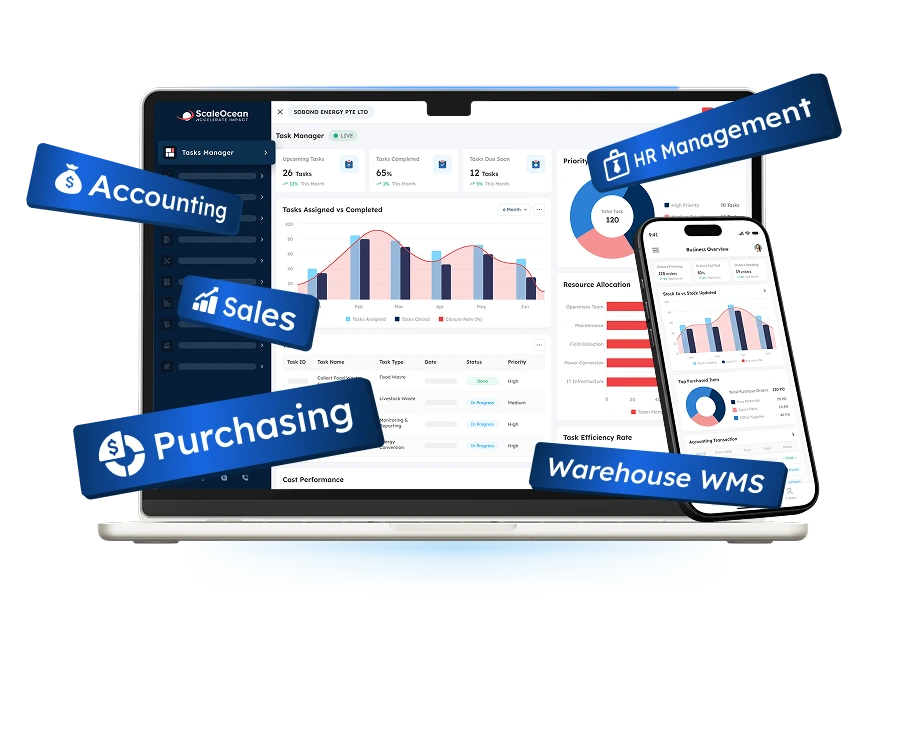
What can be said is that a localized software out-of-the-box is often preferred over general ones since it takes a shorter time to implement and get up-and-running. If you’re looking for such a software, then why not consider ScaleOcean Atlas for Construction ERP.
ScaleOcean Atlas may be a relatively new player in the Philippines, but one look at its history and you could see that it has been the trusted partner of many companies in SouthEast Asia. Makipag-ugnayan sa amin para sa libreng demo to discover more.
FAQ:
1. What is construction ERP software?
Construction ERP software is a type of solution that has been specifically designed to fit the needs of construction businesses and its operations. Some of its common features range from accounting, procurement, and project management.
2. What is the best ERP for construction in the Philippines?
There is no one “best” construction ERP system as it is entirely dependent on the size of your business and projects, as well as your specific needs. But if you’re looking for a provider designed with localized features, then ScaleOcean Atlas may be the best solution for you.
3. Why is a construction ERP important?
Construction ERP software is becoming more and more important as the Philippines is currently modernizing at a rapid pace. It enables automation of multiple key processes such as job-costing and payroll, but more importantly, it ensures that you don’t fall behind competitors.















.png)