





RFID inventory management software has become one of the most important technologies in modern inventory management. RFID is a wireless technology that uses radio waves to automatically identify, capture, and track tagged items.
Moreover, it enables businesses to automatically identify inventory using radio waves. It reads multiple products at once, making it ideal for modern warehouses that need faster shipping.
Therefore, the booming e-commerce, retail and manufacturing sectors in the Philippines have fueled the demand for smarter warehouses. As such, many-a businesses have begun to invest in RFID inventory solutions to remain competitive, as failure to do so would severely impact long-term scalability.
 Key Takeaways

RFID inventory management software is a combination of RFID technology and inventory management software, which can automatically identify, record, and monitor the flow of inventory in real-time in a warehouse environment.
Unlike the traditional barcode system, which utilizes line-of-sight (LOS), RFID tags communicate via radio frequency (RF) signals. It automatically collects the data from tagged items, a comprehensive RFID inventory system typically consists of:
Therefore, RFID technology can be used to provide good warehouse information management and control, and help companies avoid unnecessary manual data entry. Also, it is useful for monitoring the warehouses and managing inventory every day.
Today, many companies are already operating a barcode system for stock control. But when warehouses get bigger and SKUs portfolios keep growing, it can take time to scan each item with a barcode.
An RFID inventory system can overcome these limitations by allowing several products to be automatically identified without requiring any contact. This is why RFID is especially beneficial for businesses that have a high turnover of items, including:
Businesses in the Philippines with growing complexity in their warehouses are finding that RFID adds to the effectiveness of their operations and can be used to facilitate digital transformation initiatives in their supply chains.
It is also backed up with a case study published in Logistics Operations, Supply Chain Management and Sustainability, a consumer product manufacturer which adopted RFID on its warehouse and achieved a higher accuracy in inventory location.
The results indicate that the effectiveness increased from 78.2% to 100%, and the receiving cycle time was reduced by almost 29%. Also, it simplifies the inventory process and optimizes goods management every day.
There are numerous operational benefits of the RFID inventory software beyond simply tracking inventory. These are some of the advantages of using RFID inventory system to boost warehouse optimizations in the Philippines:
The type of RFID inventory management software to be used depends on the size of the business, the complexity of the warehouse and the integration needs. The following are some of the most popular RFID inventory system in the Philippines:
| Software | Key Strength | Best For |
|---|---|---|
|
ScaleOcean Atlas |
Integrated RFID, inventory, warehouse, and ERP management. |
Medium to large businesses with complex operations. |
|
Fishbowl Inventory |
Combines inventory, manufacturing, warehouse, and accounting. |
Manufacturers and growing businesses. |
|
Zoho Inventory |
Cloud inventory management with multi-warehouse and e-commerce tools. |
Small to mid-sized businesses. |
|
Sortly |
Simple inventory and asset tracking with mobile access. |
Small businesses, contractors, and teams. |
|
ConnectPOS |
Connects RFID inventory with POS and omnichannel sales. |
Retailers and multi-store businesses. |
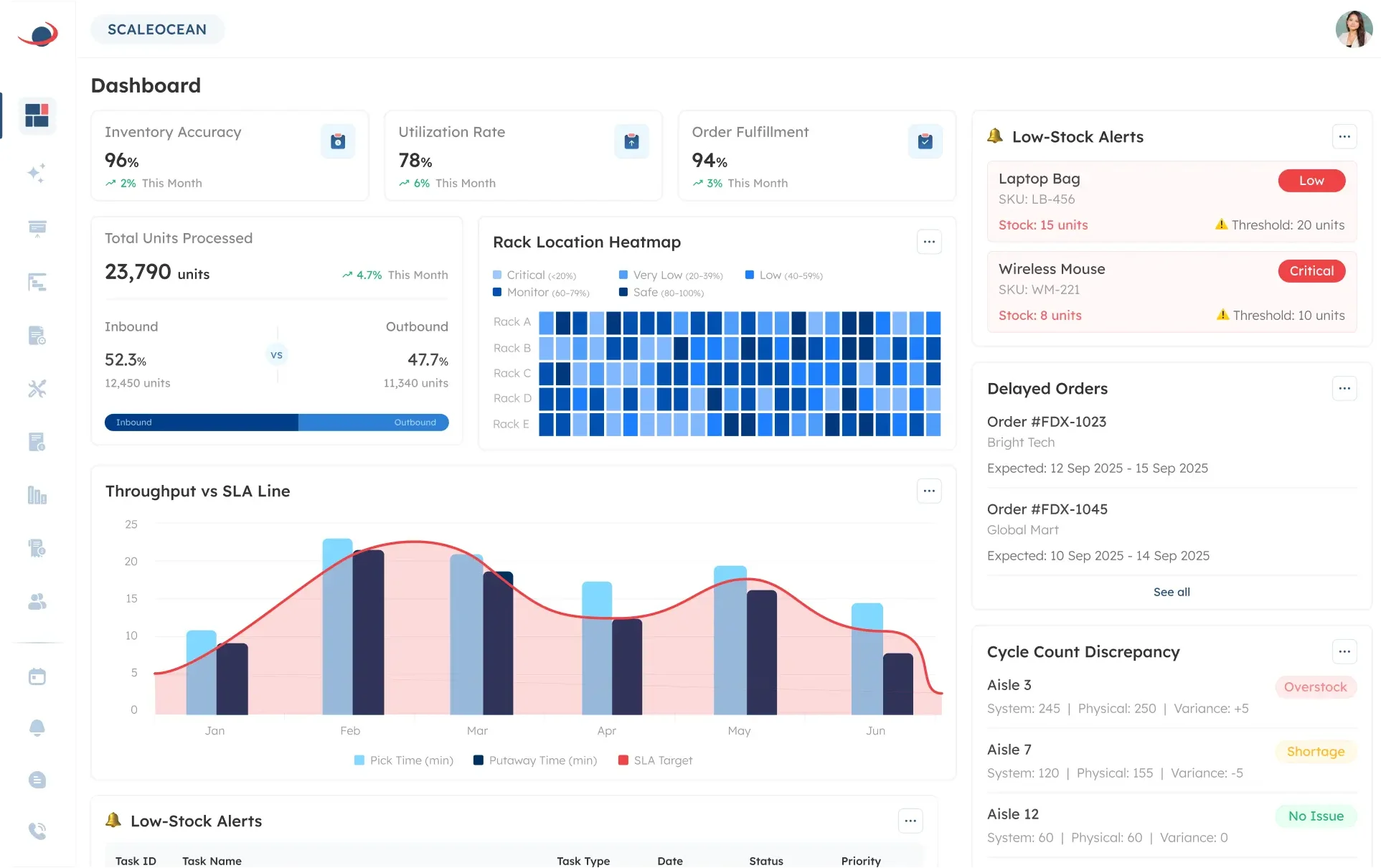
Managing inventory manually becomes increasingly challenging as warehouses grow and product movement becomes more frequent. Businesses may experience issues such as inaccurate stock records, misplaced inventory, or slower stocktaking.
To address these challenges, the inventory module of ScaleOcean Atlas helps businesses automate inventory tracking using RFID technology, enabling real-time stock monitoring and faster warehouse operations.
As part of ScaleOcean Atlas, it seamlessly integrates inventory management with warehouse operations, procurement, sales, accounting, and reporting. This centralized system ensures accurate inventory information across every business process.
Additionally, ScaleOcean Atlas is embedded with ScaleMind, an AI-powered assistant that provides intelligent recommendations to improve warehouse efficiency. For example, it can recommend optimal storage locations and support better inventory.
Businesses looking to modernize their warehouse operations can also schedule a consultation with our experts to discover how ScaleOcean Atlas optimizes RFID-enabled inventory management. Some of its key features include:
| Pros | Cons |
|---|---|
|
|

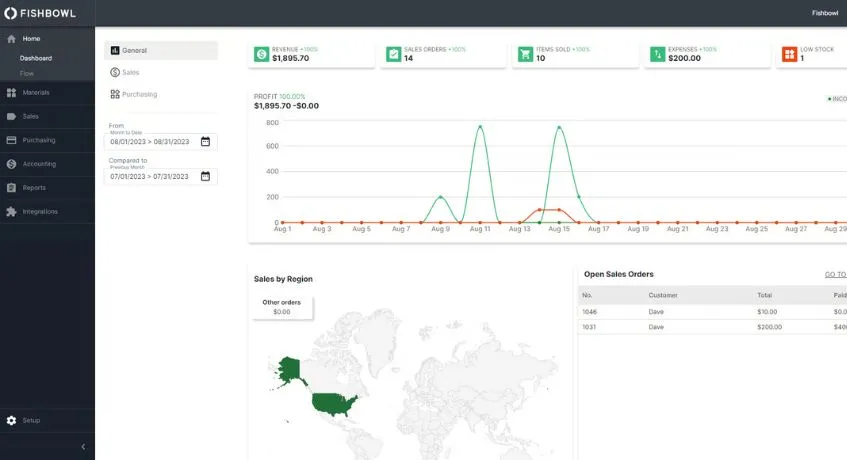
Fishbowl Inventory is inventory software designed to work with RFID technology of warehouse and manufacturing processes. It facilitates businesses to track their inventory in an automated way yet keeping accurate stock records.
Fishbowl also connects with the accounting and business management systems, enabling businesses to align stock information with their purchasing, manufacturing, and financial operations for improved efficiency. It has the following characteristics:
| Pros | Cons |
|---|---|
|
|
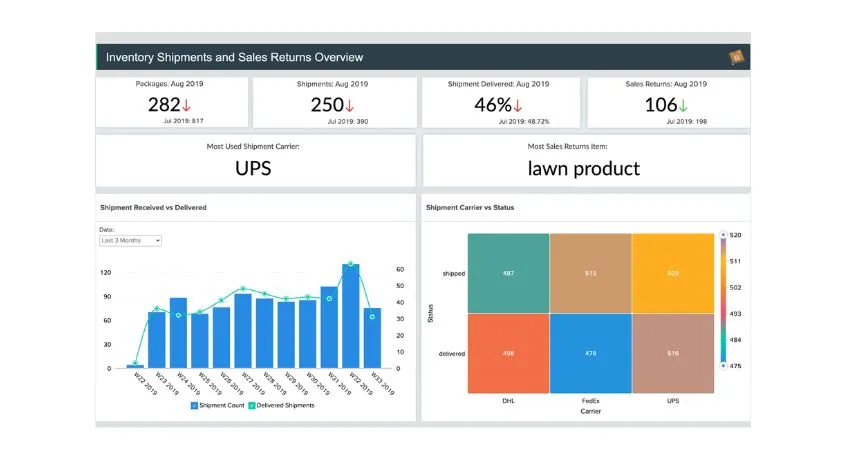
Businesses can reduce the challenges in managing their inventories with the Zoho Inventory that can be integrated with RFID hardware. It allows businesses to track their stock levels in real-time and handle orders on various channels.
The software also has integration with the broader Zoho suite that enables companies to link inventory management with accounting, CRM, and e-commerce software. Zoho Inventory comes with some of the following features:
| Pros | Cons |
|---|---|
|
|
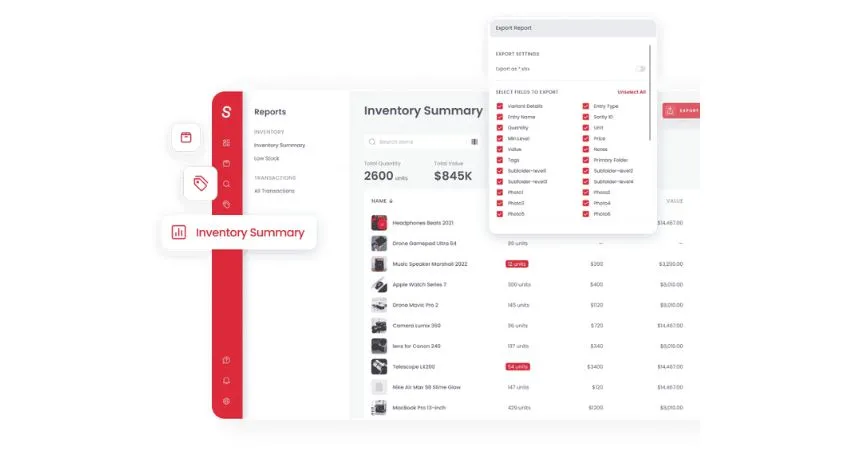
Sortly provides an intuitive inventory management system that supports businesses with the ability to manage inventory more efficiently with RFID and QR code technology. The mobile application offers updated inventory information right from their mobile devices, whether that’s a smartphone or a tablet.
Furthermore, this makes Sortly an ideal solution for small business, contractors, and organizations that require easy inventory management. Here are some of Sortly’s features include:
| Pros | Cons |
|---|---|
|
|
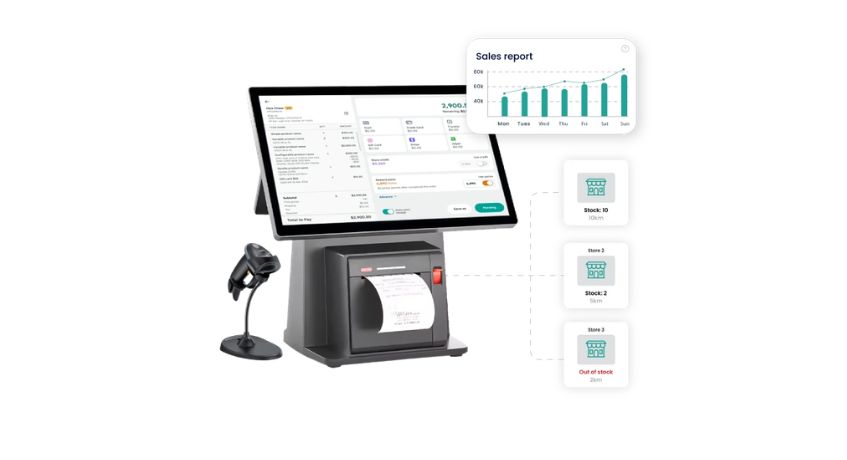
ConnectPOS is another platform which is capable of supporting RFID. It enables retailers to manage their warehouses more efficiently with the addition of point-of-sale capabilities and RFID-enabled inventory management.
Also ConnectPOS integrates stock information from all sales channels to give a real-time view of the stock, thus improving inventory management. It additionally connects with e-commerce and ERP systems, allowing for centralization management in a single ecosystem.
| Pros | Cons |
|---|---|
|
|
 Also Read: 12 Top Inventory Management Software in Philippines 2026
RFID inventory management software empowers businesses to automate inventory management, enhance inventory accuracy and gain real-time visibility into warehouse operations.
RFID technology can streamline and automate numerous manual tasks that are traditionally linked to inventory management, enabling organizations to lower costs, boost productivity and accommodate larger warehouse expansion.
For businesses in the Philippines looking to optimize warehouse operations, ScaleOcean Atlas provides an integrated Warehouse Management System with RFID inventory management, real-time stock visibility, and seamless ERP integration.
From retail to manufacturing, distribution to logistics, ScaleOcean Atlas can help optimize inventory processes and enhance operational efficiency. Request a consultation to see how the solution can help warehouse management.
Barcode systems require direct line-of-sight scanning of each item one at a time. Meanwhile, RFID tags use radio frequency signals to send to the RFID reader, which can read more than one tag at the same time, even if it is not in direct line of sight.
Four core components: RFID tags attached to products, pallets, or assets; RFID readers at entry points or on handheld devices; RFID antennas that capture radio signals; and inventory software that processes and displays the data.
The advantages include loss-prevention monitoring, wide area coverage (without the need for line of sight), asset and lifecycle tracking, real-time data updates and bulk inventory scanning.