Property management system Philippines solutions are becoming increasingly useful for property owners and managers handling multiple units, buildings, or facilities. The software can do rent collection, tenant records, and even maintenance requests.
Further, these tasks can quickly become difficult to track when everything relies on spreadsheets and separate tools. In fact, it’s better to have a centralized system that brings these activities together which makes property operations easier to monitor.
For businesses in the Philippines, choosing a system also means looking beyond basic property management features. Understanding features and benefits can help property managers find software that supports business, here is the guide for finding the best property management system in the Philippines.

Key Takeaways
- A property management system in the Philippines helps centralize property, tenant, rental, maintenance, accounting, and reporting activities in one system.
- The right PMS should support rent collection, local payment workflows, financial reporting, tenant management, and multi-property operations.
- Philippine businesses should consider BIR compliance, local payment options, data privacy, property type, scalability, and local support when choosing a solution.
- ScaleOcean Atlas for Property Management connects property and facility management with accounting, maintenance, procurement, and asset management.
Schedule a consultation
What is Property Management System Software?
A property management system (PMS) is software that helps property owners and managers organize and automate their daily operations. Instead of maintaining separate files for tenants, leases, payments, maintenance, and property information, a PMS keeps these records in a centralized platform.
A robust PMS can support residential leasing, commercial property management, hotel operations, accounting, and reporting seamlessly integrating all daily activities. Not only integration, the software also can help maintain compliance with local regulations.
For businesses managing properties in the Philippines, the system should also fit local workflows. This can include invoice management, payment tracking, Philippine tax requirements, and integrations with local business processes.
The Benefits of a Property Management System Software?
Property management software offers several advantages, chief among them being the ability to streamline daily operations. According to a market report by IMARC Group, the Philippine real estate market was valued at USD 94.4 billion in 2025 and is projected to reach USD 135.9 billion by 2034, growing at a CAGR of 4.12% from 2026 to 2034.
As the industry expands, adopting a property management system allows real estate businesses to optimize their operational workflows and minimize human error or miscalculations in financial reporting. Here are the key benefits of using property management software in the Philippines:
1. A Centralized View on Every Property and Tenant
Managing several properties becomes harder when information is stored in different spreadsheets and folders. A property management system brings property, unit, tenant, lease, and payment information into one centralized database.
For businesses managing properties across Metro Manila, Cebu, Davao, or other locations, centralized access can also make it easier for teams to coordinate without constantly exchanging updated files.
2. Compliance with Local Integrations
Property management in the Philippines involves more than collecting rent. Businesses may also need to manage invoices, tax records, payment information, and tenant data.
A suitable property management system in Philippines should therefore support the company’s local accounting and compliance workflows. For example, BIR Revenue Regulations No. 7-2024 covers registration and invoicing requirements, while BIR Revenue Memorandum Circular No. 77-2024 clarifies invoice requirements following the Ease of Paying Taxes Act.
3. Automatic Accurate Rent Collection
Late payments can create unnecessary administrative work and distort cash flow visibility for property managers. Staff may need to check bank records, update general ledgers and manual spreadsheets, send reminders, and reconcile payments manually.
A PMS can automate parts of this process by tracking rent schedules, outstanding balances, payment status, and collection records, seamlessly integrating rent rolls directly into your core accounting software. A property management system automation reduces ledger posting errors and simplifies month-end financial reconciliations, which help managing property in Philippines islands.
For landlords in the Philippines with dozens or hundreds of tenants, automated reminders and payment tracking can make collections easier to monitor without manually checking every lease.
4. Easier Maintenance Scheduling
Another key benefit of property management software is its ability to streamline maintenance scheduling. Building issues, such as leaking pipes or faulty air conditioning, require prompt attention.
Therefore, with PMS, it can solve and even prevent the problems in the first place. The property software can centralize maintenance requests and assign them to the appropriate staff or vendor.
5. Real-time Financial Reports
Additionally, property managers need more than a list of tenants. They also need to understand how each property is performing financially. A property management system can consolidate rental income, outstanding payments, operating expenses, maintenance costs, and other financial information into reports and dashboards, especially for businesses operating across the Philippine archipelago.
6. Improved Relationships with Tenants
The next reason is because tenant experience often depends on how quickly and clearly property managers respond. With a PMS, tenants may be able to submit maintenance requests or communicate with property teams easily.
A PMS Should be BIR-compliant and Support Local Payment Integrations
A property management system should support more than property operations. Especially for business in the Philippines, it should assist with local compliance. Moreover, when evaluating a system, consider these local requirements:
- BIR Invoicing Compliance: BIR RR No. 7-2024 outlines requirements for invoicing, accounting records, registration, and electronic invoicing-related systems. BIR RMC No. 77-2024 also states that VAT-registered persons must issue a VAT Invoice for sales, barter, exchange, or lease of goods or properties and services.
- Integrated Billing and Collections: The PMS should connect billing, rent collection, accounting, and reporting to reduce manual data entry which to minimize inconsistencies between systems.
- Local Payment Support: Consider whether the software can work with the payment channels and banking workflows your business already uses in the Philippines. This can make rent collection and payment reconciliation easier to manage.
- Data Privacy: Property systems may store tenant names, contact details, identification information, payment records, and other personal data. The Philippine Data Privacy Act of 2012 requires organizations to process personal information lawfully and protect it with appropriate safeguards.
- Access and Security Controls: Check whether the property management system in Philippines provides user permissions, role-based access, audit trails, and other controls to prevent unauthorized access to tenant and financial information.
- Data Retention and Vendor Practices: Review how the provider stores, retains, secures, and handles property. Businesses should also understand what happens to their information if they stop using the platform.
The 17 Best Property Management System in the Philippines
Understanding the benefits of a property management system is crucial when searching for the right software for your real estate or property business. However, with thousands of options offering similar features, finding the best fit can be overwhelming. To help narrow down your choices, here are some of the top platforms to enhance property management for Philippine businesses:
|
Software |
Key Strength |
Best for |
|
|
Integrated property, maintenance, asset, contract, and financial management with ScaleMind AI |
Property businesses needing an integrated ERP approach |
|
|
Real-time property oversight, collection tracking, maintenance, and community management |
Philippine property managers and large portfolios |
|
|
Rental tracking, income and expense management, rent collection, and reporting |
Individual landlords and rental property owners |
|
|
Hotel reservations, channel management, front desk, and multi-property operations |
Hotels and hospitality businesses |
|
|
Property accounting, maintenance, resident portals, and reporting |
Residential property managers |
|
|
Rent payments, tenant screening, lease management, and communication |
Landlords and residential property managers |
|
|
Hotel management, front office, reservations, and operational reporting |
Philippine hotels and hospitality businesses |
|
|
Property listings, rental management, tenant coordination, and property analytics |
Philippine real estate brokers and property managers |
|
|
Front desk, reservations, housekeeping, channel management, and reporting |
Hotels, resorts, and multi-property operators |
|
|
Booking, housekeeping, billing, and guest service management |
Hotels and hospitality businesses |
|
|
Accounting, inventory, sales, logistics, and financial management |
Businesses seeking broader ERP capabilities |
|
|
Reservations, room inventory, folio management, and hotel operations |
Hotels and accommodation providers |
|
|
Front office, reservations, housekeeping, and reporting |
Hotels and hospitality operators |
|
|
Enterprise hotel operations, guest profiles, room management, and payments |
Large hotels and hospitality groups |
NOAH Business Applications |
Property sales, leasing, property management, and business process integration |
Philippine real estate companies |
|
|
Rent management, tenant portals, maintenance, and accounting |
Residential and commercial property managers |
|
|
Property accounting, rent collection, maintenance, and tenant/owner portals |
Residential, commercial, and association property managers |
1. ScaleOcean Atlas for Property Management
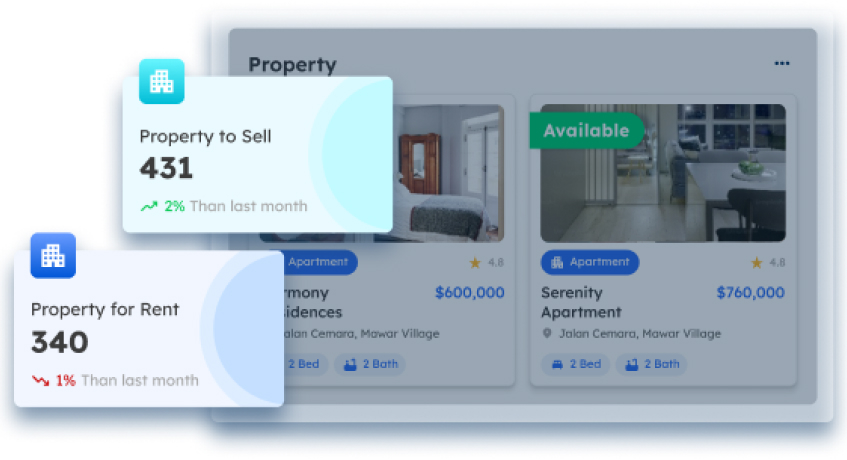
ScaleOcean Atlas for Property Management is an integrated ERP platform that can connect property and facility management with accounting, procurement, asset management, maintenance, and other business processes.
For Philippine property businesses, this integrated approach can be useful when property teams need to coordinate with finance, procurement, maintenance, and other departments. Managers can centralize property information, monitor assets, schedule maintenance, and track operational activities from one system.
The platform also uses ScaleMind AI to support data analysis and operational decision-making. Businesses can configure the system around their workflows rather than relying on a fixed setup.
Schedule a consultation with our experts to explore how ScaleOcean can support your property operations. Here’s a quick look at some of its key strengths:
- Property and Asset Management: Centralizes property, asset, and facility information for easier monitoring across locations.
- Maintenance Management: Helps teams schedule preventive maintenance, manage work orders, and track service activities.
- Contract Management: Organizes property-related contracts, agreements, and important dates in one system.
- Financial Management: Connects property-related financial activities with accounting and reporting processes.
- Tenant and Lease Management: Helps organize tenant information, lease details, agreements, and important dates in one place.
- ScaleMind AI: Supports data analysis and provides AI-powered insights to help teams monitor operations and make informed decisions.
| Pros |
Cons |
- Connects property and facility management with accounting, procurement, maintenance, assets, and other business processes.
- Supports centralized management for businesses handling multiple properties or locations.
- Uses ScaleMind AI to support data analysis and operational decision-making.
|
- May be more suitable for businesses looking for an integrated ERP approach rather than a standalone PMS.
|
ScaleOcean Atlas Pricing: Pricing is quote-based and depends on the modules, users, integrations, and business requirements. You can contact the ScaleOcean team for pricing details.
ScaleOcean Capterra Rating: 5.0/5.
2. Inventi Asia
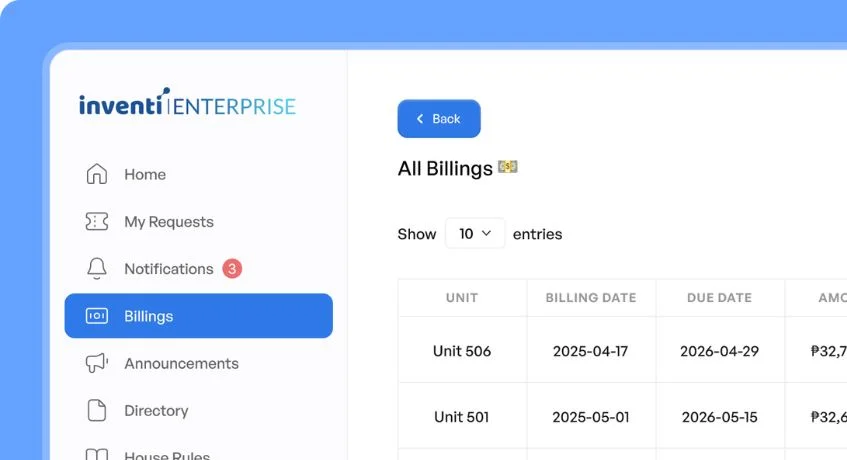
Inventi Asia is a cloud-based property management platform developed with the Philippine property management sector in mind. It brings property oversight, collections, maintenance, and community management into one system.
For Philippine property managers, Inventi can be useful for monitoring buildings and branches while keeping collection and maintenance activities connected. The platform also supports payment portal and accounting integrations. Here are some of its key features:
- Property Oversight: Provides centralized visibility into properties, branches, and operational activities.
- Collection Management: Helps automate statements of account and monitor tenant payments and outstanding balances.
- Maintenance Management: Organizes maintenance requests, work orders, and equipment servicing.
- Community Management: Supports tenant requests, amenity reservations, document access, and other community activities.
| Pros |
Cons |
- Built around property management needs in the Philippines.
- Connects collection, maintenance, and community workflows.
|
- May be more focused on property management and facilities operations than broader ERP requirements.
|
Inventi Asia Pricing: For pricing details, you can contact the Inventi Asia team for the details.
Inventi Asia Capterra Rating: No current Capterra rating found.
3. LandLord Studio
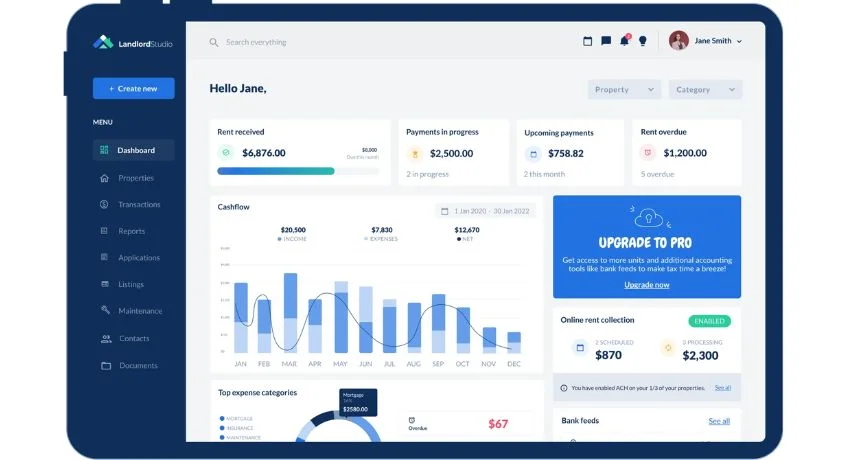
The third property management system that known in Philippines is Landlord Studio. It is a property management platform designed for landlords who want to manage rental properties, tenants, income, expenses, and maintenance from one application.
Additionally, it offers income and expense tracking, online rent collection, bank integration, reporting, and tenant tools. Its relatively lightweight approach makes it more relevant to individual landlords and smaller rental portfolios than large Philippine property groups. Four key features include:
- Rental Property Tracking: Organizes properties, units, tenants, and lease information.
- Income and Expense Tracking: Records rental income and property-related expenses.
- Online Rent Collection: Supports digital rent payments and payment tracking.
- Financial Reporting: Provides reports for monitoring property finances and tax preparation.
| Pros |
Cons |
- Simple approach for landlords managing smaller portfolios.
- Includes financial tracking alongside property management.
- Offers a free plan for smaller portfolios.
|
- May not provide the breadth of local Philippine property workflows needed by larger businesses.
|
Landlord Studio Pricing: Starts at ₱751,15 ($12) per month for the Pro plan, with a free plan available.
Landlord Studio Capterra Rating: 4.9/5.
4. Hotelogix Philippines
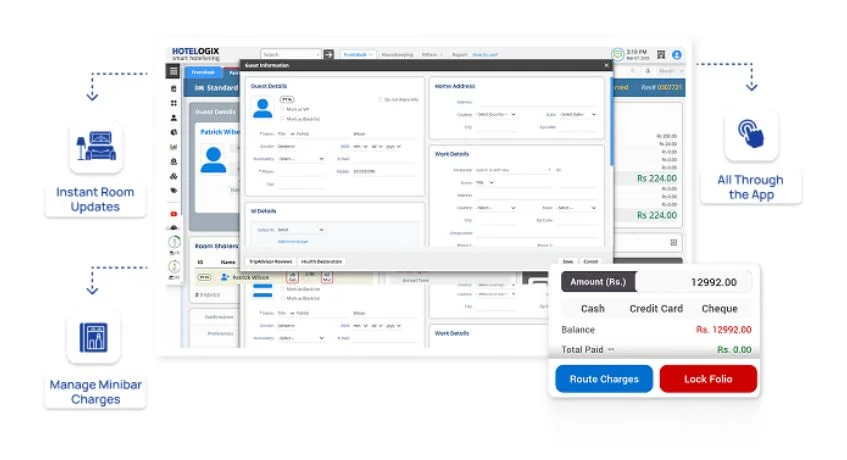
Hotelogix is a cloud-based hotel property management system that focused on reservations, front desk operations, housekeeping, and hotel reporting. It is therefore more relevant to Philippine hotels and resorts than conventional long-term rental properties.
The platform supports reservation management, room operations, channel management, and reporting, with integrations for other hospitality workflows. Here are the key features of Hotelogix Philippines:
- Reservation Management: Handles bookings, check-ins, check-outs, and room availability.
- Channel Management: Connects hotel inventory with online booking channels.
- Housekeeping Management: Helps coordinate room cleaning and operational status.
- Reporting: Provides operational and financial information for hotel management.
| Pros |
Cons |
- Designed specifically for hospitality operations.
- Provides tools for multi-property hotel operations.
|
- Its hotel-centric design may not suit conventional residential or commercial property management.
|
Hotelogix Pricing: Price based on business requirements, you can contact the vendor for current pricing.
Hotelogix Capterra Rating: 4.4/5.
5. Buildium
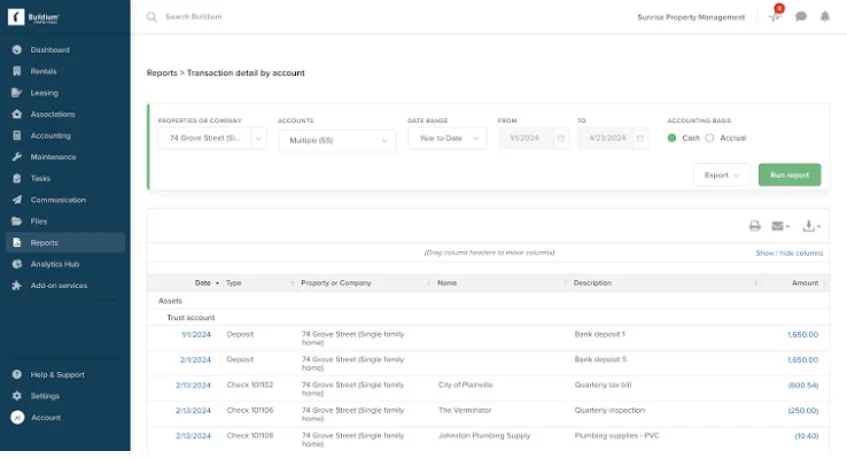
Buildium is a property management platform that combines accounting, maintenance, leasing, resident communication, and online portals. It can suit residential property managers that need more than basic rent tracking. The key features include:
- Property Accounting: Tracks property income, expenses, and financial transactions.
- Maintenance Management: Organizes maintenance requests and service activities.
- Resident Portals: Gives residents access to payments, communication, and property information.
- Reporting: Provides financial and operational reports for property managers.
| Pros |
Cons |
- Combines property operations and accounting.
- Supports resident portals and online workflows.
- Offers an API on higher plans.
|
- Philippine-specific tax and payment requirements may require additional evaluation.
|
Buildium Pricing: Starts at ₱3.875,03 ($62) per month for the Essential plan, for further information, you can contact the Buildium team.
Buildium Capterra Rating: 4.5/5.
6. Tenantcloud
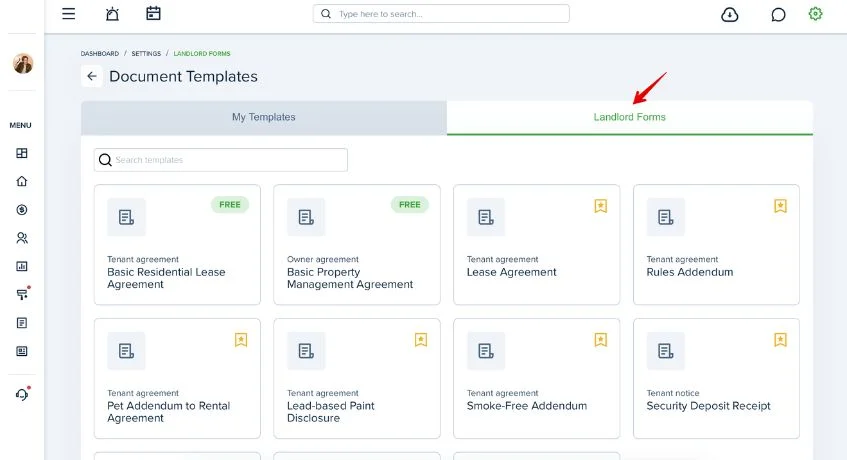
TenantCloud is a cloud property management platform designed for landlords and property managers. It covers rental payments, tenant screening, leasing, and property communication. Below here are some of the features include:
- Rent Payments: Supports online rent payments and automatic payment options.
- Tenant Screening: Helps property managers screen prospective tenants.
- Lease Management: Supports lease creation, signatures, and tenant records.
- Property Communication: Provides tools for messages and tenant updates.
| Pros |
Cons |
- Designed for residential rental management.
- Offers online payment and tenant tools.
- Provides multiple plans for different portfolio sizes.
|
- Some advanced features require higher-tier plans.
- Philippine-specific integrations should be checked before implementation.
|
TenantCloud Pricing: Starts at ₱1.561,62 ($25) per month for the Starter plan, and also ₱2.187,08 ($35) per month for the Growth plan.
TenantCloud Capterra Rating: 4.3/5.
7. Jinisys Software
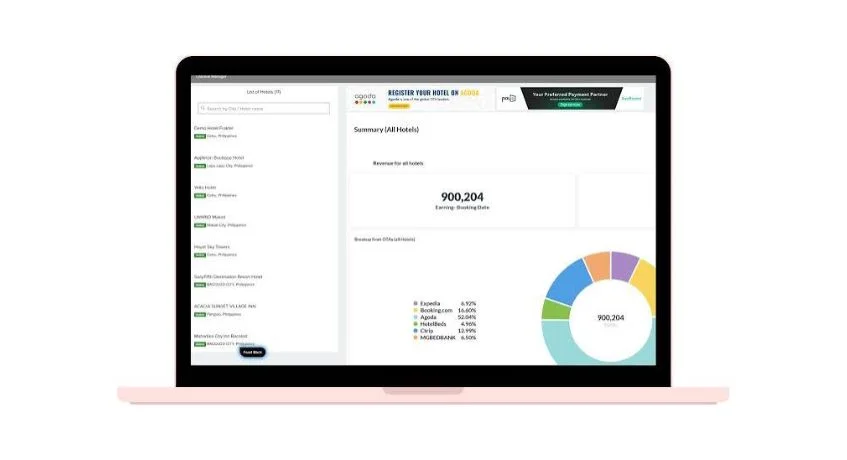
Another software that can help manage property business is Jinisys Software. It provides business technology solutions for hospitality and other industries in the Philippines.
Its hospitality solutions are designed around hotel operations and related business processes. For Philippine hotels, a locally established technology provider can be worth considering when evaluating implementation and support requirements. Below here are some of its features:
- Hotel Management: Supports day-to-day hotel operational workflows.
- Front Office Operations: Helps manage guest-facing hotel activities.
- Reservation Management: Organizes room bookings and availability.
- Business Reporting: Provides operational information for management decisions.
| Pros |
Cons |
- Philippine market presence.
- Focuses on hospitality-related business processes.
- Can support hotel operational requirements.
|
- More suitable for hospitality businesses than conventional rental property portfolios.
|
Jinisys Pricing: Contact the Jinisys for pricing details.
Capterra Rating Jinisys: No current Capterra rating found.
8. iRealtee OS
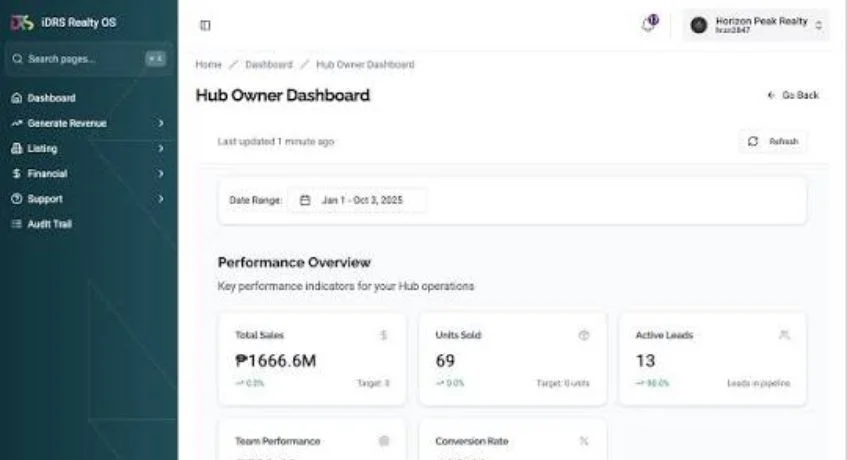
iRealtee OS is a Philippine real estate platform that combines CRM, property listings, lead management, and real estate business workflows. Moreover, its local orientation makes it relevant for Philippine brokers and agencies that need to manage property information alongside sales and client relationships. Here are the features include:
- Property Listings: Organizes property listings and related information.
- Real Estate CRM: Helps manage leads, contacts, and client relationships.
- Sales Management: Tracks prospects and property sales activities.
- Property Management: Supports selected property-related operational workflows.
| Pros |
Cons |
- Built for the Philippine real estate market.
- Combines property information with CRM capabilities.
- Useful for brokerages managing sales and listings.
|
- Its real estate sales focus may not cover all requirements of large property management operations.
|
iRealtee OS Pricing: Custom pricing tailored to your business size and requirements.
Capterra Rating iRealtee: No current Capterra rating found.
9. eZee Absolute
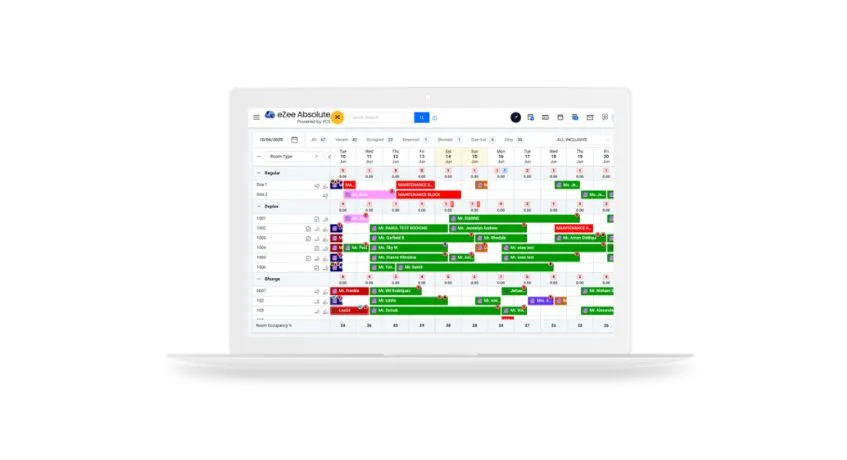
eZee Absolute or also known Yanolja Cloud Solution, is a cloud and on-premise hotel PMS designed for hotels, resorts, guest houses, hostels, villas, and serviced apartments. The platform focuses on hospitality operations rather than conventional landlord management, making it more relevant to Philippine accommodation businesses. Below here the features of eZee Absolute include:
- Front Desk Management: Supports check-in, check-out, room assignment, and guest operations.
- Reservation Management: Manages bookings and room availability.
- Housekeeping: Helps track room status and housekeeping activities.
- Hotel Reporting: Provides operational and financial reports.
| Pros |
Cons |
- Supports different hospitality property types.
- Available through cloud and on-premise deployment.
- Covers core hotel management workflows.
|
- Businesses should separately verify Philippine tax and invoicing configuration before implementation.
|
eZee Absolute Pricing: Starts at approximately ₱1.490,80 ($23.86) per user per month according to Capterra.
eZee Absolute Capterra Rating: 4.6/5.
10. Cloudreef
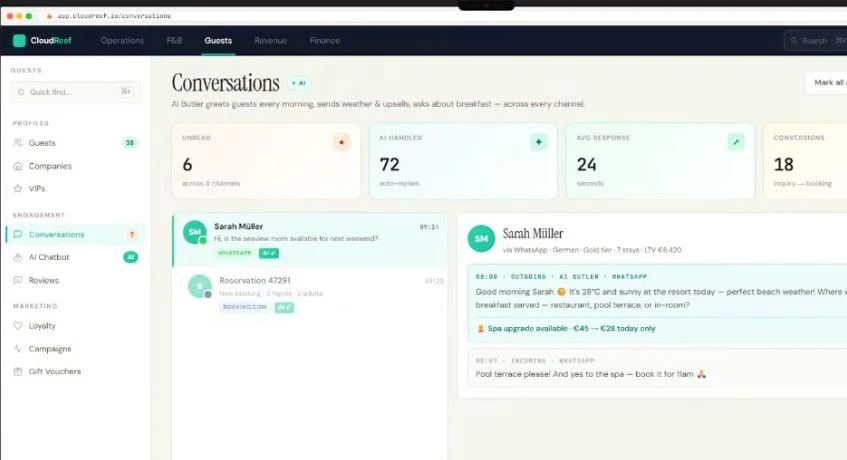
CloudReef is a hospitality operating system designed specifically for the Philippines. It brings bookings, restaurant operations, housekeeping, billing, and guest communication into one platform.
Its local positioning can be relevant for Philippine resorts and accommodation businesses that need hotel operations and guest services connected in one system. Below here are the features of Cloudreef include:
- Booking Management: Handles reservations and property availability.
- Housekeeping Management: Coordinates room and housekeeping activities.
- Billing: Connects guest charges and operational billing.
- AI Guest Assistant: Provides automated guest communication and assistance.
| Pros |
Cons |
- Designed around Philippine hospitality operations.
- Combines accommodation and restaurant workflows.
- Provides an integrated guest experience.
|
- Primarily targets hospitality properties rather than long-term rental portfolios.
|
CloudReef Pricing: Pricing starts at ₱7,147.23 (€100) per month, contact the vendor for CloudReef pricing details.
Capterra Rating CloudReef: No current Capterra rating found.
11. ECOUNT ERP
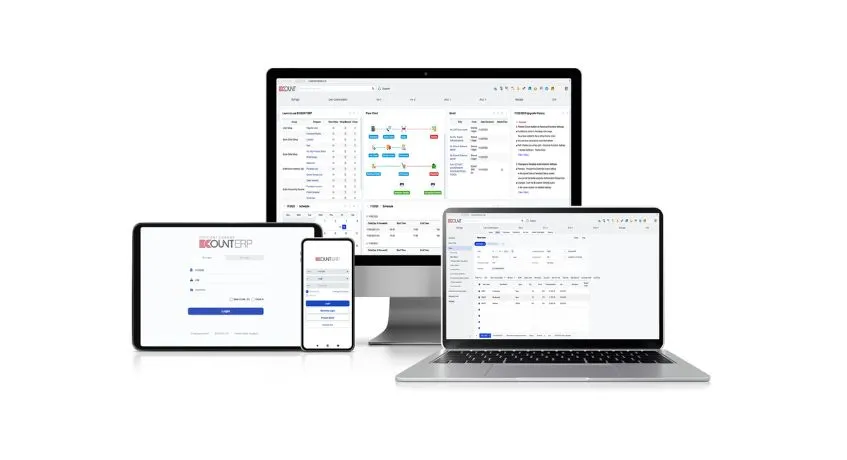
ECOUNT ERP is an integrated business management system covering accounting, finance, inventory, sales, logistics, and other operational functions. Rather than acting as a dedicated PMS, ECOUNT can be considered by property-related businesses that want broader ERP capabilities alongside financial and administrative processes. Here are the features include:
- Accounting: Manages financial transactions and accounting processes.
- Financial Management: Tracks business finances and related reports.
- Inventory Management: Monitors inventory and stock movements.
- Sales and Logistics: Connects sales activities with logistics processes.
| Pros |
Cons |
- Provides broader ERP functionality.
- Combines accounting and operational processes.
- Can support businesses beyond property management.
|
- Does not focus specifically on tenant and property management workflows.
|
ECOUNT Pricing: Starts at ₱3.435,27 ($55) per user per month, you can contact the ECOUNT team for more pricing information.
ECOUNT Capterra Rating: 4.4/5.
12. RoomKey PMS
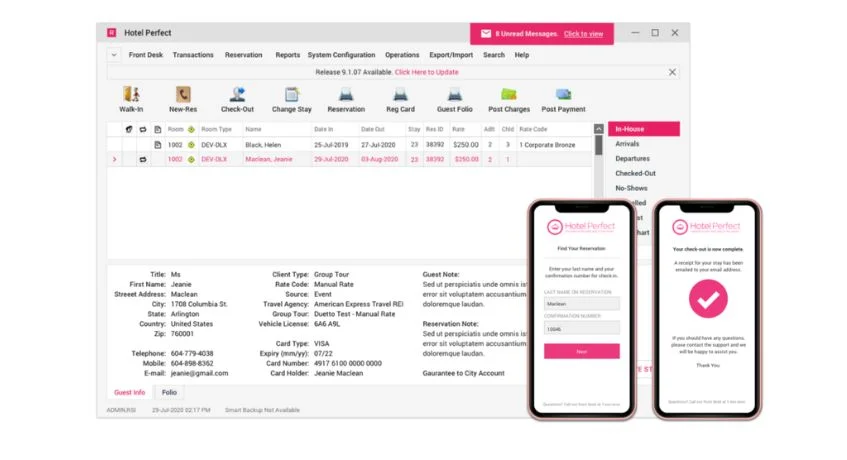
RoomKey PMS is a hotel management platform designed primarily for independent hotels and hospitality businesses. It combines reservations, front desk operations, room management, and reporting.
The platform can be relevant to hotels in the Philippines that need core hospitality functions rather than residential leasing tools. Below here are the features to optimize hospitality:
- Reservation Management: Handles bookings and guest reservations.
- Room Inventory: Provides visibility into room availability and status.
- Maintenance Tracking: Records maintenance activities and out-of-order rooms.
- Folio Management: Tracks guest charges, payments, adjustments, and billing.
| Pros |
Cons |
- Focused on hotel and hospitality operations.
- Supports booking and room inventory management.
- Includes maintenance and billing workflows.
|
- Primarily designed for hotels rather than long-term rental properties.
|
RoomKey PMS Pricing: Contact the vendor for pricing details.
RoomKey PMS Capterra Rating: 4.4/5.
13. KloudHotels
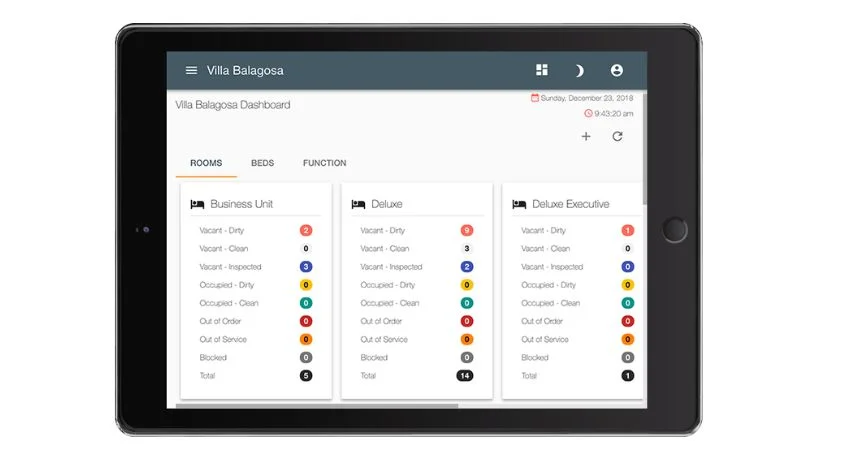
KloudHotels (Folio Plus) is a cloud-based hotel management solution designed to help accommodation businesses manage reservations and daily hotel operations. It can be considered by Philippine hotels looking for cloud-based tools to coordinate front office and guest-facing activities.
- Front Office: Supports daily front desk operations.
- Reservations: Manages bookings and room availability.
- Housekeeping: Helps coordinate room cleaning and status.
- Reporting: Provides operational information for hotel management.
| Pros |
Cons |
- Cloud-based hotel management approach.
- Covers core hotel operations.
- Supports centralized access to operational information.
|
- Its hospitality focus makes it less suitable for conventional landlord or commercial leasing operations.
|
KloudHotels Pricing: Pricing starts at ₱4.377,17 ($70) per feature per month, you can contact the vendor for pricing details.
Capterra Rating KloudHotels: 5.0/5.
14. Oracle Hospitality
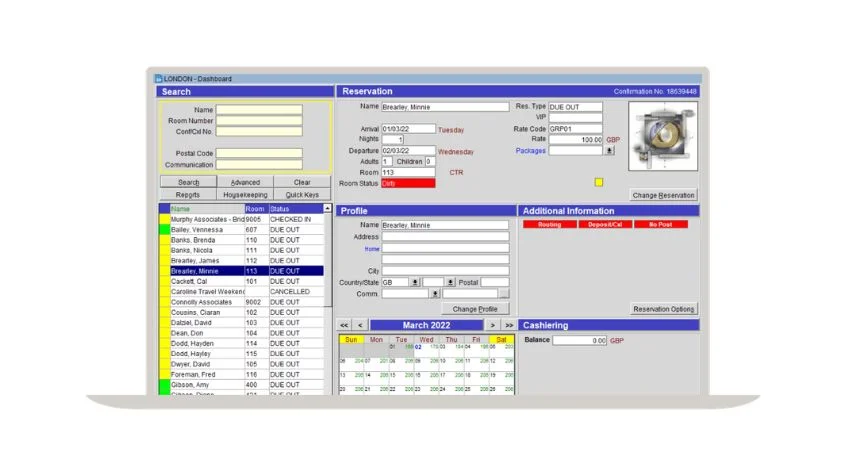
Oracle Hospitality OPERA Cloud is an enterprise cloud property management system which also works for Philippines industry. It’s designed for hotels and hospitality organizations that centralizes hotel operations, guest information, room inventory, rates, payments, and other functions.
Moreover, its open architecture and integration capabilities can be useful for hospitality groups managing complex operations or multiple properties. Below here are the features of Oracle Hospitality include:
- Hotel Operations: Centralizes core front office and property operations.
- Guest Profiles: Stores and manages guest information and preferences.
- Room and Rate Management: Helps manage room inventory, availability, and pricing.
- Payments: Supports payment-related hotel workflows.
| Pros |
Cons |
- Designed for complex hotel operations.
Supports centralized and multi-property management.
- Offers broad integration capabilities.
|
- Enterprise functionality may be more than smaller Philippine accommodation businesses require.
|
Oracle Hospitality OPERA Cloud Pricing: Contact Oracle team for more pricing details.
Oracle Hospitality OPERA Cloud Capterra Rating: 3.6/5.
15. NOAH Business Applications
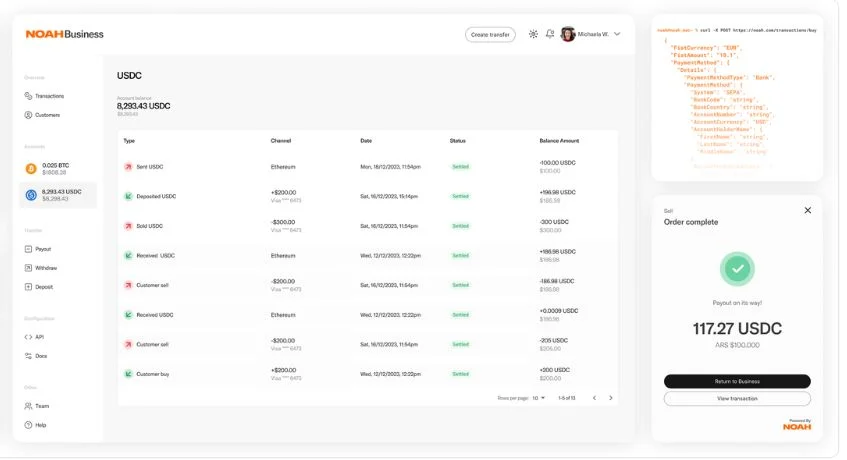
NOAH Business Applications provides a Philippine-focused real estate management system covering property sales, leasing, commercial and residential properties, dormitories, hotels, memorial lots, and property management offices.
The platform is positioned as an end-to-end property management solution and can connect with NOAH Financials, Project Management, Procurement Management, and CRM. Below here are the features include:
- Property Sales and Leasing: Supports transactions across residential and commercial properties.
- Property Management: Covers operational processes for different property types.
- Financial Integration: Connects real estate operations with financial management.
- Procurement and CRM: Links purchasing and customer relationship processes with property operations.
| Pros |
Cons |
- Strong focus on Philippine real estate operations.
- Supports several property types and business models.
- Connects property management with broader ERP processes.
|
- Businesses may need a more detailed consultation to determine the appropriate modules and setup.
|
NOAH Business Applications Pricing: Contact the vendor for pricing details.
Capterra Rating NOAH Business Applications: 5.0/5.
16. Doorloop Inc.
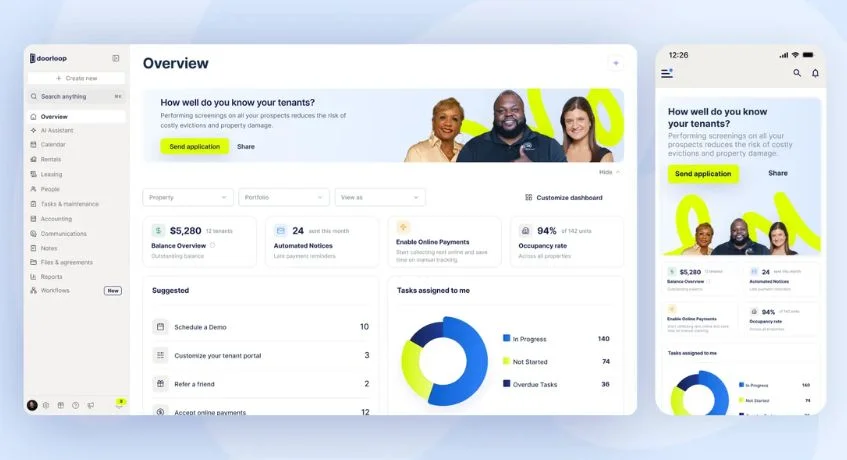
DoorLoop is a property management platform that combines rent collection, tenant management, accounting, maintenance, and communication. Its feature set makes it relevant to residential property managers and landlords who want leasing, financial, and maintenance activities connected in one platform. Here are the features:
- Rent Management: Tracks rent payments, balances, and reminders.
- Tenant Portal: Gives tenants access to payments, communication, and account information.
- Maintenance Management: Manages work orders and maintenance requests.
- Accounting and Reporting: Connects property transactions with financial reporting.
| Pros |
Cons |
- Combines property operations and accounting.
- Includes tenant-facing tools.
- Supports maintenance and online payment workflows.
|
- Payment features are built around markets and payment methods that may differ from common Philippine practices.
|
DoorLoop Pricing: Starts at ₱4.313,54 ($69) per month for the Starter plan.
DoorLoop Capterra Rating: 4.8/5.
17. Yardi Breeze
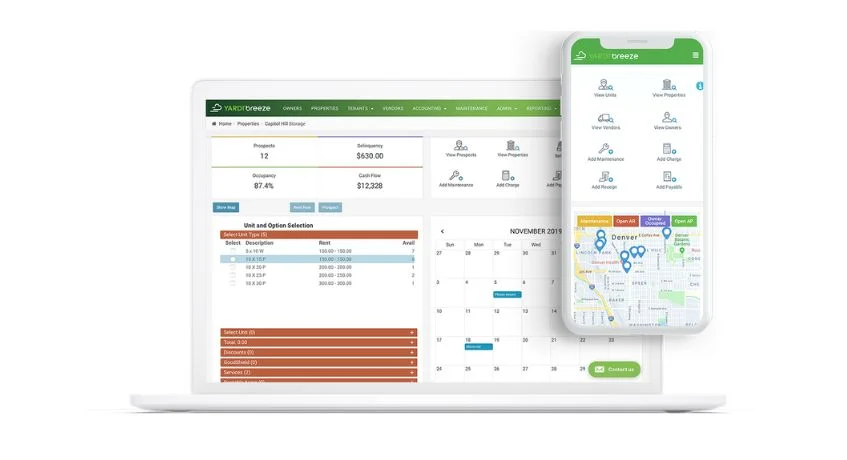
Last but not least is Yardi Breeze, a cloud-based property management platform covering residential, commercial, affordable housing, associations, and other property types.
It combines property accounting with tenant management, rent collection, maintenance, and reporting, making it suitable for businesses managing different types of rental properties. Here are the features of Yardi Breeze:
- Property Accounting: Tracks property income, expenses, and financial transactions.
- Rent Collection: Supports online payments and rent tracking.
- Maintenance Management: Helps manage work orders and service requests.
- Tenant and Owner Portals: Provides online access to payments, documents, and property information.
| Pros |
Cons |
- Supports multiple property types.
- Combines accounting with property management.
- Provides online portals and payment tools.
|
- Philippine businesses should verify local tax, payment, and integration requirements before implementation.
|
Yardi Breeze Pricing: Residential plans start at ₱62,51 ($1) per month, while commercial plans start at ₱125,03 ($2) per month, with plan-specific minimums and conditions.
Yardi Breeze Capterra Rating: 4.2/5.
How to Choose the Best Property Management System for Your Business?
The right property management system depends heavily on your property type, portfolio size, and existing workflows. Before making a decision to implement property management system in the Philippines, consider these factors:
- Property Type: Make sure the system supports your properties, whether condominiums, apartments, commercial spaces, hotels, or mixed-use developments.
- Multi-Property Management: If you manage properties across Metro Manila and the provinces, look for centralized dashboards for occupancy, collections, maintenance, and property performance.
- Rent and Local Payment Collection: Look for support for payment habits common in the Philippines, such as GCash, Maya, InstaPay, PESONet, and online bank transfers, with tools to match incoming payments to the right tenant and property.
- BIR and Invoicing: Review whether the system supports your invoicing, tax, and accounting workflows in line with applicable Philippine BIR requirements.
- Property-Level Accounting: The system should help separate rental income, association dues, utilities, repairs, and other expenses by property or unit.
- Local Support and Scalability: Consider whether the provider can assist with implementation, training, integrations, and future expansion as you add properties or branches.
In Conclusion
Implementing a property management system in the Philippines helps real estate businesses move past manual spreadsheets like Excel and Google Sheets. By centralizing tenant contracts, maintenance, and financial reporting, local property teams gain clear operational visibility.
However, effective software selection must address local demands, such as BIR tax compliance, popular payment channels like GCash and Maya, and data privacy regulations.
ScaleOcean Atlas for Property Management solves these local operational challenges by unifying property management, accounting, and asset maintenance into a single, compliant ERP ecosystem.
Schedule a consultation with the ScaleOcean Atlas team to discuss your portfolio and discover a tailored solution for your business.
FAQ:
1. What does property management software do?
Property management software centralizes tasks such as tenant management, rent collection, lease tracking, maintenance, accounting, and financial reporting in one system.
2. What is the best property management software for landlords?
The right property management software depends on your property type, portfolio size, required features, budget, integrations, and local compliance needs. Compare these factors before choosing a system.
3. How do you choose the right property management system?
Consider property types, multi-property management, rent collection, local payment support, BIR workflows, maintenance, accounting, data security, scalability, and vendor support.
4. Can property management software handle multiple properties and units?
Yes. Many systems can centralize property and unit records, tenant information, rent collection, maintenance requests, and financial data across multiple properties and locations.