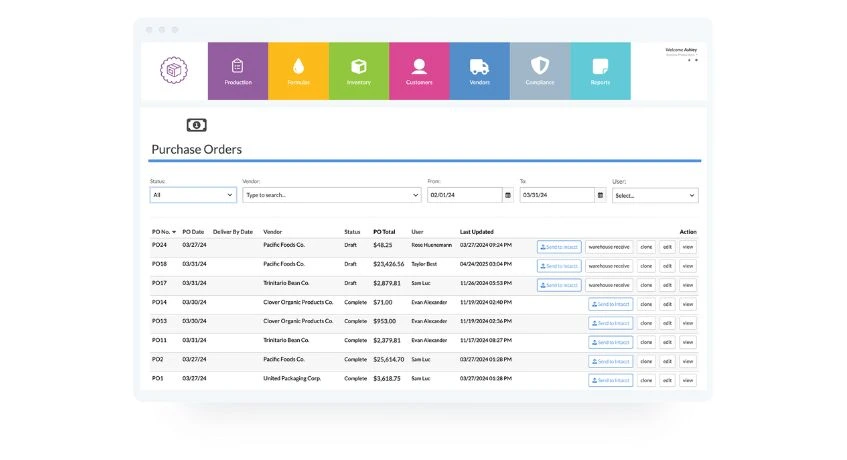
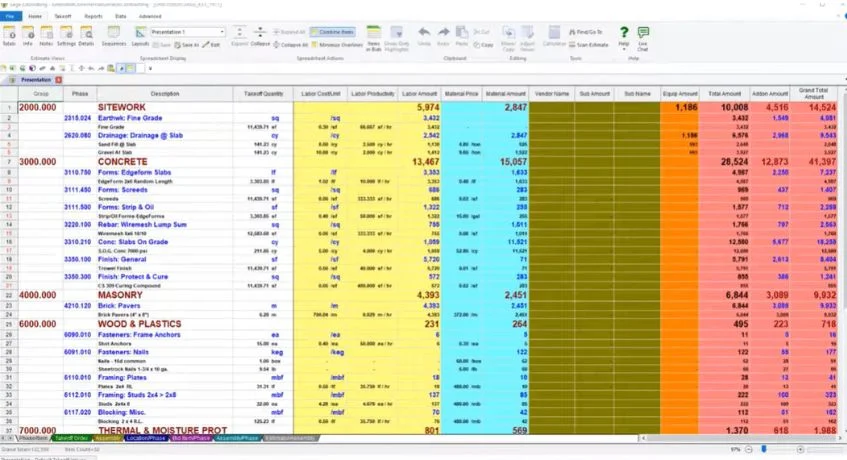
ERP software for food manufacturers refers to a specific type of software that helps companies in the food industry manage their operations more efficiently by automating various tasks and ensuring product safety and FDA compliance.
In addition to producing finished goods, ERP software for food manufacturers also handles recipes, batches, costing, and even, distribution. By using a digital system, manufacturers can work with greater accuracy and produce higher quality products. This article brings you the best ERP systems for food manufacturers in the Philippines that can help you make your choices.
Key Takeaways
Food manufacturing ERP offersa centralized method for manufacturing, stock management, procurement, quality, traceability, and much more.
The ERP software for food manufacturers has several key features, such as recipe management, batch tracking, lot traceability, expiration control, and demand planning.
ScaleOcean Atlas for manufacturingintegrates the whole food production with inventory, procurement, warehouse, accounting and supply chain in one platform.
ERP Software for food manufacturers is a business management tool that integrates various aspects of food manufacturing and distribution. As opposed to a standard manufacturing system, food based ERP software can be used for the entire food manufacturing process.
Common functionality of the features are ingredient ordering, recipe management, production planning, batch tracking, cost estimation, and finished goods control. A bakery, for example, can benefit from a food ERP system to manage its recipes, determine raw material needs, simplify order management, manage production batches, and take care of the distribution.
The goal is to create one connected source of operational data. Teams can share and collaborate on information in a single platform, instead of separating documents for production, purchasing, inventory and accounting spreadsheets.
Why Do Philippine Food Manufacturers Need a Specific Software?
Food manufacturing in the Philippines involves complex operations where small errors in ingredients, inventory, or documentation can quickly escalate into costly quality issues, compliance gaps, or lost sales.
Moreover, the scale of the local industry makes digital systems increasingly relevant. According to the Philippine Statistics Authority’s 2022 Annual Survey of Philippine Business and Industry (ASPBI), there were 23,571 formal manufacturing establishments in 2022. Among these, the “manufacture of other food products” industry group had the highest number of establishments at 7,195, representing 30.5% of the total.
What is more, for manufacturers in the Philippines that manage food or other products where consumption and shelf life matter, it is best to use ERP systems designed to maintain optimal product quality, given that food materials have expiration dates and are sensitive to storage conditions.
In addition, a system specific to the food industry, like a food manufacturing ERP, can handle these risks and can also feed into the growth of businesses in Luzon, Visayas, and Mindanao, which is driven by the following operational needs:
Regulatory Compliance & Audit Readiness: Streamlines FDA, HACCP and GMP permits, standardizes sanitation records and automates audit-ready batch traceability.
Traceability & Fast Recalls: Enables lot tracking, both forward and backward, to identify affected batches and make accurate recalls through complex distribution channels.
Production Planning & Cost Control: Automates scheduling, allows to compare actual ingredient usage to the standard to monitor cost variances, and includes required quality checkpoints.
Equipment Reliability & Continuity: Records maintenance schedules, associates equipment status to scheduled production, and associates equipment downtime to batch production for root-cause analysis.
Multi-Site Visibility: Provides real-time visibility, coordinated procurement and integrated reporting across multiple sites in Luzon, Visayas and Mindanao.
The Key Features of Food Manufacturing ERP
Another important aspect of the ERP system for food manufacturers is the features. When assessing the food manufacturing software in the Philippines that a business can use, look for the software to support the following abilities:
Lot Traceability: Provides ingredients from raw material reception to production and also to customer delivery, ensuring mock recall readiness.
Inventory Management: Facilitates teams to manage inventory with features like FIFO or FEFO, track inventory expiration dates, and manage quarantined inventory, minimizing the risk of using incorrect materials.
Recipe & Batch Control: It can scale recipes up or down and control production based on formulas, allowing you to adjust production volumes without having to re-calculate all of the ingredients.
Compliance & Quality: Manages adherence to standards like FDA, FSMA 204, HACCP, SQF, and BRC, alongside allergen tracking. It organize quality checks, allergen information, and production records based on applicable food safety requirements
Catch Weight Management: Manages products for which there are variations by unit or batch, tracking and managing variable product weights from procurement to production to sales.
The 13 Best ERP Software for Food Manufacturing in the Philippines
The choice of ERP will be determined by the size of the manufacturer, production model, product category, budget and regulatory requirements. There are various ERP software for food manufacturers to manage operational, which are as follows:
Software
Key Strength
Best for
ScaleOcean
Integrated ERP with AI, recipe management, traceability, and inventory control
Philippine food manufacturers needing an integrated ERP
BatchMaster ERP
Strong formulation, batch production, and traceability tools
Process and batch-based food manufacturers
Deacom ERP
Combines manufacturing and business management in one ERP
Complex manufacturing operations
Inecta Food ERP
Food-specific tools built on Microsoft Dynamics 365 Business Central
Food and beverage manufacturers
FlexiBake
Recipe-based production and bakery management
Bakeries and recipe-based food businesses
Aptean Food & Beverage ERP
Food-focused production, traceability, and quality management
Established food and beverage manufacturers
QAD Adaptive ERP
Broad manufacturing, supply chain, and financial management
Manufacturers with complex operations
Wherefour ERP
Food-specific compliance, batch tracking, and inventory management
Food and beverage manufacturers
NutraSoft
Cloud-based food production, traceability, and nutrition tools
Small and mid-sized food manufacturers
Sage X3 ERP
Broad ERP with food traceability and supply chain capabilities
Multi-site food manufacturers and distributors
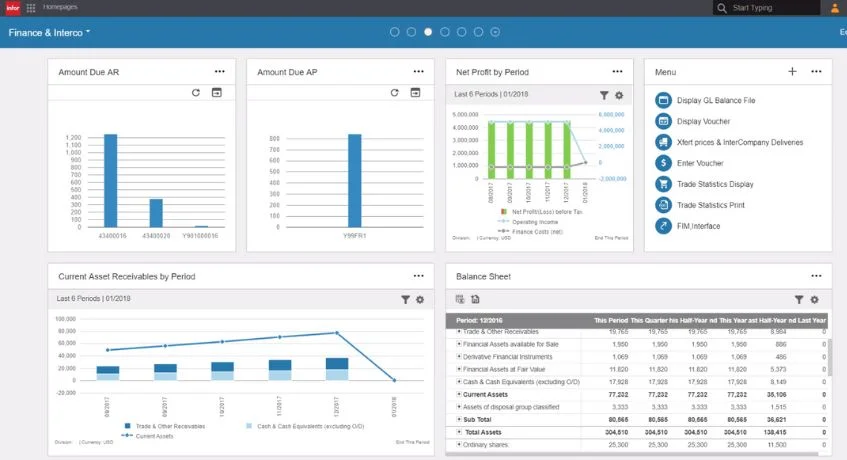
Infor CloudSuite Food & Beverage
Industry-focused cloud ERP with manufacturing and supply chain tools
Complex food and beverage operations
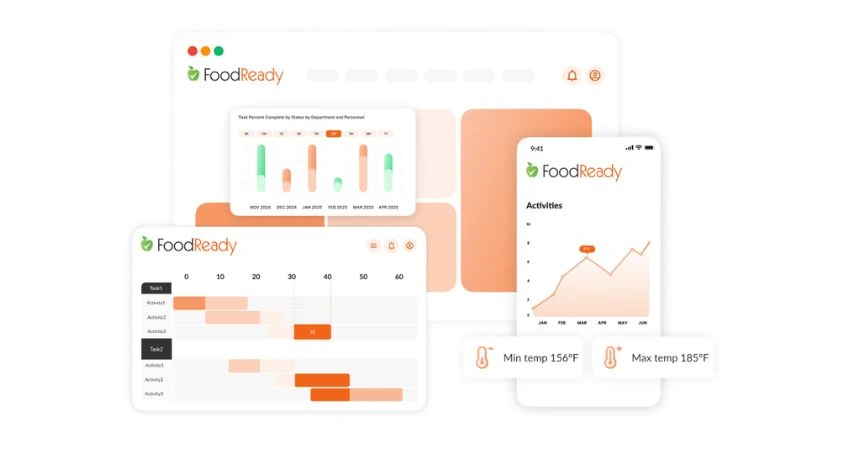
FoodReady ERP
Combines ERP with food safety, quality, and recall workflows
Food manufacturers, processors, and co-packers
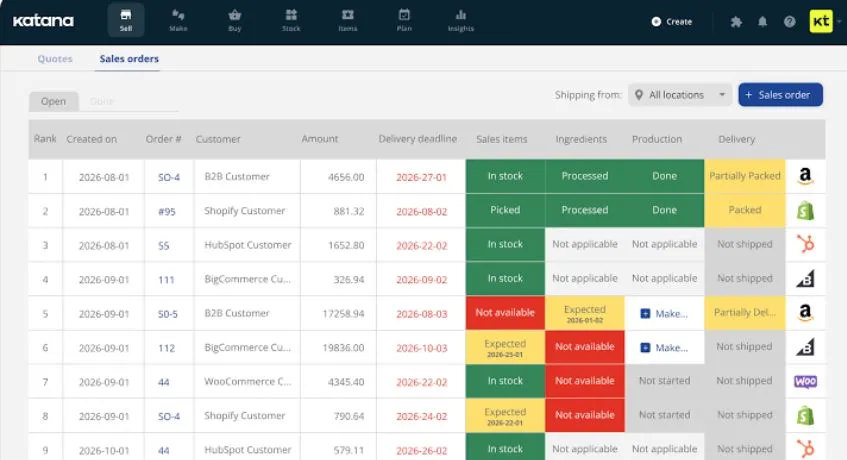
Katana MRP
Simple manufacturing, inventory, batch tracking, and costing
Small and growing food manufacturers
1. ScaleOcean Atlas for Manufacturing
ScaleOcean Atlas for manufacturingis an integrated ERP system that combines production and inventory, procurement, warehouse, sales, accounting and supply chain management. The ERP integrations system can help food manufacturers of production best quality products and comply with FDA.
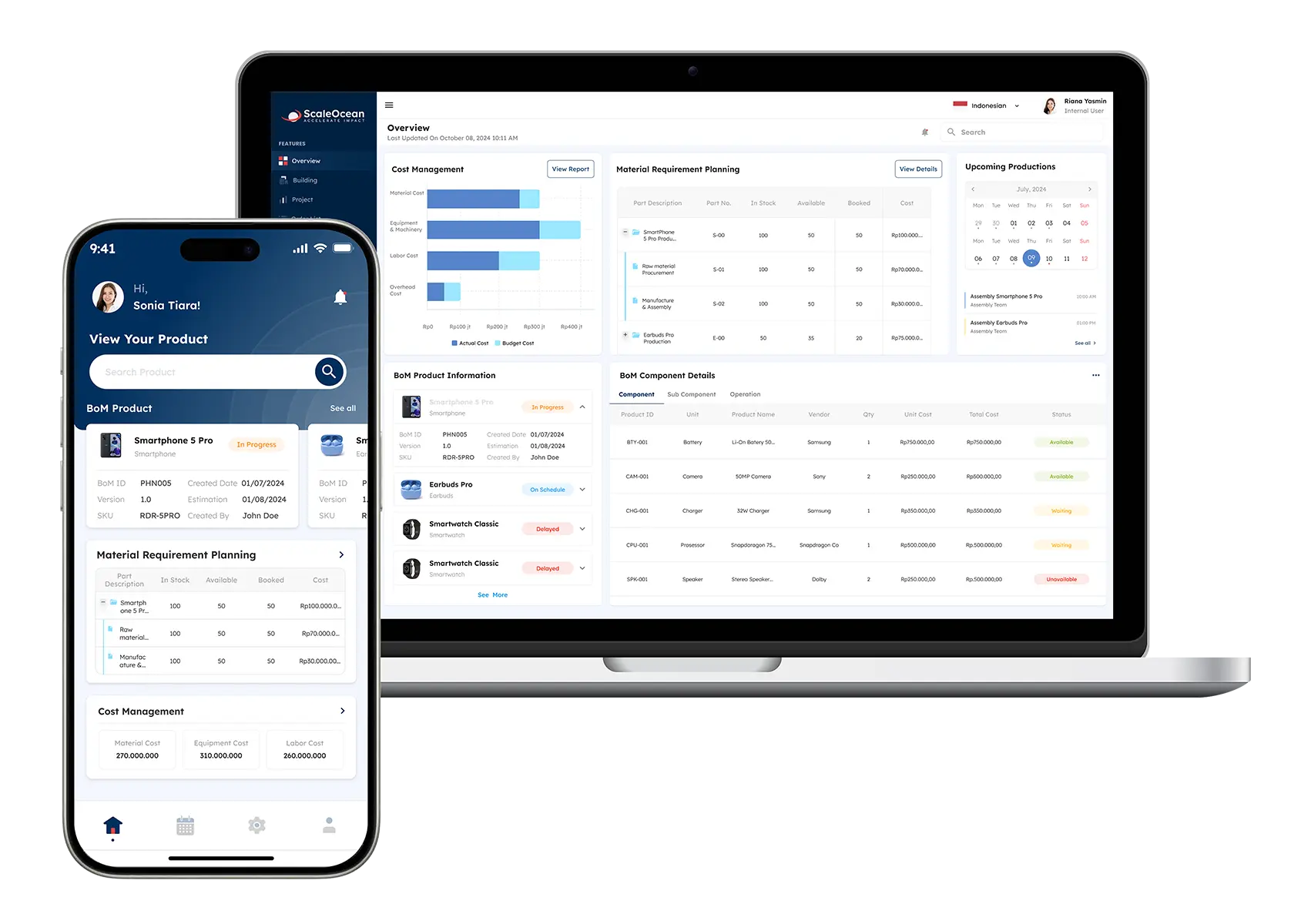
For Philippine manufacturers, this approach can be useful when several departments need to work from the same operational data. Production teams can manage BOMs, production planning, and manufacturing orders, while inventory and procurement teams can monitor raw materials and stock availability.
The platform also enabled ScaleMind AI to aid in data analysis and operational decision-making. The system can be set up according to the manufacturing process of the business instead of the set configuration.
Schedule a consultation with our experts to explore how ScaleOcean can support your operations. Here’s a quick look at some of its features designed for food manufacturers:
AI Stock and Demand Forecasting: Provides analysis of inventory and demand data to assist in purchasing, stock planning, and replenishment decisions.
Local Focus and Compliance: Provides assistance in business processes that are relevant to Philippine manufacturers, such as inventory reporting and operational processes.
Recipe and Formula Catalog: Organizes recipes, formulas, and ingredient requirements to support consistent production.
Catch Weight Management: Helps manage products with varying weights during purchasing, production, and sales.
FIFO, LIFO, and FEFO Support: Supports inventory valuation and stock rotation based on applicable inventory management methods.
BOM Management: Tracks the materials and components required for each product.
Quality Control Management: Helps manage inspections, quality checks, and production standards to maintain consistent product quality.
Pros
Cons
Integrates manufacturing with inventory, warehouse, procurement, accounting, sales, and other business processes.
Includes production planning, BOM, MRP, and manufacturing cost management.
Uses ScaleMind AI to support data-driven manufacturing decisions.
May be more suitable for businesses looking for an integrated ERP rather than a standalone manufacturing.
ScaleOcean Atlas Pricing: Pricing is quote-based and depends on the modules, users, integrations, and business requirements. You can contact the ScaleOcean team for pricing details.
Food manufacturers often need to manage recipes, batch production, inventory, quality, and traceability in one system. BatchMaster ERP is designed for process manufacturers and provides tools for managing these operations.
The platform supports formulation, production planning, batch processing, inventory, quality control, and lot traceability. This can help food manufacturers maintain better control over ingredients and finished products.
For Philippine manufacturers, BatchMaster can be useful for businesses handling complex recipes, multiple production batches, and strict quality requirements.
Some of its key features include:
Recipe & Formula Management: Manages recipes, formulas, ingredients, and product specifications.
Lot Traceability: Tracks ingredients and finished products across the production process.
Quality Management: Supports inspections and quality control throughout manufacturing.
Inventory Management: Monitors raw materials, work-in-progress, and finished goods.
Pros
Cons
Designed specifically for process and batch manufacturing.
Includes formulation, traceability, inventory, and quality management.
Supports production and product costing.
May require implementation support for businesses with complex manufacturing workflows.
BatchMaster ERP Pricing: Pricing is quote-based. Contact the BatchMaster team for pricing details.
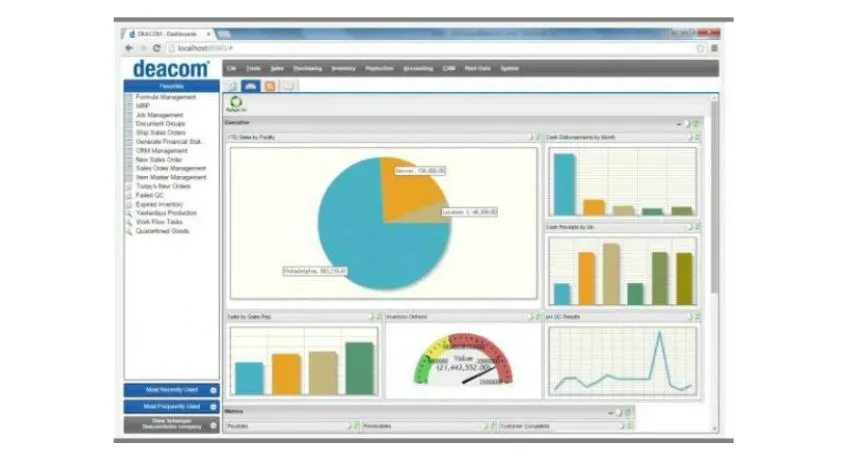
Deacom ERP is one of the ERP software for food manufacturers that offers integrated system designed for manufacturers and distributors that need to connect production, inventory, purchasing, sales, quality, and accounting. It seamlessly integrates the process of manufacture within one platform.
Moreover, for food manufacturers, the platform can help centralize operational data while supporting batch production, inventory control, traceability, and quality processes. Here are some of the Deacom features to optimize food manufacturing process:
Production Management: Helps plan and manage manufacturing activities.
Inventory Management: Tracks materials and finished products.
Quality Management: Supports quality checks and manufacturing controls.
Lot Traceability: Provides visibility into materials and products throughout operations.
Pros
Cons
Combines manufacturing and business management in one ERP.
Suitable for complex manufacturing operations.
May be more than smaller manufacturers need if they only require basic production management.
Deacom ERP Pricing: Pricing can vary, which is based on business requirements. Contact the Deacom team for pricing details.
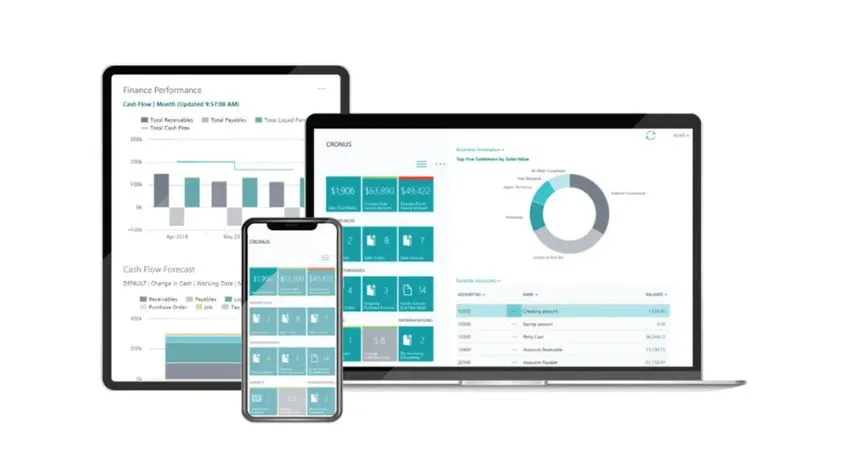
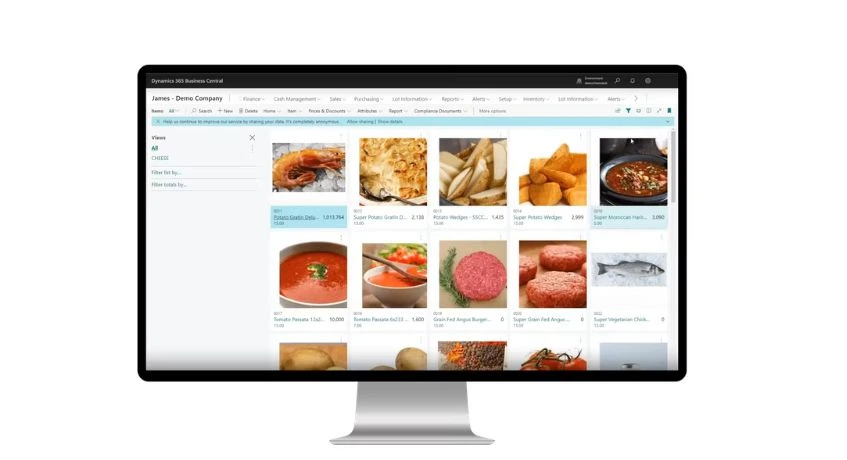
Inecta Food ERP is built for food and beverage manufacturers and runs on Microsoft Dynamics 365 Business Central. It combines ERP capabilities with food-specific tools for recipes, ingredients, production, quality, and traceability. Some of its key features include:
Recipe Management: Manages recipes, formulas, and ingredients.
Production Management: Supports food production planning and execution.
Lot Traceability: Tracks ingredients and finished products by lot.
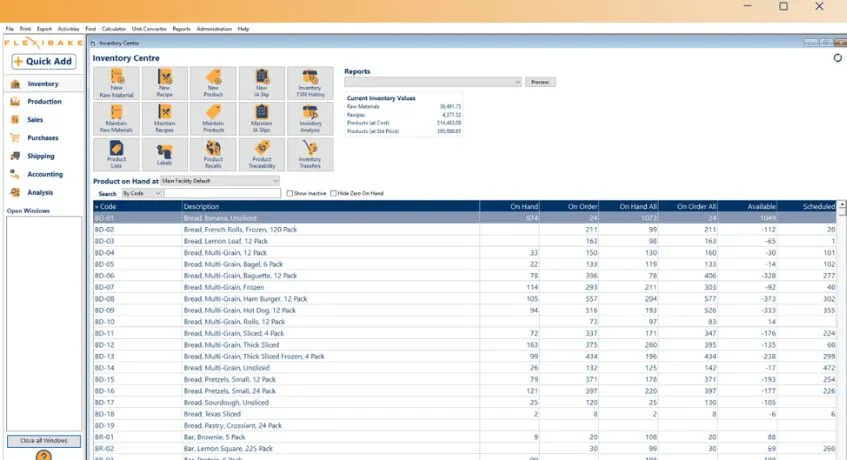
FlexiBake is a food manufacturing ERP designed particularly for bakeries and other recipe-based food businesses. It brings production, inventory, sales, accounting, and traceability into one platform, helping businesses manage operations from ingredients to finished products.
The platform is especially useful for manufacturers that handle frequent production runs and need to keep recipes, ingredient quantities, inventory levels, and product information organized. Some of its key features include:
Recipe Management: Organizes recipes, ingredients, and product requirements.
Production Planning: Helps schedule and manage production runs based on business needs.
Inventory Tracking: Monitors ingredients, packaging materials, and finished products.
Nutritional Analysis: Helps manage nutritional information for food products.
Pros
Cons
Designed specifically for food and bakery manufacturers.
Includes recipe and product traceability tools.
Its bakery-focused capabilities may not cover every complex manufacturing model.
FlexiBake Pricing: Pricing starts at ₱18.522,76 ($295.00)/user/month. Contact the FlexiBake team for pricing details.
Aptean Food & Beverage ERP, formerly associated with JustFood, is an industry-focused ERP designed to support food and beverage manufacturers. It connects production with inventory, quality, traceability, distribution, and financial management.
The platform is built to help manufacturers manage the different stages of food production while maintaining visibility across materials and finished products. Its traceability and quality capabilities can also support businesses that need stronger control over food safety and compliance processes. Below here are the features include:
Production Management: Supports production planning, scheduling, and manufacturing activities.
Traceability: Tracks ingredients, batches, and finished products throughout the supply chain.
Quality Management: Helps manage inspections, quality processes, and compliance requirements.
Inventory Management: Monitors raw materials, packaging, work-in-progress, and finished goods.
Pros
Cons
Designed specifically for food and beverage manufacturing.
Connects manufacturing with supply chain and financial processes.
May be more suitable for established manufacturers with broader operational requirements.
Aptean Food & Beverage ERP Pricing: Pricing is based on business requirements and complexity. Contact the Aptean team for pricing details.
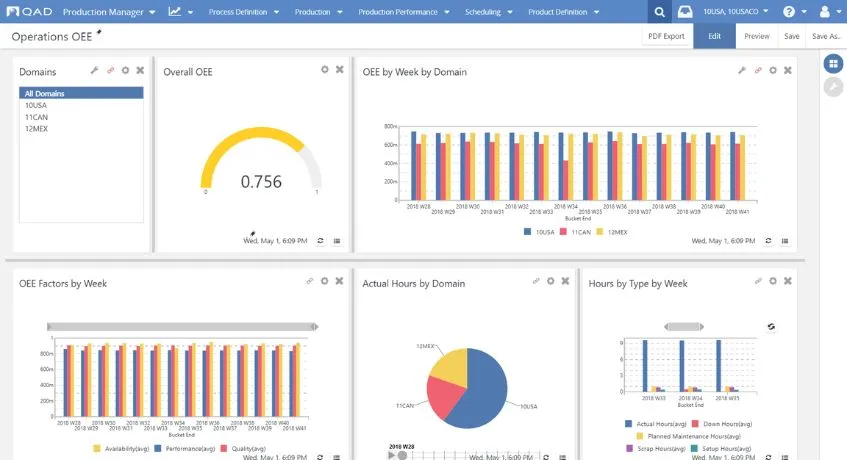
QAD Adaptive ERP is an enterprise resource planning platform designed for manufacturing and supply chain operations. It helps manufacturers manage production, inventory, purchasing, finance, and other core business processes through a centralized system.
For food manufacturers, QAD can support operations where production planning, inventory control, quality, and supply chain visibility need to work together. Its manufacturing capabilities are also designed to support businesses dealing with changing demand and complex supply networks. Here are the features:
Production Management: Supports production planning, scheduling, and manufacturing activities.
Inventory Management: Tracks raw materials, components, work-in-progress, and finished goods.
Supply Chain Management: Connects purchasing, suppliers, inventory, and production requirements.
Pros
Cons
Designed for manufacturers with complex operational requirements.
Combines manufacturing, supply chain, inventory, and financial management.
Supports businesses that need greater visibility across their operations.
Its broad enterprise capabilities may be more than smaller food manufacturers require.
QAD Adaptive ERP Pricing: Pricing is quote-based and depends on the business requirements, users, modules, and deployment. Contact the QAD team for pricing details.
Wherefour is a cloud-based ERP designed specifically for food and beverage manufacturers. It brings production, inventory, purchasing, traceability, compliance, and financial processes into one system.
The platform is particularly focused on food-specific requirements such as lot tracking, expiration dates, recipe management, allergen control, and batch production. It also provides MRP and forecasting tools to help manufacturers plan materials based on demand and inventory levels. Here are the features of Wherefour ERP:
Batch Production: Helps manage recipes, production runs, yields, and batch activities.
Lot Traceability: Tracks ingredients and finished products throughout the production process.
Inventory Management: Provides real-time stock visibility with FIFO, FEFO, and expiration tracking.
MRP & Forecasting: Supports material planning and purchasing based on demand and inventory.
Quality & Compliance: Helps manage allergens, COAs, quality tests, and audit records.
Pros
Cons
Built specifically for food and beverage manufacturing.
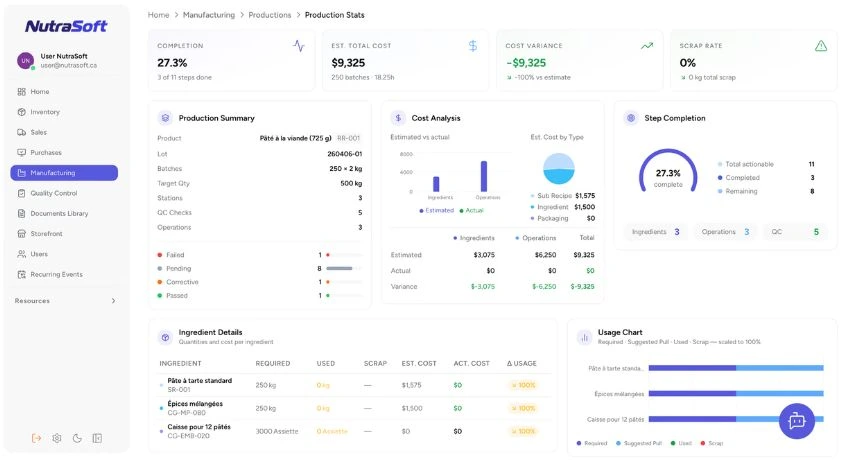
NutraSoft is a cloud-based food manufacturing ERP designed for small and mid-sized food and beverage manufacturers. It combines production planning, inventory, traceability, quality control, and nutrition labeling in one platform.
The software is designed for food manufacturing workflows, making it useful for businesses that need to manage recipes, production schedules, ingredient lots, and food safety records without relying heavily on separate spreadsheets. Here are the features include:
Production Planning: Helps schedule production and manage recipes, capacity, and resources.
Recipe Management: Organizes recipes, formulas, and sub-recipes.
Lot Traceability: Tracks ingredients and products by lot throughout operations.
Quality Control: Supports quality checks and food safety workflows.
Nutrition Labeling: Helps create nutrition information and manage allergen data.
Pros
Cons
Designed specifically for food and beverage manufacturers.
Offers a cloud-based system for small and mid-sized businesses.
Its focus on small and mid-sized manufacturers may make it less suitable for very complex enterprise operations.
NutraSoft Pricing: Starts at approximately ₱3.706,82 ($59.00)/month for their basic solutions.
Sage X3 is an ERP platform that supports manufacturing, inventory, finance, supply chain, and distribution. Its food and beverage capabilities are designed to help manufacturers manage production while maintaining quality, traceability, and compliance.
For food manufacturers, Sage X3 includes tools for recipe management, lot tracking, quality control, and supply chain management. This makes it suitable for businesses managing multiple production and distribution processes.
Recipe Management: Helps manage formulas and product specifications.
Production Management: Supports manufacturing planning and execution.
Lot Tracking: Tracks ingredients and finished products for better traceability.
Supply Chain Management: Connects purchasing, inventory, production, and distribution.
Pros
Cons
Provides broad ERP capabilities for manufacturing and distribution.
Includes food-specific traceability and quality features.
Supports businesses operating across multiple locations or markets.
Implementation can require more planning and technical support for complex operations.
Sage X3 Pricing: Pricing is quote-based. You can contact Sage X3 for more pricing details.
Infor CloudSuite Food & Beverage is an industry-focused cloud ERP designed to support food production, supply chain, product lifecycle management, and food safety.
The platform is intended for manufacturers with more complex operations and can be extended with capabilities such as demand planning, MES, warehouse management, and scheduling. This makes it suitable for businesses looking to connect manufacturing with broader supply chain processes. Here are the features include:
Food & Beverage ERP: Supports core manufacturing and business processes.
Supply Chain Planning: Helps manage demand, supply, and production requirements.
Manufacturing & Scheduling: Supports production planning and scheduling.
Traceability & Quality: Helps maintain product traceability and quality controls.
MES & WMS Integration: Can connect manufacturing execution and warehouse operations.
Pros
Cons
Designed for complex food and beverage operations.
Offers a broad ecosystem of manufacturing and supply chain tools.
Provides cloud-based deployment and industry-specific capabilities.
Its broader enterprise capabilities may be more than smaller food manufacturers require.
Infor CloudSuite Pricing: Pricing is quote-based. Contact Infor for pricing details.
FoodReady is a cloud-based ERP designed specifically for food manufacturers, processors, co-packers, and related businesses. It combines production, inventory, purchasing, quality, food safety, and traceability in one platform.
The system focuses heavily on food safety workflows, including HACCP plans, quality checks, supplier management, batch tracking, and recall management. This can help manufacturers keep operational and food safety records connected. Below here are the features include:
Batch Production: Manages recipes, production runs, batch codes, and yields.
Inventory & Lot Tracking: Tracks ingredients, packaging, and finished products by lot.
Katana MRP is a cloud-based manufacturing and inventory platform designed primarily for small and growing manufacturers. Its food manufacturing capabilities cover production, inventory, recipe management, batch tracking, and product costing.
For food businesses, Katana can help monitor perishable inventory, track product batches, and connect production with sales and purchasing. It also integrates with e-commerce and accounting platforms, which can be useful for manufacturers selling through multiple channels. Some of the features include:
Recipe & BOM Management: Organizes product recipes and required materials.
Batch Tracking: Tracks batches and expiration dates for better product traceability.
Live Inventory: Provides real-time visibility into materials and finished products.
Cost Tracking: Monitors production costs using moving average costing.
Pros
Cons
Provides manufacturing and inventory tools in one platform.
Integrates with e-commerce and accounting applications.
May be better suited to smaller food manufacturers with less complex ERP requirements.
Katana MRP Pricing: Starts at approximately ₱18.761,95 ($299) per month for the Core plan, according to Capterra.
Choosing an ERP should start with your production process rather than the software’s feature list. A manufacturer can have completely different requirements even when they sell similar products. Here are several factors to consider:
Match the Software With Production Model: The software should reflect how your factory production process aligns with the production methods that your business applies.
Functional Scope & MES Integration: Look for formulation, shop-floor management, and MES features that can reduce manual work.
Lot Tracking & Traceability (Farm-to-Fork): The system should track lots forward and backward to quickly identify affected materials or products.
Recipe & Formula Management: Check for recipe versions, yield calculations, ingredient substitutions, and allergen tracking.
Expiration Date & Shelf-Life Management: Prioritize First-Expired, First-Out (FEFO), which prioritize products nearing expiry and reduce unnecessary waste.
Compliance & Quality Control: Consider the software that supports FDA, HACCP, FSMA, or FSSAI standards and Certificates of Analysis (COA).
In Conclusion
Choosing ERP software for food manufacturers is ultimately about finding a system that fits the way your business produces, stores, sells, and controls food products. Therefore, a suitable platform should connect production, inventory, traceability, costing, and finance instead of leaving each department to work from separate spreadsheets.
For Philippine manufacturers, local operating conditions should also be part of the evaluation. Consider your facilities, supply chain, distribution network, product shelf life, compliance requirements, and plans for growth before making a decision.
If your business needs an integrated platform that can connect manufacturing with inventory, procurement, warehouse, sales, accounting, and other business processes, ScaleOcean Atlas for manufacturing is one option worth exploring.
You can learn more about its manufacturing capabilities and see how the system can be configured around your operations. If you’re unsure which modules your business needs, schedule a consultation with the ScaleOcean team to discuss your manufacturing workflow and find an ERP setup that matches your requirements.
FAQ:
1. What features should food manufacturing ERP have?
Key features include recipe and formula management, batch tracking, lot traceability, expiration control, inventory management, quality control, production planning, costing, and demand forecasting.
2. Can ERP software for food manufacturers help with food safety compliance?
Yes. ERP can centralize quality records, inspections, batch information, and traceability data to support food safety programs such as HACCP and applicable regulatory requirements.
3. Can food manufacturing ERP integrate with inventory and accounting?
Yes. Many food manufacturing ERP systems integrate production with inventory, procurement, warehouse, sales, accounting, and supply chain processes to create a centralized flow of operational data.
4. How much does ERP software for food manufacturers cost?
Pricing varies by platform and business requirements. Some providers offer quote-based pricing, while others publish starting prices. Costs may depend on users, modules, integrations, deployment, and operational complexity.
5. Is ERP software suitable for small food manufacturers?
Yes. Some ERP platforms are designed for small and growing manufacturers, while others target larger enterprises. Businesses should consider production complexity, scalability, budget, and the features they actually need.













 Key Takeaways